Understanding SOAP and the Preliminary Surgery Pathway
The Supplemental Offer and Acceptance Program (SOAP) is the NRMP’s structured process that replaces the “old scramble” for unfilled residency positions. For a Caribbean IMG interested in a preliminary surgery year, having a precise SOAP strategy can be the difference between landing a prelim surgery residency and sitting out a cycle.
What is SOAP?
SOAP is a four-day, tightly controlled process run by the NRMP during Match Week. It allows unmatched or partially matched applicants to apply to and receive offers from programs that did not fill through the main Match.
Key concepts:
Eligibility:
You may participate in SOAP if:- You registered for the Main Match, and
- You are unmatched or partially matched at 11:00 a.m. ET on Monday of Match Week, and
- You are SOAP-eligible per NRMP (status visible in your NRMP account).
Positions available in SOAP:
- Categorical positions (rare for general surgery)
- Preliminary positions (very common for general surgery)
- Transitional year positions
- Some non-surgical specialties
Communication rules:
- During SOAP, you cannot initiate contact with programs.
- Programs may contact you (by ERAS messaging, email, or phone) after receiving your ERAS application.
- You may respond to communications, but cannot solicit positions outside of the defined process.
Offer rounds:
- Programs review applications Monday–Wednesday.
- SOAP offers go out in four rounds Wednesday–Thursday.
- You may receive multiple offers per round but can only accept one.
- Accepting an offer is a binding commitment to that program.
Understanding these mechanics is foundational SOAP preparation.
The Role of a Preliminary Surgery Year
A preliminary surgery year (prelim surgery residency) is a one-year training position in general surgery, often used for:
Candidates aiming to:
- Re-apply to categorical general surgery
- Transition into other specialties (e.g., anesthesia, radiology, urology)
- Strengthen clinical skills, US experience, and letters of recommendation
Program needs:
- Service coverage (night float, trauma, ICU)
- Filling gaps left by residents who leave or transfer
Why prelim surgery is attractive for Caribbean IMGs:
- Higher volume of unfilled prelim spots compared with categorical general surgery.
- Opportunity to show you can perform in a US surgical environment.
- Potential pathway to:
- Internal transfers into categorical positions (rare but possible),
- A stronger re-application profile next cycle,
- Alternate specialties where surgical experience is valued.
However, prelim positions are not guaranteed pathways to a categorical surgery residency. SOAP preparation must therefore balance realistic expectations with strategic planning.
Pre–SOAP Preparation: 4–8 Weeks Before Match Week
The most successful SOAP outcomes for Caribbean medical school residency applicants—whether from SGU, AUC, Ross, Saba, or other schools—come from early, deliberate preparation. Think of SOAP preparation as building an emergency deployment plan that you hope you never need, but can launch in hours if required.
1. Clarify Your Goals and Risk Tolerance
Before you design your SOAP strategy, answer:
Is preliminary surgery truly my priority, or one of several options?
- Primary goal: prelim surgery only
- Secondary goal: prelim surgery plus other specialties (e.g., internal medicine prelim/PGY-1, transitional year)
- Flexible goal: any PGY-1 year to stay in the US system
What is my long-term plan?
- Re-apply categorical general surgery?
- Transition to another specialty later (e.g., anesthesia, radiology, PM&R, EM in some pathways)?
- Be content with a non-surgical specialty if prelim surgery does not lead to categorical?
How much uncertainty can I tolerate?
- Prelim surgery is less secure than categorical IM or FM.
- If your priority is guaranteed long-term training, you may need a broader SOAP strategy than just prelim surgery.
Write these answers down now. Your decisions under stress during SOAP are easier if your priorities are clear ahead of time.
2. Review Your Profile Honestly
As a Caribbean IMG, program directors will scrutinize:
- USMLE scores and attempts
- Year of graduation and any gaps
- US clinical experience (especially surgical)
- Letters of recommendation (surgery-specific vs general)
- Performance in core and surgical clerkships
- Performance in a sub-internship or audition rotation (if applicable)
Map this to SOAP realities:
Strong prelim surgery applicant (for SOAP):
- Step scores at or above national mean or modestly below
- Recent graduate (≤3 years)
- Strong surgical letters (US-based preferred)
- Good narrative in MSPE and clerkship comments
More challenging prelim profile:
- Multiple attempts on Step 1/2 CK
3–5 years post-graduation
- Limited or no US surgical rotations
- Weak or generic letters
- Significant academic or professionalism issues
If you fall into the “more challenging” group, you may still target prelim surgery through SOAP, but you should also prepare backup SOAP pathways (IM prelim, transitional year, or non-surgical specialties that are more IMG-friendly).
Building Your SOAP Application Playbook
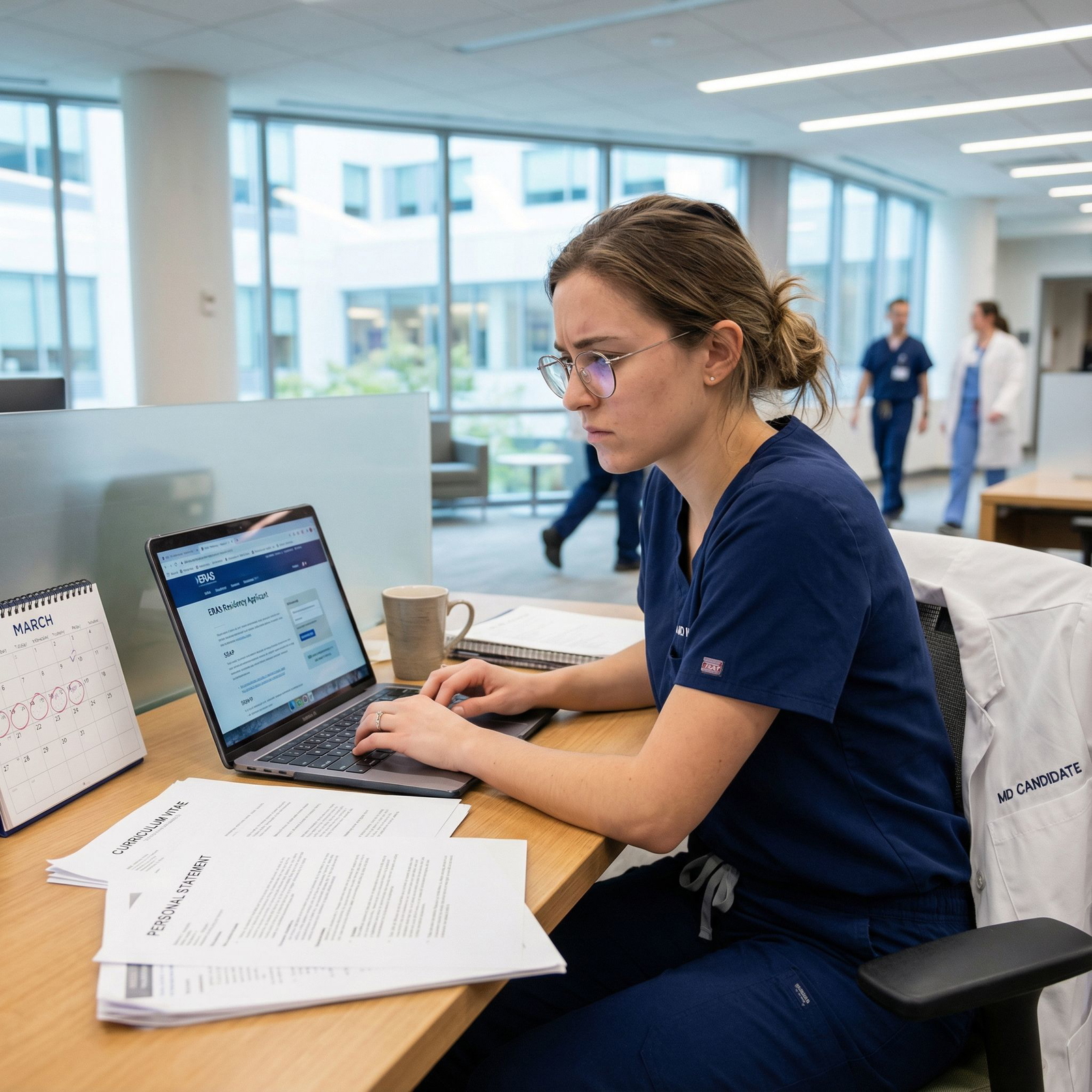
SOAP moves fast. The NRMP list of unfilled programs appears Monday at 11:00 a.m. ET; applications go out in waves that afternoon. You will not have time to write new documents from scratch. Everything must be ready before Match Week.
1. SOAP-Specific Personal Statements
You can upload multiple personal statements in ERAS and assign them per program.
For a Caribbean IMG focused on prelim surgery:
- Create at least three versions:
- Preliminary General Surgery PS
- General PGY-1 / Transitional or IM-Prelim PS (if you are open to non-surgical PGY-1 roles)
- Specialty backup PS (e.g., internal medicine categorical) if you’re realistically considering this through SOAP
Key elements for a prelim surgery personal statement:
- Directly address your:
- Commitment to acquiring strong surgical foundations
- Readiness for high-volume, high-intensity service work
- Teamwork, resilience, and teachability
- Specifically mention:
- That you understand prelim vs categorical differences
- That you are comfortable with the one-year structure
- How you will make the most of it (skill-building, professionalism, efficiency, patient care)
- For Caribbean graduates (e.g., SGU, Ross, AUC):
- Briefly normalize your route:
“My training at [Caribbean school] exposed me to diverse pathology and resource-limited settings, which strengthened my adaptability and resilience—skills that I bring to a busy surgical service.”
- Briefly normalize your route:
Avoid:
- Overpromising (“I guarantee I will become a categorical surgeon at your institution”)
- Long personal stories that do not relate to how you will perform as an intern
You may also want a very short ‘SOAP version’ PS (½–¾ page) emphasizing efficiency and readiness, to use if you need to pivot quickly.
2. Letters of Recommendation Strategy
You cannot upload new letters once SOAP begins, so anticipate:
- Ideal mix for prelim surgery SOAP:
- 2–3 surgery-specific US letters
- 1 internal medicine or ICU letter (especially strong if it comments on your reliability and teamwork)
- 1 dean’s or general academic letter (if available)
If you are still on rotations before Match Week:
- Ask attendings now:
- Mention that a “general letter for residency across surgical and related fields” would be helpful.
- For Caribbean IMGs, US surgeons often understand the match difficulties and may be willing to highlight your work ethic specifically.
For SGU residency match hopefuls and other Caribbean schools, administrative teams may help chase down letters if requested early; use that support.
3. CV and ERAS Application Optimization
SOAP programs will judge you from:
- The same ERAS application you used for the main Match, plus
- Any updated documents (e.g., recent Step 2 CK scores, new experiences) allowed by ERAS rules
Before ERAS locks important fields:
- Ensure all surgical and ICU experiences are:
- Clearly labeled
- Described with action-driven bullet points
Example: “Acted as first assist on minor procedures under direct supervision, including central line placements and wound debridement.”
- Highlight:
- Leadership roles, especially in high-stress or procedural areas
- Quality improvement or patient safety projects in surgery or perioperative care
- Research related to surgery, critical care, trauma, or perioperative medicine (even abstracts or posters)
Avoid long paragraphs in experiences; use concise, high-yield bullets for easy scanning.
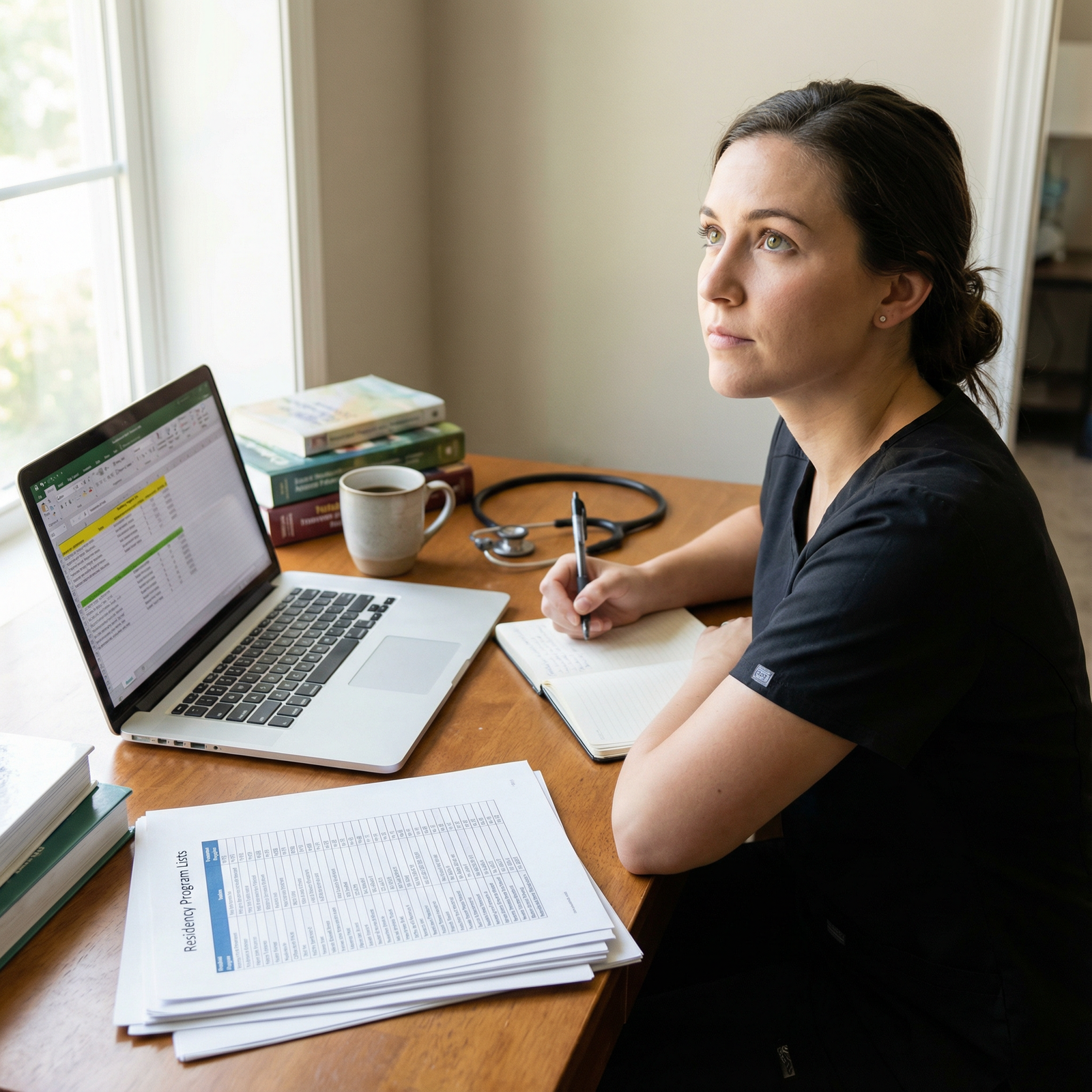
4. Program List Templates and Filters
You will see the official list of unfilled programs only on SOAP Monday, but you can:
- Build targeted templates:
- Prelim Surgery Template:
- Community and university hospitals with historically higher IMG presence
- Geographic flexibility (be very open here)
- PGY-1 Backup Template:
- Transitional years
- Internal medicine prelims or categorical positions (if open to them)
- Fields that occasionally have unfilled spots (FM, peds, psych) if you’d genuinely pursue them
- Prelim Surgery Template:
Pre-load a spreadsheet with:
- Program name
- State and city
- Program type (university vs community)
- Historical IMG friendliness (proxy from past data or school’s match list)
- Notes (e.g., trauma center level, call structure, presence of surgical subspecialties)
On SOAP Monday, you will match the official unfilled list to this prepared spreadsheet and prioritize quickly.

Execution During Match Week: SOAP Timeline and Tactics
Monday: Unmatched Status and Rapid Assessment
At 11:00 a.m. ET on Monday:
- You learn your Match status only (matched, partially matched, unmatched).
- If you are eligible for SOAP, it will be clearly indicated in NRMP.
If you are unmatched or partially matched (e.g., matched to a preliminary but not categorical spot, or vice versa):
Emotion control (30–60 minutes)
- Take a brief pause. Call a trusted mentor or friend.
- Don’t make rash decisions about career changes in the first hour.
Analyze your situation:
- If partially matched into something you can accept (e.g., categorical in a backup specialty), strongly consider keeping it rather than risking uncertainty.
- If only matched to a position you truly cannot see yourself in long-term, discuss with an advisor—but keep in mind that SOAP is not guaranteed.
Prepare for unfilled programs list (released at 11:00 a.m. or shortly thereafter on NRMP):
- Quickly filter for:
- Preliminary Surgery (PGY-1) positions
- Then add your backup categories (IM prelim, transitional, IM categorical, others as applicable)
- Quickly filter for:
Monday Afternoon: ERAS SOAP Applications
You have a limited number of SOAP applications you can send via ERAS (commonly 45 total; verify for your year). These must cover all rounds, so don’t use them all at once indiscriminately.
Strategy for a Caribbean IMG focused on prelim surgery:
Tier 1 – Prelim Surgery Programs
- Identify all prelim surgery positions that:
- Accept IMGs (from past data or residency explorers, if known)
- Are in regions you can realistically move to within months
- If you’re heavily surgery-focused, dedicate at least 50–70% of your slots to prelim surgery in this first wave.
- Identify all prelim surgery positions that:
Tier 2 – Prelim IM, Transitional Years, and Categorical Backups
- Use the remaining 30–50% for:
- Internal medicine prelim positions
- Transitional year programs
- Any categorical IM/FM/Peds/Psych programs you would genuinely accept as a career.
- Use the remaining 30–50% for:
Application customization:
- Assign the appropriate personal statement to each program (surgery vs IM vs TY).
- Tailor if allowed and time permits:
- Short program-specific lines in your PS (city, patient population, type of hospital) can help, but don’t sacrifice sending applications for micro-customization.
Once submitted, you cannot withdraw or modify SOAP applications to those programs, so think in tiers, not impulsively.
Tuesday: Monitoring, Responding, and Interviewing
Programs review SOAP applications and may:
- Send ERAS messages
- Request brief phone or video interviews
- Email you directly (as allowed)
Your tasks:
Be constantly reachable
- Keep your phone near you and email open.
- Use a professional voicemail greeting and email signature with your full name, AAMC ID, and contact information.
Quick research for any contacting program:
- Before a call or interview:
- Visit the program’s website (size, call structure, ICU exposure, fellowship presence).
- Identify one or two aspects you can mention (e.g., strong trauma exposure, robust critical care).
- Before a call or interview:
Mini-interview preparation (SOAP-focused) Programs may ask:
- “Why preliminary surgery?”
- “How will you handle the workload?”
- “What are your long-term goals?”
- “You’re a Caribbean IMG—how has that prepared you for our environment?”
Prepare short, direct answers emphasizing:
- Work ethic, humility, and resilience
- Comfort with long hours, manual tasks, and team support
- Clear, realistic long-term plan (re-application vs alternate specialties)
Example answer:
“I’m seeking a preliminary surgery year because I want to build a strong foundation in operative and perioperative care. I understand prelims are service-heavy, and my goal is to be the most reliable, efficient intern on the team—managing admissions, writing notes, and taking ownership of patients. Long-term, I hope to match into a categorical surgical position, but even if that occurs at another institution, I see this year as an opportunity to grow clinically and contribute meaningfully to your service.”Professionalism is non-negotiable
- Be on time, well-dressed (for video), and polite.
- Avoid insisting on categorical conversion or constantly asking, “Will this become categorical?”—ask once, politely.
Wednesday–Thursday: SOAP Offer Rounds and Decisions
SOAP rounds typically occur on Wednesday and Thursday with several offer rounds. Between rounds:
- Programs decide whom to offer positions.
- You may receive:
- No offers
- A single offer from one program
- Multiple offers in a round
Key rules and strategies:
Accepting vs Declining Offers
- Once you accept a SOAP offer, you are done; your participation ends, and that contract is binding.
- Declining an offer may allow a better one later—but there is no guarantee another offer will come.
When to accept a prelim surgery offer
- Accept if:
- It is a prelim surgery year,
- At a program you would be willing to work hard in for 12 months,
- Geographically and personally feasible.
- In most cases for Caribbean IMGs whose primary goal is surgical training, a prelim surgery offer is worth accepting in the first round if it meets these basic conditions.
- Accept if:
When to consider holding out
- If you receive an offer in a specialty you don’t want as a career (e.g., categorical in something you strongly dislike) and you are a strong applicant, you might cautiously wait for a more aligned offer.
- If you have strong indicators that better choices are likely (e.g., multiple interviews from prelim surgery and TY programs), you can discuss with advisors.
If you receive no offers in early rounds
- Reassess your backup strategy with mentors.
- If additional programs open (sometimes a few new positions appear), apply to them promptly if you still have unused application slots.
- Use remaining rounds to aim for any acceptable PGY-1 spot if your priority is remaining in the US system.

Special Considerations for Caribbean IMGs and SGU/Caribbean Grads
1. Leveraging Your School’s Infrastructure
Many Caribbean medical schools, especially large ones like SGU, have dedicated match advising and SOAP support teams. Use them fully:
- Attend all SOAP webinars and debrief sessions.
- Sign up for 1:1 advising before Match Week.
- During SOAP, ask:
- “Which of these prelim surgery programs have taken Caribbean IMGs before?”
- “Do you have alumni I can talk to about specific institutions?”
SGU residency match data and similar match lists from other Caribbean schools can show which programs have historically been IMG-friendly.
2. Addressing IMG-Specific Concerns in Interviews
Be prepared to answer:
- “Why did you attend a Caribbean medical school?”
- “How have you adapted to the US clinical environment?”
- “How do you handle heavy workloads and new systems?”
Effective framing:
- Focus on:
- Diversity of pathology
- Flexibility and resilience gained by navigating new systems and cultures
- Strong performance in US clinical rotations as evidence of adaptability
Avoid:
- Over-defensiveness or blaming
- Long narratives about visa challenges or personal grievances
3. Visa and Immigration Issues
If you require a visa (commonly J-1; sometimes H-1B):
Before SOAP:
- Clarify with advisors which program types are more likely to sponsor visas.
- Keep documentation (passport, US visa history) organized.
During SOAP:
- If programs ask, answer clearly whether you need sponsorship.
- Don’t assume all programs will sponsor; some prelim surgery positions, especially at smaller community hospitals, may not.
This may affect your prioritization of programs when designing your application list.
4. Financial and Logistical Readiness
SOAP moves unbelievably fast. If you accept a prelim surgery residency:
- You may have only a few months to:
- Move to a new city or state
- Secure housing and transportation
- Complete onboarding, licensing paperwork, and immunizations
Prepare in advance:
- An emergency budget for relocation (even with limited resources).
- A checklist of:
- Vaccinations and titers
- Background check documents
- US bank accounts and routing information
- A rough plan for multiple regions (e.g., one for the Northeast, one for the South/Midwest) if possible.
Life After a SOAPed Preliminary Surgery Year
SOAP is a starting point, not an endpoint. If you SOAP into a prelim surgery residency:
1. Define Success Clearly
Measure success by:
- Strong clinical evaluations from attendings
- Letters of recommendation that highlight:
- Reliability
- Ownership of patients
- Teamwork and integrity
- Skill growth:
- Efficient notes and orders
- Basic procedures (lines, chest tubes, bedside debridements)
- Communication with nurses and consultants
2. Strategic Networking and Re-Application
During your prelim year:
- Meet with the program director early:
- Clarify expectations
- Ask how you can be competitive if a categorical position opens or for the next Match
- Talk with upper-level residents:
- Learn which programs have historically accepted prelims into categorical spots
- Ask for realistic feedback
If you plan to re-apply:
- Prepare for early ERAS application:
- Update your CV with concrete achievements
- Request letters mid-year when your work is freshest
- Consider a broader range of surgery or surgery-adjacent specialties (e.g., anesthesia, EM in certain contexts, radiology with strong surgical background)
3. Alternative Long-Term Careers
If a categorical surgery spot does not materialize, your prelim surgery year still has value:
- You may be a more competitive applicant for:
- Anesthesia
- Radiology
- Emergency medicine (specific pathways)
- PM&R or critical care-related fields later on
- Employers in hospitalist or proceduralist roles often respect surgical prelim experience due to comfort with acutely ill patients.
FAQs: SOAP Preparation for Caribbean IMG in Preliminary Surgery
1. If I’m focused on general surgery, should I only apply to prelim surgery programs during SOAP?
No. Even if your main goal is a preliminary surgery year, it is risky to apply only to prelim surgery. As a Caribbean IMG, you should:
- Prioritize prelim surgery in your first application wave, but
- Also include some prelim internal medicine, transitional year, or categorical IM/FM programs you would genuinely consider.
This gives you multiple pathways to stay in the US system if prelim surgery positions do not result in offers.
2. How can I stand out as a Caribbean IMG in SOAP interviews for prelim surgery?
You stand out by:
- Demonstrating clear understanding of what a prelim surgery role involves (service intensity, limited guarantee of categorical).
- Emphasizing:
- Work ethic and reliability (“I want to be the intern people can trust at 3 a.m.”)
- Adaptability learned from Caribbean training and US clinical rotations
- Specific examples of handling high-volume, high-acuity situations
- Being concise, professional, and realistic about your goals.
Programs want interns who will take care of patients, support the team, and require minimal hand-holding.
3. What is SOAP’s biggest pitfall for Caribbean IMGs aiming at preliminary surgery?
The major pitfalls are:
- Lack of preparation: No pre-written prelim surgery personal statement, unclear goals, or disorganized letter portfolio.
- Overly narrow focus: Applying only to a small number of prelim surgery programs and ignoring backup PGY-1 options.
- Emotional decision-making: Declining reasonable prelim or PGY-1 offers in hopes of a “perfect” position that may never come.
Mitigate these by preparing comprehensively and involving mentors in real-time decisions during SOAP.
4. Does doing a prelim surgery year guarantee I will later match categorical general surgery?
No. A preliminary surgery year does not guarantee that you will secure a categorical general surgery spot, even at the same institution. Your chances improve if you:
- Excel clinically
- Obtain exceptional letters
- Actively network and re-apply strategically through ERAS for the next cycle
However, many prelims ultimately shift into other specialties or non-surgical career paths. Go into a prelim surgery year with eyes wide open: it is a valuable training and networking opportunity, not an assured bridge.
Thoughtful, early SOAP preparation tailored to your status as a Caribbean IMG—combined with realistic expectations about preliminary surgery—can turn a disappointing Match Week Monday into a viable surgical training opportunity by Thursday.