Understanding the Big Picture: Academic vs Private Practice in Neurology
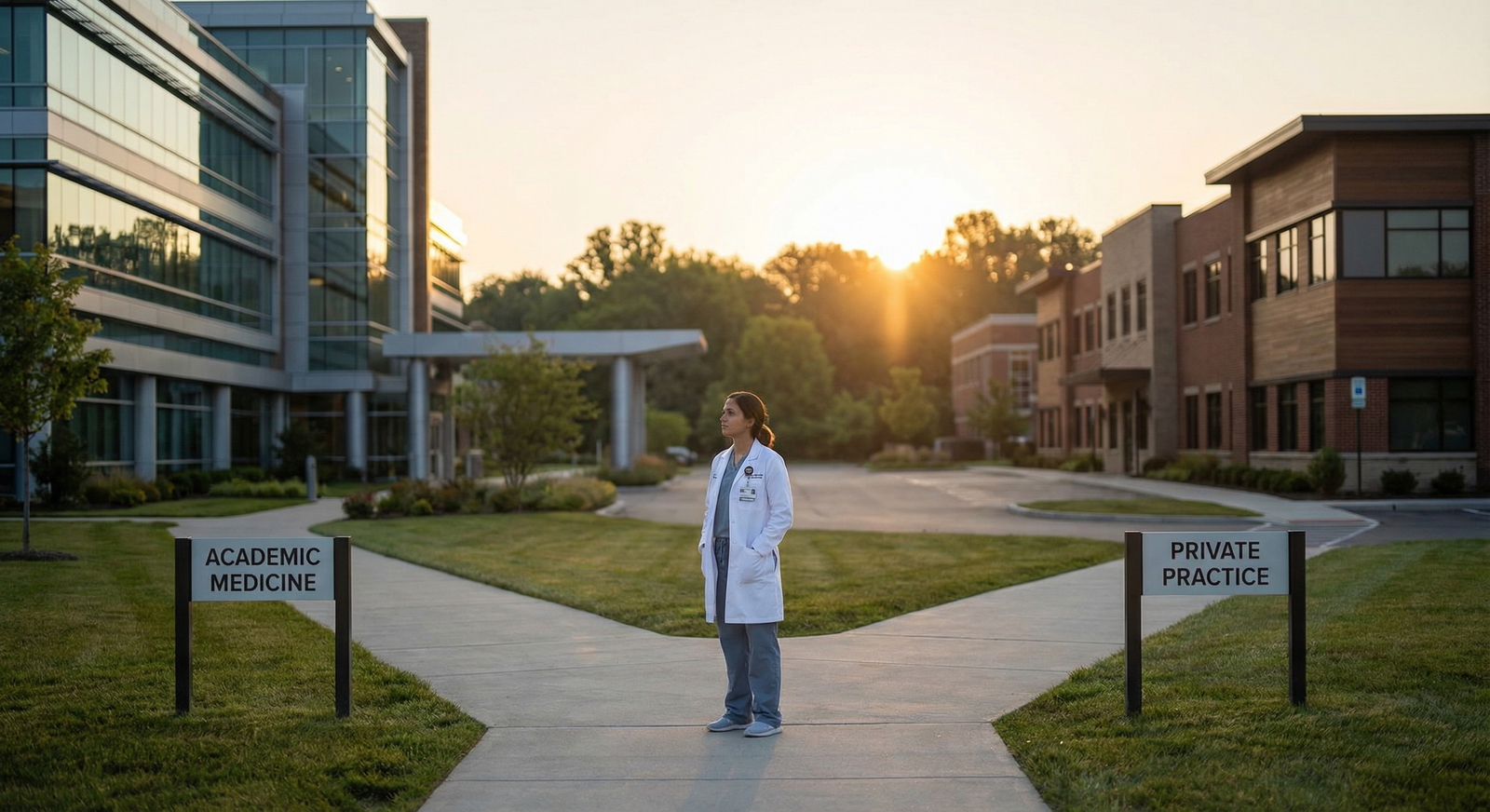
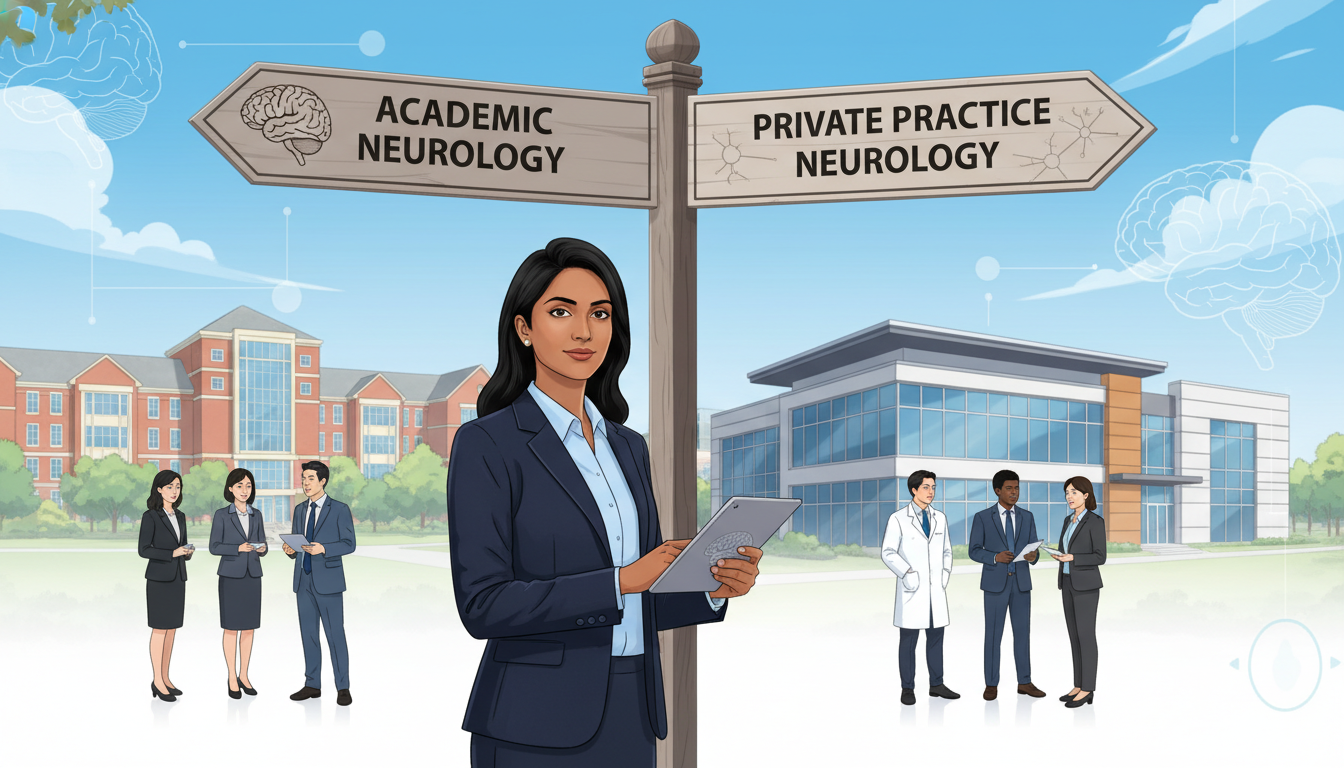
For a non-US citizen IMG, choosing between academic neurology and private practice is more than a lifestyle decision—it can determine your visa options, long-term stability, and chances of building a sustainable career in the United States. Many foreign national medical graduates understandably focus first on getting into a neurology residency (the “neuro match”), but the earlier you understand post-residency pathways, the more strategically you can plan rotations, research, and networking.
Both academic medicine and private practice neurology can lead to rewarding careers, but they differ in:
- Daily work structure
- Income and financial growth
- Visa sponsorship and immigration feasibility
- Research and teaching opportunities
- Geographic flexibility
- Work–life balance and burnout risk
This article walks through these differences with specific implications for a non-US citizen IMG, plus practical steps to position yourself for either path—even while you are still in training.
Defining the Paths: What “Academic Neurology” and “Private Practice” Really Mean
Before comparing, it helps to clarify what each path usually looks like in the US neurology landscape.
What Is Academic Neurology?
Academic neurology typically means working for:
- A university hospital
- A medical school–affiliated teaching hospital
- A large academic health system with residency and/or fellowship programs
Your role often includes:
- Clinical care (inpatient consults, wards, and/or outpatient subspecialty clinics)
- Teaching (residents, fellows, medical students)
- Research (clinical trials, translational research, quality improvement, or health services research)
- Administrative roles (committees, program leadership, or service line leadership as you advance)
Common academic job models:
- Clinician-Educator – Majority clinical + teaching; some scholarly work or QI
- Clinician-Scientist – Significant protected research time; expectation for grants and publications
- Hospital Neurologist / Stroke Neurologist – Heavier inpatient/ER focus, may still teach and do QI
- Subspecialty Faculty – Epilepsy, movement disorders, neuroimmunology, neuromuscular, neurocritical care, etc.
What Is Private Practice Neurology?
Private practice neurology usually involves:
- Working for a community-based neurology group
- Joining a hospital-employed neurology practice (technically not “academic” if no major teaching/research mission)
- Being part of a multi-specialty group or health system with mainly clinical productivity expectations
- In some cases, starting your own practice after gaining experience (less common right away for non-US citizen IMGs, mainly due to visa and business complexity)
Your work is primarily:
- Clinical care (outpatient visits, EMG, EEG, Botox, procedures, maybe inpatient consults)
- Minimal formal teaching or research, except occasional students/NPs/PAs or industry-supported studies
- Business and productivity focused – relative value units (RVUs), patient volume, revenue generation
Typical models:
- Independent private group – Partners share profits and decisions
- Employed by hospital or large system – Salary + bonus, less personal control over business decisions
- Hybrid models – Academic affiliation for teaching or trials but financially structured like private practice
Core Differences: A Side-by-Side Comparison for Non-US Citizen IMGs
1. Clinical Workload and Day-to-Day Life
Academic Neurology:
- Mix of inpatient and outpatient, depending on subspecialty and departmental needs
- More complex cases and rare diseases, referrals from community neurologists
- Set templates for patient volume (e.g., 8–14 patients per half-day clinic; may be lower for subspecialty clinics)
- Protected time for conferences, grand rounds, teaching, and research
- Frequent night/weekend call, especially at tertiary centers and stroke centers
- Multidisciplinary environment: neuro-radiology, neurosurgery, psychiatry, rehab, etc.
Private Practice Neurology:
- Predominantly outpatient; possibly some inpatient consults or weekend call shared among group
- Higher patient volume expectations (e.g., 16–24+ outpatients per day)
- Narrower case mix in some settings (headache, neuropathy, back pain, seizures), though depth can still be high
- Minimal formal academic conferences, although CME and industry-sponsored talks occur
- Workday is highly clinical, with visits, procedures, and documentation
Practical implication for non-US citizen IMG:
If you enjoy structured teaching, complex cases, and multidisciplinary rounds, academic neurology might feel more satisfying. If you prefer a more predictable clinic-focused schedule and are less interested in research or teaching, private practice neurology may better fit your daily work preferences.
2. Income, Benefits, and Financial Trajectory
Academic Neurology:
- Starting salaries are typically lower than private practice, though this gap is narrowing in some regions
- More stable base salary with potential bonuses for productivity, quality metrics, or teaching
- Strong institutional benefits: retirement match, health insurance, CME funds, tuition discounts, etc.
- Slower but steady income growth; major jumps tied to promotion (Assistant → Associate → Full Professor) or leadership roles
- If you do heavy research with grants, a portion of your salary may be grant-supported, which can add complexity but also prestige
Private Practice Neurology:
- Typically higher starting income and higher ceiling for top earners
- Productivity-based compensation: RVUs, collections, or profit-sharing
- In independent groups, can become a partner, sharing in practice profits, ancillaries (e.g., EEG lab, infusion centers), and real estate
- Benefits may be variable (often decent), but retirement and bonus potential can be substantial
- Business and financial risk is higher if you move toward practice ownership
For a foreign national medical graduate:
You might prioritize financial stability early on to manage loans, remittances, or immigration costs. Academic neurology offers predictable income and benefits, while private practice offers higher earning potential once you are more secure in your immigration status and understand the US system.
3. Visa Sponsorship and Immigration Pathways (H‑1B, J‑1, Green Card)
This is often the most critical factor for a non-US citizen IMG choosing a post-residency neurology pathway.
Common Visa Situations
- J‑1 visa holders: Need a J‑1 waiver job (usually in an underserved or rural area) or must return home for 2 years
- H‑1B visa holders: Need an employer willing to file for H‑1B transfer and usually employment-based green card (EB‑2/EB‑2 NIW or EB‑1)
Academic Neurology – Immigration Pros and Cons
Pros:
- Many universities and teaching hospitals are cap-exempt H‑1B sponsors
- Easier to secure or transfer H‑1B compared to private practices limited by the H‑1B cap
- Strong for EB‑2 or EB‑1 (especially if research-heavy) green card categories
- Some academic centers also sponsor J‑1 waiver positions in subspecialty areas or through affiliated community hospitals
- Opportunities to build a strong CV with publications, teaching, and leadership, which helps with EB‑1/NIW petitions
Cons:
- Fewer J‑1 waiver jobs compared with community hospitals serving underserved areas
- Salary may be lower during the years you are working off your J‑1 waiver or building your green card case
Private Practice Neurology – Immigration Pros and Cons
Pros:
- Many private practices and community hospitals actively recruit neurologists to underserved regions, ideal for J‑1 waiver jobs (Conrad 30, HHS waivers, etc.)
- Often very competitive salaries and relocation bonuses
- Some hospital-employed private practice settings are experienced with H‑1B and green card sponsorship
Cons:
- Smaller groups may be unfamiliar with H‑1B or green card processes, or unwilling to sponsor
- Subject to H‑1B cap, unless the hospital is cap-exempt
- Private practices without research/teaching may make it harder to build an EB‑1 or NIW profile, though EB‑2 with employer sponsorship is still possible
- Starting your own practice while on a work visa is legally complex and risky
Strategic Tip:
For non-US citizen IMGs, an academic neurology position can be an excellent first job to secure stable H‑1B/green card sponsorship. After gaining permanent residency, transitioning to private practice becomes far easier.
Career Development, Teaching, and Research Opportunities
Academic Neurology: Building an Academic Medicine Career
If you are drawn to academic medicine career development—teaching, publishing, leading programs—academic neurology is the natural environment.
Key features:
- Teaching: Integral to daily work. You supervise residents and students on wards and in clinic, give lectures, and participate in simulation or OSCEs.
- Research: Access to mentors, IRB support, statisticians, and possibly industry or NIH-funded trials. You can engage in:
- Clinical trials (stroke, epilepsy, MS, movement disorders)
- Outcomes and health services research
- Basic science (if at research-heavy institution)
- Quality improvement and implementation science
- Promotion pathways: Clear tracks (clinician-educator, clinician-scientist, research track) with defined criteria for promotion.
- National visibility: Opportunities to present at AAN, AHA/ASA, AES, CMSC, MDS, and other neurology societies. This builds your profile for leadership and immigration categories.
For non-US citizen IMGs:
- Early involvement in research projects during residency/fellowship builds your portfolio.
- Focus on first-author peer-reviewed papers, conference abstracts, and invited talks to strengthen both your CV and your future green card case.
- Maintaining clear evidence of ongoing scholarly activity is crucial for eventual academic promotion.
Private Practice: Clinical Excellence and Niche Expertise
In private practice, you can still build a strong professional reputation—more clinically focused and locally oriented.
Key features:
- Clinical depth: Opportunity to become a high-volume expert in certain conditions (e.g., headache, EMG for neuropathy/radiculopathy, Botox injections, epilepsy monitoring).
- Teaching: Limited but possible—NPs, PAs, local students, or occasional residents from affiliated programs.
- Research: May participate in industry-sponsored clinical trials if your group or hospital hosts them, but rarely the primary investigative site for large academic studies.
- Leadership: Business and administrative leadership—become a partner, medical director of neurology service line, stroke director, etc.
For foreign national medical graduates:
- If your long-term goal is purely clinical with financial growth, private practice can be very appealing after you secure permanent residency.
- If you want strong national academic recognition, private practice alone may make that more challenging, though not impossible. Some private neurologists still publish case series, guidelines, or lead professional societies.
Lifestyle, Burnout, and Work–Life Balance
Academic Neurology
Pros:
- Greater variety in work: mix of clinic, wards, conferences, teaching, and research
- More flexibility to shift effort over time (e.g., increase research and reduce clinic, or vice versa)
- Collegial environment with frequent interaction with other specialists, residents, and fellows
- Intellectual stimulation can be protective against burnout
Cons:
- Night and weekend call can be intense, especially in stroke and neurocritical care
- Clinical and academic expectations can feel like “two jobs in one,” particularly for junior faculty
- Pressure to publish, obtain grants, and meet institutional metrics
Private Practice Neurology
Pros:
- More predictable clinic schedule in many setups (e.g., 8–5, weekdays)
- Greater autonomy over patient mix, procedures, and sometimes schedule design
- Potential to scale back or hire additional partners/NPs as the practice grows
- For many, the clear clinical focus reduces administrative and academic pressures
Cons:
- High patient volume and documentation demands can be draining
- Business pressures (collections, payor mix, overhead) for partners or owners
- May feel professionally isolated if far from academic centers or formal teaching environments
Choosing career path in medicine is deeply personal; consider not only your tolerance for hours and work intensity, but also the kind of intellectual environment and daily interactions that keep you motivated.

Strategic Planning: How to Position Yourself During Residency and Fellowship
Even during neurology residency (and fellowship), you can start aligning your profile toward academic medicine or private practice—without closing off either door.
During Residency: Foundational Steps for All Non-US Citizen IMGs
Clarify your visa situation early.
- Speak with GME/immigration advisors about your J‑1/H‑1B status and long-term options.
- Understand if you’ll likely need a J‑1 waiver position after training.
Excel clinically.
- Strong evaluations and letters of recommendation help both academic and private practice job searches.
Network broadly.
- Attend AAN and subspecialty meetings; talk to both academic and private practice neurologists.
- Ask specific questions about workload, compensation, and visa experience at each institution or group.
Document achievements.
- Keep a CV updated with all presentations, QI projects, teaching activities, and leadership roles.
Academic-Track Strategy
If you see yourself in a long-term academic medicine career:
Engage in research early.
- Join faculty projects in your area of interest (stroke, epilepsy, neuroimmunology, movement, neuromuscular, etc.)
- Aim for at least 2–3 solid first- or co-first-author papers by the end of residency/fellowship.
Seek teaching responsibilities.
- Volunteer for medical student lectures, small-group teaching, or OSCEs.
- Ask attendings to observe and provide feedback; document teaching in your CV.
Leverage fellowships.
- Many academic neurology careers start with a subspecialty fellowship at a major center (e.g., vascular neurology, epilepsy, movement disorders, neuroimmunology, neuromuscular).
- Fellowships often provide protected research time and deeper mentorship—valuable for green card applications and academic job searches.
Target academic institutions for your first job.
- Prioritize those with proven H‑1B or green card sponsorship and supportive promotion tracks for clinician-educators and clinician-scientists.
Private Practice-Track Strategy
If you are leaning toward private practice vs academic neurology:
Optimize your clinical efficiency.
- Focus on mastering outpatient neurology: common presentations, efficient documentation, and procedure skills (EMG, Botox, EEG interpretation).
Develop a subspecialty niche that is clinically marketable.
- Headache, EMG/neuromuscular, epilepsy, movement disorders, and MS are often in high community demand.
- A 1-year fellowship can significantly improve job marketability and compensation.
Learn basic practice management.
- Take advantage of any resident lectures on billing, RVUs, contracts, and payor systems.
- Ask attendings in community or private settings about negotiating contracts, partnership tracks, and non-compete clauses.
Focus on J‑1 waiver and H‑1B realities.
- If on J‑1, research states and hospitals with strong neurology demand and Conrad 30 opportunities.
- For H‑1B, verify that potential employers have experience with cap-exempt or cap-subject H‑1B and employment-based green cards.
Decision-Making Framework: Academic vs Private Practice for Non-US Citizen IMG Neurologists
Use these questions to guide your decision:
What excites you most about neurology?
- Discovering new knowledge, publishing, and teaching → Consider academic neurology
- High-volume clinical care, building long-term patient relationships, entrepreneurship → Consider private practice
How critical is visa and green card security in the short term?
- Need stable, predictable sponsorship → Academic centers often more experienced and structured
- Willing to go to underserved/rural settings for J‑1 waiver → Private practice/hospital-employed jobs may be ideal
How much variability do you want in your work?
- Desire for mixed roles (ward, clinic, research, teaching) → Academic
- Preference for focused clinical routine → Private practice
What are your long-term financial and family priorities?
- Prioritize early career stability and academic growth, with financial growth later → Academic
- Aim for higher long-term clinical income with potential entrepreneurship after green card → Private practice
Do you want a national or international academic profile?
- Yes → Academic path will give easier access to grants, national committees, and leadership
- Not necessary → Private practice can still be fulfilling and successful without academic visibility
Remember that paths are not irreversible. Many neurologists move:
- From academic to private practice (often mid-career, sometimes after getting a green card)
- From private practice to academic (less common but possible, especially if they’ve maintained contacts, teaching, or research)
FAQs: Academic vs Private Practice for Non-US Citizen IMG in Neurology
1. As a non-US citizen IMG, is academic neurology better than private practice for visa purposes?
Not universally, but academic neurology often has advantages:
- Many academic institutions are cap-exempt H‑1B sponsors and have established immigration offices.
- They can sponsor EB‑2 or EB‑1 green cards, especially if you are research-productive.
- J‑1 waiver jobs, however, are often more abundant in community or underserved settings, which may be hospital-employed or private practice–like jobs.
The best approach is to evaluate each employer individually: ask about their past experience sponsoring H‑1B and green cards for neurologists and other physicians.
2. Will I earn significantly less in academic neurology compared to private practice?
Typically, yes, at least at the start, though the gap varies by region. Private practice neurologists, especially partners or owners, can earn substantially more than academic faculty. However:
- Academic jobs offer strong benefits, stability, and non-financial rewards (teaching, research, prestige).
- Early in your career and during visa/green card processes, the security and institutional support may outweigh the income difference.
- Some academic subspecialties with heavy call or procedural volume (e.g., neurocritical care, interventional neurology) can have compensation closer to private practice levels.
3. Can I do research or teaching in private practice neurology?
Yes, but less formally:
- You may participate in industry-sponsored trials, especially if your group collaborates with pharmaceutical companies.
- You can host students or nurse practitioner/PA trainees and give talks for local hospitals or community events.
- However, systematic research with grants, protected time, and promotion based on academic output is far more common in academic neurology.
If research and structured teaching are major priorities, academic medicine will likely suit you better.
4. Is it realistic to move from academic neurology to private practice after getting a green card?
Yes, this is a common pathway, especially for non-US citizen IMGs:
- Many start in academic centers to secure an H‑1B and green card while building their skills and CV.
- After obtaining permanent residency, they feel freer to prioritize geography, income, and lifestyle, and some transition to private practice or hospital-employed community neurology.
- Maintaining strong clinical skills and good references will keep your options open if you choose to move later.
Choosing between academic and private practice neurology as a non-US citizen IMG is a strategic decision involving immigration, career aspirations, and personal values. By understanding the trade-offs early—during residency, fellowship, and your first job search—you can design a path that supports both your professional growth and your long-term stability in the US.