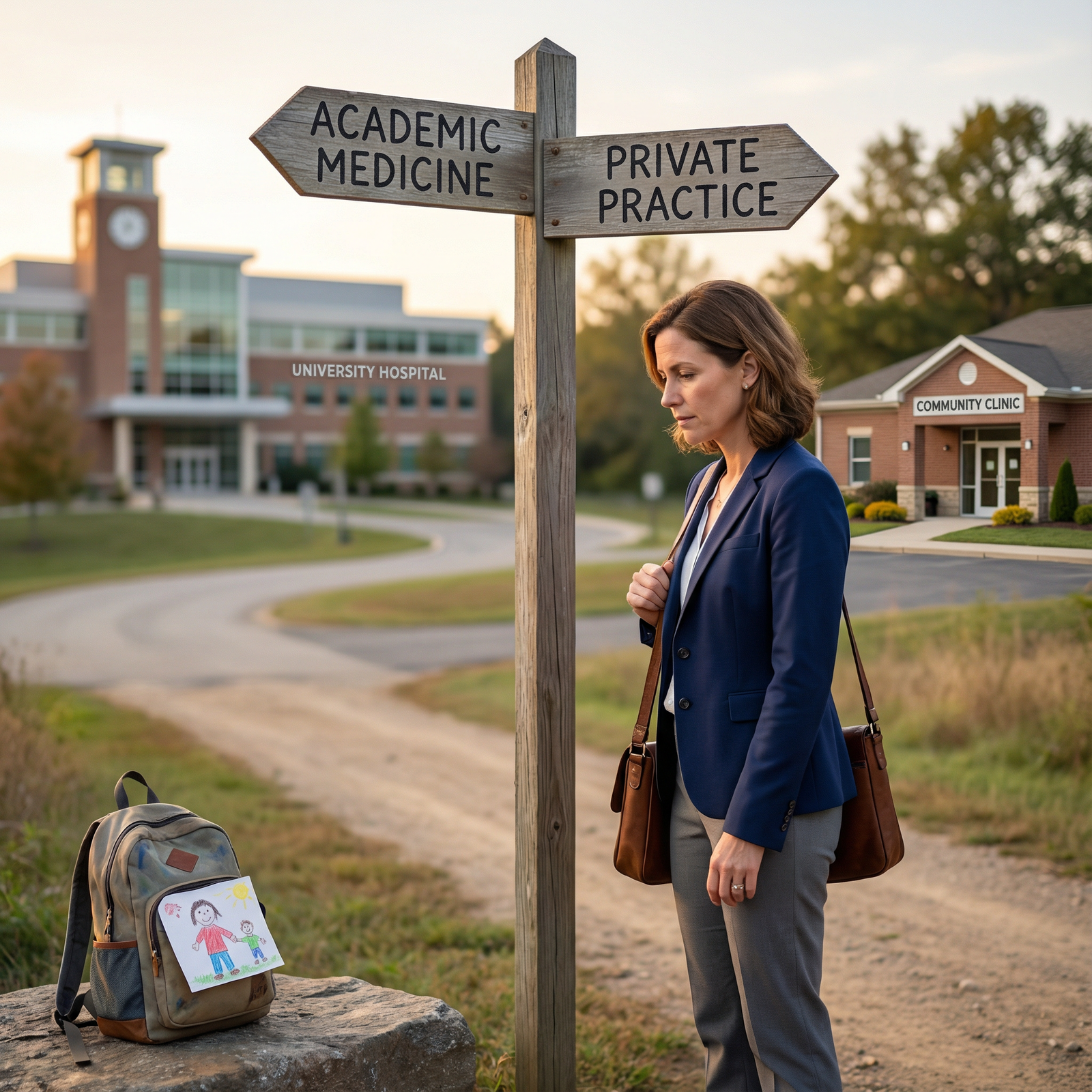
As a Caribbean IMG in pathology, choosing between academic medicine and private practice is one of the most important career decisions you will make after residency and fellowship. The choice affects not only your day‑to‑day work, but also your income trajectory, visa options, lifestyle, research opportunities, and long‑term professional identity.
This guide is tailored specifically to Caribbean medical graduates—especially those coming from schools like St. George’s University (SGU), Ross, AUC, Saba and similar—who are thinking ahead about their pathology residency, fellowship, and eventual practice setting in the United States or Canada.
Understanding the Two Paths: Academic vs Private Practice in Pathology
Before comparing lifestyle, income, and career growth, you need a clear understanding of what “academic” and “private” actually mean in pathology.
What is Academic Pathology?
Academic pathology is typically based in:
- University hospitals and medical centers
- VA (Veterans Affairs) academic affiliates
- Some large nonprofit teaching hospitals
Pathologists in academic medicine usually have three main missions:
- Clinical service – Signing out cases (surgical pathology, cytology, hematopathology, etc.), frozen sections, tumor boards.
- Teaching – Medical students, residents, and often fellows.
- Research/scholarly activity – Ranging from basic science to translational or clinical research, quality improvement, educational scholarship, or informatics projects.
Your title might be:
- Assistant Professor → Associate Professor → Professor
- Clinical Instructor or Clinical Professor (for more clinically focused roles)
What is Private Practice Pathology?
Private practice pathology generally means:
- Independent pathology groups contracting with one or more hospitals
- Large national laboratory corporations (e.g., reference labs)
- Regional hospital-based groups that are non-university affiliated
- Occasionally “hybrid” hospital-employed positions without strong academic missions
Core features:
- Primary focus is clinical service
- Group revenue typically comes from case volume and contracts
- Emphasis on efficiency, turnaround time, and client (hospital/clinician) satisfaction
- Teaching and research are limited or nonexistent unless they partner with a residency program
You might be:
- Partner in a private pathology group
- Employee (with or without partnership track)
- Medical director for a lab or hospital pathology department
How Your Training Background as a Caribbean IMG Shapes Options
Your educational pathway—Caribbean medical school + US pathology residency—strongly influences which doors open most easily.
From Caribbean Medical School to Pathology Residency
Many Caribbean IMGs successfully match into pathology, often through:
- Strong USMLE scores
- US clinical or research experience (particularly in pathology)
- Letters of recommendation from US pathologists
- Strategic applications to programs with a history of taking IMGs
The Caribbean medical school residency narrative still matters on paper, but pathology as a specialty tends to be more accepting of international graduates than highly competitive fields like dermatology or plastic surgery. Programs associated with SGU or that regularly accept SGU graduates can be a helpful starting point if you are early in the pipeline.
Academic Pathology and Program Pedigree
For a purely academic career, where you aim to work at a major university center, the following generally help:
- Residency or fellowship at a well-regarded academic program
- Strong letters from recognized academic pathologists
- Publications, posters, and presentations
- Demonstrated interest in teaching or research
Caribbean IMG status by itself does not disqualify you from academic pathology. However, you may face extra scrutiny regarding:
- Research training background
- Communication skills (particularly for teaching roles)
- Perceived “fit” in scholarly environments
This is where strategic planning during residency becomes crucial (more on this later).
Private Practice and Background Flexibility
Private practice groups often care more about:
- Clinical competence and efficiency
- Solid references from attendings
- Subspecialty training aligned with local needs
- Willingness to live in specific geographic areas
Many private practices are very open to hiring Caribbean IMGs who completed solid US pathology training and perform well clinically. In some regions, especially those with physician shortages, your IMG status becomes less of a barrier than your willingness to relocate.
Day-to-Day Life: What Your Work Actually Looks Like
Clinical Workload and Case Mix
Academic Medicine:
- Often subspecialized (e.g., breast, GI, heme, neuropathology).
- Exposure to rare and complex cases, referral specimens, and tertiary care pathology.
- You may sign out fewer total cases per day but with higher complexity.
- More frozen sections and tumor boards due to complex surgeries and multidisciplinary care.
Private Practice:
- Often more generalist, especially in small or medium-sized communities.
- Case mix dominated by bread-and-butter cases (colon, breast, prostate, gyn, etc.).
- Larger case volumes per day; strong emphasis on fast, accurate sign-out.
- May cover multiple hospitals or outpatient surgery centers.
Example:
A young pathologist in academic GI pathology may sign out 20–30 complex GI cases per day and spend additional time on tumor boards and research. Their private practice counterpart might sign out 50–80 mixed cases daily, with minimal research and no formal teaching responsibilities.
Teaching and Mentoring
Academic Medicine:
- Routine teaching of residents, fellows, and medical students at the microscope.
- Formal lectures, small group sessions, and labs.
- Opportunities for educational scholarship and curriculum development.
- Being a visible role model for future pathologists, including IMGs.
Private Practice:
- Limited or no formal teaching responsibilities.
- Some groups with residency affiliations may offer occasional teaching, but it isn’t core.
- Informal teaching might occur with pathologist assistants, lab staff, or visiting students.
If you enjoy explaining findings, guiding trainees, and presenting at conferences, academic medicine may be more aligned with your strengths and interests.
Research, Innovation, and Academic Output
Academic Medicine:
- Expectation (often formalized) to contribute to scholarship:
- Clinical research, translational work, informatics, quality improvement, educational studies, etc.
- Advantages:
- Access to statisticians, research coordinators, biobanks, and grants.
- Institutional support for IRB submissions and sample use.
- Promotion and tenure often depend on your CV: publications, presentations, grants, committees.
Private Practice:
- Most practices do not require or support research beyond occasional quality projects.
- Some larger or niche groups may participate in clinical trials or collaborative studies, but it’s rare.
- Innovation tends to focus on operational efficiency, new diagnostics that enhance service, or lab process improvement rather than academic publications.
If you envision a heavily research-oriented academic medicine career, private practice will feel limiting.
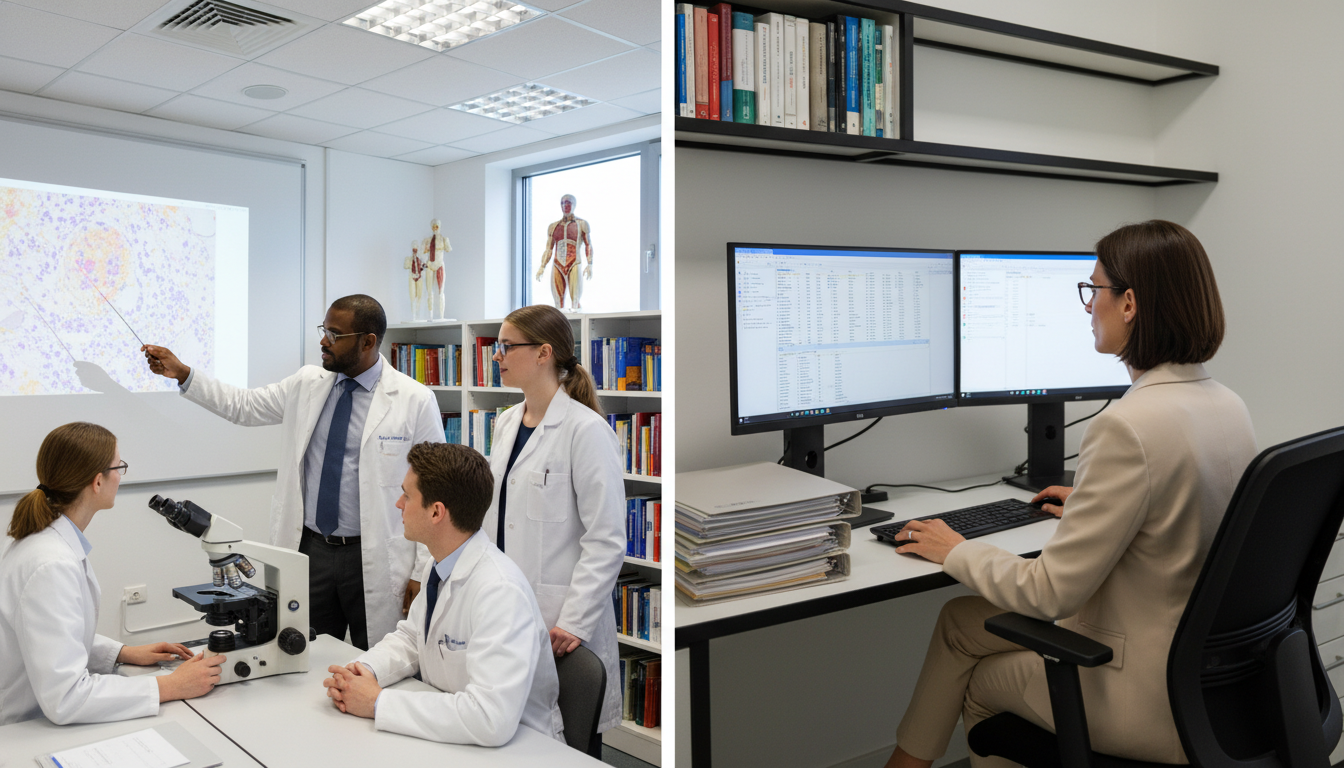
Compensation, Job Security, and Lifestyle Considerations
When Caribbean IMGs consider choosing career path medicine, financial stability and visa security are understandably major concerns.
Salary and Earning Potential
While exact numbers vary by region and year, some general trends hold:
Private Practice:
- Typically higher earning potential, especially after partnership.
- Early years (employee/associate): often competitive with senior academic salaries.
- Partnership track may significantly increase income via profit-sharing.
- Income closely tied to case volume and group contracts.
Academic Medicine:
- Lower base salary than comparable private practice positions.
- Sometimes partially offset by:
- Additional stipends for medical directorships, leadership roles, or protected research time with grant funding.
- Benefits like tuition discounts for children at associated universities (rare but valuable).
- Pay increases are more incremental and less volume-driven.
For many Caribbean IMGs carrying substantial educational debt from Caribbean medical school, private practice may look more appealing initially. However, academic centers in certain markets (especially major cities with high costs of living) sometimes offer competitive packages, particularly if they need your subspecialty.
Work Hours, Flexibility, and Call
Academic Medicine:
- Often more predictable hours, but extra commitments: teaching prep, research, committees.
- Call schedules vary; often shared among larger teams.
- Some academic roles can have built-in protected time for research (e.g., 20–40% non-clinical) depending on funding and department structure.
Private Practice:
- Hours often focused on high-volume sign-out during standard working days, but:
- Overtime is driven by case backlog and hospital demands.
- Vacation time may be generous but unpaid in non-salary models.
- Call can be substantial if covering multiple smaller hospitals, especially for frozen sections and blood bank.
From a work-life balance perspective, both paths can be reasonable, but academic medicine may offer more conceptual flexibility for non-clinical pursuits, while private practice may offer more financial flexibility.
Job Market and Geographic Flexibility
Academic Positions:
- More concentrated in cities with medical schools or tertiary centers.
- Subspecialty training (fellowship) often required and can be a major asset.
- Network-based—connections from your residency/fellowship program matter.
- Fewer total positions compared to private practice, but potentially more stable in large institutions.
Private Practice Positions:
- More numerous across the country, especially in community and regional hospitals.
- Certain subspecialties (e.g., dermpath, GI, heme) remain in demand.
- Geographic flexibility increases if you are willing to consider smaller cities or rural regions.
- Group stability varies—some practices may lose contracts or merge with bigger entities.
For a Caribbean IMG, willingness to relocate can dramatically expand opportunities in both academic and private settings.
Visa, Sponsorship, and Long-Term Security for Caribbean IMGs
Visa issues are often the crux of career planning for IMGs.
Academic Medicine and Visa Sponsorship
- Academic centers frequently sponsor H-1B visas and assist with O-1 (for those with significant scholarly achievements).
- Many universities also support employment-based green card applications relatively early in faculty appointments.
- Research-heavy roles can be particularly favorable if you build a strong CV that supports O-1 or EB-1 pathways.
Private Practice and Visas
- Some larger private groups and hospital-employed positions will sponsor H-1B, but many small partnerships are less familiar or hesitant.
- J-1 waiver jobs for pathologists exist but are less abundant than in primary care or psychiatry. Geographic flexibility is crucial.
- Once you secure a green card or US citizenship, private practice options open significantly.
Strategy Tip:
If your visa situation is complex, one viable pathway is:
- Pathology residency in an academic program that supports H-1B if possible.
- Fellowship(s) in high-demand subspecialties (e.g., hematopathology, cytopathology, GI, dermpath).
- First job in academic medicine to solidify permanent residency status.
- Consider a transition to private practice later, once immigration status is secure.

Pathways, Pros and Cons, and How to Decide
Advantages of Academic Pathology for Caribbean IMGs
Structured Mentorship and Community
- Regular interaction with senior faculty, research mentors, and trainees.
- Easier to build an academic medicine career identity.
Teaching and Leadership Development
- Teaching roles can enhance your professional profile and satisfaction.
- Opportunities for leadership in committees, residency programs, and national societies.
Research and Scholarly Impact
- Ability to pursue research interests, publish, and influence practice guidelines.
- Stronger platform for national and international recognition.
Visa and Green Card Support
- Universities often have well-established HR/legal pipelines for IMGs.
Pathway to Leadership and Subspecialization
- Departmental roles (program director, division chief, vice chair, chair).
- Ideal if you aspire to a long-term academic medicine career shaping the future of pathology.
Disadvantages of Academic Pathology
- Lower compensation on average compared to busy private practice.
- Pressure to “produce” academically (papers, grants) for promotion and job security.
- Institutional politics, metrics, and bureaucracy.
- Limited says in operational decisions if you’re junior faculty.
Advantages of Private Practice Pathology
Higher Income Potential
- Partnership models can be significantly more lucrative long term.
- Faster ability to pay off Caribbean medical school debt and build savings.
Clinical Focus
- Ideal if you enjoy pure diagnostic work without research or extensive teaching.
- Clear productivity-reward relationship.
Broader Case Mix in Some Settings
- General sign-out across organ systems can keep skills broad and marketable.
Potential Autonomy
- As a partner, you have a voice in group decisions and business strategies.
- Ability to shape lab operations, contracts, and services.
Disadvantages of Private Practice
- Variable visa support; can be a major barrier for Caribbean IMGs early on.
- Uncertainty about partnership track, job stability, and group politics.
- Less opportunity for formal teaching and scholarly impact.
- Market pressures from large reference labs and hospital consolidations.
Strategic Planning: How to Prepare During Residency and Fellowship
Your decision doesn’t have to be final on Day 1 of residency, but you should prepare intentionally so you keep both options open.
If You Think You Might Want Academic Medicine
During residency and fellowship:
Choose a Program with Academic Strengths
- Strong faculty, diverse cases, existing research, and teaching opportunities.
- If you’re aiming for places with good SGU residency match outcomes or other Caribbean medical school residency successes, look for those with a track record of promoting IMGs into fellowships and junior faculty roles.
Get Involved in Research Early
- Case reports, retrospective studies, quality improvement, or educational projects.
- Aim for at least a few abstracts and publications by graduation.
Develop Teaching Skills
- Volunteer to teach medical students, lead small groups, or create teaching materials.
- Ask faculty for feedback on your teaching.
Network in Professional Societies
- Join CAP, USCAP, ASCP, subspecialty societies.
- Present posters, attend sessions, introduce yourself to leaders.
Clarify Visa Support
- Know which academic institutions reliably sponsor H-1B/green card before interviews.
If You Think You Might Prefer Private Practice
During residency and fellowship:
Emphasize Clinical Efficiency
- Learn to manage heavy sign-out days with accuracy and speed.
- Focus on bread-and-butter surgical pathology and cytology skills.
Choose Marketable Fellowships
- Consider heme, cytopathology, GI, dermpath, or surgical pathology fellowships.
- Some private practices strongly prefer (or require) fellowship training.
Seek Community/Private Practice Rotations
- Elective rotations with private groups to understand real-world workflow.
- These can also become networking opportunities for future jobs.
Ask Real Questions About Job Structures
- How long is the partnership track?
- Are there non-compete clauses?
- How are call and vacation handled?
- What is the realistic income trajectory, and who covers visas?
Consider Hybrid or “Bridge” Positions
- Some large academic-affiliated practices or hospital-employed jobs mimic private practice but with some academic flavor.
- These can be ideal if you want high clinical volume but occasional teaching.
Putting It All Together: How Do You Decide?
As a Caribbean IMG in pathology, think through the following key questions:
- What energizes you more: teaching/research or pure clinical sign-out?
- How critical is maximum income vs. job satisfaction and academic impact?
- What is your visa status, and which environment is more equipped to support it?
- Do you prefer living in big academic centers or being flexible with location for private practice?
- Where do you see yourself in 10–15 years: recognized academic expert or high-impact private diagnostician and lab leader?
You can also adopt a phased strategy:
- Phase 1: Academic job early in your career to build your CV, secure immigration status, and explore teaching and research.
- Phase 2: Reassess after 5–7 years; if you crave higher income or different lifestyle, explore private practice roles—your academic background and subspecialty expertise can be very marketable.
Or, you may do the opposite—start in private practice and later transition to academic roles if you develop an interest in teaching or research. This is less common but possible, especially if you build a strong clinical reputation and collaborate with academic colleagues.
FAQs: Academic vs Private Practice for Caribbean IMG in Pathology
1. As a Caribbean IMG, is it realistic to aim for an academic pathology career?
Yes. Many Caribbean IMGs have successful academic pathology careers. The keys are strong performance in residency, active research/scholarship, excellent communication skills, and strategic networking. Completing residency and fellowship at reputable academic centers and building a portfolio of publications and presentations will matter more than where you went to medical school once you’ve established your track record.
2. Which path—academic or private practice—is better for paying off Caribbean medical school debt?
Financially, private practice pathology generally offers higher long-term earning potential, particularly after partnership. If rapid debt repayment is your priority, private practice may be more favorable. However, early academic positions can still be comfortable financially, especially in lower cost-of-living areas, and may come with stronger visa and green card support. Some pathologists choose academic positions early for stability and transition to private practice once debts and immigration concerns are resolved.
3. Does choosing academic medicine hurt my chances of finding a private practice job later?
Not necessarily. Academic experience—especially in a high-demand subspecialty—can be attractive to private practice groups, who value your expertise and reputation. The main adjustment will be adapting to higher volume and a more business-oriented culture. Maintaining strong clinical skills during your academic years and staying familiar with community practice patterns can make the transition smoother.
4. What fellowships are most helpful for both academic and private practice pathology careers?
Subspecialties like hematopathology, cytopathology, GI pathology, and dermatopathology are highly valued in both environments. Surgical pathology fellowships (especially those with strong case volume) can also be versatile. For academic careers, niche fellowships (molecular, neuropathology, informatics) can position you as a unique expert. For private practice, choose fellowships that match the needs of community hospitals and regional labs, and that help you stand out when negotiating your role within a group.
Choosing between academic and private practice pathology as a Caribbean IMG is not about finding a universally “better” option—it’s about aligning your career with your values, immigration reality, and long‑term goals. By planning early during residency, engaging mentors, and staying flexible, you can build a fulfilling and sustainable career on either path, or even blend elements of both over time.