

The biggest career mistake new attendings make isn’t picking the wrong first job. It’s staying in a bad one too long.
You’re not stuck. But you do need a clear framework to decide: do I fix this job, or do I leave?
Let’s walk through that—like a blunt, experienced colleague who doesn’t have time for vague “follow your passion” nonsense.
Step 1: Separate Normal Growing Pains from Real Problems
Every first job after residency is uncomfortable. You’re shifting from trainee to attending, learning a new EMR, figuring out local culture, building a panel. Feeling awkward or overwhelmed in the first 6–12 months isn’t a “time to leave” signal by itself.
Here’s what’s normal in your first year:
- Imposter syndrome and anxiety signing off on tough cases
- Needing more time per patient than your partners
- Not knowing referral patterns, local politics, or who actually gets things done
- Needing to adjust to new call systems, coverage models, OR processes
- Some mismatch between what was promised and what’s real (within reason)
Those are growing pains. They usually improve by month 12–18 if the environment is healthy.
Real problems look different. They don’t ease with time. They drain you. They often get worse as your volume ramps up.
Step 2: The Big Red Flags – When It’s Time to Seriously Consider Leaving
Here are the core warning signs I’d pay attention to. If you’re stacking several of these, you’re not “whiny.” You’re in a bad situation.
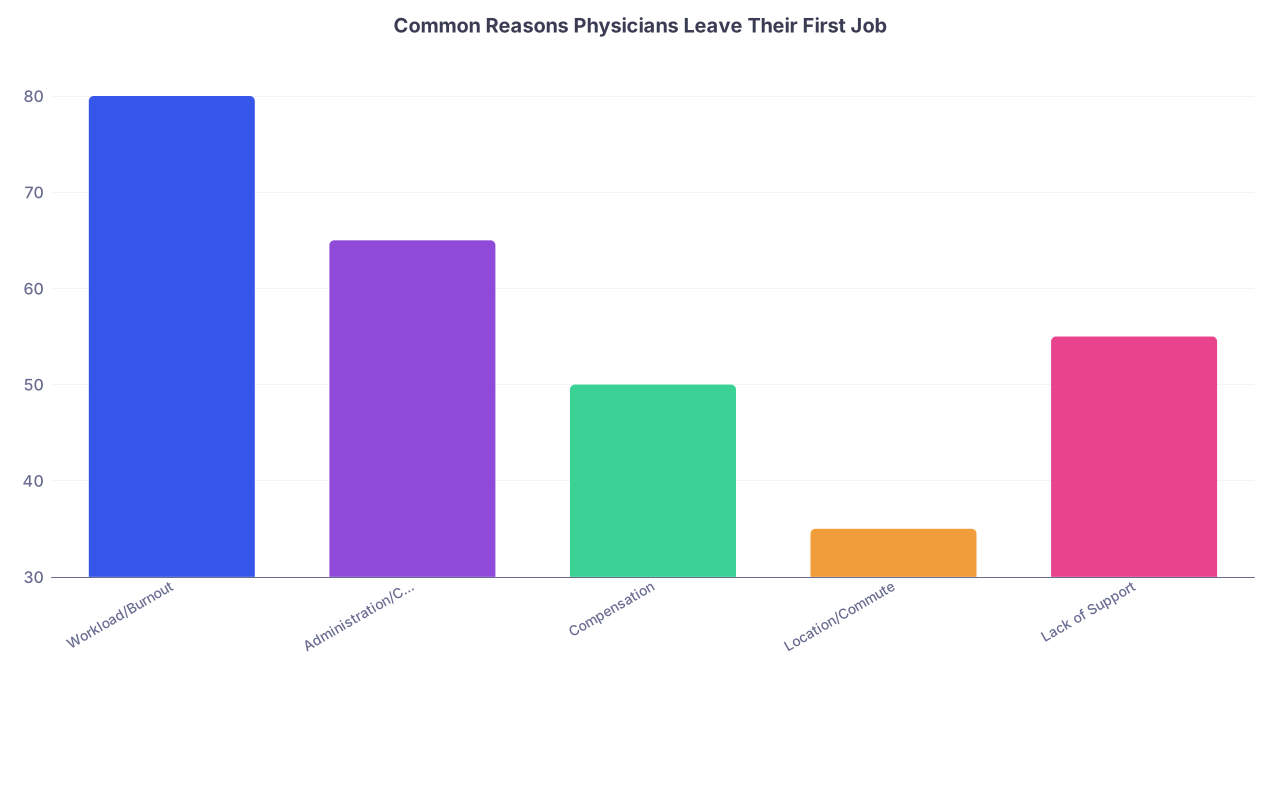
| Category | Value |
|---|---|
| Workload/Burnout | 80 |
| Administration/Culture | 65 |
| Compensation | 50 |
| Location/Commute | 35 |
| Lack of Support | 55 |
1. Unsafe Practice Environment
This is non-negotiable. If you routinely feel like you can’t provide safe care, it’s time to plan your exit.
Concrete examples:
- You’re expected to see 30+ complex patients in a half day with no support
- Chronic understaffing of nurses/MA/RT, with no real plan to fix it
- No coverage for high-risk services (e.g., solo OB call with no backup, unsafe ED boarding)
- Pressure (spoken or unspoken) to cut corners: early discharges, skipping documentation, avoiding “expensive” tests when clearly indicated
- Administration ignores multiple documented safety concerns
If a bad outcome feels not just possible but inevitable with the current setup, you shouldn’t “tough it out.” You should document, protect your license, and start looking.
2. Toxic Culture and Disrespect
You don’t need a perfect culture. You do need a baseline level of respect and psychological safety.
Red flags:
- Regular yelling, shaming, or humiliation in front of staff or patients
- Blame culture after complications or near-misses, no learning, no systems improvement
- Clear favoritism: certain physicians’ complaints are addressed; yours are dismissed
- Retaliation (or clear threats of it) if you raise concerns
- Harassment, discrimination, or bullying that leadership knows about and tolerates
If you feel anxious every time you see a particular name on your schedule or inbox, that’s data. Culture doesn’t usually get better just because you wait.
3. Chronicle Burnout You Can’t Fix Locally
Every job is tiring. But if you’re consistently at the edge—emotionally, physically, cognitively—and nothing changes despite reasonable attempts, leaving is on the table.
Think about the last 3–6 months:
- You dread going in, not just on bad days, but most days
- You feel detached from patients, numb, or cynical all the time
- Simple tasks feel overwhelming; you’re procrastinating on charting, inbox, or calls
- Your sleep, mood, or relationships are clearly deteriorating
- You’ve seriously wondered if leaving medicine entirely is the only way out
If you’ve already tried:
- Reducing clinic hours or call
- Delegating more to staff
- Time-blocking documentation and inbox
- Using scribes, templates, smarter workflows
- Having direct conversations with leadership
… and you’re still on fire, then yes, the job may be the problem, not you.
4. Broken Promises on Core Terms
Almost every job has some drift from what was pitched. I’m not talking about small stuff. I’m talking about big-ticket items:
- Pay structure dramatically different than promised
- RVU or productivity targets changed mid-contract with no negotiation
- Call burden or schedule far heavier than what was described
- “Protected time” for research/teaching that never materializes
- Partnership track silently extended, made discretionary, or tied to arbitrary hurdles
One miscommunication can be a misunderstanding. A pattern of this—especially when it’s always to your disadvantage—is a sign you’re in a place that will keep taking.
5. Severe Misalignment with Your Long-Term Goals
Sometimes nothing is “wrong” on paper. You just realize this job is not taking you anywhere you actually want to go.
Examples:
- You want academics and research; you’re in a RVU-only community mill with no research infrastructure
- You care about primary care continuity; you’re in a system pushing you toward quick visits and walk-in style medicine
- You want procedural volume; the group keeps preferentially feeding cases to senior partners
- You want leadership; this place clearly promotes based on seniority or politics, not skill
You don’t need a 10-year plan carved in stone. But if your current role and your real interests are pointing in opposite directions, that gap won’t magically fix itself.
Step 3: Do a Quick Self-Audit Before You Jump
Before you torch the place in your head, ask three blunt questions:
Is this mostly about medicine or about this specific job?
- If you’d be happier doing the same work in a different environment, job change makes sense.
- If you hate the core work (patients, pathology, daily tasks), that’s a bigger career question.
Have I actually tried to change what I can?
- Adjust schedule templates
- Ask for scribes or better MA support
- Drop certain services or call types
- Take a real vacation and assess how you feel after
If nothing changed for 12 months, would I regret staying?
Your gut response here is usually pretty honest.

| Step | Description |
|---|---|
| Step 1 | Feeling unhappy at job |
| Step 2 | Plan exit now |
| Step 3 | Adjust schedule and support |
| Step 4 | Stay and reassess in 6 months |
| Step 5 | Is practice unsafe? |
| Step 6 | Tried to change controllable factors? |
| Step 7 | Still burned out or misaligned? |
If your honest answer is “I’d absolutely regret staying,” that’s your sign. You don’t need a disaster to justify leaving.
Step 4: How Long Should You Stay in Your First Job?
People obsess over this. “Will it look bad if I leave after 1 year?” Here’s the actual deal.
| Tenure in First Job | How It’s Usually Perceived | Key for You to Explain |
|---|---|---|
| < 1 year | Red flag unless obvious reason | Safety, bait-and-switch, major life event |
| 1–2 years | Common but needs a story | Fit, culture, call, location, family needs |
| 3–5 years | Totally normal | Career growth, leadership, new opportunities |
| > 5 years | Stable, loyal | Why now? What are you seeking next? |
Leaving before 1 year is possible, but you’ll need a clean narrative:
- Unsafe environment
- Big misrepresentation of job terms
- Major geographic/family issue
Leaving between 1–3 years? Very common. I see it constantly. As long as:
- You don’t bad-mouth your prior employer
- You have a clear, concise explanation
- Your story is consistent across applications and references
…solid employers won’t care.
Step 5: Build a Quiet Exit Plan (Before You Emotionally Quit)
Once you’ve decided, “Yeah, I probably need to leave,” don’t storm out. Make a plan.
1. Get Your Contract and Read It (Really Read It)
You want to know:
- Notice period: 60, 90, 120 days? Longer?
- Termination clauses: “without cause” vs “for cause”
- Non-compete: radius, duration, what’s restricted (hospital, practice type)
- Repayment obligations: sign-on bonus, relocation, loan repayment terms
- Tail coverage: who pays for malpractice tail if you leave?
Once you’ve read it, consider a quick consult with a physician contract attorney. Not a random lawyer cousin. Someone who reads these for a living.
2. Stop Over-Investing in the Wrong Place
This sounds harsh, but if you’re leaving:
- Don’t volunteer for every new committee
- Don’t take on huge new projects that’ll tie you down
- Keep relationships professional and positive, but shift your extra energy into your future search
You owe good care to your patients and basic professionalism to colleagues. You don’t owe your evenings and weekends building someone else’s program if you’re already halfway out the door.
3. Start Benchmarking and Networking Quietly
You want to understand:
- What realistic compensation and workload look like in your specialty, in your region
- How your current job compares (numbers, not vibes)

| Category | Value |
|---|---|
| Face-to-face clinical | 35 |
| Documentation/Inbasket | 15 |
| Call/After-hours | 5 |
| Admin/Meetings | 5 |
Talk to:
- Former co-residents in different systems
- People a few years ahead of you who recently changed jobs
- Recruiters (with caution; they’re salespeople, but they know the market)
Ask specific questions:
- “What’s your average clinic volume per half day?”
- “How many shifts/call nights per month?”
- “Realistic total comp last year, including bonus?”
- “What do you not like about your job?”
Patterns here matter more than any one anecdote.
4. Tighten Up Your CV and Online Story
You don’t need a 5-page academic CV unless you’re going faculty. But you do need:
- Clean, chronological CV with job dates, education, certifications
- Short bullet list of what you actually did: volumes, procedures, leadership roles
- A simple, non-dramatic explanation for why you’re exploring a move
Something like:
“I’m looking for a position with more support for complex patients and a more sustainable schedule long-term.”
Not:
“My current job is a nightmare and admin is terrible.”
Even if that’s true.
Step 6: What to Look For in Your Next Job (So You Don’t Repeat This)
You’re wiser now. Use it.
When you interview, you’re not just trying to impress them. You’re screening hard for your past pain points.
Ask direct questions:
- “What’s a typical day look like—start to finish—for someone in this role?”
- “What’s your current MA/RN staffing situation? Any chronic vacancies?”
- “What are the expectations for RVUs/visits/procedures? What does a ‘successful’ physician here actually produce?”
- “Why did the last person in this role leave?”
- “Can I talk to someone who’s joined in the last 1–2 years?”
And then the big one:
- “If I ask your newest hire, off the record, what surprised them about this job, what would they say?”
You’re listening for consistency. If leadership, partners, and staff describe wildly different realities, that’s a sign.
Step 7: How to Leave Without Burning Bridges
When you’re ready to resign:
- Give written notice per contract—no surprises.
- Keep the explanation short and non-accusatory:
- “This role isn’t the right long-term fit for me and my family.”
- Offer reasonable help with transition:
- Clear handoff notes, closure on labs/imaging/inbox, help identify follow-up providers.
- Don’t unload everything you hate on the way out. That venting belongs to your therapist, spouse, or close friends, not your resignation letter.
People move around. Medicine is a small world. You want your reputation to be: “Professional, solid clinician, good to work with—even if the fit wasn’t right.”
FAQs
1. Will leaving my first job early ruin my career?
No. What hurts you isn’t leaving—it’s a messy exit, bad references, or a pattern of short stints with vague explanations. One early move, explained clearly and backed by good references, is normal. I’ve seen physicians land better jobs precisely because they refused to stay stuck.
2. How do I know if it’s burnout vs just being tired?
Look at duration and impact. Tired is: rough week, you crash on the weekend, and feel semi-human again after rest. Burnout is: months of emotional exhaustion, cynicism, and reduced effectiveness no matter how much you “rest.” If you come back from a real vacation and feel the dread immediately, you’re probably burnt out or fundamentally misaligned with your job.
3. Should I tell my current employer I’m job searching?
Usually, no. Not until you have a signed offer or you must give notice per contract. Early disclosure can go well in very healthy cultures, but in many places it just changes how they treat you and can jeopardize your leverage. Stay professional, do your job, and share your plans when they’re concrete.
4. What if my non-compete blocks every job nearby?
Talk to a physician contract attorney in your state. Many non-competes are narrower than they look, sometimes unenforceable, or negotiable as part of your exit (e.g., repaying a bonus in exchange for release). Also ask yourself if living in that specific zip code is worth sacrificing your career satisfaction. Sometimes the path forward is a short move.
5. How much money should I save before leaving?
Bare minimum: 3–6 months of essential expenses. More if your next job’s start date is uncertain or there’s a gap in benefits. Often you can time things so you transition directly from one job to the next with no income gap, but don’t count on that. Extra cash buys you the ability to choose a better fit instead of grabbing the first mediocre offer.
Key takeaways:
- Don’t normalize unsafe care, chronic burnout, or broken promises. Those are valid reasons to leave.
- Before you jump, understand your contract, clarify what’s fixable, and quietly explore the market.
- Use what you’ve learned to choose your next job deliberately—so you’re building a sustainable career, not just escaping the last fire.


