

The default advice to “get a stable permanent job right after residency” is outdated—and often wrong.
For a lot of new attendings, starting with locums before signing a permanent job is actually the smarter play. Not always. But way more often than most program directors, hospital recruiters, or your co-residents admit.
Let me walk you through when locums first is strategically brilliant—and when it’s a trap.
Quick Answer: Who Should Start With Locums (And Who Should Not)
If you want the bottom line first, here it is.
You should strongly consider starting with locums if:
- You are not sure where you want to live long term
- You have any doubts about your preferred practice setting (academic vs community, rural vs urban, heavy procedures vs clinic-heavy)
- You have meaningful debt and want to attack it aggressively with higher pay
- You care a lot about schedule flexibility and control
- You’re already feeling burned out or wary of RVU pressure and politics
You probably should not start with locums if:
- You need geographical stability immediately (partner’s job, kids’ school, immigration/visa issues)
- You’re dead certain about a specific institution or group and already have a solid, well-vetted offer
- You’re in a very niche field or academic subspecialty where traditional faculty tracks matter a lot
- You’re deeply risk-averse about variable income and want a guaranteed long-term salary right away
Everyone else? You’re in the gray zone—and that’s where understanding the tradeoffs really matters.
What Locums Actually Looks Like Right After Residency
Locums as a new attending isn’t a sabbatical on the beach. It’s work. Good work, but still work.
Here’s the realistic picture I’ve seen over and over:
- You sign with one or more locums agencies (CompHealth, Weatherby, Staff Care, etc.)
- You outline: your specialty, state licensure, where you’re willing to travel, desired schedule, and pay expectations
- They send you assignment options: 1–2 week stints, 3–6 month contracts, sometimes “locums-to-perm” tryouts
- The hospital covers travel and lodging; you’re typically 1099 (independent contractor) and paid higher hourly/shift rates
You are the “plug the gap” physician. Not always glamorous, but very straightforward:
- You show up, see patients, document, sign out, go home
- You’re not dragged into endless committees, long-term projects, or “we’re rolling out a new EMR” chaos
- You’re rarely in charge of redesigning systems. You’re there to keep the wheels on
For many new grads, it’s the first time they can just be a doctor without residency drama, program politics, or looming board exams.
The Main Upsides of Doing Locums First
Let’s be concrete about what you get by going locums before a permanent job.
1. You buy yourself time without going broke
Most people sign the first “reasonable” offer out of fear: fear of unemployment, debt, or “falling behind.”
Locums blocks that panic cycle. You can work full-time—or close to it—while you:
- Figure out where you actually want to live
- Test different hospital systems and EMRs
- See what patient mix and call load you actually tolerate as an attending
- Interview deliberately instead of desperately
You’re not “lost” or “behind.” You’re getting paid (usually very well) to shop.
2. You usually make more money (faster)
In many specialties, early locums rates beat starter employed salaries.
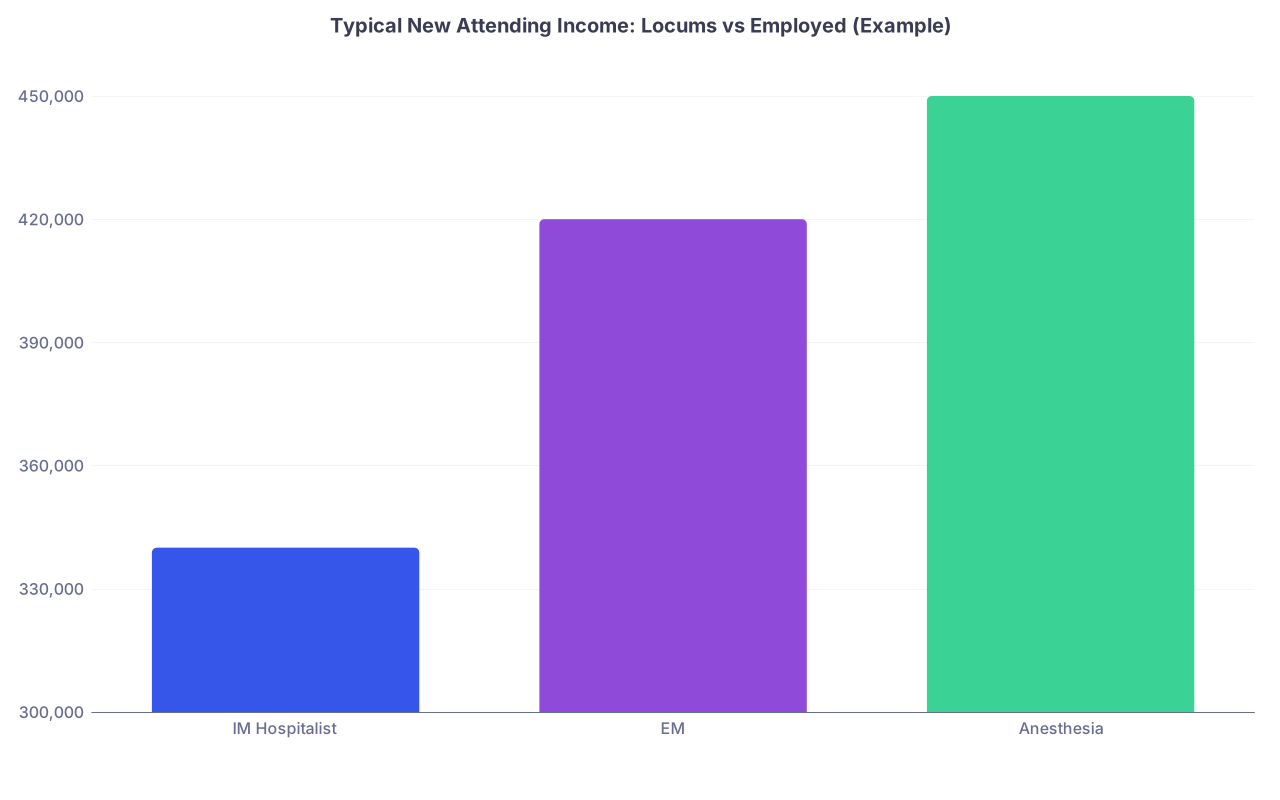
| Category | Value |
|---|---|
| IM Hospitalist | 340000 |
| EM | 420000 |
| Anesthesia | 450000 |
Think of it this way:
- Employed hospitalist starter offer: $250–300k with RVU bonus you might or might not hit
- Locums hospitalist: $160–220/hr, 14 shifts/month = $268–369k, often with housing + travel covered
And that’s conservative. If you’re willing to take less desirable locations or nights, the numbers go up fast.
That extra $50–100k in the first one to two years can:
- Crush your highest-interest loans
- Boost your emergency fund
- Give you real leverage later (“I don’t need this job; I’d like it if the terms are right.”)
3. You see how different jobs really work, not just how they interview
Interviews are theater. Locums is surveillance footage.
After a few gigs, you’ll start to notice:
- This place advertises “12-15 patients/day,” but the dispo bottlenecks and documentation make it feel like 25
- That “collegial group” has open warfare between hospitalists and specialists, and the ED hates everyone
- At the small rural hospital, the nurses run the place efficiently and your job is almost relaxing
You can then spot lies and red flags in permanent offers a mile away:
- “We don’t track RVUs much” (they absolutely will— and you’ve seen the ugly version)
- “We’re like a family here” (often means boundary-less and undercompensated)
- “We’re growing fast” (which you now know means chaos unless leadership is very strong)
Locums gives you pattern recognition. That’s hard to overstate.
4. You get real negotiating leverage
Coming to a negotiation with, “I already have full-time locums work lined up at $X/hour” changes the entire tone.
You’re not begging.
You can reasonably counter:
- Higher base or hourly rate
- Restricted call burden
- Better schedule (no more than 1 in 4 weekends, or protected clinic blocks)
- True sign-on bonus vs “repayment” disguised as a bonus
You know your market value because you’ve literally been paid it.
The Downsides You Actually Need To Take Seriously
Locums is not some magical hack with no cost. There are real risks.
1. You’re 1099: no benefits, no automatic safety net
As a locums doc, you often:
- Do not get employer retirement match
- Do not get health insurance (you buy your own)
- Do not get paid vacation or paid CME
You compensate for this with higher gross pay, but only if you treat it like a business:
- Set aside 25–35% for taxes quarterly
- Build your own retirement (Solo 401k, SEP IRA)
- Price health insurance into your mental “effective salary”
If you’re bad with money or avoid paperwork, this can go sideways quickly. You must be a grown-up about finances.
2. Less predictability in schedule and income
Especially early, you may see:
- Gaps between contracts
- Cancellations or lower census at the facility
- Months that are excellent followed by thinner months
Most people smooth this over by:
- Lining up the next contract well before the current one ends
- Working with more than one agency
- Keeping a 3–6 month personal “operating reserve”
If you need the same paycheck amount, same days, every month from day one, you’ll have more stress here than in a W‑2 job.
3. Onboarding fatigue and constant adjustment
Every new place = new:
- EMR
- Order sets
- Call schedule rules
- Local politics
The first 3–5 shifts of any new gig can be mentally expensive. If you hop contracts every 2–4 weeks, that’s rough.
The solution is not complicated: choose 3–6 month stints when possible, and favor systems you already know. After a year, you’re much faster at adapting, but the ramp-up is real.
4. It can delay academic or niche career tracks
If you’re trying to:
- Build a research portfolio
- Climb an academic promotion ladder
- Join a specific subspecialty program
Locums-first can slow that trajectory, because you’re not building at a single institution.
Sometimes the answer is a hybrid: 1 year of locums to stabilize finances and gain clarity, then commit to the academic track. Just do not kid yourself—if your dream is NIH grants and division chief, two years of random locums probably won’t help.
How To Decide: A Simple Framework
Here’s the decision tree I’d walk any new grad through.

| Step | Description |
|---|---|
| Step 1 | Finish Residency |
| Step 2 | Likely go permanent first |
| Step 3 | Strong candidate for locums first |
| Step 4 | Consider short locums trial then permanent |
| Step 5 | Know where you want to live 5+ years? |
| Step 6 | Have a strong, vetted offer there? |
| Step 7 | Comfortable with variable income and 1099? |
| Step 8 | Major constraints - family, visa, health? |
Then add these checks:
Are you burned out or barely holding on?
Locums with tighter control over schedule might be protective.Are you massively under-confident clinically?
A supportive permanent group with good mentorship may serve you better than bouncing around.Do you have a partner/kids who need stability?
You can still do locums, but probably as regional or local instead of cross-country travel.
“Locums-to-Perm”: Often the Sweet Spot
The hybrid model deserves more attention. Many systems essentially say: come as locums, if we like each other, convert to permanent.
This solves several problems at once:
- You see their true workload, culture, and politics
- They see your work ethic and clinical style
- If it’s a mismatch, you’re already a locums doc—you just move on
You negotiate the permanent deal with actual first-hand data:
- “I know the real average daily census is 18–20, not 12–15.”
- “I’ve already been working nights here; let’s be explicit about max nights in the contract.”
It’s like a prolonged working interview, but you’re paid well the whole time.
Concrete Examples: Who Should Do What
Let me give you three composites I’ve seen repeatedly.
Hospitalist, unsure about geography, heavy debt
- Wants: higher income, not sure city vs rural, no kids yet
- Best move: 1–2 years of locums (mix of 7-on/7-off gigs, maybe some rural high-pay weeks), crush loans, test regions, then sign perm where they genuinely like the culture.
Peds subspecialist, academic focus, partner locked to one city
- Wants: publications, teaching, stable local life
- Best move: Skip locums-first. Go straight for the best faculty or large group job in that city. Maybe do occasional locums later for extra income.
EM doc, burned out by residency chaos, loves travel, no kids
- Wants: flexibility, high pay, time off chunks
- Best move: Locums-first is almost a no-brainer. 7–10 shifts in high-pay states, then 10–15 days off, repeat. Permanent only if/when the right group appears.
How Locums Affects Your CV and Future Job Options
Recruiters rarely care that you did locums right out of training. What they care about:
- Were you clinically active?
- Any big red flags: license issues, privileges revoked, malpractice?
- Did you hop every 2 weeks for 3 years with no coherent narrative?
If you can say, “I spent 18 months doing locums across 3 systems, then chose this city and this group intentionally,” most rational departments respect that.
One point: keep a clean, organized log of:
- Dates and locations of assignments
- EMRs used
- Settings (rural, tertiary center, academic, etc.)
It makes credentials committees less twitchy, and it lets you frame your experience as breadth, not chaos.
Practical Steps If You’re Even Considering Locums First
Do these this week if locums is on your radar:

- Talk to 2–3 attendings who actually did locums right out of residency. Not the guy who “heard from a friend.” The real person. Ask what surprised them.
- Call 1–2 reputable locums agencies and have a blunt conversation: realistic rates for your specialty, current demand, typical assignment lengths for new grads.
- Run the numbers: cost of benefits you’d lose (insurance, retirement match), how much “extra” pay you’d realistically get, and what that could do for your loans.
- Clarify your non-negotiables: regional boundaries, minimum pay rate, max nights, preferred schedule. If you cannot articulate these, you are easy to push into bad gigs.
If—after those steps—you still feel drawn to locums, you’re probably a good candidate.
The Real Question: Are You Willing To Trade Certainty For Option Value?
That’s what this all boils down to.
Choosing a permanent job right away buys:
- Certainty
- Benefits
- Clear structure
Starting with locums buys:
- Option value
- Cash
- Data about what you actually want
Neither is “right for everyone.” But for a big chunk of new physicians, jumping into the first permanent job is how you end up 2 years later, burned out, underpaid, and trying to extricate yourself from a bad contract in a town you never liked.
You can avoid that.
Open a blank page and write two headings: “What I absolutely need in my first 2–3 attending years” and “What I can tolerate being imperfect.” List under each. Then ask yourself honestly: does locums-first move me closer to the first list or the second?
If you’re leaning toward locums, your next step today is simple: email one locums recruiter and one trusted attending, and schedule two 20-minute calls. Get real-world numbers and stories before you sign anything permanent.
FAQ: Locums Before a Permanent Physician Job
1. Will starting with locums hurt my chances of getting a good permanent job later?
No, not in any systematic way. Most employers care more that you were clinically active, had no major professionalism issues, and have solid references. If you frame it as: “I used locums to gain broad experience and then chose this community intentionally,” it often helps you look deliberate and experienced. Just avoid a chaotic-sounding timeline with dozens of ultra-short gigs and no clear story.
2. How long is “reasonable” to stay in locums before going permanent?
For most people, 12–36 months is the useful window. Less than 6 months and you probably do not get the full benefit of geographic and practice-style exploration. Beyond 3–4 years, you’re either intentionally a long-term locums doc (which is fine) or you’re drifting and using locums to avoid making any long-term decisions. Once you know what you want and have your finances stabilized, dragging it out often stops adding value.
3. Can I do locums locally instead of traveling all the time?
Yes. Many markets have “local locums” needs—covering gaps in nearby hospitals or clinics. Pay may be slightly lower than remote rural or high-demand locations, but you gain stability and can still sleep in your own bed. This is often a strong option for people with families or partners tied to one city, and you can still use it as a test drive for potential permanent employers.
4. Is locums safe for new grads, or do I need years of attending experience first?
New grads do locums all the time. The key is matching your skill set honestly to the assignment. You should not be the solo doc in a rural ICU if you just finished a very sheltered residency. But hospitalist work in a staffed facility, EM at a well-supported ED, or anesthesia at a group with backup? Those are common for new grads. Be blunt with recruiters about your comfort zone and ask about orientation and backup.
5. How do I compare locums pay to a permanent salary fairly?
Translate everything to an “effective hourly rate” after factoring: benefits, taxes, and unpaid time off. For locums, subtract: self-paid health insurance, retirement savings you’ll fund yourself, and estimate tax. For permanent, add the value of benefits (employer 401k match, health insurance subsidy), but also factor in any unpaid extra work: meetings, call, uncompensated clinic admin time. When you compare apples to apples, locums often still comes out ahead, but not as dramatically as the raw hourly suggests.
6. What red flags should I look for in a first locums contract?
Big ones: vague language on schedule and call, no cap on daily census or shift length, unclear malpractice coverage (claims-made vs occurrence, tail coverage responsibility), penalties for cancellation that are heavily one-sided, and refusal to commit in writing to basic things discussed verbally (housing quality, travel arrangements, minimum guaranteed shifts). If you see multiple red flags, walk away—there is no single “must-take” locums gig.
7. Can I switch from a permanent job to locums if my first job is terrible?
Absolutely. Many physicians escape bad first jobs by flipping to locums for a year or two. The main considerations: any non-compete clauses (which may restrict geography), whether you have enough savings to handle a short transition gap, and how quickly you can credential and license in other sites/states. It is very doable, but easier if you plan ahead—keep your CV and references current, and do not let your flexibility get completely boxed in by restrictive contracts.
Now, open your current job search spreadsheet or email thread and add one column: “Locums-first option?” For each potential path, write one concrete pro and one real con of doing locums before you commit. That five-minute exercise will clarify more than another week of vague anxiety.


