
The way most residents evaluate partnership track offers is dangerously naive.
They look at the salary number, see the word “partner,” and assume everything else will work out. That is how smart people end up trapped in toxic groups, golden-handcuffed to bad deals, or three years in with “partnership” quietly moved another two years down the road.
You are not just choosing a first job. You are choosing the people who will control your income, your schedule, and your professional reputation for years. And they have been doing this a lot longer than you have.
Let me walk you through the partnership-track traps that catch residents again and again—and how to spot them before you sign anything.
1. The Vague, Hand-Wavy “Partnership Track”
If the partnership terms are not spelled out in writing, you do not have a partnership track. You have a story.
Red flags I see constantly:
- “Most people make partner in 2–3 years.”
- “Partnership is usually automatic if things go well.”
- “We can talk numbers later; it’s formula-based.”
- “Everyone who wants to be partner eventually gets there.”
Stop right there.
A legitimate partnership track needs hard numbers and clear milestones. You should see things like:
- Exact timeline: “Eligible after 24 months of full-time employment.”
- Objective criteria: RVUs, collections, citizenship expectations.
- Defined buy-in formula (even if the exact amount is estimated).
- Written voting process for admission to partnership.
- Clear what happens if (you leave, they delay, group dissolves).
If all you get is a hand wave and “trust us, that’s how we’ve always done it,” you are walking into an unequal power dynamic. They hold all the cards. You hold vibes.
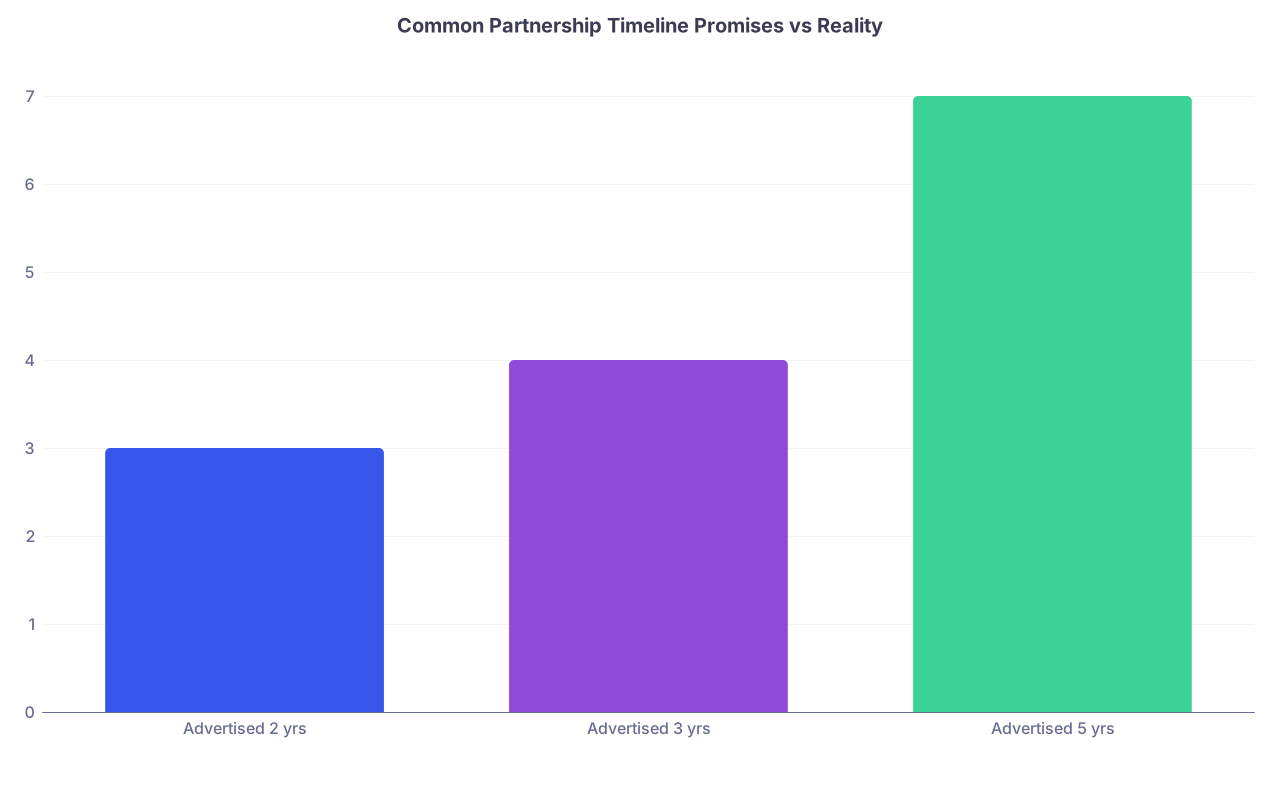
| Category | Value |
|---|---|
| Advertised 2 yrs | 3 |
| Advertised 3 yrs | 4 |
| Advertised 5 yrs | 7 |
That chart is not a joke. I have watched multiple graduates sign up for a “2-year track” that quietly morphed into 3–4 years because:
- “The group had a rough collections year.”
- “We need more data on your productivity.”
- “We are reassessing our partnership model.”
Translation: You have no leverage and they know it.
Mistake to avoid: Accepting any partnership offer without a written timeline, objective criteria, and a defined decision-making process.
2. Hidden Buy-In Landmines
Residents obsess over base salary and completely ignore buy-in. That is backwards.
You can have:
- A reasonable starting salary
- A solid practice
- A fair culture
And still get crushed by a predatory buy-in.
Common buy-in traps:
No estimated range given
They shrug off your questions: “It depends what the valuation is when you get there.”
Translation: “We will charge whatever we feel like later.”Buy-in tied to vague ‘fair market value’
With no agreed methodology (assets vs. goodwill vs. accounts receivable).
If they are buying out retiring partners at a premium, guess who funds that? You.Financing pressure
You are told, “Everyone just takes a loan; the bank will lend it.”
A $400,000 buy-in at 7% is not a small detail. That is a second mortgage.Goodwill-heavy valuation
You are paying not just for tangible assets, but for “goodwill” and future earnings—essentially buying into profits you have not yet seen. Seen $600k “buy-ins” to low-margin primary care. It happens.
At a minimum, you should have:
- Written buy-in formula (assets, AR, goodwill, etc.)
- Examples based on recent partner admissions
- History of prior buy-ins over the last 5–10 years
- Clarification if the buy-in stands still, rises, or is indexed
| Feature | Red Flag Example | Safer Example |
|---|---|---|
| Amount disclosed | “We’ll know in 3 years” | “Historically $150–250k” |
| Basis | “Fair market, trust our CPA” | “Tangible assets + AR, no goodwill” |
| Payment terms | Lump sum in 6 months | 3–5 year payroll deduction |
| Variability | Recalculated yearly, no cap | Indexed, capped % change per year |
| Past admissions | “Varies a lot” | Transparent list of last 5 buy-ins |
Mistake to avoid: Signing anything without a realistic buy-in range and formula in writing. If they dodge this repeatedly, they are not being careless. They are being strategic.
3. The “Black Box” Partnership Compensation Model
Another classic resident move: focusing on the associate salary and ignoring what partner income actually looks like.
Sometimes that is accidental. Sometimes groups hide the ball on purpose.
Traps to watch for:
“Partners make between $450k–$900k.”
Huge spread, no explanation. That tells you nothing.No written compensation formula
If partner pay is “at the discretion of the board,” you are joining a monarchy.Opaque expense allocation
You have no idea how overhead is divided. Suddenly your “eat what you kill” model includes paying for a partner’s pet side project or second clinic in a terrible location.No access to financials as an associate
If you cannot see P&L, partner draws, and overhead structure while on track, you are flying blind.
You should understand, in plain language:
- Are partners paid:
- Equal shares?
- Production-based?
- Hybrid (base + bonus based on RVUs or collections)?
- How overhead is:
- Fixed vs variable
- Shared vs individual
- How ancillary income (ASC, imaging, labs) is:
- Owned
- Distributed
- Accessed by new partners
If every question gets the answer, “It is complicated, we can explain later,” remember: complicated often equals controllable by them, not you.
Mistake to avoid: Assuming that “partnership” automatically equals a big pay jump. Bad structures exist. You need to understand the model now, not after you are locked in.
4. Moving Goalposts and “Soft” Criteria
Here is a subtle one most residents miss: subjective criteria for partnership.
They will tell you:
- “We only take people who are a good fit.”
- “We want to see if you are a team player.”
- “Partners need to show leadership and commitment.”
Sounds reasonable. Until it becomes the weapon to delay or deny you.
Common goalpost games:
- “We are not sure about your citizenship in the group.” (You refused to work every holiday.)
- “We want to see more RVUs first.” (They shifted cases to senior partners.)
- “The group is re-evaluating growth.” (Translation: No new partners this year.)

| Step | Description |
|---|---|
| Step 1 | Year 1 Hire |
| Step 2 | Year 2 Great Reviews |
| Step 3 | Year 3 Eligible for Partner |
| Step 4 | Partner |
| Step 5 | Extended Track |
| Step 6 | Quietly Pushed Out |
| Step 7 | Partner Vote |
| Step 8 | New Criteria |
You need objective, written criteria wherever possible:
- RVU/collections targets with real numbers
- Expected call participation
- Committee / leadership requirements
- Patient satisfaction or quality metrics (if used)
- Defined timeline for partner vote and re-vote if deferred
If you are hearing “we will know it when we see it,” imagine trying to argue your case after three years of 60-hour weeks when they decide you are “not quite ready.”
Mistake to avoid: Accepting a track that relies heavily on vague “fit” and “culture” with no structural safeguards.
5. Call, Coverage, and the Hidden Lifestyle Cost
Young physicians keep underestimating how much call structure and coverage expectations will affect their life.
They also fail to see how these affect partnership dynamics.
Red flags:
- Associates take heavier call “to show commitment.”
- Partners opt out of nights/weekends by paying a tiny stipend.
- Call pay is lower (or nonexistent) for associates.
- Trauma/ICU/obstetrics coverage is dumped on the newest hire.
Worse, I have seen setups where:
- Associates cover 1:4 call
- Partners cover 1:8
- And there is no formal path to equal call until after partnership, which keeps “delaying” for mysterious reasons.
If call is not explicitly detailed in writing for both associate and partner status, expect that you will carry more burden than advertised.
Ask directly:
- How many:
- Weeknight calls per month?
- Weekend calls per month?
- Holidays per year?
- How is:
- Call divided between partners and associates?
- Call compensated?
- Post-call clinic or OR scheduled?
And do not just take the recruiter’s word. Ask the youngest current partner and the most recent hire separately. If their stories differ, you have a problem.
Mistake to avoid: Ignoring the call structure and assuming “it will get better as a partner.” Sometimes it does. Sometimes it gets worse.
6. Toxic Culture Disguised as “Family Feel”
Anytime a group overuses the phrase “we are like a family,” be suspicious. It can mean they are supportive. It can also mean:
- No boundaries
- No transparency
- No accountability
Culture traps that sabotage partnership:
Hero worship of founding partners
They make all decisions, even when “stepping back.” You will never be a full equal.Two classes of partners
Senior partners with special deals, fewer calls, extra draws. “Junior partners” in name only.No dissent tolerated
The one partner who left gets described as “toxic” or “not a team player,” with zero specifics. That is a red flag, not gossip.High burnout, low tenure
If no one under 45 has been there more than 5–7 years, ask why.
Talk to:
- The newest partner
- Someone who left in the last 2–3 years (yes, track them down)
- Non-physician staff who have been there for 10+ years
Listen for phrases like:
- “It is fine if you do not rock the boat.”
- “You have to know your place at first.”
- “Dr. X can be intense, but that is just how it is.”
That is not partnership. That is feudalism.
Mistake to avoid: Confusing a “nice” interview day with a healthy power structure. You are not marrying their public persona. You are buying into their actual behavior.
7. Contract Escape Hatches (Theirs, Not Yours)
Residents obsess over the starting salary and completely ignore the exit terms. That is backwards too.
Here is where groups protect themselves:
- Long notice periods (90–180 days)
- Stiff non-competes that cover:
- Huge geographic areas
- Multiple hospitals
- Extra-long durations (2–3 years)
- Repayment obligations:
- Signing bonus clawbacks
- Relocation repayment
- Tail insurance charges
If you cannot leave without:
- Moving your family
- Paying tens of thousands
- Sitting out of your specialty nearby
Then you are not on a “track.” You are in a cage.
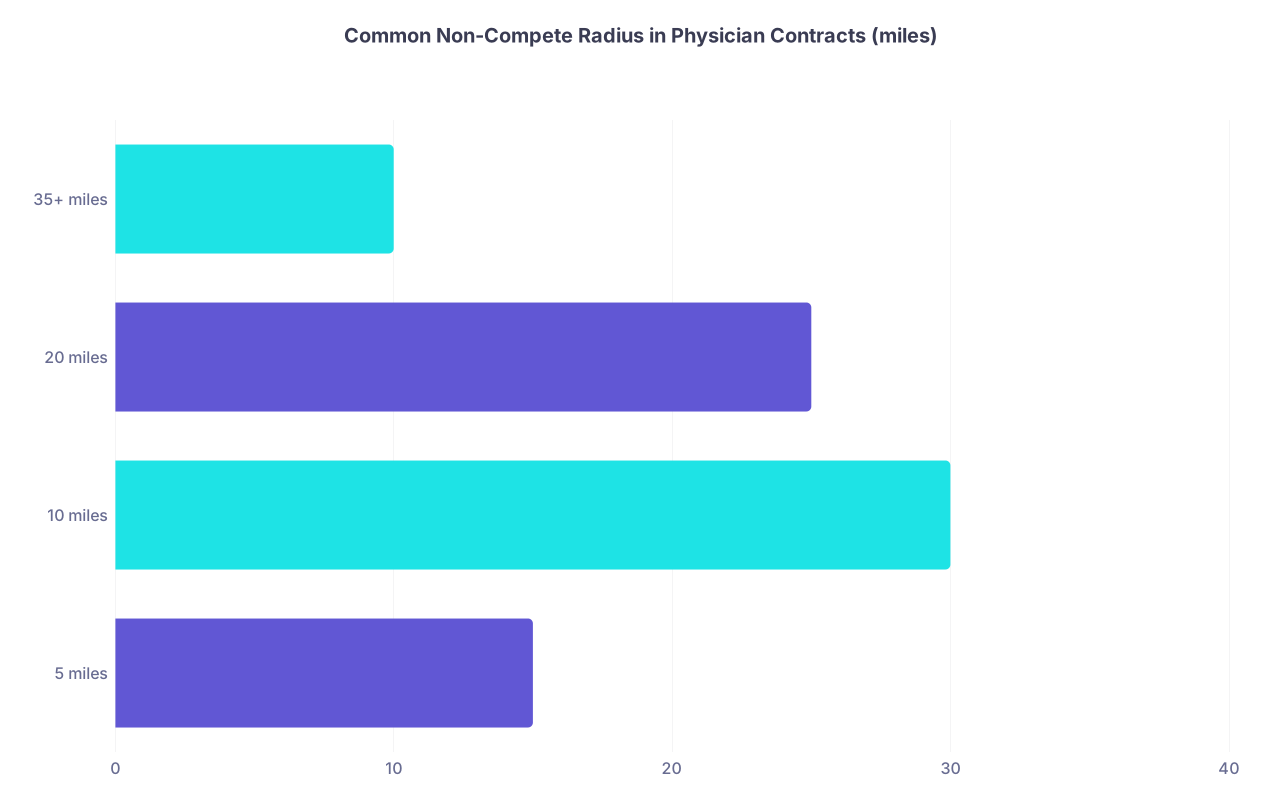
| Category | Value |
|---|---|
| 5 miles | 15 |
| 10 miles | 30 |
| 20 miles | 25 |
| 35+ miles | 10 |
Ask:
- Exact non-compete radius and sites covered
- Whether the non-compete applies:
- If they terminate you without cause
- If they sell the group
- Who pays tail coverage if you leave
- How long bonus/relocation clawbacks last
If they are offended that you ask, that is a sign you should absolutely ask.
Mistake to avoid: Accepting a “great partnership opportunity” that you cannot realistically leave without blowing up your life.
8. No Transparency on Prior Partnership Outcomes
This is the big one almost everyone is too polite to push on.
Before you join a “partnership track,” you should know:
- How many physicians have joined in the last 10 years?
- How many reached partnership?
- How many left before partnership?
- How many partners have left in the last 5–10 years?
- Why did they leave?
If they cannot (or will not) answer this cleanly, you are flying blind.
Patterns you should run from:
- Several hires in a row who left around year 2–3
- Partners who “stepped back” right when new partners were due
- Stories that always blame the person who left:
- “They were not a good fit.”
- “They could not keep up.”
- “Their spouse wanted to move.” (Repeatedly? Really?)

You are not being rude by asking. You are doing basic due diligence that any businessperson would consider mandatory.
Mistake to avoid: Failing to investigate the partnership track record because you are afraid to seem “difficult.”
9. Relying on Verbal Promises Instead of Paper
This one is brutal because it feels so human. They seem trustworthy. They say:
- “We do not usually put that in contracts, but that is how we operate.”
- “We have never not made someone partner who deserved it.”
- “Everyone here knows the deal.”
And you want to believe them. You like them. They gave you a nice dinner.
Here is the reality: people change, groups change, markets change. Your only real protection is what is on paper.
Any time you hear:
“We do not need to write that down.”
Translate it in your head to:
“We would like the option not to honor that later.”
You need:
- Partnership timeline in the contract or a written addendum
- Clear buy-in description and access to methodology
- Any promised ancillary ownership spelled out
(Surgery center, imaging, labs, real estate)
If they will not document it, they are not really promising it. They are storytelling.
Mistake to avoid: Trusting informal assurances over legally binding language. You are not paranoid. You are protecting your future self.
10. Not Getting Independent Legal and Financial Review
Final, predictable, costly mistake: not paying for real review.
You spent a decade and hundreds of thousands of dollars becoming a physician. But when it is time to sign the document that will control your income and autonomy for years, you balk at a $800–$2,000 attorney fee?
I have watched that decision cost people hundreds of thousands later.
You need:
- A physician contract attorney (not your uncle who does divorces)
- Ideally, a CPA or financial advisor experienced with medical groups
Ask them to focus on:
- Compensation and partner distribution model
- Non-compete and termination clauses
- Buy-in / buy-out terms
- Governance and voting rights
- Liability, tail coverage, and risk exposure
Do not send them a signed contract “just to look.” Send it before you sign anything. And yes, go back to the group and negotiate based on what you learn.
Good groups will respect that. Bad groups will resent it. That tells you everything you need to know.
Mistake to avoid: Treating contract review as optional or “only if things look weird.” The whole point is finding what you do not yet know is weird.
FAQ (Exactly 5)
1. Is it ever safe to accept a partnership track offer without a specified buy-in amount?
Only if the formula is clearly defined in writing and you have seen recent examples. For instance, “Buy-in equals 1x average AR plus book value of assets, no goodwill,” and they show you that new partners in the last 3 years paid $180–220k under that model. Anything vaguer than that is risk you are absorbing, not them.
2. How much non-compete restriction is reasonable in a partnership-track job?
Short answer: narrower than most contracts you will see. Reasonable often looks like 5–10 miles from your main practice site, 12–18 months maximum, and ideally waived if they terminate you without cause. If they want 25+ miles or cover every hospital in a metro area, you should consider that a major bargaining chip or an outright dealbreaker.
3. What if the group says “no one else has ever asked these questions”?
Either they are lying, or every prior recruit made the same mistakes I am warning you about. Good groups expect sophisticated questions; they may even offer written partnership policies unprompted. If they react defensively or offended, they are signaling how they handle power dynamics when challenged. Believe that signal.
4. How do I politely ask about prior hires who did not make partner?
Use direct but neutral language: “Can you share how many physicians you have hired in the last 10 years, and how many of them became partners? For those who did not, what were the typical reasons?” If they dodge, minimize, or bad-mouth everyone who left, assume there is more to the story than they want you to know.
5. Is a lower starting salary worth it for a ‘better’ partnership track?
Sometimes yes—but only if “better” is real, not mythical. A slightly lower salary in a group with transparent financials, predictable buy-in, sane call, and documented partner income can absolutely be smarter than a higher salary in a black box. But you must verify with numbers and history. “Trust us, partners do very well” is not data. It is marketing.
Remember:
- Partnership is not a word. It is a contract, a culture, and a power structure. Demand to see all three clearly.
- Any term that matters to you—timeline, buy-in, call, non-compete—belongs in writing, not in a “we’d never do that to you” conversation.
- Paying for expert review now is cheaper than paying for bad assumptions for the next decade.