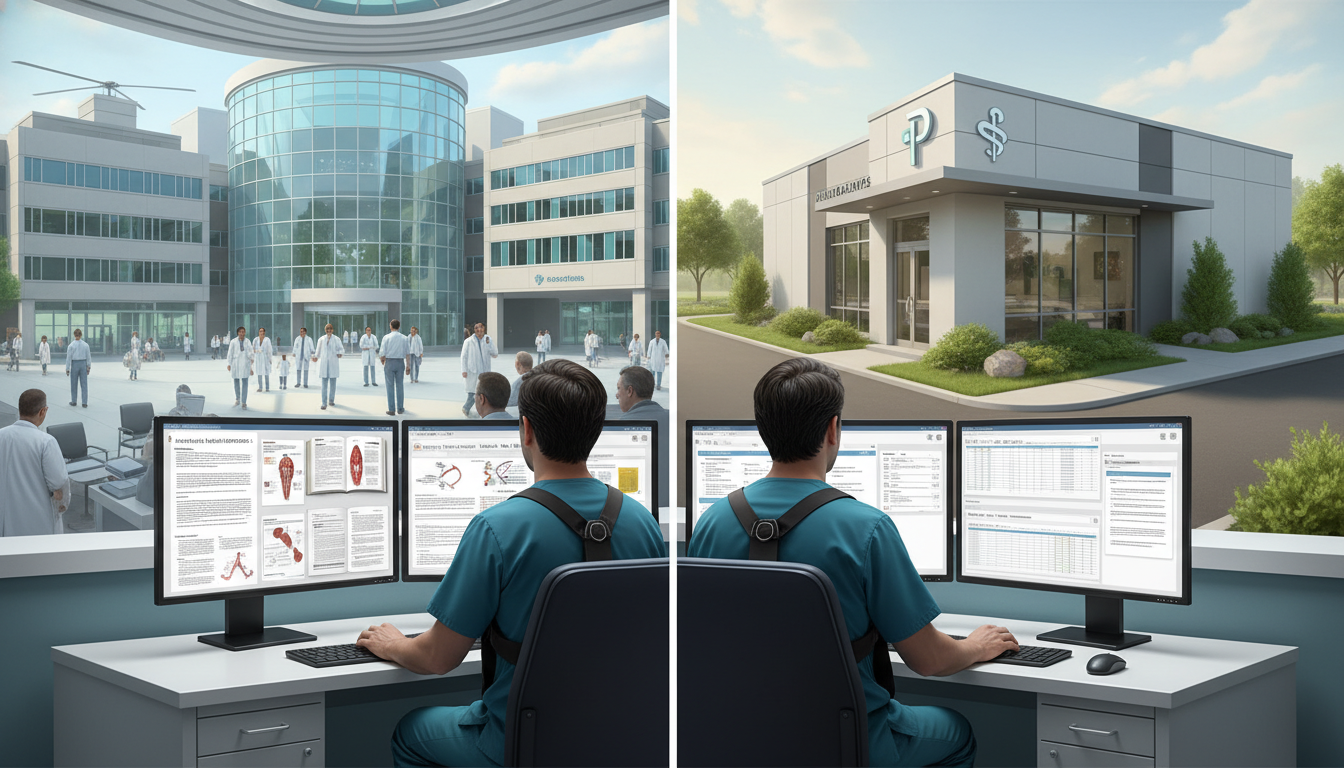
Overview: Why This Decision Matters So Much for a Non‑US Citizen IMG
Choosing between academic vs private practice in radiation oncology is never trivial, but for a non-US citizen IMG the stakes and constraints are even higher. Your employment choice will impact:
- Your visa options and security
- Your chances of staying in the U.S. long-term
- Your daily work structure and autonomy
- Research and leadership opportunities
- Income trajectory and lifestyle
- Your competitiveness for future roles, both in the U.S. and internationally
Radiation oncology is relatively small and competitive; as a foreign national medical graduate, your path needs to be especially strategic. This article breaks down the trade‑offs in a way that is specific to non‑US citizen IMGs in rad onc, integrating both career content and immigration realities so you can make a rational, long-term plan.
Core Differences: Academic vs Private Practice in Radiation Oncology
Before layering in the non-US citizen IMG considerations, it helps to define the baseline differences.
Academic Radiation Oncology
Academic medicine typically means working at:
- University hospitals
- NCI-designated cancer centers
- Large teaching hospitals or integrated academic systems
Key features:
- Tripartite mission: Clinical care, research, education
- Teaching: Residents, fellows, medical students
- Research: Clinical trials, translational projects, outcomes research, global oncology, physics collaborations
- Subspecialization: You might focus on disease sites (e.g., head & neck, GU, breast, CNS)
- Compensation: Often lower starting salary than private practice, but with academic rank, potential bonuses, and non-monetary rewards (reputation, grants, promotions)
Academics is the classic platform for an academic medicine career, especially if you see yourself doing:
- Clinical trials leadership
- Guideline writing (e.g., ASTRO/NCCN)
- Departmental or institutional leadership
- Global health collaborations
- Teaching and curriculum development
Private Practice Radiation Oncology
Private practice can include:
- Independent rad onc groups
- Large multi-specialty groups
- Hospital-employed positions that function like private practice
- Corporate oncology chains or networks
Key features:
- Clinical volume and efficiency are central
- Limited formal teaching and research (though not absent everywhere)
- More direct focus on productivity and revenue (RVUs)
- Compensation often higher, with potential for partnership tracks
- Professional identity often shaped around community presence and clinical excellence rather than academic output
Within private practice, there is substantial variability:
- Pure community practice (single or few centers, broad clinical scope)
- Hybrid models (community practices with some research/teaching)
- Large corporate models (standardized protocols and centralized admin)
How This Feels in Daily Life
In simplified terms:
- Academic: More meetings, tumor boards, research discussions, teaching responsibilities, and subspecialization; somewhat more bureaucracy; slower but more structured career progression.
- Private practice: More patient-facing time, often higher clinical throughput, tighter control over schedules in some settings, more direct financial incentives tied to productivity.
For a radiation oncology residency graduate who is a non-US citizen IMG, both paths are possible—but the rad onc match, your visa status, and your long-term U.S. immigration goals will shape which is more realistic and advantageous at a given time.

Immigration and Visa Realities: How Status Shapes Your Options
For non-US citizen IMGs, the choosing career path in medicine conversation must include immigration strategy. Two physicians with identical CVs but different visas can have drastically different options.
Common Visa Paths in Radiation Oncology
Most non-US citizen IMGs in radiation oncology will be on:
- J‑1 visa (via ECFMG sponsorship) during residency/fellowship
- H‑1B visa during employment
- Transition to permanent residency (green card) through employer sponsorship
Each has distinct implications.
J‑1 Visa and the Two-Year Home Residency Requirement
If you trained on a J‑1 visa, you usually incur a two-year home country physical presence requirement. To stay in the U.S. and work after training, you generally need a J‑1 waiver. Common waiver categories:
- Conrad 30 rural/underserved positions (more common in primary care, less in rad onc)
- Academic/research institutions with waiver capacity
- Other programmatic or hardship waivers (rare, complex)
For radiation oncology, J‑1 waivers are:
- Less standardized than in primary care
- More frequently associated with academic or quasi-academic centers in underserved regions
- Sometimes available in community cancer centers that qualify as underserved
Practical impact:
If you are on a J‑1, your first job after residency may be constrained to institutions that can and will sponsor a J‑1 waiver—these can be academic departments or certain large hospital systems, but many smaller private practices either cannot or will not handle the complexity.
H‑1B Visa: More Common in Academic Jobs
Some radiation oncology residency programs sponsor H‑1B during training, but many default to J‑1. After training, employers can hire you on:
- Cap-exempt H‑1B (universities, university-affiliated hospitals, some non-profits)
- Cap-subject H‑1B (most private practices and for-profit systems)
Cap-exempt H‑1B (academic centers) offer:
- No lottery
- Year-round filing
- Greater predictability
Cap-subject H‑1B (many private practices) entail:
- An annual lottery
- Uncertainty of approval even with a job offer
- Timing constraints
This makes academic radiation oncology much more accessible and stable for foreign national medical graduates right after residency, particularly if you need visa security.
Green Card Sponsorship
Both academic and private practice employers can sponsor green cards (usually EB‑2 or EB‑1 for exceptionally qualified individuals). Differences:
- Academic centers:
- More experience with physician immigration
- Sometimes faster EB‑1/NIW pathways if you have strong research and publications
- Private practice:
- Highly variable; some are very experienced, others reluctant to sponsor
- Research profile may be weaker, complicating EB‑1
For a non-US citizen IMG aiming to build a secure long-term life in the U.S., academic positions may offer:
- More predictable sponsorship
- Easier path if your research portfolio is strong
- Environments accustomed to handling foreign national hires
Professional Growth: Research, Teaching, and Leadership
When you think about an academic medicine career, you need to be realistic about what you enjoy and what your CV supports.
Research: Do You Need It and Do You Like It?
In academic radiation oncology, research is not optional in many departments—especially early on.
Academic environments typically expect:
- Participation in or leadership of clinical trials
- Publications (original research, reviews, case series, or educational research)
- Grant writing or contribution to grant-funded projects
- Attendance and presentations at national meetings (ASTRO, ASCO, ESTRO)
For a non-US citizen IMG:
- During residency, strong research output boosts rad onc match competitiveness, and later your chances at academic roles and EB‑1/NIW green card routes.
- Having robust research also:
- Positions you for disease site expertise
- Creates mentors and collaborators who can advocate for you
- Aligns well with academic promotion criteria
In private practice, research varies:
- Many practices do little to no research
- Some participate in cooperative group trials (NRG, Alliance) as satellite sites
- A few large networks have research infrastructure, but still far less than large cancer centers
If you are energized by publishing and trial design, academics will likely fit better, at least early in your career.
Teaching: A Core Academic Responsibility
Academic radiation oncologists often:
- Supervise residents and fellows in clinic and in contouring/treatment planning
- Give lectures to:
- Residents (rad onc, medical oncology, surgery)
- Medical students and PA students
- Physics and dosimetry trainees
- Mentor research projects, QI initiatives, and scholarly work
For many non‑US citizen IMGs, teaching is also:
- A way to build reputation and a teaching portfolio
- A route to promotion (e.g., from assistant to associate professor)
- Personally fulfilling, especially if they remember how mentorship shaped their own path
In private practice, teaching may exist but is less structured:
- Some community sites host rotating trainees from nearby universities
- Occasional lectures to community physicians, nurses, or tumor boards
- Less formal academic credit and fewer promotion ranks
If you thrive explaining concepts and shaping other doctors, academic settings offer more consistent opportunities.
Leadership and Career Trajectory
Academic career progression:
- Assistant → Associate → Full Professor (with or without tenure, depending on institution)
- Leadership roles:
- Disease site program director
- Residency program director
- Vice-chair or chair of the department
- Director of clinical trials or quality & safety
- Regional/national influence:
- Guideline committees
- ASTRO task forces
- Editorial boards
Private practice leadership:
- Practice partner, managing partner, or service line director
- Medical director of radiation oncology or cancer center
- Influence over equipment purchases, workflow, and business decisions
- Regional hospital committee roles, tumor board leadership
For a foreign national medical graduate, early academic positions can:
- Build national reputation
- Open doors for later leadership in industry, global oncology, or national organizations
- Strengthen your CV if you eventually return to your home country or move internationally

Lifestyle, Compensation, and Daily Practice: What Really Changes?
Clinical Workload and Case Mix
Academic centers often feature:
- More complex and rare cases
- High volume of:
- CNS, sarcoma, pediatric (if applicable), proton therapy (at some centers)
- Clinical trials and re-irradiation cases
- Subspecialization:
- You might see mostly GU/prostate or mostly H&N, etc.
Private practice typically involves:
- Broader generalist practice
- High volume of:
- Breast, prostate, lung, palliative cases
- Less complex re-irradiation or rare tumors (often referred to academic centers)
For non-US citizen IMGs, the complexity and exposure at academic centers can be a major advantage in building:
- A marketable skill set for any future move
- International credibility if you later work abroad
Income: Short-Term vs Long-Term
While numbers vary by region and year:
Academic rad onc:
- Lower starting salary, often in the low-to-mid 300s (USD), sometimes higher at top centers or high-cost markets
- Bonuses tied to RVUs, quality metrics, or academic performance
- Benefits may be excellent (retirement matches, health insurance, tuition benefits for dependents)
Private practice rad onc:
- Frequently higher starting salary, mid-300s to 500k+ depending on region and structure
- Partnership tracks that can push income substantially higher
- Compensation strongly tied to clinical productivity
However, for a non-US citizen IMG, visa security and green card progress may outweigh a higher immediate salary, especially early in your career.
Schedule, Call, and Burnout
Rad onc generally has favorable schedules compared to many other specialties, but differences remain:
Academic:
- More non-clinical time (research, admin, teaching), though often filled with meetings
- Some weekend/after-hours responsibilities for emergent palliative cases, but typically less frequent overnight call compared to other specialties
- Institutional pressures for RVUs have increased but are often less intense than in some private practices
Private practice:
- More clinical hours and more responsibility for:
- Planning
- On-treatment visits
- Documentation and billing efficiency
- Income is directly tied to volume, which can incentivize long days
- Administrative duties (especially as partner) can extend beyond clinic hours
- More clinical hours and more responsibility for:
Burnout is possible in both settings, but the drivers are different. For non-US citizen IMGs under visa constraints, job loss has higher stakes, so careful evaluation of workplace culture and work-life balance is critical.
Strategic Planning for Non‑US Citizen IMGs: How to Decide and Sequence Your Career
Many physicians think of academic vs private practice as a once‑and‑for‑all choice. In reality, for a non‑US citizen IMG in radiation oncology, a sequenced approach can be smarter.
Common Strategic Pathways
Academic First, Private Practice Later
This is often the most logical path for a foreign national medical graduate:
- Match into a rad onc residency (often at an academic center)
- Build research and teaching experience
- Accept an academic attending role:
- Secure visa (cap-exempt H‑1B or J‑1 waiver)
- Begin or complete green card process
- After obtaining permanent residency or citizenship, transition to private practice if desired
Advantages:
- Maximizes visa and green card stability
- Builds strong academic CV
- Keeps doors open for later high‑level roles anywhere in the world
Private Practice from the Start
This can work if:
- You are on an H‑1B with a lottery slot and an employer ready to sponsor
- The practice has real experience with non‑US citizen IMGs
- You are less interested in research/teaching
Risks:
- H‑1B lottery uncertainty if employer is cap-subject
- Fewer academic credentials if you later decide you want an academic medicine career
- Some academic institutions may hesitate to recruit from long-standing private practice backgrounds unless you maintain a scholarly profile
Hybrid or “Quasi-Academic” Models
These include:
- Community practices affiliated with university programs
- Hospital-employed rad oncologists in large health systems with teaching responsibilities
- NCI community oncology programs with cooperative group trials
For non-US citizen IMGs, these can offer:
- Some visa/green card support similar to academic centers
- Moderate research and teaching opportunities
- Better compensation than pure academics in some cases
Practical Decision Framework
When choosing between offers, systematically evaluate:
Immigration and Visa Support
- J‑1 waiver available and documented?
- H‑1B cap-exempt or cap-subject?
- History of sponsoring green cards for physicians?
- Access to competent immigration counsel?
Career Direction
- Do you genuinely enjoy research and teaching?
- Do you want to be known for a disease-site niche?
- Do you envision leadership in academia or policy?
Financial and Personal Priorities
- Debt level, family responsibilities, cost of living
- Spouse/partner career needs
- Tolerance for uncertainty vs preference for security
Mentorship and Growth
- Is there a clear mentor who can help you advance?
- Opportunities for clinical innovation (e.g., SBRT, brachy, protons)?
- Support for conferences, courses, and certifications?
Culture and Values
- Teamwork vs individual productivity emphasis
- Ethical climate and patient-first vs revenue-first focus
- Support for diversity and inclusion, including IMGs
Concrete Example Scenarios
Scenario 1: J‑1 IMG finishing residency at a major cancer center
- Goal: Stay in U.S., eventually green card, interested in GU and CNS research
- Likely best initial path: Academic job at a university cancer center that can provide a J‑1 waiver, continue research, and sponsor an EB‑2 NIW or EB‑1 green card
- Private practice initially may be risky if they cannot handle J‑1 waiver or offer clear immigration support
Scenario 2: H‑1B IMG in residency at a university-affiliated hospital
- Goal: Maximize income, interested mainly in clinical care, less in research
- Options:
- Academic job on cap-exempt H‑1B, secure green card, then move to private practice
- Direct entry into private practice if employer can transfer H‑1B and start green card promptly
- Decision may hinge on how confident you are in the private employer’s immigration track record
Scenario 3: Non-US citizen IMG already with U.S. green card (e.g., family migration)
- Immigration constraints are minimal
- Decision can be based primarily on pure career fit:
- Academic if research/teaching/leadership is important
- Private practice if you prioritize higher compensation and community clinical work
- Hybrid if you want elements of both
FAQs: Academic vs Private Practice for Non‑US Citizen IMGs in Radiation Oncology
1. As a non‑US citizen IMG, is it harder to get an academic job or a private practice job in rad onc?
It often depends more on your visa status than your training quality:
- If you are on a J‑1, academic jobs at institutions experienced with waivers are generally easier to secure than private practices able to handle J‑1 waivers.
- If you are on an H‑1B (especially cap-exempt), academic centers may be more straightforward, but experienced private practices can also hire you.
- From a pure merit standpoint, both sectors value strong clinical training; academics places more weight on your research and teaching portfolio, which can be advantageous if your rad onc match was into a research-oriented residency.
2. Will starting in academics hurt my chances of moving to private practice later?
Usually not. Many private practices value:
- Subspecialty expertise from academic centers
- Experience with complex cases and advanced technologies
- Reputation and referrals you bring with you
If you maintain strong clinical productivity and collegial relationships, moving from academics to private practice is common. The reverse (private to academic) is possible but may require extra effort to rebuild your research portfolio.
3. Can I have a serious research career in private practice?
It is possible but significantly more challenging. Most high-impact research (e.g., phase I/II trials, translational collaborations) is based at academic centers. In private practice you may:
- Participate as a satellite site in cooperative group trials
- Conduct retrospective or quality improvement studies
- Publish case series or observational work
If your long-term goal is a research-intensive academic medicine career, you are usually better off staying in or returning to academic settings where infrastructure, funding, and mentorship are concentrated.
4. How should I think about private practice vs academic if I want to return to my home country eventually?
If you plan to return to your home country:
- Academic experience in the U.S. can be very valuable:
- Enhances your CV for academic promotions back home
- Provides collaborations, trial networks, and name recognition
- Private practice experience may be useful if:
- You plan to run or join private clinics at home
- Your local system values high-volume, community-based practice experience
However, for many health systems abroad, U.S. academic radiation oncology experience is a strong differentiator, especially if you have publications, trial involvement, and recognized disease-site expertise.
Choosing between academic and private practice as a non‑US citizen IMG in radiation oncology is not just about personality fit—it is about weaving together your professional aspirations, immigration strategy, and personal life goals. For many foreign national medical graduates, starting in an academic setting offers the greatest flexibility and security, with the option to pivot to private practice once your immigration status stabilizes. Careful, early planning during residency and fellowship will give you the widest set of options when it truly matters.