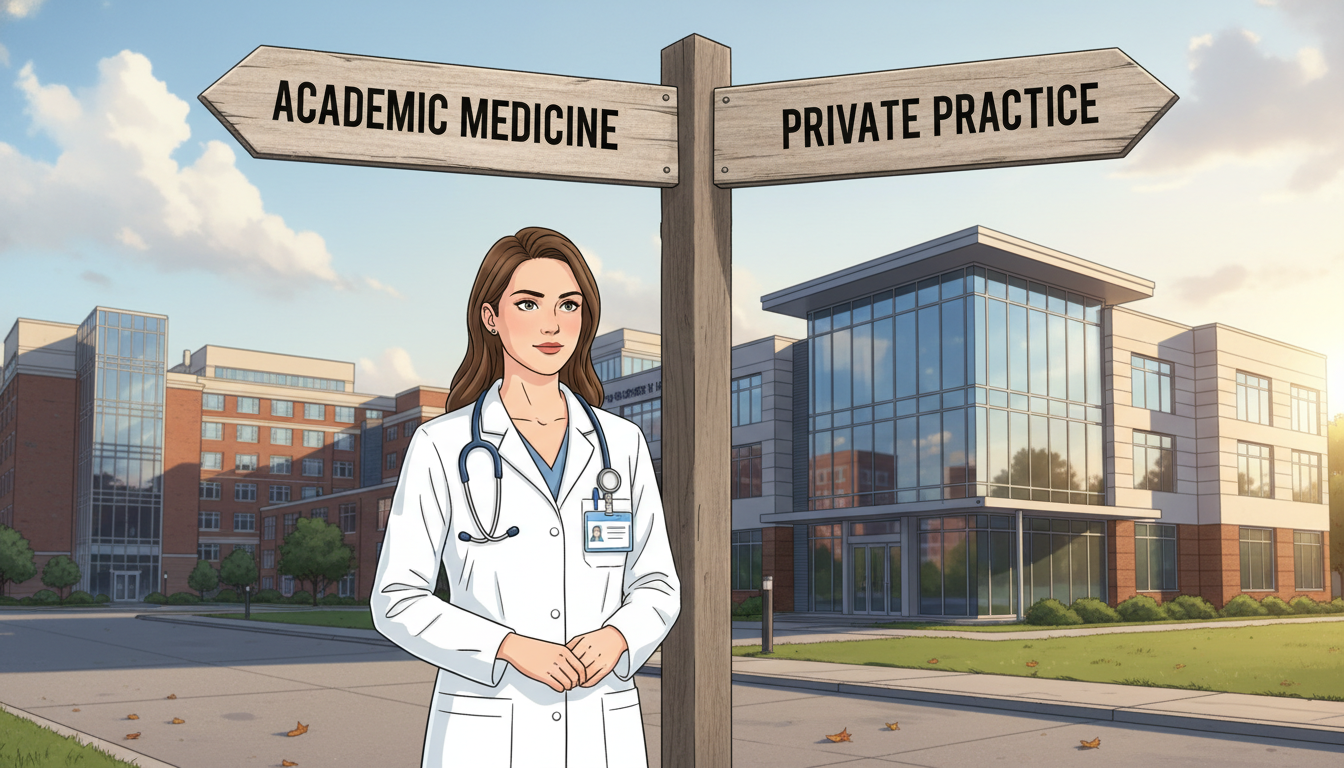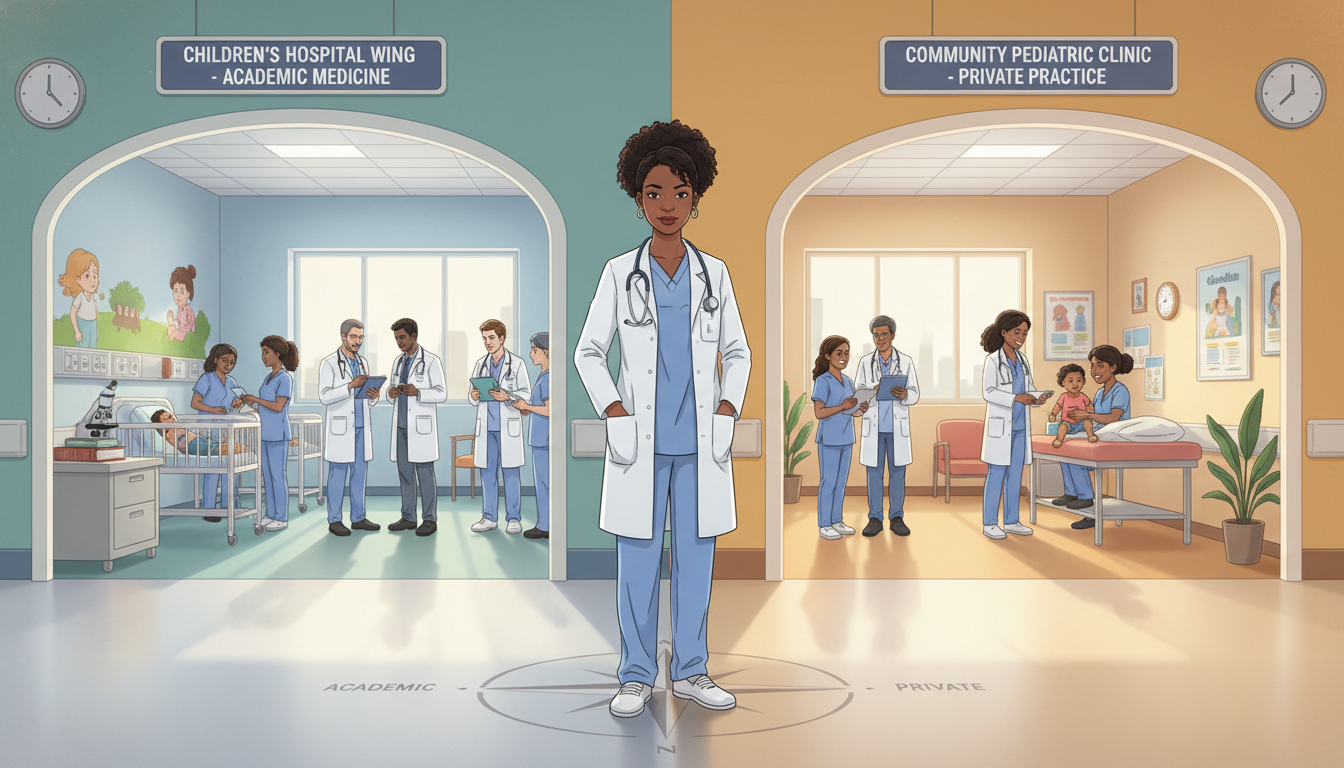
Deciding between academic pediatrics and private practice is one of the most important career choices you’ll make after residency. As a Caribbean IMG in pediatrics, your pathway, opportunities, and constraints can look somewhat different from those of U.S. MD or DO graduates. Understanding how each route functions—and how they align with your priorities—is essential for building a sustainable, satisfying career.
This guide will walk you through the realities of academic vs private practice for a Caribbean IMG in pediatrics, including how your Caribbean medical school residency outcomes (e.g., an SGU residency match) shape your options, and how to think strategically about choosing your long‑term path in medicine.
Understanding the Landscape: Where Caribbean IMGs Fit in Pediatrics
Before comparing career paths, it helps to understand your position in the U.S. pediatric workforce as a Caribbean-trained physician.
The Caribbean IMG Pipeline into Pediatrics
Caribbean medical schools (e.g., SGU, AUC, Ross, Saba) have developed strong pipelines into primary-care specialties, especially internal medicine, family medicine, and pediatrics. A successful Caribbean medical school residency outcome—such as an SGU residency match in pediatrics—already demonstrates several key attributes to employers:
- Ability to adapt to different healthcare systems
- Resilience and perseverance in a competitive environment
- Experience working with diverse and often underserved populations
Many Caribbean IMGs match into community-based pediatric residencies or university-affiliated community programs. These programs may not always be top-tier “academic powerhouses,” but they can still provide a solid foundation for academic medicine careers or for launching into private practice.
Why Pediatrics is Favorable for IMGs
Compared to many subspecialties, pediatrics residency remains relatively IMG-friendly. Reasons include:
- High demand for general pediatricians, especially in community and underserved areas
- Growing needs in outpatient and hospitalist pediatrics
- Increasing emphasis on diversity in the workforce and serving multicultural populations
As a Caribbean IMG pediatrician, you are well positioned to contribute to care in multi-ethnic communities, where your experiences and language skills can be a strong asset.
Academic Pediatrics: What It Really Looks Like
Academic pediatrics is often idealized as a mix of teaching, research, and clinical work. In reality, it can be deeply rewarding—but also demanding, bureaucratic, and slower to reward financially.
Defining an Academic Medicine Career in Pediatrics
An academic medicine career in pediatrics typically involves:
- Faculty appointment at a university or medical school
- Teaching responsibilities (medical students, residents, fellows, or all three)
- Clinical duties in a children’s hospital or academic medical center
- Scholarship (research, quality improvement, curriculum development, or publications)
- Institutional roles (committees, program leadership, advocacy, administration)
Within academic pediatrics you might be:
- A general pediatric hospitalist at a children’s hospital
- An outpatient academic pediatrician in continuity clinic plus teaching
- A pediatric subspecialist (e.g., pulmonology, hematology-oncology, neonatology)
- A clinician-educator focusing mainly on teaching and curriculum
- A physician-scientist with significant research time and grant funding
Advantages of Academic Pediatrics for Caribbean IMGs
Structured environment and mentorship
Academic centers often provide:- Protected time for teaching and academic work
- Formal mentorship programs
- Career development workshops (leadership, scholarship, education research)
Ongoing teaching and learning
You stay connected to:- Latest pediatric guidelines and evidence
- Regular conferences, grand rounds, and journal clubs
- A culture that values continuous learning
Professional visibility and advancement
Academic roles offer:- Opportunities to present at conferences
- Roles in national organizations (e.g., AAP sections, academic societies)
- A CV that grows with publications, talks, and leadership roles
Job stability and benefits
University or hospital employment often includes:- Solid benefits (health, retirement, loan repayment programs in some settings)
- Predictable base salary (even if lower than private practice)
- Less direct worry about billing and overhead
Pathway to subspecialty training
If you envision a future in pediatric subspecialty or advanced academic roles, early exposure as a junior faculty member can help you:- Develop research or QI projects
- Network with subspecialty leaders
- Strengthen a fellowship application later
Unique Challenges for Caribbean IMGs in Academic Pediatrics
Perception and bias
Some academic institutions place high value on pedigree (U.S. MD, research-heavy residencies). As a Caribbean IMG, you may:- Need to demonstrate your capabilities more actively
- Rely heavily on strong recommendations and performance, not “brand name” alone
- Face more scrutiny when pursuing competitive academic or leadership roles
Research expectations
Academic centers often expect:- QI projects, educational scholarship, or clinical research
- Evidence of publications or ongoing projects
If your residency was very clinically focused, you may have to quickly build research or scholarly momentum on the job.
Slower salary growth
Academic pediatric salaries are often 10–40% lower than comparable private practice roles, especially early in your career. For Caribbean IMGs with educational loans, this can be significant.Visa and sponsorship issues
- Academic centers may indeed sponsor H-1B or continue J-1 waivers, but policies vary.
- Some institutions have strict rules about hiring non–green card or non–citizen physicians, especially for tenure-track roles.
Example: A Caribbean IMG in Academic Pediatrics
Dr. A completed medical school at a Caribbean program and an SGU residency match led to a mid-sized, university-affiliated pediatrics residency in the Northeast. She enjoyed resident teaching and QI projects.
Post-residency, she:
- Took a job as a pediatric hospitalist in an academic children’s hospital
- Spent 70% of her time on inpatient clinical service, 20% on teaching, 10% on QI
- Led a project on reducing unnecessary labs in bronchiolitis
- Co-authored two publications and presented at a national pediatrics meeting
After four years, she became an Associate Program Director. Her salary was lower than her community-practice peers, but she felt deeply fulfilled by teaching, leadership, and scholarship.

Private Practice Pediatrics: Structure, Lifestyle, and Realities
Private practice can mean different things: small independent groups, large multi-site pediatric practices, or physician employment by a hospital or health system that functions like private practice. For many Caribbean IMGs, private practice is a primary route to financial stability and visa solutions.
Types of Private Practice in Pediatrics
Traditional independent group practice
- 2–10 pediatricians, often community-based
- Partners share overhead and profits
- Potential for ownership and equity over time
Hospital-employed outpatient pediatrics
- Work in a clinic owned by a hospital or health system
- Salary-based with productivity bonuses
- Less administrative responsibility than independent ownership
Large multi-specialty or corporate groups
- Big medical groups (often multi-state)
- Standardized workflows, EMR, and policies
- Higher patient volumes but often strong support infrastructure
Hybrid models (clinical + urgent care + hospital rounds)
- Some pediatricians combine outpatient clinic with newborn nursery coverage or emergency/urgent care shifts.
Advantages of Private Practice for Caribbean IMGs
Higher earning potential
Over several years, you may see:- Higher base salaries than in academics
- Productivity-based incentives for seeing more patients
- Partnership or profit-sharing in independent practices
This can be crucial if you have significant debt from Caribbean medical school or family obligations.
More autonomy over your practice style
You may have:- Greater control over your clinic schedule and policies
- Flexibility in how you manage common conditions (within guidelines)
- Ability to shape the culture and services of the practice
Speed of career advancement
In private practice:- You’re less constrained by academic promotion rules
- You can quickly take on leadership roles within the practice
- Your influence can grow as your patient panel and reputation grow
Simpler metrics of success
Success is often measured by:- Patient satisfaction
- Panel size
- Clinical efficiency and productivity
There is less pressure to publish or obtain grants.
Access to underserved or visa-friendly areas
Many private practices in rural or underserved areas:- Are eager to hire pediatricians
- Are willing to sponsor H-1B visas or J-1 waivers
- Offer substantial sign-on bonuses or loan repayment
Challenges in Private Practice, Especially for IMGs
Business and administrative responsibilities
Even if you are not an owner, you may face:- Pressure to see high volumes of patients
- Productivity-driven schedules (15-minute visits, double-booking at times)
- Complexities of insurance, billing, and documentation
Less formal academic engagement
Private practice may not easily support:- Regular teaching of medical students or residents
- Protected time for research or educational scholarship
If you value teaching and academic growth, you’ll need to create those opportunities (e.g., teaching clinic affiliations, precepting).
Professional isolation
In small practices:- Fewer colleagues to discuss complex cases with
- Limited formal mentorship
- Fewer on-site subspecialists and academic resources
Perception issues if you later want to return to academics
After spending many years in private practice, transitioning to a full academic role may require:- Evidence of teaching, QI, or community leadership
- Rebuilding a scholarly portfolio
Example: A Caribbean IMG in Private Practice Pediatrics
Dr. B graduated from a Caribbean medical school and matched into a community-based pediatrics residency in the Midwest. He enjoyed continuity clinic and seeing families over time but had minimal research exposure.
After residency, he:
- Joined a 5-pediatrician independent practice in a suburban community
- Started with a guaranteed salary plus productivity bonus potential
- Built a patient panel quickly due to local population growth
Over seven years, he:
- Became a partner in the group
- Earned substantially more than most academic peers
- Took on a medical director role for a local school-based clinic
Though he missed formal teaching, he compensated by serving as a preceptor for nurse practitioner students and collaborating with a nearby residency program on occasional rotations.

Key Factors to Consider: Choosing Your Career Path in Medicine
When thinking about choosing career path medicine—specifically academic vs private practice in pediatrics as a Caribbean IMG—consider the following dimensions.
1. Your Core Motivators
Ask yourself:
Do you feel most energized by:
- Teaching and mentoring? → favors academic pediatrics
- Long-term relationships with families and running a clinic? → favors private practice
- Complex inpatient care and multidisciplinary teams? → often academic hospitalist or subspecialty roles
How important is:
- Intellectual variety? (Academics often offers more)
- Financial security and higher income? (Private practice usually wins)
- Public recognition via publications and conferences? (Academics)
- Flexibility to live in a specific city or region? (May be easier in private practice)
2. Financial Realities
As a Caribbean IMG, you may have:
- Higher total educational debt
- Family abroad you help support
- Goals such as buying a home or supporting parents
Compare:
- Academic pediatric salary (often lower but stable with benefits)
- Private practice salary (often higher but with productivity pressure)
- Loan repayment options:
- Some academic or hospital systems participate in loan repayment programs
- Underserved community practices may qualify for federal or state loan repayment
Run concrete numbers: monthly payments, living expenses, and long-term savings needs.
3. Visa and Immigration Status
Your options may be strongly shaped by:
- J-1 waiver needs (e.g., Conrad 30 programs)
- H-1B sponsorship and caps
- Path to permanent residency or citizenship
In many cases:
- Rural or underserved private practices or hospital-employed roles are more available for J‑1 waiver opportunities.
- Large academic centers may have the resources to handle complex immigration matters but may also be more competitive or restrictive.
Always:
- Clarify visa policies early in job discussions
- Ask to speak with the institution’s legal or HR department
- Connect with other IMGs in that system for real-world insights
4. Work–Life Balance and Lifestyle
Both paths can be intense, but in different ways:
Academic pediatrics
- Hospital-based roles can mean nights, weekends, and teaching responsibilities beyond clinical hours
- Subspecialists may rotate through demanding service weeks and call schedules
- Outpatient academic pediatricians may have more regular hours but also additional teaching and administrative duties
Private practice
- Outpatient-only practices may offer regular daytime hours, but with:
- After-hours call (phone advice)
- Weekend urgent clinics, depending on the practice
- Hospital-employed positions can vary widely in shift structures
- Vacation time and schedule flexibility can be better or worse depending on the group’s culture and staffing
Reflect on:
- Your tolerance for call
- Your desired schedule if you plan for a family or personal commitments
- Whether you prefer structured demands (academics) or productivity-based flexibility (private practice)
5. Long-Term Career Trajectory
Think 10–15 years ahead:
- Do you want to:
- Lead a residency or medical school program? → Academic track
- Become a section chief or division director? → Academic
- Own a practice and shape local pediatric care? → Private practice
- Mix both worlds—some teaching, some community practice? → Hybrid options
Remember, your first job does not lock you in forever, but early choices influence your CV and the networks you build.
Strategies for Caribbean IMGs to Keep Both Doors Open
The best way to approach academic vs private practice is often not to lock yourself into one too early, but to keep options open through strategic choices.
During Residency
No matter where you trained (university vs community program), as a Caribbean IMG you can:
Seek academic exposure
- Volunteer for teaching opportunities (lectures, small groups)
- Ask for mentorship from faculty engaged in research or education
- Join or initiate QI or education projects and aim to present or publish
Build a strong clinical reputation
- Be reliable, thorough, and collegial
- Ask for feedback and show growth
- Secure strong letters of recommendation from respected faculty
Network intentionally
- Attend regional and national conferences (e.g., AAP meetings)
- Introduce yourself to program directors or division chiefs in areas that interest you
- Connect with other Caribbean IMG pediatricians via alumni networks
Early Career: Academic Lean with Private Options
If you lean toward academics but want to remain flexible:
- Consider a hospital-employed pediatric hospitalist or outpatient role with:
- Some teaching responsibilities
- Support for QI or research
- Look for positions at community hospitals affiliated with a university, where you can get an adjunct academic title.
Maintain:
- A portfolio of teaching evaluations
- Participation in committees and educational projects
- Documentation of any scholarly work (posters, toolkits, curricula)
This way, you can later apply for more formal academic roles if desired, or pivot into a more productivity-focused hospital or community-based job.
Early Career: Private Practice Lean with Academic Touches
If you lean toward private practice but like aspects of academics:
- Join a practice that:
- Precepts medical students or residents in clinic
- Partners with residency programs or DO schools
- Offer to:
- Give local CME talks
- Collaborate on simple QI projects with the local hospital
- Mentor premed or early medical students from Caribbean schools
Keep:
- A record of teaching activities and community leadership, which can help you return to an academic role later if you choose.
FAQ: Academic vs Private Practice for Caribbean IMGs in Pediatrics
1. As a Caribbean IMG, is it realistic to pursue an academic pediatrics career in the U.S.?
Yes. Many Caribbean IMGs hold academic pediatric positions, especially in hospitalist roles, community-based academic programs, and some subspecialties. Your path may require extra effort in building a scholarly portfolio and networking, but a strong Caribbean medical school residency outcome (such as an SGU residency match in pediatrics) plus active engagement in teaching and QI can lead to a viable academic career.
2. Will choosing private practice close the door to ever working in academics?
Not necessarily. However, the longer you stay in a purely private, non-teaching environment without any scholarship or formal teaching activities, the harder it becomes to pivot back fully into academia. To preserve options, seek roles that allow occasional teaching, QI projects, or collaboration with academic centers—so you maintain a narrative of ongoing engagement beyond pure clinical volume.
3. Which path—academic or private practice—is better financially for a Caribbean IMG pediatrician?
In most markets, private practice (including hospital-employed outpatient roles) offers higher earning potential, especially with productivity incentives or partnership opportunities. Academic pediatrics typically has lower base pay, particularly early on, but can offer long-term stability, excellent benefits, and non-monetary rewards such as teaching and professional recognition. For many Caribbean IMGs with significant debt, private practice may be financially more comfortable, but personal fulfillment and career goals remain equally important factors.
4. Does matching into a “less prestigious” pediatrics residency as a Caribbean IMG limit me to private practice only?
No. While highly research-intensive academic positions may be more competitive, you can still build a path to academia from a community-based or mid-tier program. Focus on strong clinical performance, active involvement in teaching, and at least some scholarship (QI, curriculum projects, case reports, or small studies). Many academic pediatric divisions value clinicians who are excellent teachers and team players, even if they come from non-elite programs—especially when they bring unique perspectives and resilience as IMGs.
In the end, academic vs private practice is not about which is “better,” but which aligns with your values, financial reality, immigration needs, and long-term goals. As a Caribbean IMG pediatrician, you bring adaptability, cultural competence, and determination to the table—attributes that can thrive in both settings. By understanding the contours of each path and planning deliberately, you can build a pediatric career that is not only sustainable but deeply meaningful.