Understanding the Landscape: Why This Decision Matters for US Citizen IMGs
For a US citizen IMG (international medical graduate) who has fought hard to match into a dermatology residency, the question of academic vs private practice can feel both exciting and intimidating. After years of focusing on simply getting a derm match, it may be the first time you have meaningful control over your long‑term direction.
Dermatology is one of the most competitive specialties in the United States. As an American studying abroad, you likely:
- Built a high‑powered CV to overcome the IMG label
- Did research, away rotations, and maybe a prelim year
- Spent years emphasizing academic credentials just to get in the door
Now you’re in (or approaching) residency, and the priorities shift from “Can I match?” to “What kind of life and career do I want?”
This article breaks down:
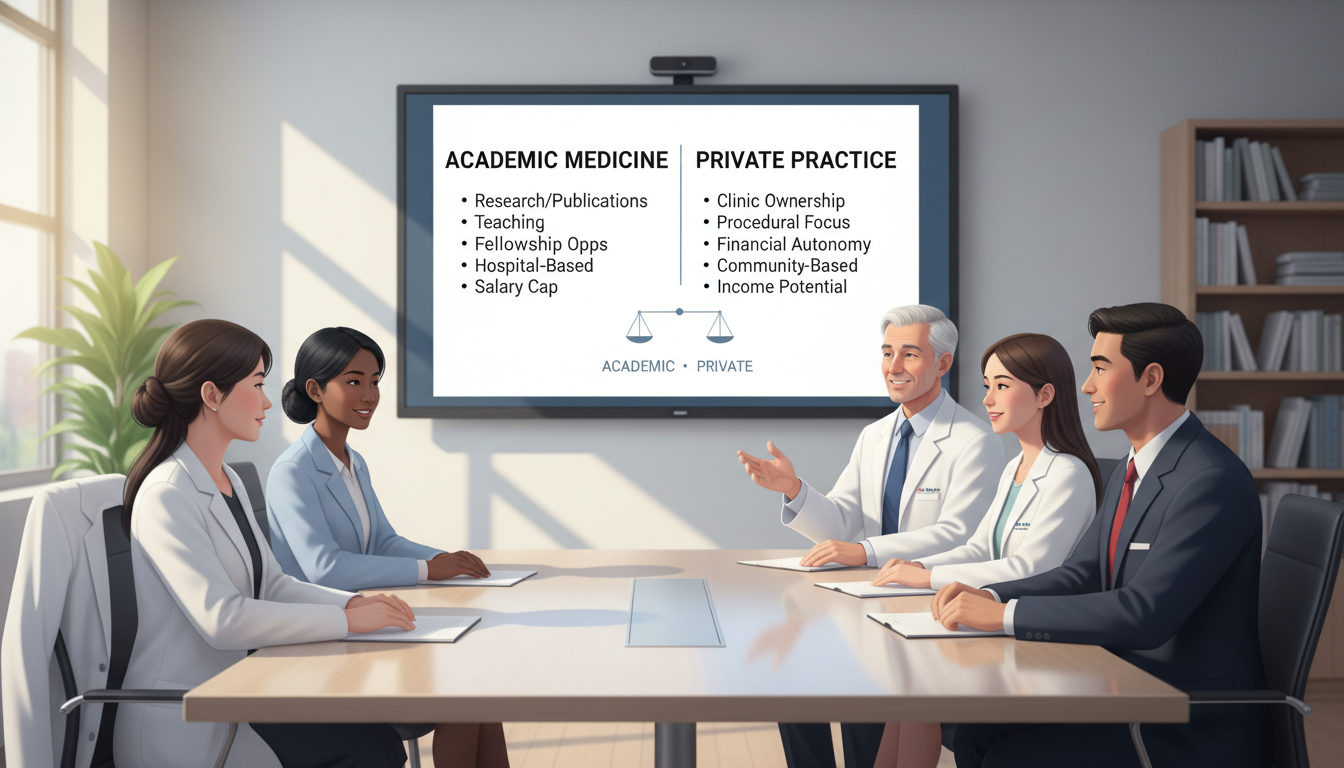
- The core differences between academic medicine and private practice in dermatology
- How those differences play out specifically for US citizen IMGs
- Income, lifestyle, and visa or mobility nuances
- How to align each path with your long‑term goals, like an academic medicine career or eventual private practice
- Practical step‑by‑step strategies to explore and decide during residency
Throughout, the focus is on realistic, actionable advice for an American studying abroad who is now navigating post‑residency choices in the U.S.
Academic Dermatology: Structure, Pros, Cons, and Fit for US Citizen IMGs
Academic dermatology typically means working in a university or teaching hospital environment. Think:
- Affiliated with medical schools
- Resident and student teaching
- Clinical research infrastructure
- Subspecialty clinics (complex medical derm, oncoderm, rheum‑derm, etc.)
Core Features of Academic Dermatology
Tripartite Mission: Clinical, Teaching, Research
You’re not just seeing patients. You’re:
- Supervising residents and students in clinic
- Teaching didactics, journal clubs, board review
- Possibly conducting or supporting research (clinical trials, outcomes research, translational projects)
The exact blend varies:
- Some faculty are 80–90% clinical, 10–20% teaching
- Others are heavily research‑focused with protected time
Case Mix and Complexity
- More complex medical dermatology (e.g., bullous diseases, autoimmune disorders, complex psoriasis)
- Tertiary referrals that community dermatologists may not manage routinely
- Access to multidisciplinary clinics (derm‑rheum, derm‑onc, transplant derm)
Compensation Structure
- Base salary often lower than private practice, especially early on
- May include:
- Incentive pay tied to RVUs or productivity
- Academic rank and promotion tracks
- Benefits: retirement match, health insurance, tuition benefits (sometimes), CME funds
- Salary is usually more predictable and less reliant on business performance
Career Progression
Typical academic ladder:
- Instructor / Assistant Professor
- Associate Professor
- Full Professor
Advancement is based on:
- Teaching evaluations
- Publications / grants (if research‑focused)
- Institutional service and reputation
Advantages of Academic Dermatology for US Citizen IMGs
Natural Continuation of the “Strong CV” Trajectory
As a US citizen IMG, you likely leaned heavily into research, teaching, and networking to secure your dermatology residency. That same skill set aligns well with an academic medicine career:
- You already know how to produce posters, papers, and possibly grants
- You may have built strong relationships at academic institutions
- Your IMG narrative—overcoming obstacles, international experiences—can actually be an asset in education and mentorship roles
Structured Environment and Mentorship
Academic centers often provide:
- Formal mentoring programs for junior faculty
- Peer groups and senior faculty who can guide you in:
- Building a niche (e.g., skin of color, telederm, oncoderm)
- Navigating promotions
- Balancing research and clinic
For a US citizen IMG who may still feel like an “outsider” in some professional spaces, a structured support network can be invaluable.
Enhanced Job Security and Stability
- Large institutions often offer more job stability and comprehensive benefits
- Less exposure to business risks (e.g., practice overhead, payroll, real‑estate leases)
- For those contemplating “choosing career path medicine” with an emphasis on safety and predictability, academic positions can feel more secure
Pathway to Leadership and Niche Development
- Opportunities to become program director, clerkship director, division chief
- Ability to build a recognized niche (for example, as national expert in a diagnostic area)
- Involvement in specialty societies, guideline committees, and national speaking roles is often easier to access through academic channels
Easier to Stay Connected to Visa‑Related or International Work
Even though you’re a US citizen IMG (so you don’t personally need a visa), you may be interested in:
- Collaborations with your international medical school
- Global dermatology work
- Mentoring other IMGs
Academic centers are usually more open to international partnerships and academic exchanges.
Downsides and Challenges of Academic Dermatology
Lower Earning Potential (Especially Early)
Compared to a high‑volume private practice:
- Base salary can be significantly less
- Incentives may not fully close the gap, especially at the start
- Your peers in private practice may out‑earn you by six figures annually after a few years
Complex Institutional Politics
- Promotion committees, departmental politics, and institutional bureaucracy
- Multiple stakeholders (hospital, med school, department chair) influencing your schedule and priorities
- Decisions may be slower and less agile than in private practice
Less Control Over Day‑to‑Day Practice
- Less freedom to choose EMR systems, staffing, or clinic flow
- Institutional rules about scheduling, telemedicine, procedure types, and cosmetic offerings
- Clinical productivity expectations that might conflict with academic time
Pressure to Produce Scholarly Work
- For promotion, you may need:
- Peer‑reviewed publications
- National presentations
- Evidence of scholarly impact
- If you primarily enjoy clinical work, these expectations can become a burden
- For promotion, you may need:
Private Practice Dermatology: Models, Benefits, Risks, and IMG-Specific Considerations
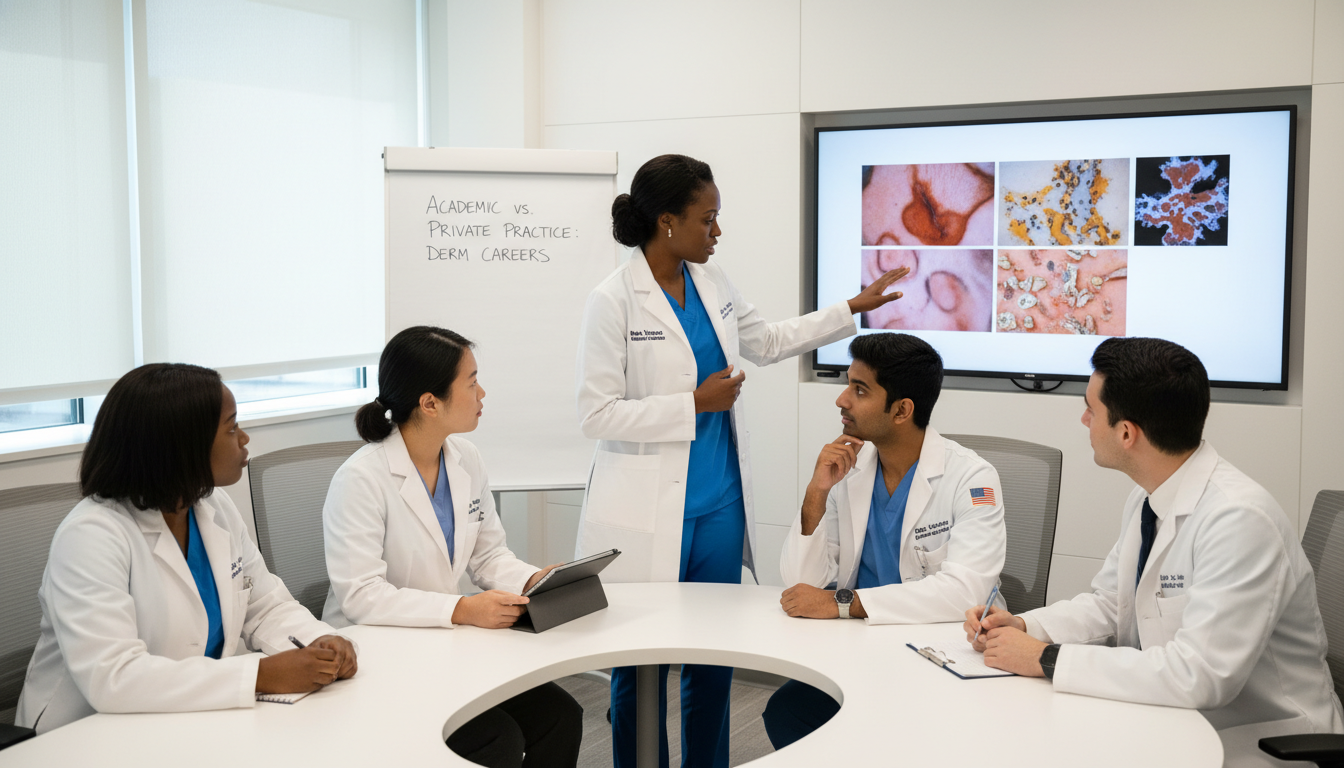
“Private practice” in dermatology is an umbrella term. It includes:
- Solo practice (owner‑operator)
- Small group practices (dermatology‑only or multispecialty)
- Dermatology megagroups or private equity–backed practices
- Hybrid models (part ownership, part employment)
Core Features of Private Practice Dermatology
Business Ownership (or Business‑Like Employment)
- Owners handle or oversee:
- Hiring staff
- Billing and coding strategy
- Negotiating with payers
- Marketing and brand development
- Employed physicians still function within a business context driven by revenue and efficiency
- Owners handle or oversee:
Clinical Focus and Autonomy
- Greater say over:
- Which procedures you offer (medical, surgical, cosmetic)
- Your schedule and volume
- Practice culture and patient experience
- You can tailor your practice to your interests (e.g., heavily cosmetic vs medical derm)
- Greater say over:
Compensation and Incentives
- Often higher earning potential than academic positions
- Common structures:
- Salary plus productivity bonus
- Straight productivity / collections‑based model
- Partnership or ownership with profit sharing
- Income can grow substantially as you build patient volume and add revenue streams (cosmetics, products, procedures)
Varied Case Mix
- Depends on practice type and geography:
- Suburban: more skin cancer, chronic derm, some cosmetics
- Urban: mix of inflammatory derm, surgical, skin of color practices
- Affluent areas: higher cosmetic demand
- Rare and highly complex cases may be referred to academic centers
- Depends on practice type and geography:
Advantages of Private Practice for US Citizen IMGs in Dermatology
Higher Income and Financial Independence
- Derm private practice is among the most lucrative in all of medicine
- The gap between academic vs private practice incomes can be significant over a career
- Financial independence can come earlier, allowing:
- Debt repayment
- Flexibility to work part‑time later
- Ability to fund personal projects or philanthropy
Greater Control Over Lifestyle
- Many private practices offer:
- More predictable hours
- Limited or no inpatient/ER coverage
- Capacity to reduce or adjust clinical days as your financial situation stabilizes
- For those prioritizing lifestyle after a long, difficult path as an IMG, this can be very appealing
- Many private practices offer:
Clinical Freedom and Entrepreneurship
- Ability to:
- Introduce new procedures or technologies quickly
- Brand your practice around your values or niche (e.g., skin of color, cosmetic focus, rural access)
- Build ancillary services (cosmetic lines, spa components, telederm offerings)
- If you enjoy business or entrepreneurship, private practice lets you fully lean into that side
- Ability to:
Less Pressure for Publications and Formal Scholarship
- No promotion committees or publish‑or‑perish expectations
- You can still teach (students rotating through your practice, community precepting) and speak at conferences, but on your terms
Challenges and Risks of Private Practice
Business and Administrative Burden
- Owners must manage:
- Staffing issues (hiring, firing, training)
- Overhead costs and lease negotiations
- Regulatory compliance and audits
- Even employed docs feel pressure to be productive and efficient, often with less institutional support than academic settings
- Owners must manage:
Financial Risk and Variability
- Income can fluctuate due to:
- Changes in insurance reimbursement
- Local competition
- Economic downturns impacting cosmetic demand
- Start‑up costs or buy‑in for partnership can be significant
- Income can fluctuate due to:
Professional Isolation
- Smaller teams, fewer colleagues in your immediate environment
- Less built‑in academic networking unless you actively cultivate it
- For a US citizen IMG who has relied on networks for advancement, you will need to intentionally maintain connections with former mentors and institutions
Less Direct Access to High‑Complexity Cases and Research
- Fewer opportunities to participate in large multi‑center trials or high‑impact academic projects unless you seek them out
- If you strongly value contributing to scientific advancement or major guideline development, pure private practice may feel limiting

Comparing Academic vs Private Practice: Income, Lifestyle, and Identity as a US Citizen IMG
Income and Financial Trajectory
While exact numbers vary by region and institution, broad trends:
- Academic dermatology
- Lower starting salary but stable
- Modest annual raises, sometimes tied to rank
- Potential RVU bonuses but often capped
- Private practice dermatology
- Higher potential once ramped up
- Bonus structures can dramatically increase income with volume
- Ownership or partnership can lead to substantial profit sharing
For a US citizen IMG who may have:
- Extra educational debt (e.g., from overseas tuition + US exams and travel)
- Delayed earnings due to prelim years or research fellowships
The temptation to maximize income quickly is understandable. However, avoid making a purely short‑term financial decision. Consider:
- Your tolerance for business risk
- Your long‑term vision (early retirement? part‑time work? major academic impact?)
- How much you value intellectual and teaching roles vs. pure clinical work
Lifestyle and Work–Life Balance
Dermatology, in general, offers a favorable lifestyle compared to many specialties. Yet, the balance looks different in each setting.
Academic
- Clinic hours may be similar to private practice, but:
- Add teaching prep, lectures, research obligations
- Add committees, conferences, and mentoring time
- Protected “academic time” can be a blessing or feel like a second job, depending on your interests
- Clinic hours may be similar to private practice, but:
Private practice
- Day‑to‑day is more clinical, but with:
- Possible administrative responsibilities (especially if you’re an owner or partner)
- Direct accountability for practice performance
- Greater ability to adjust your schedule or drop clinical days once financially secure
- Day‑to‑day is more clinical, but with:
As a US citizen IMG who has already invested heavily in your career, you may crave:
- More personal and family time
- A predictable schedule without night call
- A sense that the grind is finally over
It’s worth shadowing attendings in both environments to see what real‑world days look like, not just the idealized version.
Professional Identity and the “IMG Factor”
Although you are a US citizen, the IMG label may still shape how you see yourself and how others have viewed you. When choosing between academic vs private practice, reflect on:
Do you want to stay immersed in academic circles where your journey can inspire trainees?
- Academic departments often value your resilience and international perspective
- You can become a visible role model for other IMGs and students from nontraditional paths
Or do you want to redefine yourself entirely outside the “IMG box”?
- In private practice, patients rarely care where you went to medical school; they care about access, bedside manner, and outcomes
- Your identity can become “local expert dermatologist” rather than “IMG derm resident who made it”
Networking and Future Flexibility
For US citizen IMGs, maintaining options is especially important. Historically, some opportunities may have felt slightly more constrained, so you should:
- In academics: build a broad network across institutions and societies
- In private practice: stay active in professional organizations (AAD, subspecialty groups) and maintain ties with academic mentors
This networking keeps doors open if you ever decide to switch from one path to the other.
Hybrid Paths and Long-Term Strategy: You Don’t Have to Choose Only One Forever
A common misunderstanding about “choosing career path medicine” is assuming the decision is permanent. In dermatology, many physicians blend or transition between academic and private practice roles over time.
Common Hybrid and Transition Models
Academic Early, Private Practice Later
- Start your career in an academic setting to:
- Build a niche and reputation
- Gain teaching and research experience
- Develop strong mentorship and national connections
- After several years, move into private practice:
- With a stronger personal brand
- With subspecialty expertise that adds value to a group
- Possibly retaining adjunct academic appointments
This path often suits US citizen IMGs who want to solidify their academic credentials before moving into higher‑earning roles.
- Start your career in an academic setting to:
Private Practice with Academic Affiliations
- Join a group practice but:
- Serve as community faculty for a nearby residency
- Take students for outpatient rotations
- Give guest lectures or supervise clinics periodically
You maintain a foothold in academics without sacrificing financial and lifestyle benefits.
- Join a group practice but:
Part‑Time Academic, Part‑Time Private Practice
In some markets, dermatologists split:
- 2–3 days/week in private practice
- 1–2 days/week at an academic center
This can be ideal if you:
- Love teaching and complex cases
- Also want the autonomy and income of private practice
- Are comfortable with some schedule complexity
Industry, Telederm, and Nontraditional Roles
Some dermatologists—often with academic foundations—evolve into:
- Industry roles (medical affairs, clinical trials)
- Telederm leadership positions
- Policy, advocacy, or global health roles
An academic background can make entry into these sectors smoother, but private practice experience is also valuable for understanding real‑world care delivery.
Strategic Planning for US Citizen IMGs
As you think longer term:
Define your 5–10 year vision:
- Where do you want to live?
- How important is a high income vs. academic influence?
- Do you see yourself leading a division or owning a practice?
Identify what you must have (non‑negotiables):
- Geographic proximity to family
- Certain clinical niche (e.g., peds derm, oncoderm)
- Protected research time vs. no research responsibilities
Recognize what you are willing to grow into:
- Learning business and finance for private practice
- Building research skills and grant writing for academics
Your IMG background may actually make you more adaptable—you’ve already switched systems, countries, and expectations. Use that adaptability as an asset when designing your career.
Practical Steps During Residency to Explore Academic vs Private Practice
1. Seek Mentors in Both Settings
- Identify:
- At least one academic mentor involved in teaching and research
- At least one private practice mentor (alumni, local dermatologist, or someone you met at conferences)
Ask specific, targeted questions:
- “What do you wish you’d known about academic medicine before you started?”
- “How did your income and lifestyle change over your first 5–10 years in practice?”
- “If you were in my position as a US citizen IMG, what factors would weigh most heavily?”
2. Use Electives and Rotations Strategically
- Schedule away elective time in:
- Different academic departments to see variation in culture
- Private practices (if your program allows observerships or community preceptorships)
During each experience, track:
- Daily schedule and pace
- Mix of cases (medical, surgical, cosmetic)
- Faculty satisfaction and burnout levels
- Teaching and learning environment
3. Build a Versatile CV
Regardless of which path you think you’ll choose:
- Involve yourself in at least one research or quality improvement project
- Participate in teaching activities (lectures, small groups, curriculum design)
- Join national organizations and attend meetings (AAD, SID, etc.)
This gives you:
- A stronger bargaining position for both academic and private roles
- Flexibility if your plans evolve
- A professional identity that transcends the IMG label
4. Learn Basic Business and Academic Skills
During residency:
For potential private practice:
- Read about coding, billing, and practice finances
- Attend workshops or webinars on practice management
- Ask attendings how they structure contracts and compensation
For potential academic careers:
- Learn the basics of study design and statistics
- Understand promotion criteria at your institution
- Practice presenting at national meetings
The more literate you are in both arenas, the less intimidating your decision will feel.
5. Evaluate Offers Holistically, Not Just by Salary
When you start receiving job offers, especially as a US citizen IMG eager for stability, it’s easy to focus on the number. Instead, consider:
- Mentorship and support
- Flexibility in schedule and practice model
- Opportunities for growth (partnership track, leadership roles, niche development)
- Alignment with your values and desired patient population
Ask yourself, “Will this job move me closer to the life and career I actually want in 5–10 years, not just the paycheck I want next year?”
FAQs: Academic vs Private Practice for US Citizen IMGs in Dermatology
1. As a US citizen IMG, am I at a disadvantage when applying for academic dermatology positions?
In most cases, once you are a board‑certified or board‑eligible dermatologist, the weight of your IMG background decreases significantly. Program directors and department chairs care about:
- Your clinical skills and professionalism
- Your teaching ability
- Your research or scholarly productivity (if relevant to the role)
If anything, the initiative you showed to achieve a derm match as an American studying abroad can be seen as a positive. However, you may still encounter subtle biases at some institutions, which makes networking and strong references especially important.
2. Can I move from private practice back into academic dermatology later on?
Yes, it’s possible, but easier if you:
- Maintain some scholarly activity (case reports, lectures, participation in societies)
- Stay connected with academic mentors and colleagues
- Clearly define a niche or area of expertise you can offer (e.g., procedural derm, complex medical derm, skin of color)
Some academic centers are particularly open to hiring experienced clinicians—especially those who bring unique skills or can support program growth.
3. Which path is better if I’m interested in a significant cosmetic dermatology component?
Pure cosmetic dermatology tends to be more prominent and profitable in private practice, where you have:
- Freedom to design cosmetic menus
- Control over pricing and marketing
- Ability to integrate medspa services or product lines
Academic centers may offer cosmetics, but often on a more limited scale, with fewer resources dedicated to marketing or expansion. If cosmetics is central to your vision, plan for a private practice–heavy career, perhaps with an adjunct academic appointment if desired.
4. I’m unsure and anxious about making the “wrong” choice. How do I decide?
Recognize that your decision is not irrevocable. To reduce anxiety:
- Clarify your top 3 priorities (income, location, academic impact, lifestyle, etc.)
- Gain real‑world exposure to both practice types
- Seek candid opinions from mentors who know you well
- Consider starting in a setting that provides:
- Strong mentorship
- Flexibility to evolve (e.g., academic with strong community ties, or private practice with academic affiliations)
You can intentionally design a stepwise career path that starts in one world and gradually adds elements of the other, rather than viewing it as a single one‑time fork in the road.
By approaching the academic vs private practice decision with clarity, mentorship, and a long‑term view, you—as a US citizen IMG in dermatology—can shape a career that is not only successful on paper but deeply aligned with who you are and how you want to practice medicine.