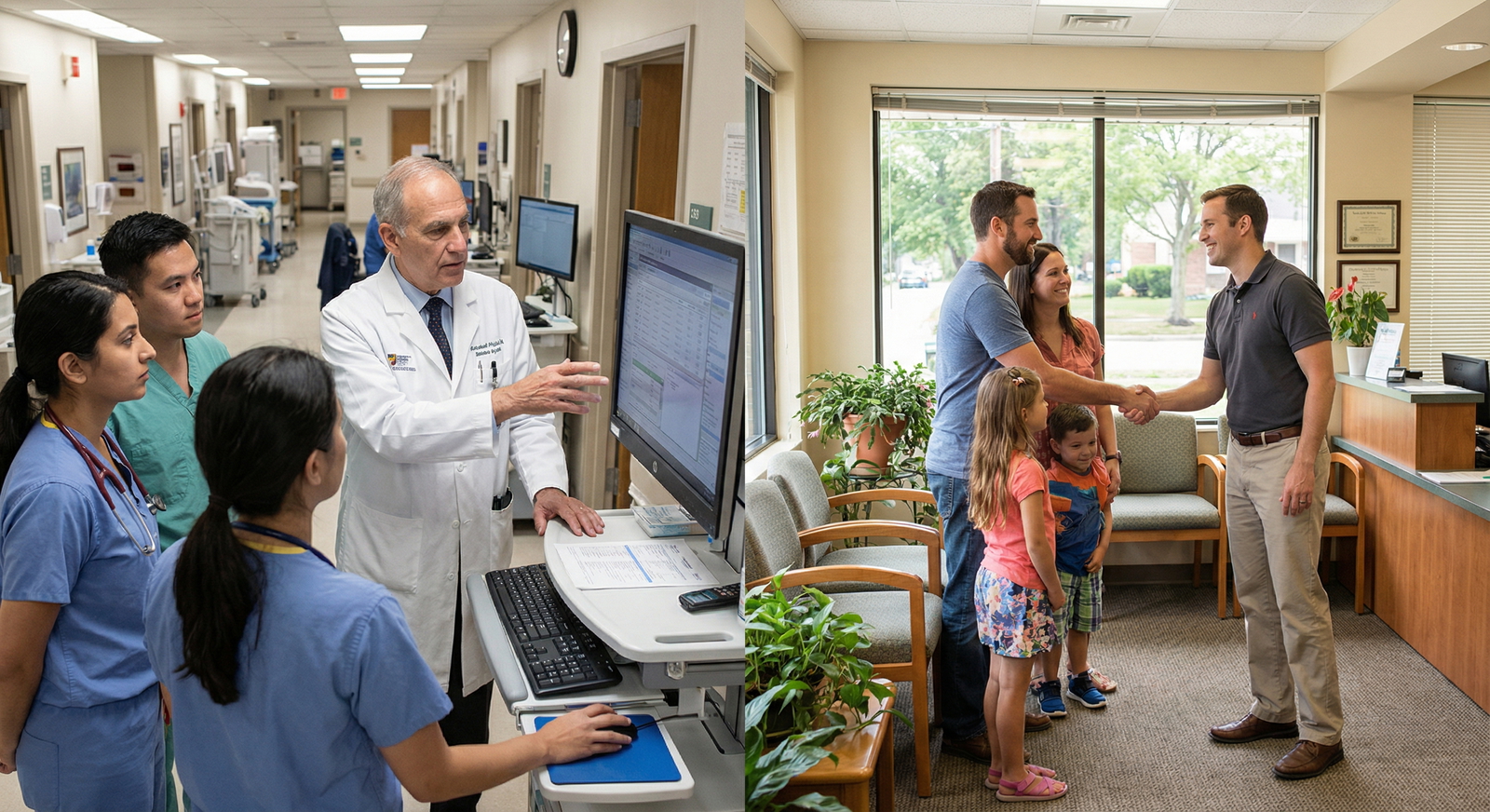
Understanding the Landscape: Academic vs Private Practice in Diagnostic Radiology
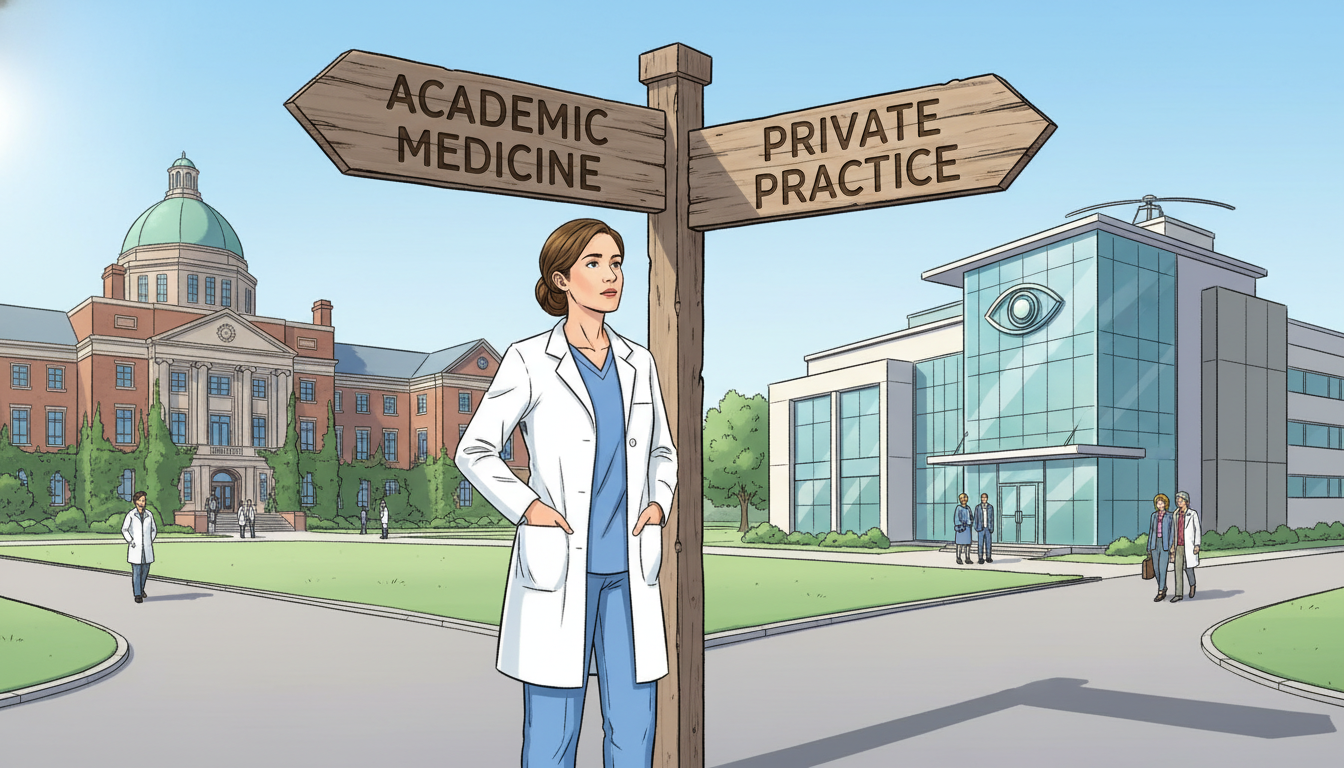
For an MD graduate in diagnostic radiology, few decisions feel as consequential as choosing between academic medicine and private practice. This choice shapes your daily workflow, income trajectory, research and teaching opportunities, and even how you see yourself as a physician. It can also influence your strategy for the diagnostic radiology match and how you position yourself during an allopathic medical school match if you’re still earlier in your journey.
The good news: there is no “right” answer—only the right fit for you at a particular stage of your career. Many radiologists move between settings or blend both through hybrid roles, teleradiology, and part‑time academic appointments. Your first job does not have to be your forever job, but informed decisions early on will help you avoid misalignment, regret, and burnout.
In this article, we’ll compare academic radiology and private practice across the dimensions that matter most to new MD graduate residency completers and early‑career radiologists: culture, compensation, workload, research and teaching, lifestyle, and long‑term career trajectory.
Core Differences Between Academic and Private Practice Radiology
Before diving into details, it helps to clarify what people typically mean by “academic” and “private practice” in diagnostic radiology.
What is an Academic Radiology Career?
In academic radiology, you are employed by:
- A university hospital or academic medical center
- A large teaching hospital with residency and fellowship programs
- Sometimes a hybrid “academic affiliate” hospital with strong teaching and research ties
Key characteristics:
- Missions: “Three‑legged stool” of clinical service, teaching, and research.
- Title structure: Instructor → Assistant Professor → Associate Professor → Professor.
- Metrics of success: Publications, grants, educational contributions, specialty leadership, along with clinical productivity (RVUs).
- Environment: Regular interaction with residents, fellows, medical students, and multidisciplinary teams in a highly subspecialized setting.
What is Private Practice Radiology?
Private practice denotes:
- Independent or group‑owned radiology practices
- Hospital‑employed or health‑system‑employed positions without a major academic mission
- Corporate radiology groups or teleradiology companies
Key characteristics:
- Primary mission: Clinical service and efficiency.
- Structure: Partner‑track, partnership, or employed (salaried) models.
- Metrics of success: Productivity, quality, turnaround time, and business performance.
- Environment: Less teaching and research; more focus on volume, customer service, and contracts with hospitals or imaging centers.
How the MD Graduate Pathway Intersects With These Choices
As an MD graduate, your trajectory generally looks like:
- Allopathic medical school match → Diagnostic radiology residency (and often a fellowship).
- Diagnostic radiology match → Choosing a program that may lean heavily academic, community, or hybrid.
- Post‑residency job search → Deciding whether to target academic medicine career paths, private practice jobs, or something in between.
Importantly, your radiology residency environment often shapes your default comfort zone—those from strong academic centers may feel pulled to stay in academia, while residents in community programs may be more oriented toward private practice. Be deliberate about whether you’re following a path by design or simply inertia.
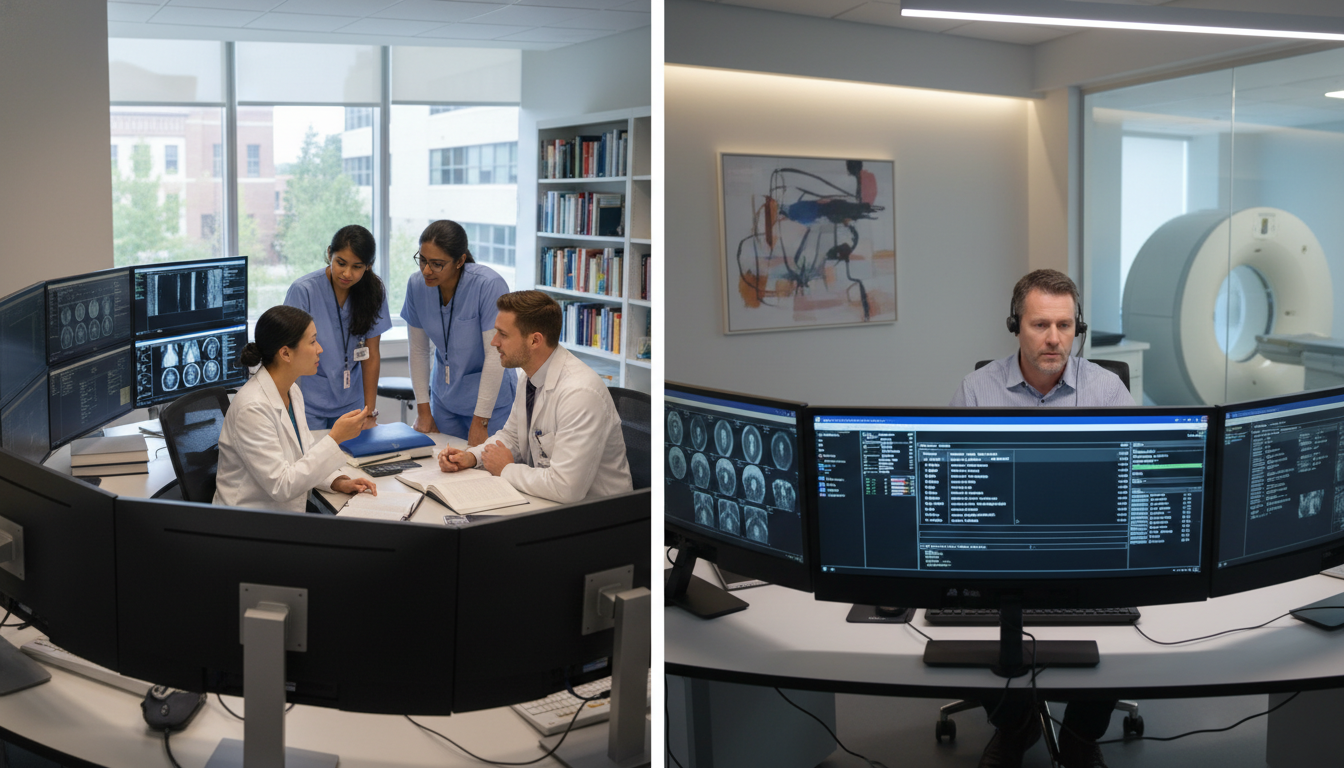
Daily Work and Lifestyle: What Your Workday Actually Looks Like
MD graduates frequently underestimate how different daily life feels between academic radiology and private practice. Beyond money, your day‑to‑day experience may be the single most important factor in choosing a career path in medicine.
Clinical Workload and Case Mix
Academic Radiology:
- Case complexity: Often higher complexity and more rare pathology (tertiary/quaternary referral centers).
- Subspecialization: Many academic radiologists practice within narrow subspecialties—e.g., neuroradiology only, pediatric neuroradiology, or advanced cardiac imaging.
- Volume: Moderate to high volume, but typically lower than high‑throughput private practice groups, especially if you have protected academic time.
- Referrals: Many consults from clinicians, tumor boards, and complex inpatient services.
Private Practice:
- Case mix: More bread‑and‑butter radiology—MSK injuries, oncologic follow‑up, standard neuro, body CT, screening mammography, etc.
- Subspecialization vs generalism: Varies widely. Smaller groups often require you to be a strong generalist. Larger groups may allow subspecialty niches but usually with some general call coverage.
- Volume: Frequently higher. Productivity expectations can be intense, especially in RVU‑driven or teleradiology settings.
- Focus: Rapid, accurate reads; efficient workflow; timely communication with referring clinicians.
Teaching and Mentoring
This is a major differentiator and a key reason many radiologists choose the academic medicine career.
Academic:
- Regularly supervise residents at the workstation.
- Give lectures, case conferences, and participate in journal clubs.
- Mentor residents and fellows on research, careers, and subspecialty choices.
- Serve as program leadership (APD, PD) or fellowship director over time.
Private Practice:
- Teaching opportunities depend on practice setting:
- Community programs with residents/PA students may offer some teaching.
- Many high‑volume private groups have minimal formal teaching obligations.
- Mentoring tends to focus on new partners, advanced practice providers, or technologists.
If your ideal professional identity includes “educator,” academics naturally offers a more supportive structure.
Call, Shifts, and Workload Intensity
Academic Call:
- Structured night float systems are common.
- Residents and fellows may buffer some overnight work, though attending backup and final reads are still required.
- Case complexity on call is often high (neuro emergencies, trauma, complex postoperative patients).
Private Practice Call:
- Can range from surprisingly light (large group with night coverage outsourced) to heavy and frequent (small group covering multiple hospitals).
- Teleradiology options may allow you to work only nights, only days, or flexible schedules, but volume is usually high.
- Weekend and holiday distribution depends heavily on group culture and partnership status.
Lifestyle and Flexibility
Lifestyle is highly variable on both sides, but some general patterns:
Academic Radiology Lifestyle:
- Some predictability with academic schedules, clinic conferences, and administrative days.
- In many departments, there is a strong culture of flexing around academic events (e.g., protected time for a grant deadline).
- Compensation often comes with trade‑offs in lifestyle (e.g., lower pay but more vacation, more protected time, or lighter call in certain subspecialties).
Private Practice Lifestyle:
- Often higher overall workload intensity but:
- Potentially more control over geography (smaller cities, suburbs, or high‑demand metropolitan areas).
- Greater flexibility through part‑time, 7‑on/7‑off, or teleradiology options as your career progresses.
- Group culture can be a major determinant—some groups prioritize lifestyle; others prioritize productivity and revenue.
When choosing a career path in medicine, imagine a normal Tuesday in each environment, not just your ideal or worst‑case scenarios.
Compensation, Stability, and Career Trajectory
For an MD graduate residency completer facing a six‑figure student loan burden, questions about money are both rational and unavoidable. Understanding compensation trends in academic vs private practice radiology is essential.
Compensation and Benefits
Private Practice Radiology:
- Earning potential: Generally higher across the career span.
- Partner‑track models: Often start with lower “associate” pay for 1–3 years, followed by a significant jump when you make partner.
- Employed models: Steady salaries with possible productivity or quality bonuses; more common in hospital‑employed and corporate settings.
- Teleradiology: Can be high‑income, especially for nocturnists or high‑volume readers, but may come with lifestyle and isolation trade‑offs.
Academic Radiology:
- Base salary: Typically lower than private practice, sometimes by a large margin, especially in early and mid‑career.
- Supplemental income: From administrative stipends, extra call, moonlighting, or consulting.
- Non‑financial benefits:
- Richer retirement plans in some university systems.
- Tuition benefits (for you or dependents) at certain institutions.
- Access to academic and research resources.
As a rule of thumb, over an entire career, a purely private practice path tends to generate significantly more lifetime earnings, but that must be weighed against personal fulfillment, academic interests, and lifestyle.
Job Stability and Market Dynamics
The post‑residency and job market landscape is evolving:
Private Practice Market:
- Consolidation into larger corporate groups has changed traditional partnership models in some regions.
- Competition for desirable urban or coastal locations can be intense.
- Strong ongoing demand for diagnostic radiologists, particularly those comfortable with a broad skill set (especially if you can do procedures, mammo, or neuroradiology).
- Market cycles: Times of shortage vs surplus can affect negotiation power and partnership terms.
Academic Market:
- Often more stable in terms of institutional longevity, but:
- Dependent on hospital finances, productivity metrics, and grant funding.
- Certain subspecialties may be saturated at top‑tier institutions, but openings exist at regional academic centers.
- Career stability can be bolstered by achieving tenure or long‑term contracts, though criteria can be demanding.
From a job security standpoint, radiology overall remains relatively strong, but how you weather market changes may differ between academic and private practice settings.
Promotion and Career Growth
Academic Promotion:
- Formal pathway: Instructor → Assistant Professor → Associate Professor → Full Professor.
- Criteria:
- Peer‑reviewed publications.
- Grants and external funding (depending on institution).
- Educational output (lectures, curricula, mentoring).
- Leadership roles (section chief, vice chair, program director).
- Advantages:
- National and international recognition.
- Opportunities to shape the field via guideline committees, societies, and editorial boards.
Private Practice Growth:
- Promotion often revolves around:
- Achieving partnership.
- Taking on leadership roles (e.g., department chair, group president, quality director, IT/PACS lead).
- Building subspecialty lines of service (e.g., expanding cardiac CT in your group).
- Career satisfaction can come from autonomy, business ownership, and control over local practice culture.
If academic titles, national committee roles, and shaping the scientific direction of radiology appeal to you, academia is the natural home. If entrepreneurship, local practice control, and financial upside appeal more, private practice may be a better fit.

Academic Medicine Career: Who Thrives and Why?
Academic radiology isn’t just lower pay and more meetings; it offers a distinct professional identity and set of rewards.
Ideal Profiles for Academic Radiology
You may be well‑suited for an academic medicine career if you:
- Enjoy teaching: You find it energizing to explain cases to residents, give didactics, or help trainees prepare for the boards.
- Are curious and research‑minded: You like asking “why” and “what’s next,” devising projects, or collaborating on clinical trials.
- Value intellectual community: Grand rounds, journal clubs, and multidisciplinary conferences are appealing rather than burdensome.
- Seek leadership in the profession: You want a voice in national societies, guideline committees, and the future direction of radiology.
- Prefer subspecialization: You want to focus primarily on one area (e.g., pediatric neuro, advanced body MRI) with minimal general call.
Pros of an Academic Radiology Career
- Built‑in opportunities for:
- Teaching and mentorship.
- Research and innovation.
- Collaboration with other specialties and scientists.
- Access to cutting‑edge technology and new imaging protocols earlier.
- Stronger alignment with those who enjoy continuous learning and scholarship.
- Non‑monetary prestige and legacy through publications, trainees, and program development.
Challenges and Trade‑offs
- Lower base pay relative to private practice, especially early on.
- Administrative and bureaucratic demands (committees, institutional policies).
- Pressure for academic productivity (publish or perish) at some institutions.
- Slower decision‑making processes and less autonomy over day‑to‑day practice changes.
Practical Examples
Case 1 – Research‑oriented MD graduate:
You completed a radiology residency with multiple first‑author papers, enjoyed designing projects, and loved working with a biostatistics core. You’re excited about investigating AI tools in chest imaging. For you, an academic job with at least 30–40% protected research time and access to grants is likely to be deeply satisfying—even if it means a lower starting salary.Case 2 – Education‑focused MD graduate:
You served as chief resident largely because you loved teaching. You design teaching files, craft board‑style questions, and enjoy flipping through cases with junior residents. An academic position with robust teaching responsibilities, potential for medical education leadership, and a trajectory toward program director may be ideal.
Private Practice vs Academic: Matching Career to Personal Priorities
Choosing a career path in medicine, especially diagnostic radiology, should be a structured decision rather than a default. Use your MD graduate residency years to gather data and test your assumptions.
Step 1: Clarify Your Top 5 Priorities
Common priorities include:
- Income potential
- Geographic location
- Lifestyle/hours
- Desire to teach
- Interest in research
- Subspecialization vs general practice
- Leadership and ownership opportunities
- Academic prestige and professional recognition
Rank these for yourself—honestly, not aspirationally.
Step 2: Compare How Each Environment Fits
If your top priorities are:
- Maximizing income
- Achieving early financial independence
- Strong control over location
- Minimal non‑clinical obligations
Then private practice radiology is usually a closer match.
If your top priorities are:
- Teaching the next generation
- Advancing imaging science or education
- Working in a highly subspecialized or niche area
- Building a national reputation in a specific domain
Then an academic medicine career is likely a better fit.
Step 3: Consider Hybrid and Transitional Options
The dichotomy between academic and private practice is blurring. Options include:
- Hybrid jobs: Community hospitals with academic affiliations, where you teach intermittently and participate in limited research but primarily work at a private‑practice pace.
- Part‑time academic appointments: Some private practitioners serve as adjunct faculty, giving lectures or supervising residents occasionally.
- Shifting over time:
- Early career in academia to build subspecialty expertise and publications.
- Later transition to private practice to capitalize on earning potential.
- Or vice versa: early private practice to stabilize finances, then move into academia with a strong clinical track record.
Step 4: Use Training to Test Environments
During residency and fellowship, deliberately:
- Rotate at both academic and community sites.
- Ask attendings candid questions: “What do you like least and most about this setting?”
- Attend tumor boards and teaching conferences to assess how much you enjoy those activities.
- Do a visiting elective or moonlighting in non‑academic settings if possible.
This will help ensure that when you step into the post‑residency and job market, you’re not guessing about what each environment is like—you’ll have lived experience.
Frequently Asked Questions (FAQ)
1. Is it harder to get a radiology residency spot at an academic program if I ultimately want private practice?
Not necessarily. Many MD graduate residency applicants target strong academic programs during the diagnostic radiology match because these programs:
- Offer broad exposure to subspecialties.
- Provide strong board preparation.
- Enhance your competitiveness for top fellowships.
Completing residency at an academic center does not commit you to an academic medicine career. In fact, many private groups value applicants from rigorous academic programs because of their strong training and subspecialty exposure. Be transparent about your goals with mentors, and they can help you strategize both academic and private practice options.
2. Can I move from private practice to academia later in my career?
Yes, but it can be more challenging than moving from academia to private practice. Common hurdles:
- Lack of recent publications or academic portfolio.
- Less familiarity with grant writing or educational scholarship.
- Need to adapt to promotion criteria and institutional expectations.
However, if you:
- Maintain some scholarly activity (case reports, invited talks, quality improvement projects).
- Develop a niche expertise (e.g., cardiac CT, prostate MRI, emergency radiology).
- Build strong professional relationships via national societies.
Then transitioning to an academic role—often on a clinical or educator track—is very feasible.
3. How much does compensation really differ between academic and private practice radiology?
Exact numbers vary by region, subspecialty, and market conditions. But broadly:
- Private practice (especially partnership‑track or partner level) typically pays substantially more than academic positions at comparable seniority.
- The gap can range from modest (for certain high‑paying academic departments or lower‑paying private jobs) to very large (for high‑earning private partners or teleradiologists compared to junior academic faculty).
- Consider total compensation: retirement contributions, benefits, time off, protected time, and job stability can partially offset lower salaries in academia.
When evaluating offers, ask for:
- Detailed breakdown of base salary, bonuses, and call pay.
- Partnership track terms (buy‑in, timeline, expectations).
- Protected time, FTE expectations, and promotion criteria.
4. What if I’m still unsure about my ideal career path during residency?
Uncertainty is normal. Use residency and fellowship strategically:
- Seek mentors in both academic and private practice settings.
- Do research or education projects to “try on” academic work.
- Moonlight or rotate in community hospitals or imaging centers to understand private practice volume and workflow.
- Reflect annually on how your priorities (debt, family, location, interests) are evolving.
When you enter the job market, consider applying to both academic and private practice positions. Interview widely, ask detailed questions about daily life, and then choose the offer that best aligns with your actual—not hypothetical—priorities.
Choosing between academic and private practice radiology is less about prestige and more about alignment: aligning your work with how you want to spend your time, what energizes you, and how you define a successful life and career. As an MD graduate in diagnostic radiology, you have the advantage of a flexible specialty and a strong job market. Use that flexibility intentionally to build a career that fits you—today and in the decades ahead.