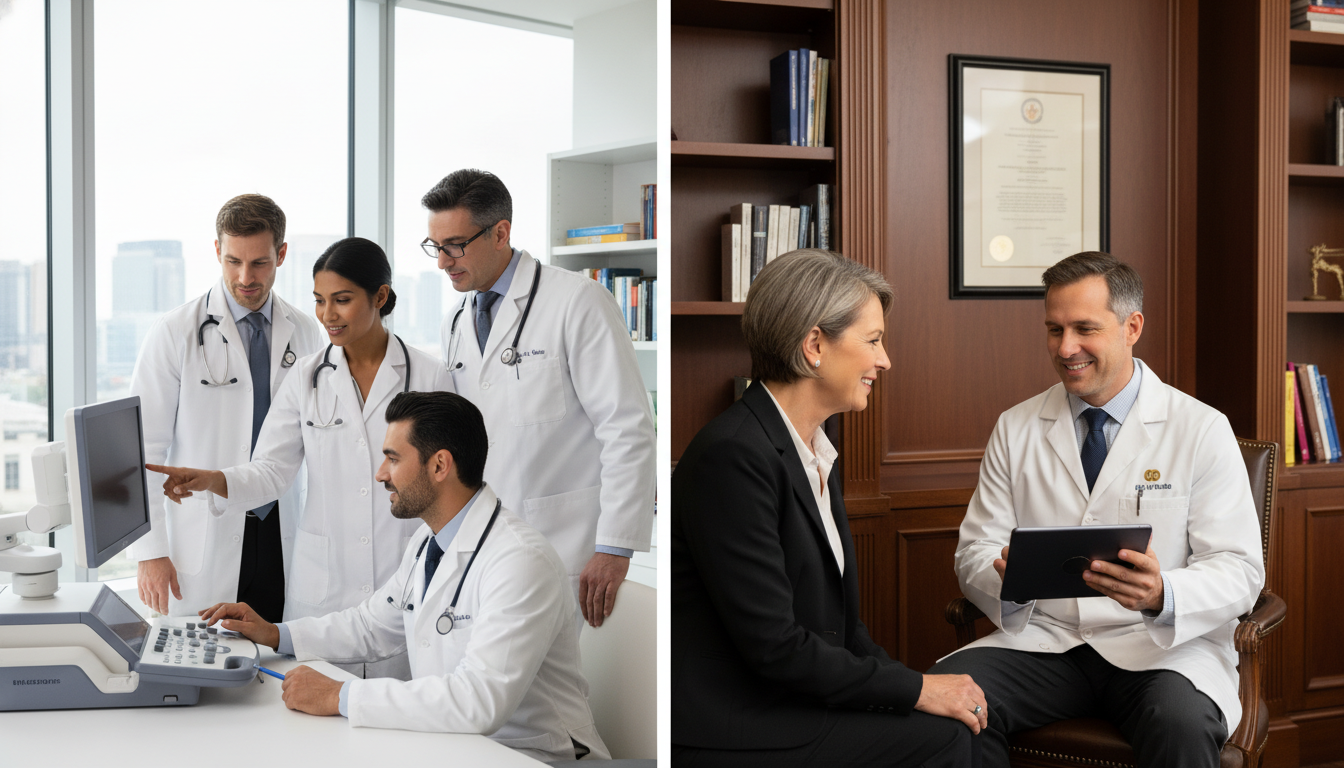
Understanding Your Starting Point: Preliminary Medicine and Career Forks
As an MD graduate residency applicant or current intern in a preliminary medicine year (prelim IM), you occupy a unique and often confusing position. You are part of internal medicine, but not quite an internal medicine resident. You are also committed (or hoping) to transition into another specialty—anesthesiology, neurology, radiology, dermatology, physical medicine and rehabilitation, ophthalmology, or others.
Amid the intensity of your prelim year, a bigger question is already looming:
Long term, should you pursue an academic medicine career or aim for private practice?
While your definitive practice setting will depend largely on your advanced specialty (not the preliminary year itself), the choices you make now—mentors, research, electives, networking, values—will shape whether you ultimately align more with academic medicine or private practice.
This article will help you:
- Understand the differences between academic vs private practice across specialties
- See how your preliminary medicine year can support either pathway
- Clarify which environment might fit your values, personality, and goals
- Make concrete, practical moves during PGY-1 to keep doors open
The focus is on the MD graduate from an allopathic medical school match who is currently (or soon to be) in a prelim IM year, but much of this applies to any intern considering long‑term career direction.
Academic Medicine vs Private Practice: Core Differences
Before linking these options to your preliminary medicine year, you need a clear picture of how they differ in daily life, incentives, and expectations.
What Is Academic Medicine?
Academic medicine generally refers to working in a setting affiliated with:
- A medical school
- A teaching hospital or academic medical center
- A system where missions include clinical care, teaching, and research
Common features:
- Teaching: Medical students, residents, and sometimes fellows
- Research/Scholarship: From case reports and QI projects to funded clinical or basic science research
- Committees & Leadership: Protocol development, guidelines, education committees, DEI initiatives
- Complex Cases: Higher proportion of tertiary/quaternary care, rare diseases, multi‑specialty coordination
Your job title might eventually include Instructor, Assistant Professor, Associate Professor, etc.
Typical pros of academic medicine:
- Intellectual stimulation, complex pathology
- Opportunity to teach and mentor
- More structured path to engage in research or QI projects
- Collegial, team‑based work with trainees and subspecialists
- Enhanced reputation/networking through conferences and publications
- Better fit if you’re exploring an academic medicine career with leadership or subspecialty focus
Typical cons:
- Often lower salary than comparable private practice roles (especially in procedure‑heavy fields)
- More bureaucracy and institutional politics
- More non‑clinical responsibilities (documentation, meetings, committees)
- Promotion metrics (publications, grants, teaching evaluations) can add extra pressure
What Is Private Practice?
Private practice usually refers to:
- Independently owned or partner-owned physician groups
- Hospital-employed but non‑academic groups
- Large multispecialty groups or corporate models (e.g., national anesthesia or radiology companies) not strongly tied to a med school
You are primarily paid to deliver clinical care. Teaching and research may exist, but they are not central.
Typical pros of private practice:
- Often higher earning potential, especially in procedural and diagnostic specialties
- Greater autonomy in scheduling, workflow, and sometimes clinical decision‑making
- Stronger focus on efficiency and productivity
- Clearer link between effort and compensation (RVUs, bonuses, partnership tracks)
- More straightforward performance metrics (patient volume, patient satisfaction)
Typical cons:
- Less structured opportunity for teaching and academic advancement
- Less exposure to rare or complex diseases (depending on practice setting)
- Business pressures: productivity targets, payer contracts, prior authorizations
- Career development may be more self-directed; fewer formal mentorship structures
How This Relates to a Preliminary Medicine Year
Your preliminary medicine year is often a stepping stone into:
- Anesthesiology
- Neurology
- Dermatology
- Radiology and interventional radiology
- PM&R
- Ophthalmology
- Radiation oncology
- Some surgical or subspecialty paths
The final choice between academic vs private practice will most likely occur during:
- Your advanced residency (PGY-2+), and/or
- Early attending years
However, your prelim IM year can:
- Expose you to academic attending vs hospitalist/private groups
- Allow you to collect mentors and letters of recommendation from either sphere
- Provide research or QI experience that tilts you toward academic medicine
- Show you what clinical pace, hierarchy, and lifestyle you find sustainable
Even if you are “just passing through” internal medicine, the habits and relationships you form during PGY-1 can have long-term impact on your career trajectory.

Daily Life: Academic vs Private Practice Through the Lens of a Prelim Year
Even during your prelim IM year, you are already seeing both worlds. Observing carefully can sharpen your career decision.
How Academic Life Looks from a Prelim Medicine Seat
On an academic inpatient team, you might notice:
- Team structure: Attending + senior resident + interns + students
- Rounding style:
- Teaching rounds with “chalk talks”
- Frequent literature references (“Let’s pull up that NEJM paper…”)
- Patient presentations given with attention to teaching moments
- Case mix:
- Transplants, rare autoimmune diseases, unusual infections
- Co-managed patients with multiple subspecialties
- Conferences:
- Morning report, noon conference, grand rounds, M&M conference
- Academic projects:
- Residents and attendings talking about papers, abstracts, QI initiatives
- Opportunities to help with data collection or case write-ups
During your rotations, notice:
- Which attendings are full‑time academic faculty vs community/hospitalist docs
- Who seems energized by teaching and research vs who is more clinically focused
- Which environment feels motivating vs draining for you
How Private Practice/Non-Academic Life Appears in Prelim IM
You may also rotate at:
- Community hospitals affiliated with your main academic institution
- Non‑teaching services staffed primarily by hospitalists or private groups
- Outpatient clinics without trainees
Key differences you might see:
- Lean teams: Often one attending or hospitalist with a small team and maybe no students
- Rounding style:
- More time directly on clinical work, less structured teaching
- Emphasis on efficiency, discharges, patient satisfaction
- Documentation and billing:
- Explicit focus on productivity, billing levels, throughput
- Case mix:
- More “bread and butter” medicine
- Fewer tertiary-level cases but more longitudinal or local community patterns
Translating These Observations into Career Insight
Ask yourself during prelim IM:
Do I like the teaching environment?
Do you feel energized after giving a mini‑teaching presentation or engaging in morning report? If yes, academic medicine may suit you.How do I feel about complexity vs volume?
Would you rather see fewer, complex patients (academic) or a larger volume of more straightforward cases with higher efficiency (private practice)?Do I want research/QI as a substantial part of my career?
If you enjoy digging through evidence and designing studies, the academic track may be more satisfying.How do I respond to hierarchy and institutional structure?
Academic medicine often has more layers of bureaucracy. Some find that secure and structured; others find it constraining.
Your preliminary medicine year is like a year‑long site visit to both worlds. Treat it as active data‑gathering for your future self.
Long-Term Pathways: How Specialty and Setting Interact
While your prelim IM experience is common ground, the advanced specialty you enter will heavily influence what academic vs private practice look like for you.
Below are examples of how the decision plays out in different prelim‑feeder specialties, and how to leverage your PGY-1 year for each.
Example 1: Anesthesiology After a Prelim Medicine Year
Academic anesthesia:
- OR cases with complex cardiac, transplant, neurosurgical, and ICU-level patients
- Teaching residents, fellows, and SRNAs
- Research in perioperative medicine, pain, outcomes
- Involvement in curriculum, simulation labs, departmental leadership
Private anesthesia:
- OR cases at community hospitals or surgicenters
- Heavy emphasis on efficiency and on-time OR starts
- Potential for higher income, especially in high-volume practices
- Less formal teaching; research uncommon
As a prelim IM resident, you can:
- Work closely with perioperative medicine teams (hospitalists co‑managing surgical patients)
- Ask anesthesia attendings about their own academic vs private paths when you meet consultants
- Participate in QI projects around perioperative optimization, pain control, or post‑op complications
→ These experiences support a future academic medicine career if you lean that way.
Example 2: Neurology After Prelim IM
Academic neurology:
- Stroke centers, epilepsy monitoring units, neuroimmunology clinics
- Heavy involvement with trainees and sometimes subspecialty fellowships
- Research in stroke outcomes, neurodegenerative diseases, neuroimaging
Private neurology:
- Office-based practice with common outpatient complaints (headache, neuropathy, seizures)
- Some hospital coverage, often through consults
- Strong emphasis on efficiency and patient access
During prelim IM, you can:
- Seek neurology consult-heavy rotations (stroke, ICU, general wards)
- Ask to help with stroke/QI protocols, such as door-to-needle time improvements
- Present neuro-focused cases at morning report or noon conference
→ This builds early neurology‑aligned academic exposure.
Example 3: Radiology, Dermatology, PM&R, and Others
For many advanced specialties that follow prelim IM (radiology, derm, PM&R, etc.):
Academic medicine often means:
- Subspecialization (e.g., neuroradiology, complex medical dermatology)
- Research and conferences (e.g., RSNA, AAD, AAPM&R)
- Dedicated teaching hours and curriculum development
Private practice often means:
- High-volume, efficiency-driven practice
- More general or broad case mix
- Stronger link between productivity and compensation
Leverage prelim IM by:
- Identifying faculty with academic titles in your advanced field and asking for short, focused mentorship chats
- Volunteering for case reports that intersect IM and your target specialty (e.g., derm and internal medicine overlap, radiology and ICU imaging)
- Attending specialty conferences or virtual grand rounds when possible
Regardless of your field, your prelim year is an unusually good time to collect stories, projects, and mentors that fit either an academic or private vision of your future.

Choosing Your Path: Values, Finances, and Lifestyle
Your choice between private practice vs academic medicine is ultimately a values decision shaped by finances, personality, and long-term career goals.
Key Questions to Guide Choosing a Career Path in Medicine
Ask yourself:
How much do I value teaching?
- If explaining pathophysiology to students and residents feels deeply rewarding, you may be happier in academia.
- If teaching feels like a drain that slows you down, private practice may better align with your strengths.
Do I want research or scholarship as a core part of my career?
- If you want to publish regularly, present at conferences, or obtain grants, an academic medicine career provides infrastructure for that.
- If you’re satisfied with reading the latest literature and applying it clinically—but not running your own studies—private practice may be ideal.
What are my financial goals and obligations?
- Consider your debt burden, family responsibilities, and long‑term goals (home, dependents, location preferences).
- Private practice often offers higher compensation, which may feel crucial if your loan burden is heavy or you support extended family.
- Academic positions sometimes offset lower pay with loan repayment programs, better benefits, or more predictable hours (though this varies significantly by specialty and institution).
What kind of professional identity do I want?
- Do you like the idea of being known as “Professor X,” giving talks, writing guidelines, and shaping the field?
- Or do you see yourself as a highly skilled clinician in your community, known for excellent patient care and access?
What is my tolerance for institutional politics and slower change?
- Academic centers can be bureaucratic, but they can also be stable career homes with clear promotion ladders.
- Private groups may be more nimble but can face market pressures, mergers, and shifts in payer contracts.
Practical Financial Considerations
For an MD graduate in a preliminary medicine residency, remember:
- Your earning power comes after your advanced residency/fellowship.
- Specialty choice itself (e.g., dermatology vs neurology vs PM&R) often has a larger effect on lifetime earnings than academic vs private.
- But within each specialty, the academic vs private practice gap can be significant—especially in procedure‑intensive fields.
Actionable steps now:
- Use online salary reports (e.g., MGMA, Medscape) to understand ranges in both academic and private settings for your target specialty.
- Consider talking to attending physicians in both settings about:
- Loan repayment strategies
- Lifestyle at different career stages
- How long it took them to feel financially stable
Lifestyle, Autonomy, and Burnout Risk
Workflow and lifestyle differ:
Academic medicine:
- May offer protected time for teaching/research, but watch out for “soft creep” of expectations.
- Call schedules can be intense in some academic subspecialties.
- Burnout risk can come from grant pressures, promotion requirements, and administrative overload.
Private practice:
- Clinical intensity and patient volume can be high.
- Administrative burdens can shift toward metrics, RVUs, and business pressures.
- On the flip side, some private practices offer greater flexibility in scheduling once established.
During your prelim IM year, notice:
- Which attendings (academic or private) seem like the version of yourself you’d want to be in 10–15 years.
- Ask them explicitly:
- “What aspects of your job give you the most satisfaction?”
- “If you could go back, would you still choose academic vs private practice?”
These real-world narratives are often more instructive than abstract pros and cons lists.
Maximizing Your Prelim Year to Keep Both Doors Open
You do not need to commit firmly to academic vs private practice during PGY‑1. But you can make choices that preserve flexibility and enhance your competitiveness for either path.
If You’re Leaning Toward Academic Medicine
Use your prelim IM year to build an early “academic profile”:
Seek mentors with academic titles
- Ask attendings, “Do you have a few minutes to talk about your academic career trajectory?”
- Request long-term mentorship related to research, teaching, or subspecialty focus.
Engage in research or QI
- Volunteer for small, realistic projects:
- Single case reports of interesting patients
- Retrospective chart reviews
- QI initiatives (e.g., reducing readmissions, improving handoffs)
- Even one or two accepted abstracts or posters make future academic positions more attainable.
- Volunteer for small, realistic projects:
Teach when you can
- Offer informal teaching to medical students on your service.
- Give micro‑talks at morning report (“5-minute chalk talk on hyponatremia workup”).
- Ask chief residents if you can present a case or topic at conference.
Attend scholarly events
- Regularly attend grand rounds, M&M conference, or journal club.
- If your future specialty offers departmental conferences at your institution, sit in when you can.
Document your academic engagement
- Keep a running log of:
- Projects
- Presentations
- Committees
- Teaching evaluations or feedback
- This portfolio will be helpful later for academic job applications and promotion packets.
- Keep a running log of:
If You’re Leaning Toward Private Practice
Even if your end goal is private practice, your prelim year can prepare you to be a strong, efficient clinician and a savvy future job seeker.
Learn efficiency and systems of care
- Ask hospitalists and community attendings how they manage:
- High patient volumes
- Discharges
- Documentation shortcuts that remain safe and compliant
- Refine your time management and prioritization skills.
- Ask hospitalists and community attendings how they manage:
Understand the business side of medicine
- Ask attendings in non‑academic roles about:
- Compensation structures (salary, RVUs, partnership tracks)
- Contracts and non-competes
- Negotiating call schedules and benefits
- Consider reading basics on reimbursement, coding, and billing.
- Ask attendings in non‑academic roles about:
Observe different community settings
- If your program allows, rotate in community hospitals or outpatient clinics.
- Notice workflow differences, staffing, and patient expectations.
Build broad clinical competence
- Private practice physicians are often expected to handle a wide range of cases independently.
- Use prelim IM to solidify:
- Bread‑and‑butter inpatient management
- Communication skills with consultants and PCPs
- Safe discharge planning and outpatient follow-up coordination
If You’re Unsure: How to Stay Flexible
You are allowed to be undecided. In fact, many physicians change direction several times. To keep both paths open:
Do at least one small scholarly project
This keeps the academic door open later and also improves your CV for fellowships or advanced positions.Prioritize strong clinical training
Excellence in clinical care is foundational for both academic and private careers.Cultivate mentors in both realms
Talk to:- At least one academic faculty member in your future specialty.
- At least one community or private practice physician in that field.
Stay curious and intentional
Don’t let the prelim year just “happen to you.” Every rotation is data about the kind of physician and career you want.
FAQs: Academic vs Private Practice After a Preliminary Medicine Year
1. Does doing a preliminary medicine year push me toward academic medicine?
Not inherently. A prelim IM year is neutral—it is a required foundation for many advanced specialties. The environment of your prelim program may expose you more to academic hospital culture, but many physicians with prelim backgrounds end up in private practice.
What tilts you toward academic medicine is less the prelim label and more:
- Your research/scholarly activity
- Mentors you connect with
- Your enjoyment of teaching and complex cases
2. If I want an academic career, do I have to do a categorical internal medicine residency instead of prelim?
No. Many academic physicians in anesthesia, neurology, radiology, dermatology, PM&R, and other specialties did preliminary medicine first. Your ability to pursue an academic medicine career depends on:
- The academic strength of your advanced residency
- Your research and teaching activities during residency and beyond
- Networking and mentorship, not the mere fact that you did prelim vs categorical IM
If your long-term goal is academic general internal medicine, that’s different—you would typically need a categorical IM residency, not a prelim.
3. Will choosing private practice limit my ability to teach or be involved academically later?
Not necessarily. Many private or community physicians:
- Teach as volunteer or community faculty at nearby medical schools
- Supervise students and residents on community rotations
- Participate in local research, registries, or quality initiatives
However, if you aim for formal academic titles, promotion, or major research leadership, working primarily in an academic center usually offers more structured and supported pathways. It’s also possible to move from private practice to academic roles later, particularly if you maintain connections and some scholarly activity.
4. How early do I need to decide between academic vs private practice?
You do not have to decide during your preliminary medicine year. Most physicians crystallize their choice:
- During their advanced residency and any fellowship, or
- In the 1–3 years around their first attending job search
For now, focus on:
- Being clinically excellent
- Exploring teaching and basic scholarly work
- Talking to mentors across both settings
By the time you approach the post-residency and job market phase, you’ll have more experiences to make an informed decision about academic vs private practice that truly fits your life and goals.
By engaging intentionally with your prelim IM experience—observing faculty in both academic and private contexts, testing your interest in teaching and research, and clarifying your values—you’ll position yourself to choose a practice setting that matches who you are and the physician you want to become.