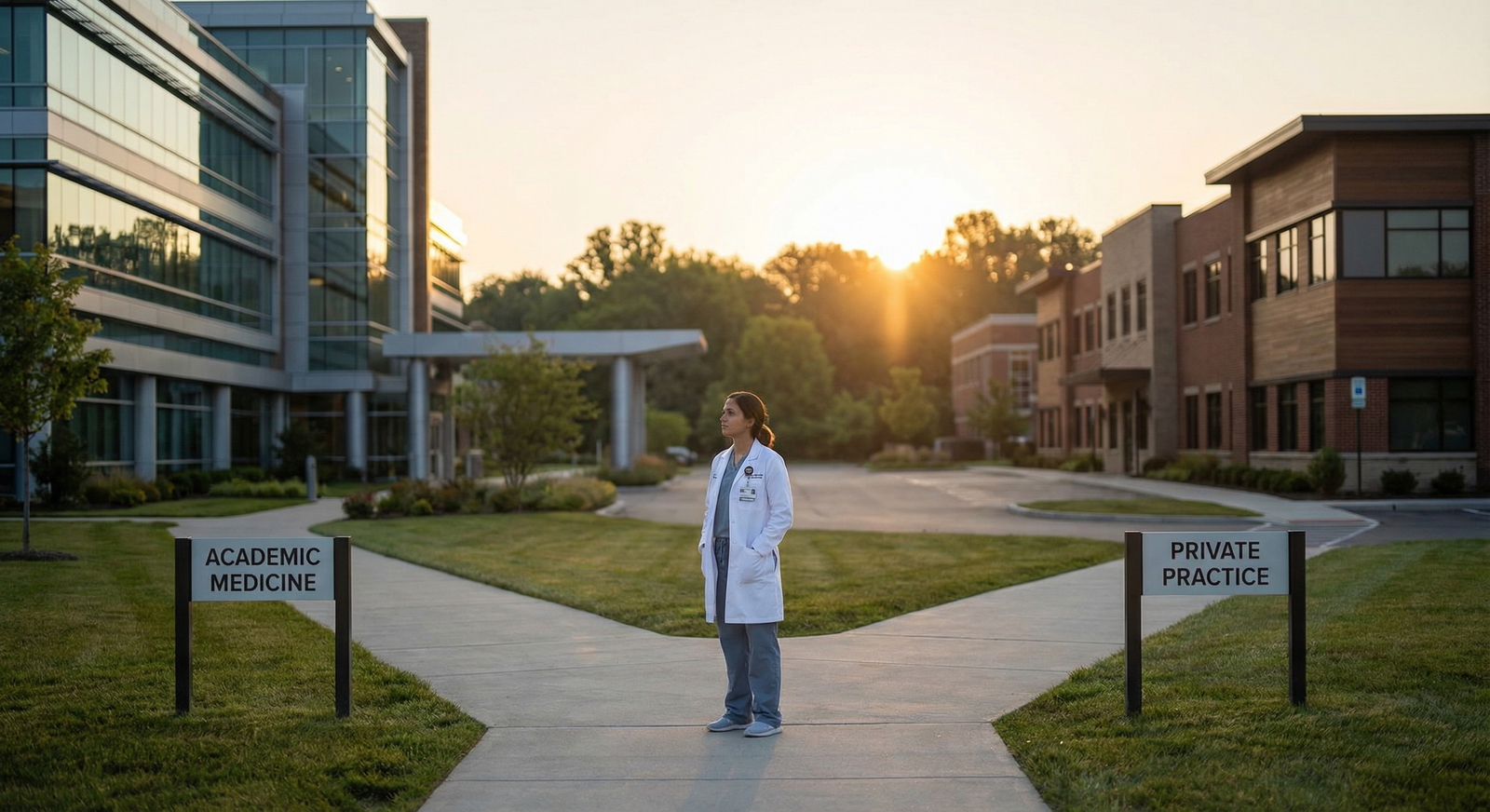
Neurology is one of the few specialties where your career can look radically different depending on whether you build it in academic medicine or private practice. For an MD graduate residency applicant or recent graduate thinking about the neuro match and life after training, understanding these pathways early will help you align your choices with your long‑term goals.
This guide focuses on academic vs private practice specifically for neurology—what the work really looks like, how you’re paid, lifestyle trade‑offs, and how each path supports your vision for an academic medicine career or a clinically focused role in the community.
Understanding the Two Paths in Neurology
Before comparing details, it’s helpful to define what “academic neurology” and “private practice neurology” usually mean. In reality, there is a spectrum, and many jobs are hybrids.
Academic Neurology
Academic neurology typically means you are employed by:
- A university medical center
- A teaching hospital affiliated with an allopathic medical school match program
- A large health system with ACGME‑accredited neurology residency and fellowship programs
Core missions in academic medicine:
- Clinical care – inpatient and/or outpatient neurology
- Teaching – medical students, residents, fellows, other trainees
- Scholarship – clinical research, basic/translational science, quality improvement, education research
Your academic rank (Instructor, Assistant Professor, Associate Professor, Professor) is tied to productivity in those missions.
Private Practice Neurology
Private practice neurology generally refers to:
- Independent or group practices owned by neurologists or physician groups
- Single‑specialty neurology groups or multi‑specialty groups
- Sometimes contracted to cover local hospitals but not directly employed by an academic center
Private neurologists may still teach, participate in clinical research (especially industry‑sponsored trials), and interact closely with academic centers, but:
- Their primary mission is clinical care
- Their incentives are aligned with productivity, efficiency, and local market needs
There is also a growing category of employed neurology positions in large non‑academic health systems—these often resemble private practice financially and structurally but without physician ownership.
Clinical Work, Patients, and Daily Workflow
For an MD graduate in neurology, the biggest day‑to‑day difference between academic vs private practice is how your clinical time is structured and what kind of patients you see.
Clinical Practice in Academic Neurology
Academic neurologists often practice in multiple settings:
Inpatient neurology service:
- Stroke units, general neurology consults, neurocritical care teams
- High‑acuity, complex cases (e.g., unusual autoimmune encephalitis, rare genetic disorders)
- Working with residents, fellows, and students daily
Outpatient clinics:
- Often subspecialty focused: epilepsy, movement disorders, neuromuscular, MS, behavioral neurology, headache, neuroimmunology, etc.
- More time spent on rare or complex cases, referrals from community neurologists
Procedures and labs:
- EMG/nerve conduction studies, EEG, intraoperative monitoring
- Botulinum toxin injections, nerve blocks, DBS programming, etc.
A typical academic week might include:
- 2–3 half‑days of subspecialty clinic
- 1–2 weeks per month on inpatient consults or stroke service
- 1–2 half‑days for research or scholarly work
- 1 half‑day for administrative/teaching time (curriculum design, conferences, mentorship)
You’re more likely to see:
- Medically complex, refractory, or rare conditions
- Patients referred from a wide geographic region
- Multidisciplinary care (e.g., ALS clinics, epilepsy surgery conferences, MS centers)
For someone aiming for an academic medicine career, this environment supports deep subspecialization and exposure to cutting‑edge treatments.
Clinical Practice in Private Practice Neurology
In private practice, your work is more heavily outpatient, though many neurologists still:
- Take hospital call
- Perform inpatient consults
- Cover stroke alerts through telestroke or local hospital contracts
Typical features:
- High volume of common conditions: migraines, neuropathy, back/neck pain with radiculopathy, epilepsy, dizziness, Parkinson’s disease, dementia, carpal tunnel, etc.
- Shorter visit times than in academia (e.g., 20–30 minutes follow‑ups vs 40+ minutes)
- More focus on procedures and diagnostics that are revenue‑generating: EMGs, EEGs, Botox, nerve blocks, sleep studies (if offered)
A typical private practice week might include:
- 8+ half‑day clinics per week
- 18–24+ patients per day (sometimes more)
- 1–2 half‑days reserved for procedures or EMG/EEG reading
- Scheduled hospital consult days or shared call responsibilities
You’re more likely to see:
- Bread‑and‑butter neurology in a steady stream
- A mix of insured patients that reflects the local market (commercial, Medicare, Medicaid, self‑pay)
- Fewer rare or ultra‑complex cases, except when you’re the only neurologist in a region

Teaching, Research, and Academic Identity
Your interest in teaching and research is often the key determinant when choosing career path medicine in neurology.
Teaching Responsibilities
Academic Neurology:
- Built‑in teaching is central to your job:
- Bedside teaching on rounds
- Didactic lectures for residents and students
- Mentoring research projects, QI initiatives, and scholarly work
- You may hold formal roles:
- Clerkship director, residency/APD, fellowship director
- Course director for neuroanatomy, neuroscience, or neurology rotations
- Your teaching evaluations and educational contributions may factor into promotion and awards.
Private Practice Neurology:
- Less formal teaching, but opportunities exist:
- Precepting occasional students or residents rotating through community sites
- Giving CME talks for local physicians or grand rounds at nearby hospitals
- Patient education and community outreach talks (e.g., stroke awareness, dementia care)
- Teaching is usually more ad hoc and not protected time; it often competes directly with clinical productivity.
If you derive energy from teaching and watching trainees grow, academic neurology offers a more structured environment to do this at scale.
Research and Scholarship
Academic Neurology:
Opportunities range from heavily research‑oriented (e.g., 70–80% protected research time) to clinically focused jobs with 10–20% scholarly time.
Possible roles:
- PI or co‑investigator in clinical trials (stroke, MS, epilepsy, etc.)
- Basic science or translational neuroscience lab work
- Health services research, outcomes research, or implementation science
- Education research focused on curriculum or assessment in neurology
Your progression in an academic medicine career often depends on:
- Publications, grants, and presentations
- National society involvement and guideline authorship
- Leadership in multicenter trials or consortia
Private Practice Neurology:
Research tends to be:
- Industry‑sponsored clinical trials (MS drugs, migraine monoclonals, epilepsy meds, etc.)
- Practice‑based registries and outcomes projects
- Informal quality improvement work within the practice or hospital
Benefits:
- Research can diversify revenue and attract complex patients
- Trials may offer cutting‑edge therapies to local communities
However:
- Infrastructure (CRC, regulatory support) is often more limited
- Protected time is rare; research is usually in addition to a full clinical workload
If your long‑term goal is to be a principal investigator, shape guidelines, and present regularly at AAN or subspecialty meetings, academic neurology is usually better structured to support that path.
Compensation, Benefits, and Job Security
For many MD graduate residency applicants, there’s an assumption that private practice always pays more than academic medicine. The reality is more nuanced.
Compensation in Academic Neurology
Typical features:
- Base salary often pegged to AAMC or MGMA academic benchmarks
- Lower starting salary compared to high‑producing private practice, but with:
- Stable base
- Institutional benefits (retirement contributions, health insurance, tuition discounts)
- Access to sabbaticals or academic leave in some systems
- Incentive bonuses based on:
- Relative value units (RVUs)
- Quality metrics
- Teaching effort, leadership roles, or research funding
Pros:
- Income stability and predictability
- Less direct pressure to maximize every 15‑minute slot for revenue
- Institutional support for loan repayment in some public or underserved systems
Cons:
- Slower salary growth compared to highly efficient private groups
- Administrative cap on earnings potential, especially if you are heavily research‑focused
Compensation in Private Practice Neurology
Models vary widely:
- Productivity‑based compensation (wRVU or collections percentage)
- Salary plus productivity bonus
- Partnership track with profit‑sharing after a set number of years
- Ancillary revenue from:
- EMG/EEG labs
- Infusion centers (MS, migraine biologics)
- Sleep labs and neurodiagnostic services
Pros:
- Higher upside potential, especially after partnership
- More direct correlation between your work effort and income
- Ability to build equity in a practice
Cons:
- Income tied to local payer mix and administrative overhead
- Start‑up or buy‑in costs for partnership
- More exposure to market fluctuations, regulatory changes, and business risk
Non‑Salary Considerations
Regardless of academic vs private practice, pay attention to:
- Call schedule and intensity (particularly for stroke coverage)
- Malpractice coverage (claims‑made vs occurrence; tail coverage)
- Non‑compete clauses and geographic restrictions
- Support staff ratios (MAs, scribes, NPs/PAs)
- EMR systems and billing support
A neurology MD graduate residency applicant should ask specifically about these during interviews—compensation on paper means little without understanding the call burden and support structure.

Lifestyle, Autonomy, and Long‑Term Career Fit
The trade‑offs between academic vs private practice neurology extend beyond money and research—they shape your daily experience, autonomy, and burnout risk.
Lifestyle and Work‑Life Balance
Academic Neurology:
- Call often shared across a larger faculty group
- Inpatient weeks can be intense, but outpatient weeks may be more predictable
- Protected time for scholarly work can offer cognitive variety and intellectual satisfaction
- Institutional resources for wellness, childcare, and leave policies may be stronger
Common frustrations:
- Bureaucracy and administrative layers
- Slower decision‑making
- Pressure to meet relative value or grant funding targets on top of teaching and service
Private Practice Neurology:
- Schedules can be tailored somewhat to personal preference, particularly for partners
- High autonomy in how you structure clinic days, procedures, and days off
- Workload can be heavy, especially early on or in understaffed practices
- Call burden may be higher in small groups or underserved areas
Common stressors:
- Direct responsibility for practice finances and staff
- Pressure to maintain patient volume and revenue
- Limited backup if colleagues are out or leave the group
Autonomy and Decision‑Making
Academic setting:
- Clinical autonomy is high within your subspecialty, but:
- Institutional policies guide practice patterns, order sets, and formularies
- Research and teaching agendas influenced by department priorities
Private practice:
- More control over:
- Time spent with patients
- Services offered (e.g., adding an EMG lab, infusion center)
- Business decisions (staffing, expansion, hours of operation)
- Less external oversight, but more exposure to payer policies and utilization review.
If you’re energized by building and running a “mini‑enterprise,” private practice may feel more fulfilling. If you prefer being part of a large academic structure with broader institutional support, academic neurology may be more comfortable.
Career Trajectory and Flexibility
Your choosing career path medicine decision is not completely irreversible. Many neurologists:
- Start in academia, then move to private practice for higher income or location flexibility
- Begin in private practice, then transition into academia, especially if they maintained some research or teaching relationships
However, some paths are easier than others:
- From academia to private practice: Often straightforward; your subspecialty training and teaching experience are assets.
- From private practice to academia: Easier if:
- You maintain scholarly output (publications, trials)
- You stay engaged with academic societies and conferences
- You have niche expertise or procedural skills valued by departments
If you’re uncertain, a common strategy is:
- Pursue a fellowship in a neurology subspecialty you enjoy
- Start in an academic position to solidify your academic credentials and network
- Reassess after 3–5 years; you’ll be more marketable in either sector
Strategic Planning from Residency Through Early Career
As an MD graduate thinking about the allopathic medical school match and the eventual neuro match, you can lay groundwork for either path while still in training.
During Medical School and Residency
To position yourself for academic neurology:
- Choose a neurology residency with:
- Strong research opportunities
- Active subspecialty divisions (stroke, epilepsy, neuroimmunology, etc.)
- A track record of placing graduates into academic jobs
- Get involved in:
- Retrospective chart reviews, case series, or prospective trials
- Abstracts and posters at AAN or subspecialty conferences
- Teaching activities (near‑peer teaching, simulation, OSCEs)
- Identify mentors who have the academic career you aspire to:
- Ask about their path, time allocation, and challenges
- Seek their feedback on your CV and trajectory
To position yourself for private practice neurology:
- Rotate at community and private practice sites during residency
- Learn about:
- Clinic flow optimization
- Coding, billing, and documentation for outpatient neurology
- Practice management basics (overhead, payer mix, staffing)
- Network with community neurologists:
- Attend local neurology society meetings
- Ask to shadow them in clinic during elective time
Fellowship Decisions
Fellowship can shape your opportunities:
- Some subspecialties are highly valued in both academic and private settings:
- Epilepsy, stroke, movement disorders, neuromuscular, MS, sleep
- A subspecialty can:
- Make you more attractive to academic departments
- Allow you to build a niche practice in private settings (e.g., headache, movement disorders with DBS, MS with infusion centers)
If you’re strongly leaning towards academia:
- Seek fellowships in institutions that are research‑active
- Aim for projects and mentors that can help launch your academic medicine career
If you’re leaning towards private practice:
- Focus on procedural and clinical skills with direct market demand
- Gain exposure to high‑volume ambulatory care models
First Job Selection: Key Questions to Ask
Whether academic or private, ask targeted questions during interviews:
For academic positions:
- What is the breakdown of clinical vs non‑clinical time?
- How is promotion evaluated? What are typical timelines?
- Is there formal mentorship? Protected time for research or teaching?
- How many RVUs are expected per year? How achievable is that benchmark?
For private practice positions:
- What is the compensation model (salary, bonus, partnership track)?
- What is the realistic timeline and cost for partnership?
- How is call shared? How many weekend and night calls per month?
- What is the payer mix? What are typical collection rates and overhead?
Clarifying these early can prevent mismatches in expectations and job dissatisfaction.
Frequently Asked Questions (FAQ)
1. Is it harder for an MD graduate to match into a neurology residency geared toward academic careers?
Not necessarily. Many neurology programs have a mix of residents pursuing both academic and community paths. If you’re interested in academic neurology, emphasize:
- Research experiences and scholarly output on your application
- Strong letters from academic neurologists
- A clear statement of interest in teaching and scholarship in your personal statement
Top‑tier academic neurology programs may be more competitive, but solid performance, genuine interest, and early mentorship go a long way.
2. Can I have an academic role if I join a large private or community practice?
Yes, but it will look different from a full‑time university position. Many community neurologists:
- Hold voluntary faculty appointments at nearby medical schools
- Teach students and residents on rotations
- Participate in clinical trials or registries
- Give CME lectures and speak at regional conferences
You may not have the same protected time or promotion track, but you can still maintain an academic identity and collaborate with academic centers.
3. Which path—academic or private practice—offers better long‑term job security in neurology?
Both can be stable, but in different ways:
- Academic jobs: Often feel more secure because they’re embedded in large institutions, but are not immune to budget cuts or service line restructuring.
- Private practice: Security depends on local demand, payer environment, and business management. Neurology is generally in high demand nationwide, which helps.
Your personal adaptability, reputation, and willingness to relocate if needed may matter more than the sector itself.
4. If I start in one path, how difficult is it to switch later?
Switching is possible and common:
- From academia to private practice: Usually straightforward; your subspecialty training and teaching background are advantages.
- From private practice to academia: More feasible if you:
- Maintain involvement with clinical trials or scholarly activities
- Stay visible in professional societies and conferences
- Develop niche expertise valued by academic departments
If you anticipate wanting to keep this door open, try to preserve at least a minimal level of scholarship and networking regardless of your first job.
Choosing between academic vs private practice in neurology is fundamentally about aligning your work with your values: curiosity and scholarship vs autonomy and entrepreneurialism, teaching and research vs clinical volume and local impact. As an MD graduate entering the neuro match landscape, define what energizes you most—and then use your residency, fellowship, and early career choices to build intentionally toward that vision.