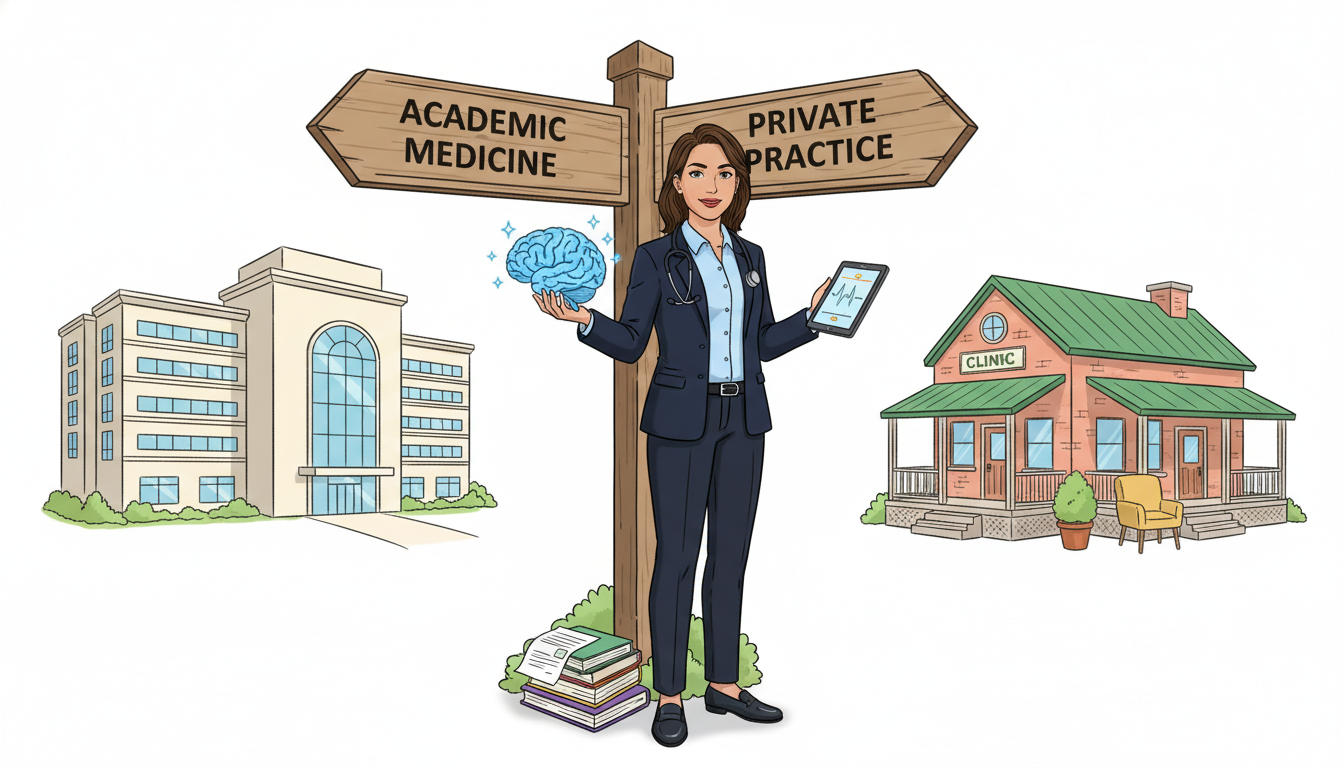
Choosing between academic medicine and private practice is one of the most important decisions you will make after completing a Pediatrics-Psychiatry (peds psych) or Triple Board residency. As a non-US citizen IMG (international medical graduate), the decision is even more complex because visa status, sponsorship options, and long-term immigration plans intersect with your professional goals.
This guide is designed specifically for the foreign national medical graduate in peds psych or Triple Board training who is trying to understand which career path in medicine—academic vs private practice—fits best, both professionally and personally.
Understanding the Pediatrics-Psychiatry Landscape for Non-US Citizen IMGs
Pediatrics-Psychiatry is a relatively small, highly specialized niche. Whether you completed a combined peds psych track or a Triple Board program, you bring rare skills in developmental, behavioral, and psychiatric care for children and adolescents. That uniqueness affects your career options—but so does your immigration status.
Key Features of Peds Psych / Triple Board Careers
- Integrated training: You are comfortable managing both medical and psychiatric conditions in children.
- Systems-oriented thinking: You often work across pediatric hospitals, schools, social services, and mental health systems.
- High demand but small field: There are relatively few specialists, especially outside academic centers.
- Multiple possible identities:
- Pediatrician with psych expertise
- Child & adolescent psychiatrist with strong pediatric grounding
- Bridge between pediatrics and psychiatry services
These features influence where you may thrive. Academic medicine often leverages your integrated, systems-oriented background, while private practice may capitalize on the clinical scarcity of this dual expertise, especially in underserved communities.
Immigration-Specific Realities
As a non-US citizen IMG or foreign national medical graduate, your choices are constrained by:
- Visa category: J-1, H-1B, O-1, or pending/approved green card.
- Need for sponsorship: Academic employers are more likely to sponsor, but some private groups do as well.
- Timeline for permanent residency: This may influence whether you choose jobs with J-1 waiver options (e.g., underserved areas) vs major academic centers in large cities.
Understanding these constraints early will help you evaluate not only “What kind of career do I want?” but also “What kind of job can reasonably support my long-term immigration goals?”
Academic Medicine in Pediatrics-Psychiatry: Pros, Cons, and Visa Realities
Academic medicine includes university hospitals, children’s hospitals affiliated with medical schools, and large teaching institutions. These settings train residents, fellows, and medical students—and often lead innovation in child mental health.

What Academic Pediatrics-Psychiatry Looks Like
Most academic faculty blend several roles:
- Clinical care
- Integrated pediatric-psychiatry consult service
- Child psychiatry clinics for complex cases (e.g., autism with comorbid medical issues)
- Inpatient child psych units or pediatric wards with psychiatric comorbidity
- Teaching
- Supervising residents (peds, psych, Triple Board) and fellows
- Giving lectures, workshops, and case conferences
- Scholarly work
- Quality improvement (QI) projects
- Clinical research (e.g., ADHD in medically complex children, suicidality in chronic illness)
- Guideline development or curriculum design
- Administrative / leadership
- Program leadership (clerkship director, program director)
- Service leadership (medical director of consult liaison service)
Advantages of Academic Medicine for Non-US Citizen IMGs
Visa Sponsorship and Long-Term Stability
- Larger universities and children’s hospitals frequently sponsor:
- H-1B visas
- O-1 visas for highly accomplished physicians
- Employment-based green cards (EB-2/EB-1)
- Many institutions are cap-exempt for H-1B, reducing risk of lottery issues.
- Some academic positions in underserved regions may also qualify for J-1 waivers (e.g., Conrad 30), although this is less common than in purely primary care.
- Larger universities and children’s hospitals frequently sponsor:
Structured Mentorship and Professional Development
- Formal promotion pathways (e.g., Assistant → Associate → Full Professor).
- Mentorship in:
- Research methods
- Grant writing
- Educational scholarship
- Faculty development workshops specifically targeting career planning and academic medicine careers.
Protected Time for Non-Clinical Work
- Many academic contracts include:
- Protected research time (10–40%)
- Dedicated teaching time
- Administrative time
- This can be critical if you’re interested in:
- Child mental health advocacy
- Policy
- Research in developmental psychopathology
- Educational innovation in integrated peds-psych training
- Many academic contracts include:
Alignment with Integrated Peds-Psych Skillset
- Academic centers are more likely to:
- Have complex patients that truly need dual expertise
- Support integrated clinics (e.g., joint peds-neuropsych clinics, complex ADHD clinics, medically complex child psychiatry services)
- Value Triple Board and peds psych faculty as “bridge builders” between departments
- Academic centers are more likely to:
Reputation and Networking
- Academic affiliation strengthens:
- Chances of leadership roles in national organizations (AACAP, APA, AAP)
- Opportunities for invited talks, guideline panels
- Visibility that can support O-1 or EB-1 green card applications
- Academic affiliation strengthens:
Challenges of Academic Medicine
Lower Compensation (On Average)
- Academic salaries are usually:
- Lower than high-volume private practice
- Closer to or slightly above hospital-employed positions
- Extra compensation may come from:
- Call coverage
- Extra clinics
- Leadership stipends
- For non-US citizen IMGs supporting family abroad or trying to repay debt, this is a real consideration.
- Academic salaries are usually:
Pressure to “Produce” (Beyond Clinical Work)
- Expectations may include:
- Publishing papers or case series
- Obtaining grants
- Producing educational curricula
- If you are not truly interested in these activities, the pressure may feel burdensome.
- Expectations may include:
Slower Path to Autonomy
- You may have less control over:
- Clinic scheduling and templates
- Documentation systems
- Support staff and resources
- Institutional bureaucracy can be frustrating, especially for foreign national medical graduates used to different healthcare systems.
- You may have less control over:
Visa and Promotion Tied to Institutional Policies
- Some institutions:
- Take years to initiate green card sponsorship
- Have rigid timelines for promotion that may not reflect IMGs’ unique paths
- J-1 waiver positions may be limited or unavailable in your preferred academic location.
- Some institutions:
Who Thrives in Academic Pediatrics-Psychiatry?
You may be best suited to academic medicine if you:
- Are energized by teaching and mentoring.
- Enjoy complex, interdisciplinary cases more than high-volume straightforward visits.
- Want to shape the future of child mental health care through research, policy, or education.
- Value the prestige and structure of an academic medicine career.
- Need or strongly prefer cap-exempt H-1B or robust green card sponsorship support.
Private Practice in Pediatrics-Psychiatry: Structures, Opportunities, and Risks
“Private practice” in the US is no longer just solo practitioners in small offices. For peds psych and Triple Board graduates, private practice can include:
- Solo or group outpatient practices
- Hospital-employed models
- Large multispecialty groups (with strong pediatric or psychiatry presence)
- Telepsychiatry platforms
- Non-academic children’s hospitals with strong clinical focus

What Private Practice Looks Like in Peds Psych
Typical features:
- Clinical focus:
- Mostly outpatient visits: ADHD, anxiety, depression, behavioral issues, autism spectrum conditions with co-occurring mental health needs.
- Medication management and psychotherapy, depending on your training and practice model.
- Fewer highly complex, multi-system cases than in academic tertiary centers (but this depends heavily on region and referral patterns).
- Business orientation:
- Emphasis on productivity and patient volume.
- More direct connection between your clinical work and your income.
- Limited teaching/research:
- May host rotating residents or students occasionally, but not a core function.
- Less structured research or scholarly support.
Advantages of Private Practice for Non-US Citizen IMGs
Higher Earning Potential
- Especially in:
- High-demand regions with child psychiatry shortages.
- Underserved areas where your dual training is rare.
- You may have:
- Higher base salary
- Productivity bonuses
- Partnership or profit-sharing opportunities
- Especially in:
Greater Clinical Autonomy
- More influence over:
- Scheduling (e.g., 4-day weeks, telehealth days)
- Caseload type (more therapy vs more med management)
- Patient age range and diagnoses you focus on
- Ability to design “niche services,” e.g.:
- Integrated ADHD + learning differences clinic
- Youth transition clinic (late teens/early adults)
- Pediatric psychopharmacology consults for community pediatricians
- More influence over:
Potential for Entrepreneurship
- As your immigration status stabilizes (e.g., after obtaining a green card), you can:
- Open your own practice
- Expand into multi-clinician groups
- Offer consultation services to schools and pediatricians
- This can significantly increase both income and professional independence.
- As your immigration status stabilizes (e.g., after obtaining a green card), you can:
Flexibility with Work-Life Balance
- If you choose the right group and negotiate well, you can:
- Avoid overnight call or inpatient work.
- Set boundaries on panel size and hours.
- Create family-friendly schedules, which is particularly important if you’re managing cross-border family responsibilities.
- If you choose the right group and negotiate well, you can:
Challenges of Private Practice (Especially for Foreign National Medical Graduates)
Visa Sponsorship is Less Universal
- Some private practices:
- Do not sponsor H-1B or green cards at all.
- Are unfamiliar with immigration processes and reluctant to engage.
- Smaller or purely private practices are unlikely to be H-1B cap-exempt.
- For J-1 waiver needs:
- Private practices in Health Professional Shortage Areas (HPSAs) may qualify.
- But competition for strong, reputable employers in such areas can be intense.
- Some private practices:
Business and Regulatory Complexity
- Billing, coding, insurance contracts, malpractice coverage, and compliance are more visible and often your responsibility.
- As a non-US citizen IMG, you may have:
- Less familiarity with the US insurance system.
- Fewer mentors in your local network to help navigate business decisions.
Professional Isolation
- Fewer colleagues in your subspecialty, especially if you are the only peds-psych or Triple Board physician in the area.
- Less built-in teaching, academic discourse, or research collaboration.
- Need to be proactive about staying up to date and connected (professional societies, conferences, online networks).
Limited Scholarly and Teaching Opportunities
- If your passion is:
- Curriculum design for integrated training
- Publishing on novel peds-psych interventions
- Developing national guidelines
- You may feel professionally under-stimulated in a pure private practice setting.
- If your passion is:
Who Thrives in Private Peds Psych Practice?
You might be best suited for private practice if you:
- Strongly value autonomy over your daily schedule and clinical decisions.
- Are comfortable focusing primarily on clinical care and patient relationships.
- Want to maximize income, especially after years of training and possibly supporting family abroad.
- Have or expect to secure stable immigration status (e.g., J-1 waiver with a private employer, H-1B through a large group, or a green card).
- Are willing to learn the business side of medicine—or to join a group that handles it well.
Comparing Academic vs Private Practice: A Practical Framework for Non-US Citizen IMGs
To make the choice more concrete, consider this structured comparison through a “career decision matrix.”
1. Visa and Immigration Considerations
| Factor | Academic Medicine | Private Practice |
|---|---|---|
| H-1B sponsorship | Common, often cap-exempt | Variable; more common in large groups/hospitals |
| J-1 waiver options | Less frequent but present in some underserved academic centers | More common in underserved areas; often primary care focus but child psych sometimes eligible |
| Green card sponsorship | Often well-established processes | Variable; strong in large systems, weak in small groups |
| O-1 / EB-1 support | Easier to build credentials via research/teaching | Harder but possible; need strong clinical reputation and niche |
Action step: Before choosing a path, explicitly map your desired immigration outcome (e.g., “green card within 5–7 years”) against the type of employers that can realistically support it.
2. Professional Identity: Who Do You Want to Be?
Ask yourself:
Do you see your future self more as:
- “Dr. X, professor and national expert on pediatric psychopharmacology?”
- Or “Dr. X, trusted community child psychiatrist serving generations of families?”
Are you more motivated by:
- Publishing, teaching, building programs?
- Or direct clinical impact and practice growth?
Your answer should weigh heavily in choosing an academic medicine career vs private practice.
3. Daily Life and Workload
Academic:
- Morning: Teaching rounds with residents on the pediatric consult service.
- Midday: Outpatient clinic for complex autism + medical comorbidities.
- Afternoon: Research meeting or curriculum development.
- Evening: Prepare slides for a grand rounds talk.
Private Practice:
- Morning: Scheduled outpatient visits, a mix of new ADHD, follow-ups for anxiety/depression.
- Midday: Call from a local pediatrician asking for advice on a complex case.
- Afternoon: More visits, some telehealth, brief family meetings.
- Evening: Review notes, plan schedule, maybe respond to a few calls.
Visualizing your day-to-day routine helps clarify which environment fits your personality and energy.
4. Financial and Lifestyle Trade-Offs
Academic:
- Steady but generally lower salary.
- Strong benefits (retirement, CME funds, conference travel).
- Less direct link between extra work and extra pay.
Private Practice:
- Higher potential income, especially with full panels and efficient systems.
- May require:
- Longer hours early on.
- Higher responsibility for overhead (in solo practice).
- Potential for flexible or reduced hours later once established.
For a non-US citizen IMG, financial stability must be balanced with immigration security and long-term career satisfaction.
Strategic Career Planning: Hybrid Paths, Timing, and Long-Term Vision
You do not have to pick one path forever. Many peds psych and Triple Board physicians move between academic and private sectors as their career and immigration status evolve.
Common Hybrid or Sequential Pathways
Academic First, Then Private Practice
- Start in academic medicine to:
- Secure H-1B or green card.
- Build CV with teaching, publications, and national presentations.
- After immigration stabilizes:
- Transition to private practice for income and autonomy.
- This is particularly valuable if you’re considering O-1 or EB-1 as a foreign national medical graduate, since academic roles help you accumulate the needed evidence.
- Start in academic medicine to:
Private Practice with Academic Affiliation
- Work primarily in a private or hospital-employed clinical role.
- Hold adjunct faculty appointments:
- Supervise residents in clinic one half-day per week.
- Give occasional lectures or electives.
- Allows you to:
- Stay connected to academic medicine career opportunities.
- Continue modest teaching or research while prioritizing clinical work.
Private Practice in an Academic Town
- Join or start practice near a university or children’s hospital.
- Collaborate on:
- Shared patients
- Case conferences
- Small-scale research or QI projects
- You benefit from:
- Academic stimulation
- Community visibility
- Private practice autonomy
Steps to Choosing and Preparing for Your Path
Clarify Your 5–10 Year Goals
- Immigration status: Where do you want to be?
- Professional identity: Academic leader, master clinician, entrepreneur?
- Personal life: Family, geography, cultural community needs?
Use Residency and Fellowship Deliberately
- If leaning academic:
- Seek research mentors.
- Present at national conferences.
- Get involved in curriculum design or QI.
- If leaning private practice:
- Prioritize strong clinical volume.
- Learn about billing, documentation efficiency, and time management.
- Rotate through community practices if possible.
- If leaning academic:
Ask Employers the Right Questions When interviewing, ask specifically:
- About visa sponsorship history for non-US citizen IMG hires.
- Timeline and policies for green card filing.
- Expectations for:
- RVUs / productivity
- Teaching vs clinical vs research time
- Opportunities for:
- Leadership roles
- Protecting and customizing your clinical niche
Build a Support Network
- Connect with:
- Other foreign national medical graduates in child psychiatry and pediatrics.
- Alumni from your residency who have navigated similar decisions.
- Join relevant organizations:
- AACAP sections (e.g., International Medical Graduate groups, if available)
- AAP sections related to integrated care, mental health, or developmental-behavioral pediatrics
- Connect with:
FAQs: Academic vs Private Practice for Non-US Citizen IMG in Peds Psych
1. As a non-US citizen IMG, is academic medicine “safer” than private practice for my visa?
Often, yes—especially early in your career. Academic centers and large teaching hospitals are more familiar with H-1B, J-1 waiver, and green card processes and may be H-1B cap-exempt. This can reduce risk and delays. However, some large private groups and hospital-employed settings also provide robust sponsorship. Always verify an employer’s immigration track record before signing.
2. Can I build an academic medicine career if I start in private practice?
It’s possible but more challenging. To return to academia later, maintain:
- Strong clinical reputation and subspecialty expertise.
- Ongoing involvement in teaching (e.g., adjunct faculty) or quality projects.
- Participation in professional organizations and presentations.
Starting in academia and moving to private practice tends to be easier than the reverse, but with intentional effort and networking, both directions are possible.
3. How does peds psych / Triple Board training affect my options compared to general child psychiatry?
Your dual training can be a major advantage:
- In academia, it positions you as a bridge between pediatrics and psychiatry, making you attractive for integrated clinics and leadership roles.
- In private practice, you can market a unique niche, attract complex referrals, and collaborate closely with pediatricians.
However, the small size of the field means fewer targeted positions, so you may need to be flexible with geography or job descriptions.
4. What if I’m very undecided—should I still “pick a side” before graduating?
You don’t need to lock yourself into one path permanently. Instead:
- Prioritize a first job that supports your visa and green card goals.
- Seek a role with some flexibility (e.g., an academic position with heavy clinical focus, or a hospital-employed job with adjunct teaching).
Use your first 2–3 years to clarify what energizes you most—then adjust your trajectory accordingly.
Choosing between academic vs private practice in pediatrics-psychiatry as a non-US citizen IMG is not just about prestige or salary; it is about aligning your immigration pathway, professional identity, daily work, and long-term dreams. By understanding the realities of each setting, asking the right questions, and planning strategically, you can design a career path in medicine that truly fits who you are—and who you want to become.