Understanding the Landscape: Nuclear Medicine Careers for US Citizen IMGs
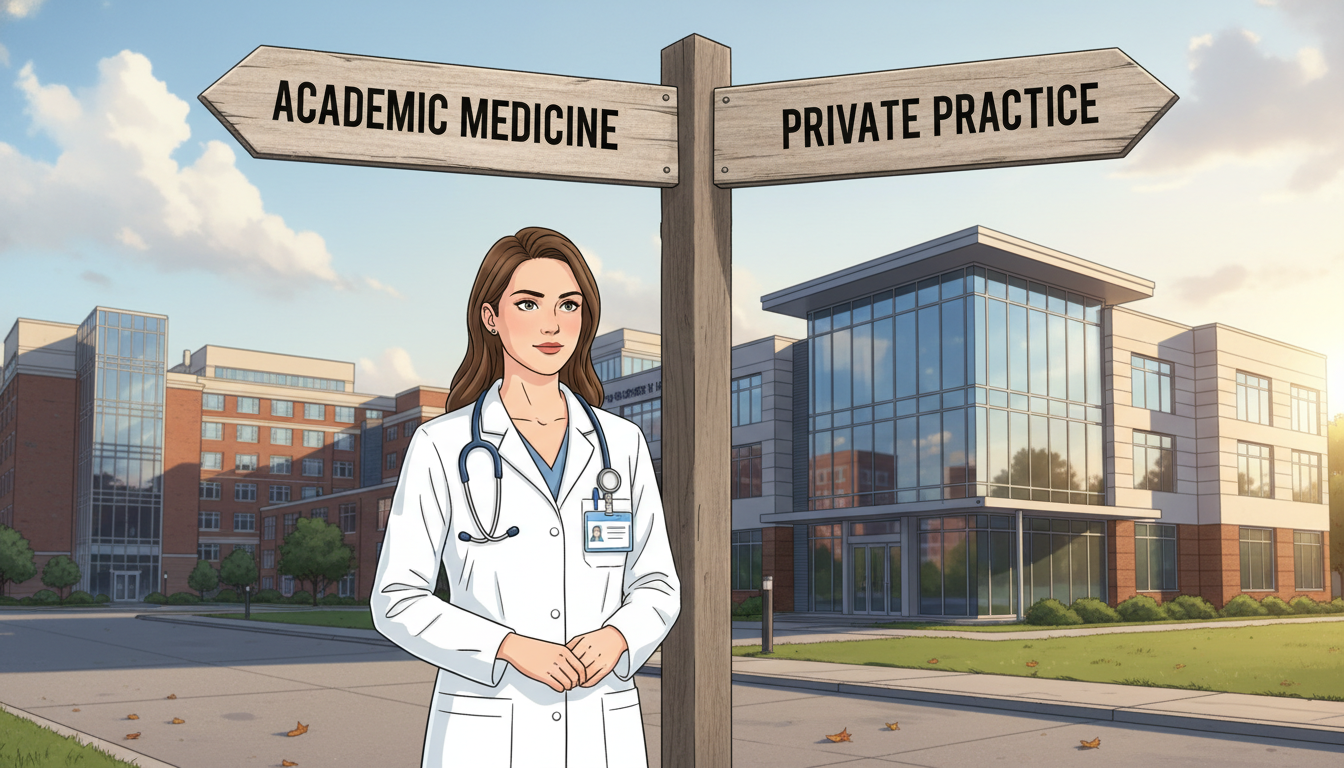
For a US citizen IMG (American studying abroad), nuclear medicine can be an attractive, somewhat less-saturated specialty with a strong imaging and physiology focus. But as you progress through or complete residency/fellowship, one of the most consequential decisions you’ll face is choosing between academic medicine and private practice.
This choice shapes:
- Your day-to-day work (case mix, teaching, research)
- Your income and financial trajectory
- Your schedule and lifestyle
- Your visa/credentialing or licensing strategy (even as a US citizen IMG, training background matters)
- Your long-term nuclear medicine career options
This article breaks down the differences between academic and private practice nuclear medicine specifically for US citizen IMGs, focusing on the nuclear medicine match, early-career decisions, and how each pathway supports different long‑term goals.
Training Foundations: How Your Path Shapes Your Options
Even though you’re looking at post-residency and job market decisions, your training pathway heavily influences what is realistic and competitive—especially for a US citizen IMG.
Common Training Routes into Nuclear Medicine
By the time you’re deciding academic vs private practice, you may have come through one of these:
Diagnostic Radiology (DR) Residency + Nuclear Medicine or Nuclear Radiology Fellowship
- Most common modern route into imaging-heavy nuclear medicine roles.
- Highly competitive DR programs may be harder to access for a US citizen IMG, but community and mid-tier academic programs are attainable with a solid application.
Direct Nuclear Medicine Residency (3-year)
- Less common but still viable.
- May limit job options in some markets unless combined with strong PET/CT and cross-sectional imaging experience.
Internal Medicine or Other Primary Specialty + Nuclear Medicine Fellowship
- More traditional/older pathway; in some regions, now less favored for purely imaging practices.
- May be more aligned with hybrid clinical–imaging roles or academic niche positions.
For US citizen IMGs, the training choice affects:
- Academic medicine career potential (e.g., DR + fellowship often preferred by academic radiology departments).
- Competitiveness for certain nuclear medicine residency or fellowship programs.
- Flexibility to work in mixed imaging and nuclear medicine private groups.
Key takeaway: To keep both academic and private practice options open in nuclear medicine, aim for the broadest and most marketable training possible (e.g., DR + strong nuclear experience or a robust nuclear medicine residency with significant PET/CT exposure).
Academic Nuclear Medicine: Pros, Cons, and Realities
Academic medicine in nuclear medicine typically means working in a university or major teaching hospital, often affiliated with a medical school or large health system.
What Academic Nuclear Medicine Looks Like Day to Day
Core components often include:
Clinical work
- Interpreting PET/CT, SPECT, and planar nuclear medicine studies
- Overseeing stress tests, radionuclide therapies (e.g., I-131, Lu-177, Ra-223, I-131 mIBG)
- Multidisciplinary tumor boards and case conferences
Teaching
- Medical students, residents (radiology, internal medicine), and fellows
- Bedside or workstation teaching while reading studies
- Formal lectures, board reviews, and small-group sessions
Research / Scholarly activity
- Clinical trials (especially in theranostics and oncology imaging)
- Outcomes and quality improvement projects
- Imaging protocol optimization
- Writing papers, abstracts, and book chapters
Academic administration
- Serving on committees
- Helping with program accreditation and curriculum development
- Participating in department and hospital-level initiatives
Advantages of an Academic Medicine Career for US Citizen IMGs
Structured Mentorship and Professional Development
- Academic centers often have:
- Formal mentorship programs
- Protected time for scholarly activities
- Faculty development workshops (teaching, leadership, research methods)
As a US citizen IMG, this environment can help you:
- Build a recognizable academic profile (CV) that may offset any bias from being an IMG.
- Develop credibility through publications, presentations, and committee roles.
- Academic centers often have:
Niche Expertise and Cutting-Edge Technology
- Academics are typically first adopters of:
- Theranostic therapies (e.g., PSMA, DOTATATE)
- New PET tracers and hybrid imaging (PET/MR, advanced PET/CT)
- Quantitative imaging, AI tools, and novel radiopharmaceuticals
This is ideal if you want a subspecialized nuclear medicine career, especially in fields like:
- Oncologic PET/CT
- Molecular imaging
- Radiotheranostics
- Academics are typically first adopters of:
Clear Pathway to Leadership and Academic Promotion
- Instructor → Assistant Professor → Associate Professor → Professor
- Potential roles:
- Program Director or Associate PD
- Section Chief of Nuclear Medicine
- Vice Chair or Chair of Radiology / Nuclear Medicine
These roles are especially valuable if you envision a long-term academic medicine career with influence over education and research.
Stable Income with Strong Non-Financial Rewards
- Compensation might be lower than comparable private practice positions, but:
- Income is usually stable and predictable.
- Benefits (retirement, health, CME support) are often robust.
- Job stability tends to be good at well-funded institutions.
- Compensation might be lower than comparable private practice positions, but:
Immigration/Regulatory Issues Simplified (Even as a US Citizen IMG)
- While you don’t need a visa as a citizen, academic centers:
- Are often more familiar with credentialing graduates from international schools.
- May be more willing to look past pedigree if you have strong scholarly promise.
- While you don’t need a visa as a citizen, academic centers:
Challenges of Academic Nuclear Medicine
Lower Compensation Compared to Private Practice
- Academic salaries for nuclear medicine/radiology may be:
- 20–40% lower than high-earning private practice groups (varies significantly by region).
- Supplementary income (moonlighting, extra call) may help but generally won’t fully close the gap.
- Academic salaries for nuclear medicine/radiology may be:
Publish or Perish Culture (to Varying Degrees)
- To advance academically:
- You may need ongoing publications, grants, or leadership roles.
- Pressure for productivity can be challenging if you mainly enjoy clinical work.
- To advance academically:
Bureaucracy and Institutional Politics
- Slower decision-making for:
- Equipment purchases
- Hiring techs or admin staff
- Implementing new clinical protocols
- Promotion and resource allocation sometimes influenced by departmental politics.
- Slower decision-making for:
Heavier Teaching and Administrative Loads
- Time spent on education and committees:
- Can be rewarding,
- But limits time for high-volume clinical reads that might boost income elsewhere.
- Time spent on education and committees:
Example: US Citizen IMG in Academic Nuclear Medicine
- Profile: American studying abroad in Eastern Europe; completed IM residency + nuclear medicine residency at a US academic center.
- Position: Assistant Professor in Nuclear Medicine at a large university hospital.
- Daily mix:
- 60% clinical (PET/CT, radionuclide therapy, SPECT/CT).
- 20% teaching residents and fellows.
- 20% research in novel PET tracers for neuro-oncology.
Outcome: Slightly lower salary than peers in private practice, but:
- Enjoys research, tumor boards, and subspecialty recognition.
- Building a strong CV with the goal of being Section Chief in 8–10 years.
Private Practice Nuclear Medicine: Pros, Cons, and Day-to-Day Realities
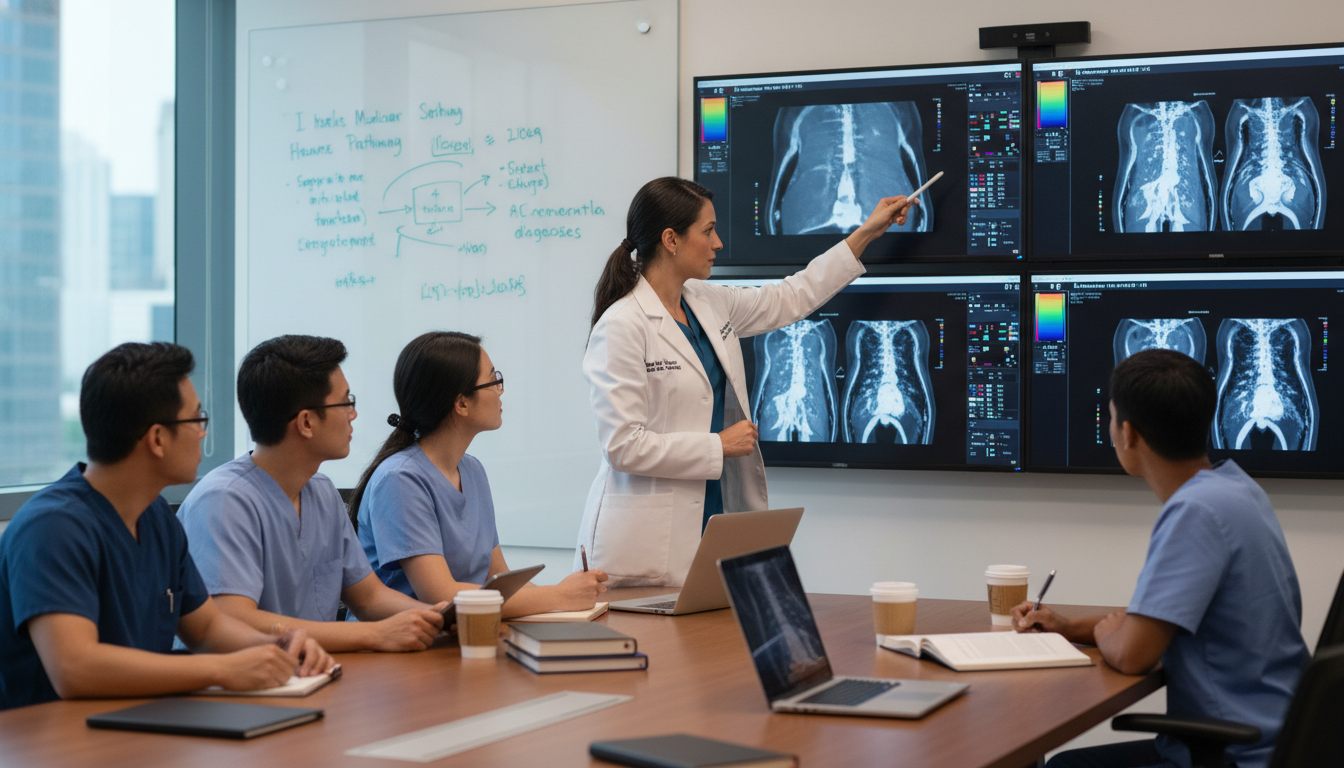
Private practice for nuclear medicine physicians often occurs within radiology groups that staff community hospitals, imaging centers, or multi-specialty practices. In some regions, dedicated nuclear medicine practices or outpatient PET centers also exist.
What Private Practice Nuclear Medicine Looks Like
Common features include:
High-volume clinical work
- PET/CT (often oncologic and cardiac)
- SPECT/CT and planar studies
- Cardiac stress testing and myocardial perfusion
- Limited radionuclide therapies (depending on practice setup)
Limited or no formal teaching
- Some practices have residents or fellows (e.g., if affiliated with a teaching hospital), but many do not.
- Teaching is usually informal and not a major time commitment.
Minimal research
- Quality improvement and protocol optimization do occur, but little expectation for formal publications or grants.
Business and operational considerations
- Coverage contracts with hospitals and imaging centers
- RVU-based productivity models
- Negotiations with administrators and payers
- Practice-building and referral relationships
Advantages of Private Practice for US Citizen IMGs
Higher Earning Potential
- In many markets, private practice nuclear medicine/radiology physicians:
- Earn significantly more than academic counterparts.
- Have bonus potential based on productivity (RVUs) and group performance.
- Over a career, this can result in a substantially higher net worth and earlier financial independence.
- In many markets, private practice nuclear medicine/radiology physicians:
Faster Path to Financial Stability
- For US citizen IMGs who may have:
- Higher debt from attending medical school abroad + US exams + extra clinical experiences, private practice can offer a quicker route to:
- Repaying loans
- Buying a home
- Saving for retirement and other long-term goals
- For US citizen IMGs who may have:
Clinical Focus Without Research Pressure
- Ideal if you:
- Love interpreting studies
- Enjoy efficient, high-volume reading
- Prefer not to publish or chase grants
- Ideal if you:
Potential for Partnership and Ownership
- Many private groups offer:
- Partnership tracks (2–5 years is common)
- Profit-sharing
- Ownership in imaging centers, equipment, or buildings
This can be particularly attractive if you enjoy:
- Business strategy
- Entrepreneurial aspects of medicine
- Having direct influence over practice decisions
- Many private groups offer:
Flexibility in Job Market and Geography
- Private practice jobs often exist in:
- Suburbs, smaller cities, and rural areas underserved by academic centers.
- This can open doors for a US citizen IMG who:
- May face subtle bias from major academic powerhouses.
- Values location flexibility for family or lifestyle reasons.
- Private practice jobs often exist in:
Challenges of Private Practice Nuclear Medicine
Job Market Variability
- Some regions have:
- Saturated radiology markets
- Limited full-time nuclear medicine-only jobs
- Many groups prefer:
- Physicians who can read general radiology plus nuclear/PET
- DR-trained radiologists with strong nuclear competencies
- Some regions have:
Less Structured Mentorship and Academic Support
- You may have:
- Fewer formal mentorship programs
- Limited opportunities for recognized academic output
- If you later decide to pursue an academic medicine career, your CV might lack:
- Publications
- Teaching portfolios
- Academic titles
- You may have:
Business and Productivity Pressures
- RVU or productivity-based compensation can feel:
- Stressful in times of low volume
- Demanding if the practice expects high throughput
- Group dynamics:
- Unequal distribution of call or less desirable sites
- Tension between partners and newer associates
- RVU or productivity-based compensation can feel:
Potential Vulnerability to Market Changes
- Reimbursement cuts
- Hospital contract losses
- Consolidation by large corporate entities
- All can affect income and job stability.
Example: US Citizen IMG in Private Practice Nuclear Medicine
- Profile: American who went to Caribbean med school, matched into a community DR residency with strong nuclear rotation, then completed a PET/CT-focused fellowship.
- Position: Associate in a private radiology group serving several community hospitals and outpatient centers.
- Daily mix:
- 50–60% oncologic PET/CT and general nuclear medicine.
- 40–50% CT and MRI of chest/abdomen/pelvis.
- Limited involvement in teaching; no research obligations.
Outcome:
- Income significantly higher than a comparable academic role.
- Enjoys the clinical focus and financial upside but has less opportunity for formal academic recognition.

Academic vs Private Practice: Head-to-Head Comparison for US Citizen IMGs
1. Competitiveness and the Nuclear Medicine Match
As a US citizen IMG, your pathway into either environment begins much earlier—during residency and the nuclear medicine match (or subsequent fellowship match).
Academic trajectory is easier if:
- You match into:
- University-based DR programs
- Reputable nuclear medicine residencies
- You:
- Engage in research during residency
- Present at nuclear medicine or radiology conferences
- Build relationships with faculty who can advocate for you
Private practice trajectory is easier if:
- You:
- Train in a busy community program with strong general imaging + nuclear volume
- Become comfortable with a wide case mix, not just PET/CT
- Develop efficiency and speed in interpreting studies
Actionable advice for US citizen IMGs still in or entering training:
- If unsure, keep both paths open:
- Seek opportunities for a few publications or case reports (supports academic prospects).
- Maintain broad imaging skills (supports private practice viability).
- Network at national meetings (SNMMI, RSNA) with both academic and private practice physicians.
2. Academic Medicine Career vs Private Practice Growth Trajectory
Academic medicine career path:
- Early stage:
- Assistant Professor with emphasis on clinical + some scholarly work.
- Mid-career:
- Potential leadership: Program Director, Section Chief, Associate Program Director.
- Promotion to Associate Professor.
- Late career:
- Full Professor, major leadership roles (Vice Chair, Chair).
- National/international recognition in a niche (theranostics, neuroimaging, etc.).
Private practice growth path:
- Early stage:
- Associate or employee physician (2–5 years).
- Mid-career:
- Partnership with profit-sharing and decision-making.
- Perhaps leadership roles within the group (president, managing partner).
- Late career:
- Senior partner, partial retirement options (part-time work, teleradiology).
- Potential sale of practice or equity events if practice is acquired.
3. Lifestyle and Work–Life Balance
Both environments can offer good or poor work–life balance depending on:
- Call structure
- Group culture
- Institutional demands
Academics:
- May offer more predictable schedules, especially if:
- Night float, resident coverage, or teleradiology is robust.
- But:
- Grant deadlines, promotion expectations, and committee work can add evening/weekend obligations.
Private practice:
- Can be intense in early years, especially:
- In high-volume practices.
- Pre-partnership phases.
- But:
- Once established, some groups offer flexible schedules, part-time options, or “lifestyle” positions with lower pay but more time off.
As a US citizen IMG, consider:
- How important is rapid income growth (debt, family obligations)?
- How much do you value:
- Teaching and research?
- Flexibility and entrepreneurial activities?
4. Long-Term Flexibility: Switching Between Paths
From Academic → Private Practice
- Generally easier if you:
- Maintain high-volume clinical skills.
- Stay comfortable with general imaging if you’re DR-trained.
- Potential employer concerns:
- Whether your pace and volume expectations match private practice norms.
- Whether you’re okay losing academic title/status for higher pay and different expectations.
From Private Practice → Academic
- More challenging, but not impossible:
- You may be perceived as having insufficient scholarly activity.
- You might start at a lower academic rank.
- To maintain the option:
- Publish occasionally (case reports, review articles).
- Stay involved with national societies and conferences.
- Participate in informal teaching if your practice allows.
US citizen IMG tip:
- If you start in private practice but think you may want an academic medicine career later:
- Consider positions that keep you in contact with teaching hospitals or residents.
- Seek adjunct faculty appointments if local universities allow it.
Choosing Your Career Path in Medicine: A Decision Framework for US Citizen IMGs
When choosing a career path in medicine—and specifically in nuclear medicine—it helps to replace vague pros/cons with concrete questions.
Step 1: Clarify Your Core Motivations
Ask yourself:
Do I derive energy from:
- Teaching learners and mentoring trainees?
- Publishing and presenting research?
- High-volume, efficient clinical work?
- Building and leading a business?
What do I want to be known for 10–15 years from now?
- Nationally recognized theranostics expert? (often academic)
- Highly respected local imaging leader with a thriving group? (often private practice)
- Hybrid: part-time academic, part-time private practice?
Step 2: Map Your Current Strengths and Limitations
As a US citizen IMG:
Strengths might include:
- Resilience and adaptability (you navigated an IMG pathway).
- Strong clinical or test-taking skills.
- Experience in both international and US medical systems.
Limitations might include:
- Less brand-name recognition for your medical school.
- Need to work harder to overcome initial skepticism from some employers.
Use this to your advantage:
- In academics, emphasize:
- Your perseverance, research interest, and global perspective.
- In private practice, highlight:
- Your work ethic, clinical volume experience, and ability to handle diverse case mixes.
Step 3: Assess Your Financial Needs and Risk Tolerance
- How much educational debt do you carry?
- Do you have dependents or family obligations?
- Are you comfortable trading:
- Higher short- and mid-term income for reduced academic recognition?
- Or vice versa?
For some US citizen IMGs, the combination of:
- High debt
- Desire for geographic flexibility
makes private practice more appealing—at least for the first 10–15 years of their nuclear medicine career.
Step 4: Explore Hybrid and Transitional Options
Not all careers fit neatly into “academic” or “private” boxes.
Potential hybrids:
- Academic-affiliated private groups
- Private practice group reads for a teaching hospital.
- Limited, but meaningful teaching opportunities.
- Part-time academic appointments
- You work primarily in private practice but hold a voluntary or part-time faculty title and participate in teaching or tumor boards.
- Industry and clinical trial roles
- You work in private practice but collaborate with industry or academic centers on theranostic trials, gaining quasi-academic experience.
This hybrid approach can be particularly appealing to US citizen IMGs who:
- Want high earning potential but also:
- A modest academic footprint
- Conference visibility
- Opportunities to pivot later.
FAQs: Academic vs Private Practice Nuclear Medicine for US Citizen IMGs
1. As a US citizen IMG, do I have a realistic chance of an academic nuclear medicine career?
Yes. Academic nuclear medicine is often more open to US citizen IMGs than some other competitive specialties, especially if you:
- Train at a US residency or fellowship with a solid reputation.
- Build a track record of research or scholarly work.
- Establish strong relationships with mentors who will advocate for you.
Your medical school may not be highly ranked, but your US training, board scores, publications, and clinical excellence can absolutely position you for an academic medicine career.
2. Is private practice nuclear medicine still viable, given the shift toward DR radiologists handling many nuclear imaging studies?
In many regions, yes—with nuance:
- Pure nuclear medicine-only roles are less common, especially in smaller markets.
- Practices often prefer DR-trained physicians who can handle:
- PET/CT
- SPECT/CT
- General CT, MRI, and radiography
For long-term viability in private practice, a broad radiology skill set plus strong nuclear expertise is typically more marketable than a narrow nuclear-only focus.
3. Can I switch from private practice back to academia later?
It’s possible but requires planning:
- Maintain some scholarly activity (e.g., case reports, small studies, invited talks).
- Stay active in professional organizations (SNMMI, RSNA).
- Seek adjunct faculty or teaching roles if your practice is near an academic center.
If you pivot later, you might:
- Enter at a more junior academic rank than your years in practice might suggest.
- Need to demonstrate recent scholarly productivity and engagement.
4. How should a US citizen IMG decide between academic and private practice if they’re truly undecided?
If you’re uncertain:
During training, keep both doors open:
- Do some research.
- Maintain broad imaging skills.
- Seek mentors in both academics and private practice.
For your first job, consider:
- Joining an academic-affiliated private group or “hybrid” environment.
- Taking a role where you can at least teach or engage in limited research.
Set a 3–5 year checkpoint:
- Reassess your satisfaction with:
- Income
- Lifestyle
- Intellectual challenges
- Adjust accordingly—either deepen your academic involvement or move toward a more purely private practice model.
- Reassess your satisfaction with:
In the end, whether you choose academic medicine or private practice in nuclear medicine, your identity as a US citizen IMG does not limit you to one path. Your training choices, early-career decisions, and intentional career planning will matter far more than the country where you earned your MD. By aligning your work setting with your values, strengths, and long-term goals, you can build a fulfilling, sustainable nuclear medicine career in either environment—or at the intersection of both.