Understanding Your Options: Why This Decision Matters So Much for a Non‑US Citizen IMG
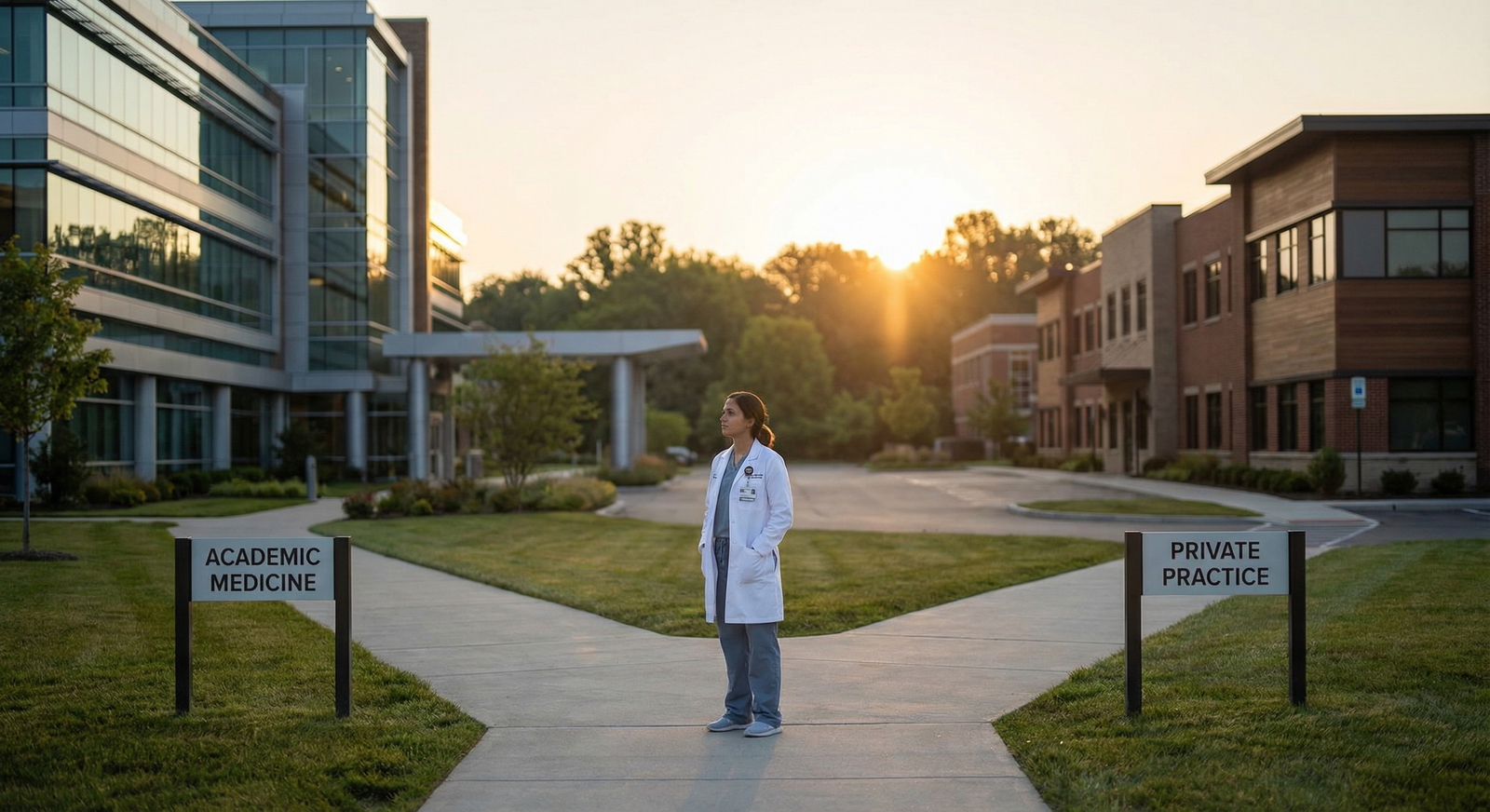
For a non-US citizen IMG in pediatrics, the choice between academic medicine and private practice is not just about work setting—it can shape your visa options, competitiveness for future positions, research and leadership opportunities, and even your long-term ability to stay and grow in the United States.
You are making this decision in the context of:
- Visa status (J-1 vs H-1B, waiver needs, permanent residency plans)
- Being a foreign national medical graduate who may need additional support, mentorship, and sponsorship
- The realities of the peds match (often more IMG-friendly than some other specialties, but still competitive for top academic centers)
- Your long-term career path in medicine—clinical focus, research, teaching, leadership, or a mix of all three
This article breaks down the differences between academic pediatrics and private practice from the specific perspective of a non-US citizen IMG, and offers concrete strategies to help you decide, prepare, and transition successfully after residency.
Core Differences: Academic Pediatrics vs Private Practice
Before considering visas, green cards, or job searches, it helps to clearly define the two major paths.
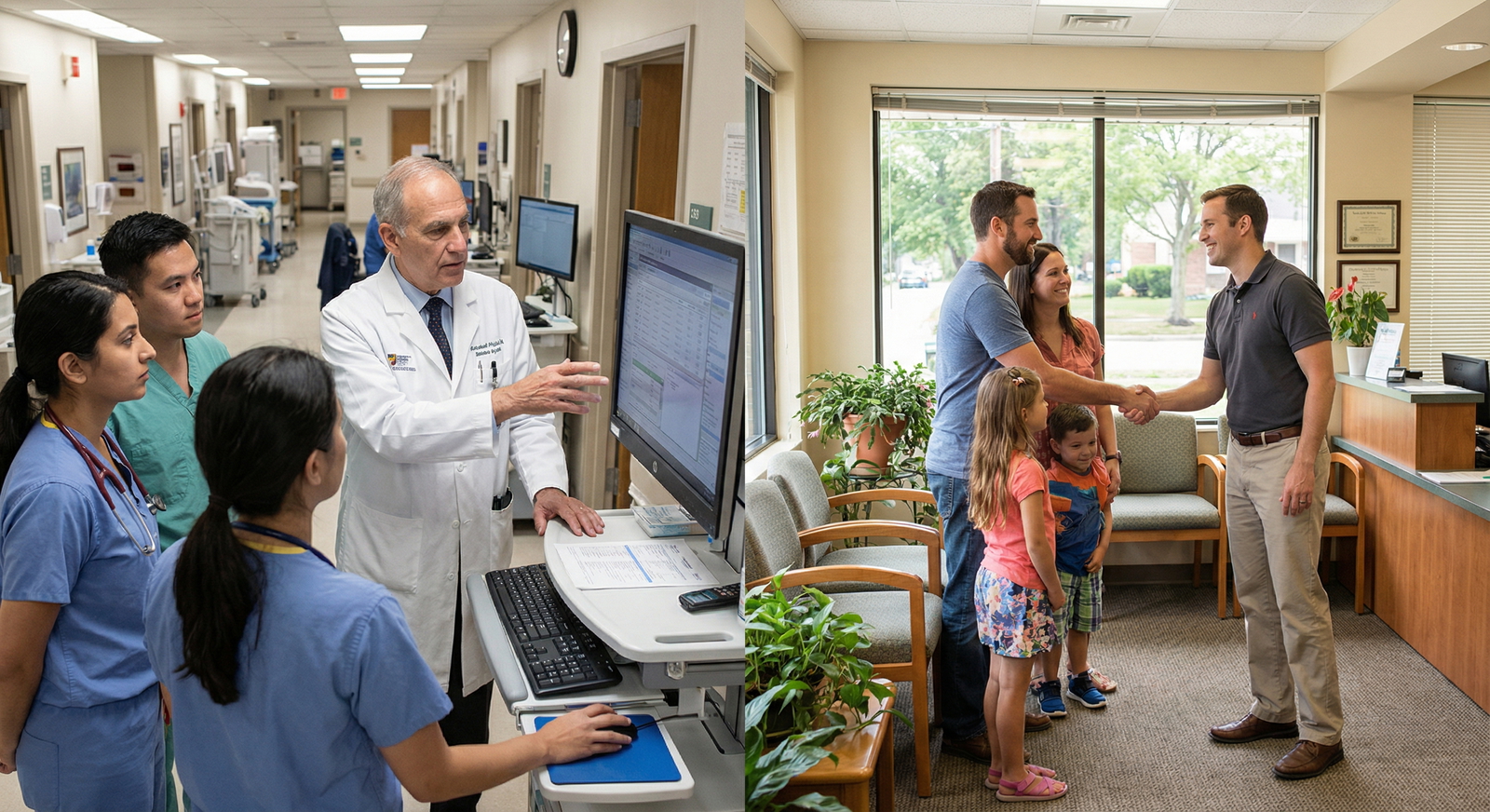
What Is Academic Pediatrics?
Academic pediatrics is typically practiced in:
- University-affiliated children’s hospitals
- Teaching hospitals with pediatric residency or fellowship programs
- Large health systems with significant teaching and/or research missions
Core features:
- Multiple roles: clinical care, teaching, research, administration
- Often salaried with institutional benefits
- Strong emphasis on evidence-based practice, guidelines, and quality initiatives
- Regular involvement with medical students, residents, and sometimes fellows
Common academic roles in pediatrics include:
- Inpatient pediatric hospitalist
- General pediatric clinic attending in a teaching clinic
- Subspecialist (e.g., pediatric cardiology, heme-onc, NICU, PICU, endocrinology)
- Clinician-educator (focus on teaching)
- Physician-scientist (research-heavy roles)
What Is Private Practice in Pediatrics?
Private practice generally refers to:
- Outpatient community pediatric offices
- Group practices or multi-specialty groups
- Hospital-employed community positions with minimal formal teaching or research
Private practice may be:
- Independently owned by physicians
- Part of a large corporate group
- Hospital-owned or health-system employed but non-academic in function
Core features:
- Majority of time in direct patient care (clinic, sometimes newborn nursery)
- Revenue often tied to productivity (RVUs, patient volume, procedures)
- Less formal teaching or research
- More control over your daily schedule and clinical style in many settings
Many foreign national medical graduates ultimately end up in community roles, including private practice, due to J-1 waiver positions, geographic availability, and visa sponsorship dynamics.
Daily Life and Workload: What Your Week Really Looks Like

Clinical Work: Breadth, Complexity, and Volume
Academic Pediatrics
- You are more likely to see:
- Complex, rare, or multi-system pediatric diseases
- Children referred from community pediatricians for subspecialty care
- High-acuity patients in inpatient, NICU, or PICU settings
- Case mix is often more intellectually challenging and varied.
- Outpatient clinics may be fewer days per week if you have teaching or research obligations.
- Documentation demands can be significant, especially in tertiary centers with complex care plans.
Private Practice Pediatrics
- You are more likely to see:
- Common pediatric conditions (URIs, asthma, ADHD, obesity, eczema, anxiety, depression)
- Well-child visits, vaccinations, school physicals
- Fewer medically complex cases (those are usually referred out)
- Volume is often higher—more patients per day to maintain revenue.
- The pace may feel faster and more business-oriented.
Example:
If you love managing rare metabolic disorders or complex congenital heart disease, academic pediatrics is a better fit. If you enjoy watching your patients grow up from newborn to adolescent and building long-term family relationships, private practice can be extremely fulfilling.
Teaching and Education Responsibilities
Academic Pediatrics
- Teaching is central:
- Supervising residents and medical students
- Giving lectures, small group sessions, and simulation training
- Participating in curriculum development or evaluation
- Your performance may be evaluated based on teaching evaluations and educational contributions.
- You may have protected time for teaching (and sometimes an official educator role).
Private Practice Pediatrics
- Formal teaching is limited:
- Occasional precepting of students if practice is affiliated with a medical school
- Informal teaching to nurses, MAs, and sometimes community programs
- Most of your teaching energy goes to educating patients and families rather than trainees.
Research, Scholarship, and Academic Output
Academic Pediatrics
- Expect significant opportunity—and sometimes pressure—to:
- Participate in clinical research, QI projects, or basic science
- Present at conferences
- Publish in peer-reviewed journals
- You may have “protected time” for research, though how real this is depends on your division/department.
- Your promotion often depends on:
- Publications
- Grants
- National presentations
- Educational innovations or leadership
Private Practice Pediatrics
- Research is usually limited:
- Simple QI projects (vaccination rates, asthma control)
- Participation in multi-site practice-based research networks (optional)
- Scholarship is rarely required for job security or advancement.
- If you truly enjoy research and want a strong research academic medicine career, private practice is usually not the optimal primary setting.
Compensation, Lifestyle, and Job Security
Salary and Earning Potential
Compensation can vary widely by region and setting, but general trends:
Academic Pediatrics
- Often lower starting salaries than private practice, especially in big coastal cities.
- Salary grades often structured by rank (Assistant, Associate, Full Professor).
- Potential extra income from:
- Extra clinical shifts
- Administrative stipends
- Grants (protected time, salary support)
- Financial upside may be modest but stable.
Private Practice Pediatrics
- Frequently higher base or total compensation in many markets, especially suburban and rural.
- Productivity-based pay (RVUs, bonuses) can significantly increase earnings.
- Opportunity for partnership/ownership can further expand income and control over the practice.
For a non-US citizen IMG, the higher earnings in private practice can be attractive, especially if you are supporting family abroad, paying loans, or planning for a future green card.
Lifestyle, Hours, and Flexibility
Academic Pediatrics
- Schedules can vary dramatically:
- Hospitalists: block schedules with intense inpatient weeks and off-weeks
- Subspecialists: mix of clinic, inpatient consults, and call
- General pediatric attendings: combination of clinics, teaching, and admin
- The culture of academic centers may sometimes lean toward longer hours due to research, committee work, and teaching demands.
- Vacation and parental leave policies are often robust and well-structured.
Private Practice Pediatrics
- Typically more predictable clinic hours (e.g., 8–5) but:
- Some early morning, evening, or weekend clinics
- Call responsibilities (phone calls, newborn nursery, or ED coverage)
- If in a group practice, lifestyle can be excellent once call and workload are shared.
- Ownership or leadership roles may increase your administrative responsibilities.
Job Stability and Career Growth
Academic Pediatrics
- University hospitals and large health systems may offer:
- Strong job stability once you’re established and performing
- Clear promotion pathways (Assistant to Associate to Full Professor)
- Academic promotion may be slower for IMGs who:
- Have less research background
- Face visa-related constraints in moving between institutions
- However, being in a major institution can be an advantage for networking and leadership roles.
Private Practice Pediatrics
- Stability depends on:
- Financial health of the practice
- Local competition
- Payer mix (Medicaid vs private insurance)
- Career growth may mean:
- Partnership/ownership
- Medical director roles
- Leadership in local hospital committees, ACOs, etc.
- Career ladder is less formal, but income growth can be significant.
Visa, Waivers, and Immigration: Academic vs Private Practice
For a non-US citizen IMG, this section is often the most decisive. The choosing career path in medicine for you is tightly linked to visa realities.

Common Visa Pathways in Pediatrics
J-1 Visa (ECFMG sponsored)
- Most common for pediatric residents and fellows.
- Requires returning to home country for two years after training OR completing a J-1 waiver job.
H-1B Visa
- Less common in pediatrics but used in some residency/fellowship programs and jobs.
- Can be advantageous because it avoids the J-1 home-return requirement.
- Cap-exempt H-1Bs are available for universities and some nonprofit hospitals.
Permanent Residency (Green Card)
- Typically employer-sponsored (EB-2, EB-2 NIW, sometimes EB-1 for academic stars).
- Timelines depend on your country of origin and category.
Academic Medicine and Visa/Green Card Considerations
Advantages:
- Many universities and major children’s hospitals are H-1B cap-exempt, meaning:
- They can sponsor H-1B outside the annual lottery.
- This can be very attractive if you are converting from J-1 to H-1B or starting on H-1B.
- Academic centers frequently have:
- Dedicated immigration/legal teams
- Experience sponsoring green cards (EB-2, sometimes EB-1 for researchers)
- If you have strong research output or unique expertise, you may qualify for:
- EB-1 (extraordinary ability or outstanding researcher)
- EB-2 NIW (national interest waiver), especially if your work contributes to national health priorities (e.g., pediatric obesity, asthma, mental health, rural child health).
Challenges:
- Many academic jobs don’t qualify as J-1 waiver positions (especially in popular metropolitan areas).
- J-1 waivers are usually in underserved or rural locations.
- If you finish fellowship on a J-1, transitioning to academic positions often requires:
- First completing a J-1 waiver job in a qualifying location (often community or private practice), then later moving into academia.
- Academic salaries may be lower, which can affect finances while you navigate immigration processes.
Private Practice and Visa/Green Card Considerations
Advantages:
- Many J-1 waiver jobs in pediatrics are in:
- Community hospitals
- Rural or underserved outpatient clinics
- Federally Qualified Health Centers (FQHCs)
- These positions are often non-academic, pushing you toward community or private practice initially.
- Some larger private groups or hospital-employed community practices may:
- Sponsor H-1B (cap-subject, so lottery risk unless hospital is cap-exempt)
- Support green card applications after a period of employment
Challenges:
- Small private practices may:
- Be unfamiliar with immigration processes
- Be reluctant to sponsor visas or green cards due to legal costs/complexity
- If on a J-1, your waiver job must:
- Meet state or federal program requirements
- Often be in a Health Professional Shortage Area (HPSA) or underserved region
- Private practice settings usually cannot offer cap-exempt H-1Bs, making the H-1B lottery a potential risk.
Practical Strategy for a Non-US Citizen IMG:
A common pathway for non-US citizen IMG pediatricians is:
- Pediatrics residency on J-1.
- Possibly fellowship on J-1 (if subspecializing).
- J-1 waiver job in community or rural pediatrics (often private practice vs academic leaning heavily toward private/community).
- During waiver job:
- Start or continue green card process (EB-2, NIW, etc.).
- Build clinical and leadership experience.
- After waiver fulfillment and more stable immigration status:
- Consider transitioning to academic medicine if desired.
This path means your first job after residency may not match your ideal long-term setting, but it can be a strategic bridge.
Personality, Values, and Long-Term Career Vision
Beyond visas and salaries, think deeply about who you are as a physician and what energizes you.
Who May Thrive in Academic Pediatrics?
Academic pediatrics may be a better fit if you:
- Enjoy constantly teaching and mentoring others.
- Feel excited by complex, rare, and challenging cases.
- Like participating in research, QI, or scholarly writing.
- Appreciate a structured environment with committees, conferences, and formal evaluations.
- Want a strong chance at national visibility and leadership roles in pediatric societies and guideline development.
- Are open to moderate or lower income in exchange for intellectual and academic rewards.
Example Profile:
Dr. A, a foreign national medical graduate from India, completed pediatrics residency and a pediatric nephrology fellowship on J-1. During training, she published several papers on childhood CKD and presented at PAS. She values complex pathophysiology and enjoys working with residents. After a J-1 waiver job in a moderately underserved region (community hospital with some teaching), she transitions to a university-based nephrology division that supports her research and sponsors her EB-1 green card. Her long-term goal is division leadership.
Who May Thrive in Private Practice Pediatrics?
Private practice pediatrics may be a better fit if you:
- Love continuity and long-term relationships with families.
- Prefer practical, efficient, and high-volume clinical work.
- Are less interested in publications and national academic recognition.
- Want higher earnings potential sooner.
- Feel comfortable with or interested in the business side of medicine.
- Prefer more autonomy in style and pace of practice.
Example Profile:
Dr. B, a non-US citizen IMG from Nigeria, finishes pediatrics residency on J-1. He enjoys general pediatrics, adolescent medicine, and preventive care but isn’t passionate about research. He accepts a J-1 waiver job in a multi-physician community clinic in a medically underserved area. The group sponsors his H-1B and later an EB-2 green card. Over time, he becomes a partner, helps expand behavioral health services, and becomes medical director. His career satisfaction comes from watching his patients grow and building a stable life for his family.
Hybrid and Evolving Paths
Your path does not have to be fixed forever. Many pediatricians:
- Start in private practice (often due to J-1 waiver needs) and later move into part-time academic roles (e.g., teaching clinic, hospitalist work with residents).
- Work in community settings affiliated with academic centers, providing a mix of community work and some teaching.
- Transition from full-time academic roles to community or private practice to improve lifestyle or income.
As a foreign national medical graduate, your transitions may be timed around:
- Completion of J-1 waiver obligation
- H-1B to green card progression
- Family needs (schools, spouse’s career, aging parents)
Action Plan: How to Decide and Prepare During Residency
Step 1: Honestly Assess Your Interests and Strengths
During residency:
- Notice what days you enjoy most:
- Teaching interns and students on ward rounds?
- Busy continuity clinic days?
- Scholarly projects and QI meetings?
- Ask for feedback from attendings:
- “Do you see me better suited for academic or community practice?”
- “Where do you see my strengths and gaps if I wanted an academic medicine career?”
Write down your non-negotiables:
- Must have: visa sponsorship support, geographic preferences, certain salary range.
- Nice to have: teaching, research, specific patient population, specific city type.
Step 2: Clarify Your Visa and Immigration Timeline
Meet early with:
- Your program director and GME office
- The institution’s immigration lawyer (if available)
- An independent immigration attorney (especially if your situation is complex)
Questions to clarify:
- Am I on J-1 or H-1B now?
- Do I plan to pursue fellowship? How will that affect my visa?
- What are my realistic options for J-1 waiver jobs in pediatrics?
- Can I consider academic positions directly after residency/fellowship, or will I likely need a waiver job first?
- Do I have a realistic path to EB-2 NIW or EB-1 in the future?
Step 3: Build a CV That Supports Both Options
Even if you’re leaning one way, keep doors open:
For Academic Pediatrics:
- Get involved in at least one research or QI project.
- Present at a regional or national conference.
- Seek teaching roles (simulation, lectures, near-peer teaching).
- Ask mentors for letters that highlight your academic potential.
For Private Practice:
- Develop strong outpatient skills and efficiency.
- Understand basics of practice management and billing (ask attendings or practice managers).
- Rotate in community clinics or private practice electives.
Step 4: Network Strategically
For academic careers:
- Work closely with faculty in your area of interest.
- Attend national pediatric society meetings (AAP sections, PAS, etc.).
- Ask about junior faculty positions, hospitalist roles, or clinician-educator tracks.
For private practice careers:
- Talk with community pediatricians and alumni from your program.
- Attend job fairs or hiring events.
- Ask directly about visa experience and willingness to sponsor.
Step 5: Evaluate Actual Job Offers Holistically
When offers come, compare:
- Visa/immigration support:
- Type of visa offered
- Experience with J-1 waivers or green cards
- Compensation and benefits:
- Base salary, bonus structure, call pay, sign-on, relocation
- Loan repayment programs (state or federal)
- Professional development:
- Academic titles, mentorship, promotion pathways
- Business training or leadership opportunities
- Lifestyle and location:
- Cost of living
- Schools, community support, safety
- Proximity to airports for international travel
Create a simple scoring sheet to compare academic vs private practice options concretely, rather than relying only on intuition.
FAQs: Academic vs Private Practice for Non-US Citizen IMG Pediatricians
1. As a non-US citizen IMG in pediatrics, is academic medicine harder to get into than private practice?
Not always, but top academic centers—especially in major cities—can be more competitive and may prefer applicants with strong research backgrounds and US training. For many non-US citizen IMGs, the main barrier is not academic quality but visa logistics, especially if they are on J-1 and need a waiver. Private practice or community positions are often more available in underserved areas that qualify for waivers, making them more common first jobs even for very academically strong candidates.
2. Can I move from private practice to academic pediatrics later?
Yes, it’s possible and not uncommon. To make this transition easier:
- Maintain some scholarly activity (QI projects, guideline development, local presentations).
- Keep connections with academic mentors.
- Look for community positions affiliated with teaching hospitals. Once your immigration status is stable (e.g., green card), moving into a hospitalist, clinician-educator, or subspecialty academic role can be realistic, especially if you have relevant experience and references.
3. Does one path (academic vs private practice) make it easier to get a green card?
Neither path is universally “better,” but they differ in how they support immigration:
- Academic centers often have well-established immigration offices and can sponsor cap-exempt H-1B and sometimes EB-1 or EB-2 green cards, especially for those with strong research CVs.
- Private practice/community jobs may qualify for J-1 waivers and support EB-2 or EB-2 NIW, but small practices may have less experience with immigration.
Your best path depends on your visa status, academic profile, and the specific employer’s willingness and experience with sponsorship.
4. How early in residency should I decide between academic and private practice?
You don’t need a final decision in PGY-1, but you should:
- By mid-PGY-2: Have a clear understanding of your visa constraints and general career lean (general peds vs fellowship, academic vs community).
- By early PGY-3: Start targeting job types (J-1 waiver, academic hospitalist, community pediatrician) and aligning your CV and networking accordingly.
Think of it as keeping both doors open in PGY-1–2, then narrowing your focus as your graduation date approaches and your visa timeline becomes clearer.
Choosing between academic and private practice pediatrics as a non-US citizen IMG is not simply an abstract career question; it’s deeply tied to your immigration strategy, family plans, financial goals, and personal values. By understanding the trade-offs clearly, planning early around visas, and honestly evaluating what energizes you in daily practice, you can design a path that is both professionally satisfying and strategically smart for your long-term future in the United States.