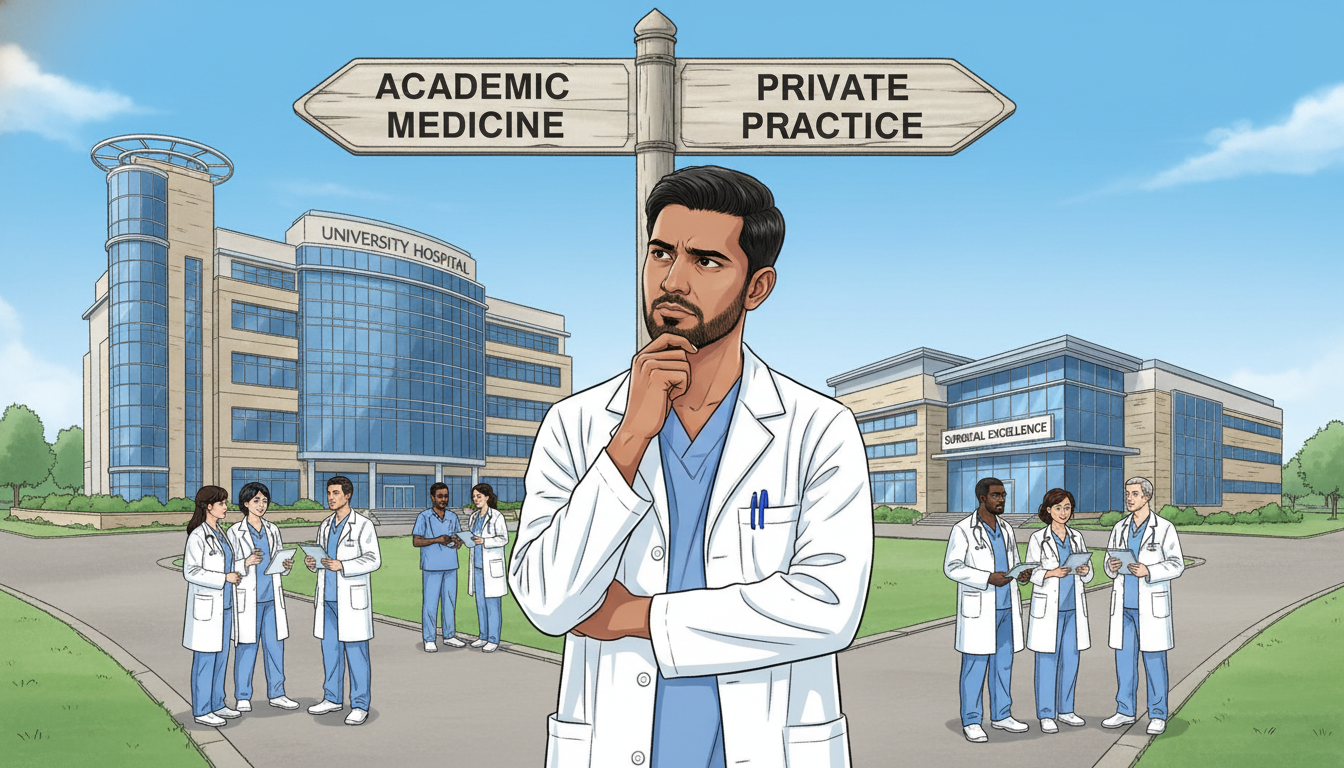
Understanding the Landscape: Academic vs Private Practice in Urology
For a non-US citizen IMG pursuing a urology residency in the United States, choosing between academic medicine and private practice after training is one of the most important career decisions you will make. It influences your visa strategy, lifestyle, income trajectory, research opportunities, and even your chances of eventually obtaining a green card.
Both paths can offer fulfilling, impactful careers—but they differ significantly in structure, expectations, and long-term implications. As a foreign national medical graduate, you have additional layers to consider: immigration status, job market dynamics, institutional sponsorship policies, and how each setting affects your future flexibility.
This guide breaks down the key differences between academic vs private practice urology from the perspective of a non-US citizen IMG, with practical examples and step-by-step advice to help you choose the path that truly fits your goals.
Core Differences Between Academic and Private Practice Urology
Before focusing on IMG-specific issues, it’s crucial to understand how these two environments differ in general.
Mission and Primary Focus
Academic Urology (Academic Medicine Career)
- Core missions:
- Patient care
- Teaching (medical students, residents, fellows)
- Research and scholarship
- Typical practice setting:
- University hospitals
- Large teaching hospitals
- VA medical centers affiliated with universities
- Emphasis on:
- Complex, tertiary/quaternary referrals
- Subspecialty urology (oncology, endourology, reconstructive, pediatrics, FPMRS, etc.)
- Publishing, grants, clinical trials
- Education, mentorship, curriculum development
Private Practice Urology
- Core missions:
- Patient care
- Business sustainability and growth
- Typical practice setting:
- Community hospitals
- Independent group practices
- Large urology/surgical multispecialty groups
- Corporate/health-system–employed practices
- Emphasis on:
- Efficient, high-volume clinical care
- Broad-spectrum general urology with some subspecialty niches
- Patient satisfaction, access, revenue cycle, operations
Typical Weekly Work Content
Academic Urologist’s Week (Example)
- 2–3 days: OR, endoscopy, or procedural time
- 1–2 days: Clinic (often complex referrals or subspecialty)
- Scheduled blocks:
- Teaching rounds with residents and medical students
- Didactics, journal clubs, M&M conferences
- Protected research time (if contractually specified)
- Non-clinical tasks:
- Writing manuscripts, IRB protocols, grants
- Mentoring residents/fellows
- Committee work (education, quality, DEI, etc.)
Private Practice Urologist’s Week (Example)
- 2–3 full clinic days: High patient volume
- 1–2 OR days: Elective surgeries, procedures
- Administrative/business responsibilities:
- Reviewing billing, productivity, RVUs
- Practice meetings, strategic planning, marketing
- Less structured teaching
- Some involvement if affiliated with residency programs
- Occasional precepting medical students, but usually not a major time block
Income and Financial Structure
While individual offers vary widely, some trends are consistent:
Academic Medicine
- Base salary: Often lower than private practice, especially early career
- Incentives:
- RVU/productivity bonuses (smaller proportion of total income)
- Stipends tied to teaching, research, or administrative roles
- Grant funding (for research-heavy roles)
- Non-financial benefits:
- Prestige of academic titles
- Tenure or promotion tracks
- Access to institutional resources and labs
- Conference travel and CME support
Private Practice
- Compensation models:
- Employed with salary + productivity bonus
- Partnership tracks (buy-in to group, share of profits)
- Pure productivity models (RVU-based or collections-based)
- Earning potential:
- Typically higher median incomes
- Faster income ramp-up after partnership
- Financial risk/reward:
- Ownership comes with profit-sharing but also business risk
- Income more sensitive to volume and payer mix
For a non-US citizen IMG, higher private practice income can significantly help with loan repayment and financial security, but academic positions may be more stable and supportive in the early immigration phase.
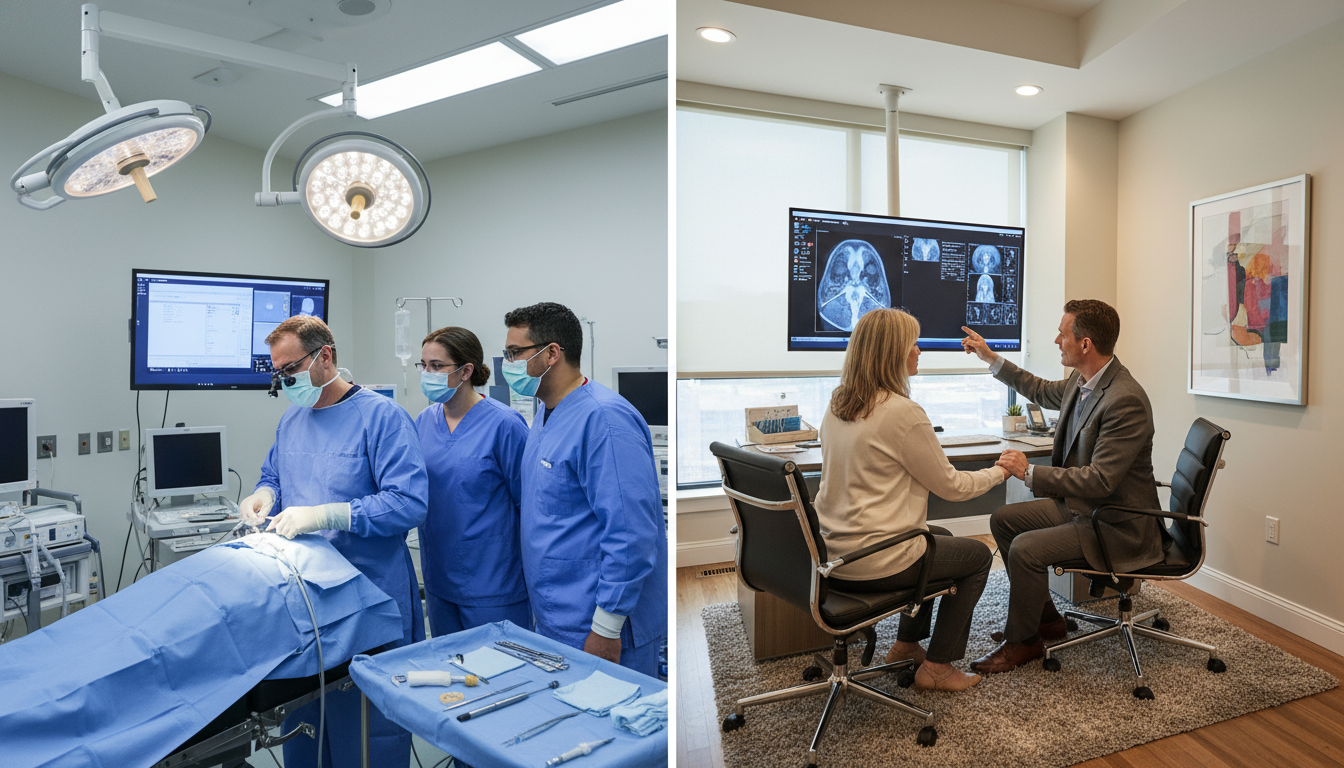
Immigration and Visa Considerations for Non-US Citizen IMGs
For a non-US citizen IMG, the urology match is only one hurdle. Post-residency, you must navigate visa and immigration realities that heavily influence whether academic or private practice is more feasible.
Common Visa Scenarios at the End of Urology Residency
J-1 Visa (ECFMG-sponsored)
- Most common for IMGs in residency
- Requires a 2-year home-country physical presence OR a waiver (usually via service in an underserved area or specific hardship/persecution routes)
H-1B Visa (Institution-sponsored)
- Some urology programs sponsor this, but not all
- More flexible at the end of training; can transition directly to H-1B employment
- Generally easier to move into either academic or private practice roles that will sponsor H-1B
Green Card (Permanent Resident)
- If you have already obtained permanent residency through family, diversity lottery, spouse, or prior employment, your options open substantially
- Academic vs private becomes more of a classic career choice, less of an immigration-driven decision
J-1 Waiver Jobs: Where Are They Usually Found?
If you completed residency or fellowship on a J-1 visa, a J-1 waiver job is typically required to remain in the US without returning home for 2 years. This directly touches the academic vs private practice decision:
Academic centers
- Some academic hospitals qualify as underserved (HPSA or MUA/MUP) or have state-designated slots for J-1 waiver positions.
- More common in:
- Public/state university systems
- Academic medical centers in less urban or less saturated markets
- Advantages:
- Stability, structured position
- Research/teaching opportunities
- Disadvantages:
- Limited number of urology spots
- Competitive and timing-sensitive
Private practice or community hospital–based jobs
- Many J-1 waiver roles are in community hospitals or large multispecialty groups.
- Often located in rural or semi-rural regions, or smaller cities with physician shortages.
- Advantages:
- High demand for urologists
- Potential for strong case volume and income
- Disadvantages:
- Fewer formal research/teaching opportunities
- Geographic limitation (you may not have as many choices in major metro areas)
Key point: As a foreign national medical graduate, you must sometimes let immigration realities dictate your first job. You can still pivot between academic and private practice later, but your initial choice may be constrained by where a J-1 waiver–eligible or visa-friendly position exists.
H-1B and Green Card Sponsorship: Academic vs Private Practice
Academic institutions
- Frequently have well-established processes for sponsoring H-1B and then green cards (often via EB-2 or EB-1 routes for research-intensive roles).
- More likely to have in-house immigration counsel.
- Some departments are more IMG-friendly and hire many foreign national physicians; others are more conservative.
Private practice and community hospitals
- Larger hospital systems and large multispecialty groups often sponsor H-1B and green cards regularly.
- Smaller independent groups may be hesitant due to cost and complexity.
- You must explicitly ask about prior experience sponsoring non-US citizen physicians.
Actionable Advice:
- During PGY-3/PGY-4, start mapping which states and employers are most flexible with visas for urologists.
- Ask seniors and mentors: “Which graduating IMGs in urology successfully found J-1 waiver or H-1B jobs, and where?”
- When interviewing for jobs, make visa questions explicit and early:
- “Do you sponsor H-1B?”
- “Do you have experience with J-1 waiver processes?”
- “How many foreign national medical graduates are on your staff currently?”
Career Content: Daily Work, Subspecialization, and Academic Identity
Once immigration feasibility is addressed, you can focus on the content of your career: what you actually do every day, and how that matches your preferences.
Clinical Mix and Case Complexity
Academic Urology
- Tends to manage more:
- Complex oncologic cases (e.g., rare tumors, complex partial nephrectomies)
- Reconstructive cases, referrals for complications
- Multidisciplinary tumor boards, high-risk or re-do surgeries
- More likely to work within subspecialty teams:
- GU oncology, endourology, and stone disease
- Andrology, infertility
- Pediatric urology
- FPMRS (Female Pelvic Medicine and Reconstructive Surgery)
- Academic prestige:
- You may be recognized regionally/nationally for a niche area of expertise.
Private Practice Urology
- Broad general urology with varying degrees of subspecialization depending on group size and regional needs:
- BPH, stones, incontinence, vasectomies
- Common cancers (prostate, bladder, kidney)
- Male sexual dysfunction, infertility (to a lesser extent unless specifically marketed)
- Case complexity:
- Often high volume but moderate complexity
- Very complex cases may be referred to academic centers
Teaching and Research Expectations
Academic Medicine Career in Urology
- Teaching:
- Daily interaction with residents and students
- OR teaching, bedside teaching, lectures
- Potential for leadership roles in residency or fellowship programs
- Research:
- Expectations vary widely
- Some positions: Primarily clinical with optional research involvement
- Others: Require significant research output for promotion, with defined “protected time”
- Promotion/Tenure:
- Clear criteria: publications, grants, educational contributions, institutional service
- May influence your long-term CV, speaking invitations, and leadership opportunities
Private Practice Urology
- Teaching and research are optional extras, not core expectations:
- Some groups affiliate with medical schools and allow for limited teaching opportunities
- Some physicians participate in industry-sponsored clinical trials
- Quality improvement projects and registries may exist, but formal academic scholarship is not usually expected
If you enjoy mentoring, academic discourse, and pushing the field forward through research, academic urology can be deeply satisfying. If you are more motivated by direct patient care and seeing the tangible impact of high-volume practice, private practice may be more aligned.

Lifestyle, Work–Life Balance, and Financial Trajectory
When choosing a career path in medicine, the lifestyle dimension is often underestimated, especially by high-achieving IMGs who are used to working very hard. In urology, both academic and private practice roles can be demanding, but the types of demands differ.
Work Hours and Control Over Schedule
Academic Urology
- Pros:
- Slightly more predictable clinic and OR schedules in some settings
- Protected academic half-days (if negotiated in your contract)
- More flexibility to attend conferences, present research, engage in national societies
- Cons:
- Residents and fellows may generate more consults and operations, but you hold supervisory responsibility
- Academic meetings, committees, and promotion-related tasks add “invisible” after-hours work
Private Practice Urology
- Pros:
- Greater control over clinic block times and OR days once established
- Potential to adjust volume (and therefore hours) if income targets are flexible
- Cons:
- Early years may be very busy as you build your patient base
- Pressure to maintain high volume for income and partnership
- Business and administrative responsibilities can spill into evenings/weekends
Income and Long-Term Financial Security
For a non-US citizen IMG, especially if you are supporting family in your home country or repaying substantial loans, financial factors are not trivial.
Academic track:
- Typically lower starting salaries but with steady increments.
- Benefits (health, retirement, disability) are often strong and institutionally subsidized.
- Potential for additional stipends (program director, research director, etc.).
Private practice:
- Attractive starting packages with sign-on bonuses, loan repayment options, and relocation assistance, particularly in underserved areas.
- Partnership or ownership can significantly increase income 3–5 years in.
- Income can be more directly tied to your work effort and business health.
Geographic Flexibility and Family Considerations
- Academic centers are often located in major cities or university towns. These may have larger established immigrant communities from your home country, international schools for children, and more cultural support.
- Private practice opportunities are abundant in smaller cities and rural areas, where the urologist shortage is more acute—but these may be less diverse or further from major airports.
As a non-US citizen IMG in urology, it’s vital to involve your family early in the conversation:
- Are they comfortable in smaller-town America if a J-1 waiver job is there?
- Do they prioritize proximity to a diaspora community from your home country?
- Is your spouse planning to work, and how will local job markets affect them?
Strategic Planning: How to Choose and Keep Your Options Open
You do not have to decide on academic vs private practice on day one of residency—but you should develop a strategy early, especially because of immigration timelines.
During Urology Residency: Explore Both Worlds
Electives and Rotations
- Seek rotations at both a busy academic tertiary center and a community or private practice setting.
- Notice differences in:
- Clinic pace
- OR case mix
- Documentation expectations
- Relationships with patients and staff
Mentorship
- Identify at least one mentor in academic urology and one in private practice.
- Ask specific questions as a non-US citizen IMG:
- “What would you do differently if you were in my visa situation?”
- “Which employers are known to be IMG-friendly in urology?”
Research and CV Building
- If you are leaning academic:
- Build a strong research portfolio (manuscripts, abstracts, presentations).
- Serve as chief resident if possible; get teaching and leadership experience.
- If you are leaning private practice:
- Participate in quality initiatives, practice management electives, and outpatient efficiency projects.
- Learn about coding, billing, and basic financial literacy.
- If you are leaning academic:
Fellowship Decisions and Career Trajectory
Subspecialty training can shift your likelihood of landing certain types of jobs:
Strongly academic-leaning fellowships (e.g., urologic oncology at renowned NCI centers, transplant, advanced reconstructive, certain pediatric programs)
- Often lead to academic positions or hybrid roles at academic-affiliated community sites.
- May strengthen your profile for EB-1 or EB-2 NIW green card applications based on research or specialized skills.
Fellowships that integrate well into private practice (e.g., endourology, FPMRS, andrology)
- Can boost your marketability in private groups seeking a niche expert.
- Still compatible with academic positions, but often extremely valuable in community practice.
As a foreign national medical graduate, consider how each fellowship’s reputation and visa track record align with your long-term residency and job market goals.
Initial Job Choice: Think of It as Phase 1, Not Forever
Many urologists, including IMGs, transition between academic and private practice mid-career:
- Academic ➝ Private practice
- Common when physicians seek higher income, fewer academic pressures, or different geographic locations.
- Private practice ➝ Academic
- Less common, but possible if you maintain some scholarly activity, cultivate teaching skills, and join institutions receptive to community-experienced surgeons.
For you, the initial job may be shaped by J-1 waiver or H-1B sponsorship availability. That doesn’t lock you in permanently. But you should act deliberately to keep options open:
- Build a track record of high-quality clinical work
- Maintain some scholarly activity if you may want to pivot to academic roles later (case series, QI projects, registry participation)
- Stay involved in professional societies (AUA section meetings, committees)
Putting It All Together: Decision Framework for Non-US Citizen IMG Urologists
When it comes to choosing a career path in medicine between academic and private practice urology, you can use this structured framework tailored to non-US citizen IMGs:
1. Clarify Your Top Priorities
Rank the following from most to least important to you personally:
- Immigration stability and green card timeline
- Income level and speed of financial independence
- Desire to teach and mentor trainees
- Interest in research and academic promotion
- Geographic preferences (big city vs smaller town)
- Subspecialty focus vs broad general urology
- Work hours and perceived work–life balance
2. Overlay Visa and Immigration Realities
- What visa are you currently on?
- Will you need a J-1 waiver position?
- Are your preferred states and cities friendly to J-1/H-1B waivers for urologists?
- Are you aiming for EB-2 NIW or EB-1 categories, where academic credentials and publications matter significantly?
3. Map Your Profile to Each Path
If you strongly value:
- Teaching, research, academic titles, and complex cases → Academic medicine is a natural fit.
- High income, operational autonomy, business aspects, broad clinical practice → Private practice may be better aligned.
But adjust this mapping based on:
- Where J-1 waiver jobs exist
- Which employers are known to sponsor green cards successfully
- Real-world job offers vs theoretical preferences
4. Seek Data, Not Just Opinions
- Talk to at least 3–5 non-US citizen IMG urologists, some in academic roles and some in private practice.
- Ask about:
- How they obtained their first job
- What surprised them about their chosen path
- What they wish they had known in PGY-3
- Review job postings carefully:
- Are visa sponsorship and J-1 waiver eligibility clearly stated?
- Is the description of research and teaching expectations realistic?
FAQs: Academic vs Private Practice for Non-US Citizen IMG in Urology
1. As a non-US citizen IMG, is it harder to get an academic urology job than a private practice job?
It depends on the region and your profile. Academic urology positions are fewer and more competitive, often requiring a strong research record or fellowship. However, academic institutions may be more familiar with visa processes and more willing to sponsor H-1B and green cards. Private practice roles are abundant, especially in underserved areas, but smaller groups may hesitate to sponsor visas. For many IMGs, the first job is where a visa-friendly employer is located, whether academic or private.
2. If I start my career in private practice, can I switch to academic medicine later?
Yes, but it’s more feasible if you maintain some scholarly and teaching activity while in private practice. Publish case reports, participate in registries or clinical trials, attend conferences, and stay active in professional societies. Programs hiring academic faculty will look for evidence of teaching ability, collaboration, and some track record of scholarship, even if modest.
3. Which path is better for getting a green card: academic or private practice?
Both can work. Academic roles—especially research-intensive ones—can support EB-1 or EB-2 (with or without National Interest Waiver) due to clear evidence of scholarly impact. Private practice jobs, particularly in underserved areas, can support EB-2 employment-based green cards with hospital or system sponsorship. The key is finding an employer with experience and a clear plan for your immigration process, regardless of setting.
4. I am on a J-1 visa. Should I target academic or private practice for my waiver job?
Target wherever J-1 waiver–eligible positions are realistically available in urology. Many waiver jobs are in community or semi-rural settings, typically closer to private practice models, but some academic or academic-affiliated hospitals also have waiver positions. Your first job may be more about satisfying waiver requirements and securing immigration stability; you can then reassess academic vs private practice later, once you have more freedom of movement.
By approaching the academic vs private practice decision with a structured framework and clear understanding of immigration, lifestyle, and career trajectory factors, you can design a urology career that is both professionally rewarding and personally sustainable as a non-US citizen IMG.