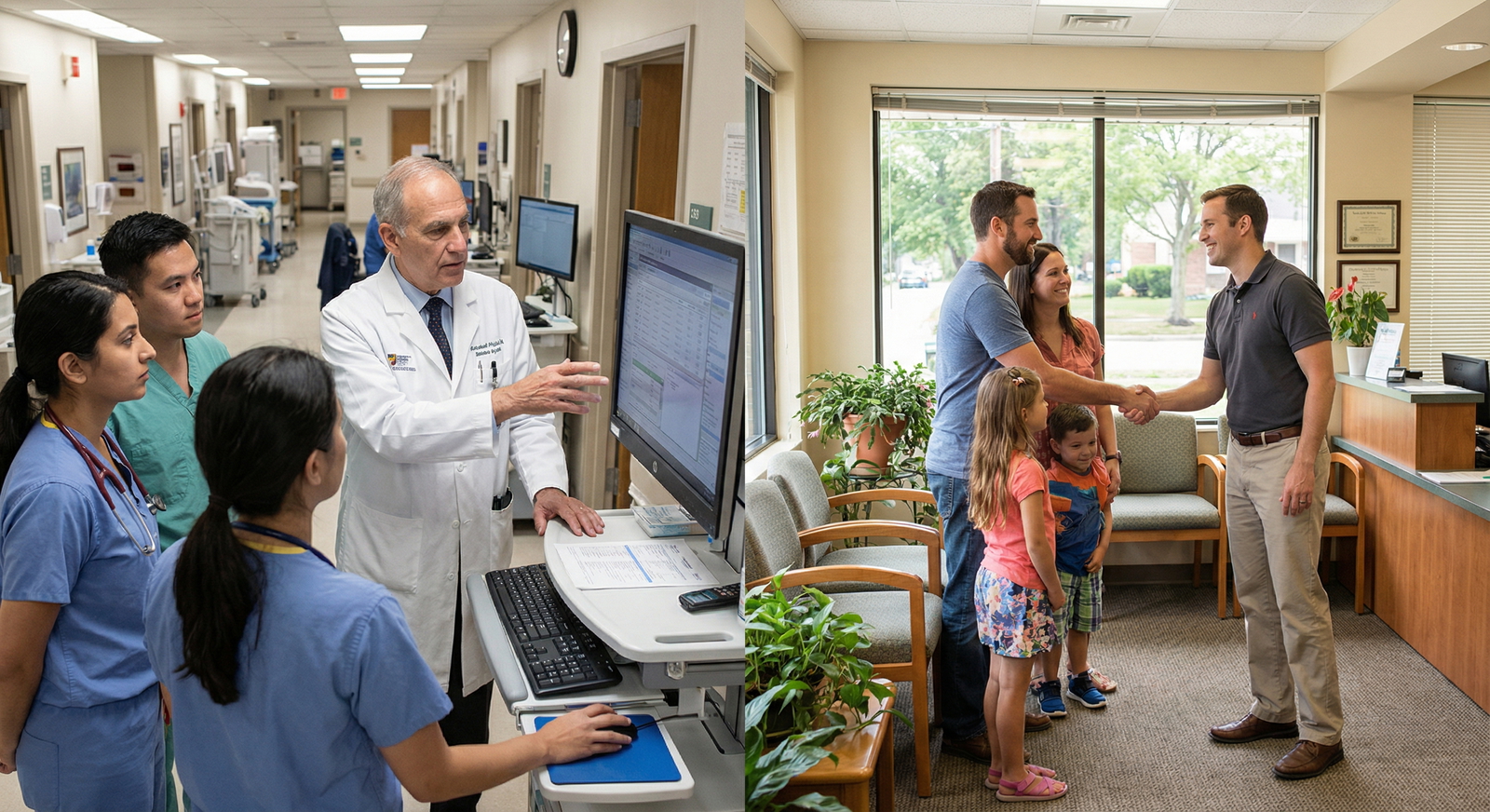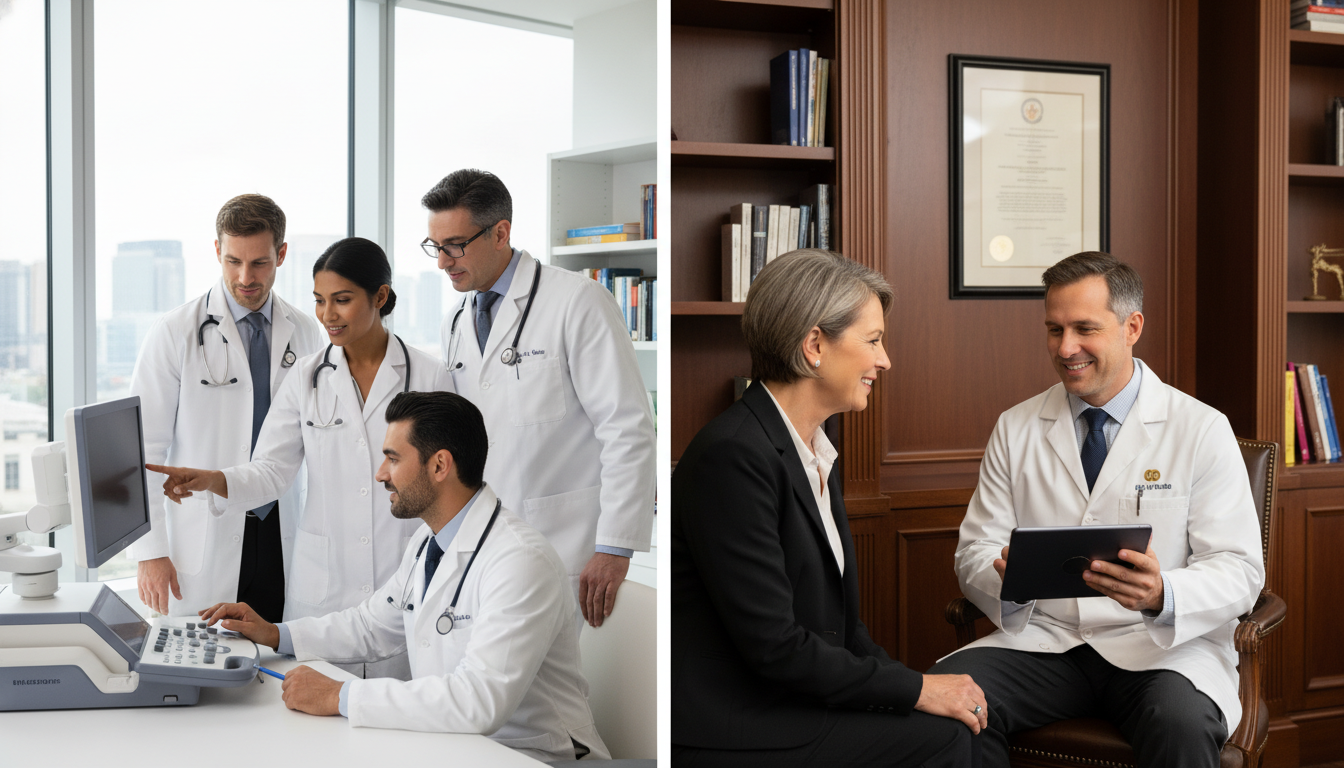
Understanding the Landscape: Academic vs Private Practice After a Preliminary Surgery Year
For a US citizen IMG in a preliminary surgery residency, the question of academic vs private practice can feel premature—after all, you’re still trying to secure a categorical spot or map out a long-term plan. But in reality, understanding these career pathways early can help you:
- Make smarter choices during your prelim surgery year
- Position yourself better for either a categorical surgery spot or another specialty
- Build a portfolio aligned with your long-term goals in academic medicine or private practice
This article breaks down how academic vs private practice differ specifically for an American studying abroad who returns to the US and enters surgery through a preliminary year. We’ll look at the day-to-day differences, competitiveness, lifestyle, long-term growth, and what you can do right now in your prelim year to keep doors open.
What Your Preliminary Surgery Year Actually Sets You Up For
Before comparing academic vs private practice, it’s crucial to understand what a prelim surgery residency does—and doesn’t—do for your career.
The Role of a Preliminary Surgery Year
A preliminary surgery year is typically:
- One year of non-categorical training in general surgery
- Designed to:
- Lead into a categorical general surgery spot (via re-application or transfer), or
- Prepare you for other specialties that value surgical experience (e.g., anesthesiology, radiology, PM&R, emergency medicine, sometimes internal medicine), or
- Fulfill PGY-1 requirements for fields like urology or some competitive subspecialties.
You are not guaranteed continuation in surgery beyond that year.
How It Affects Future Academic vs Private Practice Options
Your prelim year influences your eventual job market and choosing a career path in medicine in several ways:
Academic surgery pathway
- Values: research, teaching, scholarly activity, letters from academic faculty
- A prelim year can be helpful if you:
- Gain strong academic mentors
- Build a track record of research, QI projects, or teaching
- Demonstrate excellence on busy academic services
Private practice surgery pathway
- Values: operative skill, efficiency, work ethic, collegiality
- A prelim year can help you:
- Develop early operative and perioperative care experience
- Build a reputation as reliable, hard-working, and technically capable
- Network with surgeons who later become partners or recommenders
Whether you end up in academic medicine or private practice, the key for a US citizen IMG is to maximize every opportunity now, because you may be starting from a slightly more competitive position versus US MD seniors.

What Academic Surgery Careers Look Like for a US Citizen IMG
An academic medicine career in surgery typically means you’re employed by a university or teaching hospital. You’re not just a surgeon; you are often a clinician, teacher, and researcher all at once.
Defining Features of Academic Surgery
Most academic surgeons have responsibilities in three pillars:
Clinical Care
- Operate, run clinics, manage inpatients
- Often focus on complex, referred, or tertiary-care cases
- May have subspecialty training (e.g., surgical oncology, vascular, trauma/critical care)
Teaching
- Teach:
- Medical students
- Surgery residents (including prelim surgery residents)
- Fellows in advanced subspecialties
- Give lectures, run skills labs, supervise in OR and clinics
- Teach:
Research/Scholarly Activity
- Clinical outcomes research, translational research, education research, quality improvement
- Write papers, present at conferences, apply for grants
The balance among these pillars varies:
- Some academic surgeons are clinician-educators (more teaching, less research).
- Others are surgeon-scientists (heavy research, protected time).
- Many are clinicians with academic affiliation (primarily clinical, some teaching, modest scholarship).
Advantages of Academic Surgery for US Citizen IMGs
For an American studying abroad who returns as a US citizen IMG, academic surgery offers several attractive features:
Structured Mentorship and Visibility
- You are part of a large department with:
- Program directors
- Division chiefs
- Research mentors
- More chances to:
- Co-author papers
- Present at conferences
- Build a nationally recognized academic profile
- You are part of a large department with:
Competitive Edge via Scholarship
- As a US citizen IMG, one way to differentiate yourself from US MD peers is a strong academic CV:
- Publications
- Presentations
- Leadership roles in education or QI
- Academic settings are better equipped to support this.
- As a US citizen IMG, one way to differentiate yourself from US MD peers is a strong academic CV:
Pathway to Leadership and Influence
- Academic roles lead to:
- Program leadership (APD/PD roles)
- Division or department leadership
- National committee memberships and guideline authorship
- If you want to shape surgical education or practice standards, academic surgery is the usual path.
- Academic roles lead to:
Alignment with Visa-Free Status
- As a US citizen IMG, you avoid visa constraints that sometimes limit non-citizen IMGs in academic centers.
- You are more flexible for:
- NIH funding (generally favors citizens/permanent residents)
- Long-term faculty appointments
- Leadership roles
Challenges of Academic Surgery
Academic roles are rewarding but demanding:
Lower relative compensation
- Typically less income vs comparable private practice surgeons
- Some settings offset this with benefits: retirement, loan repayment, job security, academic titles
Increased bureaucracy and expectations
- Mandatory committees, documentation, meetings
- Expectations to produce scholarship or meet educational metrics
Promotion and tenure pressures
- Need measurable output (publications, grants, teaching evaluations)
- Can be stressful if you don’t enjoy or naturally pursue academic activities
How Your Prelim Year Can Point You Toward Academic Surgery
As a prelim surgery resident, consider these action steps if you’re leaning toward academic medicine:
Identify academic mentors early
- Target attendings known for research or education
- Ask to get involved in:
- Retrospective chart review projects
- Case reports, case series
- QI initiatives
Teach whenever possible
- Volunteer to:
- Teach medical students on rounds
- Lead brief case-based discussions
- Ask for formal feedback that can be used in future applications
- Volunteer to:
Seek tangible academic output
- Aim for:
- At least one submitted manuscript, even as co-author
- Poster or oral presentation at a regional or national meeting
- Highlight your role (data collection, analysis, writing, presentation)
- Aim for:
Document everything
- Keep a running CV and log:
- Teaching activities
- Presentations
- Quality projects
- Research contributions
- Keep a running CV and log:
These steps make you a more competitive candidate for:
- Categorical general surgery positions in academic centers
- Other residency specialties where academic mindset is valued (e.g., anesthesia, radiology, IM subspecialties).
What Private Practice Surgery Careers Look Like—and How They Differ
Private practice vs academic surgery can feel like two different worlds. In reality, they exist on a spectrum, but there are clear tendencies.
Core Features of Private Practice Surgery
Private practice surgeons typically:
- Work in community hospitals, surgery centers, or group practices
- Have a clinical productivity focus
- Income is more strongly tied to RVUs, case volume, or collections
- Have less formal teaching or research obligations
- Some still teach or take residents (in community programs)
- Often enjoy more autonomy and local decision-making power
Types of private practice models:
Traditional partnership track
- Join a group → associate → partner after several years
- Equity/ownership in the group
- Share in profits and decision-making
Employment by health system / hospital
- Salary plus productivity incentive
- Less business risk, less administrative control
- Increasingly common hybrid between “academic” and “community”
Solo practice
- Full independence but high administrative and financial responsibility
- Less common for new graduates today
Advantages of Private Practice for US Citizen IMGs
As a US citizen IMG, private practice offers:
Potential for Higher Income
- In many markets, especially outside major academic centers, surgeons earn more in private practice.
- Over time (after partnership), compensation can significantly exceed academic salaries.
More Control Over Schedule and Focus
- You may gradually shape:
- Which cases you perform
- Call frequency (often negotiable)
- Where and with whom you operate
- Possibility to create niche services if there’s local need.
- You may gradually shape:
Less Pressure for Research Output
- If you don’t enjoy publishing, conference travel, or chasing grants, private practice might feel more rewarding and straightforward.
Opportunity to Embed in a Community
- Deep, long-term relationships with primary care doctors and patients
- Strong local impact, especially in underserved areas
Challenges of Private Practice
Business and administrative demands
- Need to understand:
- Billing and coding
- Practice management
- Negotiation with hospitals and insurers
- Even as an employed surgeon, productivity metrics can be stressful.
- Need to understand:
Less formal academic recognition
- Fewer publications and national-stage opportunities (unless you seek them out)
- Less direct connection to residency education in many non-teaching settings
Variable mentorship environment
- Fewer academic role models
- Mentorship tends to be informal and local
How a Prelim Year Sets You Up for Private Practice
From the perspective of choosing a career path in medicine that leads to private practice, your prelim surgery year can still be very valuable:
Focus on clinical excellence and OR skills
- Be the intern who:
- Shows up early
- Knows patients cold
- Assists efficiently
- Learns to close, manage drains, interact well with staff
- Build a reputation among attendings as technically capable and reliable.
- Be the intern who:
Cultivate relationships with community surgeons
- Many academic programs have community affiliates:
- Ask to rotate or be assigned to these services if possible.
- Impress community-based attendings; they may later:
- Offer jobs after you complete full training
- Serve as reference writers
- Many academic programs have community affiliates:
Learn the basics of surgical business and workflow
- Ask questions (appropriately timed) about:
- Practice management
- Contracts
- How they chose their own career paths (academic vs private)
- Ask questions (appropriately timed) about:
Keep your options open
- Even if you aim for private practice, having some academic-style achievements (a few publications, teaching experience) can help you:
- Get better residency positions
- Negotiate from a stronger position later
- Even if you aim for private practice, having some academic-style achievements (a few publications, teaching experience) can help you:

Comparing Academic vs Private Practice: Key Dimensions for US Citizen IMGs
Below is a side-by-side comparison tailored to a US citizen IMG in preliminary surgery considering long-term direction.
1. Training Path and Competitiveness
Academic Surgery:
- Often requires:
- Categorical general surgery residency, often at an academic center
- Sometimes additional fellowship (e.g., trauma, surgical oncology, MIS, colorectal)
- As a US citizen IMG:
- Strong research and letters from academic surgeons can help neutralize IMG bias
- Performing well in a prelim surgery residency at a respected institution can open doors to categorical spots
Private Practice Surgery:
- Typically still requires:
- Completion of an ACGME-accredited general surgery residency
- Fellowship optional but can increase value in certain markets (e.g., bariatrics, colorectal, vascular)
- Programs with higher community exposure or hybrid models may be more open to IMGs
- For you as an American studying abroad, successful completion of any solid residency (academic or community) + strong references is usually enough to enter private practice.
2. Day-to-Day Work
Academic:
- OR days, clinics, inpatients
- Plus:
- Teaching rounds
- Conferences, M&M
- Research or administrative time
- More frequent exposure to complex, tertiary, or referred cases
Private:
- Heavy clinical:
- OR, clinic, call coverage
- Limited formal teaching unless affiliated with a residency or medical school
- Cases may be more “bread and butter”:
- Hernias, cholecystectomies, appendectomies, colon resections, minor oncologic surgery
- Complexity depends on local resources and referral patterns
3. Income and Lifestyle
Academic:
- Generally lower base pay than equivalent private practice roles
- Often better benefits and retirement packages
- Lifestyle can vary:
- High-acuity specialties may be intense
- But some academic groups balance call across a large faculty
Private:
- Potential for higher income, especially after partnership
- Lifestyle can be good or bad:
- Busy call, high case volume
- But also more autonomy to negotiate schedule and practice design
4. Career Growth and Identity
Academic Medicine Career:
- Identity often tied to:
- Titles (assistant/associate/full professor)
- Publications and grants
- Educational leadership roles
- You become known in your field regionally or nationally
Private Practice Career:
- Identity often tied to:
- Reputation in the local community
- Referring physician network
- Patient satisfaction and surgical outcomes
- You may still be active in societies, but primarily as a clinician.
5. Which Path Fits a US Citizen IMG Best?
There is no universal answer. As a US citizen IMG, consider:
Academic may fit you if:
- You truly enjoy teaching and research
- You want to influence training or guidelines
- You’re comfortable trading some income for academic impact
Private practice may fit you if:
- You prioritize higher earning potential and autonomy
- You prefer clinical work over research and formal teaching
- You like the idea of deep roots in one community
Remember: many surgeons move along the spectrum over their careers—some start academic and switch to private practice or vice versa, especially in systems where community hospitals gain teaching roles.
Strategic Planning During Your Preliminary Surgery Year
For a US citizen IMG in a preliminary surgery residency, the crucial challenge is that:
- You must first secure a long-term training path (categorical surgery or another specialty).
- Only then do academic vs private practice distinctions fully matter.
Step 1: Secure Strong Performance and Letters
Regardless of future direction:
- Excel clinically:
- Be reliable, prepared, and proactive
- Own your patients, anticipate needs, communicate clearly
- Seek 3–4 strong letters from:
- Chair or program director
- Key academic surgeons and/or busy clinical attendings
- Any mentor familiar with your research or teaching contributions
These letters are vital for:
- Transitioning from prelim to categorical surgery
- Switching fields (e.g., anesthesia, radiology, internal medicine) if needed
Step 2: Align Academic and Clinical Activities with a Long-Term Vision
If leaning academic:
- Prioritize:
- Research projects
- Teaching roles
- Presentations and publications
- Target:
- Categorical positions at academic or hybrid programs
- Fellowships that are research or subspecialty heavy if you get there
If leaning private practice:
- Focus on:
- Clinical excellence
- Honest conversations with attendings who work in community settings
- Still participate in some academic activity—not for its own sake, but to:
- Strengthen your application
- Keep your options open for academic or hybrid jobs later
Step 3: Learn About the Realities of Each Path from Role Models
As an American studying abroad returning to the US, you may not have had as much real-world exposure to US practice styles. Use your prelim year to:
- Ask faculty how they chose academic vs private practice
- Pay attention to:
- Which surgeons look satisfied or burned out—and why
- How call and lifestyle differ between older and younger surgeons
- Financial discussions (at a high level) about overhead, reimbursement, and contracts
You’re not deciding tomorrow—but you are collecting data for your eventual choice.
Step 4: Stay Flexible and Realistic
- Recognize that training opportunities may guide you:
- You might aim for academic surgery but land in a strong community program—and still do great work and teach.
- You might enter private practice with academic affiliation (e.g., teaching community program) and later shift more academic or more clinical.
- For a US citizen IMG, flexibility is key:
- Some doors may open later than others
- Success is less about the label (academic vs private) and more about your performance, relationships, and professionalism.
FAQs: Academic vs Private Practice for US Citizen IMG in Preliminary Surgery
1. As a US citizen IMG in a prelim surgery year, should I already know if I want academic vs private practice?
Not necessarily. Your first priority is to secure a stable training path (categorical surgery or another suitable specialty). However, having a tentative preference can help you:
- Choose mentors (research-focused vs highly clinical community attendings)
- Select projects (more scholarly vs purely clinical)
- Strategically build your CV
Think of this year as exploration plus positioning, not final commitment.
2. Does aiming for academic surgery make it harder to find a job compared with private practice?
The job market depends on geography, subspecialty, and your strengths:
- Academic jobs may be more competitive in popular cities or elite centers, but a strong academic track record (research, teaching, letters) can make you very marketable.
- Private practice jobs are widely available, especially in non-urban or underserved regions, and often easier to obtain if you are:
- Clinically strong
- Collegial
- Willing to be flexible about location
As a US citizen IMG, robust performance and a coherent narrative matter more than the label you choose.
3. If I start in academic surgery, can I later move to private practice—and vice versa?
Yes, many surgeons transition:
- Academic → Private Practice
- Common for those seeking:
- Higher income
- Less emphasis on research
- Different lifestyle/geography
- Common for those seeking:
- Private Practice → Academic
- Less common but possible, especially if:
- You maintain some teaching/research
- You have strong clinical reputation and can fill a needed niche
- You’re open to starting at a lower academic rank
- Less common but possible, especially if:
The more you keep up some scholarship and teaching, the easier it is to move along this continuum.
4. How can I, as an American studying abroad, overcome IMG bias and still succeed in either path?
Capitalize on the strengths of being a US citizen IMG:
- No visa limitations → more flexibility for programs and employers
- Demonstrate:
- Strong clinical performance in your prelim surgery residency
- Excellent US-based letters of recommendation
- Academic or QI work that shows initiative
- Be strategic and professional:
- Communicate clearly
- Own your story (why you studied abroad, what you’ve learned)
- Show resilience, maturity, and a growth mindset
Whether you ultimately choose an academic medicine career or private practice, the combination of strong work ethic, humility, and proactive planning during your prelim year will matter more than where you did medical school.
By using your preliminary surgery year intentionally—seeking mentors, excelling clinically, and exploring both academic and community environments—you’ll be well-positioned, as a US citizen IMG, to craft a fulfilling long-term career in either academic surgery, private practice, or a hybrid that blends the best of both worlds.