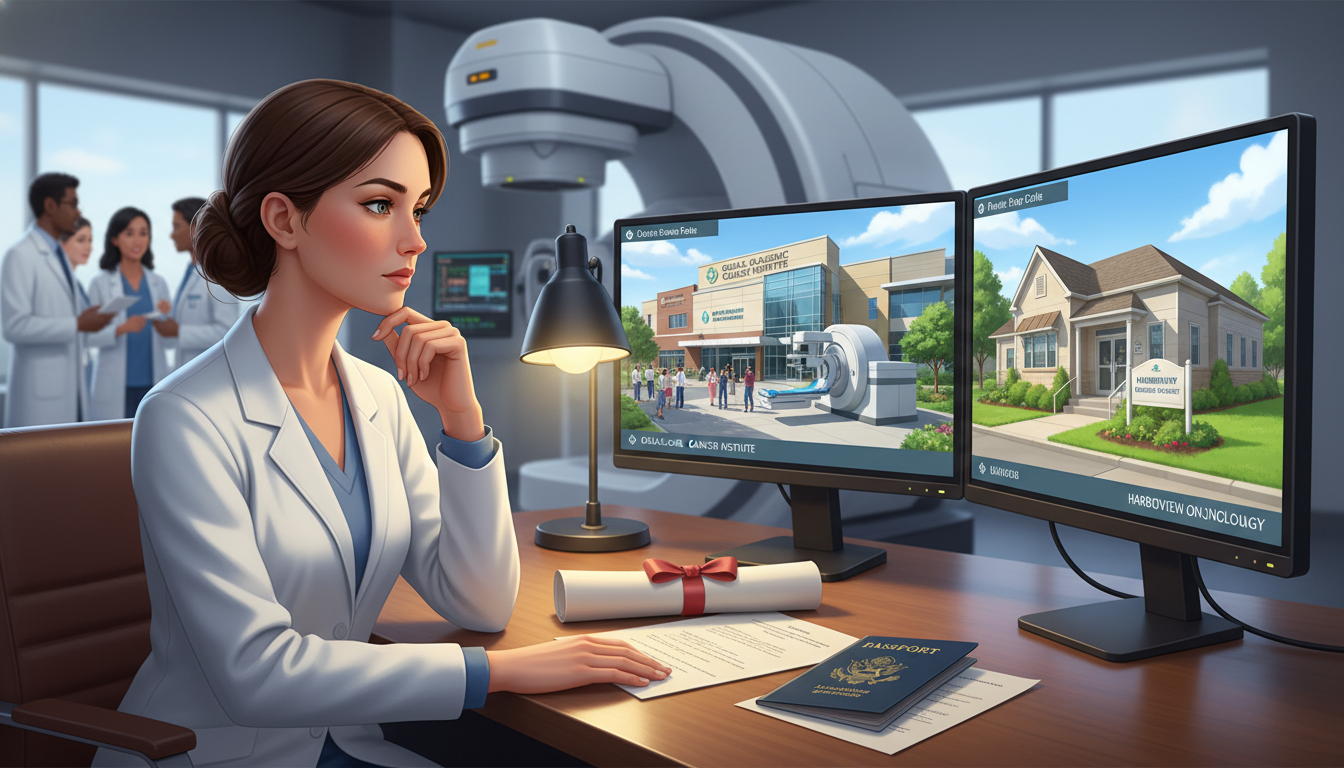
Why Your First Job Choice Matters So Much as a US Citizen IMG
For a US citizen IMG entering radiation oncology residency or finishing training, the question of academic vs private practice is more than a lifestyle decision—it can shape your entire academic medicine career, visa status (if applicable), geographic flexibility, and long‑term income trajectory.
As an American studying abroad who worked hard to overcome the additional barriers in the rad onc match, you now face a new layer of complexity:
- Will academics give you the career stability and credibility you want?
- Will private practice give you the autonomy and income you need?
- And does being a US citizen IMG change which path makes more sense?
This article walks through the real differences between academic and private practice radiation oncology—specifically through the lens of a US citizen IMG—so you can make an informed, strategic decision about your choosing career path in medicine after residency.
Core Differences: Academic vs Private Practice in Radiation Oncology
Understanding what actually changes between these paths is easier if you break it into six domains:
- Mission and daily focus
- Clinical workload and case mix
- Compensation and financial growth
- Promotion, titles, and job security
- Geography and lifestyle
- Opportunities beyond clinical care
1. Mission and Daily Focus
Academic Medicine (University/Teaching Hospital/Cancer Center)
Core mission:
- Advance knowledge (research, innovation)
- Train future physicians (residents, med students)
- Deliver complex, cutting‑edge cancer care
Day‑to‑day, your time might include:
- 60–80% clinical care
- 10–30% research (clinical, translational, or basic)
- 10–20% teaching and institutional service (committees, tumor boards, lectures)
You’ll typically:
- Attend multidisciplinary tumor boards several times a week
- Teach residents and students at the console, in clinic, and in formal sessions
- Participate in clinical trials, protocol development, and quality initiatives
Private Practice (Independent, Hospital-Employed, or Corporate Group)
Core mission:
- Deliver efficient, high‑quality clinical care
- Maintain a sustainable, profitable practice
Day‑to‑day, your time is usually:
- 90–100% clinical care
- Minimal formal teaching (unless affiliated with a residency or med school)
- Limited research, mostly if you create that space yourself
You’ll typically:
- See more patients per day than in academics
- Focus on efficiency, access, and patient satisfaction
- Participate in tumor boards, but with less emphasis on research protocols
Key takeaway for US citizen IMG:
If you spent your training building a CV rich in research and education to strengthen your rad onc match application and you enjoy those activities, academics may feel like a natural extension. If your motivation is primarily patient care and financial security, private practice may align better.
2. Clinical Workload, Case Mix, and Technology
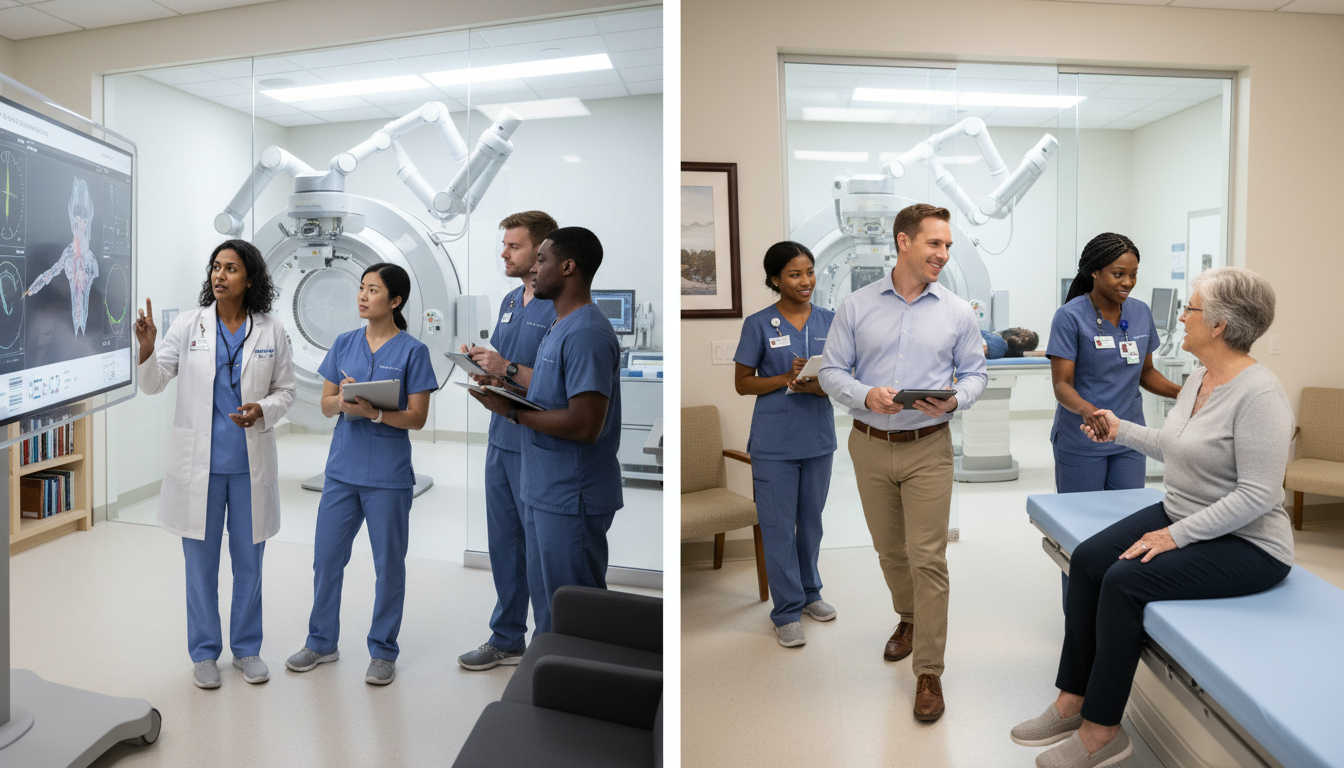
Clinical Volume
Academic
- Moderate volume; more time per patient
- More complex cases: re-irradiation, rare tumors, unusual indications
- Higher proportion of patients on clinical trials
- Often more subspecialization (e.g., CNS, GU, thoracic, peds)
Private Practice
- Higher volume; shorter visits on average
- Bread-and-butter cases: prostate, breast, lung, palliative, head & neck depending on region
- Less formal subspecialization in smaller markets; you may treat “everything”
- Clinical trials often limited or run through external networks
Technology and Support
Academic Centers tend to:
- Acquire new technologies earlier (proton therapy, MR‑linacs, advanced imaging, adaptive RT)
- Support more advanced planning techniques (SRS/SBRT, brachytherapy, clinical trials protocols)
- Provide more robust physics and dosimetry support for complex cases
Private Practices vary widely:
- Many modern community centers now offer SRS, SBRT, and HDR brachytherapy
- Smaller practices may refer out certain complex procedures or lack the latest platforms
- Corporate practices often invest heavily in standardized, high‑throughput systems
US citizen IMG perspective:
Academic centers may be more receptive to an IMG whose strength is understanding evidence and complexity. But in private practice, your broad-based training can be a real asset if you’re comfortable treating diverse cases independently.
Compensation, Benefits, and Financial Trajectory
Money shouldn’t be the only factor in choosing a career path in medicine, but it is a crucial one—especially if you carry substantial debt from being an American studying abroad.
Starting Compensation
Academic Radiation Oncology
- Base salary is usually lower than private practice at entry
- Guaranteed salary with structured raises
- May include:
- Protected time for research or teaching
- Start-up research packages (in some centers)
- Modest bonuses tied to RVUs, quality metrics, or academic productivity
- Typical total comp (ballpark, varies by region and institution):
- Often in the low-to-mid six figures for new faculty
Private Practice Radiation Oncology
- Higher initial compensation, often with variable components
- Models include:
- Straight salary (hospital-employed)
- Salary + productivity bonus
- Partnership track with “buy-in” after 2–5 years
- Typical total comp early on:
- Frequently significantly higher than academic starting salaries
- Mature partners in well-run groups:
- Can earn substantially more than academic colleagues, especially in lucrative markets
Long-Term Financial Outlook
Academic
- Slower salary growth, but:
- More predictability
- Often better retirement contribution structure in large universities
- Potential for admin roles (program director, chair) with incremental stipends
- Less tied directly to RVU productivity, which can buffer you from volume shocks
Private Practice
- High upside but more risk:
- Income tied to patient volume, referrals, and group health
- Partnership changes can significantly impact income
- Practice sales to corporate entities can change the compensation landscape quickly
- In many markets, long-term earnings exceed those of academic paths by a wide margin—but this is not universal
Considerations for US citizen IMG:
- If you have large educational loans from international schooling, private practice can accelerate payoff.
- However, academics may offer Public Service Loan Forgiveness (PSLF) opportunities if your institution qualifies.
- Review actual contract terms carefully; flashy starting numbers in private practice can be offset by long, restrictive partnership tracks or non-competes.
Academic Medicine Career: Pros, Cons, and Fit for US Citizen IMGs
For many US citizen IMGs, their application to the rad onc match leaned heavily on:
- Extra research years
- Publications and abstracts
- Teaching and leadership in medical school or during gaps
That background often aligns well with an academic medicine career.
Advantages of Academic Radiation Oncology
Protected Research and Teaching Time
- Ability to conduct clinical trials, outcomes research, or basic science
- Support from statisticians, research assistants, and IRB infrastructure
- Regular opportunities to teach: residents, fellows, medical students, other specialties
Academic Identity and Reputation
- Title progression: Instructor → Assistant Professor → Associate Professor → Professor
- Easier to build a recognizable academic brand as a US citizen IMG—academic outputs matter more than where you went to med school
- Opportunities to speak at conferences, write guidelines, and serve on national committees
Complex Case Exposure and Subspecialization
- Volume of rare cancers and difficult clinical scenarios
- Access to multidisciplinary teams, tumor boards, and subspecialty clinics
- Easier to carve out a niche (e.g., CNS tumors, pediatric rad onc, immunotherapy‑RT interactions)
Structured Environment and Mentorship
- More defined expectations and career development pathways
- Formal mentoring, promotion committees, and faculty development programs
- Easier entry points for leadership roles (program director, division chief, QI director)
Non-Clinical Career Doors
- Health policy, outcomes research, global oncology, bioinformatics
- Joint appointments (e.g., public health, engineering, business)
- Pathways into industry, regulatory roles, or national organizations
Challenges of Academic Careers for US Citizen IMGs
Lower Relative Compensation
- May delay big financial milestones (paying off debt, home purchase, family planning)
- Salary compression: you may not see large jumps even with increased experience
Grant and Publication Pressure
- For promotion and tenure, you may be expected to:
- Publish regularly
- Secure extramural funding
- Maintain a visible academic presence
- This can feel like “a second job” on top of clinical duties
- For promotion and tenure, you may be expected to:
Institutional Politics and Bureaucracy
- Complex promotion rules, committee requirements, and administrative layers
- As an IMG, you might feel additional pressure to “prove yourself” academically
Geographic Constraints
- Fewer academic centers overall
- You may have to live in limited urban areas, not always where family or partners are
- Spousal/partner job opportunities sometimes limited to large cities
Who typically thrives in academics?
- Those energized by teaching and mentorship
- Clinician‑scientists who like asking and answering questions
- People who want a long-term academic medicine career with national visibility
- US citizen IMGs who leveraged research to get into residency and genuinely enjoy that work
Private Practice Radiation Oncology: Pros, Cons, and Practical Realities
While academics often dominated US citizen IMG strategy for the rad onc match, private practice can be the better fit once you’re board‑eligible or board‑certified and facing the real job market.
Advantages of Private Practice
Higher Income Potential
- Stronger starting salaries and substantial growth with partnership
- Potential to pay off debt much faster
- Greater control over spending and practice investments if you’re a partner
Clinical Autonomy
- More direct control over:
- Treatment planning approaches
- Scheduling and clinic flow
- Technology acquisition in some settings
- Ability to respond quickly to local market needs (e.g., open satellite, add new service)
- More direct control over:
Lifestyle and Flexibility
- Greater geographic diversity: suburbs, mid‑size cities, rural areas
- Opportunities for 4‑day work weeks or flexible schedules in some groups
- Potential to design a schedule around family or personal priorities once established
Entrepreneurial Opportunities
- Ownership in imaging centers, free‑standing clinics, or real estate
- Ability to shape the culture of the practice as a partner
- Direct impact on patient access and local cancer care delivery
Challenges and Risks in Private Practice
Volume and Efficiency Pressure
- More patients per day, tighter templates
- Productivity expectations sometimes high, especially with RVU‑based pay
- Less time per patient, which can be stressful for those who value long counseling visits
Business and Administrative Load
- Understanding:
- Referral patterns
- Payer mix and prior authorizations
- Billing and coding
- Contract negotiations and malpractice costs
- In smaller practices, partners shoulder significant admin work
- Understanding:
Less Formal Academic Support
- Harder to maintain a traditional academic CV:
- Limited research infrastructure
- Less time for writing and research
- That said, you can still participate in:
- Cooperative group trials (if available)
- Quality improvement projects
- Community lectures and tumor boards
- Harder to maintain a traditional academic CV:
Practice Stability and Corporate Consolidation
- Some groups face buyouts from large consolidators or hospital systems
- Non‑compete clauses can limit your options if things go poorly
- New partners may be brought in on less favorable terms over time
US citizen IMG‑specific angle:
- While IMGs sometimes feel “typecast” into academic positions, private practice groups largely care about:
- Clinical competence and interpersonal skills
- Work ethic and collegiality
- Ability to build and maintain referring relationships
- Your IMG status matters less than your reputation, references, and interview performance.
Decision Framework: Choosing Academic vs Private Practice as a US Citizen IMG

You don’t need to decide in a vacuum. Use a structured approach that reflects your personal priorities, professional identity, and realities as a US citizen IMG.
Step 1: Clarify Your Top Priorities
Rank the following from 1 (most important) to 5 (least):
- Income and debt payoff speed
- Academic and research identity
- Teaching and mentorship
- Geographic flexibility
- Lifestyle (schedule, call, family time)
Patterns:
- If 1 + 4 + 5 are highest → private practice often fits better.
- If 2 + 3 are highest → academic practice likely more satisfying.
- If you’re mixed, consider hybrid roles (e.g., community academic affiliate hospitals).
Step 2: Assess Your True Enjoyment of Academic Work
Ask yourself:
- Did I do research because I loved it, or because I needed it for the rad onc match?
- Do I enjoy writing, revising, and resubmitting manuscripts?
- Do I find teaching energizing or draining?
If research and formal teaching feel like chores rather than callings, a research‑heavy academic medicine career may not be sustainable, regardless of how strong your CV is.
Step 3: Be Realistic About Competitiveness and Options
As a US citizen IMG, the job market in radiation oncology can be:
- Competitive in major metro academic centers
- More open in:
- Smaller or mid‑size cities
- Community or private settings
- Underserved regions
Practical tips:
- Cast a wide net initially: both academic and private practice roles
- Don’t assume academics is the only option “appropriate” for an IMG; your skill set matters more
- Don’t underestimate your attractiveness to community groups that value work ethic and broad training
Step 4: Evaluate Specific Job Offers, Not Just Labels
Two “academic” jobs can be completely different. Same with “private practice.” Compare:
- Clinical workload: number of patients/day, new starts/week, call responsibilities
- Support: number of physicists, dosimetrists, NPs/PAs, therapists
- Structure: protected time, expectations for RVUs, academic productivity benchmarks
- Stability: practice finances, history of turnover, referral base, institutional support
- Mentorship: formal mentorship plans, senior partner/faculty engagement
Ask pointed questions in interviews:
- “What happened to the last few people who held this role?”
- “Why is this position open now?”
- “How is success measured for this role in year 1, 3, and 5?”
- “Can I see anonymized productivity/compensation ranges for recent hires?”
Step 5: Consider Hybrid and Transition Paths
Your first job doesn’t lock you in forever. Many radiation oncologists:
- Start in academics for experience and credibility, then move to private practice for lifestyle or compensation
- Start in private practice, then move to academics with a clinical educator or community faculty focus
Examples:
Academic → Private Practice:
A US citizen IMG who completed a fellowship and 3 years as Assistant Professor decides to move closer to family in a community group; their academic background boosts their credibility with referrers.Private Practice → Academic:
A community rad onc who built strong quality and outcome metrics joins an academic cancer center as a clinical educator, emphasizing community outreach and trial accrual.
If you might want the option to move from private to academic later, keep some academic engagement alive (see below).
How to Keep Options Open: Practical Strategies
Whether you lean toward academics or private practice, you can future‑proof your career.
If You Start in Academic Practice
- Build a portable niche: something valuable in both settings (e.g., SBRT, brachytherapy, palliative RT program development, quality and safety leadership).
- Maintain strong clinical productivity—it will matter if you ever move to a community or hospital‑employed role.
- Learn basic practice management: understand clinic flow, scheduling, and cost-awareness.
If You Start in Private Practice
Stay connected to academia:
- Co-author clinical research projects or case series with former mentors
- Participate in multi‑institutional studies if available
- Present at regional or national meetings when possible
Take on roles that translate well:
- Tumor board leader or organizer
- Quality improvement champion (e.g., hypofractionation initiatives)
- Community education and outreach (CME talks, survivorship programs)
Document your outcomes and initiatives:
- Local protocol development
- Implementation of new techniques or workflows
- Any measurable care improvements
These activities help preserve your eligibility for an academic medicine career later, if you decide to pivot.
FAQs: Academic vs Private Practice for US Citizen IMG in Radiation Oncology
1. As a US citizen IMG, am I more likely to get hired in academics or private practice?
Neither path is inherently more or less open to US citizen IMGs. What matters most:
- Your clinical reputation and references
- Communication skills and “fit” with the team
- Demonstrated strengths (research/teaching for academics; efficiency/collegiality for private practice)
Academic centers may value your research background more explicitly, but many private practices value hard‑working, well‑trained clinicians regardless of IMG status.
2. Will choosing private practice close the door to an academic medicine career later?
Not necessarily, but it can make the transition harder if you completely detach from academic activity. To keep doors open:
- Maintain some research or scholarly activity when possible
- Stay involved in tumor boards and quality projects
- Attend and present at relevant meetings occasionally
If you return to academics, you may enter with a clinical educator or clinical track rather than a tenure‑track scientist role, which still offers a robust academic environment.
3. Does academic radiation oncology always pay less than private practice?
In most markets, yes, especially when comparing senior private practice partners to academic attendings. However:
- Some high‑cost-of-living cities and prestigious centers offer competitive salaries plus strong benefits
- Hospital‑employed “quasi‑academic” jobs may pay similar to or above some academic roles, with less research expectation
- The total package (retirement benefits, loan forgiveness, cost of living) matters as much as base salary
Run detailed financial comparisons using realistic numbers, not just headline salaries.
4. If I’m undecided, how should I use my final year of residency or fellowship?
Use your last year strategically:
- Arrange electives:
- 1–2 months at an academic site different from your home institution
- 1–2 months in a community or private practice setting if permitted
- Talk frankly with mentors in both environments about their real lifestyles and regrets
- Attend national meetings and go to networking events that include both academic and private practice physicians
- Begin exploratory job conversations early, not just formal applications, to understand what’s actually available
Seeing both worlds first‑hand is far more informative than reading job ads or listening to second‑hand stories.
Bottom line:
As a US citizen IMG in radiation oncology, both academic and private practice pathways are open to you. Decide based on your authentic interests, financial reality, and lifestyle goals—not on outdated assumptions about what IMGs “should” do. Build skills and relationships that are valuable in either setting, and you’ll keep your career flexible, resilient, and rewarding for the long term.