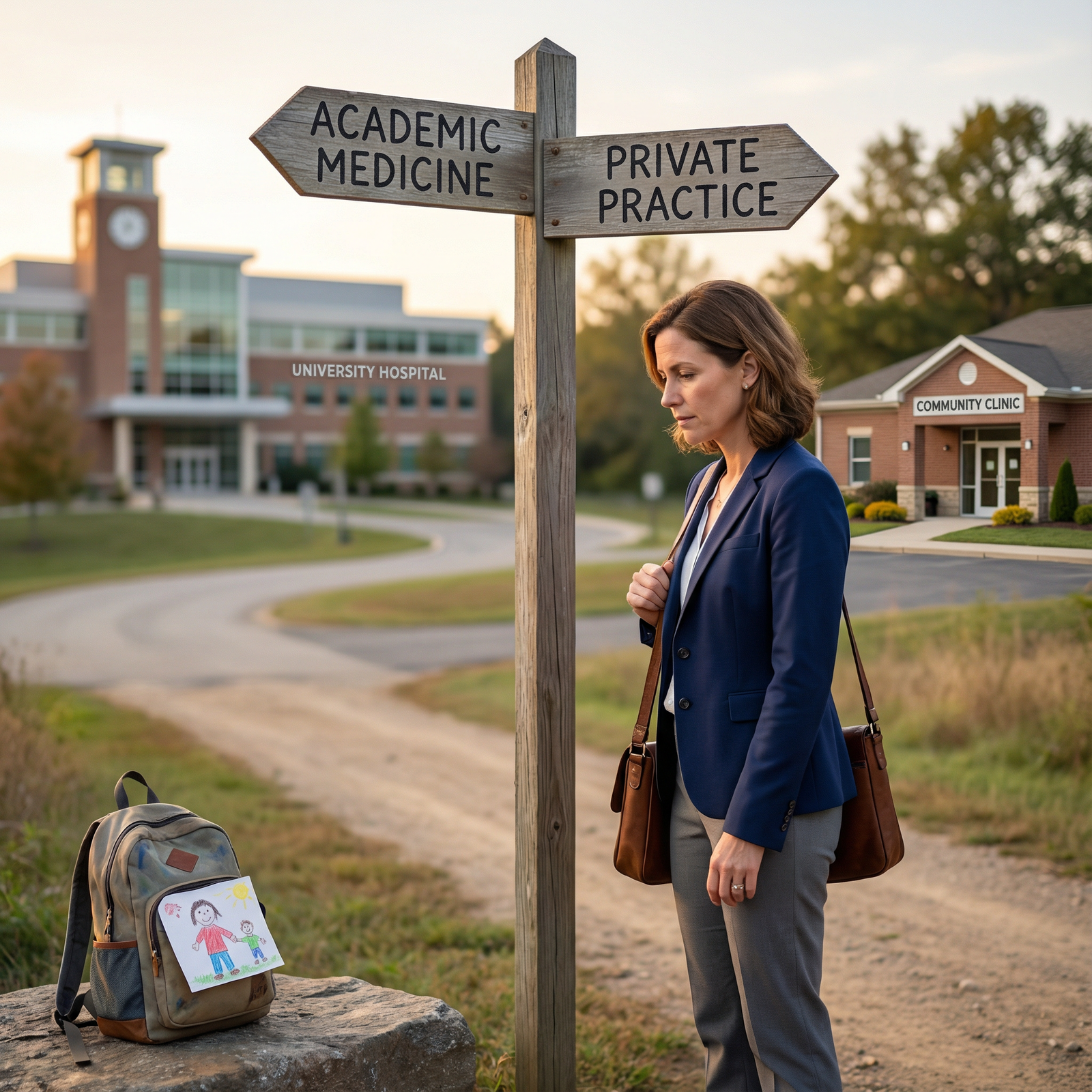
As a Caribbean IMG finishing residency and considering Addiction Medicine, you’re entering a field with expanding need, evolving training pathways, and real opportunities for impact. One of the biggest long-term decisions you’ll face is choosing between a career in academic medicine and private practice—or some hybrid of both.
For Caribbean graduates—whether from SGU, AUC, Ross, Saba, or other programs—this choice is influenced not only by your interests, but also by visa status, training history, and how you want to position yourself after residency and fellowship.
Below is a comprehensive guide tailored specifically to you: a Caribbean IMG interested in Addiction Medicine, weighing academic vs private practice in the U.S. or Canada.
Understanding the Landscape: Addiction Medicine Careers for Caribbean IMGs
Before comparing academic vs private practice, it helps to clarify what an Addiction Medicine career really looks like after training.
Typical Training Pathway
For most Caribbean IMGs, the common route is:
- Caribbean medical school → U.S. or Canadian residency, often in:
- Internal Medicine
- Family Medicine
- Psychiatry
- Pediatrics (less common for adult addiction practice)
- Addiction Medicine Fellowship
- 1-year ACGME-accredited addiction medicine fellowship
- Or Addiction Psychiatry fellowship (if you trained in psychiatry)
- Board Certification
- In your primary specialty (e.g., ABIM, ABFM, ABPN)
- Plus Addiction Medicine (ABPM) or Addiction Psychiatry
If you are an SGU graduate or from another Caribbean medical school, you are very much in the pipeline for an SGU residency match or similar, followed by an addiction medicine fellowship. Programs are used to IMGs in this field, especially in internal medicine and psychiatry–based pathways.
Where Addiction Medicine Physicians Work
Addiction specialists practice across a spectrum of settings:
- Academic medical centers (university hospitals, teaching hospitals)
- Hospital-based consultation services (inpatient consults for withdrawal, pain/addiction interface)
- Outpatient addiction clinics (methadone, buprenorphine, naltrexone, general SUD treatment)
- Integrated primary care + addiction clinics
- Specialty programs (pregnancy and addiction, HIV/HCV and addiction, chronic pain and opioid use)
- VA hospitals and public mental health systems
- Private practice (solo or group practice)
- Non-profit community programs, FQHCs, and telemedicine
Both academic medicine careers and private practice roles can exist in any of these settings, but your responsibilities and lifestyle will look very different depending on which path you choose.
Academic Addiction Medicine: Roles, Pros, and Cons
Academic medicine means your primary employer is a university or teaching hospital. You may have a faculty title such as “Assistant Professor of Medicine/Psychiatry.”
What Academic Addiction Medicine Looks Like Day-to-Day
An academic addiction specialist often divides time between:
- Clinical care
- Inpatient consult service: assessing patients with withdrawal, substance use complications, or pain/opioid issues
- Outpatient clinics: medication-assisted treatment (MAT), dual diagnosis, specialty clinics
- Teaching
- Supervising residents, fellows, and medical students
- Giving lectures, leading case conferences
- Creating curricula for substance abuse training across departments
- Research and scholarship
- Clinical research, QI projects, implementation science
- Publications, conference presentations
- Administration and leadership
- Directing an addiction consult service, fellowship program, or outpatient clinic
- Committee work focusing on opioid stewardship, overdose prevention, or hospital policies
The proportion of clinical vs academic work varies. Some positions are 80–90% clinical with light teaching; others are 50% clinical / 50% research and teaching.
Advantages of an Academic Medicine Career for Caribbean IMGs
1. Built-in Teaching and Mentorship
For many Caribbean IMGs, especially those who thrived in small-group teaching environments or took on peer-tutoring roles in SGU or other Caribbean schools, academia provides:
- Regular interaction with trainees
- Opportunities to mentor other IMGs and underrepresented students
- Formal teaching roles in substance abuse training for the whole institution
If you enjoy explaining concepts, leading rounds, and designing curricula, this is a strong fit.
2. Reputation, Networking, and Career Mobility
Academic positions:
- Often carry the prestige of a university title
- Facilitate strong professional networks with addiction researchers, policymakers, and national organizations
- Can make it easier to:
- Obtain leadership roles (program director, division chief)
- Sit on boards or committees for professional societies
- Transition into public health or policy positions
For a Caribbean IMG, this can help counteract early biases you may have faced and open national-level leadership pathways.
3. Structured Pathways in Academic Promotion
Academic tracks (clinical educator, clinician–investigator, research-intensive) give you:
- A clear promotion ladder (Instructor → Assistant Professor → Associate Professor → Professor)
- Requirements that reward:
- Teaching excellence
- Scholarly output
- Service and leadership
If you like defined milestones and long-term career structure, academia is appealing.
4. Visa and Immigration Advantages
Academic centers often have more experience with:
- H-1B sponsorship
- Extensions and green card (EB-2 NIW or employer-sponsored) processes
- J-1 waiver job structures (especially in underserved areas)
Many academic hospitals are cap-exempt for H-1B visas, which can be crucial for Caribbean IMGs navigating complex immigration paths.
5. Protected Time for Non-Clinical Interests
Compared to pure private practice, academic jobs are more likely to offer:
- Protected time (e.g., 0.2–0.5 FTE) for:
- Research projects
- Quality improvement
- Curriculum development
- Advocacy and policy work
- Institutional resources:
- Research coordinators
- Statistical support
- Grant-writing assistance
If you see yourself shaping how addiction medicine is taught or studied, this is a strong plus.
Downsides and Trade-Offs of Academic Addiction Medicine
1. Lower Compensation (Often Significantly)
Generally:
- Academic salaries are lower than private practice for similar clinical hours
- Compensation may be more standardized and less responsive to productivity
As an early-career Caribbean IMG with loans and possibly financial obligations to family, this difference can be significant.
2. Bureaucracy and Institutional Politics
Academic centers can be:
- Hierarchical, with complicated approval processes
- Slow to change, even when innovations are clearly beneficial
- Demanding in terms of:
- Committee service
- Documentation for promotion
- Administrative tasks unrelated to direct patient care
You need tolerance for institutional rules, meetings, and politics.
3. Research Pressure (Depending on Track)
Even “clinician-educator” tracks sometimes:
- Expect publications, posters, or grants
- Evaluate your academic output for promotion
If you don’t enjoy scholarly work at all, you’ll need to choose a very clinical-heavy academic role or you may feel misaligned with institutional expectations.
4. Less Control Over Schedule and Practice Style
You may have:
- Set clinic templates that you can’t freely modify
- Less flexibility to cap patient volume or tailor your niche
- Limits on telemedicine, private consulting, or external work
If autonomy is your top priority, this may be frustrating.

Private Practice in Addiction Medicine: Models, Pros, and Cons
“Private practice” in addiction medicine covers a wide range:
- Solo practice or small-group addiction clinics
- General psychiatry or primary care practices with a substance use disorder (SUD) focus
- Multidisciplinary practices (psychologists, counselors, social workers, physicians)
- Telehealth-centered MAT practices
- Contract work at rehab centers, detox units, or correctional facilities
What Private Practice Addiction Medicine Looks Like Day-to-Day
Depending on your model, your day may include:
- Outpatient visits:
- MAT with buprenorphine, naltrexone, or methadone (if certified facility)
- Co-occurring psychiatric conditions (if you’re a psychiatrist)
- Comorbid medical conditions related to substance use (if IM/FM)
- Coordination with therapists, social workers, and case managers
- Business responsibilities:
- Hiring staff
- Billing, coding, and collections management
- Marketing and referral relationships
- Regulatory compliance (DEA, state boards, documentation standards)
Some physicians join an established practice where administrative burdens are shared or handled by a central office. Others, especially later in their career, open practices of their own.
Advantages of Private Practice for Caribbean IMGs
1. Higher Income Potential
Private practice often offers:
- Higher base salary and/or productivity-based compensation
- Opportunity to:
- Increase income through efficiency and volume (within ethical and legal bounds)
- Add revenue streams (e.g., consulting, telehealth, ancillary services)
If you have substantial educational debt from Caribbean medical school, the financial upside can be compelling.
2. Autonomy and Control
You can typically control:
- Your schedule (clinic days, hours, telehealth vs in-person mix)
- The types of patients and conditions you focus on
- The practice philosophy:
- Harm reduction–oriented?
- Integration with psychotherapy?
- Focus on dual diagnosis, pain + addiction, or perinatal addiction?
You also have greater flexibility to pivot your business model as the field evolves.
3. Faster Operational Changes
Unlike academic settings, in private practice you can:
- Quickly adopt new evidence-based protocols
- Implement new workflows, such as:
- Same-day MAT starts
- Integrated group visits
- Enhanced telehealth access
- Make technology choices (EMR, telehealth platforms) that match your needs
If you are entrepreneurial and enjoy building systems, this is attractive.
4. Direct Community Impact
Private practices—especially in underserved areas—can:
- Become critical local access points for SUD treatment
- Allow you to tailor services to the cultural and social needs of specific communities
- Enable partnerships with:
- Local courts/drug courts
- Community organizations
- Faith-based or grassroots groups
Caribbean IMGs who want to bring culturally sensitive care and lived experience into their work may find this very satisfying.
Downsides and Challenges of Private Practice
1. Business and Administrative Burdens
Owning or co-owning a practice means:
- Managing finances (overhead, payroll, taxes)
- Credentialing with insurers
- Navigating complex regulatory requirements around controlled substances
- Building and sustaining referral streams
Many physicians underestimate how time-consuming this is. If you dislike business operations, you may prefer joining a well-managed group or sticking to employed positions.
2. Less Formal Teaching and Academic Infrastructure
Private practice usually provides:
- Limited or no structured teaching roles
- Few built-in opportunities for research
- Less access to academic titles or promotion tracks
You can still contribute to education (e.g., hosting students occasionally, giving CME talks), but it won’t be as integrated into your daily work unless you deliberately build it.
3. Potential Isolation
Compared with university hospitals:
- Fewer colleagues on-site for spontaneous case discussions
- Less exposure to multidisciplinary academic conferences or grand rounds
- Fewer opportunities for collaborative research and large QI projects
You can offset this by staying active in professional societies or maintaining academic affiliations, but it takes intention.
4. Visa and Sponsorship Limitations
For Caribbean IMGs on H-1B or transitioning from J-1:
- Many true private practices do not sponsor visas
- Hospital-employed, large group, or FQHC positions with a private practice flavor are more likely to sponsor
If you haven’t secured permanent residency, this can be the biggest barrier to full private practice.
Key Factors for Caribbean IMGs Choosing Academic vs Private Practice
When thinking about choosing a career path in medicine, especially in addiction, consider these practical domains:
1. Immigration and Legal Status
Ask yourself:
- Am I on a J-1 or H-1B?
- Do I need a waiver job in an underserved area?
- Does my potential employer have a history of sponsoring IMGs?
Academic centers and larger hospital systems:
- Are typically more experienced in immigration processes
- May qualify as H-1B cap-exempt
Small private practices:
- Often hesitate to take on visa sponsorship due to cost and complexity
If you are still early in your immigration journey, you might start in academia or a large system that feels like semi-private practice, and transition to pure private practice after stabilizing your status.
2. Your Temperament and Interests
Be honest about what energizes vs drains you:
- Do you enjoy teaching and curriculum development?
- If yes, academic medicine aligns well.
- Are you curious about research or quality improvement in substance use care?
- Academia or hybrid models are ideal.
- Do you prefer clinical work and autonomy with less bureaucracy?
- Private practice or large-group employed models might fit better.
A useful exercise:
Write a “perfect week” schedule (clinical, teaching, administrative, research, personal time). Then compare it to typical academic and private practice job descriptions.
3. Financial Priorities
Consider:
- Total debt (Caribbean school tuition, cost of living during training)
- Desired timeline for major goals (home purchase, supporting family, investing)
- How comfortable you are with lower initial salary in exchange for academic perks
Many Caribbean IMGs choose a hybrid approach:
- Early years in academia for mentorship, reputation building, and visa stability
- Later transition to higher-paying private practice once financially and legally more secure
4. Long-Term Career Vision
In 10–15 years, do you want to be:
- A division chief, fellowship director, or well-known educator in addiction medicine?
- Academic environment is almost mandatory.
- A regional referral expert with a thriving, patient-centered practice?
- Private practice may be ideal.
- A policy leader or public health advisor influencing addiction treatment at a systems level?
- Academic plus public health roles create strong positioning.
- A clinical entrepreneur, designing innovative care models or tech-enabled SUD services?
- Private practice or startup collaborations are more flexible.
Align your first post-fellowship job with that vision, even if you plan to adjust later.

Practical Pathways and Hybrid Models: You Don’t Have to Choose Only One
In reality, many addiction medicine physicians create blended careers that capture benefits from both sides.
Common Hybrid Models
Academic Primary Job + Limited Private Work
- 0.8 FTE academic appointment
- 0.2 FTE telehealth or consulting for private programs
- Ensures salary stability, visa support, and teaching, with supplemental income and autonomy
Private Practice with Academic Affiliation
- Core work in a group practice
- Voluntary faculty role (e.g., precepting residents 1 half-day/week, giving lectures)
- Maintain academic title and network but prioritize private practice income and independence
Hospital-Employed Model (Quasi-Academic)
- Work for a large health system that is not strictly academic, but:
- Has residents or NP/PA students
- Offers CME, QI, and sometimes research opportunities
- Some systems brand themselves as “clinician-educators” environments without heavy research expectations
- Work for a large health system that is not strictly academic, but:
Non-Profit or FQHC-Based Addiction Work
- Often mission-driven, may qualify for loan repayment programs
- Some teaching and leadership opportunities
- Can function more like a structured employed setting than traditional private practice
Example Scenarios for Caribbean IMGs
Scenario 1: SGU Graduate, Internal Medicine → Addiction Medicine Fellowship, on H-1B
- Starts at a university-affiliated academic center with:
- 60% clinical addiction consult service
- 20% outpatient MAT clinic
- 20% teaching and QI
- After getting a green card:
- Negotiates 1 day/week telehealth practice serving rural communities
- Later transitions to a leadership role in academic addiction medicine with partial private consulting
Scenario 2: Caribbean IMG Psychiatrist, Permanent Resident, Entrepreneurial Mindset
- Completes addiction psychiatry fellowship at a large academic hospital
- Joins a multi-specialty group with a strong SUD service line:
- High autonomy, higher income
- Maintains voluntary faculty title at fellowship institution
- Delivers guest lectures on substance abuse training twice a year and co-authors occasional practice-based research projects
Scenario 3: Family Medicine–Trained Caribbean IMG, Passion for Community Medicine
- Completes addiction medicine fellowship
- Accepts position at an FQHC integrating primary care and addiction services
- Mix of MAT, chronic disease management, and behavioral health
- Provides training to primary care residents rotating through the clinic
- After several years, explores part-time private telehealth MAT practice to expand impact and income
Actionable Steps to Decide and Prepare (While Still in Residency or Fellowship)
Here are concrete steps you can take now:
Clarify Your Priorities
- Rank (1–5): teaching, research, income, autonomy, immigration security, leadership, work–life balance.
- Use that ranking to evaluate job postings.
Seek Targeted Mentorship
- Identify:
- One academic addiction physician (especially IMGs if possible)
- One private practice addiction physician
- Ask to discuss:
- Typical week
- Compensation model
- Biggest unexpected challenges
- Advice for Caribbean IMGs
- Identify:
Gain Exposure to Both Settings in Training
- Choose elective rotations in:
- Academic addiction consult and clinic settings
- Community or private addiction programs
- Notice which environment feels more natural and energizing for you.
- Choose elective rotations in:
Build a Flexible CV
- For academic options:
- Participate in at least one research or QI project
- Present a poster or talk on addiction-related work
- Document teaching experiences (lectures, small groups, peer-teaching)
- For private practice:
- Sharpen efficiency and clinical breadth
- Gain comfort with coding/billing basics
- Learn about regulatory frameworks around controlled substances
- For academic options:
Understand Contract Details Before Accepting Any Job Focus on:
- Non-compete clauses and their geographic scope
- Expectations for productivity (RVU targets, patient volume)
- Protected time (and whether it’s guaranteed in writing)
- Visa support specifics (type, duration, legal support)
Plan for Ongoing Professional Development
- Whether in academic or private settings:
- Stay engaged in professional societies
- ASAM (American Society of Addiction Medicine)
- APA (if psychiatrist)
- Specialty societies for IM or FM
- Attend at least one addiction-focused conference yearly
- Keep up with changes in guideline-based addiction care
- Stay engaged in professional societies
- Whether in academic or private settings:
FAQ: Academic vs Private Practice for Caribbean IMGs in Addiction Medicine
1. As a Caribbean IMG, is it harder to get an academic addiction medicine job than a private practice job?
Not necessarily. Many academic addiction programs are IMG-friendly, especially if you trained in internal medicine, family medicine, or psychiatry at reputable U.S. residency programs. If you have at least some scholarly activity (QI, posters, teaching), you’re competitive. Private practices might be more hesitant around visa sponsorship, but often less concerned about publication history. The main barriers are usually immigration and geographic preference, not your Caribbean background itself.
2. Can I switch from academic medicine to private practice (or vice versa) later in my career?
Yes. Switching is common. Many physicians start in academia to build skills and reputation, then move into private practice for autonomy and income. Others do the reverse: start in community or private settings, then join academic centers later once they’ve developed niche expertise. Maintain flexibility by:
- Preserving relationships in both worlds
- Keeping some involvement in teaching or research if you think you might want academia later
- Staying clinically strong and up-to-date
3. How does an addiction medicine fellowship influence my options in academic vs private practice?
Completing an addiction medicine fellowship greatly enhances your value in both environments:
- Academically:
- Eligible for faculty roles in addiction consult services, clinics, and fellowship programs
- More likely to be involved in curriculum development for substance abuse training
- In private practice:
- Marketable as a regional addiction expert
- Ideal for group practices, integrated care models, and specialized programs (e.g., perinatal addiction, pain + addiction)
- Can command higher compensation and leadership roles in clinical programs
4. If I’m primarily interested in an academic medicine career, should I avoid private practice altogether?
No. Limited or part-time private practice can actually strengthen your academic career by:
- Exposing you to real-world practice constraints
- Providing data or QI ideas for academic projects
- Demonstrating your ability to implement evidence-based addiction care in non-university settings
Just ensure any outside work is compliant with your academic contract and institution policies, and that it doesn’t interfere with promotion requirements or visa considerations.
Choosing between academic medicine and private practice in addiction medicine is not a one-time, irreversible decision. As a Caribbean IMG, your path may involve both settings over time. Start by clarifying your values, understanding the structural realities (especially visas and finances), and building a flexible skill set that keeps multiple doors open. Your training and background uniquely position you to make a substantial impact on a field desperately in need of passionate, well-trained physicians.