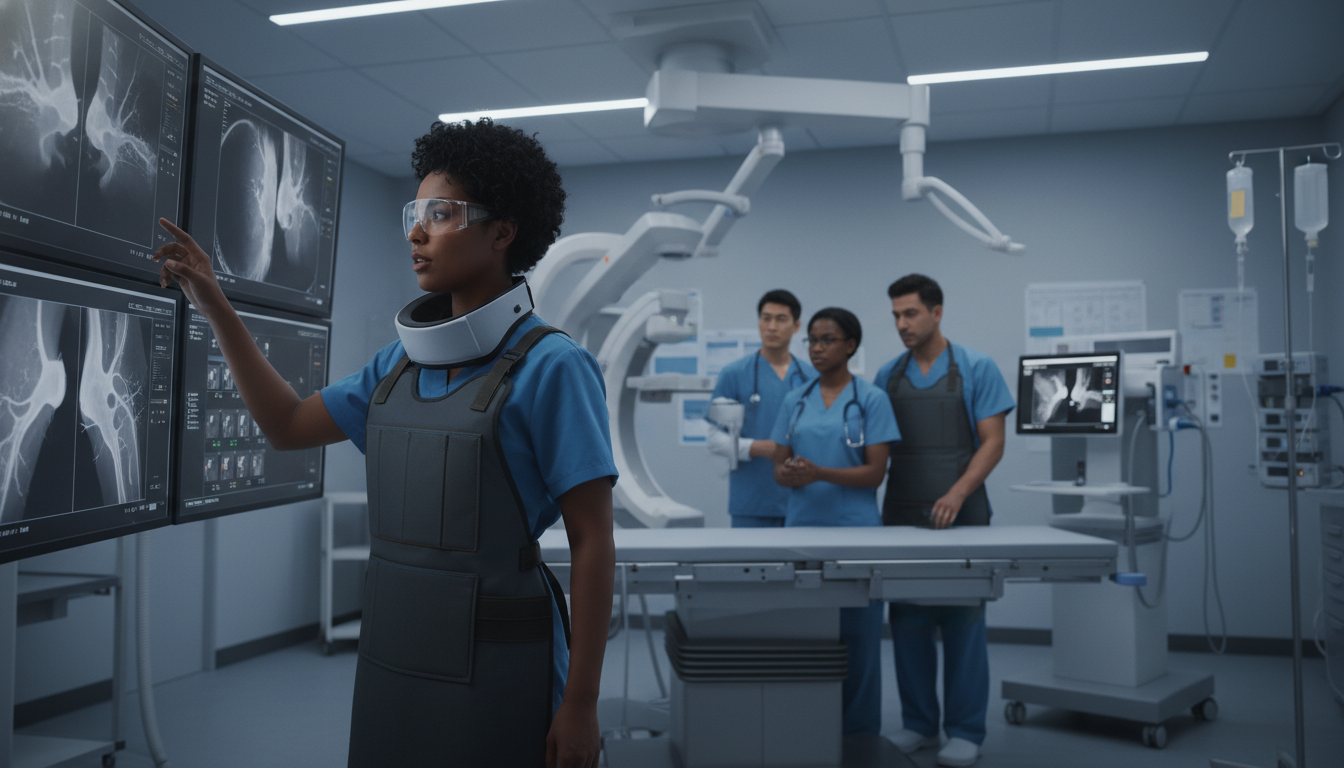
Understanding the Landscape: Academic vs Private Practice in Interventional Radiology
For a Caribbean IMG pursuing interventional radiology, choosing between academic medicine and private practice is one of the most important long-term decisions you’ll make. The choice impacts your day‑to‑day work, income trajectory, geographic options, work–life balance, and even your chances in the competitive IR match and beyond.
Because many Caribbean graduates are especially focused on residency placement and visas, it’s easy to delay thinking about what comes after training. But having a clear picture of academic vs private practice early in your journey can shape how you approach:
- USMLE performance and clinical rotations
- Letters of recommendation
- Fellowship and job search strategies
- Long-term career positioning for leadership, research, or entrepreneurship
This article breaks down the key differences between academic and private practice in interventional radiology (IR), with a specific focus on the realities, advantages, and challenges for Caribbean IMGs—especially those from schools like SGU, Ross, AUC, Saba, and similar institutions.
How Your Training Path Shapes Career Options
The IR Match and Caribbean IMGs
Interventional radiology residency (Integrated IR/DR) is one of the most competitive specialties in the US. As a Caribbean IMG, you face additional hurdles:
- Program biases toward US MD graduates
- Limitations related to visa sponsorship
- Fewer home‑institution connections compared with US med students
Because of this, many Caribbean IMGs who ultimately practice IR may follow alternative routes:
- Diagnostic radiology (DR) residency → Independent IR residency or IR fellowship
- Transitional year / preliminary medicine → DR → IR
- In some cases, hybrid careers combining IR with diagnostic radiology or even other clinical roles
Where academic vs private practice comes in:
- Academic IR departments often have more structured fellowship training, research opportunities, and mentorship—but may be more competitive and selective.
- Large private groups may offer IR fellowships or on-the-job training in niche areas (e.g., PAD, outpatient embolization practices), which can create a different path into IR-heavy practice.
As a Caribbean IMG, your strategy should be to:
- Maximize match potential first (IR or DR), then
- Be intentional about positioning yourself for the environment—academic or private—in which you ultimately want to work.
SGU Residency Match and Perception of Caribbean Schools
Caribbean schools like SGU have sizeable match lists, including radiology and occasionally interventional radiology residency positions. When program directors evaluate your application, they think in terms of:
- Board scores and clinical performance
- Strength and origin of letters (well-known academic IR faculty carry extra weight)
- Evidence of commitment to IR (research, electives, IR interest group, conferences)
Why this matters for your future career setting:
- A strong academic IR residency or fellowship can more easily launch you into an academic medicine career, especially if you publish, present, and network.
- A community-based residency with strong volume and a broad procedural mix might lead more naturally into private practice IR or a hybrid position.
While the SGU residency match or similar Caribbean medical school residency outcomes can open the door, how you use residency is what will shape your long-term options.
What “Academic” Interventional Radiology Really Looks Like
In academic medicine, your primary employer is usually:
- A university hospital
- A large teaching hospital affiliated with a medical school
- An NCI-designated cancer center or major tertiary care system
Core Characteristics of Academic IR
Clinical Focus with Subspecialty Depth
- Complex and rare procedures: advanced oncologic interventions, complex portal hypertension work, transplant-related IR, complex trauma, and advanced neuro-IR (if you cross over that domain).
- Referral base from a wide geographic area and within the institution (oncology, surgery, hepatology, transplant, etc.).
- Often higher acuity patients, more call complexity, and more multidisciplinary care.
Teaching Responsibilities
- Teaching IR/DR residents and med students during procedures, on consults, and in conferences.
- Leading didactic sessions, case conferences, and morbidity & mortality (M&M) rounds.
- Supervising and mentoring independent IR residents or fellows.
Research and Scholarship
- Participation in clinical trials, device studies, and outcomes research.
- Writing case reports, clinical series, and review articles.
- Presenting at SIR, RSNA, and other specialty conferences.
- Time for research may be “protected,” but productivity expectations still apply.
Academic Promotion Ladder
- Titles: Instructor → Assistant Professor → Associate Professor → Professor.
- Promotion criteria: publications, teaching evaluations, grants, leadership roles, and institutional service.
Compensation and Schedule
- Typically lower base salary than high-volume private practice, especially early.
- Benefits may be strong: retirement contributions, academic sabbaticals, tuition benefits for dependents, robust CME.
- Call responsibility may be heavy, but often shared among a larger IR team at big centers.
- More variation in protected time depending on institution and funding.
Pros of Academic IR for Caribbean IMGs
1. Strong Professional Brand and Credibility
An academic appointment can help offset some initial skepticism about a Caribbean medical school background. Being an Assistant Professor at a respected institution immediately signals that you:
- Trained and performed at a high level
- Are trusted to teach and lead
- Are engaged in scholarship, not merely service work
2. Enhanced Visa and Sponsorship Options
Many academic centers:
- Are experienced with J‑1 waivers and H‑1B sponsorship
- Have dedicated legal and HR resources for international physicians
- May qualify for Conrad 30–type positions through affiliated community sites, giving you more structured pathways toward long-term US practice.
3. Built-In Mentorship and Networking
Academic medicine is saturated with:
- Senior IRs who have NIH grants, leadership roles in SIR, or device‑industry collaborations
- Cross-disciplinary collaborators (hepatology, oncology, vascular surgery, transplant)
For a Caribbean IMG, this kind of environment can accelerate integration into national networks in a way that small private practices may not.
4. Easier Path to Niche Subspecialization
If you want to focus on:
- Interventional oncology
- Portal hypertension and liver-directed therapies
- Complex venous disease
- Women’s health IR (fibroids, pelvic congestion, fertility-related work)
you’ll often find more opportunity, patient volume, and academic support in university settings.
Cons of Academic IR for Caribbean IMGs
1. Lower Relative Income (Especially Early)
Compared to busy private practice IR, academic compensation may lag by 20–40% or more in some regions, especially when procedures are billed through the hospital or “global” institutional entity.
2. Pressure to Produce Scholarship
If research is not your passion:
- Manuscripts, IRB paperwork, and grant writing can feel burdensome.
- You may feel pulled between clinical care, teaching, and pressure to publish.
Some institutions still heavily weigh publications when evaluating promotions, even if you’re an outstanding clinician and teacher.
3. Slower Geographic Flexibility
Academic IR jobs are:
- Concentrated in major metro areas with large academic centers
- Limited in number, so finding a position in your exact preferred city may be challenging
4. Longer “Track” to Autonomy
As junior faculty, you may:
- Have less control over your schedule and case mix
- Spend more time covering general IR before carving out your niche
- Need to negotiate for block time, clinic slots, and research support

What Private Practice Interventional Radiology Looks Like
Private practice IR can take many forms:
- Large multispecialty radiology groups covering multiple hospitals
- IR‑dominant practices with both hospital and office-based labs (OBLs)
- Outpatient-based practices focusing on PAD, uterine fibroid embolization, varicose veins, or pain interventions
- Hybrid employment models with hospital-employed IR service lines
Core Characteristics of Private Practice IR
Production-Driven Environment
- Compensation usually tied to RVUs (relative value units), collections, or productivity bonuses.
- Focus on efficiency, throughput, and service to referring physicians.
- Emphasis on patient satisfaction and relationship-building with surgeons, oncologists, and primary care.
Broader Procedural Mix (Often Including “Bread-and-Butter” Cases)
- Lines, tubes, biopsies, drains
- PAD interventions, venous interventions, embolizations (fibroids, GI bleeding, trauma), ports, dialysis access
- In some groups, IR physicians also interpret diagnostic imaging or take DR call.
Less Formal Teaching and Research
- Some private groups host residents or medical students for rotations, but structured teaching is less common.
- Research is typically limited to industry trials or personal interest projects without formal protected time.
Business and Management Involvement
- Group partnership tracks, buy‑ins, and business decisions about expansion, equipment, marketing.
- Negotiations with hospitals, payers, and other specialties over call coverage, procedural turf, and resource allocation.
Compensation and Work Hours
- Typically higher earning potential, particularly after partnership.
- Call burden can be variable—heavy in rural regions or if group is small.
- Outpatient IR practices may achieve more predictable schedules but sometimes require heavy marketing to build volume.
Pros of Private Practice IR for Caribbean IMGs
1. Higher Income Potential
Many private practice IRs:
- Earn significantly more than academic counterparts once established
- Can increase income by taking more call or extra cases
- May gain equity in outpatient labs or practices, adding long-term financial upside
2. Greater Autonomy in Practice Style
You may have more control over:
- Which procedures you emphasize (e.g., PAD vs fibroid embolization vs venous work)
- How you structure clinic vs procedure days
- Whether you pursue business opportunities like starting an OBL or vein clinic
3. Wider Geographic Range
Private practice positions:
- Exist in suburban and rural areas where academic centers don’t
- Can offer J‑1 waiver opportunities in underserved regions
- May be more open to hiring based on skills and work ethic rather than school pedigree alone
4. Faster Decision-Making and Less Bureaucracy
Compared with university systems, private groups can:
- Implement changes more quickly (e.g., new equipment, protocols)
- Negotiate locally with hospitals or vendors
- Adapt business models quickly to new IR niches
Cons of Private Practice IR for Caribbean IMGs
1. Fewer Explicit Academic Medicine Career Opportunities
If your aspiration is:
- A long-term academic medicine career
- National leadership within teaching and research institutions
- Becoming a program director or division chief in an academic IR department
a purely private practice path may make it harder (though not impossible) to pivot later into academia, especially if you lack recent publications or teaching portfolios.
2. Visa and Immigration Variability
Some private groups:
- Are unfamiliar with H‑1B or J‑1 waiver processes
- May be reluctant to handle complex immigration cases
- Prefer US citizens or permanent residents to avoid administrative burden
You will need to ask explicitly about visa support during the job search.
3. Business Risk and Pressure
Productivity expectations can be intense:
- Lower volume may directly impact income
- Market competition (e.g., vascular surgeons starting competing practices) can create tension
- Starting or joining an OBL involves regulatory, reimbursement, and overhead risk
4. Less Structured Mentorship
While some groups have strong senior partners who mentor aggressively, others:
- Are focused on productivity and may have minimal time for teaching
- Offer limited guidance for those interested in research, national leadership, or academic-type activities

Private Practice vs Academic: Key Comparisons for Caribbean IMGs
Compensation and Financial Trajectory
Academic IR:
- Lower starting salary but stable, with institutional benefits and retirement matching.
- Less direct correlation between how hard you work and how much you earn.
- Possible supplemental income from consulting, speaking, or research collaborations over time.
Private Practice IR:
- Higher early and peak earnings, especially post‑partnership.
- Income strongly tied to productivity, call, and sometimes business equity.
- Financial risk if the practice loses hospital contracts or faces competition.
Actionable tip:
As a Caribbean IMG, you may have higher educational debt and immigration costs. Run realistic financial projections for both paths over a 10–15 year horizon, not just your first job offer.
Work–Life Balance and Lifestyle
Academic IR:
- More protected non-clinical time in some institutions; others are equally clinically heavy.
- Call often more complex but distributed among a larger team.
- Some flexibility for academic travel, conferences, and sabbaticals.
Private Practice IR:
- Schedules can be more predictable in outpatient-focused settings.
- Call and case load can be intense in smaller groups or rural areas.
- Vacation time and call coverage are directly tied to group size and culture.
Actionable tip:
Ask specific, concrete questions on interviews:
- “How many nights of call per month?”
- “How often do you get called in after midnight?”
- “Average weekly case volume for a full-time IR?”
Professional Identity and Career Satisfaction
If your passion is teaching, research, and shaping the field, academic IR aligns naturally.
If you value entrepreneurship, autonomy, and optimizing patient access in the community, private practice may feel more fulfilling.
Caribbean IMGs often come into the US system with a “prove myself” mindset. Either setting can serve that motivation:
- In academia, by becoming a prolific educator, researcher, or subspecialty expert.
- In private practice, by building a high-volume, high-quality IR service line in a region that previously had limited access.
Long-Term Flexibility and Switching Tracks
Moving from academic → private is generally easier than private → academic, because:
- Academic training and research output translate well to private practice credibility.
- Private practice without recent scholarly output may not meet academic promotion expectations.
That said, switches do happen:
- Private practice physicians who maintain some research or teaching can occasionally re-enter academic environments.
- Academic IRs occasionally transition to private practice to improve income or lifestyle.
For Caribbean IMGs, keeping some academic engagement (papers, presentations, teaching adjunct roles) gives you optionality if you decide to pivot.
Strategic Planning: How to Choose Your Path as a Caribbean IMG in IR
Step 1: Clarify Your Long-Term Vision Early
Ask yourself:
- Do I see myself teaching residents and students regularly?
- Do I want my name on research papers, clinical trials, or textbooks?
- Do I get excited about building a brand, an OBL, or growing a regional IR practice?
- How important is geographic flexibility vs anchoring at a single major institution?
Your answers won’t lock you in forever, but they help guide:
- Choice of residency and fellowship programs
- Research vs clinical extracurricular activities
- Networking priorities (academic mentors vs private practice leaders)
Step 2: Align Your Training Path with Your Goal
For an Academic IR Career:
- Prioritize residency and fellowship programs with:
- Strong academic output and NIH or industry-funded trials
- High case complexity and subspecialty depth
- Established IR divisions with recognized national leaders
- During training:
- Get involved in research early (as PGY‑2 or even earlier)
- Present at SIR and RSNA
- Seek mentorship from faculty with titles (Program Director, Division Chief, etc.)
- As a Caribbean IMG, emphasize:
- Board scores and research productivity to counter bias
- A track record of teaching, such as tutoring juniors or running journal clubs
For a Private Practice IR Career:
- Look for residencies/fellowships with:
- High procedural volume, especially bread-and-butter IR
- Exposure to outpatient practice models and clinic-based IR
- Strong relationships with community hospitals and regional practices
- During training:
- Develop solid technical skills and efficiency.
- Learn the basics of billing, RVUs, and practice management.
- Network with private practice attendings—many jobs come from word-of-mouth.
- As a Caribbean IMG, emphasize:
- Reliability, work ethic, and procedural competence
- Willingness to take call and “do what it takes” in group settings
- Any experience in underserved or rural environments, which may be more open to IMGs.
Step 3: Factor in Visa and Immigration Realities
Your immigration status heavily influences the academic vs private practice decision.
If you are on a J‑1 visa:
- You will need a J‑1 waiver job, often in underserved or rural areas.
- Many of these are community or hybrid practices; some are academic-affiliated.
- Start identifying potential waiver states and practice types early (during fellowship).
If you are eligible for H‑1B:
- Some academic centers prefer H‑1B over J‑1 waiver, which can be advantageous.
- Certain private practice groups may be reluctant to sponsor H‑1B because of cost and logistics.
Actionable tip:
During job search, ask explicitly:
- “Do you sponsor H‑1B / hire J‑1 waiver physicians?”
- “How many current physicians are on visas?”
- “Do you have an immigration lawyer you work with regularly?”
Practical Scenarios: What Might Your Career Look Like?
Scenario 1: Academic IR with Research Focus
- Caribbean IMG → SGU residency match into DR at an academic center
- Independent IR residency at the same or a higher-tier academic institution
- Multiple publications in interventional oncology and portal hypertension
- First job: Assistant Professor of IR at a university hospital, 70% clinical, 30% research/teaching
- Long-term: Promotion to Associate Professor, PI on clinical trials, national SIR committees
Scenario 2: Hybrid Academic–Community IR
- Caribbean IMG → Community-based DR residency with strong IR faculty
- Independent IR residency at a university program
- First job: Employed by an academic center but covering a regional community hospital, doing high-volume general IR with some teaching opportunities
- Long-term: Joint appointment, part-time academic role with some private-practice-type compensation incentives
Scenario 3: Private Practice IR with Outpatient Focus
- Caribbean IMG → DR residency + IR fellowship at a large teaching hospital
- First job: Associate in a private multispecialty IR/vascular group with hospital and OBL time
- Over 5–7 years: Becomes partner, invests in the OBL, builds a high-volume PAD and fibroid practice, leads local CME dinners, and grows referral network
- Long-term: Substantial income, regional reputation, limited formal research or academic output
Each scenario is viable for a Caribbean IMG, but the route you choose during training—and the mentors you select—will tilt you toward one of these futures.
FAQs: Academic vs Private Practice for Caribbean IMGs in Interventional Radiology
1. As a Caribbean IMG, is it realistically possible to build a strong academic medicine career in IR?
Yes, but you’ll need to be strategic:
- Match into a solid DR or IR residency with research opportunities.
- Get involved in IR research early and be consistent.
- Seek mentors who are willing to sponsor you for fellowships and junior faculty positions.
Your Caribbean background is not disqualifying; institutions respond to performance, productivity, and professionalism.
2. Does starting in private practice close the door on academia later?
Not necessarily, but it makes re-entry harder:
- You’ll need to demonstrate recent scholarly activity (publications, teaching, conference involvement).
- Many academic centers prefer candidates with recent academic experience.
If there is any chance you want an academic role later, maintain some connection to education and scholarship even while in private practice.
3. Which path—academic or private practice—is better for visa-dependent Caribbean IMGs?
It depends on your specific visa type and the region:
- Academic centers often have more institutional experience with visas, but not all academic jobs are in underserved areas suitable for J‑1 waivers.
- Private and community practices in underserved or rural regions may be more open to J‑1 waivers but less comfortable with H‑1B.
Evaluate each job individually, asking about visa experience and existing international physicians in the group.
4. How early in training should I decide between academic vs private practice IR?
You don’t need a firm decision as a medical student, but:
- By mid‑residency (PGY‑3 to PGY‑4 for DR residents), you should have a sense of whether you enjoy research and teaching enough for academia.
- Use electives, away rotations, and conferences to sample both worlds.
Remember: the earlier you align your CV (research vs clinical breadth), the easier your eventual job search will be.
Choosing between academic and private practice in interventional radiology is not just about salary or prestige—it’s about aligning your daily work, long-term growth, and immigration realities with the kind of physician you want to become. As a Caribbean IMG, thoughtful planning and deliberate networking can turn either path into a rewarding, sustainable, and impactful career.