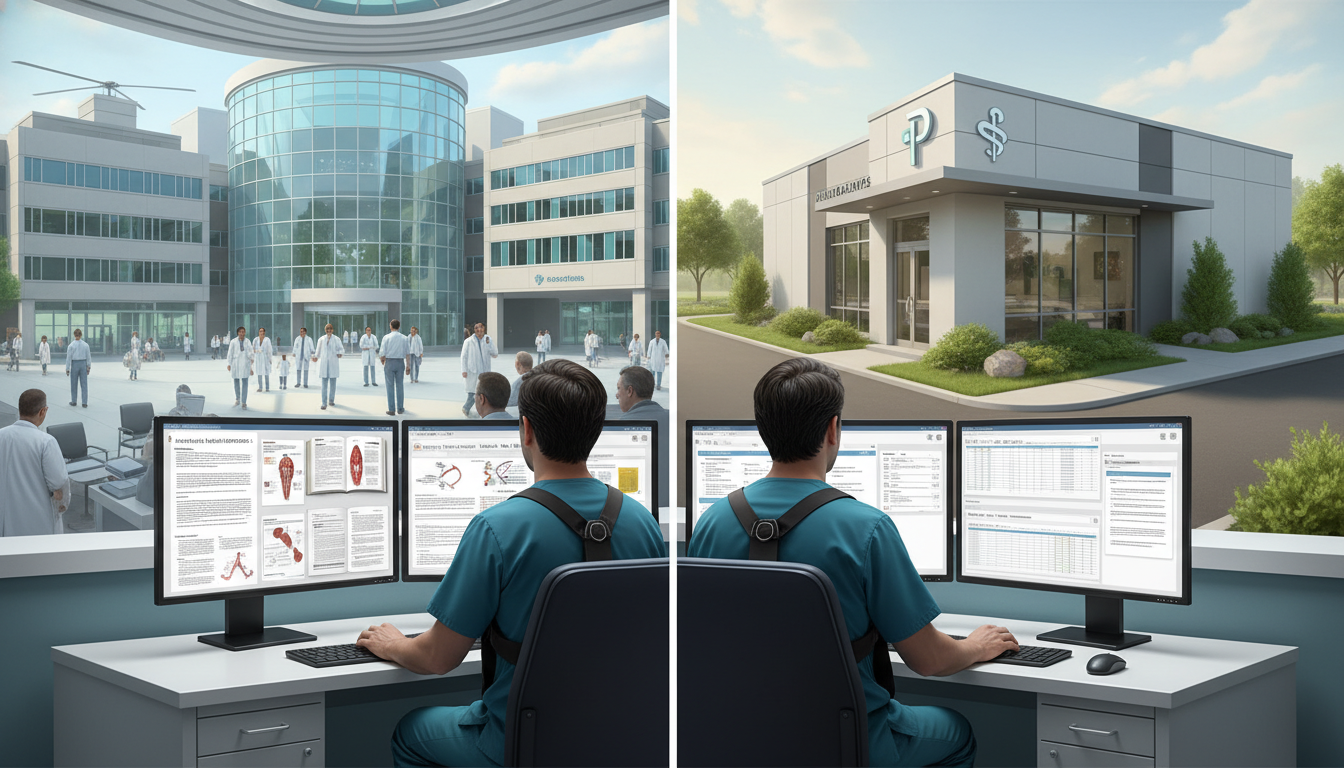
Understanding Your Options: Academic vs Private Practice in Diagnostic Radiology
For a Caribbean IMG in diagnostic radiology, the question of academic vs private practice becomes very real as you approach the end of residency or fellowship. Both paths can lead to excellent careers, but they differ in day-to-day work, compensation structure, expectations, and long‑term growth.
This decision is layered on top of unique considerations you already face as a Caribbean graduate: visa status, perceptions of Caribbean medical school residency applicants, and sometimes a more winding path to a diagnostic radiology match. The good news: whether you trained at SGU, AUC, Ross, Saba, or another Caribbean school, you can build a successful career in either environment if you plan intentionally.
This article will walk you through:
- The core differences between academic and private practice radiology
- How those differences feel in daily life
- How your Caribbean IMG background may influence opportunities
- Step‑by‑step strategies to align your choice with your long‑term goals in medicine
Big-Picture Differences: Academic vs Private Practice Radiology
Both academic and private practice radiologists read studies, interact with referring providers, and support patient care. The main differences are mission, structure, and metrics of success.
Academic Radiology: Mission, Structure, and Culture
Mission:
Academic radiology is anchored in the “tripartite mission”:
- Clinical care
- Teaching
- Research / scholarship
Your department’s success is measured not only by clinical volume and revenue, but also by publications, grants, teaching quality, and reputation.
Typical Environment:
- Affiliated with a university or medical school
- Large tertiary or quaternary care centers, often with complex pathology
- Residents and fellows in the reading room
- Regular conferences (tumor boards, morbidity & mortality, grand rounds)
- Strong emphasis on academic medicine career development
Core Features:
- Protected time: Portions of your schedule may be carved out for research, teaching prep, curriculum design, QA projects, or administrative duties.
- Academic rank: You progress from Instructor/Assistant Professor to Associate Professor to Full Professor based on scholarly activity, teaching, and service.
- Subspecialization: You are more likely to practice within a focused niche (e.g., neuroradiology, MSK, breast, IR, nuclear medicine) with emphasis on being a “go‑to” expert.
Private Practice Radiology: Mission, Structure, and Culture
Mission:
Private practice is focused on efficient, high-quality clinical care and business sustainability. The priority is timely, accurate imaging interpretations and service to referring clinicians and hospitals.
Typical Environment:
- Independent or large corporate practice groups
- Community hospitals, outpatient imaging centers, teleradiology platforms
- Limited or no formal teaching responsibilities (unless affiliated with a small residency program)
- Less emphasis on formal research or publications
Core Features:
- Productivity-based: Compensation and success are closely tied to RVUs, case volumes, and service commitments.
- Ownership/equity: Many groups offer pathways to partnership with profit-sharing and governance roles.
- Broad skill set: You may function as a “generalist with subspecialty focus,” reading across multiple modalities and body systems.

Day-to-Day Life: What Your Work Actually Looks Like
Once you’re in the workforce, labels like “academic” or “private” translate into everyday realities: what time you show up, who’s in the reading room, what interruptions you face, and how you are evaluated.
Daily Life in Academic Radiology
Clinical Work:
- Mix of routine and complex cases—oncologic staging, transplant imaging, rare diseases, advanced MR/CT protocols.
- Frequent multidisciplinary conferences: tumor boards, stroke meetings, transplant selection, etc.
- More subspecialty concentration (e.g., dedicated neuro days, body days).
Teaching and Education:
- Residents and fellows often present cases, ask questions, and require explanations.
- You may lead case conferences, participate in board reviews, or develop teaching files.
- Expect regular teaching evaluations from trainees and sometimes from medical students.
Research and Scholarship:
- Some academic jobs expect a baseline of scholarly output: case reports, retrospective studies, QI projects, educational posters.
- Formal support may include research coordinators, statisticians, and librarians.
- You may attend and present at national meetings (RSNA, ARRS, subspecialty societies).
Schedule and Workload:
- Day shifts often 7:30–5 or 8–5; variable call and weekend coverage.
- More interruptions: teaching moments, clinical discussions, conferences, procedural consults.
- Lower pure RVU volume compared to busy private practice, but more fragmented time.
Compensation:
- Generally lower than high‑earning private practice, especially early on.
- Benefits can be strong: retirement matching, tuition discounts for family, academic stipends, protected CME funds, robust health insurance.
- Salary may be more predictable and less directly tied to RVU productivity.
Example Scenario:
You’re a neuroradiologist starting at 7:30 a.m. You read overnight MRIs, then at 9 a.m. hold a quick teaching session for residents about stroke imaging. At 11 a.m., you break for a multidisciplinary tumor board where you review challenging neuro‑oncology cases. After lunch, you resume reading until 3 p.m., then work on revising a manuscript about AI tools in stroke triage before finishing at 5 p.m.
Daily Life in Private Practice Radiology
Clinical Work:
- Strong focus on high-volume bread‑and‑butter studies: CT chest/abdomen/pelvis, MRI joints/spine, ultrasound, screening and diagnostic mammography, plain films, and emergent cases.
- May work at multiple sites: hospital, outpatient imaging centers, teleradiology shifts.
- Structure and communication style can vary widely between independent groups and large corporate entities.
Teaching and Nonclinical Duties:
- Minimal formal teaching unless your group covers a teaching hospital.
- Nonclinical time may be oriented toward business administration, QA, protocol optimization, or marketing referring-physician relationships.
Schedule and Workload:
- Often earlier starts and later finishes depending on group culture (e.g., 7 a.m.–5 p.m.).
- Higher overall RVU output; efficiency is highly prized.
- Some practices offer flexible scheduling: “7-on/7-off,” 4‑day weeks, or mostly evening/nighthawk coverage (often higher pay).
- Call and weekends can be intensive but may be compensated or offset.
Compensation:
- Typically higher income, especially after partnership.
- Various structures: salary + bonus, pure productivity, equity distribution.
- Partnership track often 1–3 years, then substantial jump in compensation and voting rights.
Example Scenario:
You start a 7 a.m. shift reading ER CTs and portable films. Throughout the day you alternate between hospital studies and outpatient MRIs/US from the imaging center. You make quick phone calls to referring clinicians for critical findings but have few interruptions otherwise. Your productivity is tracked in real time, and your bonus at year’s end is tied to your RVUs.
Special Considerations for Caribbean IMGs in Radiology
As a Caribbean IMG, you may bring extra resilience, adaptability, and real‑world experience—but you also face structural challenges that shape your choosing career path in medicine.
The Path to Diagnostic Radiology Match as a Caribbean IMG
You likely already navigated a more complex path to the diagnostic radiology match:
- Strategic away rotations
- Strong USMLE scores
- Letters of recommendation from US academic radiologists
- Possibly a preliminary year outside radiology, then a reapplication
Graduates from schools like SGU have shown that a Caribbean medical school residency trajectory can still successfully lead to radiology. For example, the SGU residency match list routinely includes diagnostic radiology and subspecialty fellowships, including some academic centers.
This background matters when:
- Interviewing for academic jobs: Programs may want to see evidence that you can contribute to research/teaching, especially if your CV is light on scholarly work.
- Pursuing visas: H‑1B vs J‑1 waiver jobs can shape whether you look first at community/PP roles or academic centers in underserved areas.
- Competing in oversubscribed markets: Coastal cities with prominent academic institutions may prefer US MD/DO graduates with established local connections, especially for highly sought-after subspecialty posts.
How Being a Caribbean IMG Interacts with Academic Careers
Potential Advantages:
- You’re often perceived as hard‑working and resilient.
- You may already have experience in QI projects or educational initiatives to stand out during residency.
- You may have strong clinical acumen from diverse patient populations and high clinical exposure in core rotations.
Potential Challenges:
- Some academic institutions may have implicit bias favoring US MD/DO or graduates from more research‑heavy schools.
- You may have fewer first‑author publications when compared with peers from research‑intense medical schools.
- Visa needs (if applicable) can limit options among academic centers not set up to sponsor H‑1Bs.
Strategies to Strengthen Your Academic Competitiveness:
- During residency, actively seek research mentors; aim for at least a couple of publications or posters.
- Present at national meetings (RSNA, ARRS, ASNR, etc.) to build visibility.
- Take leadership roles in teaching residents, MS4s, or creating structured curricula.
- Document, in your CV and personal statement, your interest and experience in an academic medicine career.
How Being a Caribbean IMG Interacts with Private Practice Careers
Potential Advantages:
- Many private groups focus heavily on clinical skill and work ethic over academic pedigree.
- If you matched diagnostic radiology and completed a reputable fellowship, most groups won’t dwell on where you went to medical school.
- Caribbean IMGs often excel in high‑volume, service‑oriented environments where efficiency counts.
Potential Challenges:
- Very competitive, high‑pay metro markets may still screen by training pedigree, including fellowship program reputation.
- Visa issues again can limit your choices; not all private groups are comfortable with sponsorship or J‑1 waiver logistics.
Strategies to Strengthen Your Private Practice Competitiveness:
- Prioritize fellowships with strong procedural and high‑volume exposure.
- Develop comfort reading across a broad range of studies, not just a narrow niche.
- Cultivate strong, collegial communication with referring clinicians—this is central to private practice reputation.
- Understand basic practice economics (RVUs, collections, overhead, partnership agreements).
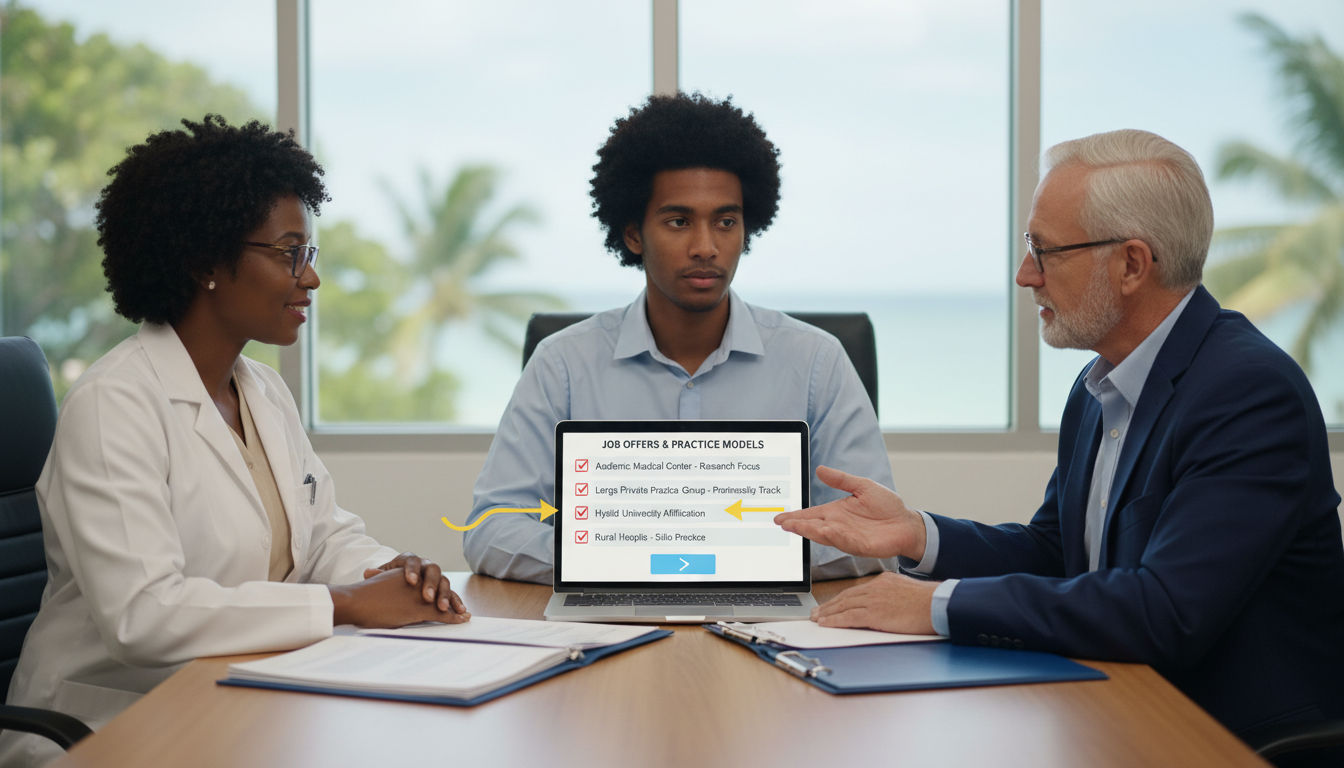
Key Factors to Compare: Academic vs Private Practice for Caribbean IMGs
When deciding between academic and private practice radiology, avoid a purely emotional or prestige-based choice. Systematically compare the domains that will most affect your happiness, stability, and professional growth.
1. Clinical Interests and Subspecialization
Ask yourself:
- Do you want to practice as a subspecialist (e.g., 80–100% neuroradiology) or as a broad generalist with some subspecialty days?
- Do you thrive on rare and complex cases, or are you comfortable (or even prefer) high-volume bread-and-butter work?
Academic Fit:
- Better if you want to be a high-level subspecialist with niche expertise.
- Strongly aligned if you enjoy multidisciplinary team interactions and advanced imaging techniques.
Private Practice Fit:
- Better if you enjoy general radiology and can read many modalities comfortably.
- Ideal if you value rapid decision-making and high throughput more than case complexity.
2. Teaching and Mentoring
Ask yourself:
- Does teaching energize you or feel like a burden?
- Do you want residents and students in your reading room regularly?
Academic Fit:
- Teaching is central. You’ll receive evaluations and be judged on your ability to educate.
- Opportunities to formally mentor IMGs, residents, and fellows.
Private Practice Fit:
- Minimal formal teaching.
- Good if you prefer to focus on clinical work and occasional informal teaching (e.g., to technologists or occasional rotating students).
3. Research and Scholarly Identity
Ask yourself:
- Do you want to write, publish, and present throughout your career?
- Are you content with clinically oriented QI projects and occasional literature review?
Academic Fit:
- Strong if you want to contribute to the field’s evidence base.
- Some jobs require a defined level of academic productivity for promotion and job security.
Private Practice Fit:
- Research generally optional or absent.
- Some large groups support limited QI or clinical research, but this is rarely a primary focus.
4. Income, Lifestyle, and Geographic Goals
Compensation:
- Private practice: Typically higher total compensation, especially post‑partnership.
- Academic: Lower salary but potentially better benefits, student loan programs, and job stability.
Lifestyle:
- Academic: May have more predictable hours but frequent committees, conferences, and nonclinical tasks.
- Private practice: Volume-driven; intense stretches but possibilities for creative schedules (e.g., 7‑on/7‑off, remote teleradiology).
Geography:
- Academic jobs cluster around major cities and university hospitals.
- Private practice opportunities are widespread, including mid‑size cities and rural areas (where pay may be higher and cost of living lower).
As a Caribbean IMG, being flexible with geography—especially early in your career—can dramatically expand your options in both pathways.
5. Visa and Immigration Considerations
If you require visa sponsorship:
- Academic centers often have established mechanisms for J‑1 to H‑1B transitions, especially for faculty.
- Private groups vary widely; small independent groups may be reluctant to sponsor, while large corporate groups may have standardized processes.
Plan early:
- Discuss your visa situation with mentors and program directors.
- Target fellowships and first jobs known to work with IMGs on visas.
- Consider how J‑1 waiver obligations (often in underserved or rural regions) could align with private practice versus academic posts.
Strategic Pathways: How to Decide and Position Yourself
You don’t have to choose during medical school or even early residency. But as graduation approaches, be deliberate.
Step 1: Clarify Your Long-Term Vision
Write down in concrete terms:
- What does a “great day at work” look like to you?
- How important is compensation vs schedule vs academic identity?
- Where do you hope to live in 5–10 years (big city vs smaller community)?
- Do you see yourself giving lectures, writing papers, and leading QI projects—or primarily focusing on high‑quality, efficient clinical reads?
Step 2: Use Residency and Fellowship to Test Both Worlds
- Seek electives at academic centers if you are in a more community-oriented residency.
- Attend academic conferences and present posters, even one or two, to see how it feels.
- Do a rotation in a high-volume community hospital or imaging center to experience private practice pace.
- Talk openly with faculty who transitioned from academic to private practice (and vice versa).
Step 3: Align Your CV with Your Preferred Path
If leaning academic:
- Prioritize research and scholarly work; aim for multiple first- or co‑author publications.
- Present at national or regional meetings.
- Seek leadership roles in teaching and curriculum design.
- Get letters from academic radiologists who can specifically speak to your teaching and research potential.
If leaning private practice:
- Highlight procedural volume (e.g., biopsies, drainages, MSK injections).
- Emphasize your ability to read high volumes and work efficiently without loss of accuracy.
- Gain broad exposure across modalities and organ systems.
- Demonstrate strong communication and team-based care in your evaluations and letters.
Step 4: Evaluate Concrete Job Offers, Not Just Labels
When you get offers:
- Request detailed breakdowns of:
- Clinical vs nonclinical time
- RVU expectations
- Call, evenings, weekends
- Partnership track structure (# of years, buy-in, voting rights)
- Research/teaching expectations and promotion metrics
- Talk to junior faculty or junior partners confidentially about real‑world culture.
- Ask explicitly how IMGs and international hires have fared in the group or department.
Blended and Evolving Models: It Doesn’t Have to Be “Either/Or” Forever
Medicine is changing. The line between academic and private practice can blur, and your career path can evolve.
Hybrid Jobs
Some positions combine features:
- Community hospitals affiliated with academic centers where you have limited teaching duties and occasional research.
- Large private groups that staff academic hospitals but are not university-employed.
- Non‑tenure clinical faculty roles with heavier clinical loads and lighter research expectations.
Career Transitions
It’s possible to move between settings:
- Academic → Private Practice: Common when people seek higher income, different geography, or less pressure for research.
- Private Practice → Academic: Less common but feasible if you’ve maintained subspecialty credibility, stayed active in societies, or bring unique expertise (e.g., operations, AI integration, high‑volume practices).
For a Caribbean IMG, a plausible route might be:
- Fellowship at a strong academic center
- First job in an academic or hybrid setting (build CV, secure visa)
- Later transition to private practice once immigration is stable and career goals shift
FAQs: Academic vs Private Practice for Caribbean IMG Radiologists
1. As a Caribbean IMG, is it realistic to aim for an academic radiology career?
Yes. Many Caribbean IMGs hold academic radiology positions, including at well-known institutions. To be competitive, you should:
- Build a record of scholarly work (publications, posters, QI projects) during residency and fellowship.
- Obtain strong letters from academic mentors.
- Demonstrate a clear, sustained interest in teaching and research.
Your medical school name matters less than your residency/fellowship pedigree, your performance, and your academic output.
2. Does private practice care where I went to medical school?
Most private practice groups care far more about:
- Your residency and fellowship quality
- Your references and interpersonal skills
- Your efficiency, accuracy, and reliability
- Your ability to integrate into the group and local medical community
Once you are a board-certified radiologist who has trained in the US, your Caribbean medical school background generally becomes a minor factor, especially outside extremely saturated markets.
3. Which path pays more: academic or private practice radiology?
In most cases, private practice pays more, especially after partnership. Academic radiologists may have lower base salaries but gain:
- Job stability
- Strong benefits and retirement plans
- Protected academic time
- The ability to build a recognized academic brand
However, there are exceptions—some high‑volume academic or hybrid positions can approach private practice compensation, and some smaller private groups may pay less than expected.
4. How should I decide between academic and private practice as a Caribbean IMG nearing graduation?
Use a structured approach:
- Clarify what you value most (income, flexibility, academic identity, geography, visa needs).
- Talk with mentors in both worlds—including Caribbean IMGs who’ve walked your path.
- Use electives, moonlighting, and fellowships to experience different settings.
- Align your CV with your intended direction (research/teaching vs broad clinical volume and efficiency).
- Compare actual job offers based on concrete details, not just title or prestige.
Ultimately, the best choice is the one that supports your long-term professional satisfaction, financial stability, and personal life—rather than what seems most impressive on paper.
Choosing between academic and private practice radiology is a major decision, but it’s not irreversible. As a Caribbean IMG, you’ve already shown that you can navigate complex systems and adapt. Approach this next step with the same strategic thinking, and you can build a diagnostic radiology career that fits both who you are now and who you want to become.