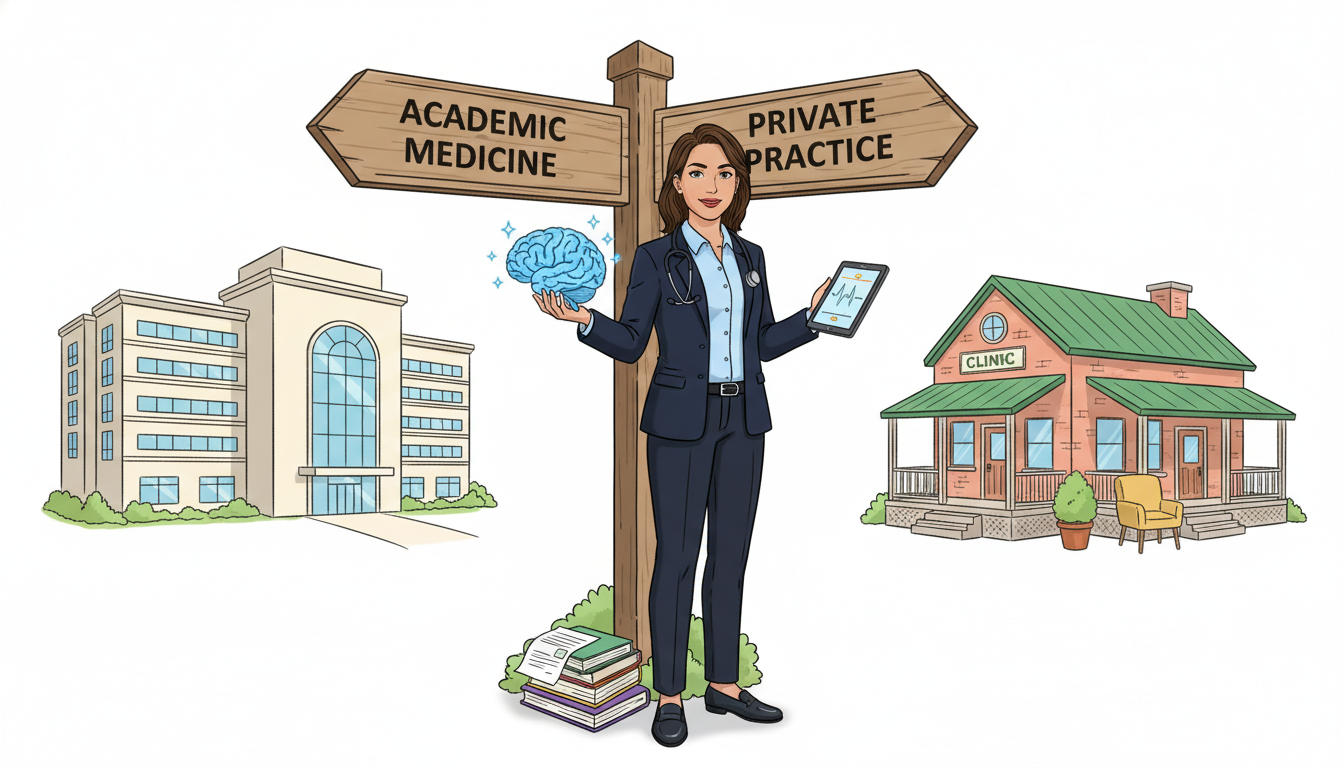
Understanding the Landscape: Caribbean IMGs in Pediatrics-Psychiatry
Caribbean international medical graduates (IMGs) who complete combined Pediatrics-Psychiatry training occupy a unique and highly needed niche. You’re trained to understand the child as a whole person—medical, developmental, and psychiatric—across settings where most clinicians see only one piece of the puzzle. After residency or a combined program (including triple board training), one of the most consequential decisions you’ll make is whether to pursue academic medicine or private practice.
For a Caribbean IMG, that decision is layered on top of other realities: visa considerations, reputation of your medical school, the weight of your SGU residency match or match from another Caribbean medical school, family obligations, financial pressures, and long-term goals like leadership, research, or building a practice that serves underserved communities.
This article breaks down how to compare academic vs private practice specifically for a Caribbean IMG in Pediatrics-Psychiatry, including:
- What academic medicine and private practice actually look like in peds-psych
- Day-to-day work, expectations, and pressures in each path
- Pros/cons for Caribbean IMGs, including reputation and visa issues
- How this choice fits with combined programs (e.g., triple board) and long-term goals
- Practical steps to explore and choose your path before and after residency
Throughout, we’ll keep a tight focus on your context: Caribbean medical school residency pathways, the nuances of a peds psych residency, and how to align your choosing career path in medicine with realistic constraints and real opportunities.
What “Academic” vs “Private Practice” Really Mean in Peds-Psych
Before comparing pros and cons, you need a clear, concrete understanding of how these paths typically look for a physician trained in pediatrics and psychiatry.
Academic Medicine in Pediatrics-Psychiatry
Academic medicine generally means being employed by or closely affiliated with a:
- University hospital
- Academic children’s hospital
- Large teaching institution
Your job description usually includes a mix of:
Clinical work
- Inpatient child/adolescent psychiatry
- Pediatric consult-liaison psychiatry (e.g., on pediatric wards, NICU, PICU)
- Outpatient clinics (developmental, autism, ADHD, mood/anxiety, medically complex kids)
- Integrated clinics with pediatricians (e.g., primary care behavioral health)
Teaching responsibilities
- Medical students (including other Caribbean IMGs rotating through)
- Residents in pediatrics, general psychiatry, child & adolescent psychiatry, or triple board
- Fellows, if your institution has child & adolescent psychiatry or related fellowships
Academic output
- Quality improvement projects
- Scholarly activity: conference posters, review articles, case reports, or research
- Curriculum development and teaching innovations
Service & leadership
- Committees: diversity/equity, education, wellness, curriculum
- Program leadership: assistant program director (APD), clerkship director, etc.
Compensation is often on a salary model, with RVU (relative value unit) or productivity expectations, but less direct pressure than pure private practice. In pediatrics-psychiatry specifically, academic centers often build your role around your dual training—e.g., you might lead a medically complex children’s clinic that integrates pediatrics and psychiatry.
Private Practice in Pediatrics-Psychiatry
Private practice can mean various structures:
- Solo practice (you are the practice owner)
- Small group practice (2–10 clinicians sharing overhead/staff)
- Medium/large multi-specialty groups (peds, family med, psych, therapy under one roof)
- Employed by a non-academic hospital or health system, but with a practice-oriented model
Your core activities typically include:
Direct clinical care
- High-volume outpatient visits: ADHD, anxiety, depression, autism, behavioral disorders
- Limited inpatient or consult work unless contracted with a hospital
- Often more autonomy over:
- Patient population focus
- Scheduling (length of visits, telehealth mix)
- Additional services (psychotherapy, testing, parent coaching)
Business and practice management (especially if owner/partner)
- Billing and coding, insurance panels, prior authorizations
- Hiring/overseeing staff (front desk, billing, MAs, therapists)
- Marketing and practice growth decisions
- Compliance with licensing, credentialing, and documentation standards
Fewer formal teaching and research duties
- You might precept students or supervise trainees informally
- May engage in local talks or CME presentations
- Limited structured academic productivity expectations unless you maintain an adjunct faculty role
Compensation is often productivity-based—you may have a higher ceiling but also higher financial risk and the need to maintain volume.
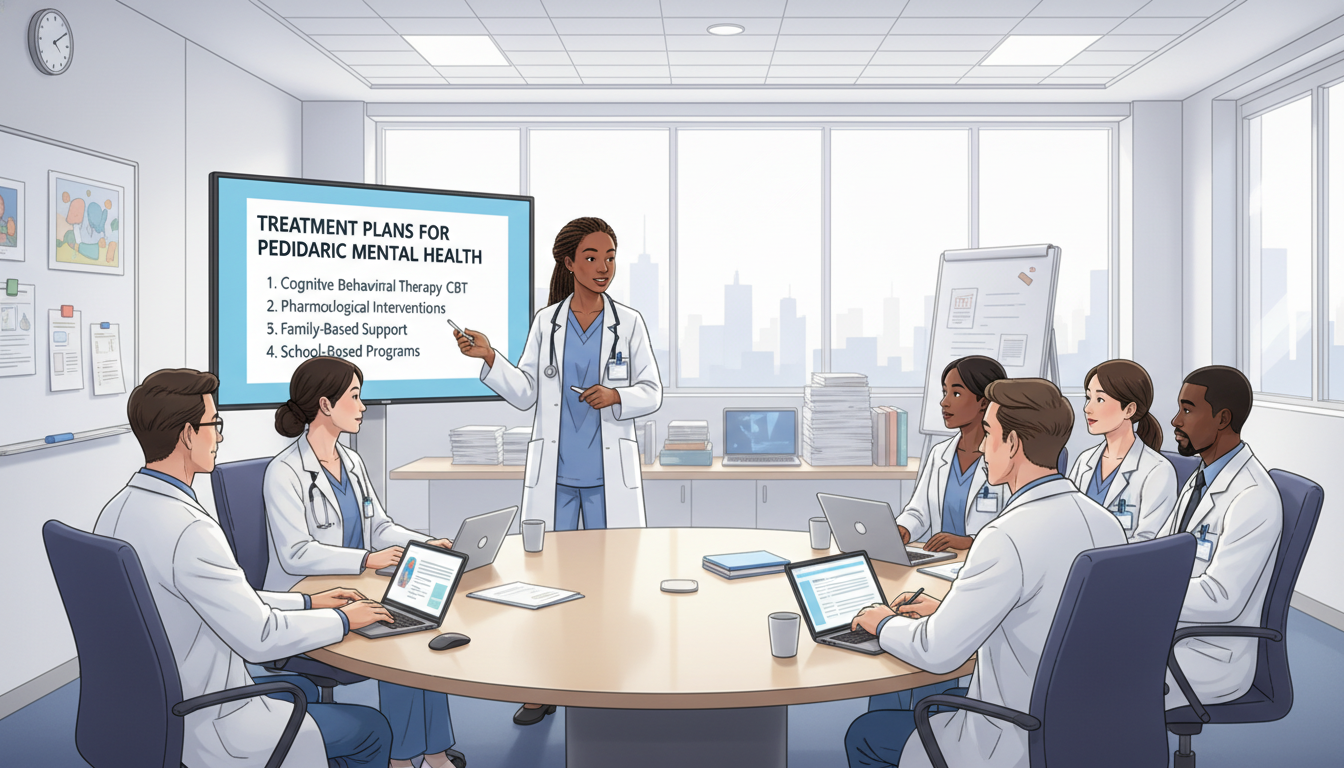
Pros and Cons of Academic Medicine for Caribbean IMGs in Peds-Psych
Advantages of Academic Medicine
1. Reputation and Career Branding
For a Caribbean IMG, an academic appointment can:
- Strengthen your professional brand, especially if you trained at a Caribbean medical school like SGU, Ross, AUC, or Saba
- Help “balance” any bias some employers still hold against Caribbean IMGs
- Create a clearer narrative:
- “I completed an SGU residency match in pediatrics-psychiatry (or triple board), then stayed on faculty and developed expertise in X.”
Working at a well-regarded academic institution can make it easier later to:
- Move between states or employers
- Apply for leadership roles
- Secure roles in specialized clinics, fellowships, or national organizations
This is particularly valuable if you foresee a long-term academic medicine career or clinical leadership path.
2. Strong Visa Support (Often)
If you are on a visa (J-1 or H-1B), academic institutions often:
- Have established immigration offices
- Are accustomed to sponsoring H-1B visas and facilitating J-1 waivers (though waiver positions are also common in underserved non-academic sites)
- Provide more structured HR support for:
- Green card applications
- Evolving immigration requirements
While not universal, it is generally easier to navigate complex immigration issues within larger academic health systems than in smaller private practices.
3. Structured Mentorship and Development
Academic settings provide:
- Mentors in pediatrics, psychiatry, and combined fields
- Opportunities to co-author papers, participate in research, or help develop curricula
- Protected time for:
- Lecturing
- Scholarship (in more supportive departments)
- Attending conferences (AACAP, APA, pediatric societies, etc.)
As an IMG, you may have fewer informal networks than U.S. MDs; academic departments help fill that gap:
- Helping you join committees and specialty societies
- Supporting you for:
- Fellowship leadership roles
- Board positions in professional organizations
- National presentations
4. Alignment With Triple Board and Combined Training
If you completed or are considering triple board (Pediatrics / General Psychiatry / Child & Adolescent Psychiatry) or other combined peds-psych pathways:
- Academic centers are the most natural environment to use all parts of your training:
- Pediatric inpatient consult-liaison psychiatry
- Behavioral health integration clinics in general pediatrics
- Specialized programs (e.g., eating disorders, neurodevelopmental clinics, somatic symptom clinics)
- You can develop a niche like:
- Pediatric CL-psychiatry
- Autism and complex developmental disorders
- Medically complex youth with mental health needs
- Transition-age youth (peds-to-adult care transition)
Private practice can also leverage these skills but tends to be more outpatient-psychiatry-focused rather than full-scope peds-psych.
5. Teaching and Giving Back
Many Caribbean IMGs feel a strong desire to:
- Mentor other IMGs and U.S. students rotating in underserved settings
- Improve education about:
- Health disparities
- Multicultural psychiatry
- Global perspectives on child mental health
Academic positions give you formal roles to:
- Teach residents and med students
- Shape how future clinicians think about children from immigrant, Caribbean, and minority backgrounds
- Advocate for inclusive, culturally informed care from within the system
This can be deeply satisfying and aligns well with long-term academic medicine career goals.
Challenges of Academic Medicine
1. Lower Pay (On Average) Compared With High-Earning Private Practice
While salaries in academic child psychiatry are not low, they often trail private practice earnings, especially in high-demand markets.
For a Caribbean IMG with:
- Substantial educational debt
- Family obligations in both the U.S. and the Caribbean
- Financial pressure to send remittances home
This income difference can be significant.
Reality check:
- You may see a 20–40% difference in potential top-end income between academic and a busy private practice, depending on region and structure.
- Academic roles often compensate partly with:
- Benefits
- Retirement contributions
- Job stability
- Less direct financial risk
2. Institutional Bureaucracy
Academic medicine comes with:
- Multiple committees and layers of approval
- Sometimes slow-moving administrative processes
- RVU and documentation requirements that can still feel heavy despite non-private status
As an IMG, you might also encounter:
- Implicit bias or doubts about your training background
- The need to “prove yourself” more than U.S. MD colleagues
This is changing gradually, especially as Caribbean medical school residency graduates from places like SGU show strong clinical performance—but it remains a factor.
3. Pressure for “Scholarly Activity”
Even if you are primarily a clinician, academic centers often expect:
- Quality improvement projects
- Some level of publications, presentations, or poster output
- Participation in research or educational innovation
If you enjoy these activities, this is a plus; if not, it can feel like extra work layered onto already busy clinical duties.

Pros and Cons of Private Practice for Caribbean IMGs in Peds-Psych
Advantages of Private Practice
1. Higher Earning Potential and Financial Control
For a peds-psych or triple board-trained physician, demand is extremely high. In private practice, that translates to:
- Ability to:
- Negotiate strong employed-practice contracts
- Build your own practice with high outpatient volumes
- Flexibility to:
- Offer cash-pay services
- Limit or select insurance panels
- Add ancillary services (therapy groups, parent training, telehealth programs)
Over time, especially if you own the practice, your earning ceiling is typically much higher than in academic medicine.
This is critical for:
- Paying down loans from Caribbean medical school more aggressively
- Supporting extended family
- Building long-term financial security
2. Autonomy Over Clinical Focus
Private practice lets you shape your:
- Patient population: e.g., mostly ADHD and anxiety, or focus on developmental disorders
- Service model:
- 30–60 minute medication visits
- Integrated psychopharmacology + brief therapy
- Parent coaching, school consultations, telehealth blocks
- Schedule:
- Start and end times
- Number of patients per day
- Mix of remote and in-person visits
For someone trained broadly in pediatrics and psychiatry, you can choose to:
- Emphasize your psychiatric expertise (most common)
- Offer some medical oversight for medically complex psychiatric patients (with caution and clarity on scope)
- Collaborate with pediatricians in your community rather than within one institution
3. Entrepreneurial Growth
If you have an interest in business:
- You can own and scale a practice:
- Hire therapists, psychologists, nurse practitioners
- Develop group programs (social skills groups, parent trainings, DBT skills for teens)
- Expand to multiple locations or fully virtual services
Your academic medicine career would typically not give you this level of direct business ownership.
Over time, practice ownership can become:
- A powerful asset
- A source of equity you can later sell or transition
4. Flexible Lifestyle (Once Established)
In the start-up phase, private practice can be intense. But once mature, you often gain:
- More control over:
- Vacations
- Clinic hours
- Call expectations (usually limited or none)
- Ability to downshift your schedule without committee approvals or academic promotion implications
For Caribbean IMGs balancing:
- Visits home
- Family obligations across countries
- Burnout risk after intensive training
This flexibility can be attractive.
Challenges of Private Practice
1. Visa and Employment Constraints
For IMGs on visas, private practice is more complicated:
- Many small private groups are not accustomed to H‑1B sponsorship or J‑1 waiver processes.
- You may find more J‑1 waiver positions in:
- Community hospitals
- Federally Qualified Health Centers (FQHCs)
- Rural or underserved clinics
than in purely private practices.
Common pattern:
- Finish peds-psych or triple board training.
- Work in a waiver-eligible setting (often not a classic private practice) for 3 years.
- Transition to private practice after permanent residency or more stable status.
You need to:
- Consult with an immigration attorney early
- Understand what types of employers can sponsor you in your state
- Consider stepping-stone jobs before full private practice
2. Business Risk and Administrative Burden
Running or joining private practice involves:
- Financial risk:
- Overhead (rent, staff salaries, malpractice, EHR)
- Variability in patient volumes and reimbursement
- Administrative work:
- Managing billing issues
- Negotiating with insurers
- Maintaining compliance and quality standards
If you’re still adjusting to the U.S. medical system, EHRs, and insurance complexity as a Caribbean IMG, add-on business responsibilities can feel overwhelming at first.
Many physicians mitigate this by:
- Joining an established group
- Working as an employed physician with salary + productivity bonuses
- Gradually taking on more responsibility and ownership after a few years
3. Limited Formal Teaching and Research
You may miss:
- Regular teaching of residents and students
- Departmental grand rounds and academic conferences built into your schedule
- The energy of an academic environment where complex cases and new research are constantly discussed
You can still:
- Take on adjunct faculty roles and host trainees
- Attend conferences independently
- Participate in local or regional research projects
But this requires extra initiative, and you won’t have “protected time” built into your job.
Matching Your Personality, Training, and Goals to the Right Path
Choosing between academic and private practice is less about “which is better” and more about which aligns with your values, temperament, and constraints as a Caribbean IMG in pediatrics-psychiatry.
Key Questions to Ask Yourself
How important is income vs academic identity?
- Do you strongly value a university title, teaching roles, and visible academic affiliation?
- Or is maximizing income to stabilize family finances the higher priority in the next 5–10 years?
Do I enjoy teaching and mentoring?
- Did you love working with medical students and junior residents during your pediatrics-psychiatry rotations?
- Or did you find the teaching aspects draining compared to direct patient care?
How comfortable am I with uncertainty and business risk?
- Do you like the idea of building something (a practice, a brand) even with risk?
- Or do you prefer the stability of a salary position, structured evaluations, and institutional support?
What are my long-term career aspirations?
- Program director, division chief, or national academic leader? → Academic track is far more direct.
- Owner of a thriving multidisciplinary child psychiatry clinic? → Private practice track is more aligned.
- Hybrid role (academic affiliation + part-time practice)? → Possible in many markets, especially once established.
What are my visa and geographic realities?
- Are you tied to a specific region due to family, immigration, or preference?
- Does that area have more robust academic institutions or private group opportunities?
Example Career Paths for Caribbean IMG Peds-Psych Physicians
Path 1: Primarily Academic With Subspecialty Focus
- SGU or other Caribbean school → peds-psych or triple board residency
- Child & adolescent psychiatry fellowship (if not already integrated)
- Faculty position at a children’s hospital:
- 60–70% clinical
- 20–30% teaching
- 10–20% research/administration
- Develop a niche (e.g., pediatric CL, autism, trauma in migrant youth)
- After 5–10 years:
- Division leadership, fellowship/program director roles
- National speaking roles and publications
Best for: Those prioritizing academic medicine career, leadership, teaching, and complex integrated care.
Path 2: Early Academic, Later Private Practice
- Caribbean medical school → SGU residency match in combined or categorical programs
- 3–5 years on academic faculty:
- Build CV, reputation, and network
- Achieve immigration stability (green card or long-term visa status)
- Transition to private practice:
- Start as employed physician in a group
- Gradually move toward partnership or ownership
- Maintain adjunct faculty role to continue some teaching
Best for: Those who value academic credentials early on but want the income and autonomy of private practice later.
Path 3: Community/Hybrid Model
- Training as above
- Accept a role in a large community health system:
- Some teaching (rotating residents)
- Primarily outpatient/inpatient clinical care
- Often eligible for loan repayment or J‑1 waiver
- Engage in side consulting:
- Telepsychiatry for rural pediatric practices
- Part-time private practice sessions
- Over time, adjust balance between system employment and private work
Best for: Those who want a balanced middle ground, especially early post-residency, with room to pivot later.
Practical Steps During Residency and Early Post-Residency
During Residency / Triple Board Training
Seek rotations that expose you to both worlds
- Academic tertiary children’s hospital
- Community clinics and private office electives
- Pediatric CL-psychiatry and integrated behavioral health clinics
Ask faculty about their own choices
- How did they decide academic vs private practice?
- What do they see as pros/cons, especially for IMGs?
Build a “scholarly footprint” even if you’re unsure
- Case reports, QI projects, poster presentations
- These keep the academic medicine career door open even if you later go into private practice.
Understand visa implications early
- Talk with GME and an immigration attorney
- Identify which states and employers are flexible for your situation
In the Final Year of Residency/Fellowship
Apply broadly to both academic and non-academic positions
- Compare offers: salary, support, visa sponsorship, call burden, teaching expectations.
Clarify expectations in interviews
- Academic:
- How much protected time?
- Scholarly expectations for promotion?
- Private/community:
- RVU targets?
- Support for billing, credentialing, and malpractice?
- Academic:
Negotiate thoughtfully
- For academic roles, negotiate:
- Protected time
- Start-up funds for projects
- For private roles, negotiate:
- Base salary vs productivity
- Clear path to partnership/ownership if desired
- For academic roles, negotiate:
Early Post-Residency (First 3–5 Years)
Keep flexibility in mind
- Your first job does not lock you in forever.
- Many physicians switch between academic and non-academic roles.
Track what energizes vs drains you
- Teaching? Committees? Research? High-volume clinics? Administration?
- Use that data to decide whether to double down or pivot.
Maintain your network
- Stay connected with mentors, co-residents, and fellows in both academic and private sectors.
- Join professional organizations in pediatrics and psychiatry (AACAP, APA, AAP sections).
Revisit your priorities regularly
- Financial goals: Are you meeting loan and family obligations?
- Career satisfaction: Are you progressing toward the kind of day-to-day work you want?
FAQs: Academic vs Private Practice for Caribbean IMG Peds-Psych Physicians
1. Is academic medicine harder to get into as a Caribbean IMG?
It can be more competitive at certain prestigious institutions, but it is absolutely possible. Factors that help:
- Strong performance during residency/fellowship
- Positive evaluations and letters from academic faculty
- Demonstrated teaching interest and some scholarly activity
- Clear niche or added value from your peds-psych or triple board background
Many academic departments value diversity and the unique perspective Caribbean IMGs bring, especially in caring for immigrant and underserved children.
2. Can I switch from academic medicine to private practice (or vice versa) later?
Yes. Many physicians:
- Start in academic roles to build experience and reputation
- Transition to private practice once established or after resolving visa/immigration issues
Likewise, some start in private or community settings and later join academic centers, though they may need to:
- Demonstrate ongoing clinical excellence
- Show some involvement in teaching, QI, or education
- Be prepared to rebuild an academic CV
Maintaining some teaching, speaking, or adjunct activity regardless of your main job helps keep both paths open.
3. How does triple board training influence academic vs private practice options?
Triple board training tends to:
- Be highly valued in academic settings, especially:
- Pediatric consult-liaison services
- Complex medical-psychiatric programs
- Developmental and autism centers
- In private practice, most of your day-to-day will look similar to child/adolescent psychiatry with pediatric-informed expertise.
The training doesn’t prevent you from succeeding in private practice, but your full scope tends to be most visible and leveraged in academic or hospital-based roles.
4. Which path is better if I want to return to the Caribbean eventually?
If your long-term goal is to:
- Build child mental health services in the Caribbean
- Lead programs, train local clinicians, or influence policy
Then:
- Academic experience in the U.S. can be valuable for:
- Leadership credibility
- Grant and program development experience
- Private practice experience can be invaluable for:
- Business, systems, and practical clinic-building skills
The best preparation may actually be a hybrid:
- A few years in academic medicine developing specialized expertise and academic connections
- Some private practice experience learning operational and financial aspects of running a clinic
Choosing between academic and private practice as a Caribbean IMG in pediatrics-psychiatry is about aligning your skills, values, and realities—including visa status, financial needs, and long-term vision. By deliberately exploring both paths during training, seeking honest mentorship, and revisiting your priorities regularly, you can build a career that is both sustainable and deeply impactful—for your patients, your community, and yourself.