Understanding Your Career Landscape as a DO in Nuclear Medicine
For a DO graduate finishing a nuclear medicine residency, the question of academic vs private practice is not just philosophical—it will determine your daily schedule, compensation, research opportunities, and long‑term satisfaction. Add to that the unique considerations of being a DO graduate in nuclear medicine—from the osteopathic residency match experience to board pathways and mentorship—and the choice can feel even more complex.
This article is designed specifically for DO graduates in nuclear medicine who are planning their next step in the post-residency and job market phase. We will walk through:
- How academic nuclear medicine and private practice actually differ in day‑to‑day life
- Unique considerations for DO graduates
- How each path affects your long-term academic medicine career prospects
- Practical strategies for choosing a career path in medicine that fits your goals
- Actionable steps to explore, test, and negotiate your first job
Throughout, we’ll use nuclear medicine–specific examples: PET/CT, theranostics, hybrid imaging, and the evolving interface with radiology and oncology.
1. Academic Nuclear Medicine: Structure, Lifestyle, and Career Trajectory
Academic practice usually means you are based at a university medical center or a large teaching hospital affiliated with a medical school. Your role combines clinical work, teaching, research, and institutional service.
1.1 Typical Clinical Responsibilities
In academic nuclear medicine, your clinical scope often includes:
- General nuclear medicine: bone scans, V/Q scans, hepatobiliary imaging, infection/inflammation imaging
- Cardiac nuclear imaging: myocardial perfusion SPECT/PET (depending on your institution)
- Hybrid imaging: PET/CT, SPECT/CT (oncology staging, restaging, treatment response)
- Therapeutics: I-131 for thyroid disease and cancer, Lu-177 DOTATATE, Lu-177 PSMA, Y-90, and newer theranostic agents
- Special procedures: sentinel lymph node mapping, gastric emptying, renal scans, etc.
In academic centers, you’re more likely to encounter:
- Complex or unusual cases referred from a wide region
- Clinical trials involving new radiotracers or novel theranostics
- Multidisciplinary collaboration: tumor boards, joint clinics, and research conferences
Clinical time is often structured as:
- 60–80% clinical service (reading rooms, therapies, consultations)
- 20–40% combined teaching, research, and administrative tasks
The exact ratio depends on your track (clinician-educator vs. research-intensive).
1.2 Teaching and Mentorship
Teaching is a central pillar in academic medicine:
- Medical students and DO/MD residents
- Nuclear medicine and radiology residents
- Fellows (e.g., nuclear radiology, molecular imaging, theranostics)
- Nuclear medicine technologist students in some programs
You may:
- Lead case conferences and didactics
- Supervise residents reading PET/CT or performing therapies
- Develop curricula, OSCE stations, and journal clubs
- Mentor learners on research projects or quality improvement efforts
For many DO graduates, this is deeply fulfilling, especially if your osteopathic training emphasized whole‑person care and teaching by example. Academic settings can be a powerful platform for modeling osteopathic principles in a high‑tech imaging environment.
1.3 Research and Scholarly Activity
Academic nuclear medicine is where innovation in imaging and theranostics is most heavily concentrated. Depending on your interests:
- Clinical research: diagnostic accuracy studies, outcome analyses of PET/CT, novel indications for existing tracers
- Translational research: integrating new radiopharmaceuticals from bench to bedside
- Health services research: cost‑effectiveness of PET imaging strategies, access disparities
- Educational research: simulation-based training for therapies, competency assessment
Protected research time is negotiable but often:
- More generous for physician‑scientist or tenure-track positions
- Modest for clinician-educators (e.g., 10–20% time if you are productive and funded)
You’ll also encounter expectations to:
- Publish in peer‑reviewed journals
- Present at national meetings (SNMMI, RSNA, ACNM)
- Apply for grants (institutional pilot funds, foundations, NIH, or industry partnerships)
For a DO who went through the osteopathic residency match or a combined AOA/ACGME path, academic centers are increasingly open—especially those embracing holistic and diverse training backgrounds. Strong research output can mitigate any lingering bias.
1.4 Compensation, Benefits, and Metrics in Academic Settings
Academic positions generally offer:
- Lower base salary than high-volume private practice
- More robust non-salary benefits:
- Retirement contributions (often with matching)
- Public Service Loan Forgiveness (PSLF) eligibility for many university hospitals
- Strong health, disability, and malpractice coverage
- Additional pay through:
- RVU-based bonuses (depending on department policy)
- Stipends for administrative or leadership roles
- Grant support (salary coverage from extramural funding in research-heavy positions)
You are usually evaluated on a blend of:
- Clinical productivity (RVUs, case volumes)
- Teaching effectiveness (evaluations from residents and students)
- Scholarly activity (publications, presentations, grants)
- Service (committees, program development, DEI work, hospital initiatives)
Academic ranks (Assistant, Associate, Full Professor) are tied to these domains. Progression is often slower but more structured than in private environments.
1.5 Lifestyle: Call, Hours, and Culture
Lifestyle varies considerably by institution, but commonly:
- Weekdays: 8–5 or 7–5 on reading days; earlier if supervising therapies
- Call:
- Some academic nuclear medicine groups have minimal in-house call
- You may take home call for emergent studies (e.g., V/Q scans, GI bleeds) or therapies
- Larger departments may have dedicated radiology call pools that also cover nuclear imaging
Culture is often:
- Team-oriented with multidisciplinary boards and conferences
- Focused on education and innovation
- Influenced by institutional politics, promotion criteria, and departmental strategy
For many DO graduates, the collegial, teaching-oriented environment aligns well with the osteopathic emphasis on mentorship and continuous learning.
2. Private Practice Nuclear Medicine: Structure, Income, and Daily Work
Private practice can take several forms in nuclear medicine:
- Radiology group with nuclear medicine division (most common)
- Multispecialty group with imaging service lines
- Standalone nuclear medicine or molecular imaging centers (less common, region-dependent)
For a DO graduate residency background, private practice groups may focus more on skills, efficiency, and references rather than degree type, though familiarity with group culture and local biases is important.
2.1 Clinical Volume and Breadth
In private practice, clinical work is dominated by efficiency, throughput, and service:
- High volume of standard nuclear medicine imaging (bone, HIDA, renal, thyroid, V/Q)
- Cardiac nuclear imaging often significant (depending on cardiology vs radiology ownership)
- PET/CT for oncology is a major volume driver in many markets
- Variable exposure to advanced therapeutics, depending on whether:
- The practice runs its own theranostic program
- Therapies are relegated to academic or specialty centers nearby
You might:
- Read a large number of similar studies per day (e.g., 12–20+ PET/CTs plus other nuclear exams)
- Participate in general radiology (if part of a mixed group), depending on your training and local credentialing
- Direct technologists and handle consults with referring clinicians
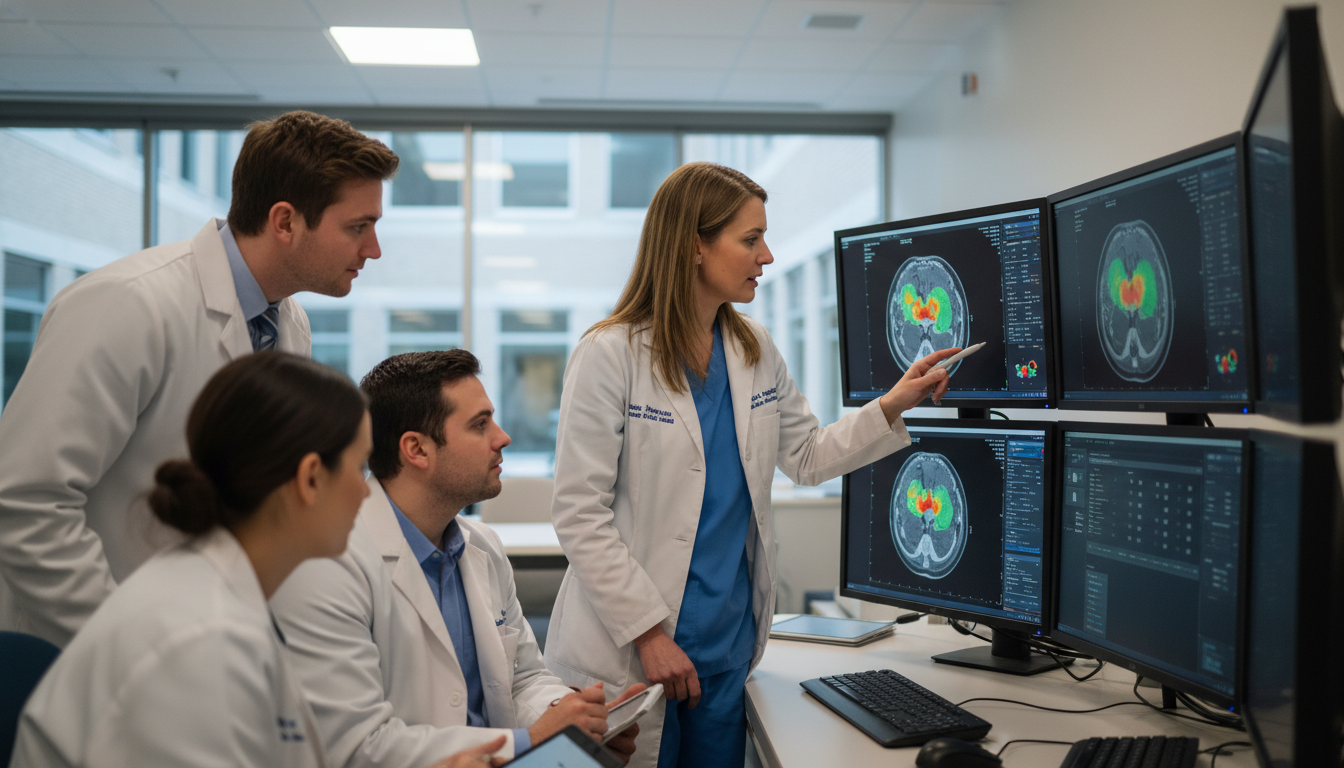
Research and teaching are limited, though some practices host residents or fellows from affiliated programs or participate in industry-sponsored trials.
2.2 Income Structure and Earning Potential
Private practice typically offers:
- Higher base salary and earning potential than academic positions
- Compensation models such as:
- Straight salary with bonus aligned to productivity (RVUs or collections)
- Partnership track: lower salary initially, then significantly higher income when you become a partner
- Equity or profit-sharing in imaging centers, radiopharmaceutical services, or new ventures
Partners in busy imaging groups, especially those owning PET/CT or theranostic centers, may earn substantially more than academic colleagues—but this often comes with:
- Longer hours
- Business responsibilities
- Pressure to maintain efficiency and manage costs
For DO graduates who may carry significant educational debt, the financial appeal of private practice is powerful.
2.3 Autonomy, Governance, and Business Demands
Private practice offers potentially greater operational autonomy:
- You may influence scheduling, staffing, and protocols
- You can advocate for new tracers or theranostic services if they are financially viable
- Governance is often via group partnership or board structure rather than university committees
However, this also means:
- Direct exposure to market pressures: negotiations with hospitals, insurers, and radiopharmaceutical vendors
- Must be attuned to regulatory and reimbursement changes in nuclear medicine
- Decisions around investing in new PET/CT scanners, SPECT/CT upgrades, or therapy services are business decisions as much as clinical ones
If you enjoy business strategy, operations, and entrepreneurship, private practice can be rewarding.
2.4 Lifestyle, Call, and Workload
Lifestyle can be excellent in some practices and demanding in others:
- Hours: 7–5 or longer, depending on case load; some flexibility if group culture supports it
- Call: Rotating nuclear call, and possibly general radiology call if applicable
- Vacation: Generous once you reach partnership in many groups (8–12 weeks or more), but more modest as an associate
Culture is usually:
- Productivity-oriented with focus on service to referring clinicians
- Less structured around teaching and scholarship
- Strongly influenced by group dynamics, leadership style, and local competition
Private practice may suit DO graduates who:
- Prefer hands-on clinical work over research
- Value financial security and flexibility
- Enjoy working directly with community clinicians and patients in a service-driven environment
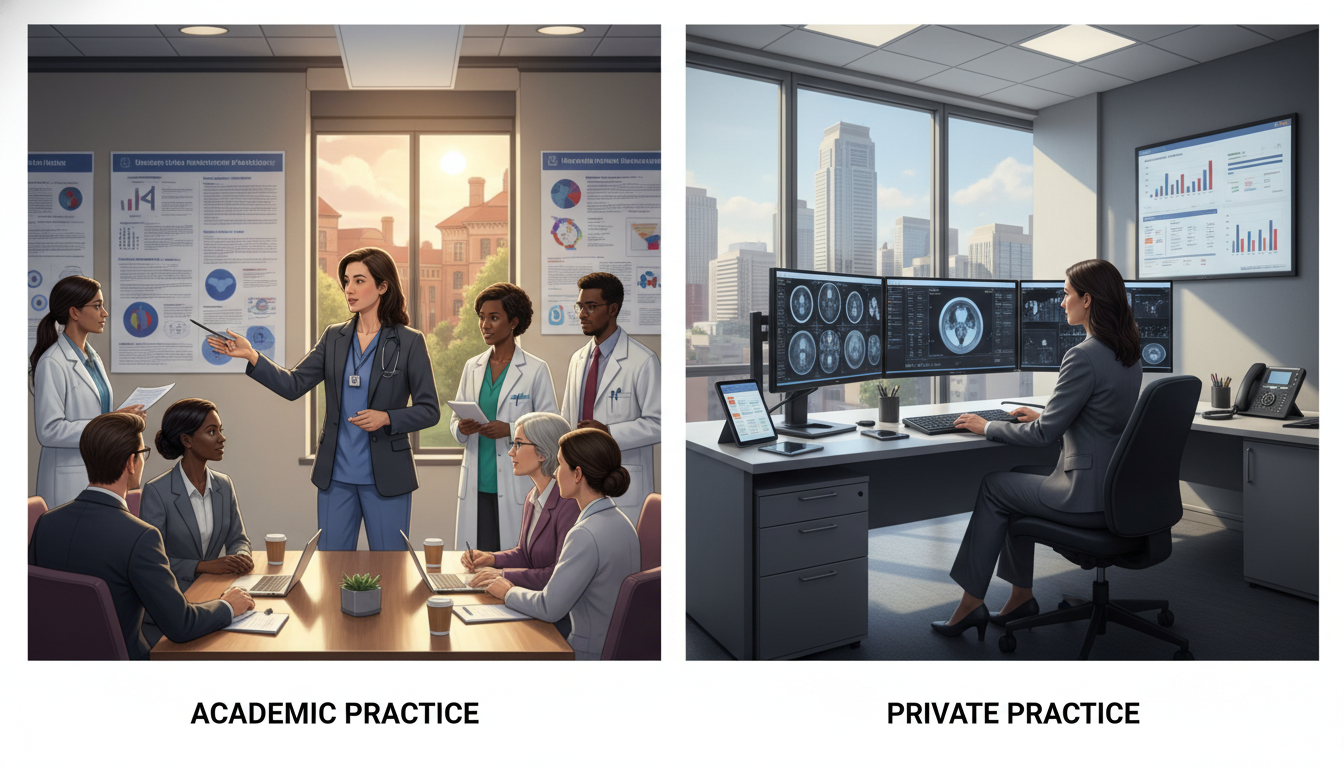
3. Key Differences: Academic vs Private Practice for DO Nuclear Medicine Physicians
The academic vs private practice decision can be clarified by comparing core domains.
3.1 Clinical Focus and Complexity
Academic:
- Higher proportion of complex, unusual, or referral cases
- More frequent involvement in cutting-edge tracers and therapies
- Stronger integration into multidisciplinary tumor boards and research protocols
Private Practice:
- Higher volume of routine studies with reproducible workflows
- Growing but variable access to theranostics depending on local strategy
- Heavy emphasis on timely reads and high availability for referring clinicians
3.2 Teaching and Scholarship
Academic:
- Integral teaching role; central to identity and promotion
- Opportunities for curriculum development and educational leadership
- Expectation for scholarly output (papers, presentations, QI projects)
Private Practice:
- Limited teaching, except in groups affiliated with training programs
- Scholarship is optional and often not rewarded financially
- Quality improvement tends to be focused more on operational performance
3.3 Income and Financial Considerations
Academic:
- Lower salary but relatively predictable and stable
- Potential eligibility for PSLF and state or institutional loan repayment programs
- Smaller direct business risk
Private Practice:
- Higher income potential, especially at partnership level
- Exposure to business risk and variability in reimbursements
- Opportunity to build equity in practice or imaging centers
3.4 Career Trajectory and Leadership
Academic:
- Clear academic ranks (Assistant, Associate, Full Professor)
- Pathways to Program Director, Division Chief, Department Chair
- Increased opportunity for national leadership roles in societies (SNMMI, ACNM), guidelines, and policy
Private Practice:
- Partnership and leadership within the group (section chief, managing partner)
- Business leadership in imaging centers or multispecialty enterprises
- Influence within local hospital systems and regional networks
3.5 Flexibility and Portability
Academic → Private Practice:
- Often feasible, especially if you maintain high clinical productivity
- Academic credentials may increase your attractiveness to selective groups
Private Practice → Academic:
- Also possible, but you may need to rebuild scholarly activity and teaching portfolio
- For DO graduates, demonstrating engagement in national societies and continuing education is helpful
4. Special Considerations for DO Graduates in Nuclear Medicine
As a DO graduate in nuclear medicine, you bring a unique background to either pathway. There are, however, specific issues to consider.
4.1 Board Certification and Training Pathways
Your training path may include:
- A nuclear medicine residency (ACGME) after a DO internship or other residency
- A diagnostic radiology residency with subspecialty training in nuclear radiology or molecular imaging
- An osteopathic residency that transitioned through the single accreditation system
Ensure you are clear on:
- Board status (ABNM, ABR with nuclear specialty, or both)
- Any practice limitations based on your board certification (pure nuclear vs nuclear + radiology)
- Credentialing requirements of target academic centers or private groups
In some markets, combined nuclear medicine and diagnostic radiology skills are highly valued, particularly in private practice. In pure academic nuclear medicine divisions, ABNM certification and deep theranostics expertise may be sufficient.
4.2 Perceptions and Biases Toward DO Graduates
While bias against DOs has decreased, it can still manifest subtly:
- In competitive academic chairs or promotion committees unfamiliar with osteopathic training
- In large private radiology groups that historically recruited MD-only classes
You can mitigate this by:
- Highlighting robust training experiences (case logs, procedures, call responsibilities)
- Documenting outcomes: research, QI projects, national presentations
- Securing strong letters of recommendation from respected faculty in nuclear medicine and radiology
- Staying active in organizations like SNMMI, ACNM, and ACR, where DO leadership is increasingly visible
Ultimately, demonstrable competence and professionalism will speak far louder than degree initials.
4.3 Using Osteopathic Principles in Nuclear Medicine
Your osteopathic background is highly relevant, even in a technology-heavy field:
- Holistic communication when counseling patients on therapies (e.g., Lu-177 DOTATATE risks and benefits)
- Emphasis on functional impact of disease when interpreting imaging (e.g., how metastatic burden on PET guides whole‑person treatment decisions)
- Collaboration with oncology, endocrinology, and surgery grounded in a team‑based, patient‑centered philosophy
In academic medicine, you can:
- Mentor students from osteopathic schools
- Advocate for DO-friendly rotations and pathways into nuclear medicine
- Integrate osteopathic perspectives into grand rounds and case discussions
In private practice, your communication style may be especially appreciated by patients and referring clinicians who notice your focus on their overall well‑being.
5. Choosing the Right Path: A Stepwise Approach for DO Nuclear Medicine Graduates
The decision between academic vs private practice is rarely permanent and rarely purely intellectual. Use a structured approach to clarify your best starting point.
5.1 Step 1: Clarify Your Long-Term Vision
Ask yourself:
- Do I see myself teaching and mentoring regularly?
- Do I want a portfolio of research and publications?
- How important is maximizing income in the first 5–10 years?
- Do I prefer a university-centered identity or a community‑based clinical identity?
- Am I drawn to leadership in societies and guideline development (more common in academic settings)?
Write down your answers and rank priorities. Be brutally honest.
5.2 Step 2: Conduct Reality Checks
Use your residency years and final year in particular to test assumptions:
- Elective rotations in:
- Academic centers outside your home institution
- Community or private practice imaging groups
- Ask pointed questions:
- “What does a typical week look like for an early-career attending?”
- “How is compensation structured over the first 5 years?”
- “What are the expectations for research/committees/after‑hours work?”
Talk to DO attendings who have navigated both worlds. Their insight into the osteopathic residency match, board certification, and career transitions is invaluable.
5.3 Step 3: Evaluate Job Offers Systematically
Create a comparison sheet for each job:
Clinical
- Modalities and tracers used
- Volume and complexity of cases
- Theranostics and future program development plans
Academic vs Private Practice Characteristics
- Teaching responsibilities and support
- Research time, infrastructure, and expectations
- Partnership track or promotion criteria
- Governance structure (who makes decisions?)
Lifestyle and Location
- Hours, call, vacation, and weekend expectations
- Support staff and workflow efficiency
- Cost of living, schools, partner’s career, and family proximity
Compensation
- Base salary, bonus structure, and partnership timeline
- Retirement, loan repayment, health, and malpractice coverage
- Stability of the group or institution
Score or rank each factor according to your priorities.
5.4 Step 4: Think About Future Flexibility
Ask whether the job will keep doors open:
- Will academic experience make it easier to move into leadership or subspecialized theranostics roles later?
- Will private practice experience strengthen your practical clinical skills and marketability?
- Could you reasonably pivot (academic → private; private → academic) after 3–5 years with your chosen path?
For many DO nuclear medicine graduates, starting in academic medicine for a few years can:
- Build scholarly credibility
- Expand your network
- Provide time for loan repayment programs
You can later choose to move into private practice with a strong academic pedigree if you desire a higher-income phase.
Conversely, starting in private practice can:
- Offer early financial relief
- Provide intense clinical exposure
- Allow you to discover specific interests (e.g., theranostics) to bring back into academia later
5.5 Step 5: Negotiate Thoughtfully
Regardless of setting:
- Ask for clear expectations in writing
- In academic medicine:
- Clarify percent effort for clinical, teaching, research
- Ask about protected research time and mentorship for promotion
- In private practice:
- Clarify partnership timeline, buy‑in amounts, and governance
- Understand non-compete clauses and geographic restrictions
As a DO, do not hesitate to:
- Highlight your unique skills (communication, holistic counseling, adaptability)
- Request opportunities to participate in teaching, even in private practice settings that host trainees
- Leverage your participation in national societies and any leadership roles
6. Frequently Asked Questions (FAQ)
6.1 As a DO graduate in nuclear medicine, am I at a disadvantage for academic positions?
Generally, no—especially in 2025 and beyond. Many academic programs value diversity of training backgrounds and are actively recruiting DO faculty. The most important factors are:
- Strength of your clinical training and case exposure
- Evidence of teaching ability and commitment to learners
- Demonstrated or potential scholarly output (papers, abstracts, QI projects)
- Professionalism, teamwork, and fit with departmental culture
If you perceive hesitation related to your DO degree, respond with data: case logs, letters, publications, and clear, confident explanations of your training pathway.
6.2 Is it possible to start in academic medicine and later move to private practice in nuclear medicine?
Yes. Many nuclear medicine physicians start in academia then transition to private practice. To maximize your options:
- Maintain high clinical productivity and efficiency
- Stay comfortable with bread‑and‑butter nuclear imaging, not just rare cases
- Keep your skill set aligned with community needs (e.g., oncology PET/CT, cardiac imaging, common therapies)
- Build a reputation for reliability and collegiality—traits highly valued in private groups
Private practices often view academic experience as a plus, particularly when it comes to complex PET and theranostic programs.
6.3 How does the nuclear medicine match and training path affect my job prospects?
Your path through the nuclear medicine residency or osteopathic residency match matters less than:
- Your board certification (ABNM, ABR with nuclear, or both)
- The practical skills you bring (reading PET/CT independently, supervising therapies, leading tumor boards)
- References from well-regarded mentors who can attest to your abilities
If your training program had limited exposure to certain procedures (e.g., advanced theranostics), seek:
- Elective rotations at high-volume centers
- Visiting fellowships or short courses
- SNMMI or ACNM workshops and certifications
Show potential employers that you have taken proactive steps to fill any gaps.
6.4 How should I decide between private practice vs academic if I’m still unsure?
If you remain undecided, consider:
- Targeting jobs that offer hybrid roles—for example, community academic positions or private groups heavily involved in teaching
- Choosing an environment with strong mentorship and open dialogue about career development
- Negotiating a contract with 1–2 years of mutual “trial” period and clear pathways to adjust responsibilities (e.g., more research vs more clinical time)
Above all, remember that your first job does not define your entire career. The choice between academic and private practice is important, but not irreversible. For a DO nuclear medicine physician, a thoughtful, reflective approach—combined with honest self-assessment and active mentorship—will position you for a rewarding, flexible career path in either setting.