
Understanding the Landscape: Why This Choice Matters for IMGs in Urology
For an international medical graduate (IMG) entering urology, deciding between academic medicine and private practice is one of the most consequential early-career choices you will make. It affects your day‑to‑day work, visa options, income trajectory, lifestyle, research opportunities, and where you ultimately live.
Urology is already one of the more competitive specialties, and for an IMG, the path can be especially complex. You may have focused heavily on getting into a urology residency and succeeding in the urology match, but the next step—choosing your long‑term practice model—is equally strategic.
This IMG residency guide will walk you through:
- The core differences between academic and private urology
- How each path affects visas, compensation, workload, and location
- How your CV, research profile, and personal goals fit into each model
- Strategies to explore both options during residency and fellowship
- Practical decision-making frameworks and real‑world examples
The goal is not to label one path as “better” but to give you a clear, honest comparison so you can align your career with your priorities, constraints, and values.
Core Differences: Academic vs Private Practice in Urology
At a high level, urology careers in the U.S. fall into three broad categories:
- Academic medicine (university or teaching hospital–based)
- Private practice (independent or group-owned practices)
- Hybrid/employed models (hospital-employed or faculty with community emphasis)
While there is overlap, the culture, expectations, and incentives are distinct.
What “Academic Urology” Usually Means
In academic medicine, you typically work at:
- University hospitals
- Academic medical centers
- Veterans Affairs (VA) medical centers with academic affiliations
- Major teaching hospitals with residency/fellowship programs
Your responsibilities usually include:
- Clinical care: Seeing patients in clinic, performing surgeries, and taking call
- Teaching: Medical students, residents, and often fellows
- Research and scholarship: Clinical trials, basic science, outcomes research, quality improvement, or educational research
- Institutional service: Committees, conference presentations, curriculum development
Your productivity is measured not only in RVUs (billable work), but also in educational contributions, research output, and academic citizenship.
What “Private Practice Urology” Usually Means
In private practice you may work in:
- Small or mid‑sized physician‑owned urology groups
- Large multi-specialty groups
- Solo or small partnership practices
- Corporate-owned or hospital-employed urology practices
Your responsibilities center on:
- Clinical productivity: Clinic visits, office procedures, surgeries, and endoscopy
- Practice management: To varying degrees, involvement in billing, coding, staff management, marketing, and strategic decisions
- Limited teaching or research: Unless you are affiliated with a residency program or personally choose to pursue these activities
Performance is usually judged in financial terms: RVUs generated, collections, and contribution to group profitability, with patient satisfaction increasingly important.
Key Comparative Dimensions
Below is a simplified comparison relevant to an IMG urology resident or fellow:
Primary focus
- Academic: Patient care + teaching + research
- Private: Patient care and efficiency
Compensation structure
- Academic: Lower base initially; salary + incentive; benefits often strong
- Private: Higher earning potential; productivity-based; possible partnership track
Research
- Academic: Expected and supported; time and infrastructure available
- Private: Optional, usually minimal support; industry trials sometimes available
Teaching
- Academic: Core part of job; regular involvement with trainees
- Private: Variable; more common if practice is affiliated with teaching hospitals
Job market
- Academic: Fewer positions; more competitive; institutional hiring cycles
- Private: More geographically diverse opportunities; often continuous recruiting
Lifestyle control
- Academic: More predictable, but heavy non-clinical workload
- Private: More direct control but often very busy clinically, especially early
Visas and sponsorship
- Academic: More likely to sponsor H‑1B, support J‑1 waiver through underserved roles
- Private: Variable willingness/experience with visas; may prefer permanent residents/citizens
For an international medical graduate, these differences can influence not just your preferences, but what is realistically available to you at each stage.
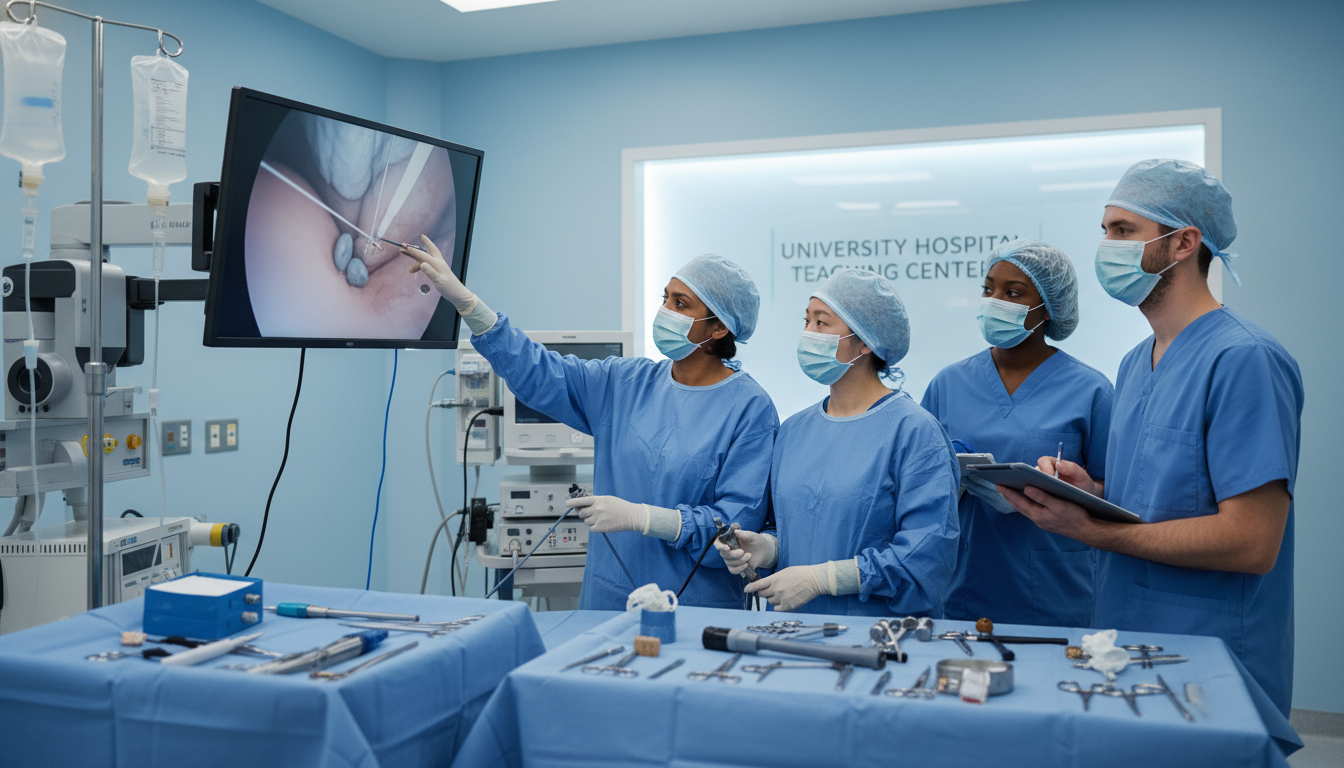
Academic Urology for IMGs: Opportunities, Constraints, and Fit
Why Many IMGs Gravitate Toward Academic Medicine
Many IMGs enter urology with strong research backgrounds and a history of academic work used to strengthen their residency applications. That same profile often aligns well with an academic medicine career.
Key advantages:
Visa-friendlier environment
- Academic institutions are accustomed to H‑1B and O‑1 sponsorship.
- Many are J‑1 waiver–eligible (particularly in less urban centers or VA systems).
- Larger HR departments are familiar with the legal and logistical requirements for international hiring.
Structured career development
- Clear academic promotion tracks (assistant, associate, full professor).
- Faculty development programs, teaching workshops, and leadership training.
- Mentoring for grant writing, clinical trials, and scholarly work.
Research infrastructure
- Access to statisticians, research coordinators, IRB support, and databases.
- Opportunity to lead or join multicenter trials in urologic oncology, endourology, female pelvic medicine, etc.
- Ability to pursue advanced degrees (MPH, MS in Clinical Research, PhD) supported by the institution.
Identity as a scholar-physician
- If you enjoy writing papers, presenting at AUA/EAU, and contributing to guidelines, academic urology aligns with that professional identity.
- Many IMGs see academic medicine as a natural extension of their early-career research efforts.
Typical Academic Urology Job Structure
Most junior faculty roles share these components:
- Title: Assistant Professor of Urology (or Clinical Assistant Professor)
- Allocation of time (typical, but variable):
- 60–80% Clinical (OR + clinic)
- 10–30% Research
- 10–20% Teaching and administration
- Expectations:
- Publish a certain number of papers or abstracts per year
- Participate in department conferences and M&M
- Teach in the OR and clinic, give lectures, mentor residents on projects
- Serve on committees (quality, diversity, curriculum, etc.)
In some settings, you may begin primarily clinical and gradually shift more time to research as you secure funding or establish a niche.
Pros of Academic Medicine for International Medical Graduates
Immigration stability and pathways
- Larger institutions are more likely to support green card petitions, sometimes via EB‑1/EB‑2 categories for individuals with significant research achievements.
- Access to legal teams who routinely handle immigration issues.
Professional visibility and mobility
- Being known in academic circles (through talks, papers, networking at AUA) can create future opportunities in other institutions or countries.
- Easier to pivot later to industry, leadership, or national society roles.
Intellectual stimulation
- Regular exposure to complex cases, multidisciplinary tumor boards, and cutting‑edge technology (robotics, advanced endoscopy, reconstruction).
- Ability to specialize deeply (e.g., infertility and andrology, reconstructive urology, female pelvic medicine, pediatric urology, oncology).
Built‑in teaching role
- If you value mentoring and working with trainees—perhaps because mentors helped you as an IMG—academic medicine is the most direct way to keep teaching central to your career.
Challenges of Academic Medicine for IMGs
Compensation gap vs private practice
- Academic starting salaries are often significantly lower than private practice, especially in high‑cost cities.
- This can be stressful if you have significant debt (US loans or foreign obligations) or are supporting family abroad.
Pressure to “do it all”
- You may be evaluated on clinical productivity and academic productivity simultaneously, with limited protected time.
- Grant funding is competitive; if you aspire to a heavily research-focused career, you may need additional training (e.g., research fellowship).
Promotion and cultural barriers
- As an IMG, you may encounter implicit bias or institutional politics.
- Navigating promotion criteria and informal expectations can be harder without strong mentorship.
Geographic concentration
- Many academic centers are in major cities or specific regions; options may be limited if you are tied to a spouse’s career or need a specific visa waiver region.
Example: IMG Choosing Academic Urology
- A urology resident who completed multiple first-author publications, enjoys tumor boards, and wants to become a subspecialist in urologic oncology.
- Needs continued H‑1B sponsorship and plans long‑term to secure a green card.
- Joins a university urology department as an assistant professor with 70% clinical, 20% research, and 10% teaching.
- Within five years, becomes a principal investigator on clinical trials and is promoted to associate professor.
For this individual, academic medicine reinforces their strengths and helps achieve both professional and immigration goals.
Private Practice Urology for IMGs: Rewards, Realities, and Constraints
Private practice can be very attractive for urologists, including IMGs, but it requires a clear understanding of what you are entering.
What Private Practice in Urology Looks Like Day-to-Day
In a typical private group:
- Your weeks center around:
- Clinic days: Seeing high volumes of patients; performing office cystoscopy, vasectomy, minor procedures.
- OR days: Robotic and open surgery, endourology, stone cases, prosthetics, etc., depending on your case mix.
- Call: Rotating nights/weekends, often shared across the group and sometimes hospital-wide.
- Non‑clinical time includes:
- Documentation, coding, handling messages, reviewing lab and imaging.
- Practice meetings about finances, scheduling, marketing, or strategic planning.
You may have minimal formal teaching or research, unless your group partners with a residency or invites medical students.
Financial and Lifestyle Considerations
Earnings and partnership track
- Starting compensation often includes a competitive base salary plus bonus.
- After a defined number of years (often 2–5), you may be eligible for partnership:
- Share of profits from ancillaries (imaging, surgery center, pathology, radiation, etc.).
- Increased autonomy in practice decisions.
- Over time, earnings can exceed academic salaries substantially, especially with ownership stakes.
Workload and control
- Early years are usually very busy as you build your patient base.
- You may have more flexibility over your schedule once established, but productivity remains key.
- Vacation and leave policies are often more negotiable but may be closely tied to your financial performance.
Geographic flexibility
- Practices exist in metropolitan, suburban, and rural areas.
- Compensation tends to be higher in more rural/underserved regions where recruitment is harder.
Visa and Immigration Challenges in Private Practice
This is where private practice may be more challenging for an international medical graduate:
- Less experience with visa sponsorship
- Many private practices prefer candidates who are already citizens or permanent residents.
- Some may be willing to hire J‑1 waiver or H‑1B candidates but have never done it before.
- J‑1 waiver jobs
- Some private practices in underserved areas qualify for J‑1 waiver programs (e.g., Conrad 30), but this is more common in primary care; surgical specialties like urology have fewer structured opportunities.
- Legal and financial costs
- The practice may be responsible for legal fees and compliance; if they are not familiar or comfortable with this, it can be a barrier.
This does not mean private practice is impossible for IMGs, but you must address visa issues early in job negotiations and be realistic about which regions/practices are likely to support you.
Pros of Private Practice for International Medical Graduates
Higher income potential
- Especially after partnership, your income may be 1.5–3x typical academic salaries, depending on region and practice structure.
- This can accelerate debt repayment, support family obligations, or allow you to invest/savings early.
Entrepreneurial opportunities
- You may participate in decisions about adding new service lines (e.g., BPH laser, lithotripsy), hiring NPs/PAs, or opening satellite clinics.
- Some IMGs enjoy the sense of ownership and direct impact on business growth.
Clinical autonomy
- Within standard of care and practice policies, you often have significant discretion over your practice style.
- You can focus on specific niches (e.g., men’s health, stone disease) if they are needed in the community.
Location and lifestyle fit
- If you prioritize a particular city, school system for children, or proximity to family, you may find more options in private practice than in academic urology.
Challenges of Private Practice for IMGs
Limited formal research and teaching
- If your academic CV is strong and you enjoy scholarly work, you may miss the intellectual environment of a university.
- You can still publish or teach (e.g., adjunct faculty positions, volunteer teaching), but it will be self-driven.
Business risk and complexity
- Reimbursement changes, payer contracts, and regulatory challenges can affect practice revenue.
- If you buy into the practice, your investment is tied to its success.
Immigration uncertainty
- Fewer practices are comfortable sponsoring visas.
- You may have less institutional support for green card processing.
Less formalized mentorship
- Some groups have excellent senior partners who mentor, but there may be no structured faculty development or promotion process.
Example: IMG Choosing Private Practice Urology
- A urology fellow on an H‑1B visa, married with young children, wants to maximize income and settle in a suburban area.
- Finds a mid‑sized private urology group in a state where the group has prior experience sponsoring H‑1B and green cards for specialists.
- Starts with a competitive base salary plus productivity bonus, with a 3‑year partnership track.
- Engages in some community education talks and joins adjunct faculty at a nearby DO school for occasional teaching—enough to maintain an academic interest without full university appointment.
For this physician, the higher earnings and geographic control outweigh the reduction in formal research and academic recognition.

Choosing a Career Path in Medicine: A Stepwise Approach for IMG Urologists
Deciding between academics and private practice is part of a larger process of choosing a career path in medicine. For IMGs in urology, it is helpful to:
Clarify your non‑negotiables
- Visa type and timeline (J‑1, H‑1B, O‑1, green card goals).
- Family priorities (spouse’s career, children’s schooling, proximity to relatives).
- Financial responsibilities (debt, family support abroad, lifestyle expectations).
Identify your professional drivers
- Do you feel energized by teaching and research?
- Do you prefer clinical volume and procedural work over meetings and manuscripts?
- Do you care about titles (Professor, Division Chief) or about business ownership and independence?
Compare likely trajectories
- Academic medicine career:
- Early years: building research portfolio, building referral base, often lower salary.
- Mid-career: leadership roles (program director, section chief), grants, more protected time.
- Private practice vs academic:
- Early years: intense clinical work; learning billing, coding, and practice culture.
- Mid-career: partnership, leadership in the group, possibly ownership in surgery centers or ancillaries.
- Academic medicine career:
Use residency and fellowship to “test drive” both paths
- Seek rotations in community/private settings and university hospitals.
- Ask attendings candid, specific questions about their daily life, compensation models, and job satisfaction.
- Attend talks on practice management, academic promotion, and contracts.
Practical Strategies During Residency and Fellowship
Build a flexible CV
- Even if you think you want private practice, having some research and teaching experience opens academic doors if you change your mind.
- For academic interest, aim for consistent scholarly output rather than one intense year followed by nothing.
Network deliberately
- At conferences (AUA, SUO, etc.), speak with both academic and private urologists.
- Ask IMGs in practice how they navigated visas and employment.
Explore hybrid roles
- Some hospital-employed positions allow:
- Moderate research
- Teaching medical students or residents
- Solid compensation approaching private practice ranges
- These jobs can combine stability and intellectual engagement without full academic pressure.
- Some hospital-employed positions allow:
Understand basic contract terms
- Whether academic or private:
- Clarify base salary, bonuses, RVU targets, and call pay.
- Ask about non-compete clauses, relocation support, and signing bonuses.
- Confirm visa sponsorship details in writing.
- Whether academic or private:
Red Flags to Watch For (Both Settings)
- Vague or non‑existent answers about how prior IMGs have navigated visas.
- No clear metrics for promotion (academic) or partnership (private).
- Cultures where junior physicians are overburdened with little support or transparency.
- Resistance to providing a written offer that includes immigration support language.
Working Toward Long-Term Goals: Switching Paths and Keeping Options Open
Your first job does not lock you into a lifelong path. Many urologists transition between private practice and academic medicine over time.
Moving from Academic to Private Practice
Common reasons:
- Desire for higher income
- Burnout from academic meeting/committee expectations
- Geographic/family needs
To maintain that option:
- Keep procedural skills strong and diverse.
- Understand basic practice management concepts (billing, documentation, coding).
- Maintain a good reputation and network with community urologists.
Moving from Private Practice to Academic Medicine
More challenging, but possible, especially if you:
- Maintain involvement in local teaching (students, residents).
- Continue small scholarly projects—case reports, QI studies, or guideline contributions.
- Build a recognized niche (e.g., complex reconstruction, advanced BPH therapies) that an academic center needs.
Building an “Academic Mindset” in Any Setting
Even in private practice, you can:
- Participate in clinical trials (often industry-sponsored).
- Start a database for quality improvement or outcomes projects.
- Serve as adjunct/volunteer faculty for nearby medical schools or residency programs.
- Present at regional/national meetings about practice innovations or clinical experiences.
Conversely, in academic settings, you can learn about basic business principles to enhance your efficiency, negotiate better, and understand the financial backbone of your practice.
Frequently Asked Questions (FAQ)
1. As an IMG, is academic urology the only realistic path in the U.S.?
No. Academic medicine is often more straightforward for IMGs due to visa infrastructure, but private practice is not off-limits. The key is:
- Targeting groups with prior experience sponsoring H‑1B or supporting J‑1 waivers.
- Being geographically flexible, especially in underserved regions.
- Starting conversations about visas early in the recruitment process.
Many IMGs successfully practice in private settings; it just requires more targeted searching and careful negotiation.
2. Will choosing academic medicine hurt my long‑term income potential?
Academic salaries are usually lower than private practice, especially beyond the early career stage. However:
- Some academic roles pay competitively, particularly in less saturated markets or for specialized surgeons.
- Leadership roles (department chair, service chief) can increase compensation.
- Non-financial returns—job satisfaction, intellectual fulfillment, reputation—can offset the raw income difference for many physicians.
If maximizing income is a top priority, private practice usually provides more upside; academic medicine can still provide a comfortable, stable income.
3. How much research do I need to secure an academic urology position?
There is no universal number, but generally:
- A consistent track record (several first‑author papers, abstracts, or book chapters) is more important than a specific count.
- Demonstrated interest in a niche (e.g., renal cancer outcomes, stone disease, robotics) helps.
- Strong letters from established academic mentors carry significant weight.
If you hope to be heavily research-focused (e.g., 50%+ research time), consider additional research training (dedicated research fellowship or MPH/PhD).
4. Can I start in academic urology and later move to private practice if I need higher income?
Yes. This is a common pathway. To keep it feasible:
- Maintain strong surgical skills and clinical productivity.
- Avoid narrowing your scope so much that you cannot handle common general urology problems.
- Network with private groups, attend local medical society meetings, and keep an eye on the job market.
When you explore private practice later, be ready to discuss how your academic experience and subspecialty skills can benefit the group.
Choosing between academic medicine and private practice as an international medical graduate in urology is not about finding the “perfect” model—it is about aligning your values, constraints, and long‑term goals with the realities of each path. By understanding the details of compensation, visa support, work content, and growth opportunities, you can make a deliberate, informed decision and adjust your trajectory as your life and career evolve.