
International medical graduates (IMGs) in interventional radiology (IR) face a pivotal decision once training is complete: academic vs private practice. Both paths can lead to fulfilling, high-impact careers, but they differ significantly in daily workflow, autonomy, income structure, and long‑term opportunities—especially in the context of visa status and the IR match landscape.
This IMG residency guide will walk you through the major differences, practical pros and cons, and a structured way to think about choosing a career path in medicine within IR as an international medical graduate. The goal is not to push you toward one direction but to help you make a deliberate, well‑informed choice.
Understanding the Core Differences: Academic vs Private Practice in IR
Before diving into granular details, it helps to understand the core “identity” of each path.
What is “Academic” Interventional Radiology?
Academic IR typically means practicing within:
- University hospitals or medical schools
- Major teaching hospitals affiliated with residency/fellowship programs
- Large tertiary/quaternary referral centers (often NCI or transplant centers)
Common features:
- Tripartite mission: Clinical care, teaching, and research
- Residents, fellows, and medical students rotate through the IR service
- Strong emphasis on scholarship: publications, presentations, clinical trials, QI projects
- More complex and rare pathologies, often as a regional or national referral center
- Structured departmental governance, promotion pathways, and institutional policies
What is “Private Practice” Interventional Radiology?
Private practice IR generally means:
- Independent or group-owned practices
- Hospital-employed or system-employed groups
- Community hospitals, regional medical centers, or outpatient-based labs (OBLs)
- Hybrid diagnostic/IR groups, or dedicated IR practices
Common features:
- Clinical productivity and revenue generation are central
- Limited or no formal teaching responsibilities (depending on region)
- Research usually optional and practice-driven, not required
- Broad mix of bread‑and‑butter IR with increasing outpatient and clinic‑based care
- Often more entrepreneurial; may involve practice ownership or partnership
Where IMG Status Matters
For an international medical graduate, this academic vs private practice choice is layered on top of:
- Visa sponsorship (J‑1, H‑1B, O‑1, green card)
- Availability of positions open to IMGs
- Requirements for research productivity or teaching experience
- Institutional comfort with sponsoring visas
- Breadth of options after completing an integrated IR/DR residency or independent IR residency
Academic centers in the U.S. are often more experienced with visa sponsorship and may be more flexible in hiring IMGs, but not always. Some large private practices also sponsor visas, especially in high‑need markets. You must investigate this locally and early.
Daily Life in Academic IR vs Private Practice IR
Understanding what your day‑to‑day reality will look like is often more useful than abstract labels.
Clinical Practice Patterns
Academic IR
- Case mix:
- High complexity: transplant interventions, complex oncologic embolizations, advanced venous reconstructions, TIPS, portal interventions, pediatric IR (in some centers)
- Referrals from multi‑disciplinary tumor boards, hepatology, transplant surgery
- Teaching involvement:
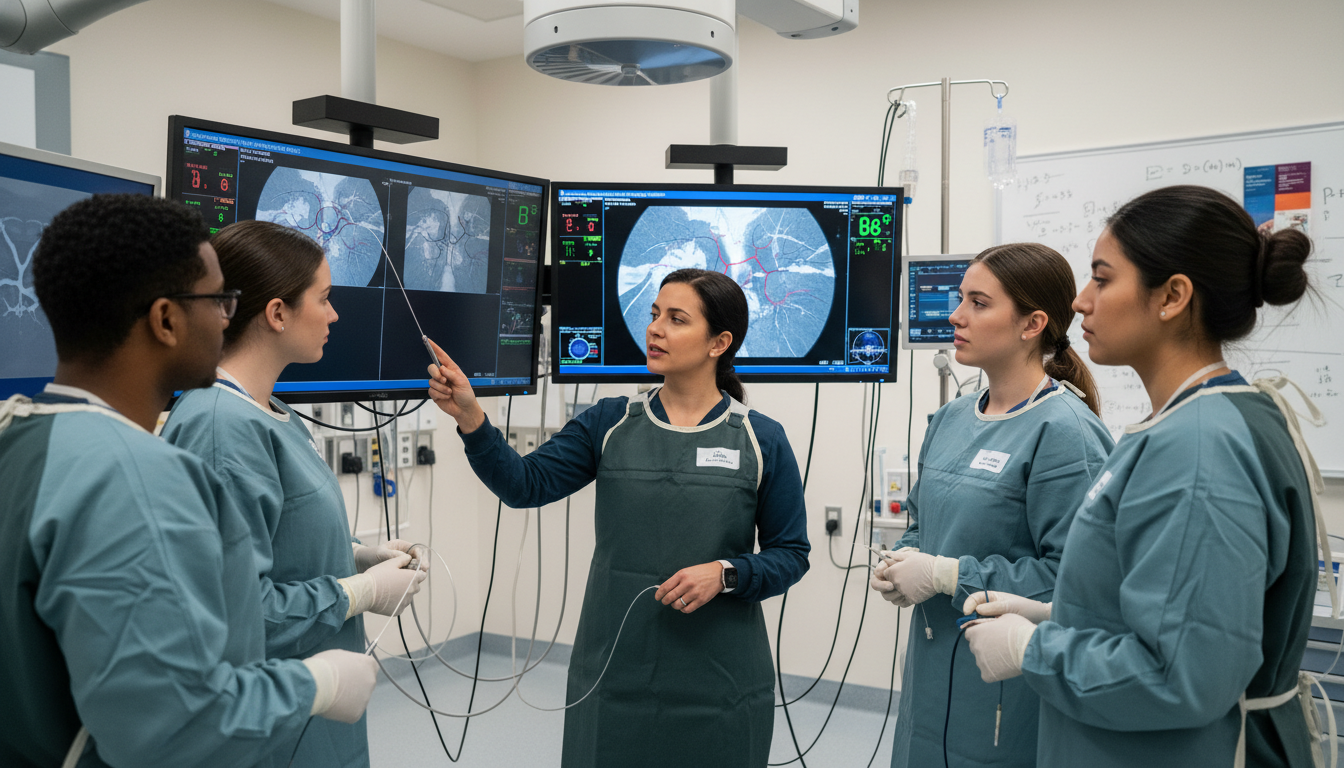
- Residents and fellows often scrub in; you guide and supervise them
- Procedures may take longer due to educational focus
- Clinic and inpatient rounds:
- Increasing emphasis on IR clinic for longitudinal follow‑up
- Participation in multidisciplinary conferences (tumor board, PAD conference, etc.)
Private Practice IR
- Case mix:
- More “bread-and-butter”: vascular access, biopsies, drainages, IVC filters, vertebroplasties, standard embolization cases
- Can still be highly advanced depending on the region and practice (e.g., advanced PAD, UFE, Y‑90 in large community centers)
- Procedural flow:
- Usually faster pace, higher volume, strong focus on efficiency
- Less time for teaching unless there is a residency program
- Clinic vs hospital:
- In some OBL‑centered practices, a significant portion of your work may be in clinic and outpatient lab, operating almost like a procedural subspecialty clinic
- Many hybrid IR/DR practices balance IR work with diagnostic reads
Teaching Responsibilities
Academic IR
- Integral to the job description
- You’ll mentor:
- IR/DR residents
- Diagnostic radiology residents
- IR fellows or ESIR residents
- Medical students on sub‑internships or electives
- Teaching can occur:
- At the workstation (case review, image interpretation)
- In the angio suite (hands‑on procedural teaching)
- In scheduled lectures, conferences, or simulation sessions
Private Practice IR
- Teaching depends heavily on environment:
- If your hospital hosts a DR residency, you might teach residents occasionally
- Most pure private practices have minimal formal teaching responsibilities
- You may still mentor:
- Physician assistants, NPs
- Technologists
- Occasionally medical students rotating through
For an IMG who enjoys academic medicine careers, the opportunity to teach and shape the next generation can be a major draw. If you prefer a purely clinical, procedure‑heavy career with minimal teaching, private practice may be more appealing.
Schedule, Call, and Lifestyle
Academic IR
- Often more predictable academic schedules:
- Protected time for research or academic activities (half‑day or day per week, depending on institution and rank)
- Scheduled teaching conferences and meetings
- Call structure:
- Typically shared among multiple attendings and fellows
- Presence of fellows/residents may buffer overnight cases and calls
- Lifestyle trade‑offs:
- Night and weekend calls can be significant, especially in level‑1 trauma or transplant centers
- Institutional policies may cap work hours or enforce post‑call relief in certain settings
Private Practice IR
- Schedule:
- May start earlier and run later depending on workflow and patient volume
- Some practices have 4‑day weeks or highly compressed schedules, particularly in OBL models
- Call structure:
- Highly variable; may be:
- 1:3 or 1:4 in smaller groups (heavier)
- 1:7 or better in large multi‑specialty groups (lighter)
- You may not have trainees to share call burdens
- Highly variable; may be:
- Lifestyle trade‑offs:
- Potentially higher autonomy over your schedule after partnership
- Ability to adjust your patient load based on personal preferences and group norms
For an IMG, call schedules can intersect with visa considerations—frequent travel abroad may be harder with heavy call rotations, and you’ll need to factor in immigration appointments, family visits, and professional meetings.
Compensation, Job Security, and Advancement

Money, stability, and growth often weigh heavily when choosing between academic vs private practice, especially after years of training and deferred earnings.
Compensation Models
Academic IR
- Base salary + incentives
- Typically a fixed base salary determined by rank (assistant, associate, full professor)
- RVU-based or productivity-based bonuses are common but usually smaller than in private practice
- Non-monetary benefits:
- Strong retirement contributions (e.g., 403(b) with matching)
- Tuition benefits for dependents in some systems
- Institutional health benefits, CME money, and support for conferences
- Income potential:
- Lower starting salary than typical private practice offers in many markets
- Slower income growth, but can still be comfortable and stable
Private Practice IR
- Productivity and partnership‑driven:
- Starting as an employee or associate
- Transition to partnership track in 1–3 years, sometimes longer
- Income structure:
- High variability; may include:
- Straight salary with RVU bonus
- Collections‑based compensation
- Profit sharing (for partners)
- Opportunity for significant income increase post‑partnership
- High variability; may include:
- Outpatient lab (OBL) or ASC models:
- IR practice ownership stakes in OBLs or surgery centers can markedly increase earning potential
- Also comes with business risk and administrative responsibilities
As an international medical graduate, you must consider how visa status affects your negotiating leverage and job choices. Some private practices may hesitate to offer partnership to someone whose immigration status is not yet fully secure, while others actively support green card pathways.
Job Security and Contract Considerations
Academic IR
- Employment is hospital/institution-based:
- Less tied to local market fluctuations in imaging volumes
- More insulated from direct reimbursement cuts
- Promotion and tenure tracks:
- Typically require scholarly activity (publications, grants)
- Academic productivity can enhance job security and promotions
- Downsides:
- Salary compression—your income may lag behind market rates
- Administrative or political changes can impact departmental priorities
Private Practice IR
- Market-sensitive:
- Dependent on referral patterns, payer mix, and local competition
- Vulnerable to contract changes with hospitals and health systems
- Contracts:
- Partnership terms (buy-in amount, non‑compete clauses, call responsibilities) are critical
- Termination clauses, tail coverage for malpractice, and productivity thresholds need close review
- Upsides:
- Potentially higher income, especially as a partner
- Opportunity to build equity in the practice, OBL, or imaging centers
Given the complexity, many IMGs benefit from having a healthcare attorney review contracts, particularly when non‑compete clauses and partnership terms intersect with immigration-related mobility constraints.
Research, Academic Promotion, and Long‑Term Career Identity
For many, the question is not only “where will I make a good living?” but also “what kind of physician do I want to be for the next 20–30 years?”
Research and Scholarship
Academic IR
- Research is central to most academic medicine careers:
- Clinical trials, device studies, new procedural innovations
- Health policy and outcomes research
- Quality improvement and patient safety projects
- Formal support structures:
- Biostatisticians, IRB offices, grants teams
- Protected time for research (often 10–30%, depending on role)
- For IMGs with strong research backgrounds or a desire to influence the future of IR, academic practice is often the best fit.
Private Practice IR
- Research is usually:
- Practice‑driven, often in collaboration with industry or academic partners
- Focused on real-world outcomes, registries, or device evaluations
- Less formal infrastructure:
- You may lead smaller-scale projects
- Must balance research with a high-volume clinical schedule
- Some large private groups with strong IR presence pursue meaningful research, but it’s usually not required and seldom dictates promotion.
Academic Rank and Leadership
Academic IR
- Promotion pathways:
- Assistant → Associate → Full Professor
- Criteria: publications, grants, teaching evaluations, service contributions
- Leadership roles:
- Program director, division chief, vice‑chair, department chair
- Institutional leadership (quality committees, diversity and inclusion, etc.)
- For an international medical graduate, achieving promotion and leadership requires:
- Strategic mentorship
- Continuous scholarly output
- Navigating institutional cultures that may be unfamiliar
Private Practice IR
- Leadership is defined more in business and operational terms:
- Managing partners, practice president, IR service line director
- Chief of radiology or IR at the hospital
- Promotions are not “titles” but shifts in responsibility, equity, and influence within the group.
If your core aspiration is to be known as an academic IR leader, speak at conferences, and contribute to guidelines or multi-center trials, academic practice is generally the most aligned path. If your vision is to build a high-impact local practice, grow an IR brand, and perhaps open an OBL, private practice fits that profile.
Specific Considerations for IMGs in Interventional Radiology
The decision matrix for an international medical graduate goes beyond general pros and cons. There are unique considerations linked to immigration, IR training pathways, and the IR match.
Visa Sponsorship and Immigration Strategy
- Academic centers:
- Frequently sponsor H‑1B or O‑1 visas; some support green card early in employment
- Institutional legal resources can be helpful for immigration processing
- More accustomed to hiring IMGs in subspecialty roles
- Private practices:
- Some sponsor visas, especially in underserved or high‑need regions
- Others may avoid visa sponsorship due to legal complexity or cost
- Green card sponsorship may depend on partnership timelines and group policies
If you are on a J‑1 visa, you must consider:
- J‑1 waiver job requirements, which often prefer or require underserved locations
- Whether those waiver positions are more likely to be academic or private practice in your specialty and region
- How your initial post‑residency job impacts later transitions (to a bigger city, academic job, or OBL start‑up)
Building a Competitive Profile for Your Chosen Path
For Academic IR Positions
Start planning early in residency or fellowship:
- Build a research portfolio:
- Case reports, retrospective studies, QI projects
- Aim for peer‑reviewed publications and conference presentations (SIR, RSNA, CIRSE)
- Get strong academic mentors:
- Seek mentors who are well‑known in IR and used to supporting IMGs
- Ask for guidance on career planning and letters of recommendation
- Volunteer for academic roles:
- Teaching sessions for medical students or junior residents
- Committee work (e.g., safety, diversity, education)
- Clarify your area of interest:
- Oncology, venous disease, PAD, women’s health, hepatobiliary, etc.
- Align your scholarly work with your niche
For Private Practice IR Positions
Focus on clinical excellence and practical experience:
- Gain high procedural volume during training:
- Use elective time strategically to maximize hands-on IR exposure
- Develop diagnostic radiology competence:
- Many private positions still expect DR call or mixed DR/IR duties
- Learn about practice management basics:
- Billing and coding, RVUs, collections, payer mix
- Workflow optimization, communication with referring physicians
- Network with private practice IR groups:
- Away rotations or observerships in community hospitals
- Conferences focusing on business and practice management in IR
Transitioning Between Academic and Private Practice
Your choice is important, but it’s not always permanent:
- Academic → Private Practice:
- Common transition, especially if lifestyle or income becomes a priority
- Academic background and research portfolio can enhance your credibility with patients and referring providers
- Private Practice → Academic:
- Less common but possible, especially if:
- You maintained some scholarly activity or teaching involvement
- You developed strong procedural expertise in a niche area
- You may enter at a lower academic rank if your research output is limited
- Less common but possible, especially if:
For IMGs, frequent job changes can be more complex due to immigration constraints, so planning your first job carefully is crucial.
Practical Framework to Choose: Which Path Fits You?
Self-reflection is just as important as market analysis. Use the following questions to clarify your direction:
- What energizes you more—teaching and research, or high‑volume clinical practice and autonomy?
- How important is maximum earning potential vs stability and institutional support?
- Do you see yourself as a future program director, division chief, or department chair—or as a practice owner/partner and local leader in IR?
- What is your immigration status, and how flexible can you realistically be with geography and timing?
- How much variability in schedule and call can you tolerate? Do you prioritize protected academic time or maximal clinical efficiency?
- Are you excited about participating in the IR match, mentoring the next generation, and influencing IR training— or more interested in building a strong patient-facing brand and efficient practice?
A simple practical exercise:
- Write two one‑page “future CVs”—one as an academic IR five to ten years from now, one as a private practice IR.
- Include:
- Typical week schedule
- Types of cases you do
- Titles and responsibilities
- Income range and living situation
- Geographic location and visa/green card status
- Compare which version feels more aligned with your values and goals.
FAQs: Academic vs Private Practice IR for IMGs
1. As an IMG, am I more likely to get hired in academic or private practice IR?
Neither is guaranteed, but academic centers generally have more standardized HR and immigration processes and may be more consistently open to IMGs, especially those with strong research profiles. Some private practices are very IMG‑friendly, particularly in underserved areas or high‑demand markets. Your best strategy is to:
- Start networking early (PGY‑4–5 for integrated IR/DR)
- Ask explicitly about visa sponsorship and prior IMG hires
- Build a profile that fits the culture of your target environment
2. Can I do an IR fellowship or residency in an academic center and then move to private practice?
Yes. Many IR physicians train in academic environments and later move to private practice. Academic training can provide:
- Exposure to complex procedures
- Strong letters of recommendation
- Robust procedural and diagnostic skills
If you foresee a future move to private practice, maintain clinical breadth and pay attention to diagnostic radiology skills and efficiency.
3. Is academic IR always paid less than private practice IR?
In many markets, average compensation in private practice is higher than in academic medicine, especially after partnership. However:
- Some academic centers in high cost‑of‑living areas pay competitively
- Lifestyle, benefits, and job security may offset salary differences for many physicians
- Certain OBL or equity‑based private practices can out‑earn both standard private and most academic salaries, but with additional business risks
You should compare full compensation packages, not just base salary.
4. How can I prepare during residency to keep both options open?
To keep both academic and private practice doors open as an IMG in IR:
- Build at least a modest research portfolio (1–3 papers, some conference abstracts)
- Ensure strong procedural and DR competency
- Seek mentorship from both academic and private practice IRs
- Learn basics of practice economics and billing
- Keep your immigration documents and planning up to date, anticipating timelines for waiver jobs or green card applications
Choosing between academic and private practice IR is one of the most consequential steps in your professional journey as an international medical graduate. By understanding the realities of each path, aligning them with your values and immigration context, and actively shaping your training years, you can position yourself for a fulfilling career—whether that’s leading cutting‑edge research in academic medicine or building a thriving, patient‑centered practice in the community.