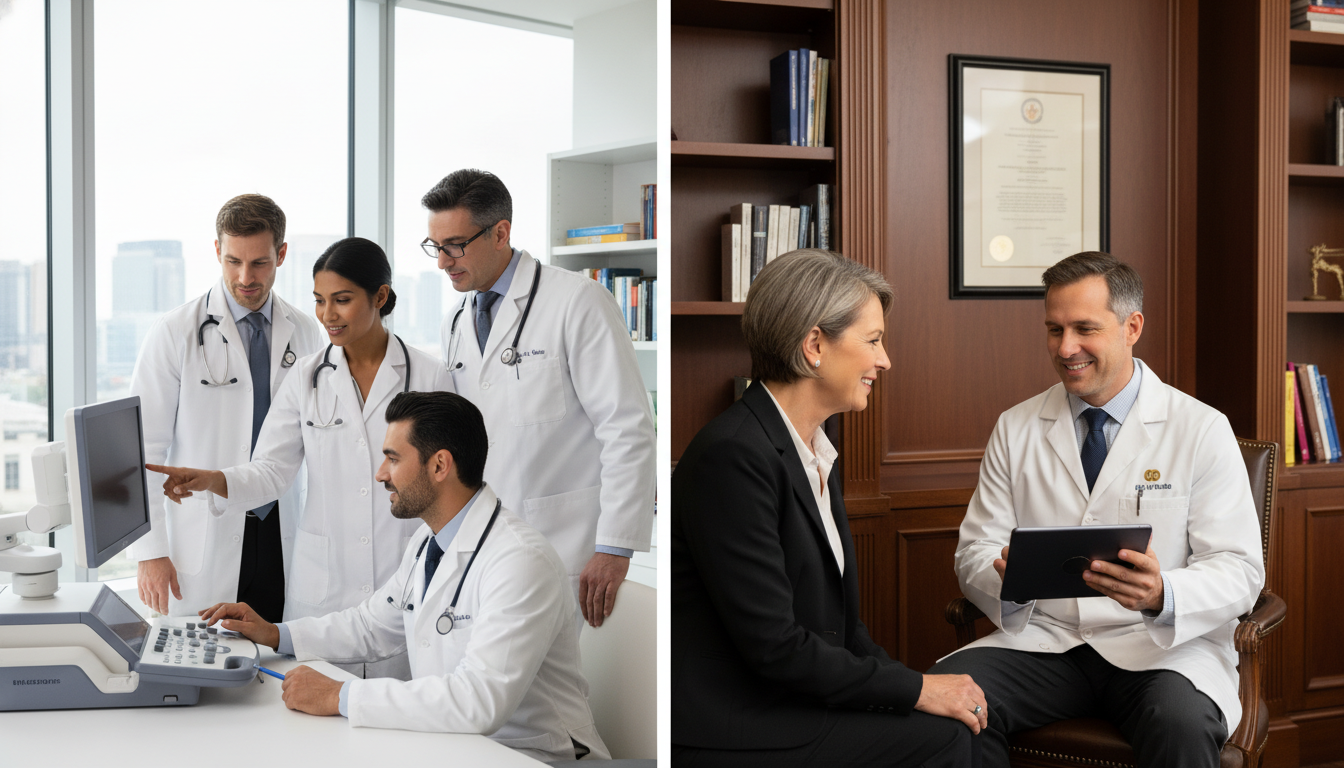
Understanding the Big Picture: Academic vs Private Practice in Neurology
For an international medical graduate (IMG) who has completed or is completing neurology residency in the United States, one of the first major career decisions is whether to pursue academic medicine or enter private practice. This choice will shape not only your daily work but also your long‑term professional identity, earning trajectory, visa options, and lifestyle.
For neurology specifically, the decision can be more nuanced than in some other specialties. Neurologists are in high demand, clinical complexity is increasing, and the boundaries between “academic” and “private” are more blurred than ever. Large private groups may run clinical trials; academic neurology divisions may operate productivity-based models similar to private practice. The old stereotypes—academics as pure researchers and private clinicians as “9–5” doctors—rarely hold true.
This IMG residency guide focuses on helping you compare academic vs private practice pathways as you approach the neuro match, finish residency, or transition out of fellowship. It is written for the international medical graduate in neurology who is realistically asking:
- “Which setting best fits my goals and personality?”
- “What are the visa implications?”
- “How do I set myself up for an academic medicine career vs a more business-oriented practice?”
- “What does private practice vs academic really look like day to day?”
Core Differences Between Academic and Private Practice Neurology
Before going deep into pros, cons, and strategies, it helps to define what we mean by “academic” and “private” in contemporary neurology.
What Counts as “Academic Neurology”?
Academic neurology generally refers to positions based at:
- University hospitals or medical schools
- Major teaching hospitals affiliated with universities
- Veterans Affairs (VA) hospitals with academic appointments
- Some large non‑university hospitals with robust residency/fellowship programs and research infrastructure
Core features typically include:
- Tripartite mission: clinical care, teaching, and research or scholarly activity
- Faculty titles: Instructor, Assistant Professor, Associate Professor, Professor
- Teaching responsibilities: residents, fellows, and medical students
- Structured promotion pathways: with expectations for publications, teaching evaluations, committee work, or quality improvement
Not all academic neurologists are heavy researchers—many are primarily clinicians and educators—but academic medicine usually expects some ongoing scholarly or institutional contribution beyond seeing patients.
What Counts as “Private Practice Neurology”?
Private practice neurology generally refers to work in:
- Independent neurology groups or multi-specialty practices
- Hospital‑employed positions without a substantial academic or teaching component
- Outpatient clinic-based roles with minimal research obligations
- Private outpatient EEG/EMG or neurophysiology practices
- Tele-neurology companies (often contract/private entities)
These can range from:
- Solo practice: rare for new graduates, but still exists in some regions
- Small groups: 2–5 neurologists, often community-based
- Large groups: 10+ neurologists, sometimes across multiple sites/hospitals
- Hospital-employed: technically not “private business owners” but run on a private-practice-style productivity model, without academic promotion structures
Private practice neurologists primarily focus on clinical productivity, patient satisfaction, and practice growth; teaching and research are usually optional, limited, or informal.
Hybrid and “In-Between” Models
Many IMGs find roles that sit between traditional academic and classic private practice:
- Academic-affiliated private groups with teaching contracts for neurology residents
- Community-based teaching hospitals where you’re employed by a hospital but hold a volunteer or adjunct faculty appointment
- Research-active private groups participating in industry-sponsored clinical trials
- Academic neurohospitalist positions that are heavily clinical with minimal research
When choosing career path in medicine, especially neurology, recognize that you don’t have to lock into a rigid stereotype. The spectrum is wide—and your first job doesn’t have to be your forever job.
Daily Life: What You Actually Do in Each Setting
Understanding how your daily and weekly schedule will look is often more helpful than abstract labels.

Clinical Workload and Patient Mix
Academic Neurology
- Higher proportion of complex, tertiary-referral cases:
- refractory epilepsy
- rare neuroimmunological disorders
- complicated neuromuscular diseases
- atypical dementia cases
- More inpatient exposure (stroke units, neuro‑ICU) depending on role
- Often lower clinic volume per day than high‑productivity private practice, especially if you have protected non‑clinical time
- Multidisciplinary work with neurosurgery, psychiatry, oncology, rehabilitation, etc.
Private Practice Neurology
- More bread-and-butter neurology:
- headache and migraine
- peripheral neuropathy
- back/neck pain with radiculopathy
- common movement disorders
- stable epilepsy follow-ups
- Usually higher clinic volumes:
- 15–25 patients/day in moderate-volume practices
- 25–35+ in high-volume or heavily RVU-driven settings
- Less exposure to rare diseases (unless you subspecialize and build a niche)
- More outpatient than inpatient, unless you’re a neurohospitalist or on call for multiple hospitals
Teaching and Education
Academic Medicine Career
If you enjoy teaching, academic neurology is the default path:
- Regular interaction with residents, fellows, and students
- Leading morning report, case conferences, journal clubs
- Receiving formal teaching evaluations, which matter for promotion
- Option to develop curricula, simulation training, or OSCE assessments
- Opportunities for regional/national teaching roles (board review courses, CME, national societies)
Private Practice
Teaching can still happen, but is typically less structured:
- Occasional lectures for community physicians (e.g., migraine updates)
- Precepting students from nearby schools in some setups
- Informal education of NPs/PAs in your group
- Rarely a core job requirement; often not compensated separately
If you want teaching to be a central part of your career, academic neurology is usually a better fit, though some community-based teaching hospitals can offer a middle ground.
Research and Scholarship
Academic Neurology
- Expectation for scholarly output: publications, presentations, QI projects, grant activity
- Access to:
- Clinical research coordinators
- Biostatisticians
- IRB infrastructure
- Institutional pilot funding
- Subspecialty areas like stroke, epilepsy, neuroimmunology, movement disorders, and neurocritical care are especially research-active
- Time for research may be protected (e.g., 20–40% FTE), though this is often negotiable and performance-based
Private Practice
- Research is possible but less frequent:
- Industry-sponsored clinical trials: especially in MS, migraine, epilepsy
- Observational registries and device trials
- Research support staff may be limited or funded by trial revenue
- Manuscript writing and academic collaborations often happen on personal time
- Promotion, if any, does not usually depend on research output
If your long-term goal includes being a principal investigator, building a funded lab, or making research a significant part of your identity, an academic setting is usually essential, at least initially.
Administrative and Non-Clinical Duties
You will have non-clinical obligations in both settings, but their nature differs.
Academic
- Departmental committees (curriculum, residency recruitment, QI, diversity)
- Hospital or university committees (IRB, ethics, promotions)
- Residency or fellowship leadership roles
- Society involvement linked to your academic work
Private Practice
- Business and operations tasks:
- Billing and coding review
- Negotiating with payers
- Managing NPs/PAs or technicians
- Marketing and community outreach
- Practice governance for partners:
- Financial decisions
- Hiring and firing decisions
- Strategic planning
If you enjoy organizational strategy and business decisions, private practice may be more fulfilling. If you prefer academic governance and education committees, academia may suit you better.
Compensation, Security, and Lifestyle Considerations for IMGs
For an international medical graduate, practical considerations like earnings, location, visa sponsorship, and job stability are critical in choosing between academic and private practice.

Compensation: Academic vs Private Practice
While exact numbers vary by region, subspecialty, and experience, general trends in neurology include:
Private practice neurology typically offers:
- Higher potential top-end income
- Earlier opportunities for productivity-based bonuses and partnership profit share
- Income growth with practice expansion, ancillary services (EEG, EMG, infusion centers), and ownership stakes
Academic neurology typically offers:
- Lower starting and median income compared with high-productivity private practice
- Somewhat more predictable salary structures early on
- Possible supplements for call, medical directorships, or research grants
- Non-monetary benefits (prestige, stability, intellectual environment) that can partially offset lower pay
For IMGs, it’s important to compare total compensation packages, including:
- Base salary
- RVU/bonus formulas
- Retirement contributions (401k/403b, pension equivalents)
- Health and disability insurance
- Paid CME and conference travel
- Loan repayment programs (e.g., NIH or state-level)
Job Security and Stability
Academic
- Usually large, stable institutions with robust patient volumes
- Tenure or non-tenure tracks; even non-tenure can be quite stable once established
- Funding pressures can affect research-heavy positions, but clinical neurology remains in demand
- Departmental changes or leadership transitions can influence your trajectory more than in private groups
Private Practice
- Income tied to patient volume and payer mix
- Practice finances depend on coding, collections, and contracts
- Risk of practice dissolution, buyouts, or acquisition by health systems
- On the other hand, well-run groups can be extremely stable, especially in neurology-shortage regions
For an international medical graduate, especially on a visa, institutional stability and a clear sponsorship plan may be more important than maximizing income.
Work-Life Balance and Call
Academic Neurology
- Call frequency varies by division size and subspecialty:
- Stroke and neurocritical care usually have more demanding call
- Cognitive, neuromuscular, and movement specialists may have lighter call
- In some academic centers, in-house call is required; in others, home call with residents as first line
- Non-clinical duties (research, committees) can spill into evenings/weekends if boundaries are not protected
Private Practice Neurology
- Lifestyle can vary widely:
- Some outpatient-focused practices have relatively predictable schedules, with limited hospital coverage
- Neurohospitalist roles may use 7-on/7-off or similar blocks, with intense work weeks and long stretches off
- Call often depends on:
- Number of neurologists in the community
- Whether telestroke services are used
- Hospital contracts
As an IMG, be candid with yourself about your tolerance for irregular hours, night call, and documentation burden. Neurology as a specialty is generally more lifestyle-friendly than many surgical fields, but call intensity varies substantially by job.
Specific Considerations for IMGs in Neurology
Being an international medical graduate adds several layers of complexity to the academic vs private practice decision—especially surrounding visas, networking, and long-term security.
Visa and Immigration Realities
Visa status can significantly affect your initial job choices:
J‑1 waiver positions:
- Common in underserved or rural areas, often in community hospitals or private practice
- Many are not tied to academic medical centers
- May require full-time clinical work with less flexibility for substantial research/teaching early on
- After fulfilling waiver requirements, you can transition to academic neurology if that’s your long‑term goal
H‑1B visas:
- Academic centers often have established processes for H‑1B sponsorship
- Some private practices may be hesitant due to administrative burden or cost
- University exemptions from the H‑1B cap can make academic jobs more accessible early on
Green card sponsorship:
- Large academic centers frequently have standardized pathways for EB‑2 or EB‑1 sponsorship
- Hospital-employed community positions may also sponsor reliably
- Smaller private groups may be less consistent, though many do sponsor if there is a strong need
When evaluating a job—academic or private—ask explicitly:
- What visas do you sponsor, and for how many physicians currently?
- Do you have an established immigration attorney or team?
- Do you have a track record of successful green card sponsorship for previous IMGs?
- What is the timeline and who covers the cost?
Building an Academic Profile as an IMG
If your goal is an academic medicine career in neurology, start positioning yourself early—ideally by PGY‑2:
During residency and fellowship:
- Get involved in at least 1–2 research or QI projects per year
- Aim for presentations at AAN, AES, ISC, or subspecialty meetings
- Co-author case reports, review articles, or small clinical studies
- Seek formal teaching roles: board review sessions, student lectures, simulation teaching
- Obtain strong letters from academic mentors who know your work well
During the neuro match and fellowship selection:
- If you anticipate an academic path, favor programs with:
- Active research programs in your area of interest
- Strong mentoring culture
- History of placing graduates into academic positions
- Be explicit in interviews about your academic interests; departments invest more in trainees who align with their mission
- If you anticipate an academic path, favor programs with:
As an IMG, you may need to be more proactive than some US graduates to secure mentorship and research opportunities, but academic neurology is generally very open to talented international physicians who demonstrate commitment and productivity.
Transitioning Between Paths
A valuable point for choosing career path in medicine: your first job does not permanently lock you into one side.
From academic to private practice:
- Very common, often driven by lifestyle or income considerations
- Your academic background can be a marketing advantage in community settings
- Research and teaching experience can help you become a local referral expert
From private practice to academic:
- Possible, but requires deliberate planning:
- Maintain some scholarly activity (case reports, local presentations)
- Stay engaged with neurology societies and conferences
- Consider part‑time teaching roles or volunteer faculty positions
- Many academic centers welcome experienced clinicians, especially in high‑demand subspecialties, but they may expect some evidence of ongoing scholarship or teaching interest
- Possible, but requires deliberate planning:
For IMGs, one pragmatic strategy is:
- Use a J‑1 waiver or H‑1B‑friendly private/community job to stabilize your immigration status and finances.
- Continue modest scholarly activity and conference attendance.
- Transition into an academic neurology position once your visa and permanent residency are secure.
Decision-Making Framework: Matching Path to Personality and Goals
To decide between academic vs private practice, move beyond titles and ask targeted questions about what makes you feel fulfilled and stable.
Ask Yourself: What Energizes You?
You may lean toward academic neurology if:
- You feel energized by teaching and mentoring trainees.
- You enjoy asking questions, designing studies, or analyzing data.
- You value being part of a university environment with grand rounds, visiting professors, and interdisciplinary conferences.
- You want a clear promotion ladder and academic titles (Assistant Professor, etc.).
- You see yourself as a subspecialist expert, perhaps known nationally or internationally.
You may lean toward private practice neurology if:
- You are most satisfied by clinical problem-solving and direct patient care.
- You enjoy efficiency, workflow optimization, and practice growth.
- You want earlier exposure to higher earnings potential and possibly ownership.
- You prefer less pressure to publish or compete for grants.
- You value geographic flexibility—living in your preferred city or region may be easier in community practice.
Aligning With Long-Term Plans
Think 10–15 years ahead:
- If you dream of being division chief of stroke neurology at a major institution, directing a fellowship, or leading multicenter trials, an academic medicine career is almost essential.
- If your ideal is to be the trusted community neurologist in a city you love, building a loyal patient base, and perhaps owning part of a practice, private practice may be a better fit.
- If you are genuinely torn, consider hybrid roles:
- Community-based teaching hospitals
- Hospital-employed neurology groups with adjunct academic appointments
- Practices participating in clinical trials and offering educational activities
Practical Exercises to Clarify Your Choice
- Shadow across settings: During residency, rotate through both academic and community neurology practices if possible. Note:
- How attendings spend their time
- Their stress levels and satisfaction
- The nature of patient interactions
- Informational interviews:
- Ask 2–3 academic neurologists and 2–3 private neurologists about:
- A “good day” and a “bad day” in their job
- What they wish they knew before choosing their path
- Ask 2–3 academic neurologists and 2–3 private neurologists about:
- Write your “ideal week”:
- Without labels, design a hypothetical work week:
- How many days in clinic?
- How much time for teaching, research, or administration?
- Then compare which environment realistically offers that mix.
- Without labels, design a hypothetical work week:
By aligning your choice to your personality, immigration needs, and long-term goals, you increase the chance that both your career and personal life will be sustainable and satisfying.
Frequently Asked Questions (FAQ)
1. As an IMG, is it harder to get an academic neurology job than a private practice job?
Not necessarily. Many academic neurology departments value IMGs highly, especially if you trained at strong US programs and have evidence of scholarly activity. Private practices may sometimes hesitate over visa issues or lack familiarity with immigration processes. Overall, visa complexity can be a bigger barrier than your IMG status itself. Building a solid CV during residency (research, teaching, strong recommendations) helps open academic doors.
2. Can I do research or teaching if I choose private practice?
Yes, but usually on a smaller or more informal scale. Some private practices participate in industry-sponsored trials, and you can teach local physicians or supervise students on short rotations. However, if you want significant protected time to run investigator-initiated studies or build a substantial teaching portfolio, academic neurology is a more natural fit. Hybrid community-academic roles can provide a middle path.
3. Which path is better for long-term income: academic or private practice?
Over a full career, high-productivity private practice or ownership generally offers higher income potential than typical academic neurology roles. However, this depends heavily on:
- Practice business health
- Geography and payer mix
- Your interest in partnership and ancillary revenue lines
Academic neurology offers more predictable early salaries and non-financial benefits (prestige, research opportunities, intellectual environment). For many IMGs, a balanced strategy is to secure immigration status, then reassess how much to prioritize income vs academic engagement.
4. Can I switch from private practice to academic neurology later?
Yes, but the transition is easier if you maintain some scholarly and professional engagement:
- Attend major neurology conferences regularly
- Collaborate on small projects or case reports
- Stay active in neurology societies and committees Academic centers often welcome experienced clinicians, particularly in high-demand subspecialties. Being able to show recent teaching, presentations, or publications will significantly strengthen your candidacy for an academic position.
Choosing between academic vs private practice neurology as an international medical graduate is not just a job decision; it is a strategic step in designing the kind of physician—and person—you want to be. Use your residency and early career years to explore, ask questions, and align your path with both your professional ambitions and personal realities.