Understanding Your Options: Academic vs Private Practice in Nuclear Medicine
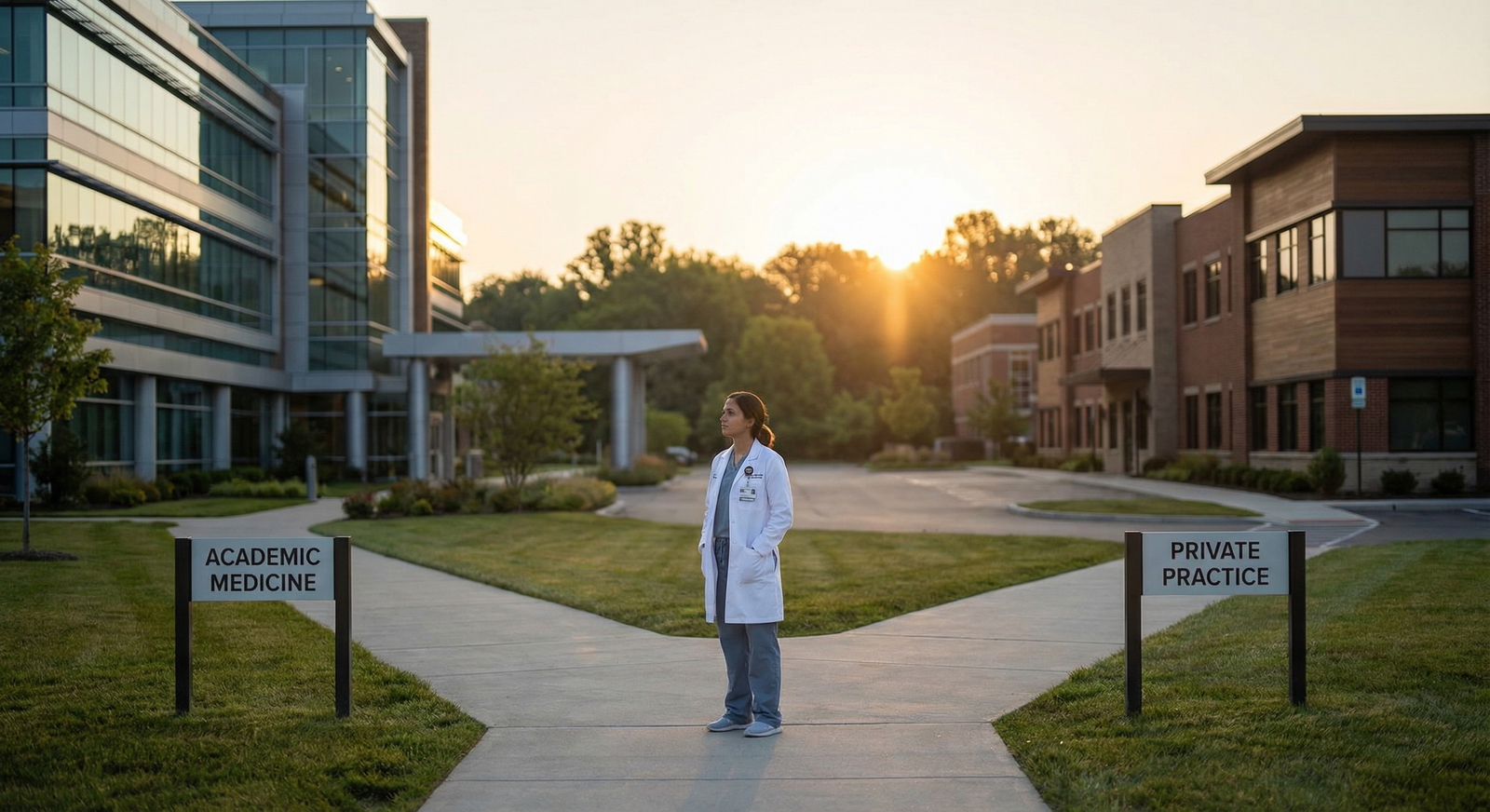
As an international medical graduate (IMG) pursuing or completing nuclear medicine residency, deciding between an academic medicine career and private practice is one of the most consequential choices you will make. Nuclear medicine has a relatively small workforce, rapidly evolving technology, and significant overlap with radiology and oncology—all of which make career planning particularly strategic for IMGs.
This IMG residency guide will walk you through how academic nuclear medicine and private practice nuclear medicine differ in daily work, lifestyle, income, visa considerations, and long‑term opportunities. The goal is to give you a clear, practical framework for choosing a career path in medicine that fits your priorities, strengths, and constraints as an IMG.
Big-Picture Overview: How Nuclear Medicine Careers Are Structured
Before comparing academic vs private practice, it helps to understand how nuclear medicine jobs are generally organized in North America and many other regions.
Common Practice Settings in Nuclear Medicine
Most nuclear medicine physicians work in one of these settings:
Academic medical centers / university hospitals
- Large teaching hospitals, often affiliated with a medical school
- Strong focus on research, teaching, and subspecialty clinical care
- Nuclear medicine may exist as:
- A separate Nuclear Medicine division/department, or
- Integrated within Radiology, Molecular Imaging, or Hybrid Imaging departments
Private practice radiology or imaging groups
- Independent groups contracting with one or more hospitals or imaging centers
- Nuclear medicine is often one component of a broader diagnostic imaging practice
- May include PET/CT, SPECT, general nuclear medicine, and sometimes theranostics
Hybrid or hospital-employed models
- Employed by a community hospital system
- Functionally similar to private practice (productivity and service oriented) but under hospital management
- Sometimes still involved in limited teaching or clinical research
Industry, research institutes, and regulatory roles (less common right after residency)
- Pharmaceutical or device companies (radiotracers, scanners, AI tools)
- Government or regulatory agencies
- Research-only institutes
For an IMG completing nuclear medicine residency, the most immediate and realistic choices are usually:
- Academic nuclear medicine faculty roles, or
- Private practice or hospital-employed imaging positions with a nuclear medicine focus (often combined with diagnostic radiology skills).
Academic Nuclear Medicine: Structure, Pros, Cons, and IMG Considerations
What “Academic” Really Means in Nuclear Medicine
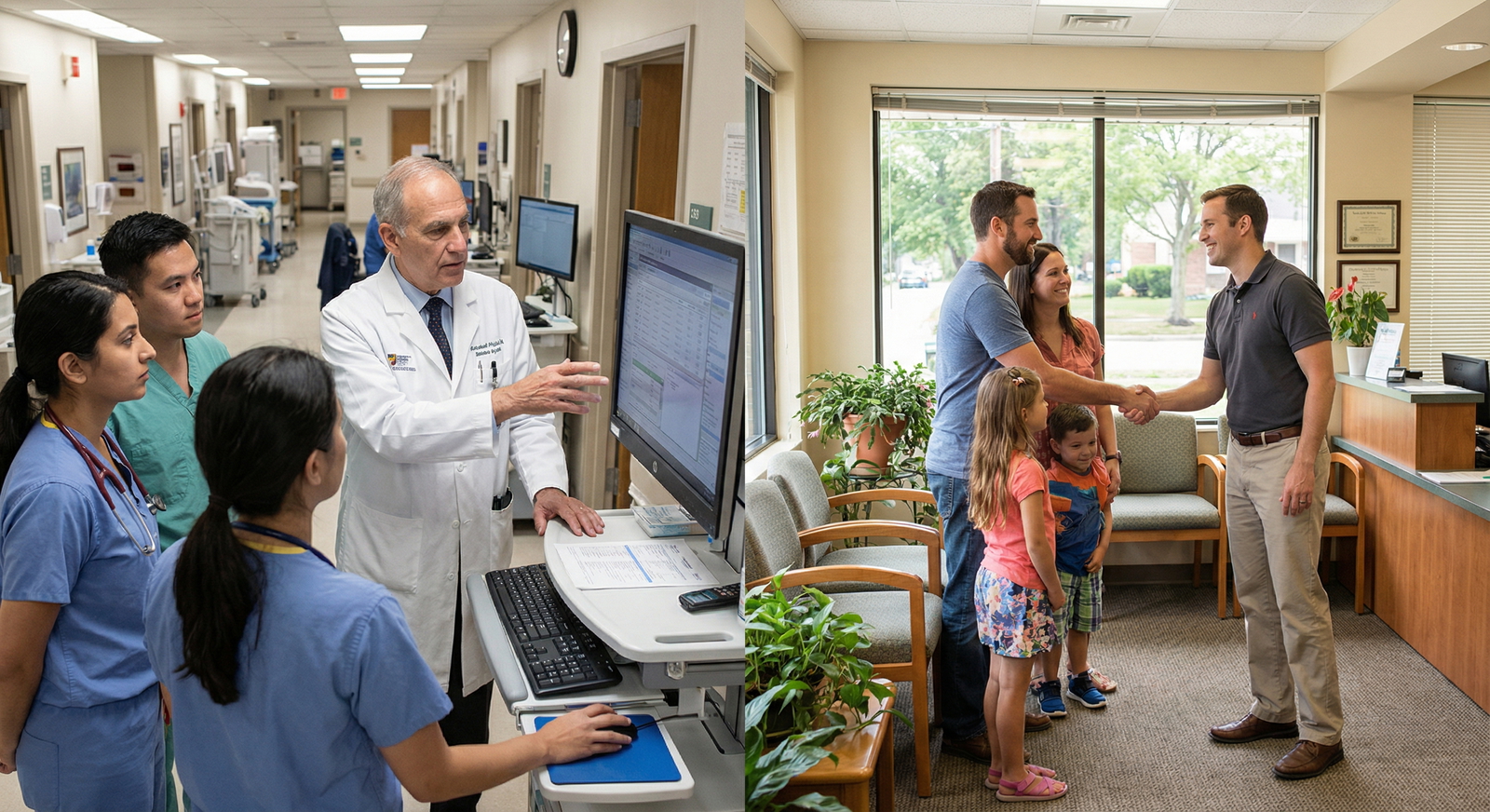
In an academic medicine career, you typically work at a university-affiliated hospital or large teaching center. Your role is usually a mix of:
- Clinical work: Reading general nuclear medicine, PET/CT, SPECT/CT, and increasingly theranostic cases (e.g., Lu-177, I-131 therapies)
- Teaching: Medical students, residents (nuclear medicine, radiology, or other specialties), and fellows
- Research and scholarly activity: Clinical trials, translational research, imaging protocols, quality improvement, and publications
- Administrative and leadership tasks: Program development, committees, guideline writing, or divisional leadership over time
Each academic job has a “distribution” of responsibilities, often stated as a percentage:
- Example: 70% clinical, 20% research, 10% teaching
- More research-oriented positions might be 50%/40%/10% or even have protected time >50% for research (often requiring secured grant funding).
Typical Day in Academic Nuclear Medicine
A realistic day for an academic nuclear medicine physician might include:
Morning:
- Read inpatients and outpatients PET/CT and SPECT/CT with residents/fellows
- Review theranostic therapy cases (e.g., patient selection for Lu-177 PSMA or DOTATATE)
- Didactic teaching for trainees (short lectures, case conferences)
Midday:
- Tumor board or multidisciplinary case conference with oncologists, surgeons, and radiation oncologists
- Protocol optimization for new tracers or imaging sequences
Afternoon:
- Work on research projects (data analysis, manuscripts, IRB submissions)
- Supervise a resident’s quality-improvement project
- Participate in departmental or hospital committees
Advantages of Academic Nuclear Medicine for IMGs
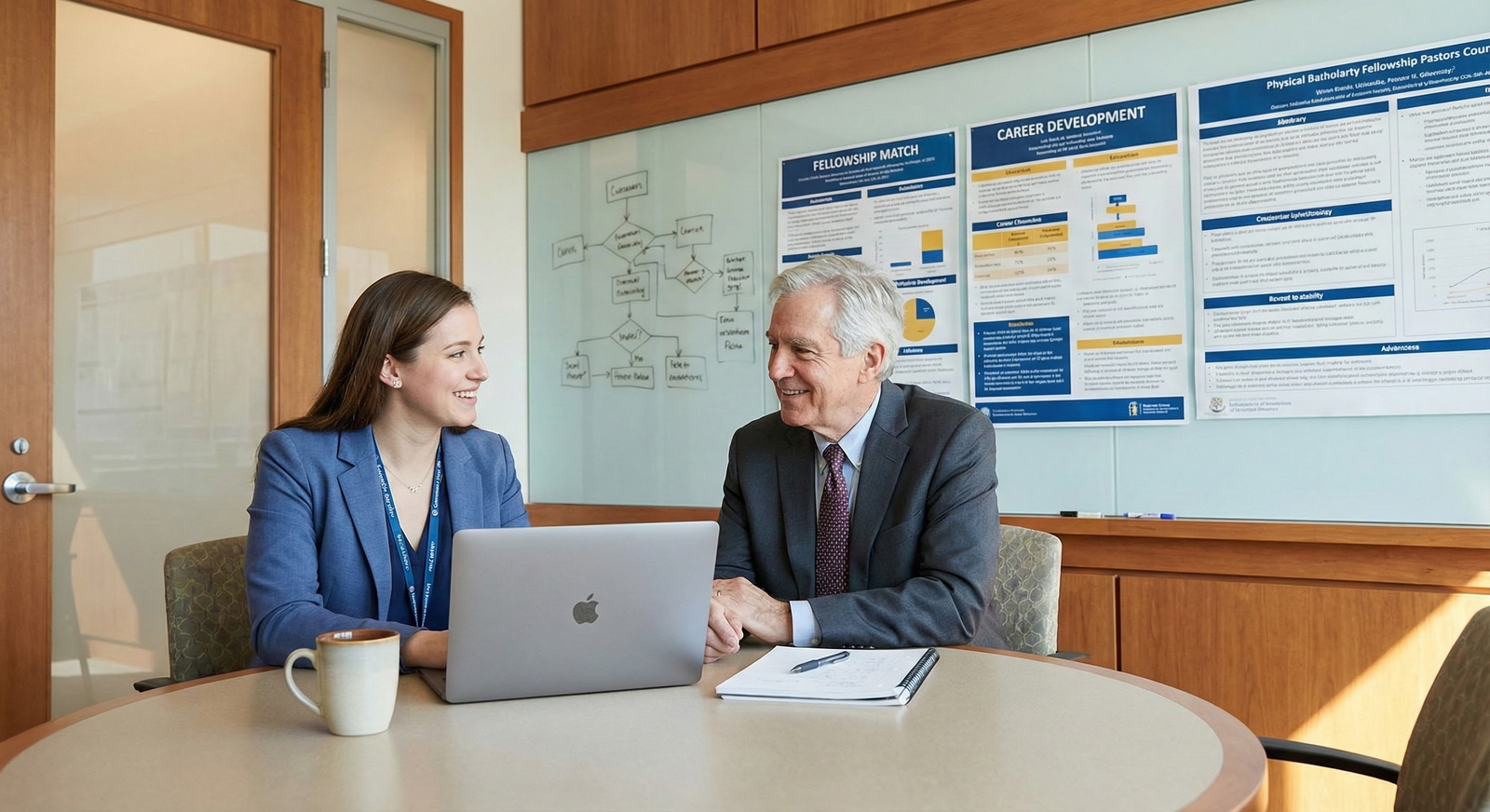
Structured mentorship and career development
- Easier access to formal mentorship, research collaborators, and academic promotion tracks
- Opportunities to learn grant writing, lead clinical trials, and become an expert in narrow subspecialties (e.g., neuroimaging, cardiac nuclear imaging, theranostics)
Visa and immigration support
- Many academic centers are experienced sponsoring H‑1B visas and assisting with J‑1 waivers (e.g., through Conrad 30 or academic waivers)
- Institutional legal teams often manage complex immigration paths, which is extremely valuable for an international medical graduate
Reputation and credibility
- Being faculty at a recognizable institution can help you:
- Build a national/international profile
- Join guideline panels or professional society committees
- Attract speaking invitations and research collaborations
- Being faculty at a recognizable institution can help you:
Intellectual environment
- Regular exposure to cutting-edge imaging, new tracers, AI tools, and novel theranostic agents
- Opportunities to be early adopter and lead in new technology implementation
Teaching satisfaction
- Many IMGs find personal meaning in teaching, especially if they benefited significantly from mentors during their own nuclear medicine residency
- Teaching improves your own understanding and keeps your knowledge up to date
Relative job security
- Academic employment can be less sensitive to short-term billing fluctuations than some private practices
- Multi-year faculty contracts may provide more stability once you are established
Disadvantages and Challenges for IMGs in Academic Medicine
Lower compensation (on average) than private practice
- Fixed salary plus modest incentives, often significantly lower than what’s possible in a high-volume private group
- Salary can be especially constrained in early years before promotion or large grant funding
Pressure to publish and obtain grants
- Promotion to higher academic ranks (Associate Professor, Professor) usually requires:
- Peer-reviewed publications
- Evidence of scholarship (books, chapters, national talks)
- Sometimes significant extramural funding
- For IMGs, additional challenges may include:
- Limited prior research track record
- Visa-related travel constraints for conferences
- Promotion to higher academic ranks (Associate Professor, Professor) usually requires:
Administrative and institutional complexity
- Slower decision-making, multiple layers of approvals, and institutional politics
- Budget constraints can delay equipment upgrades or new tracer adoption, depending on the center
Potentially heavier call and committee responsibilities
- More meetings, educational tasks, and expectations for “citizenship” (e.g., serving on committees, accreditation-related work)
- Depending on the department, call can be frequent, though typically more reasonable for nuclear medicine than for interventional specialties
Academic Careers and the Nuclear Medicine Match Perspective
From a nuclear medicine residency and nuclear medicine match standpoint:
- Residents who show strong research productivity (abstracts, posters, publications) during training are often more competitive for academic jobs
- Demonstrating interest in teaching (e.g., teaching awards, formal teaching roles) can also be a major advantage
- Having fellowships (e.g., PET/CT, theranostics, or further radiology training) can increase your marketability both academically and in private practice

Private Practice Nuclear Medicine: Reality, Income, Lifestyle, and Constraints
What “Private Practice” Looks Like in Nuclear Medicine
In private practice or hospital-employed groups, your work is primarily clinical and productivity-driven:
- High-volume reading of:
- PET/CT (oncology, sometimes cardiac or neuro)
- SPECT/CT and planar nuclear medicine
- Sometimes conventional radiology (CT, MRI, ultrasound, radiographs) depending on your training
- Limited or no formal research expectations
- Teaching is minimal unless you are affiliated with a residency program or take medical students occasionally
In many places, pure nuclear medicine jobs in private practice are rare; groups often expect:
- Board eligibility or certification in diagnostic radiology plus nuclear radiology, or
- Strong cross-sectional imaging (CT/MRI) skills in addition to nuclear medicine
This makes training and credentialing choices during nuclear medicine residency extremely important for future private practice options.
Typical Day in Private Practice Nuclear Medicine
A realistic day might include:
Morning:
- Rapid reading of scheduled PET/CT and SPECT/CT studies
- Overseeing stress tests or myocardial perfusion imaging (if the practice covers cardiology)
- Short administrative tasks or referring-physician phone calls
Midday:
- High throughput reading of routine cases; quick clinical decisions
- Occasional tumor boards or informal multidisciplinary meetings (less frequent than in large academic centers)
Afternoon:
- Continued image interpretation
- Potentially short or no dedicated academic time; emphasis on reading volume and clinical efficiency
- Business/partnership meetings if you are a partner or track-to-partnership member
Advantages of Private Practice Nuclear Medicine for IMGs
Higher earning potential
- Compensation is typically tied to RVUs, collections, or partnership profit-sharing
- After initial years, partners in successful imaging or radiology practices may earn substantially more than most academic colleagues
- Some groups offer signing bonuses, relocation, and productivity incentives
More predictable clinical focus
- Your primary role is providing efficient, accurate clinical reads
- Less pressure to publish, secure grants, or meet complex academic metrics
- Many IMGs appreciate the clarity of expectations
Potential for business involvement
- As you advance, opportunities to:
- Buy into equipment or real estate
- Participate in practice management and strategic decisions
- Shape service expansion (e.g., adding theranostics, new tracers)
- As you advance, opportunities to:
Possibly more geographic flexibility
- Private practices exist across urban, suburban, and rural settings
- Community hospitals and imaging centers may be more widely distributed than academic centers, increasing location choices
Faster clinical autonomy
- From day one, emphasis is on independent reading and clinical service
- Less oversight on how you structure your day, as long as work is completed and quality is maintained
Disadvantages and Challenges for IMGs in Private Practice
Visa sponsorship limitations
- Some private groups are hesitant to sponsor H‑1B visas due to:
- Legal and financial costs
- Uncertainty about long-term retention
- J‑1 waiver jobs are sometimes available in underserved areas, but often:
- More general radiology-focused than pure nuclear medicine
- Require flexibility in reading across modalities
- Some private groups are hesitant to sponsor H‑1B visas due to:
Intense productivity expectations
- Your income is closely tied to case volumes and speed
- Shorter time per case, less opportunity for extensive literature review or academic discussion
- Potentially higher burnout risk if volume is very high
Less formal mentoring and academic infrastructure
- Education and research support are limited
- Staying on the cutting edge of nuclear medicine requires more self-directed learning, conference participation on your own time, and personal investment
Market competition
- Private practice jobs may prioritize:
- Dual training (DR + nuclear medicine or nuclear radiology)
- American-trained candidates with fewer visa restrictions
- As an IMG, you may need to be more flexible about location and role to enter the private landscape
- Private practice jobs may prioritize:
Variable exposure to cutting-edge techniques
- Some high-end private groups are early adopters of theranostics and novel tracers
- Others may be slower to invest in new radiopharmaceuticals and technologies due to cost or reimbursement uncertainty
Key Decision Factors: How to Choose Between Academic and Private Practice as an IMG
When choosing a career path in medicine—especially in a niche field like nuclear medicine—you need a framework that goes beyond stereotypes. Here are the most important dimensions to consider, with practical guidance tailored to IMGs.
1. Visa Status and Immigration Strategy
For IMGs, immigration considerations can outweigh all other factors in the first 5–10 years.
If you are on a J‑1 visa:
- You will need a J‑1 waiver job or return-home requirement fulfillment
- Waiver opportunities in pure nuclear medicine are limited
- Consider:
- Academic centers with waiver positions in underserved locations
- Community or hospital-employed radiology jobs where your nuclear skills add value, but you also read general imaging
If you are on or eligible for an H‑1B:
- Academic centers are often more willing and experienced in sponsoring and extending H‑1B
- Some private groups (especially large hospital-employed systems) will sponsor but may be more selective
Long-term:
- Academic institutions may assist with EB‑1 or NIW (National Interest Waiver) applications if you are academically productive
- Private practice physicians often pursue EB‑2 NIW or employer-sponsored green cards based on clinical contributions
Actionable advice:
Map out your 10-year immigration plan and ask every potential employer explicit, detailed questions about:
- Visa sponsorship experience
- Past IMG hires and their immigration outcomes
- Institutional legal support for permanent residency
2. Financial Goals and Risk Tolerance
- If you prioritize maximizing income and are comfortable with higher workload and some financial variability:
- Private practice or hospital-employed models may suit you better
- If you value income stability and are willing to earn less for more job security and academic opportunities:
- Academic settings may be a better fit
Practical step:
When interviewing:
- Ask for transparent compensation structure (base, bonus, RVU thresholds, partnership track)
- Understand non-clinical expectations (research, teaching, committees) in academic jobs and whether they are financially recognized
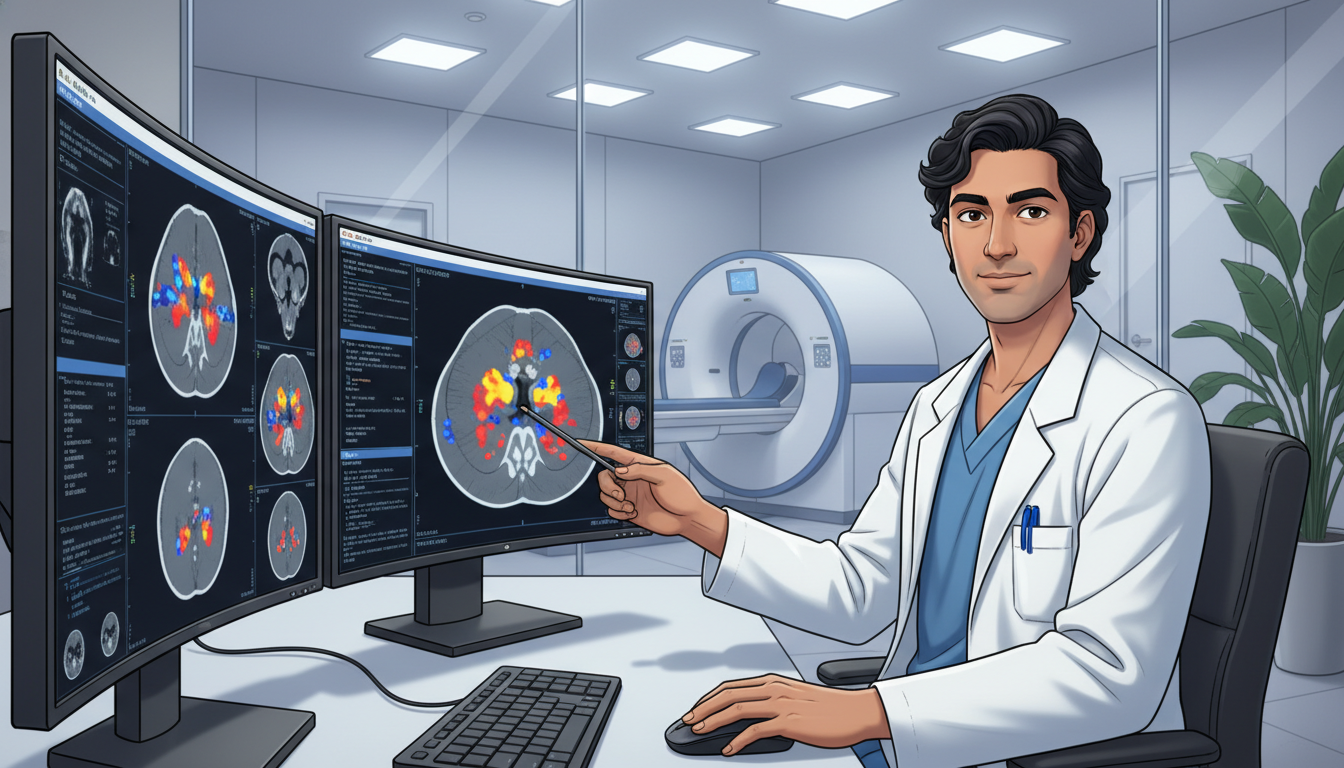
3. Professional Identity: Do You See Yourself as a Clinician, Scholar, or Both?
If you truly enjoy:
- Writing papers, designing studies, and attending academic meetings
- Teaching and mentoring residents and fellows
- Contributing to guidelines and national societies
then an academic medicine career is more aligned with your identity.
If you prefer:
- High-efficiency clinical work
- Fewer non-clinical expectations and more time off when not on duty
- Business and practice management aspects
then private practice may be more satisfying.
Self-assessment exercises:
- Look at your nuclear medicine residency: Did you voluntarily engage in research and teaching, or mainly because it was required?
- When you imagine a “perfect workday,” how much of it is:
- Reading cases
- Teaching
- Doing research
- Managing business or operations
4. Skill Set and Training Profile
Your training background strongly influences your options:
Pure Nuclear Medicine (without DR board eligibility):
- More natural fit in academic departments and specialized theranostics programs
- Private practice opportunities may be limited to niche or large centers
Dual-trained (Diagnostic Radiology + Nuclear Medicine / CAQ in Nuclear Radiology):
- Much higher flexibility in private practice and community hospitals
- Still attractive for academic units, especially hybrid imaging or molecular imaging divisions
Actionable planning during residency:
- Seek additional rotations in cross-sectional imaging if you’re considering private practice
- Develop strong PET/CT, SPECT/CT, and theranostics expertise if leaning academic
- Document your skills with case logs, mini-fellowships, and letters of recommendation that highlight your breadth
5. Lifestyle Preferences and Burnout Risk
Academic work:
- May have more variety (research, teaching, committees) but also more evening/weekend work preparing lectures or papers
- Call can be more predictable, but institutional demands can accumulate
Private practice:
- More directly correlated hours to income, but also pressure to maintain high productivity
- Depending on the group, you might have:
- Very long days but more extended time off, or
- A steady “8–6” style schedule with moderate call
Practical advice:
- During interviews, ask to speak with younger faculty or recent hires about:
- Actual hours/week
- Weekend expectations
- Flexibility for family or personal commitments
Strategy for IMGs: Combining Academic and Private Practice Over a Career
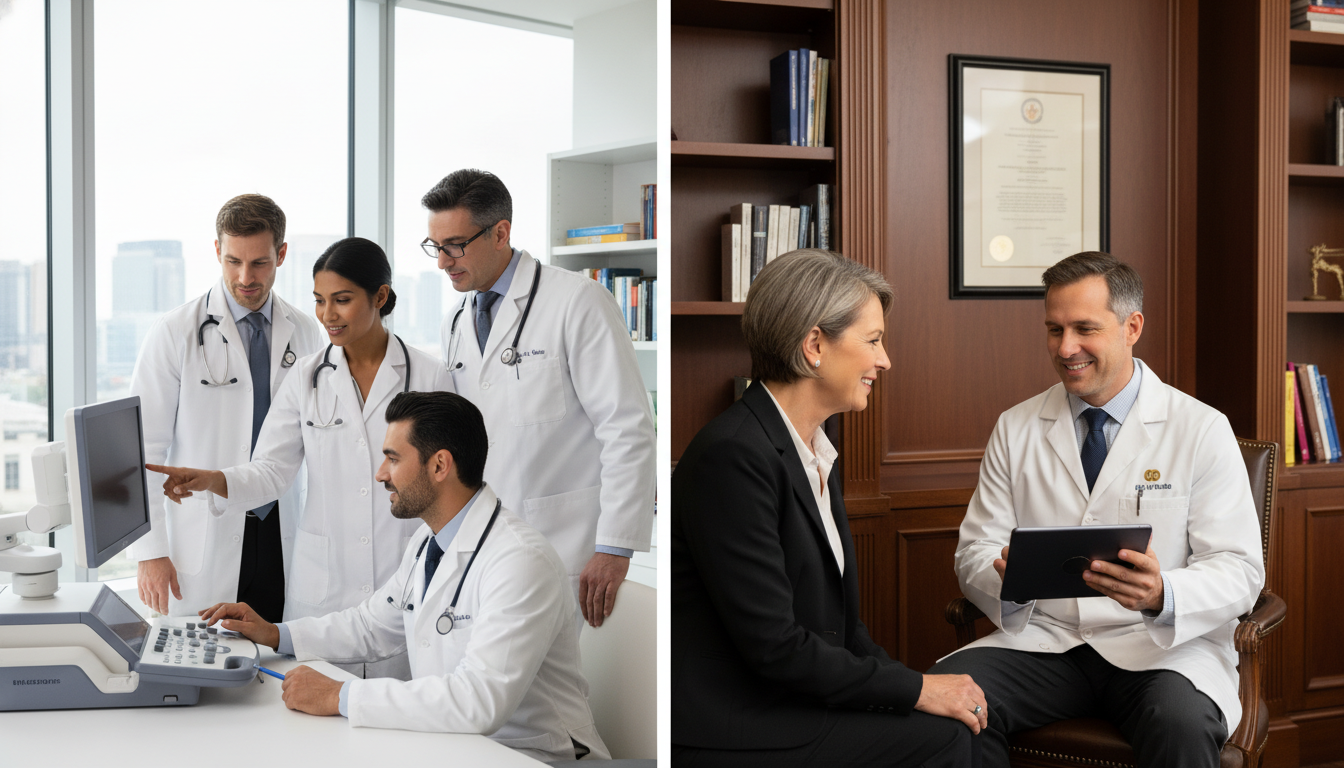
One underappreciated point: your first job does not have to be your last. Many nuclear medicine physicians—especially IMGs—evolve between academic and private practice over time.
Common Career Trajectories
Academic First, Then Private Practice
- Early years in academia:
- Build strong CV (publications, board certifications, subspecialty reputation)
- Obtain permanent residency with institutional support
- Later transition to private practice:
- Leverage your niche expertise (e.g., theranostics specialist) to negotiate better roles and compensation
- Bring academic credibility that differentiates you in the market
- Early years in academia:
Private Practice First, Then Academic Return
- Start in private practice (often driven by income or visa needs in underserved settings)
- After stabilizing finances and immigration:
- Join an academic or hybrid center as clinical faculty, sometimes focusing more on teaching and less on grant-heavy research
- This path may be more challenging for research-heavy positions but is very feasible for clinically oriented academic roles
Hybrid Roles
- Work at a large community hospital with:
- Academic affiliations
- Resident rotations
- Some limited research or clinical trial participation
- These jobs blend aspects of both worlds and can be particularly attractive for IMGs wanting balance
- Work at a large community hospital with:
Practical Steps During Residency to Keep Options Open
- Network widely at nuclear medicine and radiology conferences (SNMMI, RSNA, EANM, etc.)
- Cultivate at least one mentor in academia and one in private practice to get honest, ongoing feedback
- Aim for board certifications and skill sets that maximize flexibility:
- Consider pathways to add diagnostic radiology skills if feasible in your training system
- Document your teaching evaluations, research output, and clinical productivity—these will help you switch sides later if you decide to
FAQs: Academic vs Private Practice for IMG in Nuclear Medicine
1. As an IMG, is it harder to get an academic job or a private practice job in nuclear medicine?
It depends on your visa status and training background:
- With pure nuclear medicine training and visa needs, it’s often easier to secure academic positions, particularly in institutions familiar with IMGs and visa sponsorship.
- With dual training (DR + nuclear) and permanent residency or citizenship, private practice jobs may be more plentiful and better compensated.
- For J‑1 visa holders, finding a J‑1 waiver job that uses nuclear medicine skills can be challenging; flexibility in reading general imaging significantly expands your options.
2. Can I still do research if I work in private practice?
Yes, but with limitations:
- You are unlikely to have large protected time or institutional research infrastructure.
- However, you can:
- Participate in industry-sponsored trials at your imaging center
- Collaborate with academic colleagues as a co-investigator or site PI
- Publish case reports or smaller clinical series from your practice
- If research is a major passion, academic positions are still more supportive long-term, but private practice doesn’t entirely exclude scholarly work.
3. How important is theranostics experience for my career choice?
Very important and increasingly so:
- In academic centers, theranostics (Lu-177 PSMA, DOTATATE, I-131, and emerging agents) is a major growth area:
- It supports grant funding, multidisciplinary clinics, and national recognition.
- In private practice, theranostics services are rapidly expanding in larger practices:
- Experience in setting up theranostics workflows, radiation safety, and clinical follow-up is a major asset.
- As an IMG in nuclear medicine residency, actively seek theranostics exposure—it enhances your competitiveness for both academic medicine careers and high-end private practice roles.
4. What should I focus on during residency to keep both academic and private options open?
Focus on four pillars:
Clinical Excellence
- Strong PET/CT, SPECT/CT, general nuclear medicine, and theranostics skills
- If possible, broaden to CT/MRI basics
Scholarly Activity
- Even 2–3 solid publications or national conference presentations make a big difference
- Shows academic potential and discipline
Teaching Experience
- Volunteer to teach juniors or give lectures
- Request formal feedback you can include in future applications
Networking and Mentorship
- Stay in touch with mentors in both academic and community/private settings
- Join societies (SNMMI, local radiology/nuclear societies) and be active in committees if possible
As an international medical graduate in nuclear medicine, you are entering a field with tremendous growth in molecular imaging and theranostics. Whether you choose academic medicine, private practice, or a hybrid path, understanding the realities of each environment—and planning intentionally during your nuclear medicine residency—will allow you to build a sustainable, fulfilling career aligned with your values, immigration needs, and long-term goals.