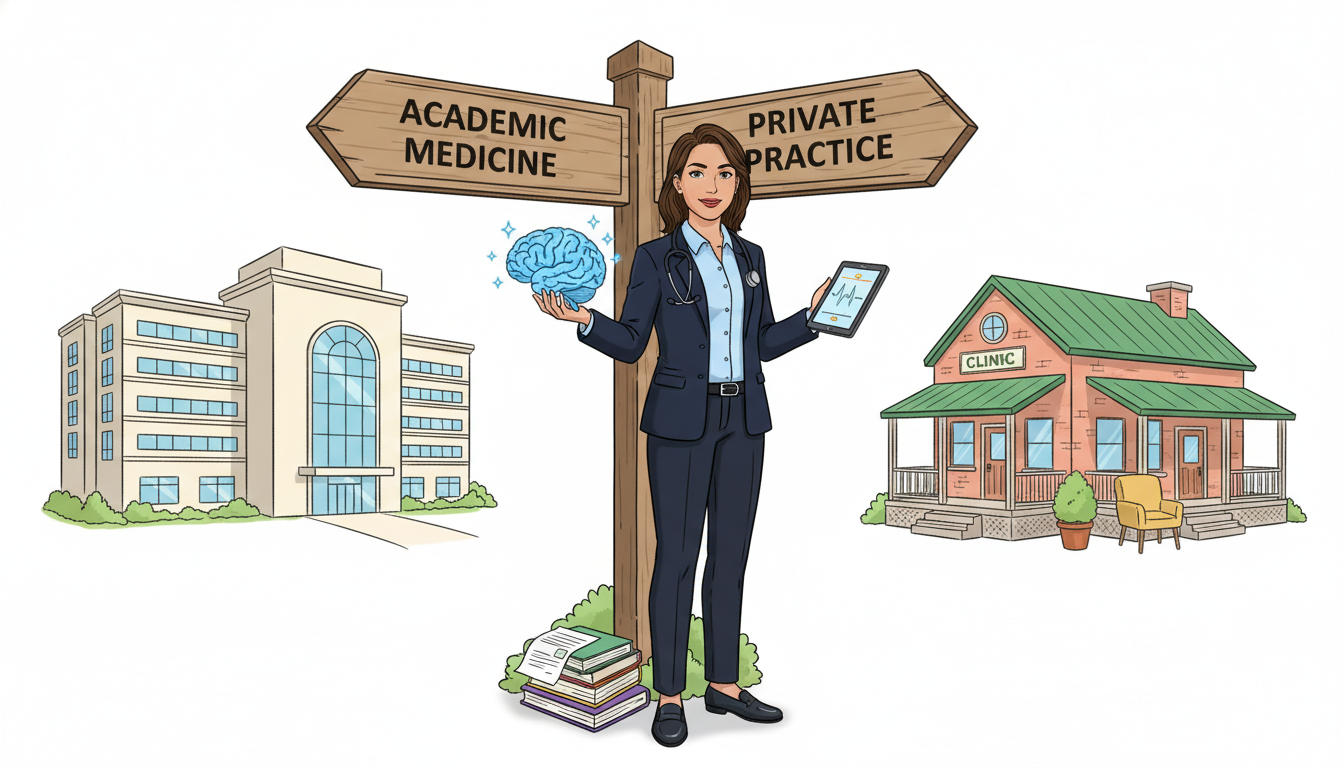
Overview: Why This Decision Matters So Much for IMGs in Peds-Psych
For an international medical graduate (IMG) in a combined Pediatrics-Psychiatry (or triple board) pathway, choosing between academic medicine and private practice is one of the most defining decisions of your career. It affects:
- Your daily schedule and workload
- Your income trajectory and financial stability
- Your visa and immigration options
- Your opportunities for teaching, research, and leadership
- Your exposure to complex pediatric and psychiatric pathology
- Your long-term satisfaction and burnout risk
This IMG residency guide focuses specifically on Pediatrics-Psychiatry, including triple board programs, and how the academic vs private practice decision plays out in the post-residency and job market phase. The goal is to help you make a deliberate, informed choice—not drift into a path by default.
Understanding Academic vs Private Practice in Pediatrics-Psychiatry
Before comparing, it helps to define these paths in the specific context of peds psych residency and triple board training.
What “Academic Medicine” Means in Peds-Psych
In this article, academic medicine refers to practice settings where your primary employer is:
- A medical school or university
- A university-affiliated children’s hospital
- A large teaching hospital or academic health system
Key features:
- Tripartite mission: clinical care, teaching, and research
- Titles and ranks: Instructor, Assistant Professor, Associate Professor, Professor
- Structured promotion: based on clinical productivity, teaching, scholarship, and service
- Patients: often high-acuity, complex pediatric and psychiatric cases; many referrals from other hospitals
- Environment: teams of residents, fellows, psychology trainees, social workers, and other learners
For a peds-psych or triple board graduate, academic roles may include:
- Inpatient or consultation-liaison child psychiatry on a pediatric service
- Integrated behavioral health in pediatric subspecialty clinics (e.g., oncology, neurology, adolescent medicine)
- Outpatient developmental-behavioral pediatrics or child psychiatry clinics
- Research positions focused on child development, neuropsychiatry, health disparities, or global mental health
- Program leadership: residency/fellowship program director, clerkship director, division chief
What “Private Practice” Means in Peds-Psych
Private practice broadly includes:
- Solo or group outpatient practices
- Private multidisciplinary mental health clinics (psychiatrists, psychologists, therapists)
- Small partnerships or physician-owned practices
- Some larger non-university-affiliated health systems or multispecialty groups with outpatient focus
Key features:
- Business-oriented: you or your group are responsible for revenue, expenses, scheduling, and often marketing
- Clinical focus: mostly direct patient care, typically in ambulatory settings
- Flexibility: significant control over patient mix, schedule, and services offered
- Income variability: often higher earning potential, but with business risk
For a peds-psych or triple board graduate, private practice might include:
- Child and adolescent psychiatry outpatient clinic
- Behavioral pediatrics consultative practice (e.g., ADHD, autism, school issues)
- Split practice: some days peds primary care, some days psychiatry
- Telepsychiatry or telehealth-focused child mental health services
In reality, many physicians work in hybrid models (e.g., academic appointment plus part-time private practice). But understanding the pure forms helps you choose a primary direction.
Key Differences: Academic vs Private Practice for IMGs in Pediatrics-Psychiatry
1. Clinical Role and Day-to-Day Work
Academic Medicine
Clinical mix:
- More complex, multi-system pediatric and psychiatric conditions
- Co-occurring medical and mental health disorders (e.g., congenital heart disease + depression, epilepsy + ADHD)
- Consultation-liaison work on pediatric wards and ICUs
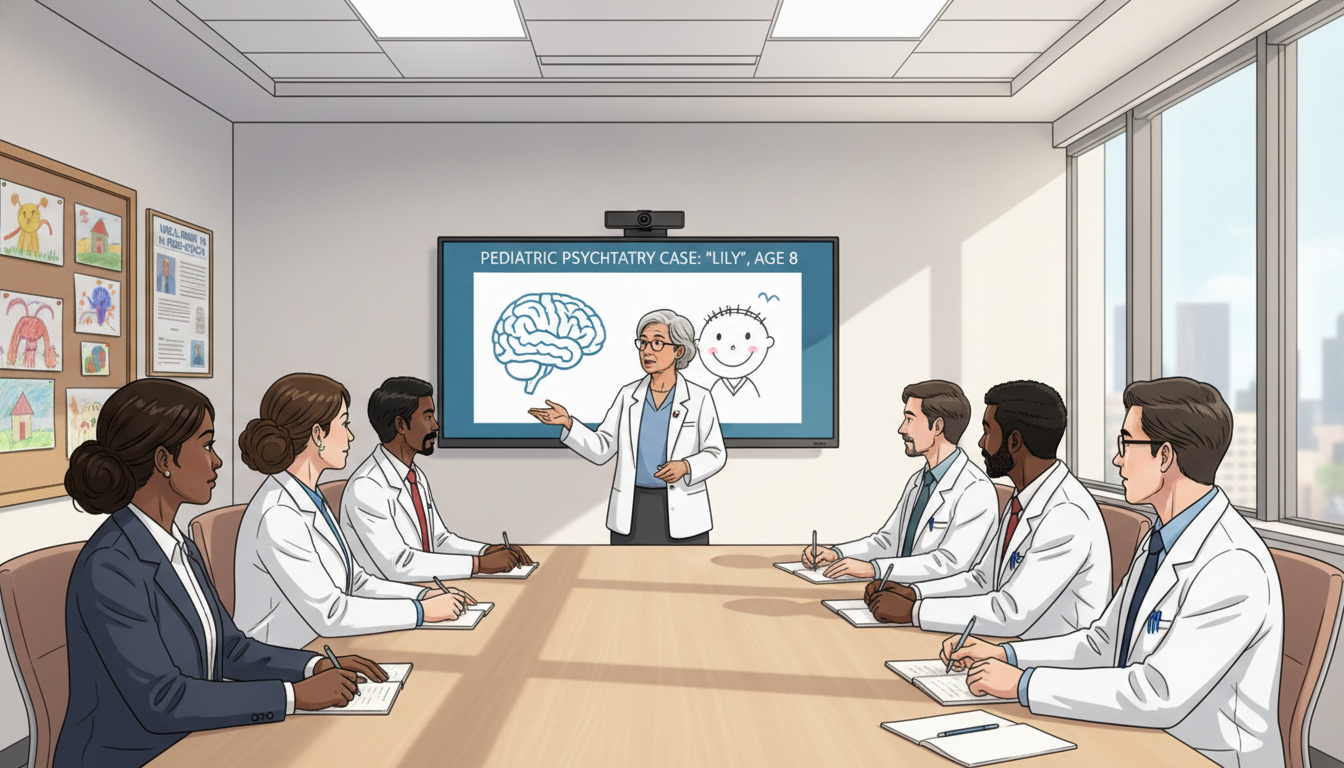
Teaching responsibilities:
- Supervising residents and fellows on psychiatric consults or pediatric rotations
- Giving lectures, case conferences, journal clubs
- Supervising medical students, psychology interns, social work trainees
Research/administrative tasks:
- Quality improvement projects (e.g., improving suicide screening in pediatrics)
- Research protocols, IRB submissions, data analysis
- Committee work: GME committees, diversity and inclusion teams, ethics boards
Private Practice
Clinical mix:
- Largely outpatient, longitudinal care
- ADHD, anxiety, depression, school refusal, autism, behavioral concerns, mild–moderate mood disorders
- Typically less medically fragile children, unless you design a niche practice
Non-clinical work:
- Business operations: billing, contracts, hiring staff, negotiating with insurers
- Marketing and networking with pediatricians, schools, therapists
- Electronic health record (EHR) management, compliance, policies
For an international medical graduate, the academic environment often feels more structured and supported, whereas private practice requires more entrepreneurial spirit and comfort with ambiguity and risk.
2. Compensation, Benefits, and Financial Trajectory
Academic Medicine
Base salary: Usually lower than private practice but stable and predictable
Incentives:
- RVU-based clinical bonuses
- Stipends for leadership roles (program director, medical director)
- Grants or protected time for research, sometimes with salary support
Benefits:
- Strong retirement plans with employer contributions
- Health, dental, disability insurance
- CME funds, paid time for conferences
- Tuition discounts for dependents at some institutions
Long-term trajectory:
- Income grows slowly with rank and responsibility
- Less upside than a thriving private practice, but fewer dramatic financial swings
Private Practice
Income potential:
- Often higher ceiling, especially in child psychiatry, where demand is intense
- Ability to set your own fees (especially in cash-based or concierge models)
- Option to expand (hire other clinicians, add services, open new locations)
Financial risk:
- Startup costs: leasing office space, EHR, staffing, legal and accounting fees
- Fluctuating revenue based on patient volume and payer mix
- Responsibility for your own retirement, health insurance, malpractice (if not in a group system)
For IMGs:
- Early in your career, you may have visa and licensing constraints that make private practice more complex to start alone. Employed positions in private groups or health systems are more common initial steps than solo practice.
When comparing, remember: child and adolescent psychiatrists and pediatric-psychiatry–trained physicians are in shortage nationwide. Both academic and private roles can be financially viable; your preferences and risk tolerance matter more than pure earning potential.
3. Visa, Immigration, and Legal Considerations for IMGs
This is one of the most critical and often overlooked differences for an international medical graduate choosing a career path in medicine.
Academic Medicine and Visas
Institutional experience:
- University hospitals and academic centers frequently sponsor H‑1B visas and may be cap-exempt, allowing more flexibility in timing and availability.
- Many have a dedicated international office familiar with J‑1 waivers, O‑1 visas, and employment-based green cards.
J‑1 waiver positions (e.g., Conrad 30, federal programs):
- Some academic centers in underserved areas qualify for J‑1 waivers for child psychiatrists and pediatric specialists.
- Triple board and peds-psych graduates can sometimes use their combined skill set to secure hard-to-fill roles.
Green card sponsorship:
- Academic institutions are commonly willing to sponsor EB‑2 or EB‑1 petitions, especially when your work includes research, teaching, or leadership.
Private Practice and Visas
J‑1 waivers:
- Many community mental health centers, FQHCs, and rural clinics qualify for J‑1 waiver positions, especially for child psychiatry. These may feel similar to private practice in day-to-day structure, even if technically not physician-owned.
- Pure solo private practice immediately after residency on a J‑1 is virtually impossible—you must fulfill the J‑1 waiver service obligations in an approved site.
H‑1B in private groups:
- Some large private practices or health systems will sponsor H‑1B, but they may be subject to the annual cap, making timing and selection unpredictable.
- Smaller practices may lack legal expertise or resources to handle complex immigration cases.
Independent practice:
- Opening a solo business is much easier once you have permanent residency or citizenship.
- Before that, employment-based options tied to an employer are more realistic.
Bottom line for IMGs:
If your first priority is securing stable immigration status, academic medicine or large health system positions are usually safer and more straightforward. Once you have a green card or citizenship, transitioning to private practice becomes much simpler.
4. Academic Medicine Career: Pros, Cons, and Fit for Peds-Psych IMGs
Academic medicine is often seen as the “default” path for those in combined or triple board training, but it’s not for everyone. Understanding the trade-offs will help you decide.
Advantages of Academic Medicine for Peds-Psych IMGs
Synergy with your unique training
- Triple board and peds psych residents are trained at the interface of pediatrics and psychiatry. Academic centers are where this integration is most fully valued:
- Pediatric psychiatry consult services
- Interdisciplinary clinics (e.g., neurodevelopmental clinics, eating disorder programs, chronic illness mental health programs)
- Your skill set may be rare and highly sought after in academic departments.
- Triple board and peds psych residents are trained at the interface of pediatrics and psychiatry. Academic centers are where this integration is most fully valued:
Teaching and mentorship opportunities
- You work with residents, fellows, and students from both pediatrics and psychiatry.
- Many IMGs find deep satisfaction in being mentors and role models for a diverse trainee population.
Structured growth and mentorship
- Clear promotion criteria (publications, teaching evaluations, leadership roles).
- Access to formal mentorship programs, faculty development workshops, and leadership training.
Research and innovation
- If you are curious about academic medicine careers—research in child mental health, developmental disorders, or health disparities—this path gives you infrastructure: statisticians, IRB, grants offices.
- Opportunities to participate in or lead quality improvement that shapes institutional practice and national guidelines.
Stability and support
- Institutional salary, malpractice coverage, benefits, and administrative infrastructure.
- Often predictable vacation, parental leave, and policies that support work–life balance.
Disadvantages of Academic Medicine
Lower compensation compared to private practice
- Especially in early and mid-career, you may earn less than peers in high-volume private child psychiatry practice.
Institutional bureaucracy
- Committees, mandatory trainings, documentation requirements, and slower decision-making.
- Less autonomy over clinic structure, scheduling, and policies.
Competing demands
- Teaching, research, and clinical work all compete for your time.
- Pressure to be productive in multiple domains can contribute to burnout if not balanced carefully.
Geographic limitation
- Academic centers are concentrated in certain cities.
- If you have family or spouse/partner constraints, you may have fewer location options than in private practice.
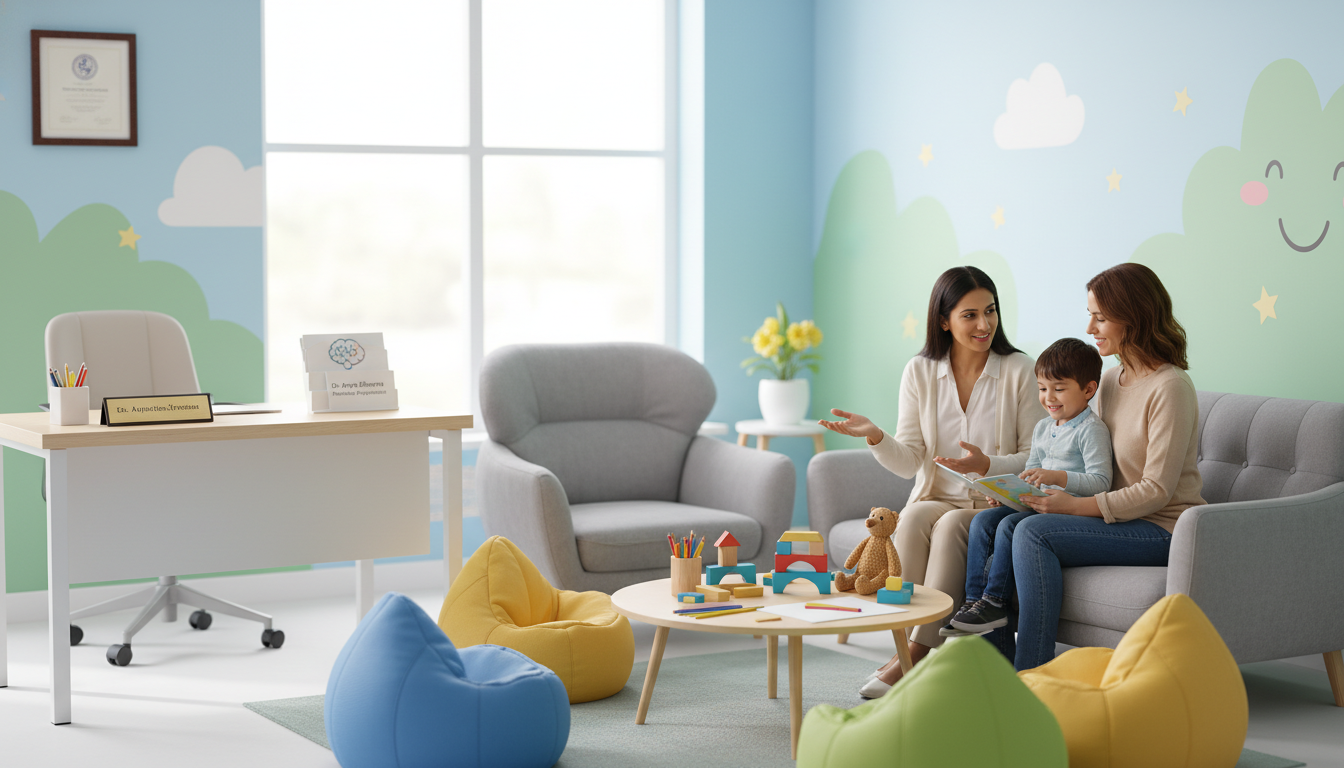
5. Private Practice: Pros, Cons, and Fit for Peds-Psych IMGs
For many child and adolescent psychiatrists, especially those with a strong outpatient focus, private practice can be an appealing end goal.
Advantages of Private Practice for Peds-Psych IMGs
High autonomy
- Control over your schedule: number of patients per day, telehealth vs in-person, hours and days worked.
- Control over clinical focus: ADHD, autism, trauma, mood disorders, school-based issues, parent training—whatever aligns with your passion and expertise.
Income potential
- In high-demand markets, child mental health clinicians can command strong rates, particularly in cash-pay or hybrid practices.
- You capture the full revenue stream rather than receiving a fixed institutional salary.
Flexible lifestyle design
- Ability to design your practice around family commitments, childcare, religious observances, or part-time work.
- Option to reduce call or eliminate inpatient duties entirely.
Entrepreneurial satisfaction
- Building a brand, hiring a team, and shaping the culture of your clinic.
- Opportunity to innovate quickly (e.g., group therapy programs, school partnerships, telehealth across a state).
Disadvantages of Private Practice
Business responsibilities
- Legal, financial, and regulatory knowledge is essential: contracts, billing, HIPAA, malpractice, state regulations.
- You may need to invest in training or hire consultants early on.
Isolation risk
- Less daily interaction with multidisciplinary teams or trainees.
- You must intentionally build peer networks to avoid professional isolation and maintain clinical growth.
Visa and timing challenges for IMGs
- Difficult to start independent practice immediately after training if you are still on a J‑1 or H‑1B.
- Often requires waiting until you have a green card or citizenship before becoming a practice owner.
Variable income and risk
- Patient cancellations, changes in insurance policies, or economic downturns can impact revenue.
- No guaranteed paycheck unless you structure your employment differently within a group.
Many IMGs choose a stepping-stone approach: employed positions in private groups or health systems right after residency/fellowship, then gradual movement toward more independent models as immigration status and business skills mature.
Practical Strategies for Choosing Your Career Path in Medicine
Step 1: Clarify Your Priorities
Write down your top 5 priorities for the first 5–10 years after training. Common priorities include:
- Immigration stability (visa, green card)
- Financial goals (debt repayment, family support, savings)
- Desire for teaching and mentorship
- Interest in research and publications
- Lifestyle (location, schedule, call burden)
- Autonomy and control over practice style
- Desire to work in underserved or global health settings
Rank them. Be honest with yourself. This list will guide your decision more than any generic advice.
Step 2: Use Training Years to “Test-Drive” Both Worlds
During your peds psych residency or triple board program:
Electives:
- Choose at least one rotation in a community mental health center or private group practice setting.
- Choose electives at high-acuity academic services, such as pediatric consult-liaison or complex neurodevelopmental clinics.
Mentors from both paths:
- Identify at least one faculty member in academic medicine you admire and one successful private practitioner.
- Ask direct questions: income, stressors, what they would do differently, and what advice they have for IMGs.
Scholarly projects:
- If you enjoy QI and research, lean into academic projects early.
- If you’re drawn to entrepreneurship, consider projects on clinic workflow, telehealth implementation, or cost-effectiveness.
Step 3: Consider a “Phased” Approach
Your career path in medicine doesn’t have to be all academic or all private from day one. Examples:
Phase 1 (early career):
- Academic or large health-system job to stabilize visa, build CV, gain mentorship, and pay down debt.
Phase 2 (mid-career):
- Keep an academic part-time appointment (e.g., supervising residents one half-day/week) while starting a small private practice.
Phase 3 (later career):
- Transition to mostly private practice with selective academic involvement (guest lectures, adjunct faculty) or
- Stay in academia but shift focus to administration, education leadership, or policy.
This flexibility is particularly valuable for IMGs as immigration status and family circumstances evolve.
Step 4: Evaluate Job Offers Systematically
For each job (academic or private), systematically assess:
- Visa sponsorship: Type, timeline, and prior institutional experience with IMGs
- Compensation: Base salary, bonus structure, benefits, malpractice coverage
- Workload: Patient volume expectations, call, weekend duties, documentation time
- Support: Availability of mentors, admin support, scribes, team-based care
- Professional development: CME, leadership opportunities, promotion pathways
- Culture: Inclusiveness for IMGs, diversity of staff, openness to different accents and cultural backgrounds
Create a simple comparison table for each offer. Include at least one column for “gut feeling” about how you felt during interviews and site visits.
FAQs: Academic vs Private Practice for IMG in Pediatrics-Psychiatry
1. As an IMG trained in peds-psych or triple board, is it harder to get an academic job than a private practice job?
Not necessarily. Child psychiatry and pediatric-psychiatry–trained physicians are highly needed in both sectors. Academic centers may actively seek your combined expertise, especially for consult-liaison roles or integrated clinics. Private practices often prioritize board-certified child psychiatrists but may be less familiar with triple board training; you may need to explain your training pathway clearly. Your visa status, geographic preferences, and networking will influence which offers are more accessible.
2. Can I switch from academic medicine to private practice (or vice versa) later in my career?
Yes. Many physicians transition between these paths. Moving from academic to private is common once you have established your reputation and immigration status and want more autonomy or income. Moving from private to academic is possible if you maintain strong clinical practice, engage in local teaching or CME, and build relationships with academic departments. Publishing or participating in research or QI projects can ease transitions into academic roles.
3. Which path is better for long-term immigration and green card options for an IMG?
Early in your career, academic centers and large health systems tend to have more established processes for H‑1B (often cap-exempt), J‑1 waivers in underserved areas, and employment-based green cards. Some community mental health centers and large private groups also sponsor, but smaller practices may not. After obtaining permanent residency or citizenship, you can more freely pursue independent private practice without employer-visa constraints.
4. If I love teaching and research but also want a strong income, what can I do?
Consider a hybrid career:
- Full-time academic job with part-time private practice (with institutional approval).
- High-productivity academic clinical role with leadership duties that carry stipends.
- Employed position in a large, non-academic system that supports teaching (residents, collaborations with universities) and QI projects, while offering compensation closer to private practice.
Designing a blended path allows you to leverage the academic environment while capturing some of the financial and lifestyle advantages of private practice.
By understanding how academic vs private practice options align with your immigration needs, values, and training in pediatrics-psychiatry, you can make a deliberate, strategic decision. Your combined expertise as an international medical graduate in this unique specialty is in demand—your task is to choose the environment where you can thrive clinically, professionally, and personally.