As an international medical graduate (IMG) entering diagnostic radiology in the United States, one of the most important long‑term decisions you will make is whether to build your career in academic medicine or private practice. Both paths can be fulfilling, financially rewarding, and intellectually stimulating—yet they differ significantly in daily work, expectations, visa implications, and long‑term growth.
This IMG residency guide will walk you through the major differences between academic vs private practice in diagnostic radiology, with a specific lens on the realities and constraints that IMGs face.
Understanding the Two Career Models in Diagnostic Radiology
Before comparing, it helps to define what “academic” and “private practice” actually mean in contemporary radiology.
What Is Academic Diagnostic Radiology?
Academic radiology typically refers to positions at:
- University hospitals
- Medical schools
- Large teaching hospitals
- NCI‑designated cancer centers or major research centers
Key features:
- Tripartite mission: Clinical service, teaching, and research
- Training environment: Residents, fellows, and medical students
- Institutional structure: Often part of a medical school faculty practice plan
- Promotion system: Academic ranks (Assistant, Associate, Full Professor)
- Clinical volume: High, often complex and referral‑based cases
- Funding mix: Hospital revenue, professional fees, research grants, institutional support
What Is Private Practice Radiology?
Private practice generally means radiology groups that are:
- Independent radiology groups contracted with hospitals or outpatient centers
- Physician‑owned practices
- Employee groups contracted by corporate entities (e.g., national radiology companies)
- Teleradiology groups operating remotely
Key features:
- Primary mission: Clinical service and revenue generation
- Minimal teaching/research: Unless affiliated with a residency program
- Compensation: Often productivity‑based (RVUs, collections, or profit‑sharing)
- Practice settings: Community hospitals, imaging centers, teleradiology hubs, hybrid hospital‑based groups
Note: Some practices are hybrid, providing community service but also participating in teaching or research through affiliations.
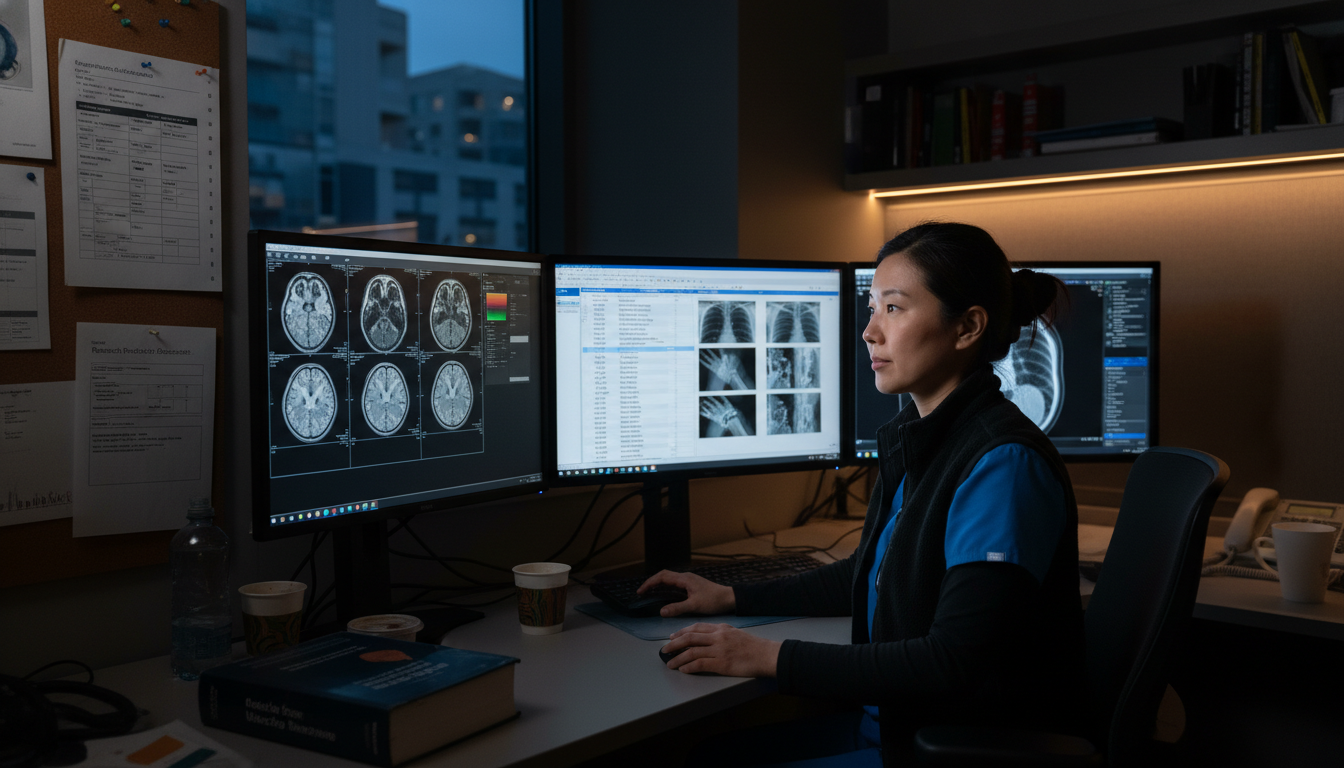
Day‑to‑Day Work: What Your Life Actually Looks Like
The most important factor in choosing a career path in medicine is often not the “label,” but what your daily and weekly life actually looks like.
Case Mix and Complexity
Academic Radiology:
- Higher proportion of complex, rare, and tertiary referral cases:
- Complex oncologic imaging
- Advanced neuroimaging
- Transplant, cardiac, and pediatric subspecialty cases
- More subspecialized reading:
- You may read primarily in one area (e.g., neuroradiology, body MRI, breast, IR)
- Often part of multidisciplinary tumor boards and conferences
- Greater exposure to cutting‑edge imaging technologies and protocols
Private Practice Radiology:
- More bread‑and‑butter community cases:
- Trauma CTs
- Abdominal pain CTs
- X‑rays, ultrasound, routine MRI
- Subspecialization depends on the group size:
- Small groups: More general radiology, “everything including mammo”
- Large groups: Subspecialization possible, but usually less pure than academics
- Less frequent exposure to highly complex, rare pathologies (depends on hospital level)
Workload, Volume, and Pace
Academic Radiology:
- Worklists may be heavy, but:
- Reading can be slower when teaching residents and fellows
- Time carved out for lectures, conferences, research, and administration
- Day often includes:
- Morning conference or teaching session
- Reading with trainees
- Multidisciplinary meetings
- Protected time (varies by department) for research or education projects
- RVU pressures exist, but typically less intense than high‑productivity private groups
Private Practice Radiology:
- High volume and efficiency are central:
- Focus on clearing worklists quickly and accurately
- Limited time for teaching (unless in a teaching hospital practice)
- Day often includes:
- Continuous reading with short breaks
- Communication with referring clinicians
- Occasional procedures, depending on subspecialty
- Productivity metrics (RVUs, cases per day) are often closely tracked and tied to compensation
Teaching and Mentoring
Academic Track:
- Teaching is a core responsibility:
- Daily case‑based teaching on the workstation
- Noon conferences, didactics, and journal clubs
- Mentoring residents, fellows, and medical students
- If you enjoy explaining concepts, building curricula, or speaking at meetings, this is a major plus.
Private Practice:
- Teaching opportunities depend on:
- Whether your hospital has a residency program
- Whether your group participates in medical education
- In purely community settings, teaching is minimal or absent.
Research and Scholarship
Academic Radiology:
- Strong expectation (though degree varies by institution) for:
- Publishing papers
- Presenting at national meetings (RSNA, ARRS, ASNR, etc.)
- Participating in clinical trials, quality improvement (QI), or educational research
- “Protected time” may be offered (e.g., 0.2–0.3 FTE) for research, especially for physician‑scientists
- Necessary for promotion and long‑term academic stability
Private Practice Radiology:
- Very limited expectation for research
- Occasionally:
- Participation in quality improvement projects
- Collaboration with academic centers
- Most groups prioritize clinical service and business operations over scholarship
Compensation, Lifestyle, and Job Security: What IMGs Should Weigh Carefully
Compensation and lifestyle often drive the “academic vs private practice” decision. As an IMG, it’s important to understand realistic numbers and trade‑offs.
Income and Earning Trajectory
Private Practice (typical tendencies):
- Higher average compensation compared to academic radiology
- Potential income ranges (very approximate, vary by region and market):
- Academic starting: often lower
- Private practice starting: often significantly higher, with potential for partnership
- Partnership track models:
- Lower salary as an employee or associate
- After 2–5 years, potential entry into partnership with increased income and profit‑sharing
- Teleradiology:
- Often high earning potential, especially for high‑volume, off‑hours work
- May offer more flexible location, but can involve isolated work and off‑shift schedules
Academic Medicine:
- Lower base salary on average
- Upsides:
- Governmental or university benefit packages (retirement match, tuition benefits)
- Potential loan repayment or public service loan forgiveness (PSLF) eligibility
- Supplemental pay for extra call, clinical moonlighting, or leadership roles
Lifestyle, Hours, and Flexibility
Consider these factors for both settings:
- Call structure:
- Academics: Rotating call, often more fellows/residents sharing load
- Private practice: Depends heavily on group size; nighthawk services sometimes offload overnight work
- Vacation and time off:
- Academics: Often more standardized vacation and academic time (3–6 weeks + conferences)
- Private practice: Ranges widely; partnership often comes with more vacation but higher daytime volume
- Remote work:
- Academics: Variable; some allow home reading sessions
- Private: Many groups now offer partial or full remote options, especially for cross‑sectional imaging and teleradiology
For IMGs, work location flexibility can be constrained by visa sponsorship, which may favor large academic centers or big corporate practices with immigration infrastructure.
Job Security and Stability
Academic Centers:
- University systems may be more stable in down markets
- Less vulnerable to:
- Hospital contract changes
- Aggressive corporate takeovers
- However, academic positions can still be affected by:
- Budget cuts
- Leadership changes
- Failure to meet promotion criteria (for tenure‑track roles)
Private Practices:
- Income usually tied to:
- Contract stability with hospitals
- Group’s business performance
- Rapid market shifts (e.g., corporate buyouts) can:
- Change compensation models
- Reduce autonomy
- Some corporate models offer W‑2 employment with “stable” salary but less local control
Special Considerations for IMGs: Visas, Credentials, and Long‑Term Plans
For international medical graduates, the academic vs private practice decision is often shaped by immigration and credentialing realities, not just personal preference.

Visa Sponsorship: Who Is More Likely to Hire and Sponsor You?
Academic Institutions:
- More familiar with:
- J‑1 waiver hiring (e.g., Conrad 30 programs)
- H‑1B petition processes
- Employment‑based permanent residency (EB‑2, NIW, etc.)
- Often have:
- In‑house immigration teams
- Clear policies around visa types and timelines
- Many IMGs find that their first post‑residency job in academic radiology is the most straightforward path to securing stable immigration status.
Private Practices:
- Wide variability:
- Large corporate practices or major radiology groups may sponsor H‑1B and green cards, with legal support
- Smaller independent groups may be inexperienced or reluctant to handle visa complexities
- For J‑1 waiver jobs:
- Many waiver‑eligible hospitals are community‑based
- You may find opportunities in smaller cities or rural areas, sometimes with less structured academic presence but occasional hybrid models
Board Certification, Fellowships, and Competitiveness
Both academic and private sectors in diagnostic radiology place a high value on:
- ABR board eligibility or certification
- Completion of a U.S. ACGME‑accredited residency
- At least one subspecialty fellowship in many cases (e.g., neuro, MSK, body, IR, breast)
Academic Radiology:
- Often expects:
- Strong research or scholarly activity during residency/fellowship
- Prior publications, presentations, or advanced degrees are a plus
- For IMGs with strong academic backgrounds abroad, this can be an advantage—if properly translated into U.S. academic productivity.
Private Practice:
- Values:
- Clinical efficiency
- Strong references from U.S. mentors
- “Plug‑and‑play” capability (reading independently from day one)
- A fellowship is increasingly standard even in community practice for most subspecialties.
Long‑Term Career Vision: Where Do You See Yourself?
When thinking about your academic medicine career vs private practice trajectory, ask yourself:
- Do you want to be:
- A nationally recognized expert in a subspecialty, publishing and speaking at conferences?
- A high‑volume clinical radiologist, known locally for reliability and speed?
- Where do you want to live long term?
- Academic centers: Frequently in large metro areas or major regional hubs
- Private practice: May offer broader geographic range, including desirable suburban and mid‑sized city markets
- How important are:
- Teaching and mentorship?
- Research and innovation?
- Maximum income vs balanced income + academic fulfillment?
Your answer to “what kind of impact do I want in medicine?” is central to choosing your path.
Choosing a Path—and Keeping It Flexible
The good news: your first job does not permanently lock you into one model. Many radiologists move between academic and private practice during their careers. That said, some moves are easier than others.
Moving from Academic to Private Practice
Common and usually easier, especially if:
- You maintain strong clinical skills and volume
- You demonstrate efficiency and excellent communication with clinicians
- You keep your skill set general enough or maintain in‑demand subspecialty training (e.g., neuro, body, IR, breast)
Concerns private groups may have:
- Whether you can handle high volume after working in a slower, teaching environment
- Whether you are comfortable with:
- Limited teaching time
- Greater emphasis on RVUs and business metrics
Moving from Private Practice to Academics
More challenging, but definitely possible, particularly if:
- You preserved academic ties:
- PRN or adjunct teaching appointments
- Participation in national societies or committees
- You can show:
- Recent scholarly output (even QI projects, case reports, or educational contributions)
- Commitment to teaching and academic engagement
Academic hiring committees will look for:
- Demonstrated interest in education, research, or program building
- Capacity to contribute to the academic mission, not only clinical service
Practical Steps During Residency/Fellowship for IMGs
No matter which path you think you want:
Seek broad exposure.
During residency, rotate through:- Academic medical centers
- Community affiliate hospitals
- Private practice or teleradiology electives if available
Cultivate mentors in both worlds.
Ask attendings about:- Their job satisfaction
- Why they chose academic vs private practice
- What they wish they had known as residents
Document your work.
- For academics: Maintain a CV with publications, abstracts, teaching, and committees.
- For private practice: Track performance metrics (e.g., case volumes, call experience, feedback from referring clinicians).
Be transparent with your visa needs.
- Discuss early with program leadership and potential employers.
- Ask: “Do you sponsor H‑1B?” “Have you hired J‑1 waiver applicants before?”
Keep your options open.
- Consider doing a fellowship in a high‑demand area (e.g., neuro, MSK, IR, breast, body).
- A strong subspecialty often lets you cross between academic medicine and private practice more easily.
Private Practice vs Academic: A Side‑by‑Side Snapshot for IMGs
To summarize, here is a conceptual comparison that can guide choosing your career path in medicine:
Academic Diagnostic Radiology
Pros:
- Teaching and mentorship
- Research and scholarship opportunities
- Exposure to complex, rare cases
- Structured academic promotion pathways
- Often stronger support for visas and green cards
- Multidisciplinary collaboration and institutional prestige
Cons:
- Lower base salary (on average)
- More meetings and administrative tasks
- Pressure for academic productivity and promotion
- Potentially slower decision‑making environment
Private Practice Radiology
Pros:
- Higher earning potential, especially after partnership
- Strong focus on clinical work and efficiency
- Broad range of practice locations and lifestyles
- Often more operational autonomy at the group level
Cons:
- Less structured teaching and research
- Business and contract risks (especially in smaller groups)
- Variable visa support; may be limited for some IMGs
- High productivity expectations, sometimes with less flexibility
Strategic Advice: How to Decide as an IMG in Diagnostic Radiology
When you are planning ahead for the diagnostic radiology match and beyond, consider this structured approach:
Clarify your top 3 priorities.
Examples:- Immigration stability
- Income
- Teaching
- Research
- Geographic preference
- Work‑life balance
Align those priorities with each track:
- If your #1 concern is secure visa and green card, an early academic medicine career position in a large university‑based system may be your safest first step.
- If your #1 concern is maximizing earnings quickly and you already have stable immigration status, a well‑run private practice (or high‑end teleradiology) may be more appealing.
- If teaching and mentorship energize you, academics is usually better.
- If research and long‑term scholarly reputation matter, academics is often essential.
Use your fellowship year strategically.
- If you prefer academics: Choose a fellowship at a strong academic center with active research and teaching; build your academic CV.
- If you prefer private practice: Choose a fellowship that offers substantial real‑world case volume and strong letters from clinicians and attendings recognized in the private practice world.
Network intentionally.
- Attend meetings like RSNA, ARRS, or subspecialty society conferences.
- Visit recruitment booths for both academic programs and major private practice groups.
- As an IMG, ask directly about:
- Visa policies
- Past experience hiring IMGs
- Support for green card processing
Reassess every few years.
Your priorities may change:- Early career: Visas, building CV, clinical competency
- Mid‑career: Income, leadership opportunities, academic rank, family needs
- Later career: Lifestyle, reduced call, mentoring, partial retirement
Your chosen path is not a prison; it is a platform. Many successful IMGs in diagnostic radiology have moved between academic and private practice multiple times as their lives and goals evolved.
FAQ: Academic vs Private Practice for IMG Radiologists
1. As an IMG, is academic radiology better for my first job after residency?
Often yes, especially if:
- You are on a J‑1 or H‑1B and need reliable visa sponsorship
- You are interested in teaching or research
- You trained at an academic program and want continuity
Academic institutions usually have more experience handling complex immigration processes and may offer more structured support and mentorship. However, some large private or corporate groups are increasingly IMG‑friendly, so always ask specifically about their visa and green card policies.
2. Will choosing private practice close the door to an academic medicine career later?
Not necessarily, but it can make the path more complex if:
- You do not maintain scholarly activities (no publications, no teaching, no conferences)
- You move far from academic networks
To keep the door open:
- Stay active in at least one national radiology society
- Participate in quality improvement, publish case reports, or collaborate on small research projects if possible
- Evidence of teaching (e.g., for technologists, local trainees) still helps
Many academic departments are open to hiring experienced private practice radiologists who bring strong clinical skills and new perspectives, especially if they show a genuine commitment to the academic mission.
3. Do academic radiologists always earn significantly less than private practice radiologists?
On average, yes—but the gap is highly variable and context‑dependent. Factors include:
- Region and city size
- Subspecialty (e.g., IR vs general vs neuro vs MSK)
- Seniority and leadership roles
- Extra call, moonlighting, and administrative stipends
- Partner vs employee status in private practice
In some high‑cost urban areas, an academic salary with strong university benefits and predictable schedule may be competitively attractive, especially early in your career. Over time, many private practice positions will offer higher total compensation, particularly after partnership, but also with higher expectations and risks.
4. How early in residency should I decide between academic vs private practice?
You do not need to make a final decision early, but it helps to have a working hypothesis by:
- Mid‑PGY‑3 (or about halfway through radiology residency) when you begin fellowship applications
- Early fellowship when job applications begin
Use PGY‑2 and early PGY‑3 to:
- Explore teaching and research opportunities
- Compare experiences at academic vs community/affiliate sites
- Talk candidly with attendings and recent graduates
If you are uncertain, choose a fellowship and early job that preserve flexibility—for example, a strong academic fellowship in a high‑demand subspecialty that is valued in both academic and private practice environments.
Choosing between academic and private practice radiology as an IMG is not about which is “better,” but which aligns more closely with your values, constraints, and long‑term vision. Understand your visa situation, clarify what kind of professional life you want, and then intentionally build a training and early‑career path that fits those goals.