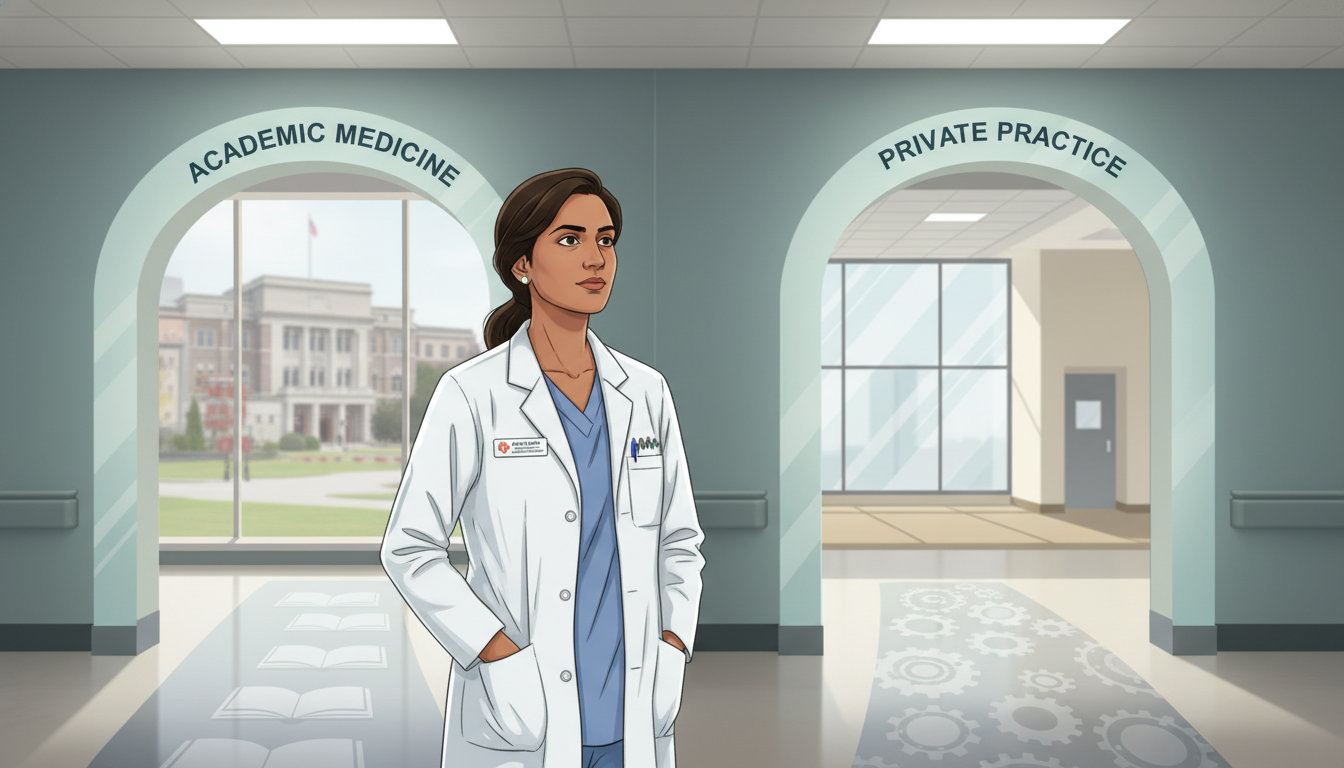
Understanding the Career Landscape in Radiation Oncology for IMGs
For an international medical graduate (IMG), completing a radiation oncology residency in the U.S. or another highly regulated system is only the first major milestone. The next challenge is choosing your career path in medicine: academic medicine vs private practice. In radiation oncology, this decision has particularly important implications for your daily work, visa options, research aspirations, earning potential, and long‑term lifestyle.
This IMG residency guide will walk you through:
- What “academic” vs “private practice” really mean in radiation oncology
- Typical job structures, responsibilities, and compensation
- Visa and immigration nuances for IMGs
- How each path affects your future options, including leadership and research
- Practical steps to prepare during residency and the rad onc match
While the discussion is U.S.-centric, much of it applies to other systems where radiation oncology is split between university and community settings.
Defining Academic vs Private Practice in Radiation Oncology
Academic Medicine: More Than Just “University Hospital”
In radiation oncology, academic medicine usually refers to positions at:
- University hospitals
- NCI-designated cancer centers
- Large teaching hospitals with residency programs
- Research institutes affiliated with medical schools
Key features:
- Tripartite mission: clinical care, teaching, and research
- Institutional expectations for scholarly productivity
- Promotion and tenure tracks (e.g., Assistant → Associate → Full Professor)
- Multidisciplinary tumor boards and complex case mix
- Integration with medical oncology, surgical oncology, and basic science
Academic positions may be:
- Tenure-track: heavier research expectations
- Clinical/educator tracks: more clinical work, but still with teaching and some scholarship
- Research-focused: heavy lab/clinical trial obligations and protected time
For many IMGs, academic medicine can also be the gateway to a longer-term academic medicine career or leadership roles (program director, department chair, director of clinical trials, etc.).
Private Practice: A Spectrum, Not a Single Model
“Private practice” in radiation oncology is diverse. It can include:
- Independent group practices that own their machines and employ physicians
- Hospital-employed community practices (technically not “private” but community-based)
- Corporate/large network practices (e.g., multi-state oncology networks)
- Hybrid practices with an academic affiliation but private pay structure
Key features:
- Primarily clinical care and revenue generation
- Less protected time for research and teaching
- Focus on efficiency, patient volume, and financial sustainability
- Strong emphasis on service, access, and patient satisfaction
- Shorter path to high earnings compared to some academic tracks
In radiation oncology, some “private practice” physicians still participate in clinical trials, tumor boards, and teaching of visiting residents or medical students, especially in large community cancer centers.
Hybrid and “Academic-Community” Models
A growing proportion of rad onc jobs blur the line:
- Community-based faculty practice affiliated with a university
- Academic centers where some faculty work predominantly off-site in community satellites
- Joint appointments with both hospital-employed and university-compensated components
For IMGs, these hybrid models can offer:
- More clinical volume and compensation than central academic posts
- Continued access to research collaborations and teaching
- Variable support for visas and green card sponsorship
Understanding these nuances is critical before you fix your mindset on “pure academic” or “pure private” practice.
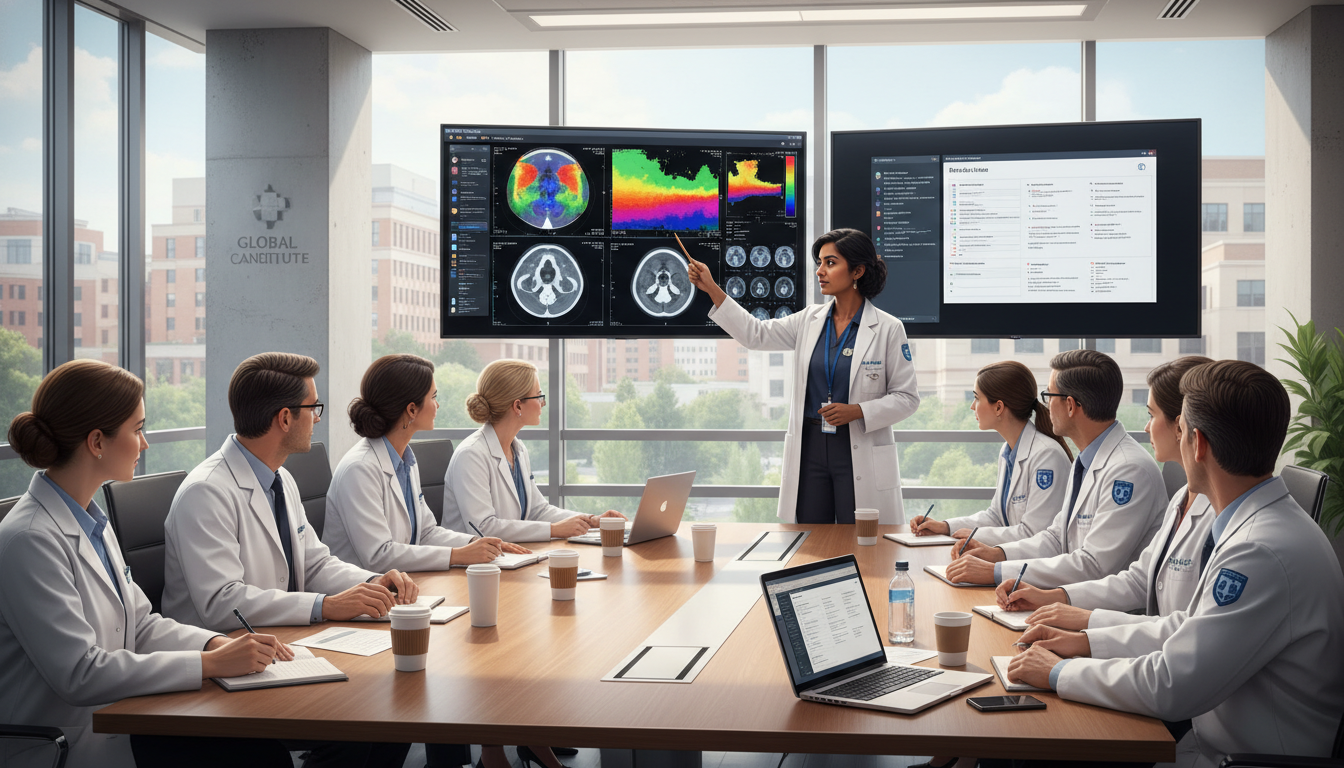
Daily Life and Responsibilities: Comparing the Two Paths
Clinical Workload and Case Mix
Academic radiation oncology:
- Case mix often includes:
- Rare tumors, re-irradiation, proton therapy, brachytherapy
- Complex head and neck, CNS, pediatric, and re-treatment cases
- High involvement in multidisciplinary clinics and tumor boards
- Many sub-specialize by disease site (e.g., breast, GU, thoracic, CNS)
- More time per consult and more complex treatment discussions
- In some institutions, fewer patients per day but more complex planning and follow-up
Private practice/community rad onc:
- Case mix often more weighted toward:
- Common cancers: breast, prostate, lung, palliative cases
- Fewer very rare or ultra-complex cases (though this varies)
- Emphasis on clinical efficiency and throughput
- More independence in decision-making; sometimes fewer subspecialty colleagues on site
- Tumor boards still present but may be fewer or less research-focused
As an IMG, consider:
- Do you enjoy mastering rare and complex scenarios, or do you prefer managing high volumes of common cancers with strong patient relationships?
- Are you comfortable taking independent decisions without always having subspecialty colleagues immediately available?
Teaching and Mentoring
Academic setting:
- Regular roles in:
- Teaching residents and medical students
- Supervising research projects or QI projects
- Designing lectures, workshops, and educational curricula
- Your performance as an educator can be formally evaluated and used for promotion
- Exposure to education research if you are interested in medical education as an academic medicine career
Private practice:
- Teaching opportunities vary:
- Some community practices host residents or students in rotations
- May provide CME talks, community education, or tumor board teaching
- Less formal structure for teaching, and rarely a major component of your job description
- Teaching often more informal and pragmatic
If you are an IMG who enjoys mentorship (especially helping other IMGs), the academic track may align better with your interests.
Research and Scholarly Activity
Academic radiation oncology:
- Wide spectrum:
- Basic science / translational research in radiobiology or immuno-oncology
- Clinical trials (phase I–III)
- Physics innovation and AI applications in treatment planning
- Outcomes research, health services research, global oncology, and education research
- Expectation for:
- Publications, presentations at major conferences (ASTRO, ESTRO)
- Grant applications (institutional, NIH, foundations)
- Protected time may be:
- 20–70% depending on role and funding
- Often better access to:
- Research support staff, statisticians, clinical trial offices, and data managers
Private practice:
- Research is possible, but usually:
- More limited in scope and time
- Focused on retrospective outcomes, practice patterns, or registry-based projects
- Clinical trial participation may focus on:
- Cooperative group trials
- Industry-sponsored trials embedded in large oncology networks
- Protected research time is rare; most work done after hours or in collaboration with academic partners
For IMGs who aspire to a strong research CV, global oncology projects, or cross-border collaborations, academic medicine is generally more supportive.
Administrative Work and Institutional Responsibilities
Academic roles:
- Frequent committee work:
- Residency program, curriculum, diversity/equity/inclusion, research oversight, IRB
- Possibility for:
- Leadership roles (Program Director, Division Chief)
- Grant review committees, national guideline panels
- This work can be intellectually rewarding but time-consuming
Private practice roles:
- Administrative work focuses on:
- Practice operations, quality metrics, accreditation, equipment decisions
- Negotiations with hospitals and payers (especially for partners/owners)
- Leadership roles are usually business-oriented:
- Medical director, practice partner, service line leader
Ask yourself: Do you like institutional politics, academic committee work, and national societies, or are you more interested in practice management and business growth?
Compensation, Lifestyle, and Job Stability
Compensation and Earning Trajectory
In the U.S., very broadly:
- Private practice radiation oncologists tend to have higher median compensation, particularly at the partner level.
- Academic radiation oncologists may accept a lower salary in exchange for research time, job stability, and institutional benefits.
Approximate tendencies (exact numbers vary widely by region and year):
- Academic starting salaries: lower but stable; may be supplemented with incentives for productivity, research, or call coverage.
- Private practice starting salaries: often higher, especially in underserved or rural areas; significant jump at partnership if the group is physician-owned.
For IMGs:
- Some academic centers are in high-cost urban areas with expensive living costs, making the real income difference feel larger.
- Certain community or rural practices may also offer visa sponsorship plus very competitive salaries, attracting IMGs willing to live outside major cities.
Work–Life Balance
Both academic and private practice can be demanding, but they stress you in different ways.
Academic:
- Variable schedule; protected research time can allow flexibility, but deadlines for grants and promotion can add pressure.
- Evening and weekend time may be spent writing papers, reviewing manuscripts, or preparing lectures.
- Vacation and leave policies might be generous, but clinical coverage and research demands don’t always pause.
Private practice:
- More predictable clinical schedule in many practices (e.g., 8–5 with limited weekend work).
- However, the pressure to maintain productivity can limit flexibility (e.g., taking time off without affecting patient flow or income).
- After-hours work can involve documentation, follow-up calls, or urgent consultations, especially where there is limited coverage.
For IMGs with family abroad, the ability to travel and take extended vacations (e.g., 3–4 weeks at a time) may be more feasible in some academic settings than in leanly staffed small practices.
Job Stability and Market Trends
Radiation oncology has undergone notable shifts:
- Concerns about job market tightening in certain regions
- Growth of large corporate oncology networks and hospital-employed models
- Changes in reimbursement for radiation therapy
Academic positions:
- Generally stable once you secure a faculty role, but:
- Some institutions may close satellites or reorganize departments
- Tenure-track roles may be more competitive and grant-dependent
Private practice:
- Independent groups may face:
- Consolidation pressure from larger networks
- Changing payer landscapes
- Hospital-employed positions can be stable but might change with hospital mergers or strategic shifts
For IMGs, job security is closely tied to visa status and green card progress. Institutions with a strong history of sponsoring IMGs may provide greater long-term security, regardless of academic vs private practice.
Visa, Immigration, and Strategic Considerations for IMGs
Visa Sponsorship: How Academic vs Private Practice Differ
Most IMGs in U.S. radiation oncology residencies are on either:
- J-1 visas (ECFMG-sponsored)
- H-1B visas (employer-sponsored)
This affects your early post-residency options.
Academic centers:
- More experienced with:
- H-1B sponsorship and cap exemptions (if attached to university/non-profit research)
- PERM and green card sponsorship
- J-1 waiver jobs are often available in non-profit or academic-affiliated hospitals, sometimes counted as underserved settings.
Private practice:
- Smaller private groups may be:
- Less familiar with visa processes
- Reluctant to sponsor H-1B or green cards due to cost and complexity
- Larger corporate or hospital-employed settings may have robust HR and legal support, but policies can be strict.
If you are subject to the two-year home-country requirement on a J-1 visa, you will likely need:
- A J-1 waiver job in a qualifying facility, often in a designated underserved area
- These are more often community-based or hybrid academic-community roles
This can influence your first job choice, even if you desire pure academic medicine later.
Leveraging Academic Roles for Long-Term Immigration Goals
Academic positions can be strategically powerful for immigration:
- University-affiliated employers often qualify for H-1B cap exemption, avoiding annual lottery issues.
- They may be more willing to pursue EB-1 or NIW (National Interest Waiver) green card categories if you have strong research credentials.
- Your publication and citation record, conference presentations, and leadership roles can strengthen immigration petitions.
If you aspire to stay permanently in the U.S., building an academic CV in your early career can significantly enhance your options, even if you eventually transition to private practice.
Transitioning Between Academic and Private Practice
Contrary to common myths, movement between academic and private practice in radiation oncology is possible:
Academic → Private:
- Common pathway when physicians seek higher income or more predictable clinical roles
- Research skills and subspecialty expertise can be attractive to large community centers
Private → Academic:
- Possible if you maintain some scholarly activity or develop niche expertise (e.g., SBRT, brachytherapy, QA, or leadership in a national society)
- Often easier earlier in your career, before long gaps in publications
For IMGs, consider:
- Early years in academic roles can build a robust CV and secure immigration status, after which you may have more freedom to move to private practice if desired.
- If you start in private practice, keep some academic engagement (e.g., co-authoring papers, participating in clinical trials) if you want the option to return.
How to Decide: Practical Framework for IMGs in Radiation Oncology
Clarify Your Long-Term Vision
Reflect on questions related to your values and goals:
- How important is research to your professional identity?
- Do you want to be known for publications, trials, or scientific innovation?
- Do you enjoy teaching and mentorship?
- Can you see yourself as a Program Director or course director?
- What role does income play for you and your family?
- Do you carry significant educational or family financial obligations?
- Where do you want to live?
- Big academic cities vs smaller communities that may have more private practice opportunities
- How risk-tolerant are you with immigration and job market uncertainty?
- Is a “safe” academic job attractive, even with lower pay?
Write down your answers; patterns will emerge that point you toward either academic medicine or private practice.
Align Your Residency Experience with Your Target Path
During residency and the rad onc match, you can intentionally prepare:
If you lean toward academic medicine:
- Seek programs with:
- Strong research infrastructure and mentors
- Opportunities to present at ASTRO/ESTRO/ASCO
- Prioritize:
- At least one substantial research project per year
- First-author manuscripts and abstracts
- Volunteer for:
- Teaching junior residents and medical students
- Education committees or DEI initiatives
If you lean toward private practice:
- Choose electives in:
- High-volume community or hybrid academic-community centers
- Focus on:
- Bread-and-butter disease sites (breast, prostate, lung)
- Efficiency in clinic and planning workflows
- Learn about:
- Practice management, coding and billing, RVUs, and payer systems
- Network with:
- Private practice attendings and alumni working in community settings
Evaluate Job Offers with a Structured Checklist
When comparing academic vs private practice offers, especially as an IMG, systematically assess:
Visa and Immigration Support
- Type of visa sponsorship (H-1B vs J-1 waiver vs O-1)
- History of sponsoring IMGs and green cards
- Legal support and timeline commitments
Compensation and Benefits
- Base salary, bonus structure, partnership track (if applicable)
- Retirement match, health insurance, relocation assistance
- Loan repayment options, signing bonus
Clinical Expectations
- Patient volume, disease site distribution
- Call responsibilities, satellite coverage, commuting
- Availability of advanced modalities (IMRT, SBRT, proton, brachytherapy)
Academic/Professional Development
- Protected time for research/education (if any)
- Mentoring structure and promotion criteria
- Opportunities to attend conferences and join societies
Lifestyle and Location
- Cost of living, schools, cultural and community support (especially for IMGs)
- Travel accessibility for visiting your home country
- Colleague culture, department stability, leadership vision
Using such a framework prevents you from over-focusing on a single variable like salary or prestige.
Example Scenarios for IMGs
Scenario 1: Research-Oriented IMG Seeking Academic Medicine Career
- Strong interest in radiobiology and clinical trials
- Already has publications from medical school or residency
- On J-1 visa requiring a waiver
Possible path:
- Seek a J-1 waiver job at an academic or hybrid center in an underserved region.
- Continue research and aim for NIH or foundation grants.
- Use academic achievements for EB-1 or NIW green card applications.
- Later, choose whether to remain academic or transition to a more clinically focused role.
Scenario 2: IMG with Strong Financial Obligations and Family Abroad
- Moderately interested in research but not passionate
- Needs higher income to support family and repay loans
- Open to living in smaller cities
Possible path:
- Prioritize hospital-employed or large network community rad onc roles with competitive salaries and visa support.
- Maintain minimal academic connection (clinical trials, occasional papers).
- After securing a green card and financial stability, reevaluate interest in academic vs private practice.
Scenario 3: IMG Who Loves Teaching but Not Heavy Research
- Enjoys mentoring residents and giving lectures
- Prefers a strong clinical role with some scholarly activity
Possible path:
- Seek academic “clinician-educator” tracks with heavy teaching but lighter research requirements.
- Develop niche expertise in education, simulation, or curriculum design.
- Use that portfolio for promotion and potential leadership roles in medical education.
Frequently Asked Questions (FAQ)
1. As an IMG, is it harder to get an academic radiation oncology job than a private practice job?
It depends on timing and your profile. Entry-level academic jobs may be competitive, especially in popular locations, but academic centers are often more accustomed to hiring IMGs and navigating visa sponsorship. Private practices, especially small independent groups, may be more reluctant to sponsor visas. If you have strong research credentials, you may actually be more competitive for academic roles than for certain private practice positions, particularly in big cities.
2. Can I start in academic medicine and later move to private practice in radiation oncology?
Yes, this is a common path. Many radiation oncologists begin in academic positions to build expertise, publications, and secure immigration status, then transition to private practice for different lifestyle or financial reasons. To keep this option open, maintain strong clinical skills and stay aware of practice management issues (billing, coding, RVUs) while in academia.
3. If I choose private practice, will I lose all opportunities for research and teaching?
Not necessarily. Large community cancer centers may host residents or students and participate in clinical trials. You can co-author retrospective studies, contribute to cooperative group trials, and give educational talks. However, these activities are usually secondary to clinical work, and you will likely have less formal support and protected time than in an academic environment.
4. Which path is better for long-term immigration stability for an IMG radiation oncologist?
Academic positions at universities or non-profit research institutions often offer more stable visa pathways (H-1B cap exemption, experience with green card processes), especially if you are research-productive enough to qualify for categories like EB-1 or NIW. That said, hospital-employed or large network community practices can also provide strong immigration support. The key is to verify each employer’s history with IMGs, planned visa category, and written commitment to long-term sponsorship.
Choosing between academic and private practice radiation oncology as an international medical graduate is ultimately about aligning your values, interests, immigration strategy, and desired lifestyle. By understanding the realities of each pathway and planning deliberately during residency and early career, you can create a fulfilling, sustainable professional journey in rad onc—whether in an academic cancer center, a community practice, or a hybrid environment that blends the best of both worlds.