
Understanding the Landscape: Why Your Career Setting Matters
Choosing between academic vs private practice in interventional radiology is one of the most consequential decisions you’ll make after your IR residency or integrated IR/DR pathway. It doesn’t just determine your first job—it shapes your daily schedule, income trajectory, research opportunities, and long‑term satisfaction with your career.
For many applicants preparing for the IR match, “academic medicine career” and “private practice” feel like vague labels. In reality, there are multiple shades of each, and most interventional radiology residency graduates will touch more than one practice style over their career.
This guide focuses on:
- The core differences between academic and private practice IR
- How those differences play out in day‑to‑day life
- Hybrid models (e.g., academic-affiliated private groups, employed models)
- How to align your personal values, interests, and risk tolerance with your setting
- Practical steps to explore and decide on your path while still in training
The goal is to help you make a thoughtful, informed decision about choosing a career path in medicine within interventional radiology—one that fits who you are now and who you want to become.
Academic Interventional Radiology: Structure, Pros, and Tradeoffs
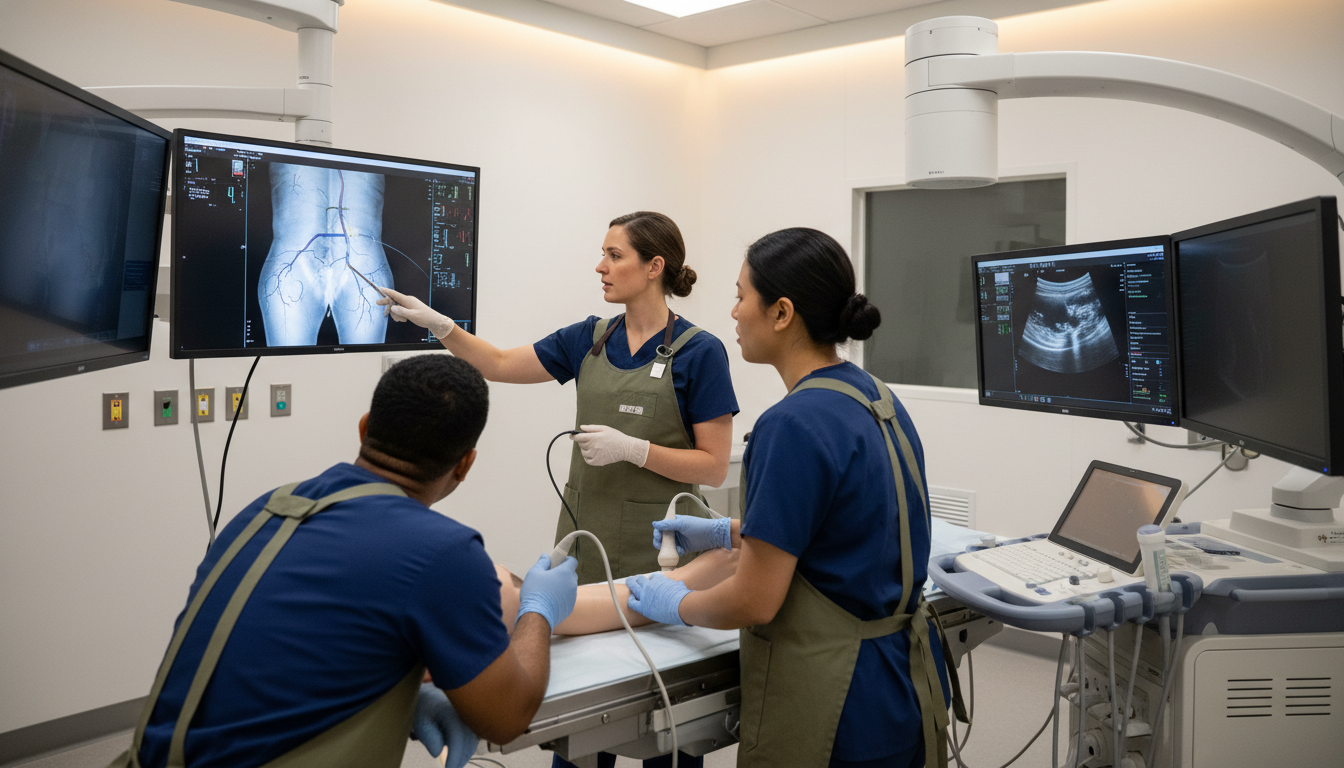
Academic interventional radiology usually refers to positions at:
- University hospitals and medical schools
- Large tertiary or quaternary care centers
- Major cancer centers or research institutes
- Teaching hospitals with residency and fellowship programs
Here, your role extends beyond clinical work: you’re expected to participate in teaching, research, and institutional service (committees, quality projects, leadership).
What Academic IR Actually Looks Like Day to Day
While details vary, a typical academic IR job might look like this:
Clinical time
- 2–4 full days per week in the IR suite
- 1–2 days dedicated to clinic, image review, or consults
- Coverage of inpatient consults and procedures
- Subspecialization (e.g., interventional oncology, pediatrics, neuro, women’s health, limb salvage) more common
Non‑clinical time
- 10–30% “protected” time for research, teaching prep, or administrative tasks
- Participation in multidisciplinary tumor boards, vascular conferences, M&M
- Teaching residents, fellows, medical students at the table side and in conferences
Call
- Often home call but can be in-house at major trauma centers
- Level 1 trauma centers may have busy overnight calls (trauma, hemorrhage, emergent GI bleeds, complications)
- Call may be more frequent but shared among a larger group in some places
In academic centers, you also frequently work on novel or high-complexity cases and see a broad range of pathology because of tertiary referrals.
Advantages of an Academic Medicine Career in IR
Teaching and Mentorship
If you enjoyed teaching during interventional radiology residency and like explaining the “why” behind each step, academics gives you built‑in opportunities:
- Daily hands-on teaching in the angio suite
- Lectures or small-group sessions for residents and students
- Longitudinal mentorship of trainees, including research projects and career guidance
Many IRs find that engaging with trainees keeps their knowledge current and makes routine cases more rewarding.
Research and Innovation Opportunities
For those interested in procedural innovation, device trials, or outcomes research, academic institutions offer:
- Infrastructure: research coordinators, statisticians, IRBs, grant offices
- Access to clinical trials and new devices (often earlier than in the community)
- Collaboration across departments (oncology, vascular surgery, hepatology, neurology, etc.)
- Potential to build your own niche (e.g., portal hypertension, interventional oncology, men’s health, women’s pelvic interventions)
Over time, you can aim for regional or national leadership in a subspecialty domain.
Professional Visibility and Leadership
Academic IRs tend to have:
- Easier access to conference presentations, society leadership (SIR, CIRSE, etc.)
- Opportunities to write guidelines, sit on national committees, or help shape the field
- More recognition in referral networks as the “expert” or “tertiary referral” for particular problems
If you enjoy being at the forefront of the specialty, academia supports that path.
Intellectual Variety and Complex Cases
Academic centers handle rare and complex cases that might not reach community hospitals. You may:
- Treat advanced malignancy with complex interventional oncology procedures
- Perform advanced portal interventions, complex endovascular reconstructions, and novel therapies
- Take part in multidisciplinary decision-making for patients with no standard options
This level of complexity can be intellectually satisfying and professionally stimulating.
More Structured Path for Career Development
Promotion criteria (assistant → associate → full professor) are often clearly defined, based on:
- Publications and grants
- Teaching evaluations and educational leadership
- Contributions to institutional committees and quality initiatives
For some, this structure can be motivating and reassuring.
Challenges and Downsides of Academic IR
Lower Compensation (On Average)
Academic salaries typically trail behind private practice, particularly in high‑earning interventional specialties. Tradeoffs include:
- Lower base pay but more job security and benefits in some systems
- Less direct connection between productivity and income
- Some compensation may come from RVU bonuses, administrative stipends, or research funding
Bureaucracy and Administrative Load
Academic centers often come with:
- More layers of administration and policy review
- Slower decision-making for new programs or devices
- Institutional priorities that may conflict with your clinical ideas
If you’re entrepreneurial or prefer rapid, independent decision-making, this can feel frustrating.
Pressure to “Do It All”
You may be expected to:
- Maintain a busy clinical service
- Produce research, apply for grants, and publish
- Teach effectively and receive strong evaluations
- Serve on committees and contribute to quality improvement
Balancing these domains is challenging and can contribute to burnout if expectations are unrealistic or support is limited.
Control Over Schedule and Practice
It can be harder to:
- Adjust your schedule around personal commitments
- Negotiate major changes in call structure or case mix
- Rapidly build a niche practice if it competes with other internal services
You’re one player in a large institutional ecosystem, which has pros and cons.
Private Practice Interventional Radiology: Models, Pros, and Realities
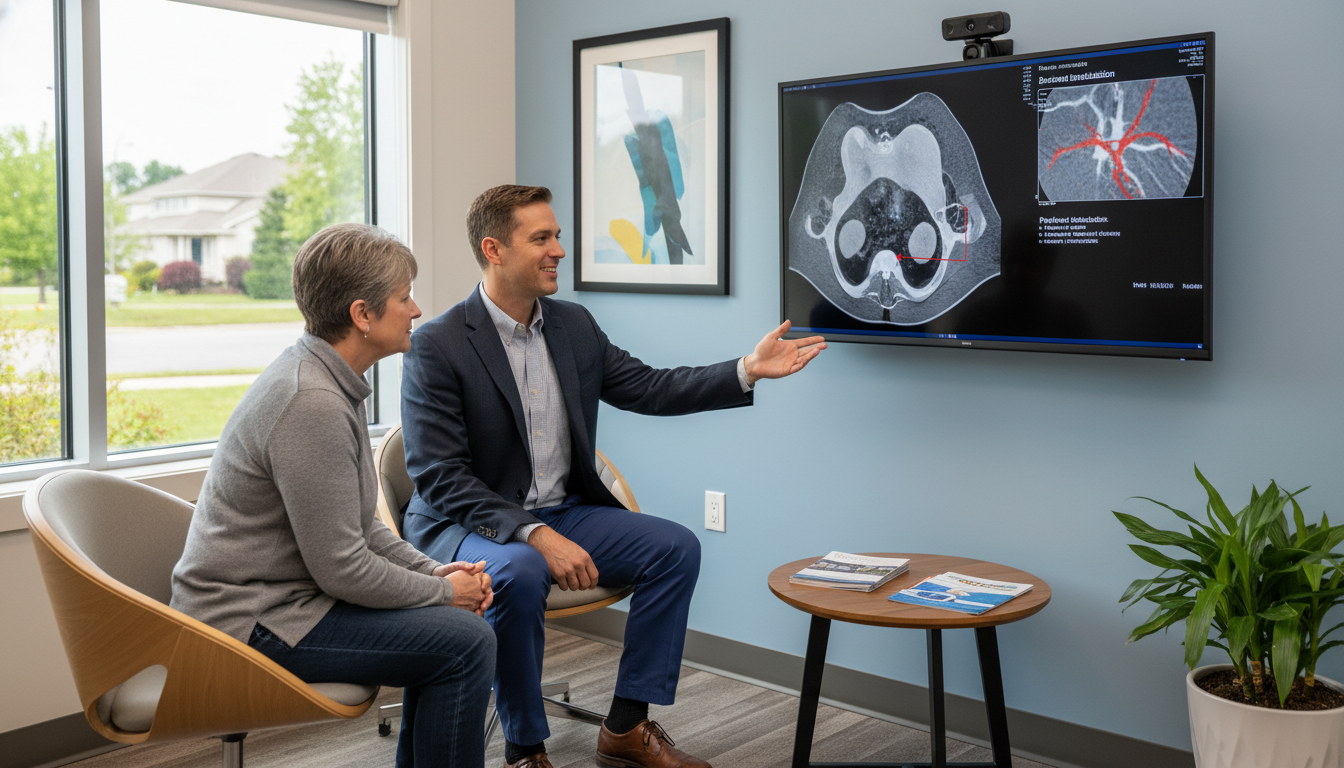
Private practice in interventional radiology is more diverse than many trainees realize. It includes:
- Independent IR/DR groups contracting with hospitals
- Large multispecialty or radiology groups employing IRs
- IR-only groups building clinic-based, referral-driven practices
- Hospital-employed IRs with a “private-practice style” workflow
When people say “private practice vs academic,” they often picture a high-volume, revenue-driven environment with minimal teaching and research. That can be true in some settings—but not all.
What Private Practice IR Typically Looks Like
A common private practice IR job may include:
Clinical structure
- 3–5 days per week in the IR lab, often with integrated clinic time
- Emphasis on efficiency and throughput
- Mix of inpatient and outpatient procedures
- Varying amounts of diagnostic radiology work (some jobs are 100% IR; many still have a DR component, especially early on)
Call
- Home call, variable frequency depending on group size and hospital volume
- Often not as intense in non–Level 1 trauma centers, but can be heavy at certain sites
Non‑clinical responsibilities
- Business development (building referral networks, meeting with other specialties)
- Administrative tasks related to group operations, billing, or quality
- Less formal teaching, but still chances to work with technologists, PAs/NPs, and occasionally residents if at a teaching site
Advantages of Private Practice IR
Potential for Higher Income
Compared with academic IR, many private practice positions offer:
- Higher starting salaries
- Partnership tracks with increasing income share over time
- Productivity-based bonuses if you’re high volume
- Opportunities for ancillary revenue (e.g., office-based labs, imaging centers, clinics) in some models
This can be important if you have significant educational debt, family financial responsibilities, or strong financial goals.
Greater Autonomy and Flexibility
In many private groups, you can influence:
- The procedures you focus on (e.g., building a vein, PAD, or oncology practice)
- How aggressively you market your services to referring providers
- Schedule tweaks, clinic blocks, and vacation time (once you’re established)
Decision-making is closer to the physicians actually doing the work, especially in smaller or physician-owned groups.
Streamlined Focus on Clinical Care
If you love procedural work and direct patient care but aren’t drawn to research or teaching, private practice lets you:
- Spend the bulk of your time in the lab and clinic
- Focus on outcomes and patient satisfaction rather than manuscripts and grants
- Avoid “publish-or-perish” pressure while still staying current via CME and conferences
Business and Entrepreneurial Opportunities
Many IRs are naturally entrepreneurial. Private practice gives you:
- Insight into negotiation with hospitals and payers
- Ability to open clinics, office-based labs (OBLs), or ambulatory surgery centers (ASCs) in some markets
- Opportunities to shape the brand and identity of your practice
If the idea of building something from the ground up is appealing, private practice may be the right environment.
Challenges and Downsides of Private Practice IR
Less Built-In Academic and Teaching Infrastructure
While some groups do teach residents or participate in research:
- There’s usually no formal expectation or support for academic output
- Research is typically unfunded and done in your “off” time
- Less frequent interaction with students and trainees
If your long-term aspiration is national academic leadership or a heavily research-focused career, this may be limiting.
Variable Case Mix and Subspecialization Opportunities
In some communities:
- Case mix skews to bread-and-butter procedures (ports, lines, drainage, basic embolization)
- Complex oncologic work or advanced procedures may be rare or dominated by another specialty
- Building a niche can require significant marketing and referral cultivation
That said, in many markets, IRs are actively expanding into clinic-based disease-focused practices.
Business and Productivity Pressure
Private practice is ultimately a business:
- Pressure to maintain productivity and revenue can be intense
- Ownership structures (partner vs employee) can affect stability and career satisfaction
- Negotiations with hospitals (e.g., call stipends, coverage) can be contentious
Not everyone is comfortable tying professional identity and income so closely to business metrics.
Job Security and Market Forces
While individual job contracts may be stable, private practice groups can:
- Lose hospital contracts to competing groups or corporate entities
- Restructure partnership tracks or compensation models
- Face buyouts or mergers that change culture and autonomy
Understanding local market dynamics is crucial when evaluating offers.
Comparing Academic vs Private Practice: Key Domains That Affect Your Life
Instead of viewing academic vs private practice as binary choices, it’s better to compare them across key domains that matter to you. Use these categories as a structured way to think through your options.
1. Clinical Scope and Case Mix
Academic IR
- More likely to see rare, complex, or tertiary-referral cases
- Greater chances to focus in niche areas (IR oncology, pediatric IR, transplant-related work)
- Higher volume of emergent cases at major centers (bleeds, trauma, complications)
Private Practice IR
- Often a mix of bread-and-butter procedures and growing advanced services
- Degree of complexity depends heavily on the hospital level and local competition
- Building subspecialty niches requires conscious effort and community outreach
Ask yourself: Do you crave complex, rare cases and subspecialization, or do you find satisfaction in efficiently treating a wide range of common problems and building long-term patient relationships?
2. Teaching and Research
Academic IR
- Regular teaching responsibilities and structured evaluation
- Built-in access to research support, IRBs, and collaborators
- Promotion and recognition tied to academic output
Private Practice IR
- Minimal formal teaching unless affiliated with a training program
- Research typically limited to industry-sponsored work or small retrospective series
- Academic promotion tracks generally not applicable
Ask yourself: How central are teaching and research to your identity and long-term goals? Would not having residents or fellows feel like a loss, or a relief?
3. Compensation and Financial Trajectory
While numbers change over time and by region, broad trends hold:
Academic IR
- Lower base salaries, especially early on
- Predictable raises and benefits (retirement matching, CME funds, robust health insurance)
- Some opportunity to supplement income via extra call, consults, or imaging reads
Private Practice IR
- Higher earning potential, especially at partnership
- Income more tightly linked to productivity and business success
- Greater variability—both upside and downside—based on group structure
Ask yourself: How much risk are you comfortable with? Do you value a stable, predictable salary, or are you motivated by a higher but more variable earning potential?
4. Autonomy, Culture, and Work-Life Balance
Academic IR
- More committee work and institutional policies
- Call and coverage may be heavier at high-acuity centers
- Culture can be collegial and mission-driven, but also hierarchical
- Protected time can help balance non-clinical interests, if it is truly honored
Private Practice IR
- Autonomy often increases with seniority and partnership
- Culture varies greatly—some groups prioritize lifestyle; others are high-intensity
- Work-life balance largely a function of group size, call structure, and local demand
- Less bureaucracy, but business pressures can intrude on time off
Ask yourself: Do you prefer a mission-driven academic culture with defined roles and expectations, or a more entrepreneurial environment where culture is shaped locally?
5. Long-Term Career Options and Mobility
From Academic to Private Practice
- Common and usually feasible, especially if you maintain procedural skills
- Strong CV, publications, and subspecialty expertise can be a selling point
- Need to adjust to productivity metrics and possibly expand back into more general IR
From Private Practice to Academic
- Also possible, especially if you’ve stayed engaged with IR societies and CME
- Easier if you have some scholarly work, teaching experience, or niche expertise
- You may enter at a lower academic rank if your research record is limited
When thinking about choosing a career path in medicine, consider how each setting affects future pivot options. Very few careers are static; think in terms of your first 5–10 years, not just your first job.
Hybrid and Evolving Models: Beyond the Binary
The reality of interventional radiology today is that many jobs are hybrid—blending elements of academic and private practice.
Common Hybrid Models
Academic-Affiliated Private Groups
- Private practice groups that staff an academic hospital
- May participate in teaching residents and fellows
- Limited or no formal research support, but opportunities for case reports and smaller projects
Hospital-Employed Positions
- Employed by the hospital or health system, not by an academic department or separate private group
- Can feel like private practice in day-to-day workflow
- Teaching and research opportunities vary by hospital and nearby training programs
IR-Only or IR-Heavy Private Practices With Academic Ties
- Outpatient-based IR clinics or OBLs that collaborate with academic centers on complex cases or trials
- May host students or residents for elective rotations
- In some markets, function as regional experts for specific conditions (e.g., fibroids, PAD, pelvic congestion)
Clinician-Educator Tracks in Academia
- Academic jobs with less emphasis on research and more focus on high-quality clinical care and teaching
- Promotion still possible based on educational leadership and scholarship
- May feel closer to “lifestyle academic” than traditional grant-focused roles
For many residents navigating the IR match and thinking about a post-residency job, the most realistic expectation is that you will encounter mixed models rather than pure extremes.
How to Decide: A Practical Framework for IR Residents and Fellows
Step 1: Clarify Your Priorities
Write down your top 3–5 priorities for your first 5 years after training. Common themes:
- Financial: Paying off debt, buying a home, supporting family
- Professional: Subspecialization, academic promotion, building a referral base
- Personal: Geographic preference, partner’s career, schools for children
- Intellectual: Desire for complex cases, research, teaching
- Lifestyle: Call burden, vacation, protected time, schedule predictability
Rank these. The exercise forces you to trade off “nice to have” items against what truly matters.
Step 2: Seek Real-World Exposure
During interventional radiology residency or fellowship:
- Do away electives or observerships in both academic and community settings
- Ask attendings in different settings if you can shadow for a full day, including clinic and call
- Attend national meetings (e.g., SIR) and talk with IRs from a variety of practice types
Pay attention not just to the procedures, but to how people talk about their work, their group, and their lives.
Step 3: Talk Openly with Mentors—And With People Who Chose Differently
- Ask academic mentors why they stayed in academia—what keeps them there despite lower pay?
- Ask alumni who went into private practice how their expectations matched reality.
- Look for mid-career IRs; they’ve often tried different models and can speak honestly about tradeoffs.
Pose specific questions like:
- “What does a typical week look like for you?”
- “What do you wish you had known before taking your first job?”
- “How has your practice changed over the last 5–10 years?”
Step 4: Understand Job Offers in Context
When you start interviewing:
- Ask about case mix, call, and expectations (RVUs, teaching, research, clinics).
- Clarify partnership tracks, buy-ins, and how decisions are made about money and scheduling.
- For academic jobs, ask how protected time is ensured in practice, not just on paper.
Compare offers not only on salary but on:
- Autonomy
- Growth opportunities
- Mentorship
- Practice stability and local market conditions
Step 5: Accept That Your First Job Is Not Final
Medicine—and interventional radiology especially—is changing rapidly. Many IRs:
- Start in academia to build skills and an academic CV, then move to private practice
- Begin in a high-intensity private practice, then shift to academic or hospital-employed roles for lifestyle reasons
- Move between cities and practice types as family and personal goals evolve
When choosing between academic vs private practice, think of your first job as your launch pad, not a lifelong contract. Place yourself where you’ll learn, grow, and build leverage for your next decision.
FAQs: Academic vs Private Practice in Interventional Radiology
1. Can I switch from academic interventional radiology to private practice (or vice versa) later?
Yes. Many IRs transition between settings over their careers. Moving from academia to private practice is common and usually straightforward if you maintain strong procedural skills and good references. Transitioning from private practice to academia is also possible, especially if you stay active in IR societies, attend conferences, and maintain some scholarly or teaching involvement. The more you can demonstrate interest in education, quality improvement, or clinical research, the smoother that transition tends to be.
2. Does choosing an academic medicine career mean I’ll earn significantly less forever?
Not necessarily. On average, academic salaries are lower than those in private practice, especially early on. However, factors such as cost of living, loan repayment programs, leadership stipends, and opportunities for extra call or imaging work can narrow the gap. Some academic IRs assume leadership roles (division chief, program director, institutional positions) that come with additional compensation. Also, satisfaction derived from teaching, research, and complex cases may outweigh the financial difference for many physicians.
3. If I’m still undecided during IR residency, how should I prepare?
Keep as many doors open as possible:
- Seek research and teaching experiences, even if modest, to build an academic-friendly CV.
- Prioritize developing a broad, strong procedural skill set that will be valued in any setting.
- Attend national meetings and network with IRs in multiple practice environments.
- Ask your program leadership for rotations in both academic and community hospitals.
By the time you approach the end of your interventional radiology residency or fellowship, you’ll have a better sense of what energizes you—and you’ll be marketable to both sectors.
4. How does private practice vs academic IR affect my chance to do advanced procedures and subspecialize?
In academic centers, pathways to subspecialization (e.g., interventional oncology, transplant-related interventions, pediatrics) are clearer and supported by institutional infrastructure. You’re more likely to see a high volume of rare and complex cases and to build recognized expertise. In private practice, opportunities depend heavily on your local hospital’s case mix, referral patterns, and competition. However, many private IRs successfully develop niche practices—such as PAD, vein centers, or women’s health—by investing in clinic time, marketing, and outreach to referring providers. Both paths can support advanced practice; they just do so via different mechanisms.
By understanding the real-world implications of academic vs private practice in interventional radiology—and by honestly assessing your own priorities—you can navigate the IR job market with clarity and confidence, and build a career that is both professionally rewarding and personally sustainable.