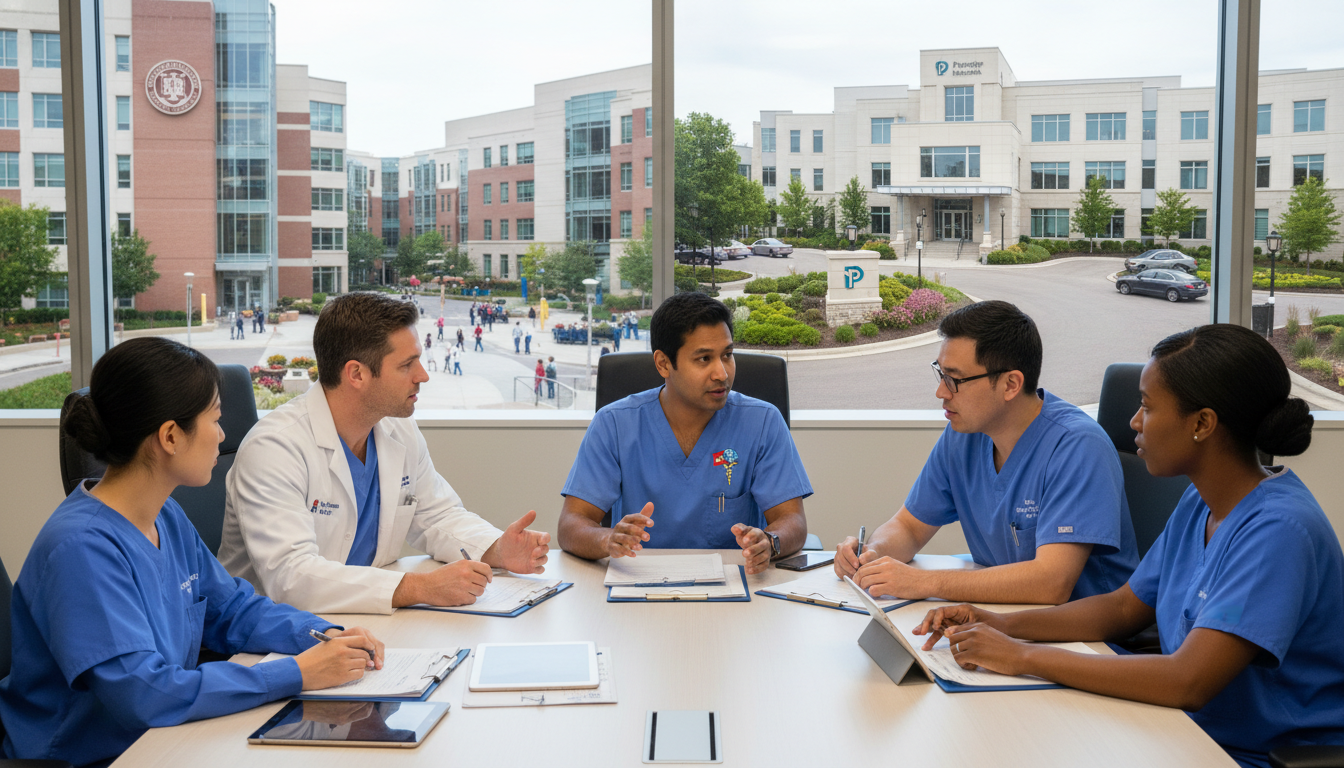
Understanding the Landscape: Academic vs Private Practice in Medical Genetics
For a non-US citizen IMG (international medical graduate) interested in medical genetics, the decision between an academic medicine career and private practice is both exciting and complex. The field of medical genetics is relatively small, rapidly evolving, and tightly integrated with research and advanced diagnostics. This makes the “academic vs private practice” question look a bit different than it does in larger specialties such as internal medicine or surgery.
In the United States, board-certified medical geneticists typically work in:
- Academic medical centers (university hospitals, children’s hospitals)
- Hospital-employed or system-based practices
- Private practice groups (often multi-specialty or genetics-focused)
- Laboratory medicine / industry roles (less direct patient care, but closely tied to genetics)
For a foreign national medical graduate, career choices are further shaped by visa status, job sponsorship options, research interests, lifestyle priorities, and long-term immigration goals. Understanding these factors early—ideally during residency or fellowship—can help you build a clear, strategic path from genetics match to your first attending job and beyond.
This article will walk through:
- How academic and private practice roles actually look in medical genetics
- Pros and cons of each pathway for non-US citizen IMGs
- Visa and job market considerations unique to foreign nationals
- Practical steps for choosing career path medicine within genetics
- How to keep doors open if you are unsure which path fits you best
What “Academic” vs “Private Practice” Really Means in Medical Genetics
The distinction between academic and private practice in medical genetics is less rigid than in some other specialties, but there are key differences in mission, daily work, and expectations.
Academic Medicine in Medical Genetics
Typical settings:
- University-affiliated medical centers
- Children’s hospitals linked to academic institutions
- National or regional genetics centers (often research-heavy)
Core characteristics:
Tripartite mission: clinical care, teaching, research
- Direct patient care: dysmorphology, metabolic disorders, hereditary cancer, cardiogenetics, neurogenetics, prenatal genetics, and more.
- Teaching: medical students, residents, fellows, genetic counseling students, lab trainees.
- Research: clinical research, translational genomics, gene discovery, clinical trials, implementation science, or quality improvement projects.
Team-based, multidisciplinary work
- Frequent collaboration with:
- Genetic counselors
- Laboratory geneticists
- Maternal-fetal medicine, neurology, oncology, cardiology, pediatrics, etc.
- Regular participation in tumor boards, undiagnosed disease programs, or specialized clinics.
- Frequent collaboration with:
Funding and promotion structure
- Salaries often a mix of:
- Institutional base salary
- Clinical productivity (RVUs)
- Grant support (for research-heavy roles)
- Promotion track:
- Instructor → Assistant Professor → Associate Professor → Professor
- Evaluation based on clinical work, teaching, and scholarly output.
- Salaries often a mix of:
Subspecialization opportunities
- High chance to focus on:
- Hereditary cancer genetics
- Cardiogenetics
- Metabolic genetics
- Prenatal genetics
- Neurogenetics or rare diseases clinics
- More access to cutting-edge diagnostics, clinical trials, and emerging technologies.
- High chance to focus on:
Private Practice and Hospital-Employed Roles in Medical Genetics
True independent solo private practices in medical genetics are rare. More commonly, you see:
- Hospital-employed positions in community or regional hospitals
- Large multi-specialty groups with an embedded genetics program
- Specialized genetics companies or private clinics, sometimes with telemedicine focus
Core characteristics:
Primarily clinical work
- Majority of time spent in clinic seeing patients or supervising genetic counselors.
- Limited formal teaching or research, though case reports and QI projects may occur.
Business and efficiency focus
- Emphasis on:
- Access to care
- Shorter wait times
- Efficient scheduling and documentation
- Compensation often tied more directly to clinical volume and productivity.
- Emphasis on:
Less formal academic infrastructure
- Fewer residency/fellowship programs on-site
- Less structured support for grant writing or lab-based research
- CME and professional development still expected, but often self-directed.
Flexible practice models
- Options for part-time, telemedicine, or regional outreach clinics.
- Some private groups contract with multiple hospitals or states to provide genetic services.

Key Differences That Matter for Non-US Citizen IMGs
When comparing academic vs private practice, non-US citizen IMGs must look beyond general lifestyle and salary comparisons. Several immigration, credentialing, and career development factors weigh heavily.
1. Visa Sponsorship and Immigration Pathways
For a foreign national medical graduate, your visa status (J-1, H-1B, O-1, or permanent resident) can significantly shape which jobs are realistically available.
Academic Positions:
More familiar with visa sponsorship
- Many academic centers routinely sponsor:
- H-1B visas
- O-1 for research/clinical excellence
- EB-2 NIW or EB-1 pathways for permanent residency (especially for strong academic CVs).
- Many academic centers routinely sponsor:
Easier to qualify for “cap-exempt” H-1B
- Universities and affiliated non-profit hospitals are usually H-1B cap-exempt, meaning:
- No annual lottery
- More predictable hiring timelines.
- Universities and affiliated non-profit hospitals are usually H-1B cap-exempt, meaning:
Strong environment for building a case for green card
- Publications, presentations, grants, and leadership roles at an academic institution directly support:
- EB-1A (extraordinary ability)
- EB-1B (outstanding professor/researcher)
- EB-2 NIW (national interest waiver).
- Publications, presentations, grants, and leadership roles at an academic institution directly support:
Private Practice / Community Positions:
Less consistent with sponsorship policies
- Some hospital-employed systems will sponsor H-1B or green card; others will not.
- Independent private groups may be unfamiliar with:
- Visa processes
- Legal costs and timelines
- Long-term immigration planning.
Often subject to H-1B cap
- Unless the employer is linked to a cap-exempt institution, you may:
- Need to enter the H-1B lottery
- Face uncertainty or delays.
- Unless the employer is linked to a cap-exempt institution, you may:
J-1 waiver jobs
- Some genetics jobs qualify as J-1 waiver positions in underserved areas, but they are much less common than in primary care or psychiatry.
- If you are on a J-1 visa, academic positions may or may not help you directly with a waiver, depending on state and institution.
Practical implication: For many non-US citizen IMGs, academic medicine is usually a more straightforward path for visa sponsorship and long-term immigration stability, especially early in your career.
2. Competitiveness and Access to Jobs
Medical genetics is a small specialty; therefore, job openings are fewer but also less “saturated” than in bigger fields.
Academic positions:
- Often posted through:
- University websites
- Professional societies (ACMG, ASHG)
- Networking at conferences.
- Many programs are actively trying to recruit more geneticists due to growing demand and limited workforce.
- Being a non-US citizen IMG is generally not a major barrier if:
- You are board-eligible/board-certified
- You speak excellent English
- Your references are strong
- You are transparent about visa needs early in the process.
Private practice / hospital-employed roles:
- More geographically varied; can be:
- In major cities
- In mid-size or rural regions lacking genetic services.
- Some employers may prefer US graduates or green card holders to avoid visa complexity, but this is not universal.
- Telehealth models are expanding, which may create new private or semi-private roles for medical geneticists.
3. Academic Profile and Research Experience
If you are considering a medical genetics residency or combined programs (like pediatrics–genetics, internal medicine–genetics, or maternal-fetal medicine–genetics), academic exposure is almost guaranteed. However, the depth of research in your background will influence your comfort and options.
Academic career expectations:
Not every academic geneticist is a full-time researcher, but most are expected to:
- Contribute to scholarly activities (publications, guidelines, QI projects)
- Teach regularly
- Participate in academic committees or program development.
For non-US citizen IMGs:
- Strong research during residency/fellowship can help:
- Scholarships or protected time
- Improved negotiation power
- Future immigration petitions (especially EB-1/NIW).
- Strong research during residency/fellowship can help:
Private practice expectations:
- Minimal pressure to publish or obtain grants.
- Emphasis on:
- Patient volume
- Referral relationships
- Service quality and access.
If you are not enthusiastic about research and teaching, private practice may feel more aligned with your strengths. However, remember that in medical genetics, most training and innovation happens in academic settings, so even private physicians often maintain some academic or collaborative ties.
4. Lifestyle, Workload, and Compensation
Lifestyle and income patterns in medical genetics differ from procedure-heavy specialties.
Academic medical genetics:
Compensation: typically on the lower to mid-range compared to procedural specialties, but competitive within cognitive fields.
Schedule:
- Predominantly daytime, outpatient work
- Limited or no overnight in-house call
- Some on-call responsibilities for inpatient consults or urgent test results.
Lifestyle advantages:
- Predictable schedule
- More holidays and academic breaks
- Opportunity to adjust clinic time vs. research/teaching as you advance.
Private practice / hospital-employed genetics:
Compensation:
- Often slightly higher than equal-rank academic posts, especially if productivity-based.
- Might include incentive bonuses tied to:
- Patient volume
- Service expansion
- Administrative roles.
Schedule:
- Also mainly daytime and outpatient, but:
- Higher clinic volume expectations
- Less flexibility for protected research or teaching time.
- Also mainly daytime and outpatient, but:
For a foreign national medical graduate, the difference in income can matter, but must be weighed against visa stability, long-term career goals, and professional satisfaction. In a niche field like medical genetics, alignment with your interests and growth opportunities is often more important than a modest salary difference.

Choosing Career Path in Medicine: How to Decide Between Academic and Private Practice
To choose between academic medicine and private practice in medical genetics, especially as a non-US citizen IMG, you need to evaluate both who you are now and who you want to become.
Step 1: Reflect on Your Motivations and Strengths
Ask yourself:
Do I enjoy teaching and mentoring trainees?
- If yes → Academic medicine may be naturally fulfilling.
- If you dislike teaching or public speaking → Private practice may feel more comfortable.
How much do I want to be involved in research?
- Love designing studies, writing papers, speaking at conferences → Academic track.
- Prefer clinical problem-solving and direct patient interaction → Any setting, but private practice may give more pure clinical time.
How important is visa stability and long-term US immigration?
- If very important, academic positions:
- Often have more experience with foreign national staff
- Provide more opportunities to build a strong immigration portfolio.
- If very important, academic positions:
How flexible am I regarding location?
- Academic positions: more concentrated in big cities or large regional centers.
- Private practice/hospital jobs: may be more options in smaller cities or underserved regions.
Step 2: Understand Training and the Genetics Match Implications
During the medical genetics residency or combined programs, you are usually in an academic environment. Use this time strategically:
Join research projects that are:
- Clinically meaningful
- Feasible within your schedule
- Likely to lead to publication or presentation.
Seek mentors in both:
- Academic research-focused roles
- More clinically-oriented positions (whether academic or semi-private).
Attend genetics conferences (ACMG, ASHG) to:
- Network with potential employers
- Learn about different practice models
- Understand where non-US citizen IMG colleagues have successfully built careers.
Your choices during and after the genetics match will shape your exposure and reputation. If you believe you might want academic medicine later, it is easier to move from academic to private practice than the other way around—especially if you let your research and teaching activities lapse.
Step 3: Explore Hybrid and Transitional Models
The strict binary of academic vs private practice is softening. Hybrid models include:
Academic-affiliated community hospitals
- Hospital-employed but with adjunct university titles
- Some teaching, limited research, but strong clinical presence.
Academic physicians with side private or telemedicine work
- Part-time academic role + part-time consulting to private labs, startups, or clinics (check institutional and visa rules).
Private practitioners with academic appointments
- Voluntary faculty titles
- Opportunities to teach small groups or supervise electives
- Occasional involvement in research/clinical trials.
These hybrid paths are particularly valuable for non-US citizen IMGs who want:
- Visa support via an academic base
- Higher income from supplemental clinical work
- The ability to demonstrate academic engagement for future promotion or immigration petitions.
Step 4: Talk to Other Non-US Citizen IMGs in Genetics
You are not the first foreign national medical graduate to navigate these choices. Seek out:
- Faculty or fellows in your program who are on H-1B, J-1 waiver, or green card.
- Senior IMGs at conferences, particularly those active in genetics committees or interest groups.
- Online communities (ACMG, ASHG forums, alumni networks) where IMGs share job and visa experiences.
Specific questions to ask:
- How did your visa status influence your first job choice?
- What would you do differently if you were starting over?
- How supportive is your institution regarding green card sponsorship?
- How easy is it to move from your current role (academic or private) to the other pathway?
These real-world examples will provide insight that goes beyond official HR policies or job descriptions.
Practical Examples: Career Pathways for Non-US Citizen IMGs in Medical Genetics
To make the differences concrete, consider a few hypothetical—but realistic—career stories.
Example 1: Research-Oriented Academic Geneticist on H-1B
- Non-US citizen IMG finishes pediatrics–medical genetics combined program.
- Has strong research on rare disease gene discovery with several first-author publications.
- Accepts an assistant professor position at a major university hospital, 60% clinical, 40% research.
- The institution:
- Sponsors an H-1B (cap-exempt)
- Initiates EB-1B green card application after 2–3 years and promotion to a more established research role.
- Over time:
- Becomes co-PI on gene therapy clinical trials
- Gains national reputation
- Has stable immigration and strong academic career trajectory.
Example 2: Clinically-Focused Hospital-Employed Geneticist with Academic Affiliation
- Non-US citizen IMG on J-1 visa completes medical genetics residency.
- Obtains a J-1 waiver position at a regional children’s hospital with strong clinical genetics needs.
- Hospital employs the physician full-time and allows a voluntary faculty appointment at a nearby university.
- Work:
- 90% clinical, high patient volume
- Occasional teaching of rotating residents and medical students
- Participates in QI projects that result in one or two publications.
- Hospital sponsors H-1B (subject to cap) and eventually EB-2 green card.
- This path balances visa needs with mostly clinical work and modest academic engagement.
Example 3: Transition from Academic to Private Practice
- Foreign national medical graduate with prior H-1B and newly obtained green card spent 5 years in academia.
- Initially enjoyed teaching but later desired more income and flexibility.
- Moves to a private multi-specialty group in a growing metropolitan area.
- Practice provides:
- Increased salary with RVU-based bonuses
- Less research pressure
- Option to focus on hereditary cancer genetics and cardiogenetics for local referrals.
- Maintains adjunct university appointment to:
- Occasionally teach
- Access academic resources
- Keep options open for future return to academia if desired.
These scenarios show that your initial choice does not permanently lock you into one career type. However, for foreign nationals, your early decisions strongly affect immigration pathways, so they must be considered strategically.
Strategic Advice: Keeping Your Options Open
Especially if you are unsure whether academic or private practice is best for you, you can deliberately build a “flexible profile” during and after training.
Maintain a basic academic portfolio
- Aim for:
- At least a few peer-reviewed publications or case reports
- Some teaching evaluations or certificates
- Poster/oral presentations at conferences.
- This keeps academic doors open and strengthens immigration applications.
- Aim for:
Develop strong clinical and communication skills
- Whether academic or private, every employer values:
- Efficient, thorough clinical care
- Clear documentation
- Good rapport with patients and referring providers.
- Whether academic or private, every employer values:
Network beyond your own institution
- Join professional societies (ACMG, ASHG, specialty groups).
- Attend regional and national meetings.
- Present your work or volunteer for committees, especially those open to trainees and early-career physicians.
Understand your visa options early
- Meet with:
- Institutional immigration attorneys
- Office of international services
- Trusted mentors who have gone through similar processes.
- Clarify:
- Whether your training program uses J-1 or H-1B
- Your eligibility for J-1 waivers, NIW, or EB-1 routes
- How different employer types handle sponsorship.
- Meet with:
Document everything
- Keep organized records of:
- CV updates
- Teaching activities
- Research and QI projects
- Awards and recognitions
- This documentation will be essential for academic promotions and immigration filings.
- Keep organized records of:
FAQs: Academic vs Private Practice for Non-US Citizen IMGs in Medical Genetics
1. As a non-US citizen IMG, is academic medicine “better” for me than private practice?
Not universally, but academic medicine often provides clearer visa sponsorship pathways, cap-exempt H-1B options, and stronger support for green card applications. It is usually easier to transition from academic to private practice later than the reverse, particularly if you want to maintain research or teaching expectations. However, if you dislike academic activities and value purely clinical work, a hospital-employed or private setting may ultimately be a better fit—just plan your immigration strategy carefully.
2. Can I do research or teach if I choose private practice?
Yes, but opportunities are less structured. In private practice or hospital-employed roles, you can:
- Collaborate with nearby universities as voluntary faculty
- Participate in multi-center clinical trials
- Publish case reports or QI projects
- Mentor students or residents who rotate through your clinic
The key is to proactively seek these connections, as they will not be built-in the way they are at academic centers.
3. How early should I decide between academic and private practice during my genetics residency?
You do not need a final decision at the start, but by the second half of training, you should:
- Honestly assess how much you enjoy research and teaching
- Speak with mentors in both academic and non-academic roles
- Consider your visa timeline and green card strategy
Use your early training years to experiment: join research projects, teach actively, and do clinical electives in different practice settings. By your final year, you should have a strong sense of which environment feels most sustainable and fulfilling.
4. If I match into a medical genetics residency as a foreign national medical graduate, will my IMG status limit my job options after training?
In medical genetics, your IMG status generally matters less than in more saturated specialties, as long as:
- You are board-eligible/board-certified
- You have strong communication skills and professionalism
- You have a clear visa plan and are transparent with potential employers
Many institutions are actively seeking medical geneticists and are willing to navigate visa processes for good candidates. Your professional performance, references, and academic/clinical record will carry more weight than your country of origin.
By understanding the realities of academic vs private practice in medical genetics—and layering on the unique considerations that apply to non-US citizen IMGs—you can make decisions that support not only your first job, but a sustainable, rewarding career in this rapidly advancing specialty.