Understanding Career Pathways in Pediatrics-Psychiatry
As a new MD graduate residency applicant or recent graduate in a Pediatrics-Psychiatry (Peds Psych) or Triple Board program, you’re entering one of the most versatile and in-demand niches in medicine. You are uniquely trained to navigate the interface between physical health, mental health, and family systems—from infancy through adolescence.
But as fellowship, board exams, and early-career decisions loom, a central question emerges:
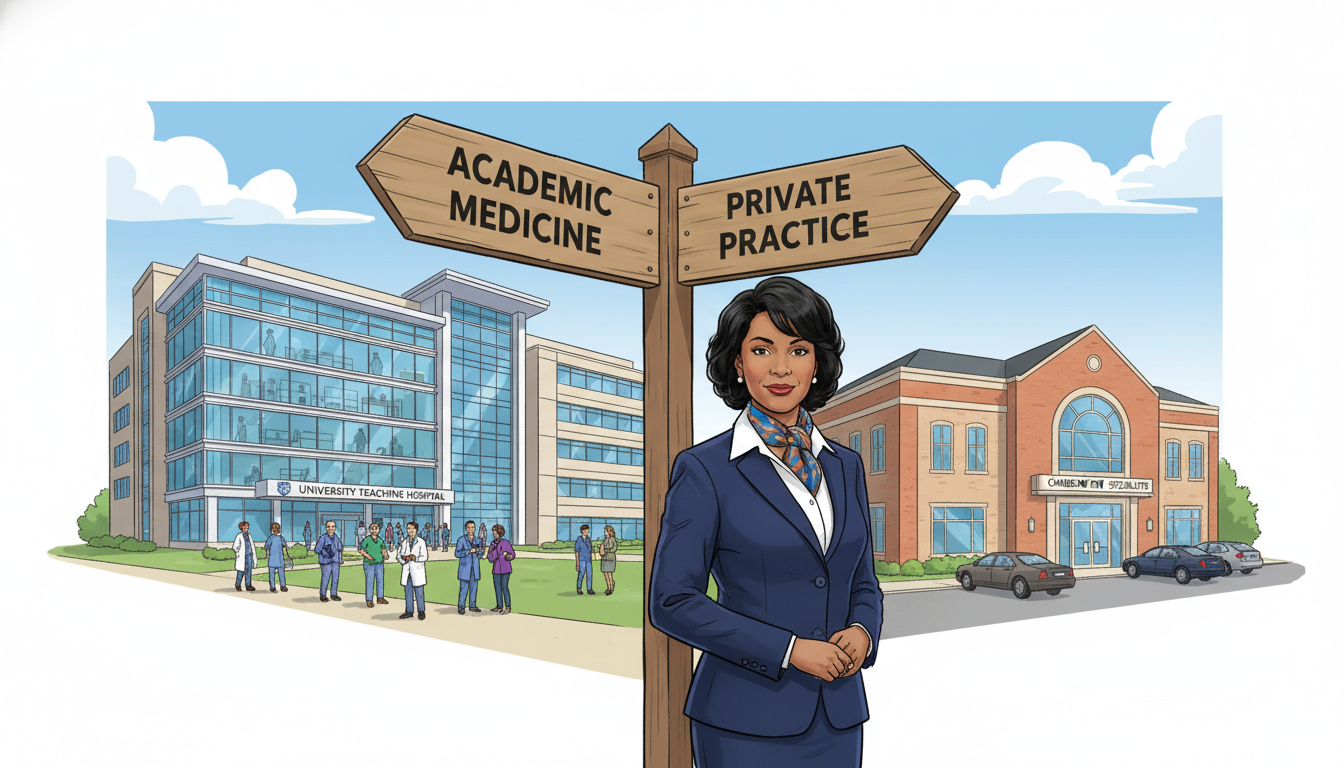
Should you build your career in academic medicine or private practice?
The answer affects nearly every aspect of your professional and personal life:
- Day-to-day schedule and call
- Income and financial trajectory
- Teaching and research opportunities
- Clinical autonomy and patient population
- Burnout risk and work–life balance
- Your long-term career path in medicine
This article breaks down the academic vs private practice decision specifically for MD graduates who completed an allopathic medical school match and are now in, or graduating from, Peds Psych residency or Triple Board programs. You’ll see how your dual (or triple) training changes the equation—and how to choose a path that fits your values, interests, and life goals.
The Core Differences: Academic Medicine vs Private Practice
At a high level, both academic and private settings allow you to practice as a pediatrics-psychiatry physician, but the structure and priorities differ.
Academic Medicine: Mission-Driven, Multi-Faceted Role
Academic positions are usually based in:
- University hospitals
- Children’s hospitals affiliated with a medical school
- Teaching hospitals with residency or fellowship programs
Primary missions:
- Clinical care (often subspecialty or high-complexity cases)
- Education (medical students, residents, fellows)
- Research and scholarship
- Institutional/departmental service
Typical characteristics:
- Teaching focus: You’re expected to supervise residents, give lectures, run case conferences, or develop curricula.
- Research/scholarship: May range from quality improvement projects to clinical trials to educational research; often required for promotion.
- Structured career ladder: Instructor → Assistant Professor → Associate Professor → Full Professor, with defined promotion criteria.
- Institutional culture: Committees, multidisciplinary teams, grand rounds, and system-wide initiatives.
- Patient mix: Often more complex, high-acuity cases; referrals from community pediatricians and psychiatrists; medically and psychiatrically complicated youth.
Private Practice: Autonomy and Individualized Structure
Private practice (solo or group) can take several forms:
- Outpatient child & adolescent psychiatry group practice
- Multidisciplinary clinics (e.g., psych, OT, speech therapy, pediatrics)
- Concierge or retainer-based models
- Partnership with pediatric groups or primary care networks
Primary missions:
- Clinical care (often with more control over niche and panel)
- Business sustainability and growth
- Personal autonomy and income optimization
Typical characteristics:
- High clinical load: Most of your time is direct patient care.
- Limited formal teaching/research: Unless you proactively create those opportunities.
- Business role: Varies—some practices are physician-owned (you’re an owner/operator); others are employer-owned (you’re an employed clinician with productivity expectations).
- Patient mix: Often a stable outpatient panel; may reflect the community’s demographics and insurance mix (commercial, Medicaid, self-pay, etc.).
- Flexibility: More control over schedule, visit length, and clinical focus (e.g., autism, eating disorders, integrated behavioral health).

Academic Medicine in Pediatrics-Psychiatry: Pros, Cons, and Fit
Why Academic Medicine Appeals to Peds-Psych-Trained MDs
Your training already aligns strongly with academic medicine:
- You’re used to complex, multi-system patients.
- You’ve functioned across pediatrics, psychiatry, and often consult-liaison services.
- You’ve likely done case presentations, QI projects, or research during residency.
Academic medicine allows you to continue using—and expanding—these strengths.
1. Rich Clinical Complexity and Subspecialty Exposure
As an academic pediatrics-psychiatry physician, your practice might include:
- Consult-liaison (C-L) work on pediatric units, NICU/PICU, or ED
- Management of youth with:
- Chronic medical illness and comorbid mental health conditions (e.g., diabetes plus depression)
- Neurodevelopmental disorders and complex behavioral presentations
- Medically unexplained symptoms or functional neurological disorders
- Co-running multidisciplinary clinics:
- Autism spectrum disorder
- Eating disorders
- Gender-affirming care
- Chronic pain and somatic symptom disorders
This environment is ideal if you enjoy “puzzle” cases and the interface of brain, body, and family systems.
2. Primacy of Teaching and Mentorship
In academic settings, you are:
- Supervising residents and fellows on inpatient or consult services
- Precepting outpatient clinics
- Delivering lectures on:
- Developmental psychopathology
- Pediatric psychopharmacology
- Family systems and child abuse/neglect
- Interface between pediatric chronic illness and mental health
- Serving as a role model for:
- Med students considering Peds, Psych, or Peds Psych residency
- Residents pursuing a triple board or combined-program career
If you light up when teaching and mentoring, an academic environment gives you structured, valued ways to do it.
3. Structured Pathway for Scholarship and Leadership
The allopathic medical school and teaching hospital environment values:
- Peer-reviewed publications
- QI initiatives that impact hospital systems
- Educational innovations (curriculum design, simulation, assessment tools)
- Leadership roles (program director, division chief, clerkship director)
Peds-psych MD graduates are especially sought after in:
- Integrated care initiatives (embedding mental health into pediatric primary care)
- Suicide prevention and crisis intervention program design
- Neurodevelopmental and complex-behavior service lines
This structure can be ideal if you envision an academic medicine career with increasing responsibility and influence.
Challenges of Academic Medicine for Peds-Psych Clinicians
Academic roles are not without trade-offs.
1. Lower Starting Salary (On Average) vs Private Practice
Although compensation varies widely by region and institution, in many markets:
- Academic salaries in child psychiatry and pediatrics-psychiatry are lower than high-volume private practice or some hospital-employed models.
- Financial upside often comes from:
- Time-based or RVU-based incentives
- Administrative/leadership roles
- Extra call, weekend coverage, or additional clinical sessions
This matters if you have substantial loans, live in a high-cost city, or are supporting dependents.
2. Complex Time Demands and Role Overload
You may juggle:
- Full outpatient schedules or consult services
- Supervision of multiple trainees
- Administrative meetings (committees, task forces)
- Scholarship expectations (papers, IRB proposals, presentations)
Without careful boundary-setting and mentorship, this can become role strain or burnout.
3. Institutional Politics and Bureaucracy
Career progression often depends on:
- Departmental sponsorship and champions
- Navigating promotion criteria (which may undervalue collaborative, interdisciplinary work)
- Adhering to institutional policies that can limit:
- Schedule flexibility
- Telehealth arrangements
- External moonlighting
If you dislike meetings, institutional processes, or multi-layered approvals, this could feel frustrating.
Who Typically Thrives in Academic Peds-Psych Roles?
You’re likely to thrive in academic medicine if you:
- Enjoy teaching and find energy in coaching learners.
- Want to contribute to research, quality improvement, or curriculum development.
- Prefer handling complex multidisciplinary cases over straightforward medication management.
- Value professional identity as a faculty member, with titles and academic advancement.
- Are comfortable with moderate income initially, in exchange for mission-driven work and stable benefits (retirement, health, maternity/paternity leave).
Private Practice in Pediatrics-Psychiatry: Pros, Cons, and Fit
Private practice in Peds Psych can look very different depending on your choices. This is where the “choosing career path medicine” conversation becomes highly individualized.
Major Advantages of Private Practice for Peds-Psych
1. Greater Autonomy Over Clinical Focus and Schedule
In private practice, you control:
- Which patients you see:
- Only outpatient child/adolescent psychiatry
- Strong emphasis on developmental and behavioral pediatrics
- Niche focus: ADHD, autism, anxiety disorders, eating disorders, gender care, tic disorders, etc.
- Visit length and style:
- Longer 60–90-minute intakes
- 30–45-minute follow-ups for relationship-based care
- Schedule and location:
- 3–4 clinical days per week
- Telehealth days from home
- Evening or weekend sessions (if you choose)
Many Peds-Psych doctors use this flexibility to:
- Align with family responsibilities
- Protect “no clinical” days for charting, CME, or side projects
- Avoid call-heavy hospital roles
2. Income Potential and Financial Control
Because of high demand for pediatric and child psychiatry services, private practice can yield:
- Substantially higher earning potential over time than most academic roles
- Ability to:
- Set cash fees
- Choose which insurers (if any) to panel with
- Offer a hybrid model (insurance + cash)
- Opportunities to diversify income:
- Group practice ownership
- Supervision/consultation services to therapists or PCPs
- Telepsychiatry in underserved regions
- Clinical work with schools, juvenile justice, or child welfare agencies
This can be especially appealing if you’re focused on loan repayment, future financial independence, or geographic mobility.
3. Customizable Practice Philosophy
With your Peds Psych background, you might design a practice that:
- Integrates family-based interventions alongside medication.
- Conducts joint visits with pediatricians (co-located or virtual).
- Uses measurement-based care, rating scales, and digital tools.
- Offers coordinated services with therapists, neuropsychologists, or pediatricians.
Your dual (or triple) training can differentiate you in a crowded market.
Challenges of Private Practice for Peds-Psych MDs
1. Business and Administrative Burden
Unless you join a fully managed group, you may need to handle or oversee:
- Billing and coding
- Credentialing and contracts with insurers
- Payroll, HR, malpractice, compliance
- Office space, IT systems, EHR, phones, telehealth platforms
You can mitigate this with:
- Hiring a practice manager or billing service
- Joining a physician-led group with shared infrastructure
- Using technology-forward, low-friction EHR and practice management tools
But it remains a fundamental feature of owning a practice: you’re both clinician and business owner.
2. Relative Professional Isolation
Compared to academic settings, you might have:
- Fewer structured peer interactions (no built-in grand rounds, journal clubs)
- Limited spontaneous case consultations (unless you build a collegial local network)
- Less exposure to trainees (unless you affiliate with a training program)
Without intentional community-building and continuing education, this can lead to feeling professionally isolated, especially in complex or ethically challenging cases.
3. Limited Formal Teaching and Research
If your heart is in formal teaching or in traditional research pathways, private practice alone may feel constraining.
However, there are ways to engage:
- Become a volunteer faculty member at a local med school, supervising residents one half-day per week.
- Collaborate on community-based research or QI projects.
- Teach CME, webinars, or local medical society talks.
- Participate in clinical trials as a sub-investigator (depending on arrangements).
These are typically added on, rather than core job expectations.
Who Typically Thrives in Private Peds-Psych Practice?
You might prefer private practice if you:
- Want high clinical autonomy and control over your schedule and workflow.
- Are comfortable with—or excited by—the business side of medicine.
- Prioritize income potential and/or fewer institutional constraints.
- Enjoy meaningful, longitudinal outpatient relationships more than teaching or inpatient work.
- Are willing to build your own professional network and CME structure.

Special Considerations for Triple Board and Combined-Training Graduates
If you’ve completed a triple board (Pediatrics–Psychiatry–Child & Adolescent Psychiatry) program or another combined Peds Psych residency, your training opens unique pathways and also unique dilemmas.
Leveraging Your Full Scope in Academic Medicine
Academic centers are often more capable of fully using your triple skill set. You can:
- Split your time between:
- Pediatric inpatient or continuity clinic
- Child & adolescent psychiatry clinic or inpatient unit
- Consult-liaison services bridging both
- Lead or co-lead:
- C-L services specifically for medically complex kids
- Integrated pediatric mental health clinics
- Programs targeting chronic illness and mental health integration
- Shape curriculum and policy around:
- Developmental screening and early mental health intervention
- Safe psychopharmacology in medically ill children
- Communication between pediatrics and psychiatry services
You may become the go-to expert institutionally for complex interface questions, leading to recognition, leadership roles, and significant institutional impact.
Using Combined Training in Private Settings
In private practice, your triple board training can still be a major asset, but in different ways:
- Market yourself as:
- An expert in both physical and mental health of children and adolescents
- Particularly skilled at working with medically ill youth (e.g., oncology, diabetes, GI, neurology patients)
- Offer services such as:
- Collaborative care with local pediatricians (case conferences, e-consults)
- Integrated assessment of physical, developmental, and psychiatric factors
- Second-opinion evaluations for complex diagnostic dilemmas
- Develop niche clinics focused on:
- Somatic symptom and functional disorders
- Chronic pain plus anxiety/depression
- ADHD with complex medical comorbidities
Your challenge will be not underusing your pediatric skills if your day-to-day work ends up being mostly traditional outpatient psychopharmacology. That’s not necessarily bad—but it may feel misaligned with your training if you value the breadth.
How to Choose: A Step-by-Step Framework for Peds-Psych MD Graduates
You don’t have to decide your ultimate career path on day one, but your first job choice will shape your trajectory. Use the following structured process.
Step 1: Clarify Your Non-Negotiables
List your top 5–7 non-negotiables, such as:
- Minimum income needed (after taxes and loans)
- Maximum acceptable weekly hours
- Geographic location or commuting time
- Required parental leave or schedule flexibility
- Desire for part-time vs full-time
- Need for strong mentorship and structured growth
Then ask: does academic or private practice better align with these in your first 3–5 years?
Step 2: Identify Your Core Professional Motivators
Rank how important these are to you:
- Teaching and mentorship
- Research or scholarly output
- Clinical innovation/program building
- High earning potential
- Autonomy and control
- Predictable schedule and work–life balance
- Prestige/recognition in academic circles
If teaching, scholarship, and institutional impact dominate your list, academic medicine is likely a better fit. If autonomy and financial flexibility dominate, private practice may be the better starting point.
Step 3: Explore Hybrid and Transitional Models
You don’t have to choose a pure either/or model. Consider:
- Academic primary role + small private practice:
- 0.8–1.0 FTE at a university
- 0.1–0.2 FTE moonlighting or small side practice (within institutional policies)
- Private practice + volunteer/adjunct faculty:
- Main job in private practice
- Half-day per week supervising residents or teaching at a nearby med school
- Hospital-employed roles:
- Sometimes functionally similar to private practice (especially large children’s hospitals) but more stable than solo practice
- May offer some teaching but less research pressure
These hybrid approaches can let you “test” different environments.
Step 4: Talk to Peds-Psych and Triple Board Role Models
Identify 3–5 physicians whose careers you admire:
- Some in pure academic roles
- Some in private/group practice
- Some in hybrid or non-traditional roles (telehealth, consulting, public policy, etc.)
Ask them:
- What made them choose their path?
- What do they enjoy most and least?
- What would they do differently early in their careers?
- How do they see future opportunities in your region and subspecialty?
Patterns in their answers will likely resonate with your own inclinations.
Step 5: Revisit the Question Every 3–5 Years
Your interests and life circumstances will change:
- Early career: may prioritize loan repayment and experience.
- Mid-career: may shift toward leadership, teaching, or less-than-full-time work.
- Late career: may value legacy, mentoring, or flexible consulting roles.
A career path in medicine is rarely linear. You might:
- Start academic, move to private practice.
- Start private, then shift to academic or hospital-employed roles.
- Evolve into national-level expert, speaker, or program consultant.
Recognize that your first job is not your last job.
FAQs: Academic vs Private Practice for Pediatrics-Psychiatry MD Graduates
1. Is it harder for an MD graduate from an allopathic medical school match to get an academic job in Peds Psych than a private job?
Not usually. In fact, for Peds Psych residency or triple board graduates, academic centers are actively recruiting due to:
- Shortages in child and adolescent mental health providers.
- High demand for integrated pediatric–psychiatric expertise.
The real competition is often for the best-fit academic jobs (desired location, specific focus, flexible FTE) rather than any academic role at all. Private practice opportunities are also abundant, but require more initiative to launch or join.
2. Will choosing private practice close the door on an academic medicine career later?
No, but it can make the path back more complex if you are absent from scholarship and teaching for many years.
To keep academic options open:
- Maintain volunteer or adjunct teaching roles if possible.
- Attend and present at conferences.
- Keep some involvement in QI, guidelines, or community initiatives.
- Build a CV that shows ongoing engagement with the field beyond day-to-day clinical care.
Academic centers often value clinicians who bring real-world, high-volume clinical experience, especially in underserved populations.
3. Can I do both pediatrics and psychiatry in private practice, or will I end up doing mostly psychiatry?
In practice, many combined Peds-Psych or triple board graduates find themselves:
- Doing mostly child & adolescent psychiatry work in private outpatient settings.
- Providing informal pediatric guidance but not running full pediatric continuity clinics.
However, you can intentionally design a dual-scope practice if:
- Your state licensure and malpractice coverage support both.
- You market clearly to families and pediatricians.
- You set up workflows (e.g., vaccines, urgent visits, well-child checks) or partner with a pediatric group.
Be realistic: running a true “full pediatrics + full psychiatry” practice solo is logistically challenging. Many physicians eventually lean more heavily into one side.
4. Long-term, which path—academic or private practice—offers more stability and satisfaction?
Stability and satisfaction depend more on fit with your values and temperament than on setting alone.
- Academic medicine often offers:
- Institutional stability (salary, benefits)
- Clear promotion pathways
- Mission-driven fulfillment in teaching and systems change
- Private practice offers:
- Flexibility and control
- Direct connection between your work and your income
- Ability to pivot quickly with market needs (e.g., telehealth, niche clinics)
For many Peds Psych and triple board physicians, the most satisfying trajectory is one that evolves:
- Early years: higher clinical load, perhaps private or hospital-based.
- Mid-career: increasing teaching, leadership, or niche program-building (often academic or hybrid).
- Later career: consulting, mentoring, or part-time work in either domain.
Choosing between academic medicine and private practice as an MD graduate in Pediatrics-Psychiatry is less about which path is “better” and more about which aligns with your personality, values, and life stage. Use your unique training—and the flexibility it offers—to build a career that is both sustainable and deeply meaningful, knowing you can recalibrate that choice as you grow.