
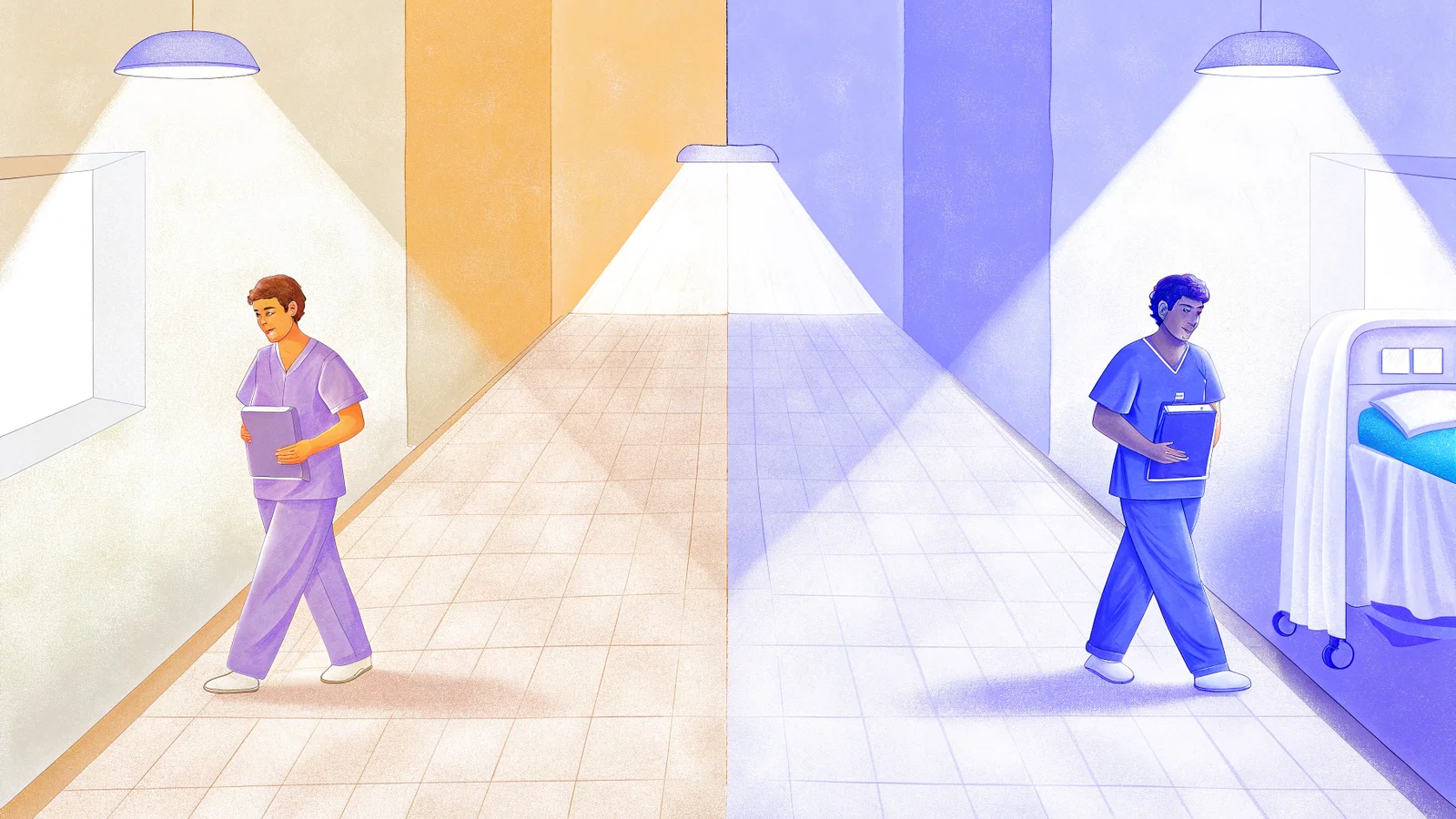
Here's the blunt truth: the "safe" home rotation is one of the most overrated ideas in surgical residency advising.
Students love the story because it feels comforting. You know the hallways. You know where the call rooms are. Maybe the residents know your name, and maybe an attending once said, "We'd love to keep you here." That gets translated, wrongly, into: I've got an inside track.
Usually, you don't.
What programs care about isn't whether you're comfortable. It's whether you reduce uncertainty. That's the whole game in the Match. A home rotation often tells a program what they already know, or think they know. An away rotation, done well, gives them new information: Can you adapt? Can you work in an unfamiliar system? Can you read a room, carry your weight, and not need hand-holding? That's valuable. Familiarity alone isn't.
(See also: how away rotations in surgery are actually scored behind closed doors for more.)
This article is for educational purposes only. It is not financial advice, not legal advice, and not tax advice. Figures vary by individual circumstances, so consult a qualified professional before acting.
(See also: home vs away match odds in competitive specialties for more.)
The Myth of the "Safe" Home Rotation
A home rotation is simple: you rotate in your own institution's department, with faculty and residents who may already know you from preclinical years, clerkships, research, or plain old hallway exposure. The myth is that this familiarity guarantees safety. It doesn't. It can actually make evaluation sloppier, harsher, or both.
I've seen this play out over and over. The home student assumes goodwill will carry them. They show up a little too casual. They disappear between cases because "everyone knows me here." They don't aggressively seek feedback because they think they're already in. Meanwhile, the faculty are watching more closely than the student realizes. Not because they love you. Because they're trying to figure out whether familiarity has made you complacent.
That's the part students miss: home rotations are often less discriminating than away rotations in the eyes of program leadership. Why? Because home performance is contaminated by prior reputation, institutional politics, and preexisting relationships. Was that student truly excellent on service, or did people already like them because they published with the chair? Did they earn trust, or inherit it? Program directors know this problem. They're not naive.
The data trend backs that skepticism. Across competitive specialties, once you control for major application variables, board performance when available, class standing, research output, letters, school reputation, the home rotation itself doesn't magically create a large interview advantage over a comparably strong applicant rotating away. The idea that "home automatically beats away" just doesn't hold up. What matters is applicant strength plus how convincingly you perform in a setting that generates useful signal.
And home rotations can generate bad signal fast. Over-familiarity is dangerous. Students start acting like junior insiders before they've earned that status. That reads as entitlement. Or worse, inertia. Surgical programs don't want the person who only shines in their own building with their own people. They want somebody who can walk into chaos, learn the workflow by Tuesday, and still be useful by Wednesday.
So no, home isn't "safe." Home is exposure. That can help if you're excellent. It can hurt if you're average and relaxed. In surgery, relaxed is often mistaken for lazy. Fair or not, that's reality.
Away Rotations: Why They Actually Build Match Equity
Let's bust another myth. Away rotations are not mainly about learning dazzling new technical skills. Nobody expects a visiting fourth-year to reinvent an anastomosis or close fascia like a chief. That's fantasy.
An away rotation is an extended interview. Full stop.
More specifically, it's a test of whether you fit the culture, keep up with the pace, absorb feedback without sulking, and work hard when nobody owes you anything. In surgical education, that's worth far more than another polished personal statement. Programs are trying to answer one practical question: Can I survive three to seven years with this person in my hospital?
That's why away rotations build match equity. They reduce uncertainty in a way home rotations often can't.
In many competitive specialties, programs use away rotators as a pre-screening mechanism because application volume is absurd and paper files are blunt instruments. The CV says you're interested. Showing up at 4:45 a.m. for rounds in an unfamiliar hospital says you're serious. Those are not the same thing.
And yes, there's a real interview signal here. Strong away performance frequently converts into an interview offer at rates that are dramatically higher than applicants who never rotated there. In some competitive fields, students who perform well on away rotations see interview conversion in the 60-70% range, sometimes better depending on specialty, institution, and whether the rotation happened early enough in the cycle. That's not folklore. That's why students keep doing them despite the cost and hassle.
Notice what that means. The away rotation isn't just an "audition" in the passive, theatrical sense. It's an active stress test. Can you function without your usual support system? Can you ask smart questions without becoming a parasite? Can you figure out where to stand in the OR, how to preround, how to write notes, how to be helpful without acting like an overeager disaster?
I remember one visiting student on a vascular service who wasn't the loudest, smartest, or slickest person on the team. But by day three, she knew every patient, anticipated dressing supplies, stayed late without advertising it, and never once needed to be chased down. The residents trusted her because she lowered friction. That's what programs remember. Not charisma. Utility.
This is why away rotations can outperform home rotations for match equity. They answer the question programs actually care about: not "Do we know you?" but "Have you proven yourself here, under our conditions?"
Big difference.
Financial and Logistical Realities: Separating Cost from Benefit
Now for the part everyone hates: away rotations are expensive. Sometimes brutally so.
By the time you add application fees, short-term housing, transportation, hospital onboarding, parking, food, and the random bureaucratic nonsense that somehow always requires another payment, one away can easily run several thousand dollars. For some students, that's a genuine barrier, not a minor inconvenience. Pretending otherwise is dishonest.
But the opposite mistake is treating cost as proof the rotation isn't worth it. That's also wrong.
If an away rotation substantially improves your chance of getting an interview, or matching at a program where you actually want to train, the value can be enormous relative to the upfront expense. Residency placement affects geography, operative exposure, mentorship, fellowship options, and in some cases future financial stability through loan repayment structures or institutional benefits. I'm not saying every away is worth any price. I am saying students often undercount the payoff because they're focused on the immediate pain and not the downstream leverage.
The bigger mistake is doing too many. More is not better. Once you push beyond roughly four to six away rotations, you often start to look scattered, desperate, or strategically confused. You also increase the odds of having a mediocre month somewhere. And one forgettable away can erase the glow of two strong ones.
Here's the smarter framework: pick rotations based on specialty competitiveness, program fit, and geography that matters to you. Not because your friend is going there. Not because it's drivable. Not because you think stacking random famous names on your schedule is sophisticated. It isn't. It's usually panic in business-casual clothing.
For hyper-competitive surgical fields, away rotations are often close to mandatory if you want real visibility. For less competitive or more regional fields, one strong away in a target geography may be enough. And if your home department has a strong track record of placing students in your specialty, your home rotation may carry more weight than average. But that's because of actual placement history, not sentimentality.
Data over vibes. Always.
The Verdict: How to Maximize Your Match Rank
Here's the clean answer: away rotations build more match equity because they reduce uncertainty for programs. Home rotations usually don't reduce uncertainty to the same degree. Sometimes they don't reduce it at all.
That doesn't mean home rotations are useless. It means they're overrated as a safety net. If you're great at home, fine, you may reinforce a strong existing reputation. But if you're mediocre, passive, or too comfortable, home can be damaging because people expect more from "their own" student than from a visitor. A lazy-seeming home rotator gets remembered. A neutral away rotator often just fades into the middle. That's better than getting flagged for complacency.
So stop asking, "Which is better?" That's the wrong question.
Ask this instead: Where do I need to be seen to prove fit, work ethic, and adaptability to the people making rank decisions? That's the strategic question. That's the one adults ask.
If you can thrive in your home system, good. If you can thrive in their system, better. On match day, programs rank the applicant who feels lowest risk and highest fit. Away rotations, done well, make you that person.
And that's the myth worth killing: comfort doesn't create match equity. Credibility does.
One stellar away beats three forgettable ones. Home doesn't guarantee anything. And the students who match well are usually the ones who understand the game early: you're not trying to be familiar. You're trying to be undeniable.


