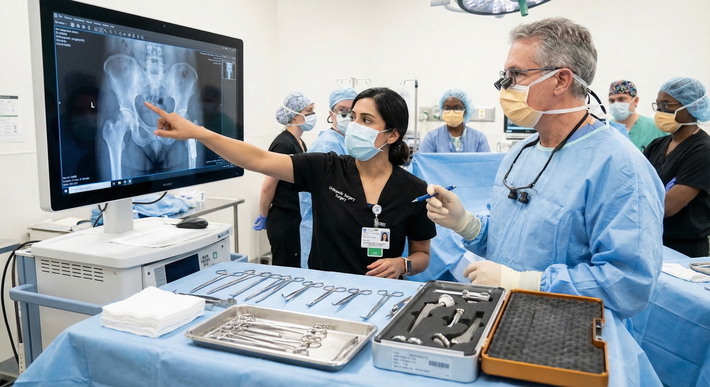
Orthopedics is not a frat house for ex–college athletes. It never was. And if you still believe that, you are already misreading the field—and sabotaging your own chances.
Let me be blunt: the “ortho is only for former athletes” idea is one of the laziest myths in surgical career counseling. It survives because it’s tidy, easy to remember, and kind of flattering to the people who matched. It’s also wrong on the numbers, wrong on the training demands, and dangerously wrong for students who would actually thrive in ortho but self-select out because they did not play varsity anything.
You want to know who actually matches orthopedics? Bookish data nerds. Former violin performance majors. Engineers who have not run a mile in five years. Yes—also some ex–football captains and D1 soccer players. But the pipeline is way more boring and way more academic than the stereotype.
Let’s dismantle this properly.
The Data: Who Actually Matches Ortho?
Start with what PDs actually value. The NRMP Program Director Survey is not perfect, but it is a brutal reality check. Over and over, orthopedic PDs rank these as top factors:
- Step 2 CK score
- Clerkship grades
- Class ranking/AOA
- Orthopedic letters of recommendation
- Research productivity
“Athletic background” does not appear. Not in the top 10. Not in the top 20. It’s not there.
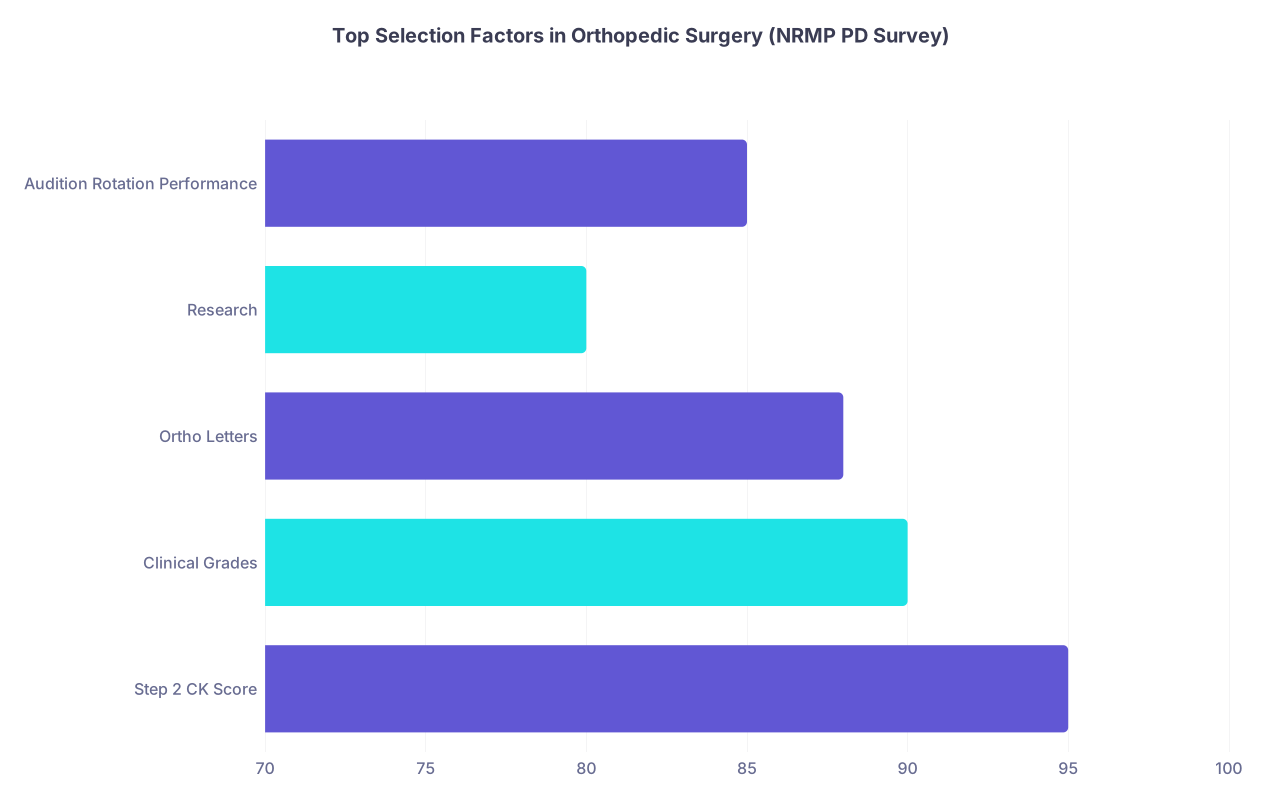
| Category | Value |
|---|---|
| Step 2 CK Score | 95 |
| Clinical Grades | 90 |
| Ortho Letters | 88 |
| Research | 80 |
| Audition Rotation Performance | 85 |
Those percentages are the proportion of programs rating each factor as “very important” or “critical” in deciding whom to interview/rank. Notice what’s missing: “played D1 soccer.”
Now look at applicant-side numbers. The mean matched ortho applicant (MD) usually has:
- Step 2 CK in the mid‑250s
- 8–10+ abstracts/pubs/presentations
- Strong clinical evaluation narrative, particularly on surgery/ortho
That profile looks a lot more like “research gunner who lived in the library” than “All-American linebacker.”
If athletic background were truly a gatekeeping feature, you’d see it reflected in some systematic way—special mentorship tracks, formal “team physician” pipelines, structured preference. You don’t. What you see is a brutal academic filter plus subjective assessments of work ethic, team behavior, and likeability on away rotations.
Those last three traits are where people smuggle in the “athlete” story. Because “good teammate, resilient, coachable” sounds familiar. But those traits are not exclusive to sports. They show up in musicians, military veterans, serious debaters, first-gen students who worked night shifts. The problem is not that ortho wants athletes. The problem is that some faculty are lazy about imagining where those traits can come from.
Why the Athlete Myth Feels So Real
So if the data do not support it, why does the myth feel so damn true on the wards?
Because of visibility, not policy.
You walk into a typical ortho call room and you’ll see:
- Wall-mounted whiteboards with Super Bowl squares
- Attendings talking about their marathon training
- Residents swapping ACL stories and fantasy football trash talk
If you’re a former D3 swimmer, that world feels instantly familiar. If your background is orchestra and robotics, you feel like you snuck into someone else’s reunion.
Orthopedics also leans heavily on musculoskeletal pathophysiology and biomechanics. Sports injuries are a huge chunk of the bread-and-butter consults at many academic centers. This draws people who were already interested in sports medicine as undergrads. So yes, there’s a correlation. But correlation does not mean “requirement.”
I’ve watched this exact moment multiple times: M3 student, no athletic past, clearly sharp, gets pulled into a shoulder case, the attending spends 10 minutes asking “what sports did you play,” the student shrinks a little each time they say “I didn’t really,” and walks out later convinced, “I don’t fit here.”
The myth persists because:
- Athletes in ortho are loud and proud about it. They talk about it all the time.
- Non-athletes rarely announce, “By the way, I practiced piano four hours a day in high school.”
- Faculty sometimes lazily conflate “athlete” with “teammate, resilient, coachable.”
That creates a survivorship bias. The people you see and hear are the ones who match the stereotype. Meanwhile, the quiet ex-chemistry-major who’s now the trauma chief does not lead with “I was president of the ACS student chapter.”
What Ortho Actually Cares About (And How Background Really Plays In)
You want to understand the real filter? Forget the locker-room mythology and look at what makes a resident successful once the novelty wears off.
Orthopedic programs care about three broad categories:
- Cognitive horsepower and pattern recognition
- Procedural aptitude and spatial reasoning
- Team function and emotional durability on long, chaotic services
Now plug different backgrounds into that.
The ex-varsity athlete:
- Used to early mornings, repetitive drills, getting yelled at by a coach.
- Comfy in hierarchies and teams.
- Understands movement and injury intuitively.
Useful? Of course. But not magical.
The former engineer or physics major:
- Built-in spatial reasoning.
- Comfort with forces, loads, materials—literally orthopedics in another language.
- Often strong with pre-op planning, implant selection, imaging analysis.
The musician or dancer:
- Fine motor control and rhythm.
- Used to deliberate practice, failure, and feedback.
- Often excellent in the OR once they’re past the “I feel like an imposter” phase.
The truth: orthopedics is greedy. It will happily take any background that maps onto those three categories. Sports is just the most visible and easiest to talk about during small talk.
Where background does matter (a little)
Here’s where the myth has a small kernel of truth. Not about getting in, but about social comfort:
- Social glue: Former athletes may slide more easily into sports-banter culture. That can make them seem more “one of us” early on.
- Research and mentors: Students who show up early to sports med clinics or team doc events may pick up mentors faster, simply because they are physically in the room.
- Confidence bias: Athletes often present as more confident in physical spaces (exam rooms, OR) even before they know what they’re doing. Perception matters.
None of this is decisive. I’ve seen ex-athletes wash out of surgical tracks because they hated the grind once they discovered what actual residency hours felt like. I’ve also seen quiet, non-athletic introverts become the person everyone calls for the hardest distal radius because their hands are steady, their plan is airtight, and they never panic at 3 a.m.
The Body Type Myth: “You Need to Be Huge”
Close cousin of the athlete myth: “You have to be big and strong to do ortho.”
No. You have to be smart about leverage and tools.
Many orthopedic attendings are not large people. Plenty of women in ortho are 5’2–5’5 and can ream a femur or reduce a hip dislocation just fine. The days of “just muscle it” are mostly gone. If you’re brute-forcing a reduction, you’re doing it wrong or using the wrong equipment.
I watched a very small, very sharp female PGY-3 show a towering male intern how to use body position, traction, and countertraction to reduce a fracture-dislocation with half the effort. He literally said, “I thought you just pull harder.” That mindset belongs in a cartoon, not a modern OR.
What does matter is:
- Willingness to stand for long cases without falling apart.
- Ability to handle lead aprons and awkward positions in trauma/fluoro cases.
- Basic baseline fitness so your back does not die by PGY-2.
You can build those. They’re not dependent on having played linebacker in college.
So Who Actually Gets Filtered Out of Ortho?
Here’s the part students do not want to hear: if your background is hurting you, it’s not because you lacked sports. It’s because you lacked production.
Programs are filtering out:
- Low Step 2 CK scores (or weak shelf/clerkship performance)
- Minimal or no research in anything, especially ortho-adjacent
- Weak letters that say “pleasant” and “hardworking” but nothing about clinical horsepower
- Mediocre aways where you looked tired, disinterested, or brittle under pressure
Background only comes into play when everything else is equal. At that point, yes, an ex-athlete who can bond instantly with the sports med faculty about ACL tears may have a marginal edge with that attending. But someone else on the committee is going to care more about the applicant who published three solid biomechanics projects.
This is where the myth does real damage. I’ve seen students say, “I’m not an athlete, so ortho probably won’t want me,” and then use that as an excuse to:
- Apply half-heartedly
- Avoid approaching ortho faculty (assuming “they want their people”)
- Skip research because “I’m already a reach”
That becomes a self-fulfilling prophecy. They do not get interviews. Then they say, “See? Ortho only takes jocks.” No. Ortho takes people who built an ortho-competitive application and then acted like they belonged in the field.
| Reality Screen Factor | Common Myth Factor |
|---|---|
| Step 2 CK / Exams | Varsity/D1 Athletics |
| Surgical/Ortho Clerkship | Playing Team Sports |
| Ortho Research | Muscular Body Type |
| Strong Ortho Letters | “Bro-y” Personality |
| Away Rotation Performance | Pre-med Sports Medicine |
How to Position a “Non-Athletic” Background for Ortho
If you want ortho and your past is more lab bench than locker room, stop apologizing. Start translating.
You need to reframe your background into the currency ortho understands: repetition, resilience, team function, and hand skills.
Basic template: “I did X, which demanded Y kind of discipline and Z kind of teamwork. That’s the same engine I use on this service.”
Concrete examples:
- Former concert pianist: “I spent 10+ years practicing multiple hours a day, working through tiny errors with deliberate repetition. In the OR I find that same mindset—slow refinement of technique, attention to millimeter differences—very natural.”
- Former engineer: “I worked on finite element models of materials under stress; pre-op planning and implant selection feel familiar, just in a much higher-stakes environment.”
- First-gen student who worked service jobs: “I’m used to long hours on my feet, managing competing demands, de-escalating upset people, and still delivering consistent service. On trauma call, that experience matters more than whether I played on a field.”
Then you back it up with behavior:
- Show up early, leave late, volunteer for cases.
- Take ownership of consults and follow-through.
- Ask to learn reductions, splinting, traction, and basic hand skills—not just “presentations and notes.”
- Do real research, not just name-on-a-poster fluff.
By the time you’re sitting in an interview room, your story is not “I didn’t play sports.” Your story is “I have repeatedly shown up in X demanding environments, built Y skills, and now I’m applying that same discipline to orthopedic surgery.”
No one serious is going to reject that because you never wore a jersey.
The Culture is Changing—Slowly, but Enough
Orthopedics, like every other surgical field, has a culture problem. For years it selected for a narrow band of personalities and demographics, then retroactively rationalized it as “we only pick people who can tolerate the workload.”
You can see the shift everywhere now:
- More women in ortho residencies and faculty positions.
- More residents with research-heavy or non-traditional paths.
- DEI and holistic review language actually showing up in program descriptions (yes, the follow-through is variable, but the direction is obvious).
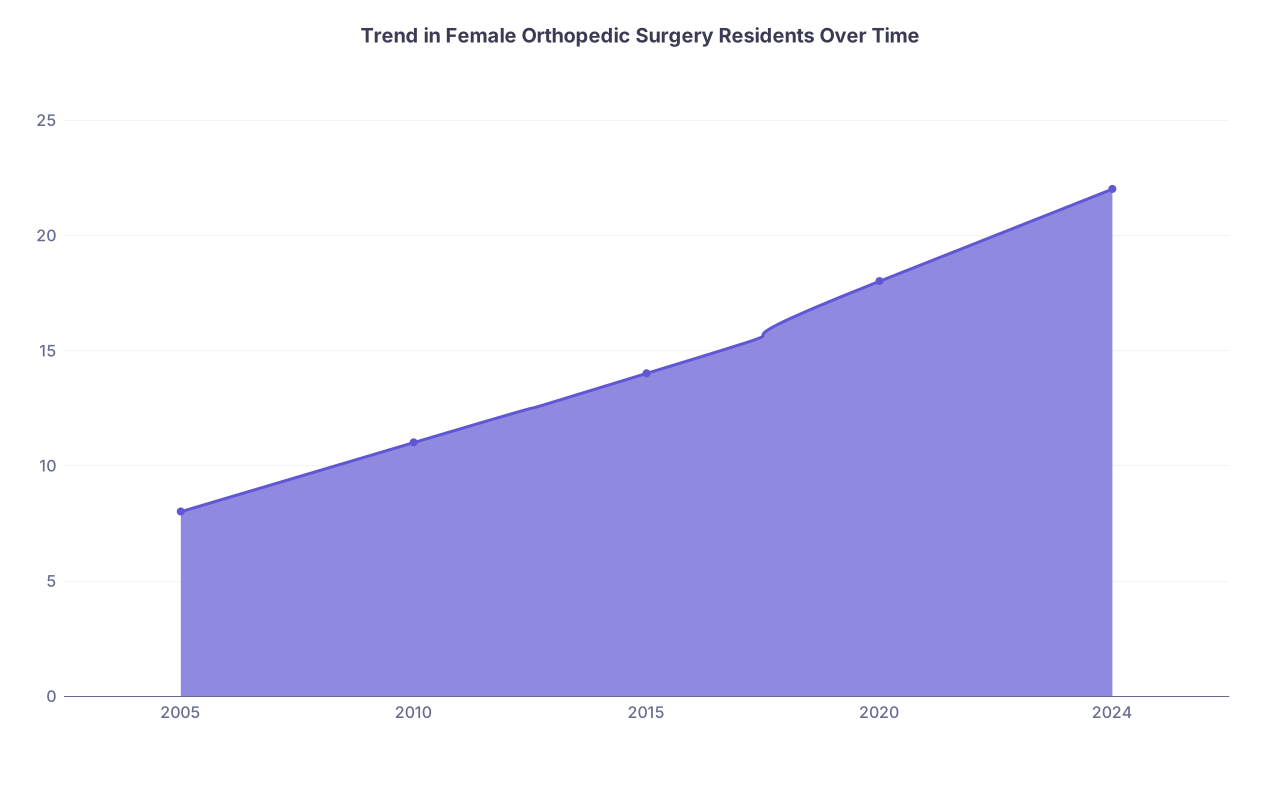
| Category | Value |
|---|---|
| 2005 | 8 |
| 2010 | 11 |
| 2015 | 14 |
| 2020 | 18 |
| 2024 | 22 |
That rise is still too slow, but it proves the point: you do not need a sports pedigree to be taken seriously. You need competence, consistency, and proof you understand what the field actually is.
If anything, programs are increasingly suspicious of the caricature: the big, loud ex-linebacker who talks a good game about “team” but has a thin CV and weaker exam scores. They’ve been burned by that archetype before. They know it.

The One Group That Should Actually Avoid Ortho
Not non-athletes. Not introverts. Not humanities majors.
The group that should stay away from orthopedic surgery: anyone who needs constant external validation and wants to feel like the smartest person in the room.
Ortho is:
- Long hours, physically and mentally.
- Iterative progress—your first 50 nails will be bad, your 51st will be less bad, your 200th will start to feel competent.
- A team sport in the behavioral sense: if you throw scrub techs, nurses, or juniors under the bus, you will fail, eventually.
You do not need to have been an athlete. But you do need to be able to live inside repetition, failure, minor humiliations, and slow improvement without losing your mind. That’s the common denominator I see in residents who thrive—whether they grew up on a field, in a lab, or at a piano.

| Step | Description |
|---|---|
| Step 1 | Interest in Ortho |
| Step 2 | Sports/Athletics |
| Step 3 | STEM/Engineering |
| Step 4 | Arts/Music |
| Step 5 | Other Nontraditional |
| Step 6 | Translate teamwork and resilience |
| Step 7 | Ortho Research and Mentors |
| Step 8 | Aways and Strong Letters |
| Step 9 | Competitive Application |
| Step 10 | Matched Orthopedic Residency |
| Step 11 | Background Type |
Bottom Line
Three things to walk away with:
- Orthopedics selects for academic performance, technical potential, and team behavior—not a sports résumé.
- Non-athletic backgrounds are not a liability; they’re assets if you learn to translate your skills into ortho’s language.
- If you want ortho and have the scores, work ethic, and realistic understanding of the lifestyle, do not self-reject because you never wore a jersey. The myth is outdated. Your application does not have to be.