This article is for educational purposes only. It is not financial advice, not legal advice, and not tax advice. Figures vary by individual circumstances, consult a qualified professional before acting.
The 3:00 AM Panic: Did I Just Ruin My Career?
It's 3:12 a.m. and I'm scrolling LinkedIn again. I know I shouldn't be, but my brain won't shut up. There's another post, a fellow intern from medical school just got named chief resident at Johns Hopkins. Swipe. A classmate's celebrating their first first-author paper at a top-10 internal medicine program. Swipe. Meanwhile I'm at a community hospital struggling to find a parking spot and wondering if the AC in the call room will actually work tonight.
If you are struggling with the choice between different training environments, learning how to know if you are better suited for community or academic training can help clarify your long-term career goals.
The panic isn't logical. But it sits on my chest like a lead vest. Did I just lock myself out of every academic faculty job forever? That term, "community hospital trap", keeps echoing. I hear it whispered in MedTwitter threads, in conversation snippets at conferences, in my own head after a rough call shift. I picture hiring committees at university hospitals tossing my CV into a digital recycle bin the second they see a hospital name they don't recognize. I imagine them laughing, okay, maybe not laughing, but definitely skimming past me with pity.
Many residents fear they are losing their competitive edge, but you can learn more about the hidden politics of research in community vs academic residencies to better navigate the landscape.
The worst part is the "what ifs." What if I'll never get research funding? What if I'm stuck doing hospitalist work without any teaching opportunities? What if I want to be a program director someday but no one from a community residency background ever gets that seat? I ruminate until I'm convinced my Match Day result sealed a permanent ceiling. I lay there and calculate how many doors just slammed shut. Two? Ten? All of them?
Prestige obsession is real. We've been trained since premed to chase the name. Ivy League undergrad, top-20 med school, university residency, it's a drug we're taught to crave. When you step off that conveyor belt and into a community program, you feel like an outsider. You second-guess every clinical decision, wondering if your training is "second-tier." You imagine academic departments viewing you as a glorified clerk who never learned to think critically. I've literally convinced myself that my letters of recommendation must smell less intellectual just because my program doesn't have a Nobel laureate on payroll.
I want to validate that anxiety because it is utterly consuming. It keeps us up at night. It makes us defensive. It turns our own self-talk into a prosecutor cross-examining every career move. But here's what I'm beginning to realize, and what I feel compelled to say even though my stomach still knots up: a lot of that fear is built on myths that don't hold up under daylight. And we need to unpack them before we self-sabotage.
The Reality Check: What Program Directors Actually Look For
I used to think academic hiring was a secret society with a "prestige filter", like a spam detector that instantly flags any application lacking a university-affiliated logo. Then I started talking to actual program directors and chairpersons. (Yes, with a trembling voice and sweaty palms, I asked.) Over and over I heard: "We don't hire a hospital name. We hire a clinician."
If you are still weighing your options, learning about how to switch from community to academic residency can provide a safety net if your career priorities shift.
The real filter isn't the shiny logo. It's competency. Board scores still open doors. More importantly, letters of recommendation that describe how you actually practice medicine, your diagnostic reasoning, your bedside skills, your ability to run a code without flailing, those are the currency. One PD told me he'd rather hire a community-trained doc whose LORs describe someone who "handles chaos independently" than an academic superstar who crumbled without a fellow holding their hand.
Let's take apart the "academic interest versus clinical excellence" tension. Academic departments don't just need researchers; they need doctors who can see a full panel of patients, teach residents at the bedside, and keep the clinical enterprise afloat. They value clinicians who walk in the door already battle-tested, not coddled in an ivory tower where every patient has a dedicated pharmacist, social worker, and case manager magically appearing. I started flipping my own narrative: instead of saying "I trained at a community site with limited resources," I began seeing that as "I trained in a high-volume, high-autonomy environment where I learned to manage complex patients with less backup." That's not a weakness. That's an asset.
I'm not saying research productivity doesn't matter. It absolutely does for big research-track roles. But the majority of academic jobs are Clinician-Educator tracks, where teaching skill and clinical volume matter more than your H-index. And many of the mid-tier and even top-tier academic centers I've scouted actively recruit community-trained doctors who bring real-world pragmatism to their teams. They want someone who won't call a specialist at the first abnormal lab value.
To better navigate these career choices, you can map your career goals to community vs academic features using a structured approach.
There's also a quiet reality: academic departments recognize that community residents often get more raw procedural exposure and unsupervised decision-making earlier. That produces a confidence and readiness that some university graduates take an extra year or two to develop. If you frame that experience honestly in your application, you're not defending a deficit, you're marketing a strength.
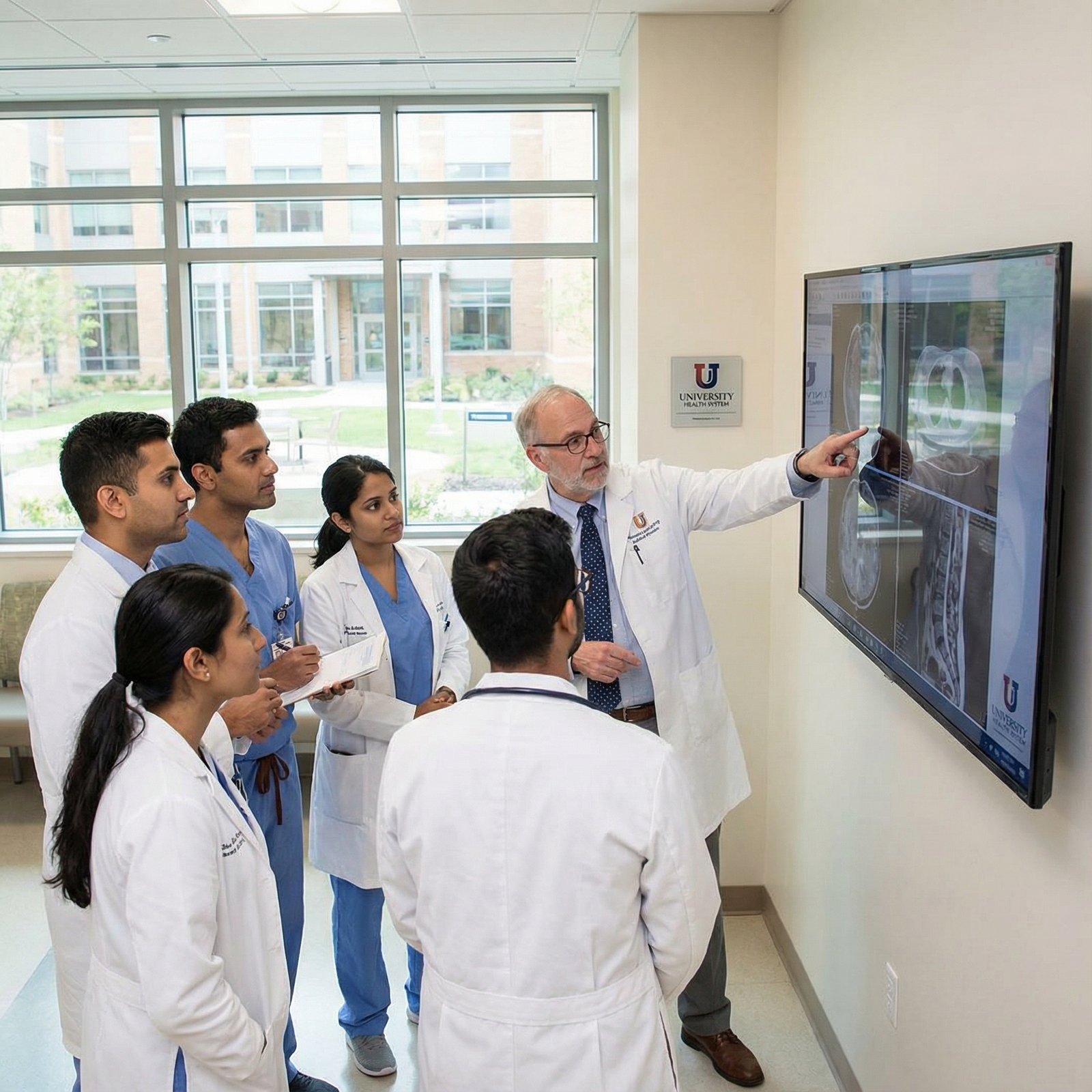
That flowchart I've sketched above? I drew it during one of my late-night spiral sessions, trying to prove to myself that research gaps aren't fatal. Notice: if clinical competence isn't there, you're out, no matter where you trained. But if you can demonstrate competence, you get a foot in the door. Research productivity might push you to a full academic interview, but if your research is light, you can still land a niche clinical role that often evolves into a teaching appointment. The path isn't a binary "yes/no" based on residency name. It's a weighted scale, and clinical performance tips it heavily.
Bridging the Gap: Your 'Community' Secret Weapon
So if the doors aren't entirely closed, how do you actually push them open from a community base? I've been obsessing over this, and I've found a few strategies that can turn the perceived disadvantage into a deliberate pivot.
First: research. I used to think I needed a lab bench and a grant to publish. Wrong. Case reports, quality improvement projects, clinical vignettes, those are all publishable and require zero funding. I cold-emailed a university faculty member two states away asking if they had a dataset I could help clean or a case series that needed a write-up. Three of those emails went unanswered. The fourth person said yes, and suddenly I had an abstract at a national conference. You don't need to be at an academic center to produce scholarship; you need curiosity and enough stubbornness to knock on digital doors until one opens.
Networking is second. Here's a truth that makes me queasy but I've seen it work: if they know you, they care less about your program name. Start going to national meetings. Even if you're "just a resident," volunteer to present a poster, attend a subcommittee meeting, or simply walk up to speakers after their talk and ask an honest question. I have forced myself into at least a dozen awkward conversations with academic mentors who later became references. The real secret? Many faculty members love to be asked for advice. It feeds their desire to educate and gives them a reason to remember you. When a job opening comes, they think of the eager resident they met in the hallway, not the CV typed in Times New Roman.
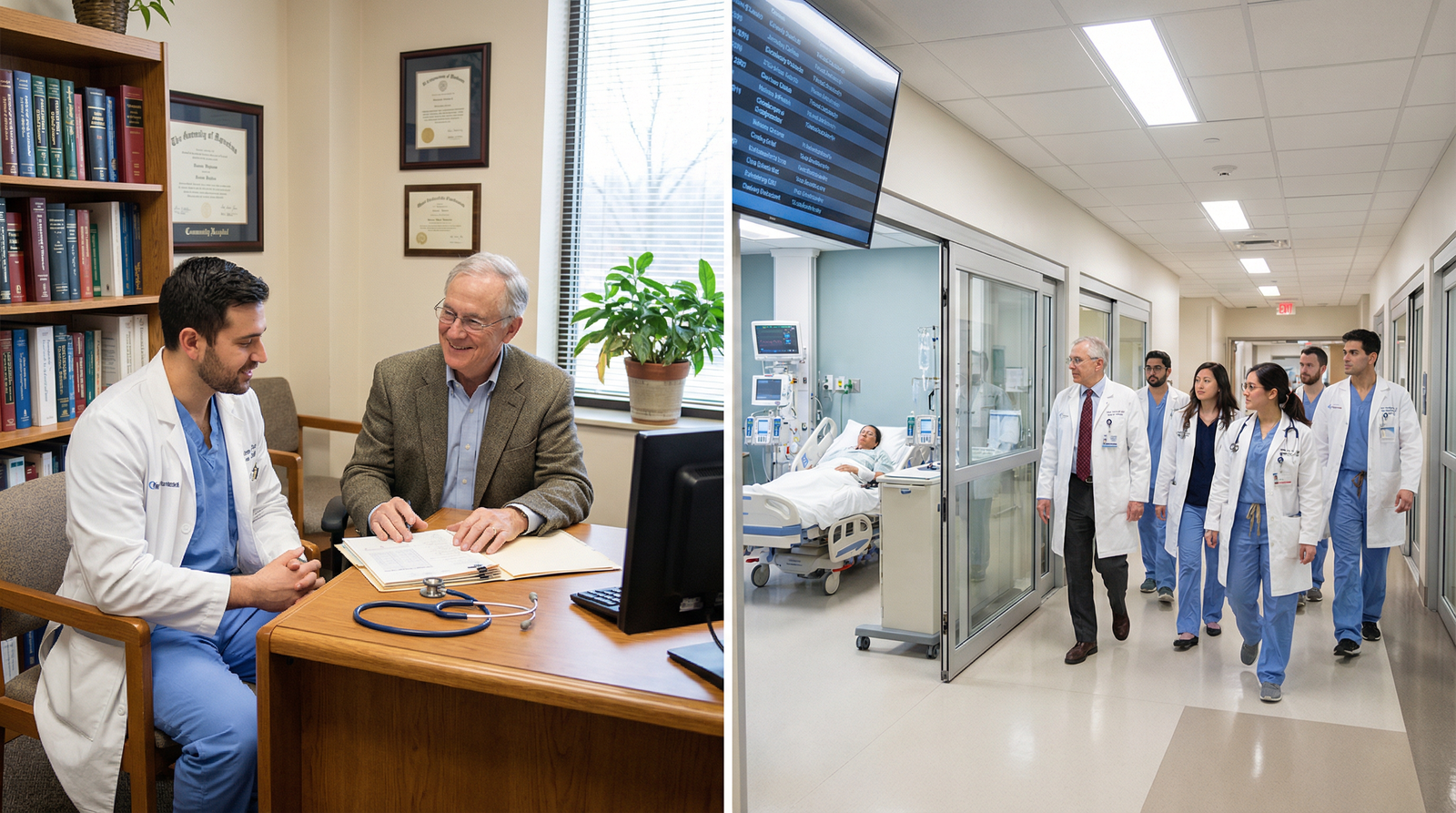
The fellowship pivot is the single most powerful weapon. I've heard it called "the great equalizer." If you complete a fellowship at a strong academic program, even coming from a community residency, you essentially re-brand yourself. Fellowship directors care more about your clinical skills and research interest than your residency pedigree. Once you're through that two- or three-year academic immersion, your community background becomes an interesting footnote, not a red flag. I personally know a resident from a small community hospital who matched into a competitive cardiology fellowship at a major university; now she's an assistant professor. The trajectory was residency → fellowship pivot → academic faculty. Her residency name? Nobody asks anymore.
Finally, reframe your personal statement and interview narrative. Don't apologize: "Unfortunately, I trained at a community-based program..." No. Say: "My training prioritized clinical independence and high patient volume, which prepared me to handle complex cases with confidence. I'm ready to bring that real-world clinical skill to your academic center and teach residents how to think on their feet." That's not spin; that's your truth. And when you believe it, they believe it too.
Data Driven: Do They Actually Care?
My anxious brain needs hard numbers. So I dug into faculty directories at about a dozen mid-tier and top-tier academic internal medicine departments. I counted where current faculty did their residency training. The results almost made me cry with relief.
Roughly 45% came from traditional academic residencies. But a full 35% had done community-based or hybrid (community/academic) residencies. The remaining 20% were international graduates or other pathways. That means over one-third of academic faculty started exactly where you are. Let that sink in. If the prestige filter were absolute, that number would be near zero.
Look at the Clinician-Educator track specifically, and the proportion of community-trained faculty jumps even higher. Many departments now prioritize teaching ability and clinical excellence over publication lists. I've seen job postings that say "strong clinical educator preferred; research experience a plus but not required." That's shouting directly at community-trained residents who've spent their residency actually teaching interns and students at the bedside, not just writing papers.
Trends matter too. There's a growing acknowledgment that medical education needs diverse training perspectives. If every faculty member comes from the same three ivory-tower pipelines, students miss out on real-world practice styles. So hiring committees actively seek geographic and training-background diversity. Your community residency may actually help you stand out in a sea of identical academic CVs.
Moving Forward Without the Imposter Syndrome
Residency didn't define you in high school, and it won't define you now. I keep a sticky note on my bathroom mirror: "Your career is a marathon, not a Match list." It sounds trite, but I need to absorb it. The people who end up as chairs, program directors, and beloved educators don't all get there because of their PGY-1 zip code. They get there because they kept showing up, kept publishing small things, kept saying yes to teaching opportunities, and refused to let a name tag become a ceiling.
Silence the inner critic by comparing yourself to yesterday, not to the Stanford resident's LinkedIn profile. I've started tracking my own small wins: the intubation I nailed solo last week, the lecture I gave med students that actually got good feedback, the QI project I finally submitted. These are the bricks of an academic career, not the logo on my badge.
Today, if you're reading this with a knot in your chest, take one concrete step. Email a potential research collaborator. Renew your specialty society membership. Plan to attend a national meeting. Write a single paragraph that articulates why your community training makes you a better clinician and educator. Then save it as a core statement for future cover letters.
You are not your program's name. You are the sum of every patient you've managed, every mistake you've learned from, and every moment you chose to stay curious. Academic medicine needs that. Please don't let a myth steal your future.