What if you match into your dream-name academic program… and then spend three years standing in the back while fellows and attendings do everything?
Yeah. That’s the nightmare, right?
You bust your ass in med school, match somewhere big and shiny, and then suddenly you’re “the note writer” while some fellow is doing every procedure and calling every shot. You graduate terrified to be alone at 3 a.m. in a community ER because you’ve literally never been the final decision-maker.
Let me say this clearly: you are not the only one obsessing over this. People act all chill on interview day, but behind the scenes everyone is whispering:
- “Are the fellows going to steal all the procedures?”
- “Do residents actually run codes or are attendings hovering?”
- “Do people graduate from here feeling ready for independent practice… or barely competent?”
Let’s unpack this without sugarcoating it.
What “Low Autonomy” Actually Looks Like (And Why It Freaks Us Out)
Low autonomy isn’t one thing. It’s a bunch of subtle daily realities that add up.
It can look like:
- Every plan being pre-written by the fellow before you see the patient.
- Attendings constantly re-writing your notes and orders instead of letting you try.
- You never being the one to consent, call the family, or make the critical call in a code.
- Procedures going: “Intern observe, senior assist, fellow do.”
The worst version? You’re PGY-3 and still asking: “Is it okay if I order this CT?” because you’ve been trained to always double-check, never decide.
And the fear is valid. Because when you graduate, no one cares where you trained. They care that you can:
- Walk into a crashing patient’s room and do something meaningful in the first 60 seconds.
- Admit the right patients, discharge safely, and own your decisions.
- Not fall apart when you can’t immediately get a consultant on the phone.
If your training environment never lets you actually own patients, that’s a problem.
But here’s the part most applicants miss: autonomy isn’t just “academic vs community.” It’s program culture, specialty norms, and how you show up.
Academic vs Community: The Real Autonomy Differences (Not the Rumors)
People talk about this like it’s binary:
Community = tons of autonomy, maybe too much.
Academic = suffocating supervision, no experience.
Reality’s more fractured.
| Aspect | Academic Program | Community Program |
|---|---|---|
| Fellows presence | Often many | Few or none |
| Procedures | Shared with fellows | Mostly residents |
| Supervision style | Closer, layered | Attending + resident |
| Patient complexity | Higher | Mixed, often high volume |
| Resident responsibility | Can be filtered through fellows | More direct attending-resident |
Now, does that mean an academic program automatically gives you less autonomy? No. I’ve seen community programs where attendings micromanage everything, and academic programs where the senior runs the show and the attending intentionally hangs back.
The scary thing is you can’t see this from the website. Or the glossy PDF. Or the big-name reputation.
You’ll see phrases like:
- “Graduated responsibility”
- “Strong supervision with appropriate autonomy”
- “Residents are the primary managers of patients”
Those are basically astrology signs. Everyone claims them; few actually define them.
How Worried Should You Be About Low Autonomy?
Let me be blunt: you should be cautious, but not paralyzed.
Here’s the mental trap I see over and over:
“If I match at Big Name Academic Hospital, my autonomy will be low and I’ll be incompetent.
If I match in a community program, my autonomy will be huge and I’ll be a beast.”
That’s comforting because it’s simple. It’s also wrong.
You should worry about three specific things, not some vague “academic = no autonomy” idea:
Who actually runs the day-to-day patient care?
Residents? Fellows? Nurse practitioners? Hospitalists?Do seniors clearly have more responsibility than interns, or is everyone equally hand-held?
Do recent grads feel prepared for what YOU want to do next?
Hospitalist? Fellowship? Rural EM? Academic career?
Your anxiety is telling you a real thing:
“I don’t want to be under-trained.”
That’s sane. The trick is using that fear to ask better questions, not making you avoid academic places automatically.
Where Autonomy Usually Drops in Academic Programs
There are some predictable problem zones.
1. Heavy-fellowship services
Big academic programs love fellow-heavy setups:
- Cards with 4 fellows and 1 resident
- ICU with multiple critical care fellows
- GI, pulm, heme/onc with constant fellow presence
If the culture is bad, this turns into:
Resident: “What should we do?”
Fellow: “Do this, I already wrote the note.”
Attending: “Okay, looks good.”
You’re just typing orders.
If the culture is good, it looks more like:
Resident proposes plan → Fellow challenges it / refines it → Attending signs off.
You still think first.
The danger isn’t “having fellows.” It’s when they insert themselves before you ever get to think.
2. Procedure-heavy specialties
EM, surgery, anesthesia, IR, etc. The ones where you’re terrified of never touching a scope or a central line.
At some academic places, the unspoken rule is:
- Fellows get first dibs on tougher or interesting cases.
- Residents are extra hands, not primary operators.
But I’ve also seen academic trauma centers where residents run the trauma bay and fellows step in only when things are derailing.
You need to find out which one you’re walking into.
3. “Protective” attendings
Some attendings grew up in old-school, sink-or-swim worlds and overcorrected:
- They call every code decision.
- They insist on being present for everything.
- They never let you place an order until they’ve fully discussed the plan.
Feels safe. Looks very “high quality care.”
Destroys your confidence.
In community programs, you sometimes get the opposite:
Attendings who are physically present but functionally in the background unless something is on fire. Residents sink or swim. That can be too much, too early—but by PGY-3, it’s gold.
How to Actually Detect Low Autonomy Before You Rank
Don’t trust program leadership on this. They usually believe their own narrative.
You want to talk to:
- Current PGY-2s and PGY-3s (PGY-1s don’t know what “autonomy” even means yet)
- Chief residents
- Recent grads if you can get them
And you want to ask pointed questions, not vague ones.
Instead of:
“Do you feel you have good autonomy here?”
Everyone will say yes. They have to.
Ask:
- “On nights in the ICU, who is actually first to the bedside for a crashing patient?”
- “Who typically intubates on nights?”
- “On your continuity clinic patients, can you discharge or change meds without staff approval each time?”
- “Have you ever been in a situation where you wanted to do a procedure but a fellow took it?” What happened?
You’re not looking for perfection. You’re looking for patterns.
If three residents from different classes all say some version of, “We run the codes, we write the plans, fellows are more like consultants,” that’s good.
If you hear, “The fellow usually does it, but they’ll let you if they’re not too busy,” that’s… a red flag. Because guess what? Fellows are always “busy.”
Here’s a simple sanity-check timeline of how responsibility should ideally grow:
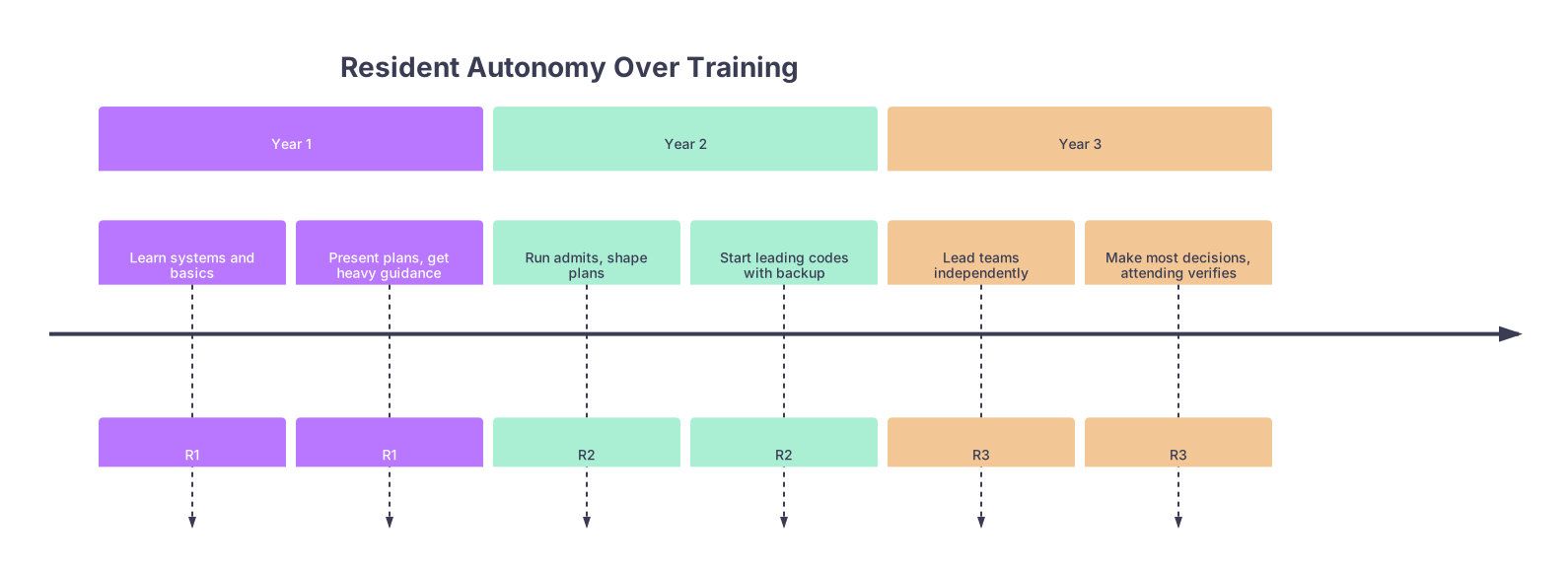
| Period | Event |
|---|---|
| Year 1 - Learn systems and basics | R1 |
| Year 1 - Present plans, get heavy guidance | R1 |
| Year 2 - Run admits, shape plans | R2 |
| Year 2 - Start leading codes with backup | R2 |
| Year 3 - Lead teams independently | R3 |
| Year 3 - Make most decisions, attending verifies | R3 |
If what residents describe doesn’t roughly match that, I’d be on edge.
Will Low Autonomy in Residency Ruin Your Career?
This is the 3 a.m. thought:
“What if I pick wrong and never catch up?”
I’ve seen people come out of low-autonomy environments and still become excellent physicians. They usually go through a painful transition:
- First job or fellowship feels like drinking from a fire hose
- They make up in 6–12 months what others got during PGY-3
- They question themselves constantly early on, but grow fast
Is that ideal? No.
Is it career-ending? Also no.
Your first job (or fellowship) will give you another big step up in autonomy. It’s not like you’re “fully cooked” the day you graduate. Programs know that.
But here’s what low autonomy does cost you:
- Confidence in that first independent role
- Emotional bandwidth (more anxiety, more second-guessing)
- A steeper learning curve when there’s nobody behind you to double-check
So yes, it matters. I’d care more about autonomy than about certain prestige points. But it’s not an irreversible disaster if you land somewhere more controlled than you hoped.
When an Academic Program Might Still Be Worth Lower Autonomy
This is where it gets messy.
Sometimes, you might accept slightly lower autonomy for:
- Phenomenal subspecialty exposure you absolutely want (e.g., you’re dead-set on cardiology or heme/onc)
- Ridiculous research opportunities that match your career goals
- A very supportive culture that will protect you from burnout
If your plan is, say, to do GI at a big academic place and stay in academia forever, then:
- Slightly fewer procedures as a resident
- Slightly more supervision
…might be a reasonable trade for a fellowship pipeline and name recognition that opens those doors.
But don’t kid yourself. If you want to be a generalist or hospitalist and feel truly comfortable day one, a super-hands-on community program will usually prepare you faster.
How to Protect Yourself If You Do Match Somewhere With Lower Autonomy
Let’s say worst-case happens: you match somewhere where fellows hover and attendings grab everything.
You’re not helpless.
You can:
Aggressively seek out the higher-autonomy rotations.
- Night float
- Community affiliate sites
- VA sites
These are often where residents quietly say, “You actually get to run things here.”
Ask for procedures. Out loud. Repeatedly.
“I haven’t gotten to do a central line in a while. Next opportunity, can I be first up?”
Annoying? Maybe. Effective? Often.Volunteer for the scary stuff with backup.
“I’ll run the next code if you can stand behind me and jump in if needed.”
Most attendings love this attitude if you’re safe and not reckless.Do mental reps even when you’re not primary.
Every patient:- What would I do if no fellow or attending was here?
- What orders would I put in?
- What would my note say?
Even if someone else is technically in charge, you train your brain to act like you are.
You can’t completely “hack” a bad autonomy culture. But you can avoid being totally passive in it.
Quick Reality Check: How Much Should This Drive Your Rank List?
Here’s my honest answer:
- If two programs feel similar overall, pick the one with more resident-run care and fewer stories of fellows doing everything.
- If the difference is huge—one is name-brand academic with rumors of being “fellow-driven,” the other is a strong community program where seniors clearly run the show—I’d strongly consider leaning toward the latter, especially if you want to be a generalist.
Just don’t let autonomy be the only thing. Burnout, toxicity, location, support, and long-term goals still matter.
Your future self doesn’t just need to be competent. They need to be sane enough to practice.
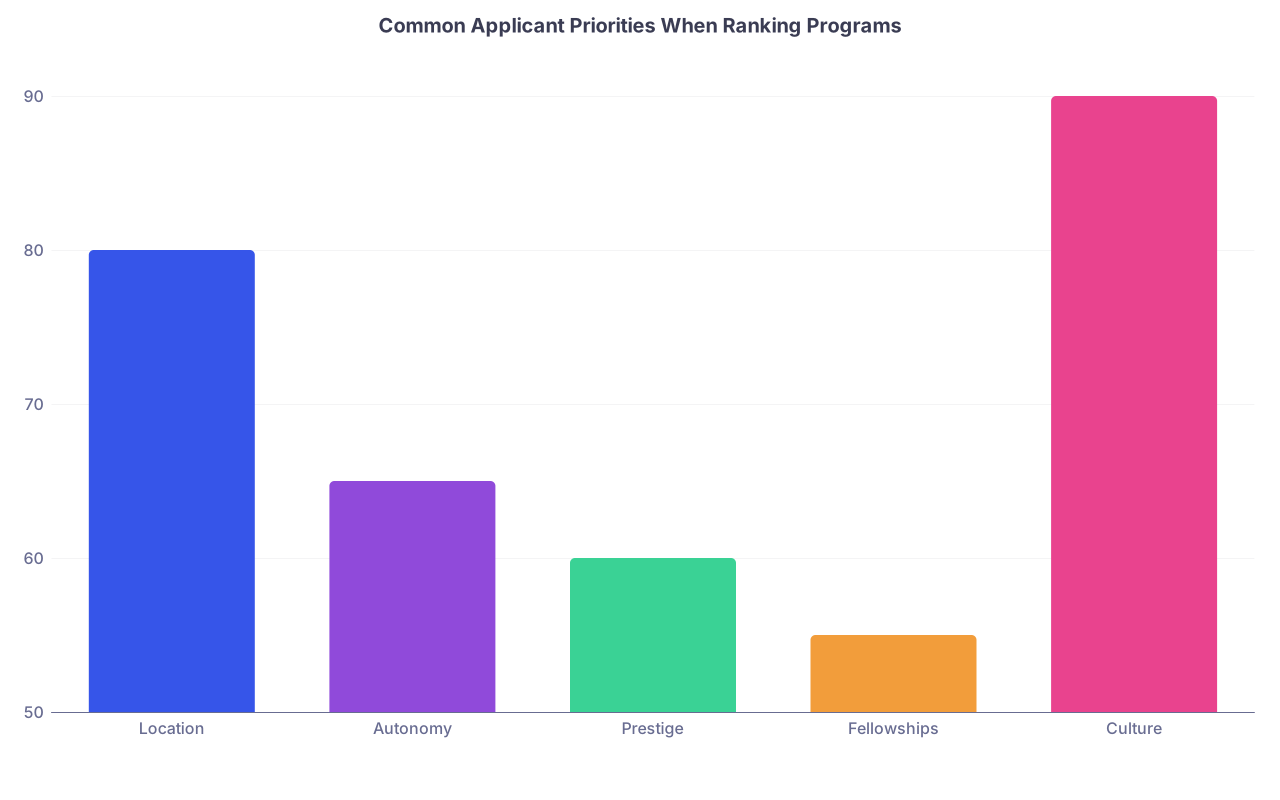
| Category | Value |
|---|---|
| Location | 80 |
| Autonomy | 65 |
| Prestige | 60 |
| Fellowships | 55 |
| Culture | 90 |
(That’s what people say. In reality, prestige still quietly hijacks a lot of rank lists.)
Try not to let shiny logos override legitimate fears about being under-trained.

FAQs
1. Should I avoid academic programs completely if I care a lot about autonomy?
No, that’s too extreme. Some academic programs have excellent autonomy with high complexity patients. The key is to identify red flags:
- Multiple fellows on every core service
- Residents repeatedly saying, “It depends which fellow you’re with” when you ask about procedures
- Seniors who don’t sound confident running things alone
Don’t blacklist “academic.” Blacklist specific programs where residents quietly admit they feel underprepared or sidelined.
2. If I want a competitive fellowship, is it safer to accept less autonomy for more prestige?
Sometimes, yes. If your dream is, for example, cardio at a top-10 program, you might accept:
- Slightly less hands-on autonomy
- More layers of supervision
- A big-name academic hospital
…in exchange for research, letters, and a strong fellowship match record.
But draw a line: if residents are openly saying they feel unready for independent practice, that’s not a small trade-off. A good academic program can do both: strong fellowships and solid autonomy by PGY-3.
3. How do I tell if residents are sugarcoating answers about autonomy on interview day?
Assume there’s always some sugarcoating. Look for:
- Hesitation before they answer.
- Phrases like “It depends,” “Usually,” “Most of the time” repeated over and over.
- Very polished, identical-sounding answers from different residents.
Ask for specific stories:
“Tell me about a night where you really felt like the doctor in charge. What happened?”
If no one has a clear story, that’s telling.
4. Is it possible to “over-autonomize” and end up unsafe in a community program?
Yes. Some community programs throw interns into situations they’re not ready for with minimal backup. That can:
- Create terrible anxiety
- Lead to bad habits or unsafe shortcuts
- Make you feel abandoned, not empowered
Healthy autonomy = you’re pushed, but there’s a real safety net. If residents talk about “being totally alone,” “attendings who don’t pick up the phone,” or “learning by failing on real patients,” that’s not admirable grit. That’s a safety problem.
Two things to keep in your head while you rank:
- Autonomy isn’t “academic vs community”; it’s specific program culture and how much you’re allowed to think and act before someone steps in.
- You want to graduate feeling like you’ve already been the doctor in charge many times—with backup—before you’re actually alone.
If a program can’t give you that by the end of residency, I’d be worried. And you’re not crazy for worrying about it now.