Last week, a PGY-1 from a community internal medicine program messaged me at 2:17 a.m. Her subject line: “Did I just ruin my future?” She’d matched to what everyone called a “solid community program”… and now every time someone on Reddit said “academic track,” her stomach dropped.
If you’re reading this, I’m guessing you know that feeling. The quiet panic. The thought loop: “I chose a community program—did I just close academic doors forever?”
Let me answer that part straight up: No, you did not slam them shut. But you also didn’t pick the easiest route into academics. Both things can be true at the same time.
What “Academic Doors” Are You Even Worried About?
Before we spiral, let’s name the actual fears. When people say “academic doors,” they usually mean:
- Fellowship at a big-name academic center
- Becoming faculty someday (attending with a university title)
- Doing meaningful research / being “a name” in a niche
- Getting competitive subspecialties ( cards, GI, heme/onc, PCCM, etc.)
At 3 a.m. your brain turns that into:
- “I’ll never match cards because I’m at a community IM program.”
- “No one will ever take my CV seriously.”
- “I’ll never be on faculty at a major institution.”
- “I’m already behind and I haven’t even started.”
Here’s the reality I’ve seen, over and over: community ≠ career death. It just usually means:
- Fewer built-in research pipelines
- Less automatic name recognition
- You having to be proactive instead of carried by the system
That’s annoying. It’s not fatal.
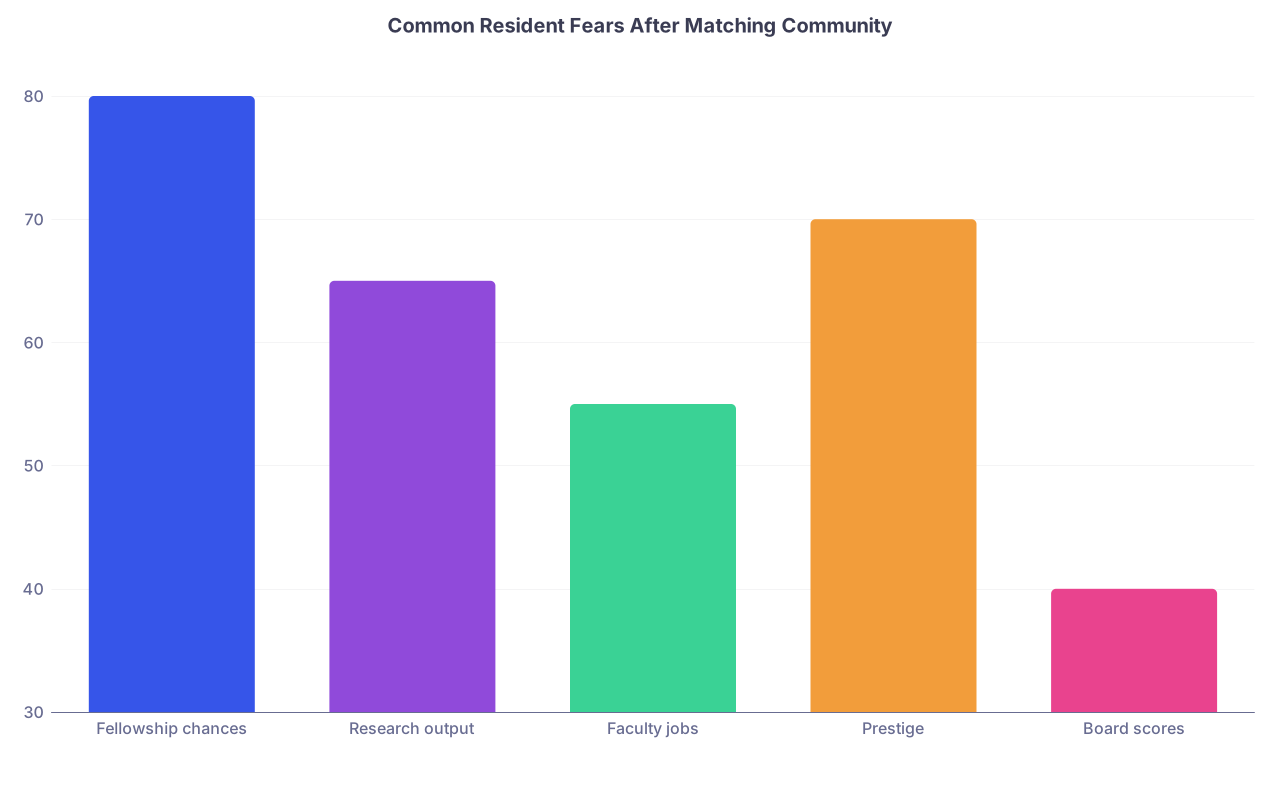
| Category | Value |
|---|---|
| Fellowship chances | 80 |
| Research output | 65 |
| Faculty jobs | 55 |
| Prestige | 70 |
| Board scores | 40 |
(Percentages represent roughly how often I hear each worry; not actual data, but very real vibes.)
Community vs Academic: What Actually Changes?
Forget the glossy brochures. Day-to-day, the main differences that affect “academic doors” are:
- Research infrastructure
- Mentorship / networking
- Case mix and complexity
- Name recognition
Research: The Big Anxiety Magnet
In a lot of academic programs, research is just… there. Database projects. Ongoing trials. Someone always recruiting residents as co-authors.
In many community programs, research looks more like:
- One or two attendings semi-interested in QI or case reports
- No established research coordinator for residents
- IRB process that feels like pushing a boulder uphill
- Zero culture of “everyone graduates with X publications”
That doesn’t mean you can’t do research. It means it won’t fall into your lap.
What I’ve seen successful community residents do:
- Grab QI and case reports early (PGY-1/early PGY-2)
- Partner with nearby academic centers (even virtually)
- Use multi-center collaborative groups (e.g., for EM, critical care, etc.)
- Present posters at regional/national conferences even if they’re “small”
Is your research life harder in a community setting compared to Mass General? Yes.
Does that automatically kill your fellowship or academic future? No.
Are Certain Specialties Harder From Community Programs?
Yes. Let’s not pretend otherwise.
Here’s a rough, honest snapshot:
| Path | From Strong Academic IM | From Community IM |
|---|---|---|
| General IM Hospitalist | Straightforward | Straightforward |
| Endocrine / Rheum | Doable | Still very doable |
| Heme/Onc | Competitive | Harder but possible |
| Pulm/CCM | Competitive | Harder but possible |
| Cards / GI | Very competitive | Significantly harder |
| Research-heavy careers | Supported | Requires extra hustle |
So if you matched a community IM program and your dream is GI at UCSF: no, that dream is not dead. But you’re going to need:
- Excellent in-training / board scores
- Strong letters
- Actual research output (not just “interested in research” on your CV)
- Probably outside mentors at academic centers
I can’t sugarcoat that. Community background + no research + average letters = not great for ultra-competitive fellowships. But that’s not about “community” being poison. That’s about the profile programs see on paper.
The Name-Brand Panic: Does Program Prestige Lock You Out?
Here’s how PDs actually think when they see “Community Hospital X” instead of “Top-20 Academic Mega-Center”:
- “Do I know this program at all?”
- “Do they train decent residents?”
- “Are there grads from there who did well in fellowship?”
- “Do I trust their letters and grades?”
What they are not doing is automatically tossing your app in the trash because you’re not from a university hospital. The bigger issue is: they don’t know what to assume. Academic names make them lazy—they already have a mental model. Community places make them pay more attention to:
- Your personal performance
- Your letters (these matter a lot more than people want to admit)
- Your research and initiative
- Board scores / in-training exams
Name helps. It’s a shortcut. But if you’re strong individually, you absolutely get looks.
“Did I Just Close Doors Forever?” – The Brutally Honest Version
Let me separate fear-brain from reality:
Doors that are basically NOT closed:
- Hospitalist positions at academic or community hospitals
- Many subspecialty fellowships, especially if you’re flexible on geography and prestige
- Teaching roles (clinician-educator tracks)
- Becoming core faculty at a community or smaller academic program
- Getting involved in QI, curriculum, or medical education
Doors that might be narrower but not shut:
- Ultra-elite fellowships at big-name places if your CV is weak
- High-powered research careers if you don’t intentionally seek research
- Tenure-track basic science researcher at a top-10 med school (this was always hard, even from Harvard)
Doors that are basically dead only if you do nothing:
- Competitive fellowship with no research, mediocre letters, and no narrative of growth
- Academic career if you never teach, never present, and never network
- Leadership if you act like residency is a 3-year victim sentence
The pattern is obvious: the “door-closing” isn’t the community label. It’s passivity + community label.
How To Keep Academic Doors Open From a Community Program
I know your brain wants concrete steps. Here’s a path I’ve seen work.
1. Identify Your “Academic Image” Early
By mid-PGY-1, bluntly ask yourself:
- Do I want fellowship? Which ones roughly?
- Do I care about research, teaching, leadership, or all of the above?
- Am I willing to put in extra work because my environment isn’t built for this?
If your honest answer is: “I want academic GI, but I’m not willing to hustle,” then yes, you’ve got a problem. Not because of community. Because the goal and effort don’t match.

| Step | Description |
|---|---|
| Step 1 | Start PGY1 at Community Program |
| Step 2 | Focus on Clinical Skills |
| Step 3 | Find Mentors Early |
| Step 4 | Join or Start Research |
| Step 5 | Present at Conferences |
| Step 6 | Apply to Fellowships |
| Step 7 | Want Fellowship or Academic Career |
2. Get Mentors—Plural, Not Just One
You need:
- One local clinical mentor who will see your work ethic and write real letters
- One academic-leaning mentor (maybe at another institution) who can plug you into projects
- Possibly a fellowship mentor in your target specialty by early PGY-2
If your program doesn’t have this built-in, that doesn’t mean you’re doomed. It means you:
- Email faculty at nearby university programs (politely, with a concrete ask)
- Network at local chapter meetings (ACP, CHEST, ACG, etc.)
- Ask your PD directly: “Is there anyone you know at [Nearby University] who works with residents on research?”
Annoying? Yes. But also how a lot of successful community residents quietly make this work.
Research from a Community Program: What Actually “Counts”?
Here’s the part people mess up: they think if it’s not a randomized controlled trial in NEJM, it’s worthless. That’s nonsense.
What matters from a fellowship / academic standpoint:
- Can you complete projects?
- Can you contribute intellectually?
- Do you have something on your CV that shows curiosity + follow-through?
These “smaller” things are not nothing:
- Case reports (especially if presented as posters)
- Quality improvement projects with real outcomes
- Retrospective chart reviews
- Multicenter collaboratives
- Educational projects (curriculum, teaching tools, etc.)
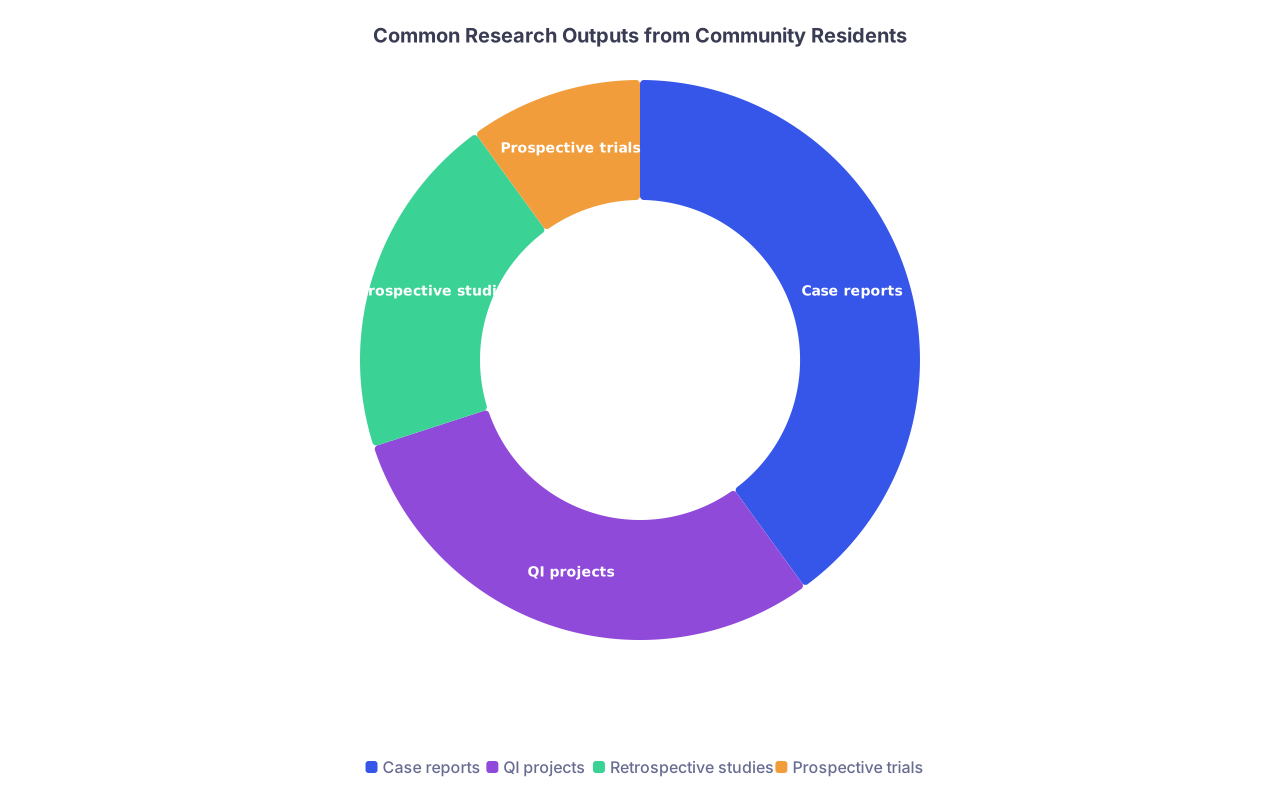
| Category | Value |
|---|---|
| Case reports | 40 |
| QI projects | 30 |
| Retrospective studies | 20 |
| Prospective trials | 10 |
Do you need some publications for competitive fellowships? Yes, realistically.
Do they all have to come from your home program? Absolutely not.
I’ve seen community residents co-author papers with faculty 3 time zones away. They never even met in person until a conference.
The Quiet Advantage of Community Programs (That No One Talks About)
Everyone focuses on what you lose going community. Let’s talk about what you quietly gain:
- Tons of autonomy faster
- More direct patient responsibility
- Often, closer relationships with attendings (smaller program, fewer trainees)
- Real-world medicine, not just zebras and tertiary referrals
Fellowship directors do notice when a community grad walks in and can just… handle things. Write notes. Manage cross-cover. Not panic at 2 a.m. That clinical maturity is real currency.
If you pair that with:
- Solid board scores
- At least some research
- Strong letters that actually say “this person is top X% I’ve worked with”
You’re competitive. Maybe not for the “flex on Twitter” fellowships. But for genuine academic paths? Yes.
If You’re Already PGY-2 or PGY-3 and Just Now Panicking
You’re not too late. You’re just out of time for perfection.
Very condensed reality check:
- PGY-1: Ideal time to start research / find mentors
- PGY-2: Crucial time to solidify projects, get something submitted, line up letters
- PGY-3: You need to be applying; scrambling for first-ever research now is… rough
But even then, doors aren’t shut. They just may require:
- A chief year
- A hospitalist year to build your CV
- Research fellowship / extra year to get papers and mentors
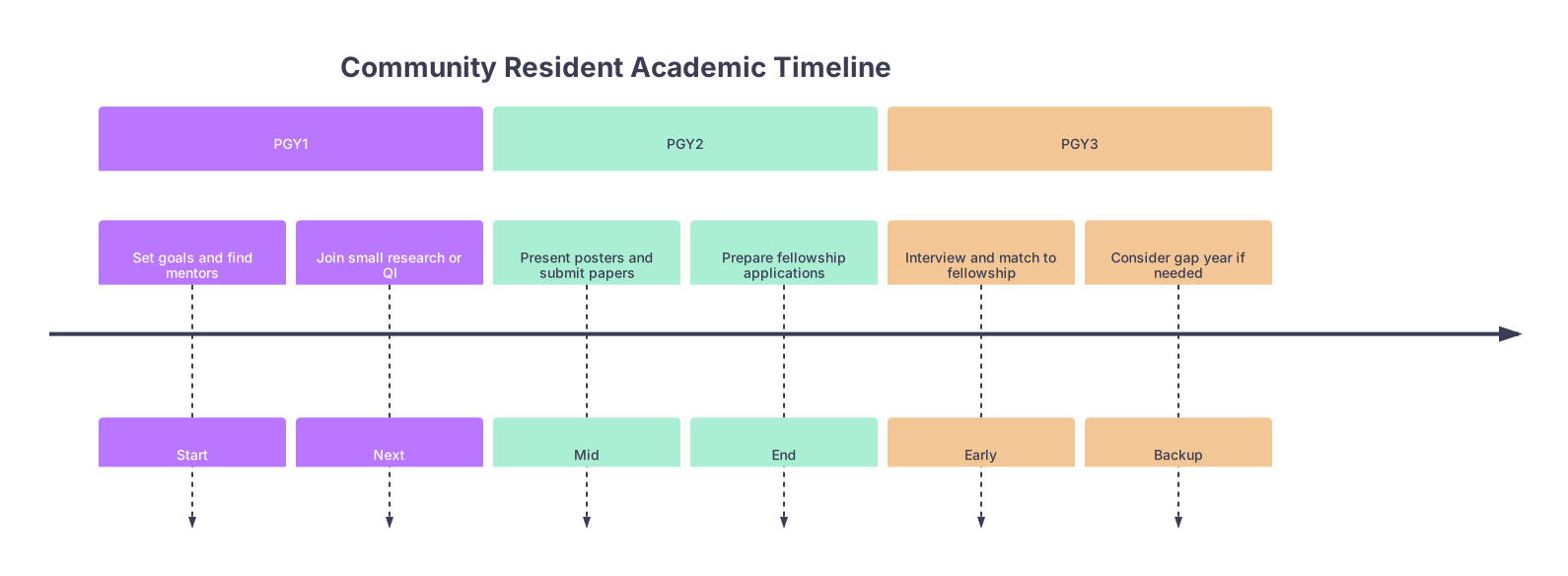
| Period | Event |
|---|---|
| PGY1 - Set goals and find mentors | Start |
| PGY1 - Join small research or QI | Next |
| PGY2 - Present posters and submit papers | Mid |
| PGY2 - Prepare fellowship applications | End |
| PGY3 - Interview and match to fellowship | Early |
| PGY3 - Consider gap year if needed | Backup |
I’ve seen people “backdoor” into great fellowships after a year or two of hospitalist work plus research. That’s not failure. That’s a different path.
What You Should Stop Doing Right Now
If you matched a community program and your anxiety is screaming, please stop:
- Doomscrolling Reddit threads written by people flexing their 10 pubs from T20 schools
- Comparing your path to the one guy from your class who matched derm at Harvard
- Telling yourself “it’s over” before you’ve even started PGY-1
You will waste the exact energy you need to actually build the CV you’re so worried about.
Instead, use that anxiety as fuel to be specific:
- What specialty do I care about?
- Do I actually want academics, or am I chasing prestige because everyone else is?
- What 2–3 concrete things can I do this year to keep doors open?
Example Scenarios (So You Don’t Think I’m Being Vague)
Community IM → Cards fellowship at solid academic program
- 2–3 case reports + 1 retrospective study with outside collaborator
- Top 10–15% on in-training exams
- PD and cardiologist letters that say “top resident” not “hard-working”
Community FM → Academic clinician-educator
- Heavy involvement in teaching students
- Curriculum project or education QI
- Presentations at state AAFP or education conferences
- Hired as faculty at an affiliated med school / residency
Community EM → Academic EM with research
- Join multicenter collaborative networks
- Lots of abstracts and a few publications
- Transition to academic ED job with protected research time
None of those are hypotheticals. I’ve watched versions of each.

Quick Reality Check: Are You Actually Trapped?
Ask yourself these three things, and answer honestly:
- Am I willing to put in extra effort because my program doesn’t hand me academic opportunities?
- Am I clear about what kind of “academic” I want: research-heavy, clinician-educator, or just “big-name fellowship”?
- Am I open to non-perfect paths (gap year, research year, hospitalist year before fellowship)?
If your answer is yes to those, no, you did not close academic doors forever by choosing a community program.
You just chose a path where you can’t coast.
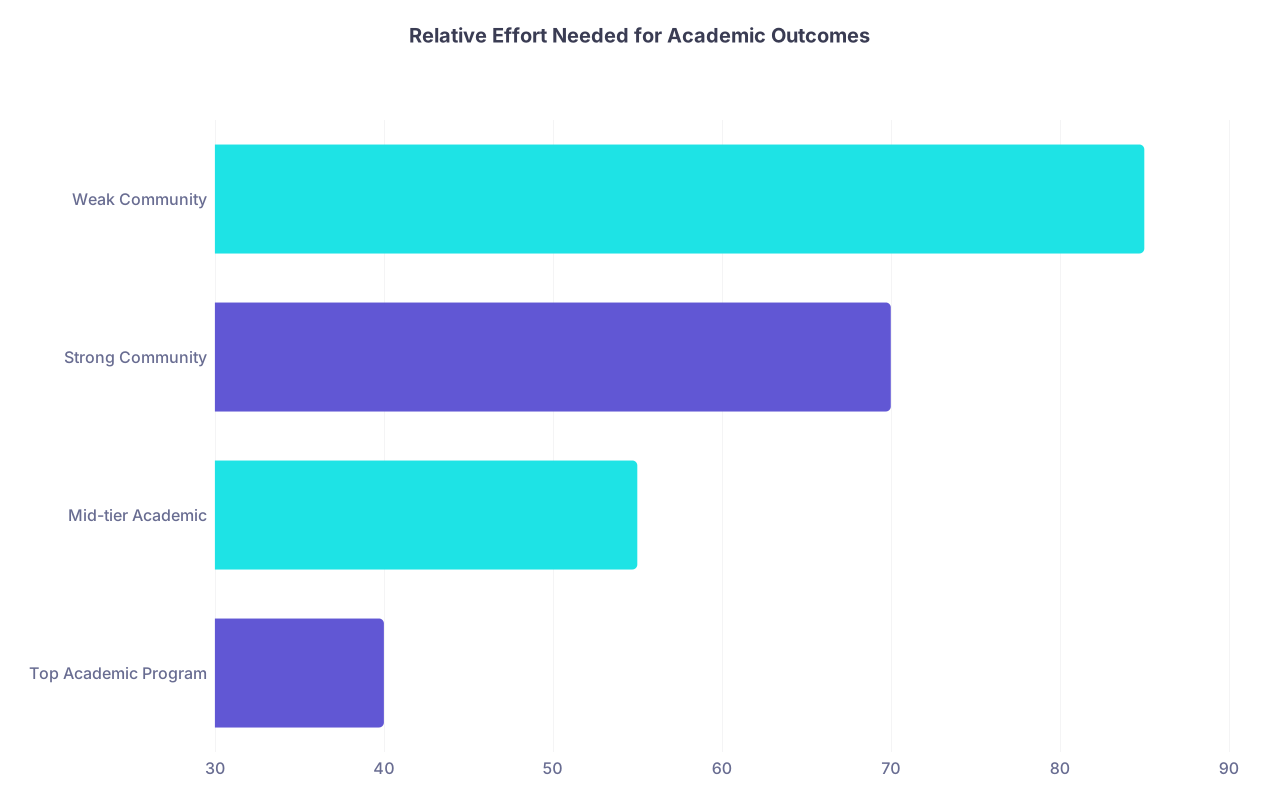
| Category | Value |
|---|---|
| Top Academic Program | 40 |
| Mid-tier Academic | 55 |
| Strong Community | 70 |
| Weak Community | 85 |
(Again, not literal data—just the relative effort I consistently see people needing to put in.)
FAQs
1. Is it basically impossible to get a competitive fellowship (cards, GI, heme/onc) from a community program?
Not impossible. Harder, yes. The bottlenecks are usually research and letters, not the label “community” itself. If you’re at a strong community program, crush your in-training/boards, get real research (even if it’s with outside institutions), and secure powerful letters from subspecialists, you can match competitive fellowships. You might need to be flexible on geography and prestige, and you might not end up at the absolute top-5 name, but the specialty itself is not off the table.
2. Do fellowship PDs look down on community programs automatically?
No, but they do have less “automatic trust.” With a big academic name, they already know the culture and baseline trainee quality. With a community program, they rely more heavily on how your PD and faculty describe you, your exam scores, and your tangible output (research, presentations, leadership). If other grads from your program have done well in fellowship, that helps a lot. If they haven’t, then you become the one who has to prove the outlier story.
3. If my community program has zero research, can I still build an academic career?
Yes, but you can’t stay passive. You’ll probably need to: reach out to nearby academic centers, join multicenter collaboratives, do QI that’s publication-worthy, and possibly consider a research or chief/hospitalist year before applying to fellowships or academic jobs. It’s more legwork, more emails, and more self-directed effort. It’s not clean or linear, but it’s very doable if you’re persistent.
4. Should I try to transfer to an academic program to “save” my career?
Transferring is possible but rare and messy. It usually requires: a clear reason, full support from your current PD, and an open funded position somewhere else (which doesn’t happen often). If your current program is malignant, unsafe, or truly non-supportive, then yes, explore it. But if you just have prestige FOMO, you’re probably better off investing energy into making the most of where you are: find mentors, seek research, build your CV. A lateral move for name alone often isn’t worth the disruption.
5. Will being at a community program stop me from ever working at a big-name academic hospital?
No. Many academic hospitalists and even some subspecialists did community residency then fellowship at an academic center, or community residency plus strong academic engagement later. Once you’ve done fellowship at an academic institution, your residency type matters less. What matters is how you performed at each step, your references, and whether your skill set matches what they need (teaching, research, leadership, etc.).
6. I’m a new PGY-1 in a community program and freaking out—what should I do in the next 6–12 months?
Three things. First, be excellent clinically; your reputation starts now, and future letters depend on it. Second, identify at least one mentor at your home program and start asking specifically about research, QI, or teaching opportunities. Third, get something small started—case report, QI, a chart review—within PGY-1, even if it feels minor. Early momentum matters way more than the project’s prestige. That combination—strong clinical performance, early mentorship, and tangible academic activity—is exactly how you keep doors open instead of spending all year in a panic spiral.
Key points, so your 3 a.m. brain has something to hold onto:
- Choosing a community program did not slam academic doors shut; it just means you can’t be passive if you want those doors open.
- Fellowships and academic jobs care more about your performance, letters, and output than the single word “community” on your CV.
- If you’re willing to hustle—seek mentors, create research, and build a track record—you can still get where you want to go, even if the path isn’t the shiny, straight-line version you imagined.