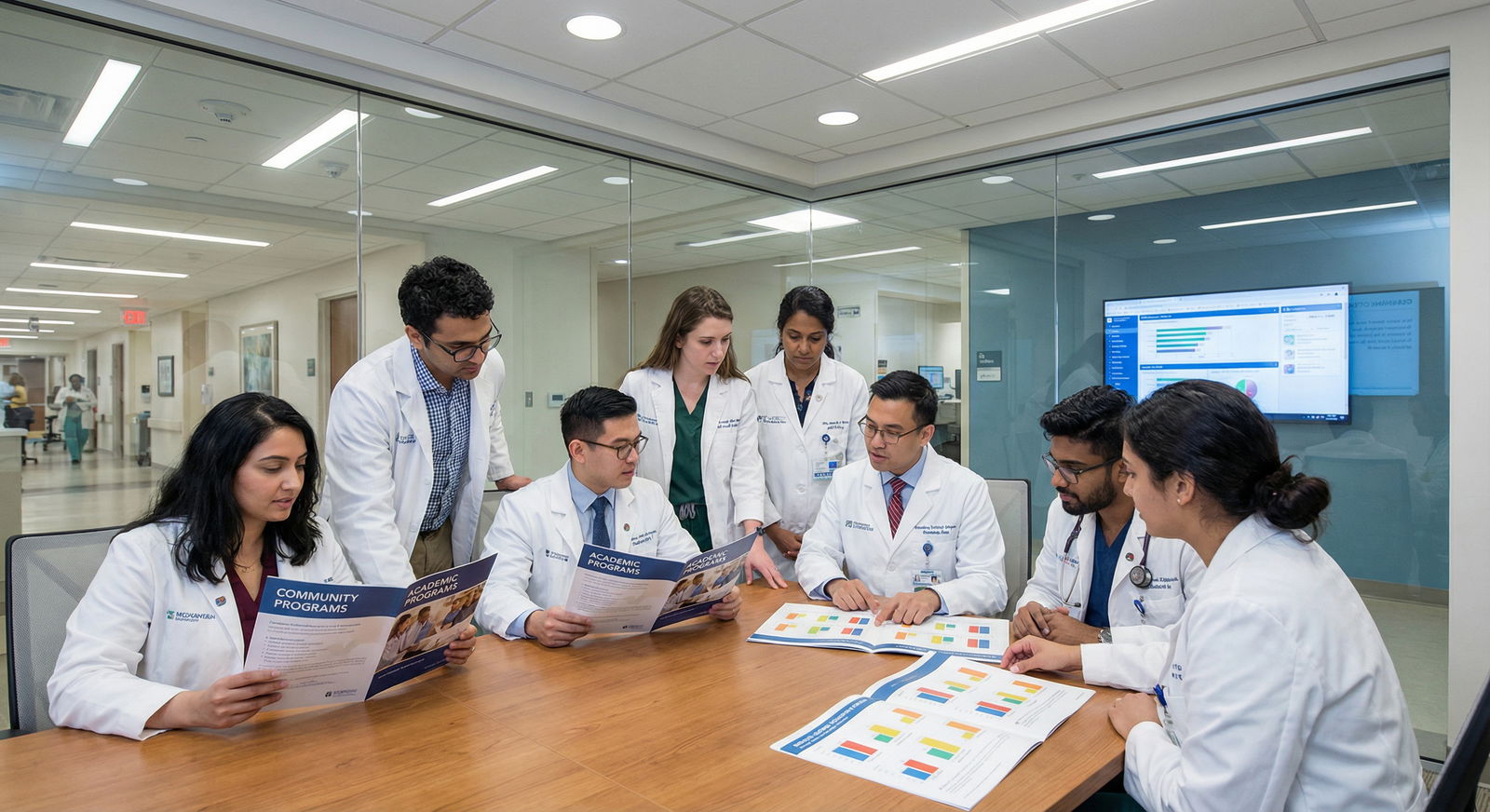
Introduction: Choosing Between Community and Academic Programs in Healthcare Education
Selecting the right training environment is one of the most important decisions in your medical career pathway. Whether you are applying to medical school, residency, or advanced allied health training, you will encounter two broad categories of Healthcare Education settings: community programs and academic programs.
Both play critical roles in preparing the healthcare workforce. Community programs are often rooted in local hospitals and clinics, prioritizing direct patient care and service to their surrounding population. Academic programs are typically based in university-affiliated teaching hospitals, emphasizing research, scholarly activity, and subspecialty exposure.
For residency applicants in particular, understanding how Community Programs and Academic Programs differ can clarify which environment aligns best with your learning style, career goals, and long-term professional identity. This guide breaks down the key differences in curriculum, training style, faculty, student support, and career pathways—and offers practical tips to help you make informed decisions during the residency match and application process.
Understanding Community vs. Academic Programs in Medical Training
What Are Community Programs?
Community programs are usually anchored in non-university, community-based hospitals or health systems. While some may have academic affiliations (e.g., as a “community-based, university-affiliated” residency), their primary mission is service to the local population.
Typical characteristics of community programs:
- Based in community hospitals, regional medical centers, or safety-net institutions
- Strong emphasis on hands-on clinical experience and service delivery
- High volume of bread-and-butter pathology relevant to primary care and general practice
- Often smaller classes and more intimate resident cohorts
- Less focus on bench research; quality improvement (QI) or clinical projects may be more common
Primary objectives of community programs:
Service-Oriented Training
Prepare trainees to deliver high-quality, efficient care to the community’s immediate needs—especially in primary care, emergency medicine, hospital medicine, and general specialties.Practical Skills Development
Emphasize procedural competence, independent clinical decision-making, and efficient patient management. Residents often gain early autonomy, managing full patient panels or service lists.Rapid Transition to Practice
Many community programs are designed to prepare graduates to enter the workforce quickly—joining group practices, hospitalist teams, or outpatient clinics immediately after completion.
What Are Academic Programs?
Academic programs are typically located at or directly affiliated with medical schools and university teaching hospitals. They serve a dual mission: training future clinicians and advancing medical knowledge through research and scholarship.
Typical characteristics of academic programs:
- Based in university hospitals or large tertiary/quaternary care centers
- Broad exposure to subspecialties and complex, rare conditions
- Strong academic infrastructure: research mentors, labs, grants, and conferences
- Larger residency classes and multi-tiered teams (medical students, interns, senior residents, fellows)
- Structured pathways for clinician-educators, physician-scientists, and healthcare leaders
Primary objectives of academic programs:
Theoretical and Scholarly Mastery
Provide deep grounding in pathophysiology, evidence-based medicine, and research methodology. Trainees learn not only “what to do,” but “why” and “how we know.”Diverse Learning and Career Options
Facilitate exploration of multiple specialties and subspecialties, from interventional cardiology to health services research. Offer dedicated tracks (e.g., medical education, global health, health policy).Advanced Career Pathways
Prepare graduates for academic careers (faculty positions), subspecialty fellowships, leadership roles in health systems, and positions in research, public health, and healthcare administration.

Key Differences in Curriculum and Clinical Exposure
1. Curriculum Structure and Educational Focus
Community Programs:
- Curriculum design: Often streamlined and clinically focused, with a strong emphasis on core rotations (e.g., general medicine, general surgery, pediatrics, emergency medicine, obstetrics).
- Didactics: Regular conferences, morning reports, and board review sessions, but typically fewer subspecialty conferences compared to large academic centers.
- Scope of practice: Heavy exposure to common conditions—hypertension, diabetes, COPD, uncomplicated pregnancies, orthopedic injuries, etc.—mirroring what many clinicians see in everyday practice.
- Flexibility: Some community programs offer electives at academic centers for subspecialty exposure or research for interested residents.
Academic Programs:
- Curriculum design: Often complex and highly structured, with core rotations plus numerous subspecialty rotations (e.g., transplant, electrophysiology, advanced oncology, rare disease clinics).
- Didactics: Robust educational infrastructure, including grand rounds, subspecialty conferences, journal clubs, morbidity and mortality (M&M) conferences, and research seminars.
- Broader exposure: Greater likelihood of seeing rare diseases, tertiary referrals, and advanced therapies (ECMO, LVADs, complex neurosurgery, etc.).
- Scholarly expectations: Many academic residencies require or strongly encourage research projects, QI initiatives, and academic presentations.
Actionable tip for applicants:
Review each program’s rotation schedule and didactics description on their website or FREIDA/ERAS listing. Ask residents during interviews:
- How much time is spent in general vs. subspecialty rotations?
- Are there required scholarly projects?
- How much elective time is there, and how can it be used?
2. Training Style, Autonomy, and Team Structure
Community Programs:
- High clinical autonomy: Residents may assume attending-like responsibilities earlier, especially at smaller hospitals where there are fewer fellows or subspecialty teams.
- Team composition: Typically consists of attending physicians and residents, sometimes with advanced practice providers (NPs/PAs), but fewer fellows and students.
- Workflow: Focused on efficiency—admissions, discharges, and continuity of care. You may directly handle more procedures and patient encounters.
- Learning style: Practical, case-based learning at the bedside and in the clinic. Teaching tends to be embedded in daily clinical work.
Academic Programs:
- Layered teams: Often include attending, fellows, senior residents, interns, and medical students. Each level has specific roles in teaching and supervision.
- Gradual autonomy: Responsibility typically increases with each year of training, with careful oversight early on.
- Research and teaching integration: Residents often participate in teaching students and may receive formal training in education methods. Evidence-based practice and literature discussion are emphasized.
- Subspecialty exposure: Fellows may perform more procedures, so residents need to be proactive in seeking hands-on opportunities.
Actionable tip for applicants:
During interviews, ask how programs balance autonomy and supervision. Questions to consider:
- When do residents start independently managing patients or performing procedures?
- How are night shifts or ICU services structured?
- What role do fellows play in resident education and procedural opportunities?
Faculty, Mentorship, and Educational Culture
3. Faculty Involvement and Mentoring Styles
Community Programs:
- Faculty profile: Many faculty are full-time clinicians deeply rooted in the community. They bring real-world practice insight—billing, practice management, work-life balance, and patient communication.
- Mentorship focus:
- Preparing for community-based practice
- Contract negotiation, outpatient practice setup, or hospitalist careers
- Quality improvement projects that directly impact local healthcare delivery
- Access to faculty: Smaller programs often mean closer relationships; attendings may know residents personally and provide individualized guidance.
Academic Programs:
- Faculty profile: Includes clinician-educators, physician-scientists, and subspecialists with significant research or leadership portfolios.
- Mentorship focus:
- Research pathways (MD/PhD, clinical trials, health services research)
- Academic career development: obtaining grants, publishing, teaching, and promotion
- Subspecialty fellowships (e.g., cardiology, GI, critical care, oncology)
- Structured mentoring: Often formal mentorship programs, scholarly oversight committees, and access to multiple potential mentors across departments.
Actionable tip for applicants:
Reflect on your career interests:
- If you see yourself in private practice, hospitalist medicine, or outpatient care, community mentors can provide invaluable real-world advice.
- If you aspire to research, teaching, or subspecialty careers, academic mentors and research infrastructure may be more important.
Student and Resident Support, Wellness, and Career Outcomes
4. Support Services and Learning Environment
Community Programs:
- Career-focused support:
- Assistance with local job placement
- Networking with regional practices and health systems
- Support for licensing, credentialing, and board preparation
- Wellness and community:
- Tight-knit resident cohorts, often described as “family-like”
- Opportunities to get deeply involved in local health initiatives (free clinics, screenings, outreach programs)
- Resources: May have fewer research labs and fewer formal academic development offices, but often invest in practical skills workshops, simulation labs, and test-prep resources.
Academic Programs:
- Comprehensive support systems:
- Offices for student/resident affairs, wellness, and counseling
- Academic advising, learning specialists, research offices, and grant support
- Access to university resources (libraries, simulation centers, interprofessional education)
- Scholarly support:
- Help finding mentors and research projects
- Funding for conferences and electives abroad or at other institutions
- Wellness initiatives: Institutional wellness programs, peer support groups, and professional development seminars are common.
Actionable tip for applicants:
Ask programs to describe their wellness initiatives, support for struggling learners, and career counseling services. Consider:
- Do they offer mental health services specifically for trainees?
- How do they support residents preparing for board exams?
- Is there dedicated staff for fellowship or job placement advising?
5. Post-Graduation Career Pathways and Competitiveness
Community Programs:
- Common career outcomes:
- Primary care (family medicine, internal medicine, pediatrics)
- Hospitalist positions
- Emergency medicine roles
- Community-based specialties (e.g., general surgery, OB/GYN, psychiatry in community settings)
- Employment advantages:
- Strong ties with local and regional employers
- Programs are often located in areas with high physician demand, leading to rapid job placement
- Fellowship potential:
- Many graduates do successfully match into fellowships, especially when they pursue research or away rotations.
- Some competitive fellowships may favor academic backgrounds, but strong performance and targeted mentorship can bridge this gap.
Academic Programs:
- Common career outcomes:
- Subspecialty fellowships (e.g., cardiology, GI, critical care, rheumatology, surgical subspecialties)
- Academic faculty positions (clinician-educators, physician-scientists)
- Leadership tracks in health systems, quality improvement, and medical education
- Fellowship and research advantage:
- Built-in exposure to subspecialists and research mentors
- Institutional reputation and existing fellowship networks can facilitate placement
- Non-academic careers:
- Graduates also join community practices and hospitalist groups; an academic residency does not obligate you to stay in academia.
Actionable tip for applicants:
Review each program’s recent graduate outcomes:
- Where do graduates practice (community vs academic settings)?
- What fellowships have residents matched into in the last 3–5 years?
- How many graduates pursue research or teaching careers?
Real-World Examples: Community and Academic Pathways in Action
Community Program Example: Primary Care and Nurse Practitioners
Consider a community-based program training family medicine residents and nurse practitioners (NPs) in a region with high rates of diabetes, obesity, and limited specialty access.
Training environment:
- Residents and NPs manage large panels of patients with chronic diseases.
- They participate in community-based initiatives—mobile clinics, health fairs, school-based programs.
- QI projects may target issues like improving vaccination rates or reducing hospital readmissions.
Outcomes and advantages:
- Graduates become highly skilled in managing common conditions, coordination of care, and preventive medicine.
- They often report strong patient relationships and high satisfaction from serving underserved populations.
- Local clinics and hospitals frequently hire graduates, creating a seamless transition to independent practice.
Academic Program Example: Physician-Scientist and Medical Scholars
In contrast, take an internal medicine residency at a major academic medical center with multiple subspecialty fellowships and active research labs.
Training environment:
- Residents rotate on transplant, oncology, advanced heart failure, and ICU services.
- Many residents participate in bench or clinical research, sometimes with protected research blocks.
- Some pursue dual-degree or physician-scientist pathways, working with mentors who hold national grants.
Outcomes and advantages:
- Graduates are competitive for subspecialty fellowships, academic faculty positions, and research careers.
- They contribute to clinical trials, guidelines, and innovations in diagnostics or therapeutics.
- For those driven by inquiry and scholarship, this environment accelerates academic development.
How to Decide: Matching Program Type to Your Goals
When considering Career Pathways in Healthcare Education, there is no universal “better” choice between community and academic programs. The key is alignment with your:
- Career aspirations (community practice vs. academia vs. subspecialty focus)
- Preferred learning style (hands-on and autonomy-focused vs. research- and theory-rich)
- Lifestyle and values (urban vs. smaller city, patient population, institutional culture)
Questions to Ask Yourself
- Do I see myself primarily as a community clinician, subspecialist, educator, researcher, or some combination?
- How important is it for me to have protected research time or publish during training?
- Do I want early, broad clinical autonomy, or a more stepwise approach within a larger academic team?
- What patient population do I feel most called to serve—urban underserved, rural communities, complex tertiary care patients?
- Where have graduates from this type of program gone, and does that align with my vision?
Strategic Application Approach
Many applicants apply to a mix of community and academic programs to keep options open:
- If strongly fellowship- or research-oriented, you might prioritize academic programs but still include strong community-based, university-affiliated programs.
- If your goal is immediate practice in a particular region, emphasize community programs in that area and evaluate their job placement track record.

Frequently Asked Questions (FAQ)
1. Are community residency programs less prestigious than academic programs?
Not inherently. Prestige is influenced by program reputation, clinical outcomes, graduate success, and fit for your goals, not simply whether a program is community or academic. Some community programs are nationally respected for producing outstanding clinicians and have strong fellowship match rates. Likewise, some smaller academic programs may be less well-known.
Instead of focusing on perceived prestige, look at:
- Board pass rates
- Graduate job and fellowship placements
- Faculty engagement and resident satisfaction
- Clinical volume and educational quality
2. Can I match into a competitive fellowship from a community program?
Yes, it is absolutely possible—especially from strong community or community-based, university-affiliated programs. Key factors that help:
- Excellent clinical performance and strong evaluations
- High scores and board pass results
- Involvement in research or QI projects, even if smaller in scale
- Strong letters of recommendation from recognized faculty
- Strategic networking, electives at academic centers, and presentation at regional/national conferences
If fellowship is a priority, ask community programs specifically about their recent fellowship match outcomes and available scholarly opportunities.
3. Do academic programs provide better clinical training than community programs?
They provide different emphases rather than universally “better” training. Academic programs offer exposure to rare conditions, advanced therapies, and subspecialists, which is invaluable for certain career paths. Community programs typically provide:
- Higher volume of common, real-world pathology
- Earlier autonomy in day-to-day patient management
- Strong preparation for primary care and community-based practice
Many outstanding clinicians come from both environments. The best clinical training for you is the one that aligns with how and where you plan to practice.
4. Can I move from an academic environment to a community practice later (or vice versa)?
Yes. Graduates of academic programs frequently enter community practice as hospitalists, primary care physicians, or general specialists. Likewise, community-trained physicians often:
- Join academic faculty in clinician-educator roles
- Return to academic centers for fellowship or faculty positions
- Participate in teaching medical students and residents in community-based programs
Your residency type influences, but does not rigidly determine, your future path. Your performance, networking, scholarly work, and ongoing professional development matter more in the long term.
5. How should I choose between community and academic programs when ranking my list in the Match?
Consider these practical steps:
- List your priorities: fellowship potential, autonomy, research, location, lifestyle, patient population.
- Score each program you interviewed at based on how well it meets those priorities.
- Talk to mentors who know you well; ask where they see you thriving based on your strengths and interests.
- Trust your interview impressions: culture, resident morale, and your gut sense of “fit” are crucial.
- Remember: both community and academic programs can provide excellent training; your effort, engagement, and adaptability will ultimately shape your success.
By understanding the key differences between community and academic programs in Healthcare Education, you can approach the residency match and other Medical Training decisions with clarity and confidence. Align the program type with your career pathways, learning style, and personal values, and you will be well-positioned to thrive—regardless of whether your future home is a bustling academic center or a high-impact community hospital.