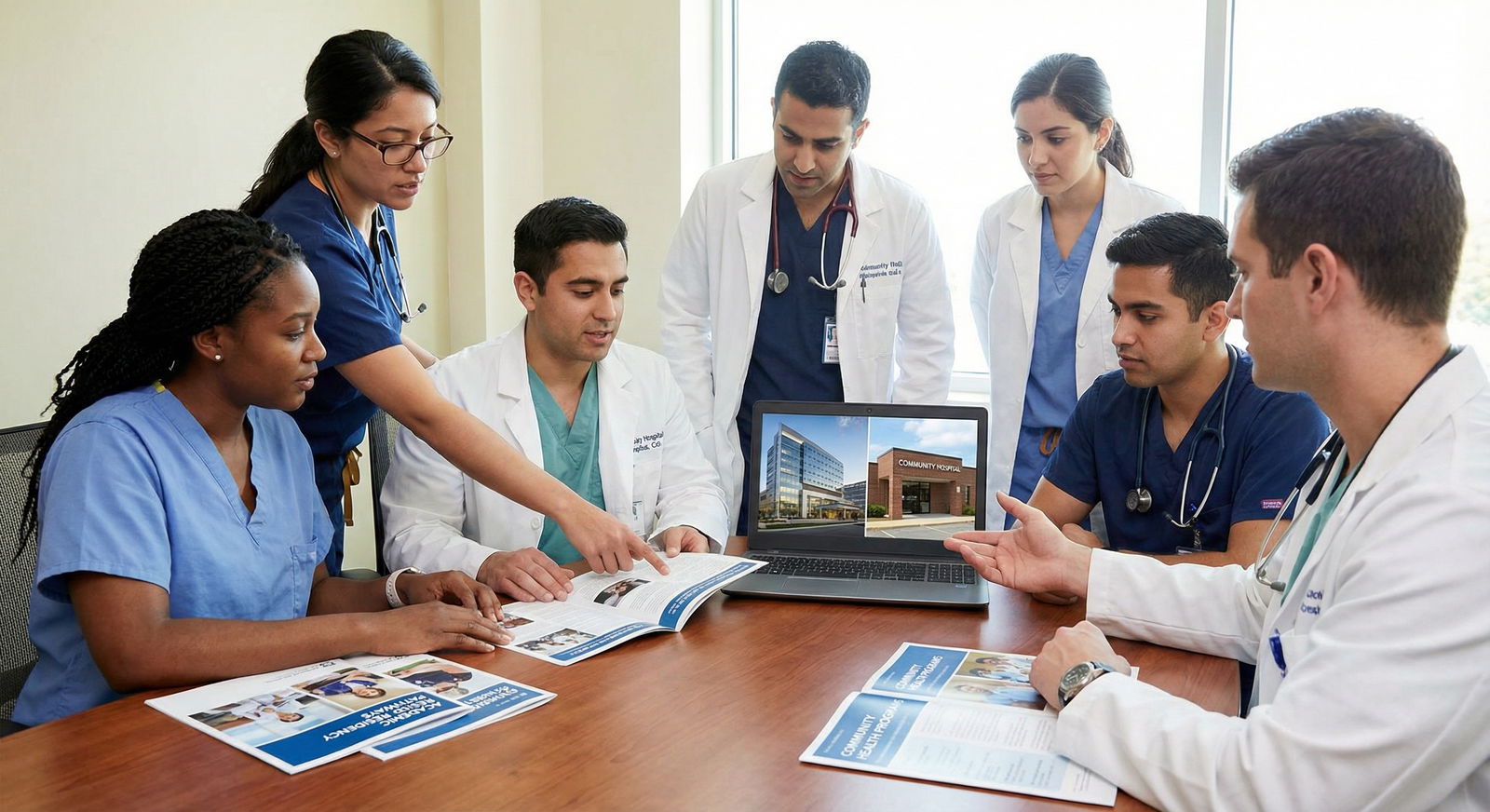
In the transition from medical school to residency, choosing the right training environment is one of the most important career decisions you will make. For many applicants, the key question becomes: Should I choose a community residency program or an academic residency program?
Both types of Residency Programs can produce excellent physicians. Neither path is inherently “better”; they simply offer different strengths, cultures, and opportunities. Understanding these differences—and how they align with your goals in Medical Education, Community Health, and Academic Medicine—will help you make a choice that supports your future Career Choices.
Community Residency Programs: Structure, Strengths, and Trade-offs
What Is a Community Residency Program?
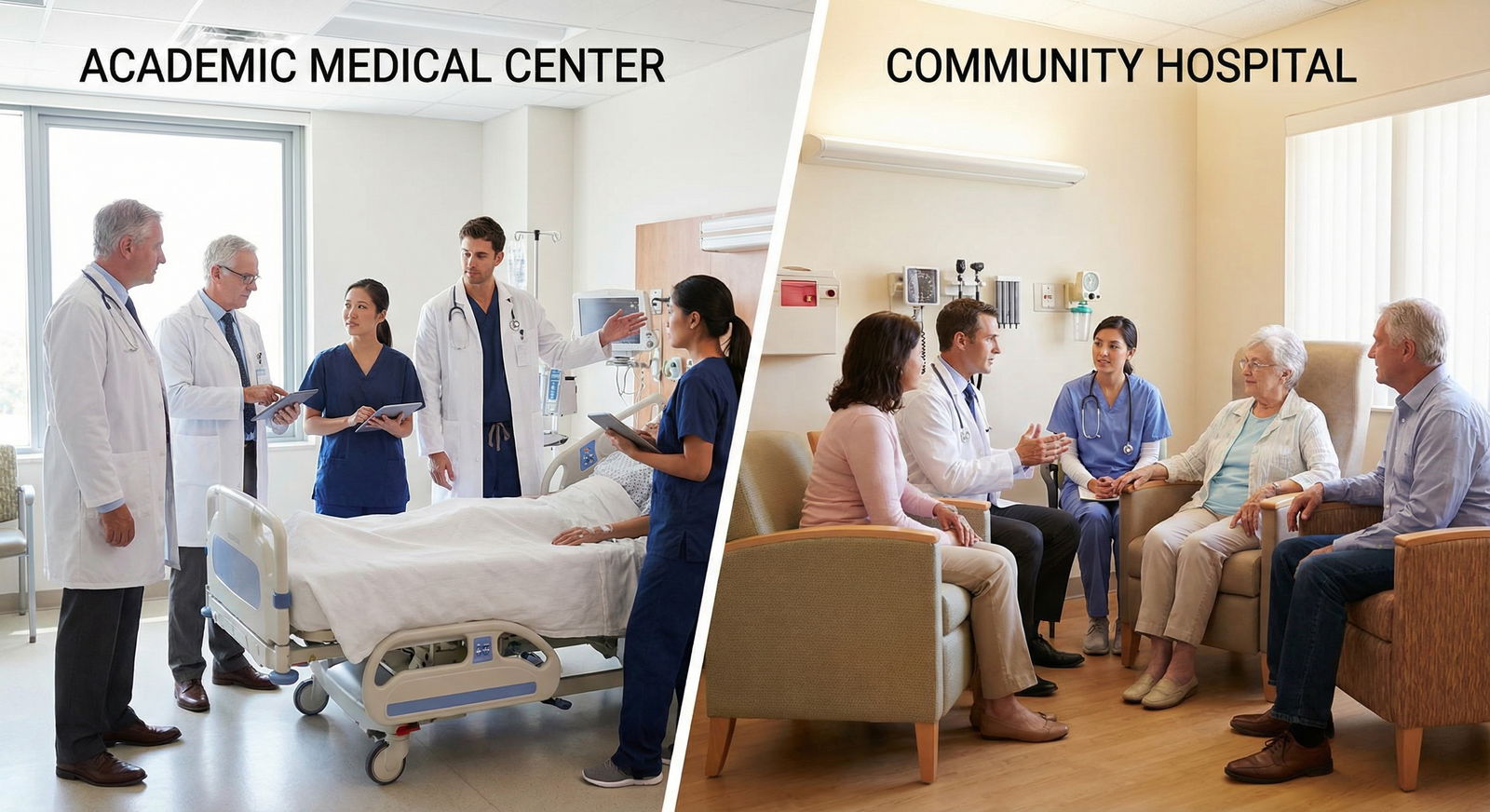
Community residency programs are usually based in community hospitals or regional health systems rather than large university medical centers. Many are affiliated with a medical school, but their primary mission is delivering patient care to the local community—often including underserved or rural populations.
Common characteristics include:
- Training primarily in non-university hospitals
- Strong focus on primary care and generalist practice
- Heavy emphasis on direct patient care and service
- Often located in smaller cities, suburbs, or rural areas
- Frequently mission-driven around Community Health and access to care
These programs are essential to the healthcare system: they train physicians who will serve where patients live, not just in tertiary referral centers.
Advantages of Community Programs
1. Intensive Hands-On Clinical Experience
Community programs often provide early and extensive autonomy in patient care. As a resident, you’re frequently:
- The primary decision-maker at the bedside
- Performing procedures (e.g., paracenteses, central lines, joint injections) more often
- Managing high patient volumes with less “layering” of teams
For example, in a community Internal Medicine program, a PGY-2 might be the first to respond to codes, coordinate care with consultants, and discharge planning. This direct responsibility accelerates your growth into an independent clinician.
Who benefits most?
Students who want to:
- Build confidence in day-to-day clinical decision-making
- Practice in outpatient or community-based settings
- Work in resource-limited or rural environments
2. Strong Primary Care and Generalist Focus
Many community programs are structured to prepare residents for primary care careers:
- More continuity clinic time
- Longitudinal relationships with patients and families
- Broad exposure to common ambulatory conditions
- Emphasis on preventive care, chronic disease management, and population health
This environment is ideal if you’re considering Family Medicine, General Internal Medicine, General Pediatrics, or community-focused specialties like OB/GYN or Emergency Medicine with a strong service orientation.
3. Potentially Better Work–Life Balance
While all residency is demanding, many community programs:
- Have fewer formal research expectations
- May involve less evening/weekend academic conference time
- Sometimes offer more predictable schedules, especially in outpatient-heavy programs
This can mean slightly more flexibility to maintain relationships, hobbies, and wellness routines—though this varies widely by program and specialty.
4. Closer-Knit Culture and Mentorship
Community programs are often smaller, which can foster:
- Tight-knit resident cohorts
- More direct access to program leadership
- Long-term mentorship relationships with attendings
- A strong sense of “family” within the residency
Residents frequently cite program culture and feeling known as individuals as major strengths of community training.
5. Rich Exposure to Real-World Community Health
Because community hospitals serve their immediate population, you’ll see:
- Bread-and-butter conditions in high volume
- Social determinants of health (housing instability, food insecurity, lack of insurance)
- Challenges of care coordination in fragmented systems
- Opportunities to participate in Community Health initiatives and outreach clinics
This can be extremely rewarding if you care deeply about health equity and real-world practice.
Disadvantages and Limitations of Community Programs
1. Fewer Built-In Research Opportunities
Most community programs have:
- Limited basic science infrastructure
- Fewer large clinical trials or research centers
- Less protected time for scholarly projects
This does not mean research is impossible—many community residents publish case reports, QI projects, and clinical studies—but it usually requires more self-direction and initiative.
If you’re strongly interested in Academic Medicine (e.g., becoming a physician-scientist or full-time faculty researcher), you’ll need to be intentional in seeking out mentors and projects.
2. Variable Exposure to Rare or Highly Specialized Cases
Because community hospitals often refer out complex cases, you may see:
- Fewer rare diseases
- Less exposure to advanced surgical techniques or highly subspecialized procedures
- Limited experience with cutting-edge therapies (e.g., some transplant care, complex oncologic interventions)
Some community programs address this by:
- Sending residents to academic centers for elective rotations
- Partnering with subspecialists who rotate through the community hospital
Still, if your goal is a very competitive subspecialty fellowship, this is an important factor to investigate for each program.
3. Perceived Prestige and Branding
Academic centers with national recognition often carry more brand prestige. Some employers and fellowship directors may more easily recognize the names of major university hospitals.
That said:
- Many community programs have strong reputations regionally.
- Solid clinical skills, strong letters of recommendation, and board scores often matter more than program label alone.
- For community-based practice, local experience can be a major asset.
The key is to understand how well a specific program’s graduates match into fellowships or jobs that interest you.
Academic Residency Programs: Structure, Strengths, and Challenges
What Is an Academic Residency Program?
Academic residency programs are based in university hospitals or major teaching hospitals closely affiliated with a medical school. Their missions usually integrate:
- Patient care
- Medical Education
- Research and innovation
- Training physician-leaders and subspecialists
These programs often serve as regional or national referral centers for complex cases, housing multiple subspecialty services and advanced technology.
Advantages of Academic Programs
1. Extensive Research and Scholarship Opportunities
Academic programs are ideal if you:
- Enjoy asking research questions
- Want to publish or present at conferences
- Are considering a career in Academic Medicine
You can benefit from:
- Access to NIH-funded labs, clinical trials, and QI initiatives
- Statisticians, research coordinators, and grant offices
- Structured research tracks or dedicated research years (in some specialties)
- Mentors with established research portfolios
This environment can help you:
- Build a strong CV for competitive fellowships
- Develop skills in critical appraisal and evidence-based practice
- Contribute to guidelines, protocols, and advances in care
2. Prestige, Visibility, and Networking
Training at a well-known academic institution can provide:
- Name recognition that may help open doors, particularly for:
- Competitive specialties (e.g., dermatology, neurosurgery, interventional cardiology)
- Highly desirable fellowship programs
- Access to national leaders in your field
- Networking through faculty, visiting professors, and alumni
However, prestige should never be the only factor in your decision; personal fit and day-to-day training quality also matter greatly.
3. Broad and Complex Clinical Exposure
Academic centers:
- Serve as tertiary or quaternary care hospitals
- See rare diseases, complex multi-organ failure, and unusual pathologies
- Use advanced technology (ECMO, transplant, cutting-edge imaging and procedures)
You’ll frequently work with:
- Multiple subspecialty teams
- Intensive care units with specialized focuses
- Multidisciplinary tumor boards, transplant conferences, etc.
This can be particularly beneficial if you aim for subspecialty training or want deep exposure to complex medicine and surgery.
4. Structured Educational Environment
Academic programs often have:
- Robust didactic schedules (morning report, grand rounds, journal clubs)
- Simulation centers for procedural and crisis training
- Formal feedback and mentoring systems
- Dedicated educators and program leadership focused on Medical Education
If you’re a learner who thrives with structure, regular teaching, and formal curricula, academic environments can be a great fit.
5. Opportunities for Teaching and Leadership
You’ll often have substantial roles in:
- Teaching medical students at the bedside and in small groups
- Leading teams as senior residents
- Participating in curriculum development or educational QI
For those interested in a career that includes teaching, debriefing, and mentoring, academic programs provide abundant opportunities to develop these skills.
Disadvantages and Challenges of Academic Programs
1. Intense Competition for Entry
Academic programs—especially at top-tier institutions—can be very competitive. Applicants often need:
- Strong USMLE/COMLEX scores
- Robust research or scholarly activity
- Stellar letters from known faculty
- Evidence of commitment to the specialty
If your application has limitations (late specialty switch, exam challenges), you may need to cast a wider net and consider a mix of academic and community programs.
2. Heavy Workload and High Expectations
Academic residency can be demanding, with:
- High patient complexity
- Extensive documentation
- Added responsibilities (research, teaching, leadership roles)
- Night float or ICU-heavy rotations
Balancing clinical duties with academic expectations can challenge your work–life balance. Some residents thrive in this environment; others may find it overwhelming.
3. Less Autonomy Early On (Sometimes)
Because teams are larger and patient care is shared across multiple layers (students, interns, residents, fellows, attendings), you may:
- Have less direct ownership of patients initially
- Share procedures with fellows or advanced practice providers
- Spend more time coordinating care across many services
This is not universal—some academic programs prioritize resident autonomy—but it is something to explore during interviews and second looks.
4. Limited Exposure to True Community Practice
Academic hospitals are not always representative of:
- Community resource constraints
- Outpatient-heavy workflows
- Private practice dynamics
- Rural or small-town medicine
If your long-term goal is small-community or rural practice, you should make sure your program offers:
- Community hospital rotations
- Outpatient continuity experiences in non-academic settings
- Elective time in rural or underserved clinics
Key Factors to Consider When Choosing Between Community and Academic Programs
Selecting the right program type is less about “which is better” and more about which is better for you. Use the following framework as you prepare your residency application strategy for the Residency Match.
1. Clarify Your Long-Term Career Goals
Ask yourself:
- Do I envision myself in primary care, community-based practice, or hospitalist work?
- Am I strongly interested in subspecialty fellowship training?
- Do I want a career that includes research, teaching, or educational leadership?
- Am I drawn to Academic Medicine as a long-term path, or do I prefer to focus mainly on direct clinical care?
General trends (with exceptions):
- Community programs often align well with:
- Primary care careers
- General hospitalist medicine
- Community-based Emergency Medicine
- Long-term Community Health work
- Academic programs often align well with:
- Fellowship-heavy specialties (cardiology, GI, heme/onc, etc.)
- Physician-scientist or clinician-educator careers
- Leadership roles in large health systems or medical schools
2. Evaluate Your Interest in Research and Scholarship
Consider:
- Do you enjoy designing studies, analyzing data, writing manuscripts?
- Or do you prefer quality improvement, clinical pathway projects, or teaching?
If research is central to your identity, prioritize:
- Academic programs with strong research infrastructure
- Tracks or pathways in Academic Medicine
- Demonstrated resident publications and conference presentations
If you mainly want a solid clinical foundation with occasional small projects, many community programs with some academic affiliation may be sufficient.
3. Weigh Lifestyle and Wellness Priorities
All residencies are challenging, but you can still consider:
- Call schedules and night float structures
- Support services (scribes, ancillary staff, APPs)
- Program approaches to resident wellness and time-off policies
- Commute, cost of living, and local support networks
In general:
- Community programs may have fewer formal academic obligations outside clinical time.
- Academic programs may require more evenings/weekends for conferences, scholarly work, or teaching.
Talk honestly with current residents about how sustainable the workload feels.
4. Think Strategically About Geographic and Personal Factors
Location is not trivial. Reflect on:
- Proximity to family or support systems
- Where you might want to practice after residency
- Visa and licensure considerations if you’re an international medical graduate (IMG)
Community and academic programs can both be found in urban, suburban, and rural areas. However:
- Academic centers tend to cluster in larger cities.
- Community programs offer more options in smaller cities and towns, which may align better with certain lifestyle or family needs.
Training in a particular region often makes it easier to stay and practice there long-term due to networking and familiarity.
5. Assess Program Culture and Fit
Regardless of “community” vs. “academic,” culture varies dramatically between programs. As you interview:
- Ask about resident support, communication with leadership, and responses to feedback.
- Note how residents interact with one another and with faculty.
- Look at resident retention and whether residents seem genuinely satisfied.
Helpful questions:
- “How does the program respond when residents struggle?”
- “What kinds of graduates does this program tend to produce?”
- “Can you describe a time the program made a change based on resident feedback?”
Your day-to-day happiness often depends more on program culture than on its classification as community or academic.

Practical Strategies to Decide and Build Your Rank List
1. Create an Honest Self-Profile
Before the interview season:
- List your top 3–5 career priorities (e.g., fellowship, primary care, geographic stability, research).
- Reflect on your learning style (structured vs. self-directed).
- Consider your resilience and support needs.
Then categorize programs you’re interested in as:
- Primarily academic
- Primarily community
- Hybrid (community-based with strong academic affiliation and research)
Aim for a balanced application list that matches your competitiveness and goals.
2. Use Data to Evaluate Outcomes
For each program, try to find:
- Fellowship match lists (for academic and some community programs)
- Job placement trends (hospitalist vs. outpatient vs. subspecialty)
- Board pass rates
- Resident scholarly output (publications, presentations)
Patterns matter more than isolated anecdotes. If a community program reliably places residents into competitive fellowships, it may be a strong choice even if it’s not a “big name.”
3. Ask Targeted Questions on Interview Day
Adapt questions to program type:
For community programs:
- “What research or QI opportunities are available for residents?”
- “How do you support residents applying for competitive fellowships?”
- “Do residents rotate at academic centers or tertiary hospitals?”
For academic programs:
- “How do you balance service demands with education and research?”
- “What opportunities are there to rotate in community or rural settings?”
- “How is resident autonomy structured and promoted?”
Specific, concrete questions will give you a clearer picture than broad queries like “What are your strengths?”
4. Prioritize Fit Over Labels
It is common to match into:
- A community program and later pursue an outstanding academic fellowship
- An academic program and later choose a community-based practice
Your residency does not permanently lock in your career path. It does, however, shape your early development, mentorship, and opportunities. Choose a place where you believe you will:
- Be supported
- Grow as a clinician
- Align with the program’s mission and expectations
FAQs: Community vs. Academic Residency Programs
1. What is the main difference between community and academic residency programs?
The primary difference lies in their mission and environment:
- Community programs focus on delivering direct patient care to their local population, often emphasizing primary care, hands-on experience, and Community Health.
- Academic programs integrate patient care with research and teaching, focusing on Medical Education, innovation, and training future subspecialists and academic leaders.
Both types can provide excellent clinical training; the right fit depends on your goals and preferences.
2. Are community programs less prestigious, and will that limit my career options?
Community programs may have less national name recognition than some major academic centers, but this does not automatically limit your career. Key factors in your future opportunities include:
- Your clinical performance and evaluations
- Board exam scores
- Letters of recommendation
- Any research or scholarly work you complete
- Networking and mentorship
Many community-trained residents successfully match into competitive fellowships and academic positions, especially when they seek out available resources and excel clinically.
3. Can I match into an academic fellowship after training at a community program?
Yes. Transitioning from a community residency to an academic fellowship is very possible. To strengthen your application:
- Identify mentors who are well connected in your field of interest.
- Engage in research, QI projects, or case reports, even on a smaller scale.
- Attend regional or national conferences and present posters or talks.
- Use elective time to rotate at academic centers or with subspecialty services.
- Start planning early—ideally in your PGY-1 or early PGY-2 year.
Programs with a track record of successful fellowship matches in your area of interest are especially promising.
4. How should I decide which type of program to rank higher on my list?
Base your rank list on fit with your long-term goals and daily life preferences, not just reputation. Consider:
- Your interest in research and Academic Medicine
- Desire for primary care vs. subspecialty practice
- Work–life balance needs and wellness priorities
- Geographic preferences and family considerations
- How supported and valued you felt during the interview and interactions
If a particular program—community or academic—aligns more closely with your personal and professional goals, it should rank higher.
5. How can I evaluate the quality of a specific residency program?
To assess program quality:
- Review accreditation status and any citations.
- Ask about board pass rates and fellowship/job placement.
- Look at the curriculum, rotation sites, and patient populations.
- Speak with current residents (preferably without faculty present) about strengths and challenges.
- Explore resident involvement in quality improvement, research, and teaching.
- Consider program stability (leadership longevity, recent changes).
Remember that “quality” includes both objective measures and subjective fit. The best residency for someone else might not be the best for you.
Choosing between community and academic residency programs is ultimately about aligning your training environment with your ambitions, values, and needs. By thoughtfully considering your career goals, interest in research, lifestyle preferences, and the culture of each program, you can make an informed decision that sets you up for a fulfilling, successful life in medicine.