
The phrase “good bread and butter training” has misled more residents than almost any other line in residency recruiting.
The Hidden Trap Behind “Bread and Butter” Training
You are not choosing a job. You are choosing the clinical skill set, exposure, and reputation that will follow you for the rest of your career. That “strong bread and butter” community program everyone keeps praising? It can be fantastic. Or it can quietly close doors you never get back.
The mistake I see over and over:
A student picks a community-heavy or non-academic program because “I just want to be a solid clinician and do bread and butter,” without realizing how that choice silently caps their options.
And then PGY‑3 hits. Suddenly they care about:
- A competitive fellowship
- A subspecialty niche
- Academic medicine, teaching, or research
- Moving to a different region or practice type
Now they are stuck explaining away:
- Minimal research
- Weak letters from unknown faculty
- Limited complex pathology or tertiary care exposure
- Zero name recognition with fellowship directors
The problem is not community programs. The problem is blindly accepting “bread and butter” as a selling point without asking: “Bread and butter for what kind of career?”
Community vs Academic: The Real Differences That Matter
Let me strip away the brochure language and the “we’re like a family” noise. Here is what actually tends to differ between pure community programs, community programs with academic affiliation, and large academic centers.
| Feature | Pure Community | Community-Affiliated | Large Academic |
|---|---|---|---|
| Case complexity | Low–moderate | Moderate–high | High |
| Research infrastructure | Minimal | Variable | Strong |
| Fellowship availability | Rare | Some | Many |
| Subspecialist presence | Limited | Moderate | Extensive |
| Name recognition for fellowships | Low | Variable | High |
The dangerous assumption:
“I want to do general practice, so community is enough.”
Here is where that logic fails:
- Many “generalists” later change their minds
- Even community jobs increasingly want subspecialty skill sets or fellowship training
- Market conditions shift; what looks safe now might not be safe in 10 years
You should never pick a training site that only prepares you for one narrow version of your future.
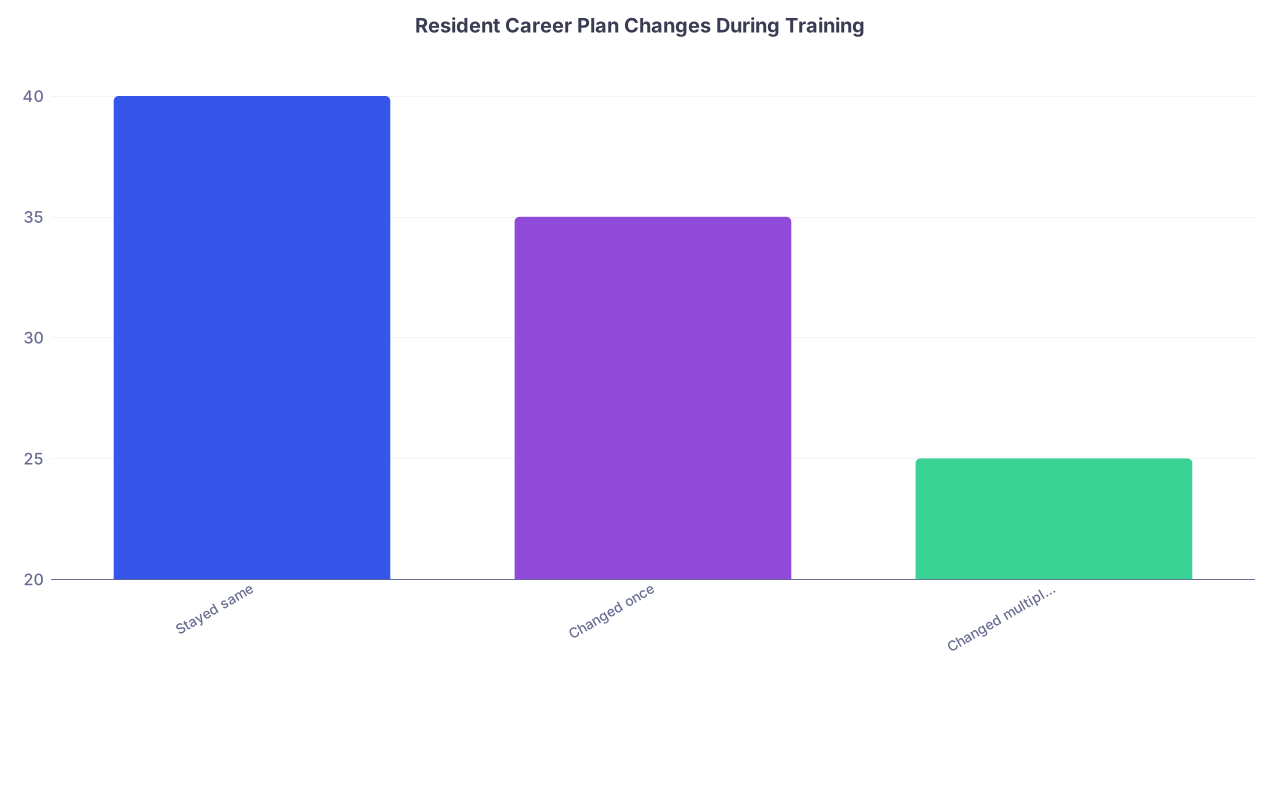
| Category | Value |
|---|---|
| Stayed same | 40 |
| Changed once | 35 |
| Changed multiple times | 25 |
I have watched people start IM residency saying “I will be a hospitalist forever” and then:
- Fall in love with cards after a rotation
- Have a mentor in GI who changes their brain
- Realize they hate nights and want outpatient subspecialty
- Get burned out and seek more control via fellowship training
Bread and butter training that does not keep those doors open is not safe. It is restrictive.
The Most Costly Misconceptions About “Bread and Butter”
Mistake 1: Thinking “Bread and Butter” Means You Will Be Well-Prepared for Anything
No. Bread and butter means you are seeing common, relatively straightforward pathology. You become very good at:
- Uncomplicated pneumonia, COPD, heart failure tune-ups
- Uncomplicated deliveries or low-risk OB (in Ob/Gyn)
- Standard cholecystectomies and hernia repairs (in surgery)
- Stable psych, depression, anxiety (in psychiatry)
What you may not see enough of:
- Cutting-edge therapies and devices
- Very sick tertiary/quaternary care patients
- Rare diseases or unusual presentations
- Complex interdisciplinary cases that fellowship directors care about
If you later decide to apply to a high-end fellowship, and your case logs and stories are all routine, the committee will see it instantly.
Mistake 2: Confusing High Volume With High Quality or High Complexity
Community programs love saying:
“We are very high volume. You will see tons of bread and butter.”
High volume of:
- Low-acuity ED visits
- Routine deliveries
- Simple inpatient medicine without ICU-level care
does not translate into:
- Strong board prep for complex questions
- Comfort handling rare but catastrophic pathology
- A CV that excites academic programs
You can be extremely busy and still under-trained for anything beyond basic work.
Mistake 3: Ignoring Research and Academic Infrastructure
If you think you will “probably not do research,” stop. This is where people sabotage future options.
At a purely community program:
- There might be no biostatistician
- No protected research time
- No active clinical trials
- No one who regularly publishes in your field
So when PGY‑2 you suddenly wants cards or GI or heme/onc, you are scrambling:
- Trying to invent a project from scratch
- Cold-emailing faculty for meaningless retrospective chart reviews
- Competing with applicants from academic centers who already have abstracts, posters, and maybe a publication or two
Fellowship directors do not care that your program was “busy” and “hands-on” if you bring nothing on paper that proves academic engagement.
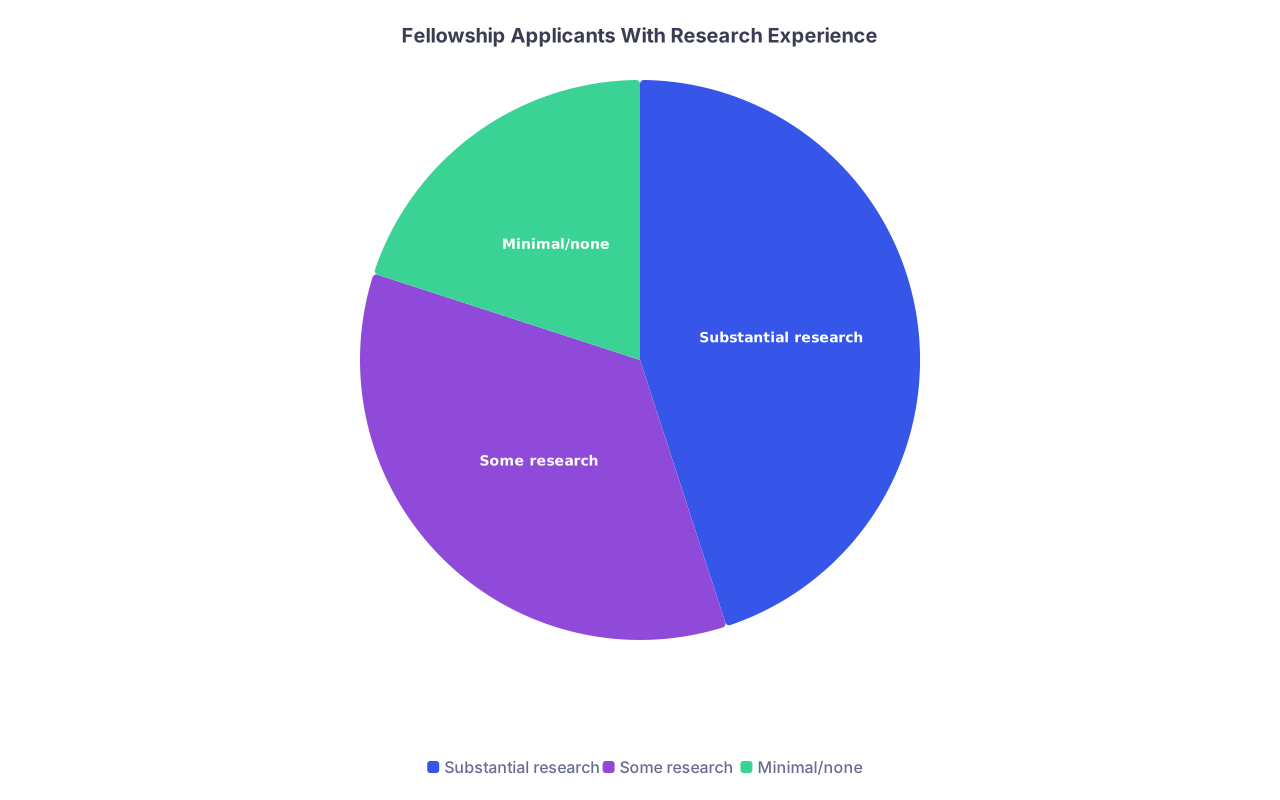
| Category | Value |
|---|---|
| Substantial research | 45 |
| Some research | 35 |
| Minimal/none | 20 |
If your honest goal is to keep doors open, you do not choose a setting that makes even minimal research extremely hard.
Mistake 4: Overrating “Autonomy” Without Asking What That Really Means
Community programs often advertise “great autonomy” compared with academic places where attendings and fellows are everywhere.
Sometimes that autonomy is excellent. Sometimes it is code for:
- Thin supervision
- Attending physically not present
- Outdated practices
- You doing things by yourself because there is no one else
That may feel empowering as a PGY‑1. It feels less impressive when:
- Your fellowship interviewer asks about advanced techniques or guidelines you never used
- You realize your management style is 5–10 years behind academic standards
Autonomy is only useful if:
- You are learning current best practices
- You have mentors who can correct and refine you
- You are not just practicing unsupervised community medicine as cheap labor
Specific Ways “Bread and Butter” Becomes a Limitation
Here is where the rubber actually meets the road.
1. Fellowship Competitiveness
If you are applying for:
- Cardiology
- GI
- Heme/Onc
- Pulm/CC
- Surgical subspecialties
- MFM, REI, Gyn Onc
- Child psych, addiction, etc.
Fellowship programs care deeply about:
- Letters from known faculty in the field
- Evidence you have worked with complex cases
- Some research, or at least academic engagement
- A program name they recognize or trust
At a small community program with no fellowships:
- There may be zero subspecialists with academic reputations
- No one presenting at national meetings
- No locally available projects in that specialty
- Your letters come from well-meaning but unknown clinicians
When selection committees have 80+ applications per spot, they default to:
- Name recognition of your program
- Research output
- Subspecialty letters
That “great hands-on bread and butter” line does not carry weight in that pile.
2. Geographic Mobility
If you train at a regional community hospital that nobody outside that state has heard of, your job options can get weirdly narrow.
Common scenario:
- You train Midwest community IM
- PGY‑3 you decide you want to move to West Coast major metro
- Hospitalist and specialty groups out there receive many applications from academic programs or prestigious names
- Your program’s unknown status makes them hesitate
Even if you just want a “normal job,” a recognized academic or strong hybrid program gives you more flexibility. Less explaining. Less suspicion about the rigor of your training.
3. Skill Ceiling
Bread and butter training can mean:
- You graduate comfortable with routine practice
- You are uneasy when things get truly unstable or complex
I have heard community-trained grads quietly admit:
- “My first job in a more complex setting felt like starting residency over.”
- “I had to re-learn how to manage sick ICU patients.”
- “We almost never saw X at my program, and I felt behind my peers from academic centers.”
You do not want to discover your training gaps on your first job, alone, at 3 a.m.
4. Lack of Mentorship in Subspecialties or Academia
At some community programs:
- No one is doing ongoing scholarship
- No one sits on national committees
- No one is deeply plugged into fellowship networks
So when you need:
- Career advice for a niche path
- A phone call to a fellowship director
- Insight into how competitive you really are
You do not get it. Or you get wildly optimistic or inaccurate guidance because your faculty simply do not know how the academic game currently works.
Red Flags in Program Marketing and Interviews
Pay very close attention to how programs talk about themselves. Certain phrases should make you dig harder, not nod politely.
Watch for these traps:
“We are a strong bread and butter program.”
- Ask: What complex or tertiary cases do residents manage? What do you not see here?
“We are not very research heavy, but you can do projects if you want.”
- Ask: When was the last abstract/poster/pub from residents? Who mentors projects? Is there a research office?
“We send residents to fellowship every year.”
- Ask: Which specialties, and where? Are these mostly regional low-competition fellowships? How many applied vs matched?
“We do not have fellows, so residents get all the procedures and autonomy.”
- Ask: Who teaches you advanced techniques? Are your attendings academically active or purely service-focused?
“We are like a family here.”
- Fine. But ask: How is your ICU structured? What is your case mix? How do graduates feel about complex cases in their first job?
If they keep repeating “good bread and butter” but cannot articulate:
- Complex pathology
- Academic engagement
- Real outcomes for fellowship applicants
that is not a training program; it is a workforce pipeline.

How to Protect Yourself When Comparing Community vs Academic Programs
You do not have to pick a giant ivory tower to avoid this mistake. There are excellent community-affiliated and hybrid programs that give you:
- Strong clinical hands-on training
- Adequate complexity and acuity
- Some academic infrastructure
The goal is not “academic vs community.” The goal is avoiding artificially closing your future.
Here is how to evaluate programs intelligently.
1. Ask for Concrete Outcome Data
Do not accept vague answers. Ask:
Where have graduates gone in the last 5 years?
- Fellowship specialties and locations
- Hospitalist or outpatient roles and regions
Of residents who wanted fellowship, how many matched? Where?
If they dodge, generalize, or cannot recall specifics, that is your answer.
2. Investigate Subspecialty Presence and Engagement
Look at:
- How many subspecialists are on staff in your area of interest
- Whether they are fellowship-trained and board-certified
- Whether they participate in national societies, present at conferences, or publish
If you want any chance at a competitive fellowship later, you need at least:
- One or two faculty in that field
- Willingness to mentor you
- Active involvement beyond pure clinical work
3. Check For Real Research Support, Not Lip Service
Ask:
- Is there a research office or coordinator?
- Do residents get protected time for projects?
- Any ongoing trials, registries, or QI that leads to conference presentations?
- Do residents attend national meetings? Who pays?
If everything is “you can if you want” but there is zero structure, you will likely end up with:
- A rushed QI project no one cares about
- No presentations
- A CV that looks thin next to academic applicants
4. Evaluate Case Mix and Acuity Honestly
You want somewhere that:
- Admits a mixture of routine and complex patients
- Has an ICU with meaningful resident involvement (for IM, surgery, etc.)
- Sees transfers from other hospitals, not just sending everything out
If your program ships out anything complicated, that is your training going out the door.

| Step | Description |
|---|---|
| Step 1 | Identify Program |
| Step 2 | Risk of limited exposure |
| Step 3 | Weak mentorship |
| Step 4 | Limited fellowship options |
| Step 5 | Stronger long term flexibility |
| Step 6 | Has complex cases? |
| Step 7 | Active subspecialists? |
| Step 8 | Research support? |
5. Talk to Graduates, Not Just Current Residents
Current residents often:
- Have not applied to fellowship yet
- Do not know what they are missing
- Want to be loyal to their program
Graduates who:
- Tried for fellowship
- Switched jobs
- Moved regions
can tell you:
- Where the program’s name carried weight and where it did not
- Whether they felt clinically under-prepared or over-prepared in their first job
- How much support they did or did not receive during applications
If the program director hesitates when you ask for recent alumni contacts, that is a warning sign.

When a “Bread and Butter” Program Is the Right Choice
There are situations where a community-heavy, bread and butter–focused program is perfectly rational:
You are absolutely certain you want:
- Community hospitalist work
- Outpatient primary care
- A stable job in that exact region
You have zero interest in:
- Academic medicine
- Publishing, teaching residents in the future, or research
- Competitive subspecialties
The program:
- Has high procedural and clinical volume
- Good supervision and up-to-date practice
- Strong local job placement
Then yes, a well-run bread and butter program can produce excellent community clinicians.
The problem is not these residents. The problem is the large group of applicants who think they are in this category and are not. Or discover it too late.
You are allowed to keep your mind open. In fact, you should.
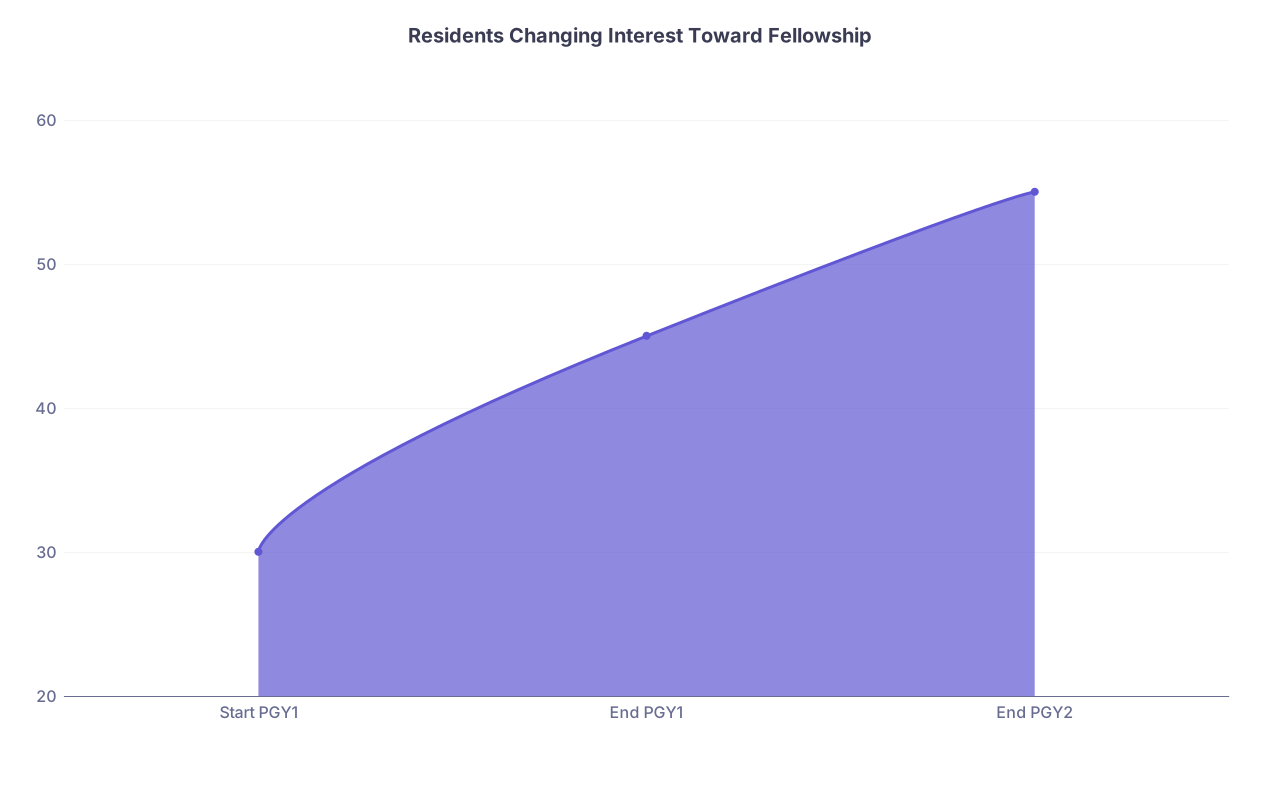
| Category | Value |
|---|---|
| Start PGY1 | 30 |
| End PGY1 | 45 |
| End PGY2 | 55 |
How to Phrase Your Priorities Without Cornering Yourself
On the interview trail, do not box yourself in with:
- “I only care about bread and butter clinical training.”
- “I am not interested in research at all.”
- “I know I will never do fellowship.”
Better, safer ways to express yourself:
- “Strong day-to-day clinical training is my top priority, but I also want to keep fellowship and academic options open.”
- “I value bread and butter exposure but would like some exposure to complex or tertiary care patients as well.”
- “I am currently leaning toward general practice, but I would like mentorship to explore subspecialty options during residency.”
This protects you in two ways:
- You do not scare off academic-leaning programs.
- You force programs to show their hand about how flexible their training really is.
FAQ (Exactly 5 Questions)
1. If I start at a bread and butter community program and then change my mind, can I transfer to an academic program?
Transfers are rare and messy. Positions have to exist, timing must align, and you need strong justification. Most residents who plan on “transferring later” never successfully do it. Assume you will complete training where you start, and pick accordingly.
2. Do fellowship programs automatically reject applicants from community programs?
No. But you start with a disadvantage if your program is unknown, has limited complexity, and offers little research. Some community or hybrid programs place residents into solid fellowships each year. The key difference is whether there is documented success and real academic engagement, not just empty assurances.
3. How can I tell if a community program really has strong fellowship placement?
Ask for a 5-year list of fellowship matches, including specialties and institutions. Look specifically at competitive fields (cards, GI, heme/onc, surgical subspecialties) and see if they match beyond local, lower-tier programs. If they cannot or will not provide this, be suspicious of their claims.
4. Is it a mistake to choose a big academic program if I am sure I only want community practice?
Not necessarily. Academic programs can still produce excellent community clinicians and give you a broader safety net for future changes in interest. The drawback is sometimes less autonomy early and more emphasis on research or teaching, which you may not enjoy. But in general, academic training rarely “limits” you the way a narrow bread and butter program can.
5. What is the single best question to ask on interview day to uncover this pitfall?
Ask: “For residents who start out saying they just want bread and butter community practice, how many later changed their mind and pursued fellowship or academic careers, and how did the program support that transition?” The content and confidence of the answer will tell you quickly whether this place truly keeps doors open or just recycles the same marketing line.
Key points to remember:
- “Bread and butter” is not automatically good; it often signals limited complexity and weak academic infrastructure.
- Your future interests will very likely shift; choose a program that keeps, rather than closes, options.
- Demand concrete data on outcomes, complexity, subspecialty presence, and research—do not let warm phrases and high volume seduce you into a boxed-in career.