The biggest cultural red flags in residency are usually hiding in plain text on the program website. You just aren’t reading it the right way.
You’re not alone. Most applicants skim websites for name recognition, call schedule, and fellowship matches. Then they act shocked in February when interview vibes don’t match what they “thought” from the site. That mismatch is predictable. And preventable.
Especially when you’re deciding between community vs academic programs, misreading websites is how people end up in the wrong ecosystem entirely.
Let’s fix that.
1. The Most Common Website Mistake: Reading Like a Shopper, Not Like a Detective
Here’s the core error: you read program websites as advertisements, not as documents written by people with priorities, fears, and politics.
You scroll for:
- How many residents
- Call schedule
- Salary
- Location blurbs
You ignore:
- What they brag about repeatedly
- What they never mention at all
- Who gets named vs who gets generalized
- How they describe residents vs faculty vs patients
That’s where the culture lives.
The second big mistake: you assume all programs are trying to say the same thing, just with different branding. They’re not. Community and academic programs often think they’re completely different species. Their websites betray that—if you know where to look.
2. “We Are a Community Program” vs “We Are an Academic Center”: Don’t Take Labels at Face Value
If you’re choosing between community and academic programs, misreading this section is how you end up miserable.
Many programs mislabel themselves or overplay one side. Here’s where people get burned:
- Community programs calling themselves “academically focused”
- Academic centers claiming “strong community feel”
- Hybrid programs pretending they are both everything and nothing
Read the clues, not the headline.
| What They Say on Website | What It Often Actually Means |
|---|---|
| "Strong academic community program" | Community hospital with some affiliation |
| "Primary training site for X medical school" | More academic expectations, students often |
| "High-volume community hospital with research" | Service-heavy with optional research pockets |
| "Tertiary referral center with community focus" | Academic center trying to sound less intense |
| "Unopposed community program" | True community culture, likely minimal fellows |
Red flag #1: “Community-based” used as a smokescreen
If the website screams “community-based” but:
- Faculty list has mostly MD/PhDs
- There’s a long research section with specific grant numbers
- Residents are all matching into very competitive fellowships
…you’re likely dealing with a de facto academic culture inside a community shell. That’s not bad—unless you thought you were signing up for a chill, service-focused, teaching-heavy, research-light residency. Then it’s a problem.
Red flag #2: Academic centers pretending to be “laid-back”
Watch for academic giants that say things like:
- “Family-like atmosphere”
- “Despite being a large academic center…”
- “Residents are more than just workhorses”
If they feel the need to explicitly deny a stereotype (“we’re not workhorses”), they’ve either been accused of it or are very aware it’s a risk. That doesn’t mean they’re lying, but you cannot take “supportive culture” at face value. You need to verify: what’s the workload, what’s the exam pressure, what’s the research expectation?
3. The Resident Page: Who Gets Shown, Who Gets Silenced
The resident page is where applicants make some of their worst assumptions.
You look for: med school names, hometowns, whether anyone “looks like you.”
You skip: what they actually say about themselves, or whether they’re allowed to say anything at all.
Silent bios vs real voices
Compare these two setups:
Program A:
“PGY-2: John Smith, MD – Med School: X. Hometown: Y. Interests: hiking.” (Copy-paste template for everyone.)
Program B:
Each resident has a short paragraph in their own voice—why they chose the program, what they like, what surprised them, plus a real, not-sanitized hobby list.
Program A is controlling the narrative. That doesn’t automatically mean toxic, but it usually means:
- Tight message control
- Less emphasis on individual identity
- More traditional hierarchy
Program B is giving residents a voice. That often correlates with:
- More informal culture
- Slightly more flexibility in training
- More emphasis on “fit” and people
You want to catch this difference, because academic vs community culture often shows up here. Many big academic centers have polished but sterile resident pages. Many community programs surprisingly let residents be very honest and specific. Not always, but often enough to pay attention.
Watch for diversity… and how they talk about it
You’re not just counting faces. You’re reading language.
Common mistake: seeing diverse faces on the web page and assuming the environment is inclusive and supportive. That can be wildly wrong.
Red flags in the diversity statement or resident blurbs:
- “We do not discriminate on the basis of…” followed by legal boilerplate and nothing else. That’s baseline law, not culture.
- Diversity and inclusion page that never mentions structural issues, bias, or concrete actions.
- No mention of mentorship, affinity groups, or support systems for URiM, LGBTQ+, or IMGs despite having many.
A stronger culture signal:
- Named faculty leading DEI.
- Specific initiatives (e.g., visiting student scholarships, anti-racism curriculum, language services initiatives).
- Residents explicitly mentioning feeling supported, not just “proud to train with a diverse patient population.”
Community vs academic note: academic centers love glossy diversity statements. Community programs sometimes have almost none—but the culture on the ground might be far more humane. Do not mistake website shininess for safety. Look for specifics, not slogans.
4. What They Brag About Tells You Who They Serve (Patients or Publications)
This is where applicants looking at community vs academic programs miss obvious clues.
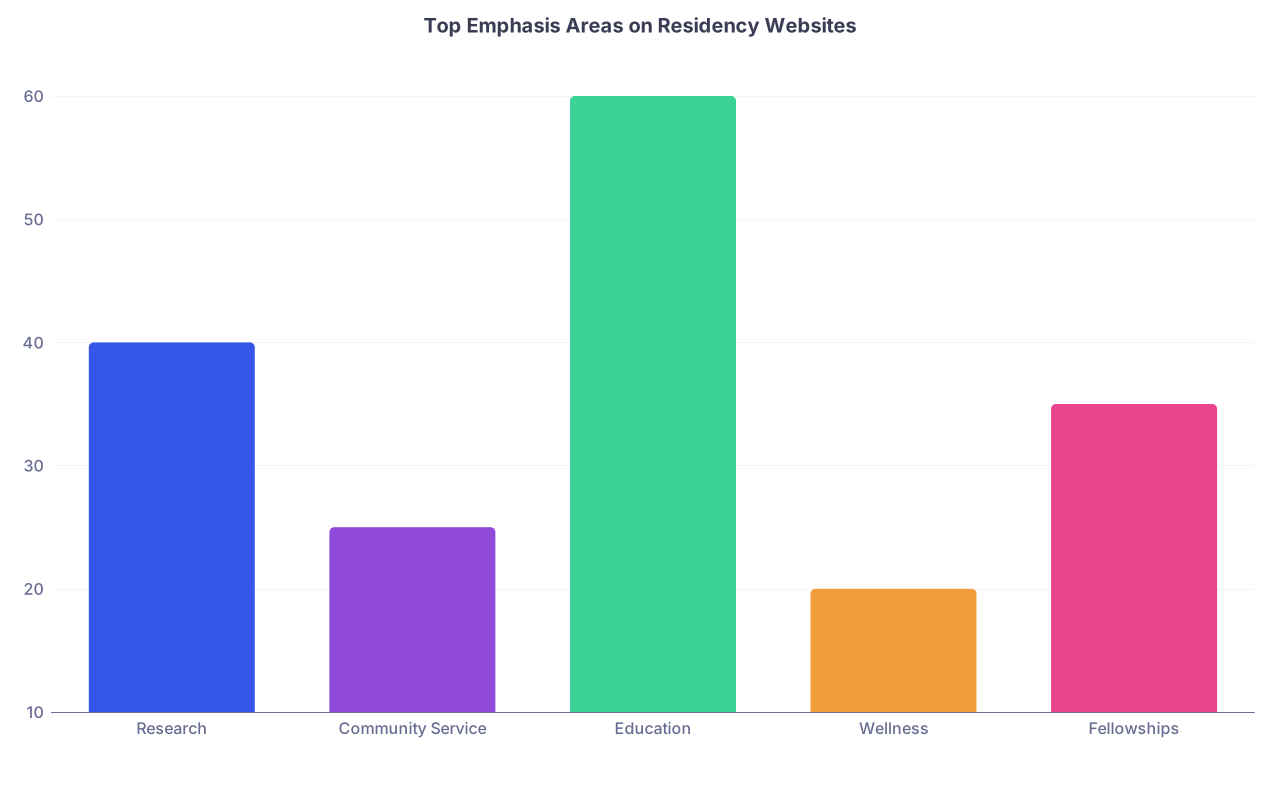
| Category | Value |
|---|---|
| Research | 40 |
| Community Service | 25 |
| Education | 60 |
| Wellness | 20 |
| Fellowships | 35 |
Academic-leaning language: research and prestige obsession
If the website repeats words like:
- “Cutting-edge research”
- “NIH-funded”
- “Nationally recognized leaders”
- “Groundbreaking discoveries”
- “Multiple R01-funded labs”
…you are walking into an academic culture whether or not the hospital is technically “community.”
Misreading mistake: you think, “Well, I can just not do research.”
Reality in many such places: “You don’t have to do research” means, “You will feel second-class if you don’t.”
Signs research is truly optional:
- They explicitly say some residents focus only on clinical excellence.
- Resident profiles show a mix: some heavy research, some none.
- Fellowship match list includes plenty of folks with minimal or no research.
Signs research is quietly mandatory:
- Every single resident bio mentions a project or poster.
- “Our residents present at national conferences every year” with no mention of who actually wants to.
- Only research-heavy residents highlighted in newsletters or “success stories.”
Community-leaning language: service, continuity, patient focus
Community programs, or academic programs with real community DNA, signal differently:
- “We serve a large underserved population.”
- “Strong emphasis on continuity clinic.”
- “Residents are primary providers for our patients.”
- “You will see bread-and-butter pathology and manage it independently.”
This usually means more responsibility earlier, less hand-holding, and sometimes less subspecialty glamor. That’s amazing if you want to be a strong generalist. It’s a mismatch if you secretly want a research-career in a subspecialty but think you’ll “figure it out later.”
Don’t be the person who reads “strong community focus” and assumes that guarantees a gentle lifestyle. It might mean heavy service, high patient volume, and a lot of real-world social complexity.
5. Curriculum Pages: The Hidden Hierarchy Map
Applicants obsess over rotations like they’re choosing from a menu. They rarely read how the curriculum is described.
Here’s where culture leaks through.
How they talk about autonomy
Academic-leaning programs:
- “Residents work closely with subspecialty attendings.”
- “Robust support from fellows and faculty.”
- “Subspecialty teams provide comprehensive care.”
Community-leaning programs:
- “Residents manage patients with direct attending backup.”
- “You will be the primary decision-maker with support.”
- “Early graduated responsibility and independent call.”
Misread this and you’ll hate your life. If you like structure and supervision and you land in a program that expects PGY-2s to run nights with minimal help, you’ll be unsafe and terrified. If you crave autonomy and end up in an academic behemoth with 3 layers of hierarchy between you and any decision, you’ll burn out from frustration.
What’s missing from the curriculum page
Absences are loud.
- Academic program with no explicit, structured research time: research is ad hoc and often limited to favorites.
- “Protected didactics” with no details on how pages/calls are handled during that time: often means they’re not really protected.
- No mention of wellness, mental health, or fatigue mitigation anywhere on the site: high chance those issues are seen as “personal problems.”
Community vs academic tip: community programs sometimes have less-polished curriculum pages but more honest wording. Academic programs may have beautiful diagrams and buzzwords but very few specifics on how they protect learning or sanity. Don’t get hypnotized by infographics.
6. Wellness Pages: Spotting Lip Service vs Real Support
Almost every program now has some kind of “wellness” blurb. Most of them are copy-paste nonsense.
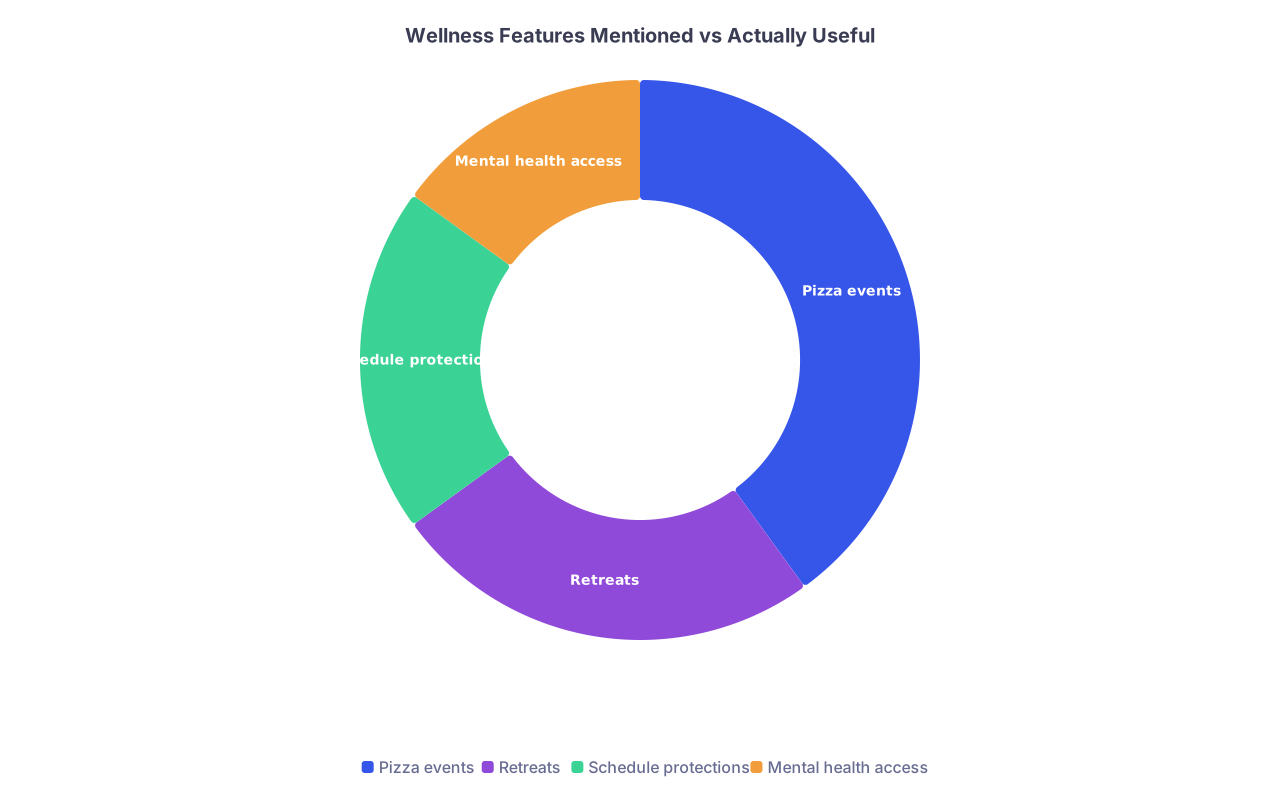
| Category | Value |
|---|---|
| Pizza events | 40 |
| Retreats | 25 |
| Schedule protections | 20 |
| Mental health access | 15 |
Here’s how applicants get fooled: they see “wellness” + pictures of people at a park and think, “They care.” No. That’s marketing.
Look for structural wellness, not vibes.
Strong signs of real wellness culture:
- Explicit mention of duty hour enforcement and backup systems.
- Clear mental health resources: confidential counseling, who pays, how to access.
- Mention of schedule protections: post-call days actually kept, no 28-hour shifts (if true), night float design that doesn’t destroy people.
- Residents quoted talking about time off or feeling supported when struggling—not just “we had so much fun at our retreat!”
Weak or fake signs:
- “We value wellness” with zero details.
- Only examples are social events, wellness lectures, or yoga.
- Pictures of residents at happy hour with no structural changes described.
Academic vs community nuance: big academic centers often have more formal wellness infrastructure (EAP, institutional support), but also higher hidden pressure. Community sites might under-sell wellness but quietly give residents more schedule sanity. You have to read beyond the buzzwords.
7. Faculty Page: Who Runs the Show?
The faculty page is where you see who actually gets respect and visibility.
Academic culture giveaways
- Many faculty with long bios, titles like “Vice Chair of Research,” “Program Director of Fellowships,” “Section Chief of X.”
- Heavy emphasis on publications, grants, editorial boards.
- Residents rarely mentioned in these bios except as research assistants.
This usually means hierarchy is strong, and the academic mission leads. Good if you want mentors in specific research tracks. Not great if you want a tight-knit, informal culture where everyone knows each other.
Community culture giveaways
- Bios focus on clinical interests, community involvement, quality improvement.
- Many DOs, FMGs, or local med school grads on faculty—people who stayed.
- Fewer titles, more emphasis on teaching and patient care.
Programs that are “truly community” often show faculty who’ve been there 10–20 years, with deep community ties. Don’t ignore that. Stability matters more than people realize.
Red flag: a program (community or academic) with very few named core faculty or lots of “Clinical Instructor” with no description. That can mean high turnover, low investment in teaching, or both.
8. Match Lists and Alumni: The Most Abused Data on the Site
You absolutely should check fellowship and job placement. But you’re probably reading it wrong.
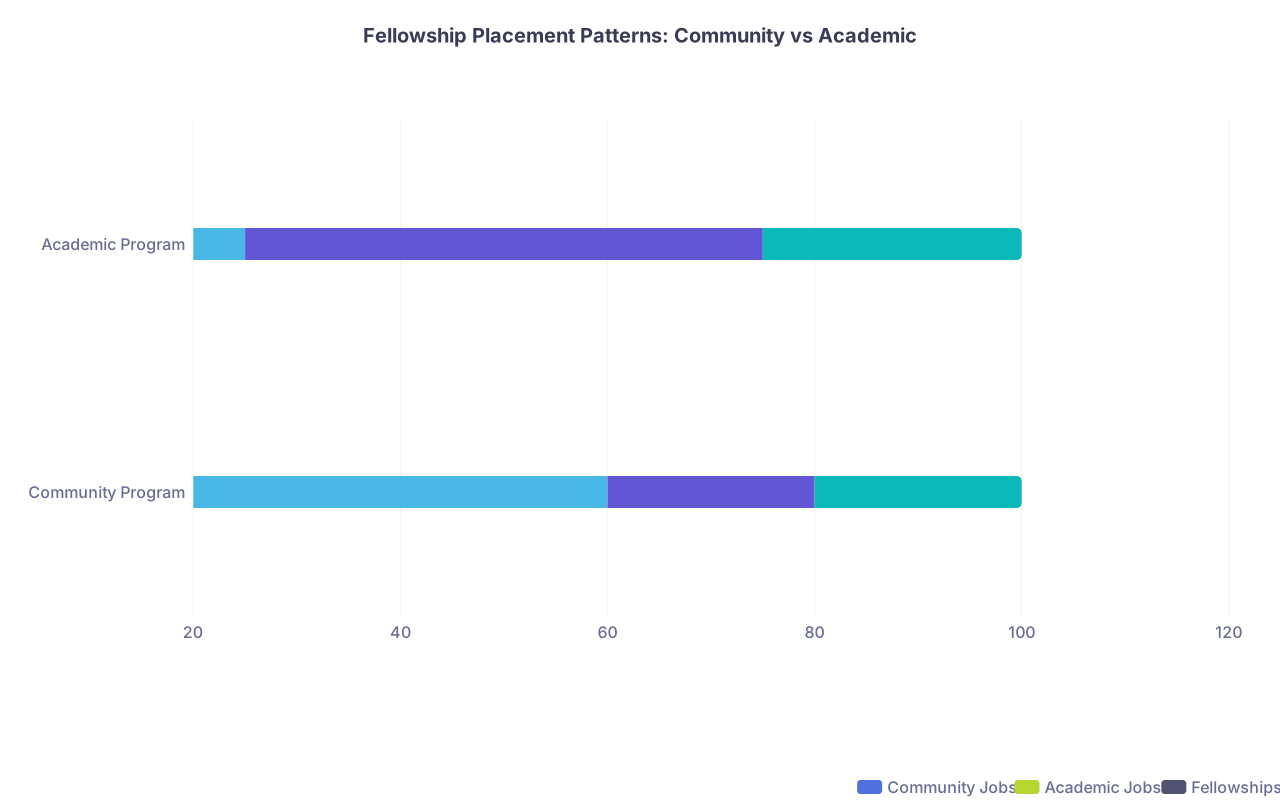
| Category | Community Jobs | Academic Jobs | Fellowships |
|---|---|---|---|
| Community Program | 60 | 20 | 20 |
| Academic Program | 25 | 50 | 25 |
Common mistake: seeing one or two big-name fellowships and thinking, “They can get me anywhere.”
You need patterns, not outliers.
For academic-leaning programs:
- You want to see consistent placement into academic and subspecialty fellowships.
- You want variety in locations, not just their own institution (or nowhere else will take them).
For community-leaning programs:
- You want to see a healthy mix of strong community jobs, some academics, and fellowships.
- If almost everyone works locally in small groups, that’s a community pipeline. Great if that’s your goal, limiting if you want national mobility.
Red flags:
- No recent match list at all.
- Only listing the best fellowship match per year, no comprehensive list.
- “Our graduates go on to diverse careers” with zero detail.
If the website hides outcomes, assume the outcomes are not impressive or not consistent.
9. The “About Our City” Section: What They Overcompensate On
The city blurb is more revealing than you think. It’s where you’ll see what they know is a hard sell.

Overcompensation clues:
Program in a smaller or less desirable area with four paragraphs about outdoor activities, breweries, and “big-city amenities with small-town feel.” That usually means they’re aware location is a major barrier. Not fatal. But you should assume recruiting is harder, retention may be tricky, and resident social life might be clustered.
Big city academic center that barely mentions cost of living or commuting. That’s not an accident. If they don’t acknowledge housing/traffic challenges, they likely don’t adjust expectations around them.
Culture hint:
- Community programs often emphasize family, schools, local roots. If that’s you, it might be a good cultural match.
- Academic programs often emphasize art, diversity, and career opportunities for partners. If you have a dual-career situation, that may matter more than you think.
The mistake is treating the city section as fluff instead of part of the culture equation. Where you live shapes how people treat time, relationships, and burnout.
10. How to Read a Program Website Without Lying to Yourself
Let me give you a simple, ruthless approach so you stop romanticizing pixels.

| Step | Description |
|---|---|
| Step 1 | Open Program Website |
| Step 2 | Scan Home and About |
| Step 3 | Check Resident Voices |
| Step 4 | Check Research Expectations |
| Step 5 | Look for Autonomy and Service Load |
| Step 6 | Review Wellness and Support |
| Step 7 | Check Outcomes and Match |
| Step 8 | Email Residents or Attend Virtual Q&A |
| Step 9 | Decide If It Fits Your Priorities |
| Step 10 | Community or Academic Lean? |
| Step 11 | Still Unclear? |
Concrete steps:
Decide first: do you truly want more community or more academic energy?
- Not the prestige answer. The honest one about how you like to work and learn.
Then read:
- Mission and overview: circle phrases that sound more community or academic.
- Resident page: is there real voice or just data?
- Curriculum: where does autonomy live? How early?
- Wellness: anything structural, or just cupcakes?
- Outcomes: patterns, not unicorns.
Write down two lists for each program:
- Evidence it’s more community-leaning (patient focus, autonomy, local retention).
- Evidence it’s more academic-leaning (research, hierarchy, tertiary care).
If your “evidence” lists are built on vibes and slogans instead of concrete wording, you are at high risk of misreading culture.
FAQ (Exactly 3 Questions)
1. Can I really judge program culture from the website, or is it all marketing?
You’ll never get the full story from a website, but you can absolutely catch major directionality—community vs academic lean, research expectations, hierarchy, and priorities. The trick is to read for what’s repeated, what’s missing, and how they talk about residents, not just what rotations they list. Use the website to form specific questions, then test those impressions during interviews and resident Q&As.
2. How do I avoid overreacting to red flags on the site?
You don’t throw out a program over one awkward phrase. You look for patterns: repeated emphasis on research with no mention of work-life, or constant talk of “resilience” with no structural support described. One weak spot is fixable; a theme is culture. When in doubt, ask residents directly: “The website really emphasizes X—does that match your experience?”
3. Is it safer to default to academic programs for ‘better training’?
No. That’s a lazy assumption that burns people every year. You can get phenomenal clinical training and strong fellowships from many community programs; you can also get lost and overworked in some academic powerhouses that see you as a data-producing unit. The right question is: does this program’s culture, as revealed in how they describe themselves, match how you actually want to live and grow for three or more years?
Key takeaways:
- Don’t read program websites like brochures; read them like evidence.
- Community vs academic culture isn’t what they call themselves—it’s what they emphasize, omit, and repeat.
- Look for structure over slogans: real wellness, real outcomes, and real resident voice tell you far more than any “family feel” tagline.