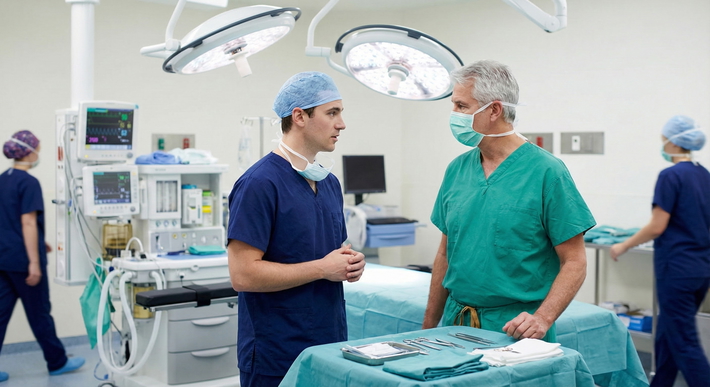
Here's the answer you're looking for: Academic departments do not run an automated shredder that bins your application the moment they spot a community hospital logo. That's the myth. The reality is more nuanced, and frankly more interesting.
But the anxiety is real. I've watched applicants spiral because someone on a medical student forum declared "academic programs auto-screen out community grads" like it was gospel. It isn't. Let me dismantle this piece by piece.
The Origin of the Community Resume Filter Myth
Where does this anxiety come from? Three places.
Historical pedigree bias. Medicine has always worshipped the academic medical center as the apex. For decades, the "big name" pipeline was the only pipeline. If you didn't rotate at Hopkins or MGH, the assumption was you weren't serious. That legacy thinking still ghosts through certain programs, especially in the ultra-competitive specialties like dermatology, plastic surgery, and orthopedics. But it's a vibe, not a policy.
Unspoken elitism. Some faculty will absolutely prefer candidates from their own alma mater or peer institutions. That's human. But personal preference isn't the same as a filter. A program director can prefer Ivy League applicants and still hand an interview slot to a community applicant with a standout file.
The echo chamber of online medical student forums. Anonymous posters project their own rejections onto institutional bias. When they don't match, it's easier to blame "the system" than to audit their own CV. The result? A persistent, low-grade panic that spreads like a contagion across SDN, Reddit, and student GroupMe chats.
Here's the grain of truth buried inside the myth: academic programs do care about scholarly engagement and research output. But they don't measure that by your hospital's logo. They measure it by what you actually did. A community applicant who published a case report, ran a QI project that changed patient outcomes, and presented at a regional meeting can easily outrank a big-name applicant who just shadowed in a lab without producing anything.
How Residency and Fellowship Screening Committees Actually Work
Stop imagining a bouncer with a clipboard at the door of every academic program. That's not how ERAS works.
Here's the real flow:
Step 1: Automated filters exist, but they're narrow. Most programs use ERAS to filter out applicants who don't meet minimum cutoffs, graduation year, visa status, USMLE/COMLEX attempts beyond a threshold, or occasionally a Step score floor. These filters don't see "community hospital." They see "did you meet our numeric baseline?"
Step 2: A human reads your file. Coordinators triage first. Then faculty or chief residents do full reviews. At most academic programs, your application is read by at least two humans before any decision about an interview is made.
Step 3: Holistic review. The AAMC and ACGME have been pushing holistic review for years. In practice, that means faculty weigh multiple factors, not one. And no, institution name isn't at the top of that weighting.
What actually moves the needle, in approximate order of importance:
- Letters of recommendation (LORs), Specific, detailed letters from clinicians who know you well outperform any logo on your CV.
- Clinical performance and MSPE, Your dean's letter and rotation evaluations are scrutinized heavily. Did you take ownership of patients? Did supervisors trust you?
- USMLE/COMLEX scores, Numbers matter, but they're a threshold, not a tiebreaker at most programs.
- Scholarly activity, Quality over quantity. One solid case report or QI project beats a CV stuffed with meaningless submissions.
- Personal statement and signaling, Did you articulate why this program? Did you use preference signaling meaningfully?
Notice what's missing from that list? Your medical school's letterhead. It matters. But it's far down the stack.
Decision Framework: Translating Community Experience for Academic Reviewers
Community applicants have an unfair advantage they rarely use: they actually see patients. In volume. With autonomy.
Here's the reframe. Academic faculty love hearing that you've managed a high patient census, run codes solo, navigated complex social determinants, and delivered care without a fleet of fellows hovering nearby. Stop apologizing for your community training. Start weaponizing it.
How to frame community-based clinical hours:
Don't write: "Completed a 4-week rotation in internal medicine at Memorial Community Hospital."
Write: "Independently managed a panel of 8-12 patients daily across diverse pathology including sepsis, CHF exacerbations, and undifferentiated chest pain in a high-acuity, high-volume community setting with minimal specialist oversight."
See the difference? Same rotation. Completely different signal.
Leveraging unique strengths:
Community applicants often possess:
- Higher patient volume exposure
- Earlier clinical autonomy and decision-making
- Direct, hands-on procedural experience
- Cross-specialty exposure without fellow buffers
- Deep understanding of healthcare disparities and resource limitations
These aren't weaknesses. They're selling points. Frame them as such.
Compensating for perceived research gaps:
You don't need a Nature paper. You need intellectual honesty and follow-through.
Actionable moves:
- Run a QI project that produced a measurable outcome. Even a small one. "Reduced average door-to-antibiotic time by 22% in community-acquired pneumonia admissions." That's publishable.
- Write a clinical case report. Pick something weird you saw. Most academic faculty love a good clinical mystery.
- Seek multicenter collaborations. Email an academic faculty member you met at a conference and offer to contribute as a co-author on a retrospective review. Many will say yes.
- Present locally and regionally. State chapter meetings of ACP, AAFP, ACS, these are accessible and respectable.
Look at that pie chart. Research is 15%. Clinical performance and letters are 65% combined. Stop obsessing over the 15% and start dominating the 65%.
Overcoming the Bias: Action Steps and Closing Guidance
Bias exists. Don't pretend it doesn't. Pretending makes you unprepared. Acknowledging it makes you strategic.
1. Secure at least one academic letter, even if your home is community.
You don't need to do an away rotation at a top-10 program. You need to find one academic faculty member who can speak to your work. Here's how:
- Email program directors or clerkship directors at your target programs. "I'm a medical student at [community school] interested in [specialty]. I'm seeking mentorship and would value 2-4 weeks of clinical exposure." Many will say yes. Many will write you a letter afterward if you perform.
- Attend academic grand rounds or journal clubs virtually. Introduce yourself. Follow up. Build a relationship.
- Cold-email is underrated. Be specific, be brief, be useful.
2. Network at national conferences.

Academic conferences aren't just for established physicians. Students and community applicants show up, present posters, and meet the people who will someday read their applications. If your program doesn't fund your attendance, drive there. Crash the hotel block. Volunteer at the registration desk. Do whatever it takes to put a face to your name.
The program director who meets you at the ACP poster session and remembers a sharp question you asked? That person reads your ERAS application differently than they read the 1,200 others.
3. Audit your CV today.
Right now. Not tomorrow.
- Cut the fluff. Every line should answer: what did I do, what was the result, what skill did I demonstrate?
- Quantify everything possible. Patient numbers, percentages, dollar amounts, time saved.
- Reframe community rotations using the techniques above.
- Confirm your most meaningful experiences are the ones you can speak to passionately for 10 minutes.
4. Use signaling and geographic preference strategically.
ERAS now offers preference signaling. Use it. Don't waste signals on programs that explicitly state they prefer academic applicants. Target programs where community applicants have historically matched.
5. Don't apologize. Don't hedge.
In your personal statement, do not write "despite attending a community medical school" or "although my research opportunities were limited." That language plants doubt. Write about what you did, what you learned, and what kind of physician you're becoming. Period.