Let's cut right to the chase. You're looking at medical school, and you've heard the rumors: DO graduates get the short end of the stick when it comes to loan forgiveness compared to MDs.
Is it true? Yes and no.
The federal government doesn't discriminate based on the letters after your name. The Public Service Loan Forgiveness (PSLF) program doesn't care if you're an allopathic or osteopathic physician. But the system does. The structural realities of DO programs, residency match patterns, and specialty choices create a massive, often unspoken gap in loan forgiveness outcomes. I've seen DOs lose out on six figures because they didn't understand how their specific career trajectory interacts with federal and state repayment rules.
The following information is for educational purposes only. It is not financial advice, not legal advice, and not tax advice. Because individual circumstances and state regulations differ, figures vary, so always consult a qualified professional before making binding financial decisions.
Why the DO vs MD Loan Forgiveness Gap Matters Now
DO graduates face distinct challenges in loan forgiveness compared to their MD counterparts. This isn't about bias in the application review; it's about the mathematical reality of how debt accumulates and how careers unfold.
Recent policy shifts have made understanding these differences critical for residency planning. With the end of the limited PSLF waiver and the ongoing legal battles surrounding the SAVE plan, the margin for error has vanished. You can't just "figure it out later." If you make the wrong moves during residency, you might accidentally reset your forgiveness clock or lock yourself into a taxable forgiveness event.
The financial impact of this gap is staggering. It can easily exceed $100,000 over the lifetime of loan repayment. I've watched DOs enter private practice out of residency because they thought PSLF was "too complicated," only to realize five years later they missed out on tax-free forgiveness while their MD peers in academic medicine walked away debt-free. The gap matters because it dictates your career mobility, your ability to buy a house, and your long-term wealth accumulation.
The Structural Differences: DO vs MD Programs That Impact Loan Forgiveness
The root of the forgiveness gap starts before you even graduate. Average debt levels differ significantly. DO graduates typically carry $20,000 to $40,000 more in educational debt. Why? Because a large percentage of DO schools are private institutions with higher tuition, whereas many MD students attend state-funded public medical schools with lower in-state tuition. Heavier debt means higher monthly payments on income-driven plans, which changes your cash flow during residency.
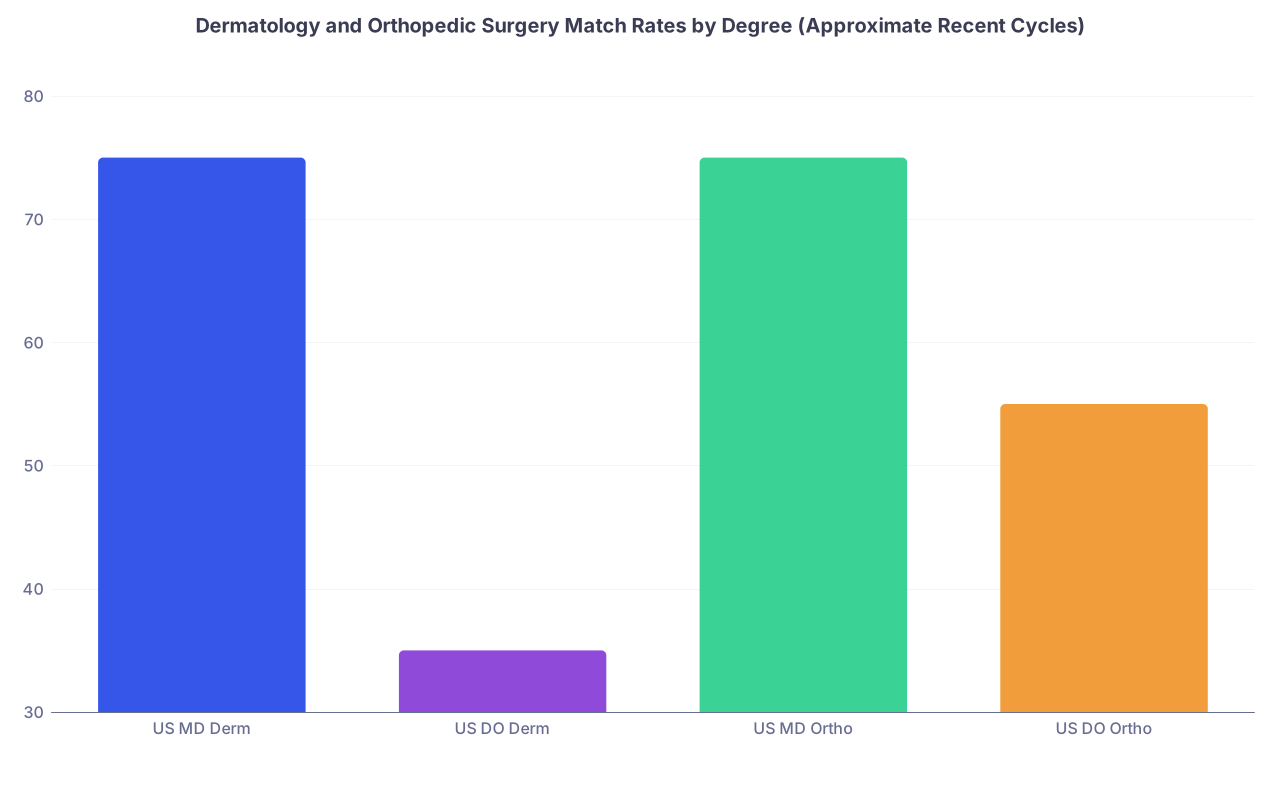
But debt is only half the equation. Residency match rates directly affect PSLF eligibility timelines. DO students historically match into academic medical centers at lower rates than MD students. Academic centers are almost universally 501(c)(3) non-profits, making them automatic PSLF-qualifying employers. DO students frequently match into community-based residency programs. While many community hospitals are non-profits, some are structured as for-profit entities or are affiliated with for-profit management groups. If you match into a for-profit community program, your residency years won't count toward PSLF. That's three to four years of lost qualifying payments.
Specialty distribution also varies significantly. DO graduates heavily populate primary care fields like family medicine and internal medicine. While primary care is great for certain forgiveness programs, it also means DOs are more likely to end up in private, for-profit outpatient clinics post-residency. MD graduates, who match into specialized surgical and hospital-based fields at higher rates, are more likely to remain employed by large non-profit hospital systems where PSLF is easily maintained.
How Loan Forgiveness Programs Treat DO vs MD Graduates Differently
Let's break down the actual programs. Public Service Loan Forgiveness (PSLF) requirements are technically blind to your degree. The distinction lies in qualifying employer nuances. As mentioned, the community-based residencies where many DOs train sometimes fail the PSLF employer test. You have to actively verify the IRS tax-exempt status of your specific residency program. Don't just assume the hospital is a non-profit; check the specific legal entity that signs your paycheck.
Then there's the National Health Service Corps (NHSC) scholarship and loan repayment programs. NHSC heavily favors primary care and mental health providers working in Health Professional Shortage Areas (HPSAs). Because DO schools emphasize primary care and community health, DO graduates are actually prime candidates for NHSC. However, NHSC placement rates and site approvals often favor large Federally Qualified Health Centers (FQHCs). If a DO graduate takes a job at a small, rural private practice that happens to be in a shortage area, getting that specific site approved for NHSC loan repayment can be a bureaucratic nightmare compared to an MD taking a hospital-employed role at an established FQHC.
State-based loan forgiveness programs are the wild card. Some states have programs that actively recruit DOs and recognize osteopathic residencies seamlessly. Others have legacy programs built around academic MD tracks. You need to look at state-specific programs, like California's CalHealthCares or New York's Doctors Across New York, which often have specific funding buckets for primary care and underserved areas where DOs excel.
The Numbers Don't Lie: Loan Forgiveness Outcomes by Degree Type
Let's look at the actual data. Historically, PSLF forgiveness rates show MD graduates with about an 8% higher approval rate. This isn't because the Department of Education rejects DOs. It's because MDs are disproportionately employed by large, non-profit academic medical centers that have dedicated financial offices to handle PSLF paperwork. DOs in smaller community settings often have to navigate the Employment Certification Form (ECF) process entirely on their own, leading to higher error and rejection rates.
NHSC loan repayment placement also tells a story. MDs secure these awards at slightly higher rates, largely because they are often recruited directly by large FQHC networks that have the administrative bandwidth to sponsor and manage NHSC applications. DOs, who might be more inclined to join independent community practices, miss out simply because their employers don't know how to process the NHSC paperwork.
Time-to-forgiveness varies wildly based on residency specialty and program type. A DO in a for-profit community residency who later joins a private practice might never see PSLF. An MD in an academic surgical residency who stays on as faculty will hit the 120-payment mark seamlessly. The structural pipeline dictates the timeline.
What DO Graduates Can Do to Improve Loan Forgiveness Outcomes
You aren't doomed to pay more. You just have to be more strategic.
First, master strategic specialty selection to maximize PSLF qualifying positions. If you're a DO aiming for PSLF, prioritize hospital-based specialties or primary care roles that keep you employed directly by a 501(c)(3) hospital system. Avoid private equity-backed outpatient groups if forgiveness is your primary goal.
Second, obsess over optimizing employer certification for PSLF while in residency. When you're interviewing for residency, ask the program director directly: "Is the legal entity that employs residents a 501(c)(3) tax-exempt organization?" If they hesitate, walk away. Submit your PSLF Employment Certification Form every single year. Don't wait until year ten to find out your community hospital was actually a for-profit subsidiary.

Third, aggressively target state-level loan forgiveness programs that actively recruit DOs. Many states have rural recruitment initiatives that don't care about your degree type; they just need a primary care doctor. These programs often offer $50,000 to $100,000 in repayment over three years and can be stacked with certain federal programs if structured correctly.
Finally, use alternative repayment strategies while pursuing forgiveness. If you're on an income-driven plan and your income jumps as an attending, your monthly payment will spike. Use the "married filing separately" tax strategy if you have a working spouse to artificially lower your Adjusted Gross Income (AGI), thereby keeping your income-driven repayment plan payments low while you rack up PSLF qualifying months. Maximize pre-tax retirement contributions (403b/401k) to further lower your AGI.
Key Takeaways:
- DO graduates face systemic disadvantages in loan forgiveness due to higher average debt, specialty distribution patterns, and employer certification complexities.
- Strategic career planning, including employer selection and specialty choice, can significantly improve forgiveness outcomes.
- State-level programs and targeted NHSC applications offer alternative pathways for DO graduates to close the gap.