Opening Problem: The Retake Result Is In—Now the DO vs. MD Clock Starts Ticking
The retake score posts, and suddenly the vague question becomes a hard one: do you push for MD, lean DO, do both, or stop this cycle before you waste more money and time? That moment is emotional. I’ve seen students stare at a 505 that felt like salvation, and others stare at a 502 that was technically “fine” but practically a mess for the school list they built.
Here’s the truth. The score is only half the story. The calendar is the other half, and the calendar is brutal. AMCAS screening moves on schedule. Secondary portals don’t care that you needed a week to process. Interview spots and class seats don’t wait for a confidence boost.
So this article answers the real question: what should you do in the first 24 hours, first 7 days, and first 30 days after your MCAT retake comes back? Not in theory. In order. Step by step.
If your score jumped, your job is to act fast and cleanly. If it dropped or barely moved, your job is to stop pretending every pathway is still equally good. It isn’t. At this point you should shift from emotion to timeline. That’s how a retake actually helps your cycle.
Day 0 to Day 2: What to Do the Moment Your Retake Score Posts
First rule: do not make a same-hour panic decision. Good or bad, give yourself one night before you blow up your school list.
At this point you should do three things in the first 24 to 48 hours:
- Verify the score and section breakdown
- Compare it against your actual target schools
- Decide whether this score changes your lane: MD, DO, both, or reapply
Your Day 0 checklist
- Open the official score report, not just the number you remember.
- Compare total score and subsection balance.
- Pull up your school list and mark each school:
- realistic now
- borderline now
- no longer realistic
- Check whether your primary is already submitted, verified, or still in draft.
- Check whether schools are waiting on the new score before review.
- Do not write a dramatic update letter that day. Bad move.
If the score is higher than expected
Good. Don’t celebrate so hard that you waste the timing advantage.
At this point you should ask:
- Does this move me into realistic range for more MD schools?
- Does this make my current DO list too conservative?
- Are there schools I can now add without looking delusional?
A stronger score late is still stronger. But late is late. For MD especially, a better score doesn’t magically erase a delayed application timeline.
If the score is lower than expected
This is where applicants make dumb decisions. They submit broadly to “see what happens.” Usually what happens is silence and debt.
At this point you should decide among three options:
- Proceed with both MD and DO if the rest of your file is excellent and the score is still viable.
- Pivot heavily toward DO if the MD list was already borderline.
- Stop the cycle and rebuild if the score leaves you noncompetitive across the board.
Be honest. A lower retake is usually worse for MD than for DO. That’s not a moral judgment. It’s a timing and screening reality.
Week 1: Update the Right Application First—DO and MD Timelines Are Not Identical
This is where strategy matters. Not every update deserves equal urgency.
At this point you should decide which application system needs your attention first based on where the new score changes your competitiveness most.
For many applicants:
- AMCAS needs faster recalibration because MD schools often screen earlier and more aggressively.
- AACOMAS may offer a wider practical runway if the cycle is still moving and your profile fits the schools well.
That does not mean DO is casual or last-minute. I hate when people act that way. It means the timing pressure is often a little less punishing than MD.
Your Week 1 checklist
Days 3 to 4
- Rebuild your school list from scratch if the score changed meaningfully.
- Separate schools into:
- reach
- mission-fit
- realistic target
- Remove vanity schools you were never truly competitive for. Be ruthless.
Days 4 to 5
- Check whether schools automatically receive the new MCAT or whether the timing of transmission matters.
- Review each portal for update policies.
- Draft concise update language if needed:
- new MCAT score
- continued interest
- any meaningful new activity
Days 5 to 7
- Turn around secondaries fast. Very fast.
- Update only what actually changed.
- Revise your personal statement only if the retake changes your narrative in a real way.
Here’s my rule: if your old story was “I struggled early, corrected my study strategy, and proved academic growth,” and the new score finally proves it, then yes, that narrative matters. If the score rose by a few points but doesn’t fundamentally change your application story, don’t force a rewrite. Forced rewrites smell desperate.
DO vs. MD in plain language
For MD, at this point you should think:
Am I still early enough to benefit from this improved score?
For DO, at this point you should think:
Can I use this score to sharpen my list and submit to schools where my profile actually fits?
Different pressure. Different tempo.
Weeks 2 to 4: Build a School-by-School Action Plan and Protect Your Cycle
By week 2, you need a tracker. Not a messy Notes app list. A real tracker. Spreadsheet, Airtable, whatever you’ll actually use.
At this point you should build columns for:
- School name
- MD or DO
- Application system
- MCAT range or cutoff awareness
- Primary submitted?
- Secondary received?
- Secondary submitted?
- New score transmitted?
- Update sent?
- Interview status
- Strategy note
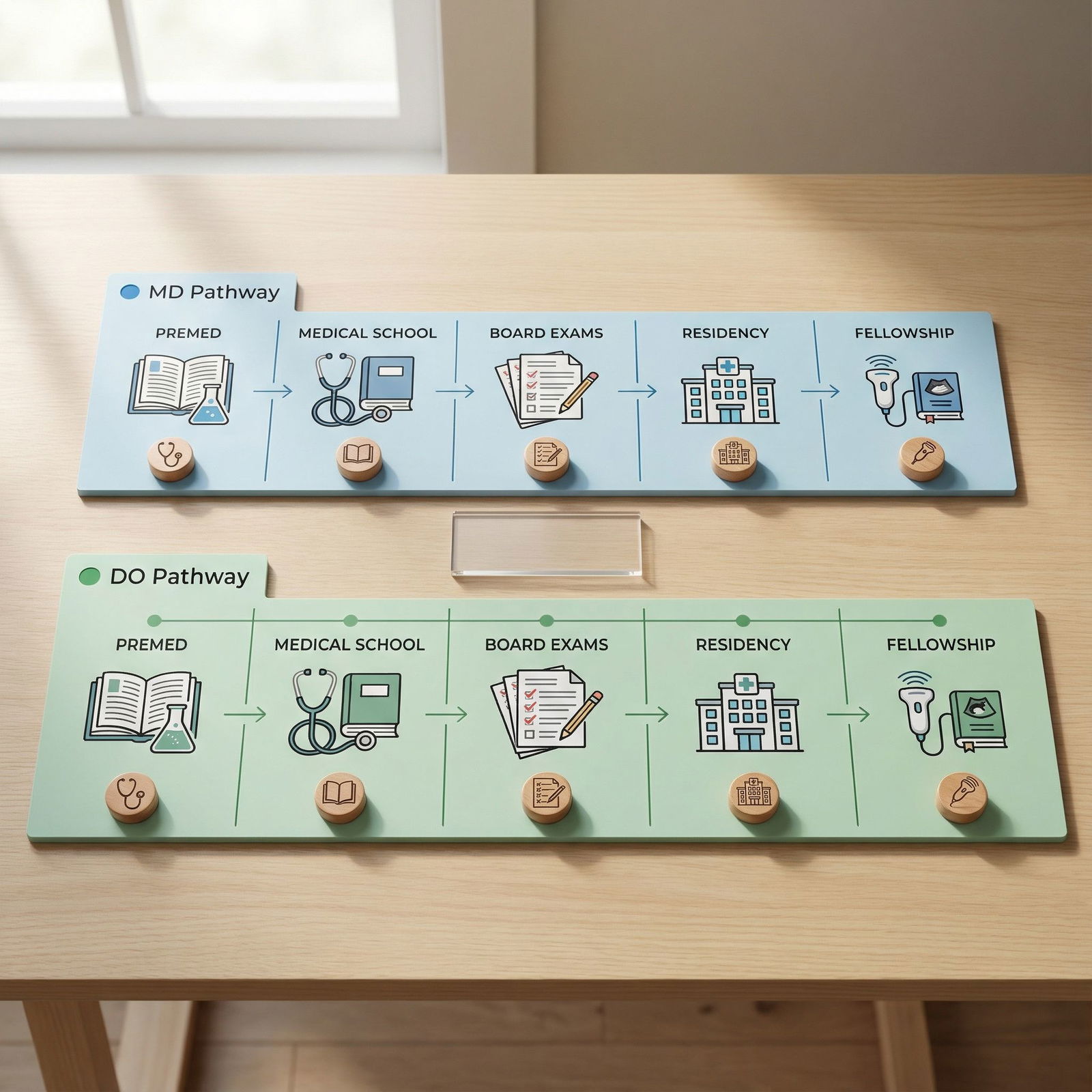
How to prioritize schools in weeks 2 through 4
1. Mission-fit schools
These go higher than applicants think. A mission fit can rescue a merely decent number. I’ve watched applicants with flashy stats get ignored while a lower-stat applicant with genuine service alignment gets the interview. Schools aren’t robots.
2. Realistic target schools
This is your backbone list. If your retake made you newly competitive here, act like it matters. Submit fast. Polish secondaries. Don’t procrastinate because you’re still obsessing over one dream school.
3. Reach schools
Keep some. Don’t build your whole list out of fantasy. That’s not ambition. That’s denial with application fees attached.
Separate your DO and MD lists
Don’t mash them into one emotional blob. Keep two columns, two strategies, two levels of urgency.
For your MD list, at this point you should:
- identify schools where the new score moves you above a screening concern
- finish secondaries within days, not weeks
- monitor for portal changes and interview prep readiness
For your DO list, at this point you should:
- add schools if the retake makes you viable across more programs
- emphasize fit, service, clinical exposure, and consistency
- avoid using DO as a lazy fallback; schools can tell
Tactical moves that protect your cycle
- Request an advising review in week 2 if your result changed the whole strategy.
- Confirm score-report timing so you know when schools can actually see the retake.
- Add more DO programs if your MD path is still borderline. This is often the smartest move, not a defeat.
- Keep building the rest of the file if you’re still in cycle:
- clinical hours
- physician shadowing
- volunteering
- strong, responsive communication
The worst thing you can do in this window is freeze. Applicants do this all the time. They wait for a sign, overthink one median MCAT table, and lose two weeks. Two weeks in admissions season is not nothing. It’s the difference between reviewed and forgotten.
Month 2 and Beyond: When to Pivot, Double Down, or Re-Apply
By month 2, indecision becomes expensive.
At this point you should know which of these three lanes you’re in:
Lane 1: MD-competitive retake
If the score clearly improves your MD viability, double down now.
- Finish every secondary quickly
- Prepare for interviews immediately
- Keep DO options only if they still fit your goals and budget
Lane 2: DO-competitive retake
If the score makes DO realistic but leaves MD shaky, stop pretending both paths are equally strong.
- Prioritize AACOMAS schools where your profile fits
- Tighten essays and activity descriptions
- Continue building clinical credibility and physician exposure
Lane 3: Still not competitive enough
This is the hardest lane, but often the smartest one to recognize early.
- End the cycle if needed
- Build a serious gap-year plan
- Fix weak areas on purpose, not vaguely
That next 30 to 60 days should strengthen everything around the score:
- more direct patient-facing experience
- cleaner school selection
- stronger letters
- sharper essays
- real interview prep, not “I’ll wing it”

If you’re headed toward reapplication, good. Own it early. A well-built reapplication beats a dragged-out weak cycle every time.
Final Summary: The Best Next Step Depends on What Changed—and How Fast You Act
Here’s the timeline that matters.
In the first 48 hours, get clear. No impulsive moves. Verify the score, compare it to your real school list, and decide whether you’re pursuing MD, DO, both, or a reset.
In the first week, update the right system and the right schools. MD usually demands faster action because screening and secondary pressure hit earlier and harder. DO often gives you a bit more room, but not enough to justify sloppiness.
In the first month, execute school by school. Build the tracker. Send updates. Finish secondaries. Adjust the list. Protect your cycle.
That’s the real takeaway: the retake doesn’t help by itself. The score matters, yes. But timing and follow-through are what turn a better score into an actual admissions advantage.