
The biggest mistake new med students make is thinking acceptance means they can relax. It doesn’t. The work just changed shape.
You’re on the hook now—for paperwork, money decisions, housing, and setting up your life so you do not implode by October. And yes, some of this looks different for DO vs. MD matriculants.
Below is a 6‑month, step‑by‑step checklist, organized backwards from orientation. I’ll assume:
- You start this about 6 months before orientation (roughly February/March for an August start).
- You may have both DO and MD acceptances, or you’re committed to one but want to know what’s different.
- You want someone to tell you, month by month, “At this point, you should…”
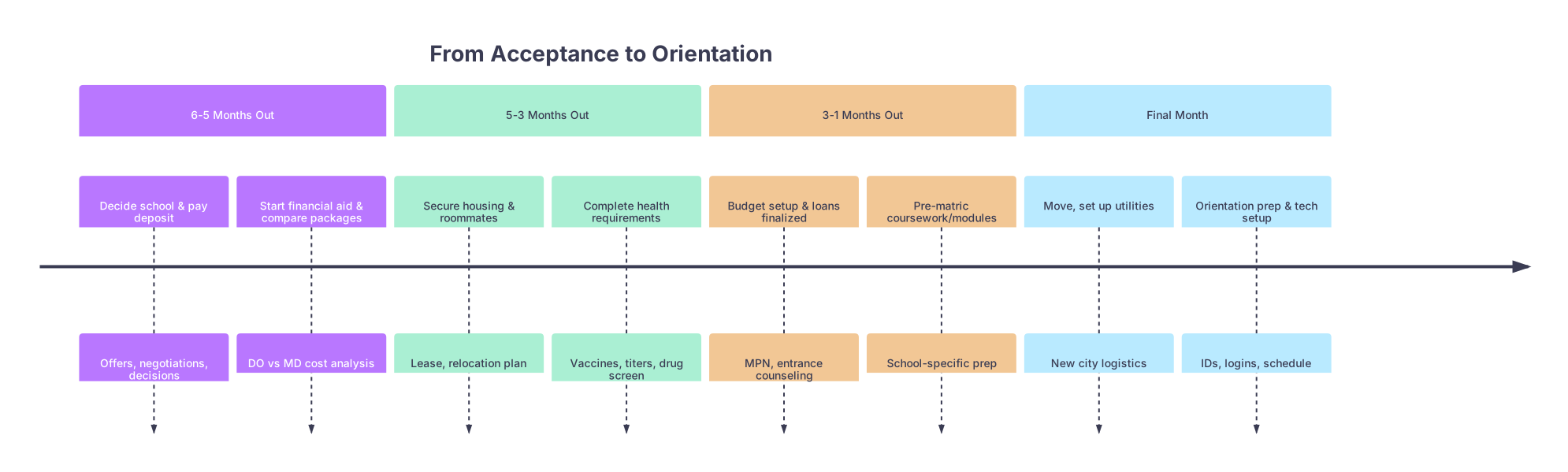
Big-Picture 6‑Month Timeline (MD vs DO)
| Period | Event |
|---|---|
| 6-5 Months Out - Decide school & pay deposit | Offers, negotiations, decisions |
| 6-5 Months Out - Start financial aid & compare packages | DO vs MD cost analysis |
| 5-3 Months Out - Secure housing & roommates | Lease, relocation plan |
| 5-3 Months Out - Complete health requirements | Vaccines, titers, drug screen |
| 3-1 Months Out - Budget setup & loans finalized | MPN, entrance counseling |
| 3-1 Months Out - Pre-matric coursework/modules | School-specific prep |
| Final Month - Move, set up utilities | New city logistics |
| Final Month - Orientation prep & tech setup | IDs, logins, schedule |
At each stage I’ll flag DO‑specific vs MD‑specific issues clearly.
6 Months Before Orientation: Lock In Your School & Money Plan
This is the “no more fantasy, make a decision” phase.
At this point you should…
Choose your school (if you haven’t yet)
- Compare:
- Location and cost of living
- Curriculum style (systems vs discipline, pass/fail vs graded)
- Residency match outcomes (especially if you’re DO aiming for competitive specialties)
- DO vs MD angle:
- MD schools often have more established research and home residencies.
- DO schools may have stronger primary care/community connections but can be weaker on home programs for some competitive specialties (ortho, derm, plastics).
- If you’re sitting on a DO seat and waiting on an MD waitlist: decide how long you’re realistically willing to gamble.
- Compare:
Pay or confirm your seat deposit(s)
- DO schools frequently:
- Have earlier and higher deposits (e.g., $1,000–$2,000, sometimes nonrefundable).
- Are stricter about deadlines.
- MD schools:
- Follow AAMC “traffic rules” with clearer “Plan to Enroll” and “Commit to Enroll” dates.
- DO schools frequently:
Start a rough 4‑year financial map
You’re not signing your life away yet, but you should know the damage.- List for each school:
- Tuition & fees (annual)
- Estimated living expenses (be honest: rent, food, car, insurance)
- Travel (family, significant other, flights vs drives)
- DO vs MD reality check:
- Many DO schools are private and pricey with weaker institutional aid.
- Some state MD schools are dramatically cheaper for residents.
Use a very rough calculation:
- (Tuition + Living) × 4 = total estimated borrowing
- Then accept that interest will make it higher.
- List for each school:
Start a “Before M1” master list (digital, not in your head)
Create sections like:- Financial
- Housing
- Health/Immunizations
- Tech & Gear
- Personal Life (relationships, moves, etc.)
This list becomes your command center. Without it, you will miss something dumb like a deadline for transcripts or your immunization form.
5 Months Before Orientation: Aid, Paperwork, and Health Baseline
Now you move from big decision to actual logistics.
At this point you should…
File/Update the FAFSA
- Do this as soon as possible after it opens (check current year dates).
- Use the school code for each school you’re still considering.
- Grad/professional students are independent for FAFSA—parents’ info usually isn’t needed for federal loans (merit/need-based institutional aid can be different).
Complete institutional financial aid forms
- Some MD schools (especially top tier) require extra forms or verification for scholarships.
- DO schools may have:
- Fewer institutional grants
- More reliance on federal loans and private scholarships
- Turn this in early. Slow responders get leftovers.
Start immunization and health clearance steps
You do not want to be the person scrambling for titers in July when appointments are booked.Typical requirements (MD and DO look similar here):
- MMR titers or proof of vaccination
- Varicella titer or vaccination
- Hepatitis B series + surface antibody titer
- Tdap within last 10 years
- TB screening (PPD or IGRA like Quantiferon)
- COVID vaccinations/boosters if required
- Annual flu shot (timing can be closer to fall)
Move now on any series that takes months (Hep B series, repeated TB testing if needed).
Review any DO‑specific OMM/osteopathic expectations (if DO‑bound)
- Check:
- Required OMM labs starting M1
- Dress code for labs (exercise clothing, scrubs, etc.)
- Any pre-matric materials explaining osteopathic philosophy
- Start mentally accepting that you’ll be touched a lot in lab. This unsettles some students more than the gross lab.
- Check:
Request official transcripts and final paperwork
- If you’re still finishing undergrad:
- Know exactly when your degree will appear on your transcript.
- Set a reminder to send final transcripts as soon as the degree posts.
- Check your school portal weekly for:
- “To-do” items
- Missing documents
- Form deadlines
- If you’re still finishing undergrad:
4 Months Before Orientation: Housing, Relocation, and Life Logistics
This is where people either get organized or end up couch-surfing the week before orientation.
At this point you should…
Lock in housing (or at least shortlist options)
- Decide: live alone, with roommates, or with a partner/family.
- For most M1s:
- 10–15 minutes from campus is ideal.
- You don’t need luxury. You do need quiet, safety, and year‑round comfort.
DO vs MD angle:
- Many DO schools are in smaller towns / suburban areas with:
- Limited public transit
- High demand on a few apartment complexes used by students
- Some MD schools in big cities give you:
- Difficult parking
- Higher rent but better public transit
Do not wait until 6 weeks before orientation to start this search.
Join your class Facebook/GroupMe/Discord
- Find:
- Housing threads
- Roommate posts
- Used furniture and textbook swaps
- This is also where you’ll see:
- Orientation info
- “Pre-matric” group chats
- Rumors and panic (mute as needed).
- Find:
Map out your relocation plan
Answer these now:- When exactly will you move? (Aim for 1–3 weeks before orientation.)
- Are you driving, flying, renting a truck, shipping a car?
- Do you need storage? Interim housing?
Make a simple move checklist:
- Lease signed, deposit paid
- Utility setup dates (electric, internet, water)
- Change of address with USPS
Clarify any pre-matric academic requirements
MD and DO schools sometimes have:- Required online modules:
- HIPAA
- OSHA/Bloodborne pathogen training
- Intro to professionalism
- Optional refresher courses:
- Anatomy boot camps
- Biochem review
- “Math for med school” style workshops
My opinion: Do the required stuff on time. For optional science refreshers, only sign up if:
- You truly struggled with the subject before, and
- The course doesn’t eat your entire last free summer.
- Required online modules:
3 Months Before Orientation: Loans, Budget, and Tech
This is the “turn abstract debt into actual loans” month.
At this point you should…
Review your official financial aid offer
It typically includes:- Unsubsidized Direct Loans (standard for med students)
- Possibly Grad PLUS loans or instructions for them
- Any institutional scholarships or grants
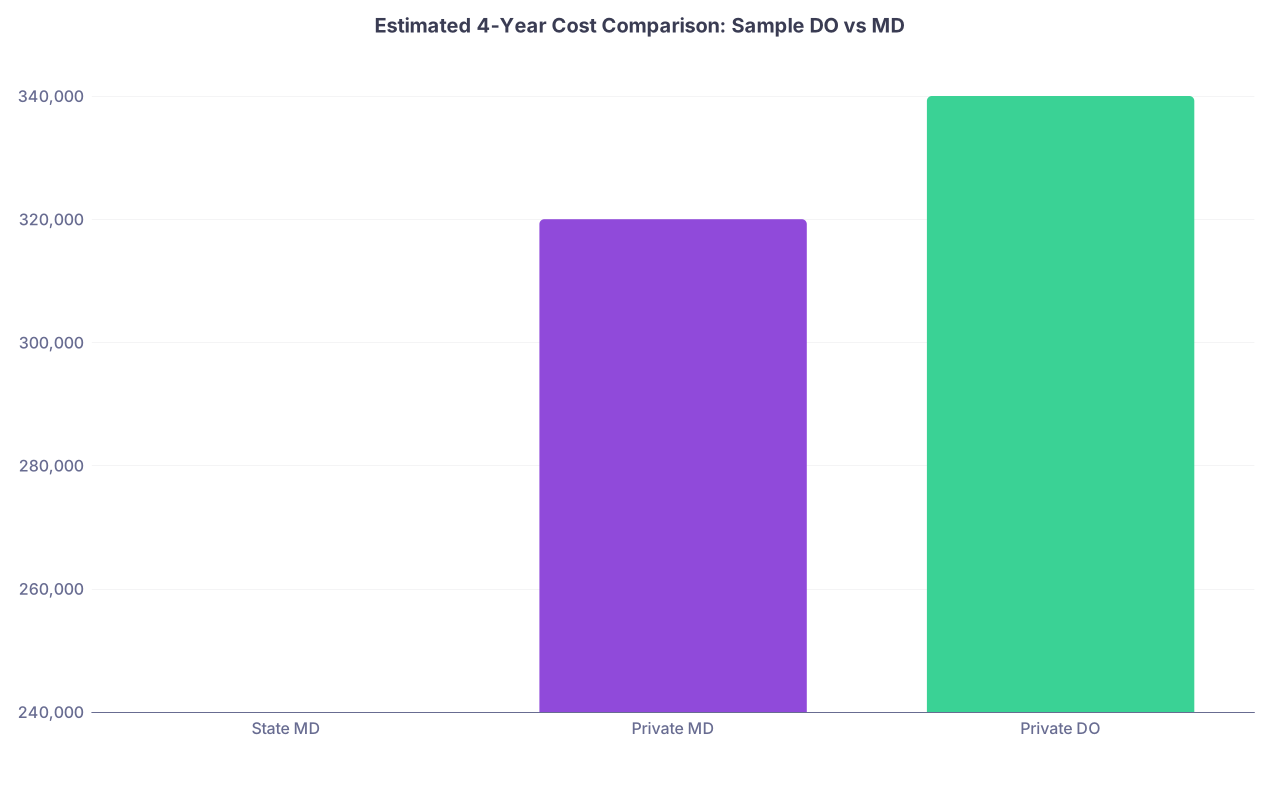
Compare DO vs MD packages clearly.
| Category | Value |
|---|---|
| State MD | 240000 |
| Private MD | 320000 |
| Private DO | 340000 |
Interpretation: if your numbers look worse than this, you should know now, not years later.
Decide how much to actually borrow (not just accept the max blindly)
Build a realistic monthly budget:- Rent + utilities
- Food (not your ideal, your actual)
- Car + gas + insurance (if applicable)
- Health insurance (if not covered elsewhere)
- Books/board prep, miscellaneous
Then:
- Accept enough loans to cover cost of attendance, not wild lifestyle upgrades.
- If your DO program is more expensive and you still chose it—fine. Own it. But don’t pretend the numbers don’t matter.
Complete loan entrance counseling + sign Master Promissory Notes (MPN)
- Federal loans require:
- Online entrance counseling
- Separate MPNs for Direct and Grad PLUS loans (if using both)
- Knock this out now so your money actually disburses before rent is due in August.
- Federal loans require:
Clarify tech requirements and software access
- Check if your school mandates:
- A specific type of laptop or operating system
- iPad or tablet for testing platforms (NBME/Examplify style)
- Wait to buy big tech until:
- You see if there’s a student discount
- The school confirms what will be supported during exams
- Check if your school mandates:
Start a minimal “prep” review if you really want to
I’m not a fan of full MCAT‑level studying again. But 2–3 hours/week on:- Basic oxygen transport physiology
- Basic biochem (glycolysis, TCA, amino acids)
- Anatomy terminology
…can make the first weeks less brutal.
Do not waste money on full board resources now. First survive M1.
2 Months Before Orientation: Health Clearances, Final Documents, and Early Networking
This is the paperwork crunch.
At this point you should…
Complete and upload all health documentation
- Confirm:
- All titers done and uploaded
- TB test within the right timeframe
- Any additional occupational health or drug screen completed
DO schools sometimes coordinate with specific clinical partners—make sure you’re following their exact instructions.
- Confirm:
Finish all pre-matric modules
- These might include:
- HIPAA
- Professionalism courses
- Sexual harassment or Title IX training
- Put the completion confirmations (PDF or screenshots) in a dedicated “Med School Admin” folder.
- These might include:
If DO‑bound, start engaging with osteopathic resources
- Skim:
- A brief history of osteopathic medicine
- What OMM actually aims to do clinically
- Find out:
- How your school schedules OMM labs
- Dress code and expectations
- Not to worship the philosophy. Just to not look confused when faculty talk about it like it matters—because at DO schools, it does.
- Skim:
Connect with 1–2 current students
- Reach out through:
- Class Facebook/Discord
- Mentorship programs run by the school
Ask targeted questions:
- “If you had to pick where to live again, where would you choose?”
- “What’s one thing you bought that you never used?”
- “What’s overrated to prep before M1?”
Filter out the extremes:
- The “I pre‑studied all of First Aid” person.
- The “I did nothing and still honored everything” unicorn.
- Reach out through:
1 Month Before Orientation: Move, Setup, and Mental Reset
This is when your life physically shifts.
At this point you should…
Move to your new city/town (ideally 1–2 weeks before orientation)
- Unpack more than just a suitcase. You need:
- A functional workspace
- A sleep setup that doesn’t wreck your back
- A kitchen you can actually use
- Unpack more than just a suitcase. You need:
Set up utilities, internet, and basic services
Confirm:- Electric, water, gas (if needed)
- Internet (test speed; you’ll be streaming lectures, not just Netflix)
- Trash/recycling schedules
Do a “life systems check” in your new place
- Where will you:
- Study (desk, lighting, chair)?
- Keep your printed materials or whiteboard?
- Exercise (complex gym, local gym, home setup)?
- Figure out:
- Closest grocery stores
- Closest urgent care/ER
- Commute route to campus and parking situation
- Where will you:
Review your orientation schedule and required events
- Mark:
- Mandatory sessions (often attendance is tracked)
- White coat ceremony date/time
- MD vs DO:
- Some DO schools have extra OMM or osteopathic identity sessions during orientation.
- MD schools may emphasize research or institutional history more.
- Mark:
Buy only the gear you now know you truly need
After you talk to current students and review school lists:Usually safe to get:
- A decent laptop or tablet that meets requirements
- Noise‑cancelling or comfortable study headphones
- 1–2 sets of professional clothing for clinical events
Wait on:
- Stethoscope (often white coat ceremonies include discounts or school guidelines)
- Full dissection kit or diagnostic kits unless mandated
- Piles of anatomy atlases (your school library likely has digital copies)
Final 2 Weeks: Orientation Prep and Mental Strategy
This is where you stop “preparing for school” and start preparing yourself.
At this point you should…
Complete any last forms and ID steps
- Upload photo for student ID if required
- Confirm:
- Parking permit application
- Health insurance waiver (if you’re using outside coverage)
- Print or save:
- Orientation schedule
- Campus map
Set up your digital ecosystem
- Log into:
- School email
- LMS (Canvas, Blackboard, etc.)
- Exam software (Examplify, NBME secure browsers, etc.)
- Create:
- Clear folder structure for each course
- A calendar with:
- Exam dates (if released early)
- Mandatory sessions
- Log into:
Plan your first-week routine
Decide:- What time you’ll wake up
- Your commute timing and backup route
- Where you’ll sit in lecture (if in‑person)
- When and how you’ll review material daily
For DO students, also note:
- When OMM labs occur
- What clothing you’ll need that day (so laundry doesn’t ambush you).
Set 3 realistic goals for your M1 fall
Not vague nonsense like “do well.” Real things like:- “Pass all exams on first attempt, no remediation.”
- “Exercise 3x/week for at least 20 minutes.”
- “Call family once a week.”
And then one DO vs MD reality check:
- If DO and eyeing competitive specialties:
- Start paying attention early to research opportunities and class rank.
- If MD and leaning primary care:
- Start scoping out community clinics and longitudinal opportunities.
Protect 2–3 days of real rest before orientation
No modules. No “one more biochem lecture.”
Just let your brain reset, because the next 18–24 months will not be kind.
Day Before Orientation & Orientation Week
At this point you should…
Day before orientation:
- Lay out:
- Clothes for the day (aim for neat, not overdressed)
- Notebook/iPad, pens, water bottle
- Any documents the school asked you to bring
- Confirm:
- Where you’ll park
- What time you need to leave
- Who you might meet up with (roommate, someone from your group chat)
Orientation week:
Your job this week is not to “get ahead” academically. It’s to:
- Learn names: classmates, key staff, student affairs people.
- Learn spaces: classrooms, labs, student lounge, library.
- Learn norms: attendance policies, recording policies, how exams actually run.
DO vs MD:
- DO programs will likely emphasize:
- OMM labs
- Osteopathic identity
- Community/primary care narratives
- MD programs may lean harder into:
- Institutional prestige
- Research options
- Specialty exposure
Just absorb it. You don’t need to decide your specialty this week. You do need to act like a functional adult who can show up on time and follow instructions.
One Concrete Next Step
Today—not tomorrow—pick one of these based on where you are:
- If you’re >5 months out: open a document and create your “Before M1” master list with the five sections: Financial, Housing, Health, Tech, Personal.
- If you’re 3–4 months out: pull up your financial aid portal and confirm exactly which loans and scholarships you’ve been offered—then write down your projected 4‑year cost.
- If you’re within 2 months: log in to your school portal and clear every outstanding task or form.
Pick the one that matches your stage, do it in the next 30 minutes, and you’ll be ahead of at least half your future classmates—DO or MD.