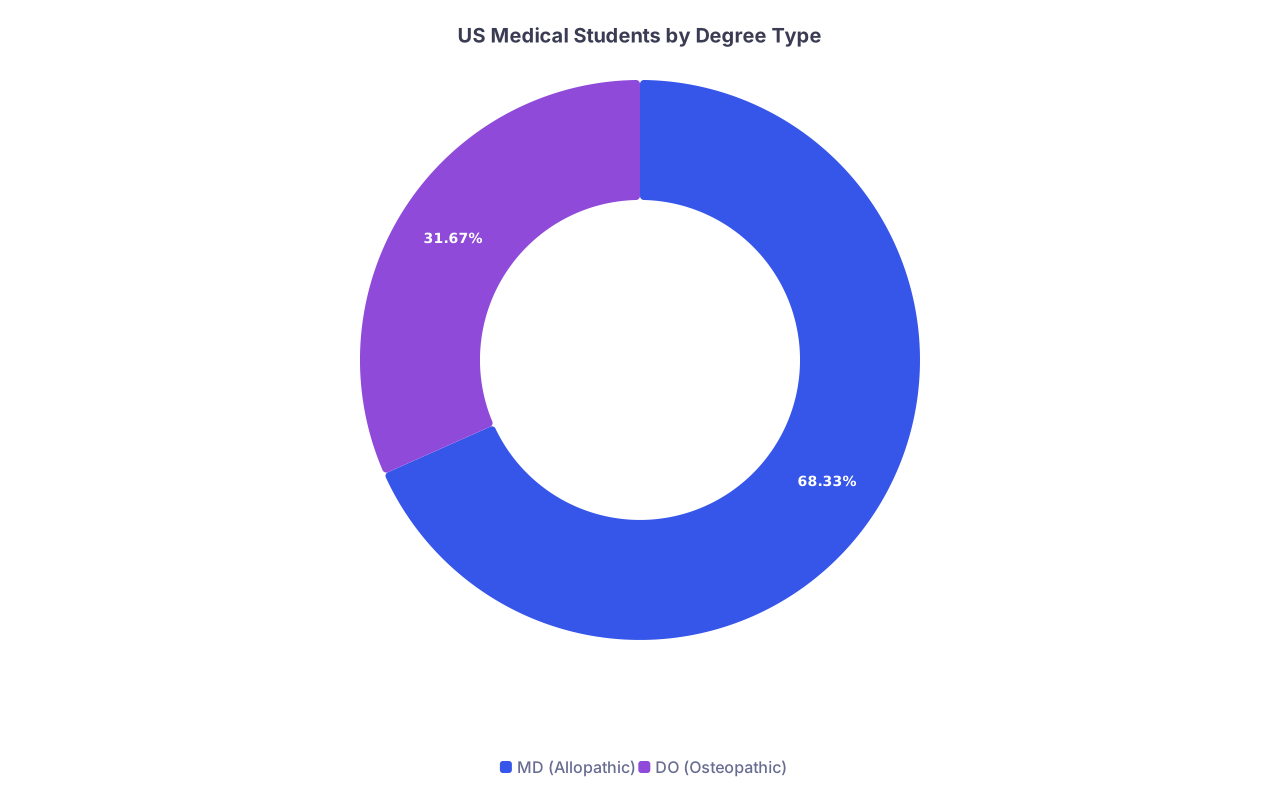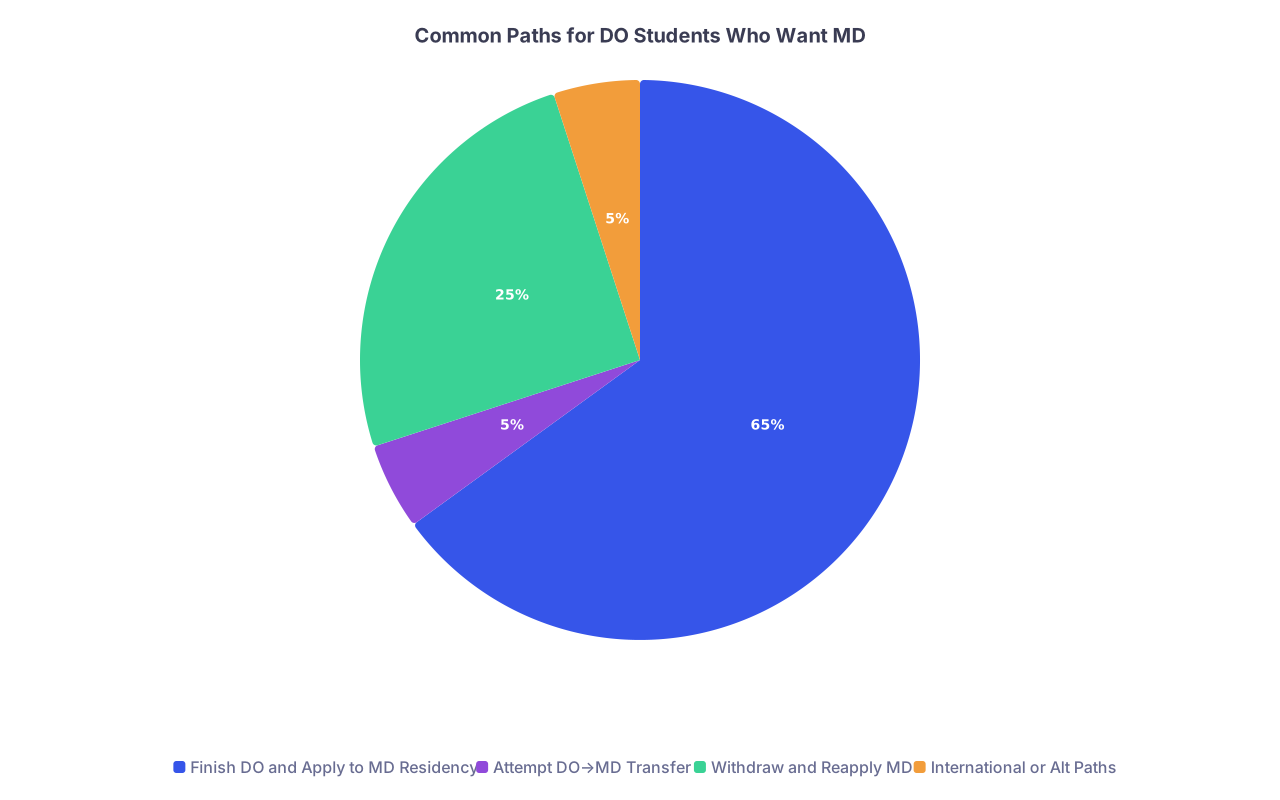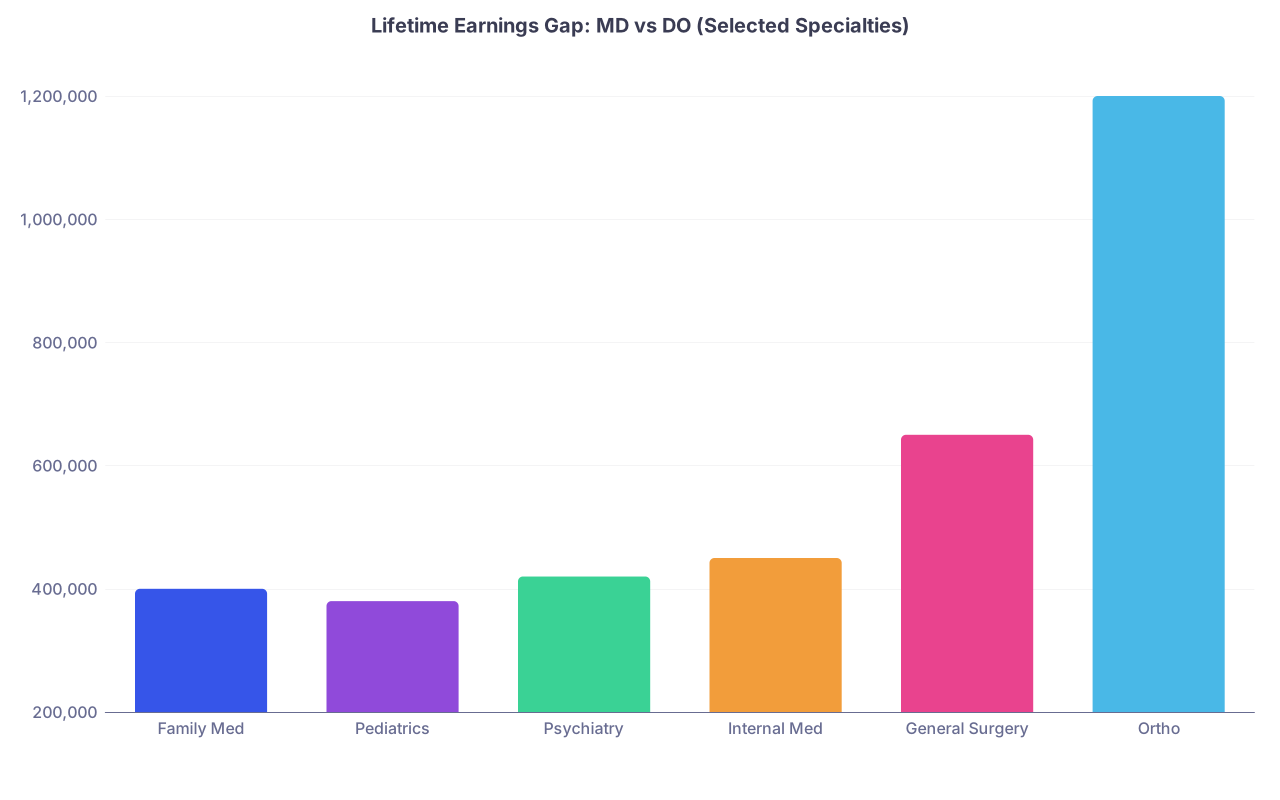
When planning a career in medicine, most U.S. students find themselves evaluating two main degrees: Doctor of Osteopathy (DO) and Doctor of Medicine (MD). Both lead to full physician licensure and rewarding healthcare careers, but there are meaningful differences in acceptance rates, curriculum, teaching philosophy, and career trajectories that can shape your medical education experience.
This expanded guide walks through the DO vs. MD comparison in detail—from competitiveness and curriculum comparison to residency pathways and lifestyle considerations—so you can make an informed, strategic decision about your future in medicine.
DO vs. MD: Foundations, Philosophy, and Scope of Practice
Understanding what each degree represents is essential before diving into statistics and curriculum details.
What Is a DO (Doctor of Osteopathic Medicine)?
DO programs are rooted in osteopathic medicine, a philosophy that emphasizes:
- The body as an integrated whole (mind, body, and spirit)
- The body’s innate ability to heal itself
- The importance of structure and function, especially the musculoskeletal system
- Preventive care and primary care in community and underserved settings
Key features of DO training:
- Osteopathic Manipulative Treatment (OMT): Hands-on techniques used to diagnose, treat, and support function, particularly in the musculoskeletal system.
- Holistic focus: Attention to lifestyle, social determinants of health, and patient-centered communication.
- Strong orientation toward primary care: A significant proportion of DO graduates enter family medicine, internal medicine, pediatrics, and other primary care specialties.
Despite these philosophical differences, DOs in the U.S. are fully licensed physicians:
- Can prescribe all medications
- Can perform surgery
- Can practice in all medical and surgical specialties
- Can serve in the military, academic medicine, and leadership roles
What Is an MD (Doctor of Medicine)?
MD programs represent the traditional allopathic route, grounded in:
- Disease-focused diagnosis and management
- Evidence-based medicine and biomedical science
- Use of medications, surgery, and procedural interventions as primary treatments
Key features of MD training:
- Strong emphasis on pathophysiology and diagnostics
- Extensive research infrastructure at many schools, often tied to large academic medical centers
- Historic dominance in competitive specialties (though this gap is narrowing as more DOs match into these fields)
Like DOs, MDs:
- Are fully licensed physicians
- Can enter any specialty (assuming they complete the appropriate residency)
- Can practice in all 50 states and internationally, though global recognition is more straightforward in some regions for MDs than DOs
Bottom Line on Scope
In the U.S., DO and MD physicians have essentially the same legal scope of practice. The major differences are in training philosophy, culture, and (sometimes) competitiveness for certain residency specialties—not in what you are ultimately allowed to do as a doctor.
Acceptance Rates and Competitiveness: DO vs. MD Programs
Understanding acceptance trends can help you realistically assess your chances and shape your application strategy.
MD Programs: Highly Competitive Entry
MD Programs in the U.S. are generally more competitive on average:
- National MD acceptance rates often fall around 5–7%.
- The Association of American Medical Colleges (AAMC) regularly reports application volumes exceeding 60,000–70,000 applicants per cycle, with roughly 21,000–23,000 matriculants.
- Matriculants tend to have:
- Higher average GPA
- Higher average MCAT scores
- Extensive clinical, research, and extracurricular experience
While these numbers vary year-to-year, the key takeaway is that MD programs tend to be more numerically selective, especially at top-ranked or research-intensive schools.
DO Programs: Slightly Higher Acceptance Rates, Strong Growth
DO Programs have expanded significantly over the last two decades, both in the number of schools and seats available:
- DO acceptance rates commonly fall in the 6–10% range (highly variable by school).
- Osteopathic schools have seen sharp growth in applications, with tens of thousands of applicants each year and several thousand matriculants.
- DO schools often emphasize:
- Holistic review of applicants
- Commitment to primary care and service
- Consideration of nontraditional paths and diverse backgrounds
This does not mean DO schools are “easy” to get into. They remain highly competitive doctoral programs, but they may be more accessible to students with slightly lower statistics or those who strongly align with osteopathic values.
Strategic Takeaways for Premeds
- Apply broadly if possible. Many applicants apply to a mix of DO and MD programs to maximize their chances of entering medical school in a given cycle.
- Align your story with the mission. If you apply to DO programs, explicitly demonstrate interest in holistic care, primary care, community health, or OMT.
- Be realistic about your profile. Use the median MCAT/GPA data for each school to gauge where you are competitive and where you are a reach.

Curriculum Comparison: Inside DO and MD Medical Education
Both DO and MD programs must prepare students to pass licensing exams and practice safely. Yet, there are differences in how content is organized and emphasized.
Shared Core Elements in DO and MD Training
Both types of programs cover:
- Foundational sciences: anatomy, physiology, biochemistry, pathology, pharmacology, microbiology
- Organ-system–based pathophysiology
- Clinical skills: history taking, physical exam, communication
- Clinical rotations in:
- Internal medicine
- Surgery
- Pediatrics
- Psychiatry
- Obstetrics & gynecology
- Family medicine
- Electives and sub-internships
Both pathways are typically four years:
- Pre-clinical years (1–2): Mostly classroom, labs, and simulation
- Clinical years (3–4): Hospital- and clinic-based patient care rotations
MD Programs: Traditional and Research-Intensive Models
Many MD programs follow one of two patterns:
- Traditional structure
- Years 1–2: Organ-system–based basic science curriculum
- Years 3–4: Core clinical clerkships plus electives
- Integrated or shortened pre-clinical period
- Some MD schools compress basic sciences into 1–1.5 years
- More time for early clinical exposure, electives, or research
Common features:
- Strong research emphasis at many MD schools:
- Dedicated research blocks
- Scholarly projects
- MD/PhD dual-degree options
- Simulation centers and standardized patients for clinical skills
- Exposure to subspecialty and academic medicine earlier in training
DO Programs: Integrative, Holistic Curriculum with OMT
DO Programs cover the same core sciences and clinical rotations but add distinctive elements:
Osteopathic Principles and Practice (OPP)
- Dedicated coursework on osteopathic philosophy
- Understanding how structure and function interact
Osteopathic Manipulative Treatment (OMT)
- Hands-on labs and practice sessions
- Techniques for treating musculoskeletal pain, somatic dysfunction, and related issues
- Integration of OMT into clinical settings where possible
Emphasis on holistic, patient-centered care
- Training in motivational interviewing, lifestyle counseling
- Focus on behavioral health and social determinants of health
- Significant attention to primary care and preventive medicine
Early community engagement
- Many DO schools partner with community clinics or rural health sites
- Opportunities to work with underserved populations early in training
Licensing Exams: USMLE vs. COMLEX
A crucial practical difference in curriculum planning involves licensing exams.
- MD Students
- Typically take the USMLE series: Step 1, Step 2 CK, (Step 3 during residency)
- DO Students
- Must take the COMLEX-USA series: Level 1, Level 2-CE, Level 3
- Many DO students also choose to take USMLE Steps 1 and 2 CK to remain maximally competitive for all residency programs
This dual-exam pathway means many DO curricula are deliberately structured to prepare students for both COMLEX and USMLE, aligning their content with national standards across both exam systems.
How to Use Curriculum Differences in Your Decision
Ask yourself:
- Do you want formal training in manual medicine (OMT) and holistic frameworks?
- Are you excited by research-intensive environments and potentially pursuing academic medicine?
- Is your goal a primary care–focused career or are you already targeting a highly competitive subspecialty?
Your answers can help you decide which environment better supports your goals—though it’s important to remember that either pathway can lead to almost any specialty with the right performance and mentorship.
Residency Opportunities and Match Outcomes for DO and MD Graduates
Residency training is where your chosen degree truly translates into a defined medical career. Understanding the landscape is critical.
The Single Accreditation System: ACGME for All
Historically:
- MD graduates matched into residency via the NRMP (National Resident Matching Program) into ACGME-accredited programs.
- DO graduates had access to a separate AOA match with osteopathic residencies.
Now:
- As of 2020, the U.S. operates under a single accreditation system.
- All residency and fellowship programs are accredited by the ACGME.
- Both DO and MD graduates participate in the same Match (NRMP) and compete for the same positions.
This has expanded opportunities for DO graduates while maintaining broad access for MDs.
Match Statistics and Specialty Trends
While exact percentages shift each year, several consistent trends have emerged:
- Overall Match Rates
- MD seniors typically have slightly higher overall match rates.
- DO seniors now also have strong match rates across many specialties, including:
- Family medicine
- Internal medicine
- Pediatrics
- Emergency medicine
- Anesthesiology
- Competitive Specialties
- Both DO and MD applicants can match into highly competitive fields (e.g., dermatology, orthopedic surgery, plastic surgery, neurosurgery).
- Historically, MD applicants have had an edge in these specialties, but the number of DOs matching into them continues to grow.
- Primary Care
- DOs are disproportionately represented in primary care specialties, reflecting their training and school missions.
Factors That Matter More Than Degree Type
Residency programs evaluate far more than whether you hold a DO or MD:
- Board exam scores (USMLE/COMLEX)
- Clinical performance and clerkship grades
- Letters of recommendation
- Research and scholarly work
- Sub-internships (audition rotations)
- Personal statement and interviews
- Professionalism and interpersonal skills
A strong DO applicant can absolutely out-compete a weaker MD applicant and vice versa. Your performance and engagement carry more weight than your degree label alone.
Strategic Advice for Residency-minded Applicants
- If you know you want a very competitive specialty:
- Consider where you’ll have the strongest support for research and mentorship.
- If you pursue the DO route, strongly consider taking USMLE exams in addition to COMLEX.
- If you’re open to (or prefer) primary care:
- Both DO and MD paths are excellent; DO programs may offer more explicit alignment with primary care missions.
- Seek out schools—DO or MD—that:
- Have a track record of matching graduates into your desired specialty
- Offer robust advising, specialty interest groups, and alumni networks
Cost, Time, Environment, and Lifestyle Considerations
Beyond academics and match rates, there are practical factors that deeply affect your training and long-term satisfaction.
Cost of DO vs. MD Medical Education
- Tuition: Both DO and MD programs frequently exceed $50,000 per year in tuition alone, with total four-year costs often surpassing $200,000–$300,000 when factoring in living expenses and fees.
- Public vs. private: Some public MD schools may be more affordable for in-state students. Many DO schools are private and may have similar or slightly lower tuition, but this varies widely.
- Scholarships and financial aid:
- Competitive MD and DO applicants may receive merit scholarships.
- Need-based aid, federal loans, and service-based scholarships (e.g., NHSC, military HPSP) are generally available for both types of programs.
When comparing offers, focus on:
- Total estimated cost of attendance (COA), not just tuition
- Local cost of living
- Availability of scholarships, teaching assistantships, or research stipends
Length of Training and Career Timeline
The core medical school length is the same:
- 4 years of medical school (DO or MD)
- Residency: 3–7+ years depending on specialty
- Optional fellowship: 1–3+ additional years
Your total training time is dictated more by your chosen specialty than whether you pursued a DO or MD degree.
Educational Environment and Culture
Subtle (and sometimes not-so-subtle) cultural differences can influence your experience:
- DO schools often:
- Emphasize small-group learning, community connection, and primary care
- Attract students with strong interest in holistic and patient-centered care
- MD schools often:
- Are attached to large academic medical centers
- Offer extensive research infrastructure and exposure to complex tertiary-care cases
- May have more visible representation in high-profile specialties and academic careers
Visiting campuses, talking to current students, and attending accepted student days can help you determine which environment feels like the best fit.
Lifestyle and Long-term Practice Patterns
Your eventual lifestyle will depend more on specialty choice and practice setting than degree type:
- Primary care and outpatient specialties may offer:
- More predictable schedules
- Longitudinal relationships with patients
- Surgical and highly procedural specialties may involve:
- Longer hours
- More call and emergencies
- Higher compensation
Because DO programs are heavily oriented toward primary care, many DO physicians end up in specialties that can facilitate a more stable work–life balance, but this is not guaranteed or universal. MD graduates also frequently enter primary care and lifestyle-friendly fields.

Choosing Between DO and MD: A Strategic Framework
To make a thoughtful decision, consider these key questions:
What kind of physician do you want to be?
- Are you drawn to manual/physical medicine, holistic frameworks, and primary care? A DO program may resonate strongly.
- Are you focused on academic medicine, cutting-edge research, or highly competitive subspecialties? An MD program may offer more built-in infrastructure for those goals—but DO programs can still get you there.
How competitive is your current application?
- If your MCAT and GPA are comfortably above the median for many MD schools, you may focus more heavily on MD programs while still considering DO.
- If your stats are borderline for MD but solid for DO, a DO program might represent a more realistic and mission-aligned path.
How important is OMT and osteopathic philosophy to you?
- If you’re not interested in learning or using OMT, think carefully before committing to a DO curriculum that will require time and effort in this area.
- If you are excited by the idea of integrating hands-on musculoskeletal care into your practice, DO training offers unique value.
What are your geographic and lifestyle preferences?
- Some regions of the country have more DO schools or stronger DO alumni networks.
- Consider where you want to live during training and in your career; local networks can matter.
What does your gut say after talking to current students and physicians?
- Shadow both DO and MD physicians if possible.
- Ask them how their training influenced their practice style, opportunities, and satisfaction.
Ultimately, the “right” path is the one that aligns your values, strengths, and career aspirations with the opportunities and culture of the program.
FAQs: DO vs. MD Programs for Premeds and Medical Students
1. Is one degree (DO or MD) considered “better” than the other?
In terms of legal authority and ability to practice medicine in the U.S., DO and MD degrees are equivalent. Both can prescribe medications, perform surgery, and enter any specialty. Some residency programs and institutions may still be more familiar with the MD degree, particularly in historically competitive fields, but this gap has narrowed substantially with the single accreditation system. What matters most is your individual performance, fit, and professionalism, not just the letters after your name.
2. Can DOs and MDs apply to the same residency programs?
Yes. Under the ACGME single accreditation system, all residencies and fellowships are under one umbrella, and both DO and MD graduates apply through the same NRMP Match. DO students typically take COMLEX exams and may also take USMLE exams to remain competitive for all programs. Many programs now actively recruit both DO and MD applicants and value the diverse perspectives they bring.
3. Are DO Programs easier to get into than MD Programs?
DO Programs often have slightly higher acceptance rates and may accept applicants with somewhat lower average GPAs and MCAT scores compared with MD programs, but they are still highly competitive doctoral-level professional schools. “Easier” is relative—both paths require strong academic preparation, extensive clinical exposure, and compelling applications. A thoughtful school list that includes both DO and MD programs often gives applicants the best overall chances.
4. Will choosing a DO Program limit my chances of entering competitive specialties?
Choosing a DO program does not automatically prevent you from matching into competitive specialties, but it may require more strategic planning:
- Strong COMLEX (and typically USMLE) scores
- Early and meaningful specialty exposure
- Research and scholarly activity
- Mentorship from physicians in your target specialty
- Stellar clinical performance and letters of recommendation
Many DO graduates successfully enter competitive fields, from orthopedic surgery to dermatology. However, if you’re already certain you want an ultra-competitive specialty, it’s important to carefully evaluate each school’s match list, mentorship opportunities, and research environment, regardless of DO or MD status.
5. Can DOs practice internationally like MDs?
In many countries, DOs from U.S.-accredited osteopathic schools can practice similarly to MDs, but international recognition can be more complex and variable by country. MD is more universally recognized worldwide, particularly in regions without an established osteopathic profession. If long-term international practice is a core goal, you should:
- Research regulations in the countries you’re interested in
- Speak with global health advisors and current physicians who practice abroad
- Consider that an MD degree may provide a smoother path in certain regions
By understanding acceptance rates, curriculum structures, residency options, and lifestyle considerations, you can choose a path—DO or MD—that aligns with your vision for your medical education and your future in healthcare. Both degrees can lead to fulfilling, impactful careers caring for patients and shaping the future of medicine.