Are DOs Taken Seriously? Debunking Common Myths About Osteopathic Medicine
Osteopathic physicians (DOs) are a rapidly growing and highly respected part of the U.S. Healthcare system. Yet among premeds, medical students, and even some patients, persistent myths still raise the question: Are DOs taken seriously?
For anyone considering Osteopathic Medicine as a career—or for patients trying to understand their options—it’s essential to separate myth from reality. This article unpacks common misconceptions, explains what Osteopathic Medicine actually is, and outlines where DOs fit in today’s medical training and patient care landscape.
Understanding Osteopathic Medicine and the DO Pathway
Before addressing the myths, it helps to understand what Osteopathic Medicine is, how DOs are trained, and how they practice.
What Is Osteopathic Medicine?
Osteopathic Medicine was founded in the late 19th century by Dr. Andrew Taylor Still, who believed that many illnesses stem from problems in the musculoskeletal system and that the body has an inherent capacity to heal itself when structure and function are aligned.
Today, Osteopathic Medicine has evolved into a fully modern branch of medicine that incorporates all contemporary scientific advances while retaining its core philosophy:
- The body is a unit—mind, body, and spirit are interconnected.
- The body has self-regulatory and self-healing mechanisms.
- Structure and function are interrelated at all levels.
- Rational treatment is based on these principles.
In practice, this means DOs are trained to consider not just a disease or organ system, but the whole person—biological, psychological, and social factors together.
Key Features of Osteopathic Medicine
1. Whole-Person, Holistic Approach
DOs are trained to ask broader questions:
- How is the patient sleeping?
- What stresses—social, financial, or emotional—might be affecting their health?
- How do lifestyle and environment contribute to their symptoms?
This doesn’t replace evidence-based diagnosis and treatment. Rather, it adds additional layers of context that can improve patient care and outcomes.
2. Osteopathic Manipulative Treatment (OMT)
OMT (often called osteopathic manipulative medicine, or OMM) is a defining skillset of DOs. It involves using the hands to:
- Diagnose musculoskeletal dysfunctions
- Treat pain and functional problems
- Support the body’s ability to heal
OMT techniques include soft tissue work, muscle energy, counterstrain, and certain gentle joint manipulations. It’s commonly used for:
- Low back and neck pain
- Headaches
- Certain sports injuries
- Some pregnancy-related musculoskeletal complaints
Not all DOs practice OMT in daily patient care, but all DO students learn it, and many use it as an adjunct to conventional treatment.
3. Emphasis on Preventive Care and Lifestyle
Osteopathic training traditionally places a strong focus on:
- Preventive medicine
- Lifestyle modification
- Public health
- Behavioral and psychosocial aspects of illness
This aligns with modern priorities in Healthcare: managing chronic disease, improving population health, and reducing long-term costs through prevention.
Myth 1: “DOs Are Not Real Doctors”
This is one of the most common and most inaccurate myths.
The Reality: DOs Are Fully Licensed Physicians
In the United States, DOs and MDs have equal legal status. Both are:
- Fully licensed physicians
- Able to diagnose and treat medical conditions
- Authorized to prescribe medications
- Allowed to perform surgery
- Eligible for the same residencies and fellowships (through the unified ACGME system)
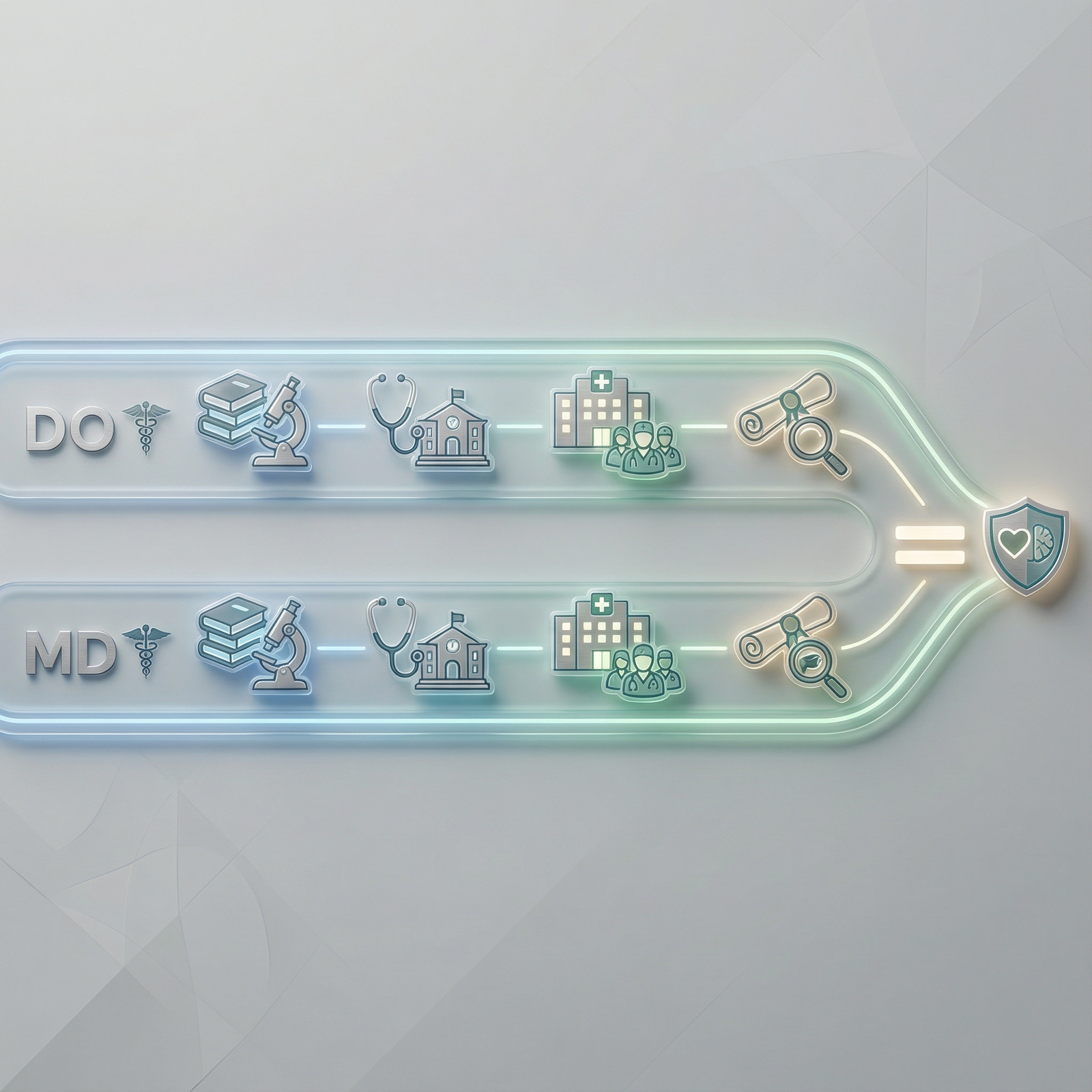
Both DO and MD physicians complete:
- Four years of undergraduate education (premed requirements)
- Four years of medical school
- 3–7+ years of residency
- Optional subspecialty fellowship training
DOs must pass rigorous licensing exams (COMLEX-USA, and often USMLE as well) and meet the same state licensing requirements as MDs.
Growing Presence in U.S. Medicine
DOs are no longer a small minority:
- Over 25% of U.S. medical students are enrolled in osteopathic medical schools.
- The number of DOs has more than quadrupled in the past few decades.
- DOs practice in every specialty and in every state.
In many hospitals and clinics, you will find teams that include both MD and DO physicians working side by side—often indistinguishable in day-to-day practice except for the letters after their names.
Bottom line: In the eyes of the law, licensing bodies, and the Healthcare system, DOs are absolutely “real doctors.”
Myth 2: “DOs Have Inferior Training Compared to MDs”
This myth usually arises from misunderstanding the differences in curricula and entrance statistics between DO and MD schools.
The Reality: The Training Is Parallel and Comparable
Both DO and MD medical schools are accredited by rigorous national bodies and meet strict standards for curriculum, clinical exposure, and outcomes.
Core Medical Education
DO and MD students both learn:
- Anatomy, physiology, biochemistry, pharmacology, pathology
- Clinical skills, interviewing, and physical examination
- Evidence-based medicine and critical appraisal
- Clinical rotations (“clerkships”) across core specialties:
- Internal medicine
- Surgery
- Pediatrics
- OB/GYN
- Psychiatry
- Family medicine
- Emergency medicine
The key difference is that DO students also complete hundreds of additional hours in Osteopathic Principles and Practice (OPP) and OMT.
Licensing Exams and Accreditation
- DOs take COMLEX-USA Level 1, 2, and 3 exams to obtain licensure.
- Many DO students also choose to take the USMLE series to be competitive for certain residencies.
- Since 2020, all U.S. residency programs are under a single, unified accreditation system (ACGME), and DOs and MDs compete for the same positions.
Residency directors evaluate applicants based on:
- Scores (COMLEX and/or USMLE)
- Clinical performance
- Letters of recommendation
- Research experience
- Professionalism and interview performance
Not the letters “DO” or “MD” alone.
DO Match Outcomes and Competitive Fields
Data from recent residency match cycles show:
- DO graduates matching across all 50 states
- DOs securing positions in:
- Internal medicine, family medicine, pediatrics
- Emergency medicine, anesthesia
- General surgery, orthopedics, neurology
- Psychiatry, radiology, OB/GYN, and more
- Increasing DO representation in academic programs and large university centers
While there may still be a small number of programs that historically favored MDs, this is diminishing as awareness and experience with DOs increases.
For premeds and medical students: The quality of your training will depend far more on your effort, your school’s resources, and your clinical opportunities than on whether your degree is DO or MD.
Myth 3: “DOs Are Only Primary Care Doctors”
Many people assume DOs are limited to family medicine or general practice.
The Reality: DOs Practice in Every Medical and Surgical Specialty
It is true that DOs are more likely than MDs to pursue primary care. Historically, Osteopathic Medicine has emphasized community-based care and service in underserved areas.
However, DOs are found in virtually all specialties, including:
- Medical specialties: Cardiology, gastroenterology, oncology, pulmonology, nephrology, endocrinology
- Surgical specialties: General surgery, orthopedic surgery, neurosurgery, ENT, urology
- Hospital-based: Anesthesiology, emergency medicine, critical care, radiology
- Others: Psychiatry, physiatry (PM&R), sports medicine, dermatology
Example: DOs in Subspecialties
Think of:
- A DO cardiologist doing catheter-based interventions
- A DO orthopedic surgeon repairing ACL tears
- A DO psychiatrist leading an academic research program
- A DO intensivist running a multidisciplinary ICU team
All of these roles are common and increasingly visible.
For patients, your DO can be your primary care doctor, specialist, surgeon, or consultant. For premeds, a DO degree does not lock you into primary care unless that’s what you want.
Myth 4: “DOs Are Less Competent Than MDs”
This myth often reflects unfamiliarity with the DO pathway, not actual evidence.
The Reality: Competence Is Individual, Not Degree-Based
Competence in medicine depends on:
- Depth of medical knowledge
- Clinical judgment
- Procedural skills
- Communication and teamwork
- Ongoing learning and professionalism
Research comparing patient outcomes between DO and MD physicians has found:
- No significant difference in key clinical outcomes when controlling for specialty and practice setting.
- Similar or higher patient satisfaction ratings for DOs in some primary care contexts, possibly reflecting the emphasis on communication and holistic care.
For example, studies published in peer-reviewed journals (including the Journal of the American Osteopathic Association) report:
- Comparable quality of care for chronic conditions
- Similar adherence to evidence-based guidelines
- Equivalent hospitalization and readmission rates
How DOs Are Evaluated in Practice
Hospitals, health systems, and credentialing committees evaluate physicians based on:
- Board certification
- Training history (residency and fellowship)
- Clinical outcomes and peer evaluations
- Quality metrics and patient feedback
Once in practice, DOs and MDs are judged by the same professional standards and expectations.
For patients: The most important question is not “Is my doctor a DO or MD?” but rather “Is my doctor well-trained, up to date, communicative, and trustworthy?”
Myth 5: “OMT Is Not Evidence-Based”
Skepticism around manual therapies is understandable, particularly in an era focused on high-level evidence and reproducible trials.
The Reality: OMT Has Evidence for Specific Indications
OMT is not a cure-all, and responsible DOs do not claim that it is. However, there is a growing body of research supporting OMT as a safe and effective adjunct for certain conditions.
Evidence Highlights
- Low back pain: Multiple randomized controlled trials and meta-analyses have shown:
- Reduced pain intensity
- Improved functional status
- Decreased use of pain medications
- Neck pain and some headaches: Evidence suggests benefit for certain headache types and neck-related musculoskeletal issues.
- Pregnancy-related back pain: Some studies report improved pain and function, and better quality of life.
For example, a meta-analysis in Archives of Internal Medicine reported that OMT produced clinically meaningful reductions in low back pain compared with control or sham treatments.
How DOs Use OMT in Modern Practice
Not all DOs use OMT regularly; practice patterns vary:
- Some DOs, especially in primary care, integrate OMT into routine visits.
- Others (e.g., surgeons, hospitalists, intensivists) may use it more selectively or not at all, based on their setting and patient population.
- Some DOs pursue additional training and specialize in neuromusculoskeletal medicine with a primary focus on OMT.
OMT is one more tool in the toolkit—used when it fits the clinical situation, evidence, and patient preference.
The Expanding Role of DOs in Modern Healthcare
Osteopathic physicians are helping shape the future of medicine in several key ways.
DOs and Patient-Centered Care
The philosophy of Osteopathic Medicine aligns closely with contemporary trends:
- Value-based care: DOs’ preventive and holistic focus supports long-term outcomes and cost-effective management.
- Chronic disease management: Addressing lifestyle, mental health, and social determinants is critical for conditions like diabetes, hypertension, and depression.
- Communication and empathy: Many DO schools emphasize patient communication and rapport, which correlates with patient adherence and satisfaction.
Serving Underserved and Rural Communities
Data consistently show a higher proportion of DOs:
- Practicing in rural and medically underserved areas
- Entering primary care specialties (family medicine, internal medicine, pediatrics)
- Working in community hospitals and safety-net clinics
This helps address critical physician shortages and improves access to care for vulnerable populations.
Leadership, Research, and Academic Medicine
DOs are increasingly visible in:
- Academic leadership (deans, program directors, department chairs)
- National organizations and specialty societies
- Health policy and public health roles
- Clinical and translational research
You will find DOs on hospital executive boards, writing guidelines, and leading national conversations on healthcare delivery and reform.
Changing Perceptions: What This Means for Premeds and Patients
Perceptions of Osteopathic Medicine have changed substantially in the last 20–30 years and continue to evolve.
For Premeds and Medical Students
If you’re considering applying to DO schools, keep in mind:
- Competitiveness: Many DO programs have become highly competitive, with strong emphasis on GPA, MCAT, service, and clinical experience.
- Curriculum: Expect a rigorous, science-heavy curriculum plus additional OMT training and a holistic care framework.
- Residency prospects: With proper planning (board exams, clinical performance, research where appropriate), DO students regularly match into a full range of specialties.
Actionable steps:
- Shadow both DO and MD physicians to see differences and similarities.
- Ask DO mentors how their training influences their daily practice.
- Research each school’s residency match outcomes and academic opportunities.
If you resonate with a whole-person philosophy and want additional hands-on tools like OMT, Osteopathic Medicine may be a strong fit.
For Patients and Families
If your doctor is a DO:
- They are a fully licensed physician with broad training.
- They can provide the same standard medical and surgical care as an MD.
- They may offer additional options like OMT where appropriate.
- You can ask them how their osteopathic background shapes their approach.
Choosing a doctor should focus on:
- Communication and trust
- Clinical expertise and board certification
- Availability and continuity of care
- Personal comfort and shared decision-making—not just degree type.
Conclusion: Are DOs Taken Seriously?
In modern U.S. Healthcare, the answer is unequivocally yes.
Osteopathic physicians:
- Complete rigorous, accredited medical training
- Match into competitive residencies alongside MD peers
- Practice in every specialty and every clinical environment
- Contribute to research, teaching, leadership, and policy
- Play a crucial role in patient-centered and preventive care
The myths that DOs are “not real doctors,” have “inferior training,” or are “only primary care providers” are outdated and inconsistent with current data and clinical reality.
For aspiring physicians, Osteopathic Medicine offers a respected, expanding pathway with a distinctive philosophical foundation and practical advantages. For patients, DOs are qualified experts capable of providing high-quality, evidence-based care—with the option of integrative, hands-on approaches where appropriate.
FAQs About Osteopathic Medicine and DO Physicians
1. What is the main difference between an MD and a DO?
Both MDs and DOs are fully licensed physicians with similar core medical training. The primary differences are:
- Philosophy: DOs are trained in a holistic, whole-person approach that emphasizes the interconnection of body, mind, and environment.
- Training: DO students receive additional education in Osteopathic Principles and Practice and Osteopathic Manipulative Treatment (OMT).
- Practice: Many DOs incorporate preventive care and lifestyle counseling heavily, and some use OMT as an adjunct to conventional treatments.
In day-to-day practice, especially in hospitals and specialty clinics, MDs and DOs often work in very similar ways.
2. Can a DO perform surgery or work in highly specialized fields?
Yes. DOs can:
- Perform all types of surgery, provided they complete the appropriate surgical residency and board certification.
- Enter competitive specialties such as orthopedic surgery, neurosurgery, cardiology, anesthesia, radiology, and more.
- Complete fellowships at major academic centers.
Your surgeon, cardiologist, or anesthesiologist may be an MD or a DO; both undergo extensive specialty training.
3. Do DOs have the same residency opportunities as MDs?
Under the unified ACGME accreditation system, DOs and MDs:
- Apply to the same residency programs
- Are evaluated using similar criteria
- Train side by side in most specialties
Some residency programs may have historical patterns or preferences, but these are steadily fading. Strong performance in medical school, licensing exams, and clinical rotations usually matters far more than whether the degree is DO or MD.
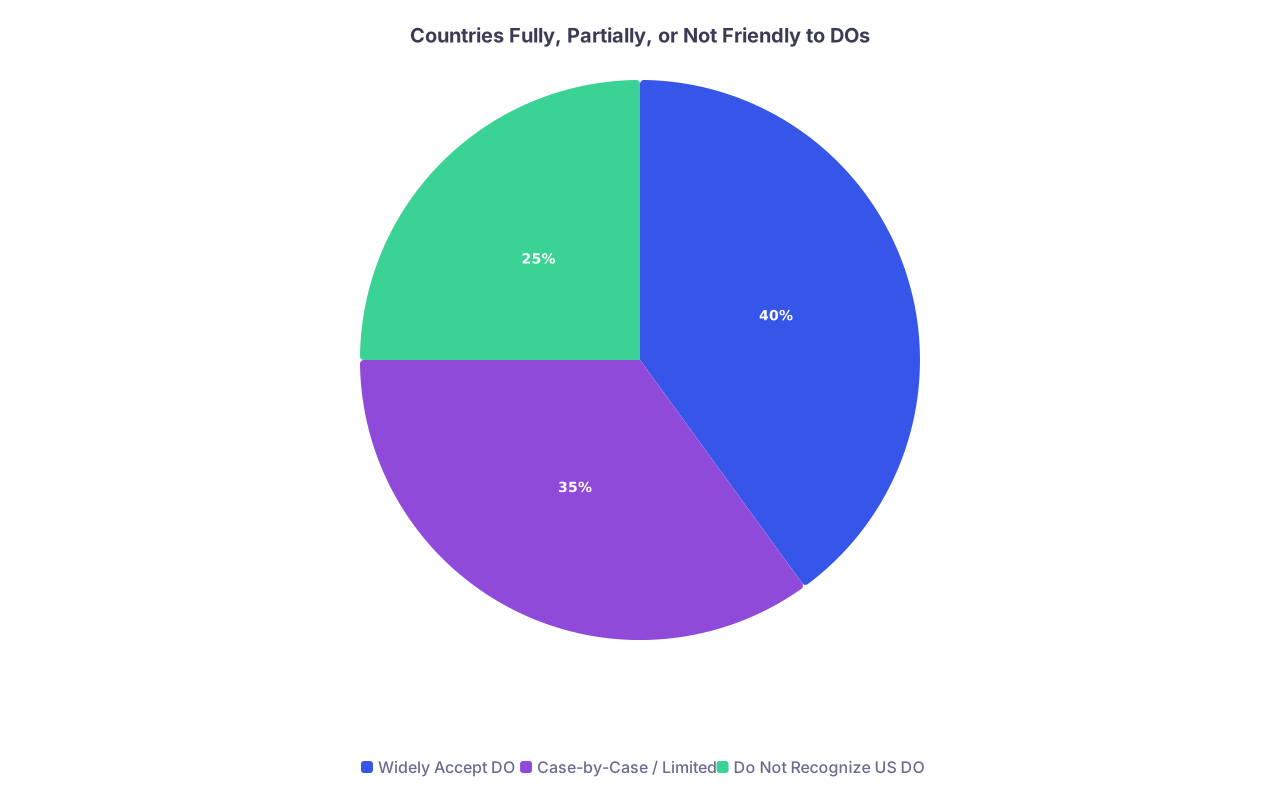
4. Are DOs recognized internationally?
International recognition varies:
- In the United States, DOs are fully licensed physicians equivalent to MDs.
- In countries like Canada and parts of Europe, U.S.-trained DOs are often recognized as physicians, but processes and requirements differ.
- In some regions, DO may be misunderstood or equated with non-physician manual therapists (who use the “osteopath” title but are not doctors).
If a DO plans to practice abroad, they should research specific country regulations, licensing exams, and recognition policies.
5. Can a DO prescribe medication and admit patients to the hospital?
Yes. In all 50 U.S. states and U.S. territories, DOs:
- Can prescribe medications (including controlled substances) within their scope of practice
- Admit and manage patients in hospitals
- Order labs, imaging, and diagnostic tests
- Lead care teams and serve as attending physicians
Their practical authority is the same as that of MDs.
For further insight into medical education pathways and preparation, you may also find it helpful to explore resources on:
- Preparing strategically for medical school applications
- Understanding GPA calculations and standardized test expectations
- Exploring differences between various medical school programs and curricula