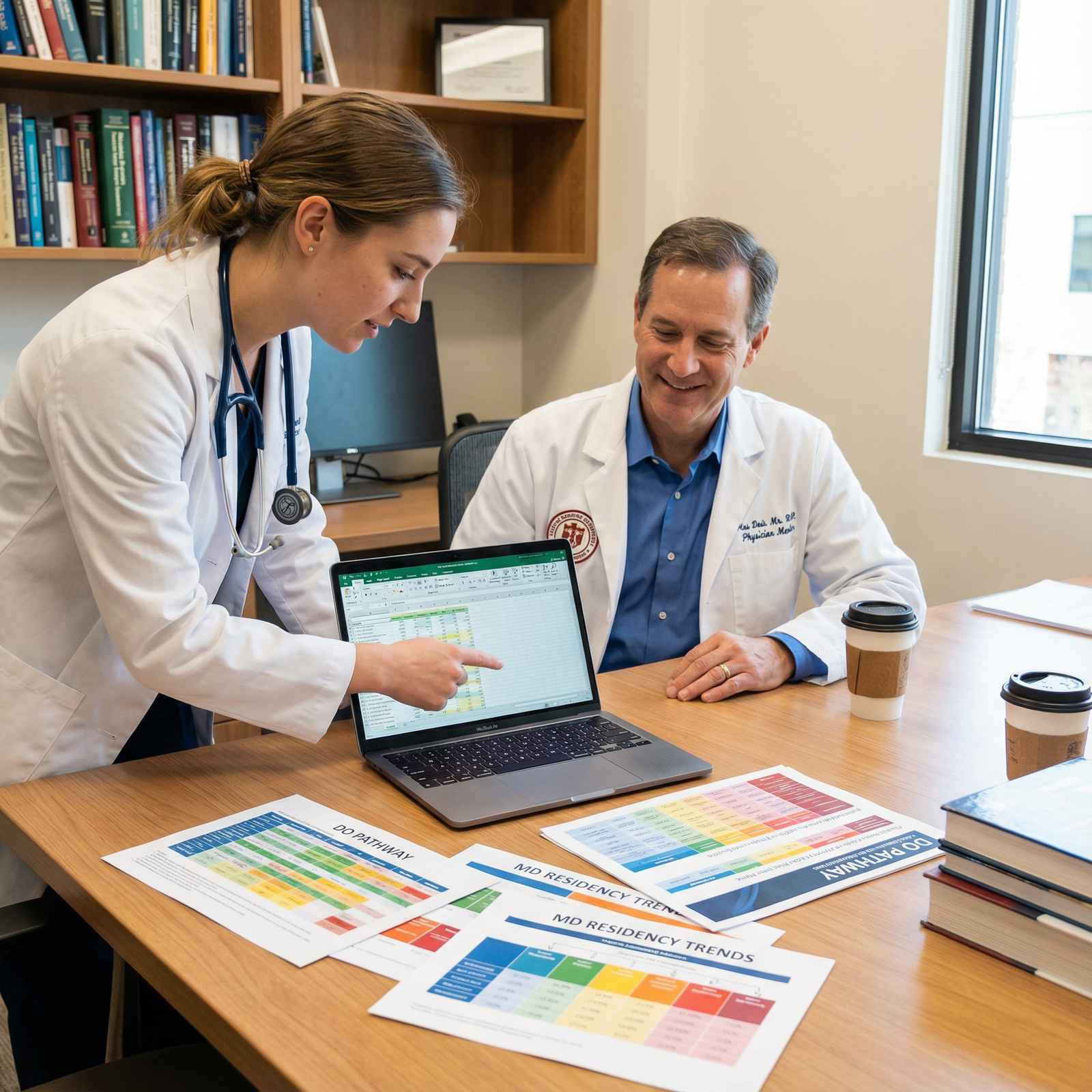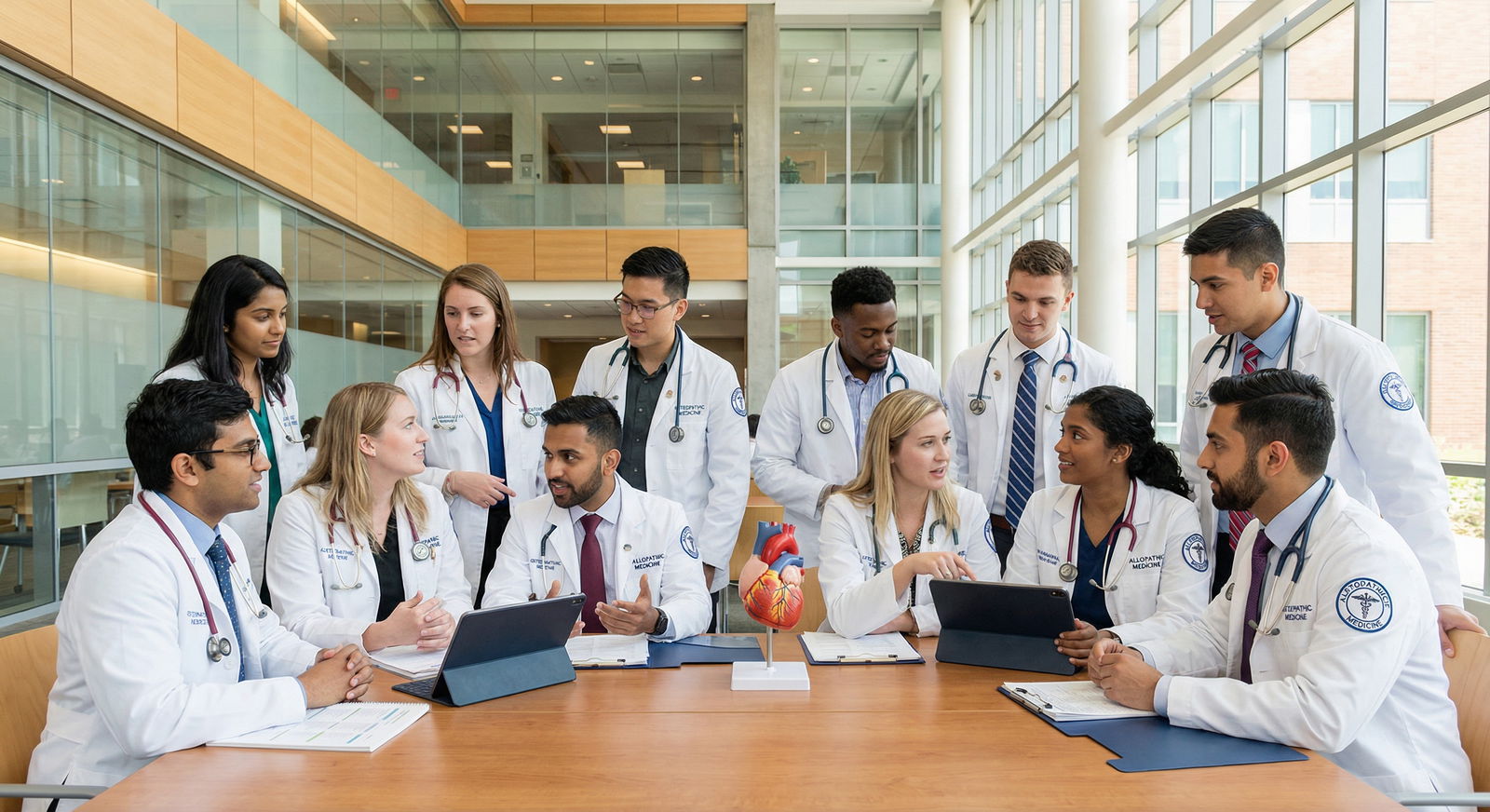
Choosing between a DO vs MD pathway is one of the earliest—and most important—decisions in planning your medical career. Both routes lead to becoming a fully licensed physician in the United States, capable of practicing in any specialty, prescribing medications, and performing surgery. Yet they differ in philosophy, aspects of training, and sometimes in how residency programs and patients perceive them.
This guide is designed for premeds and early medical students who want a detailed, practical comparison of Osteopathic Medicine and Allopathic Medicine to make an informed decision about their physician training path.
Understanding the Fundamentals: DO vs MD in Modern Medicine
Defining the Degrees: What Is an MD?
An MD (Doctor of Medicine) is the traditional allopathic medical degree awarded by LCME-accredited (Liaison Committee on Medical Education) medical schools.
Key characteristics of MD programs and allopathic medicine:
Philosophy:
- Emphasizes diagnosing and treating disease, often focusing on targeted interventions (e.g., medications, procedures, surgery).
- Strongly grounded in biomedical science, evidence-based guidelines, and clinical research.
Training Structure:
- Typically 4 years:
- Pre-clinical (Years 1–2): Foundational sciences, systems-based courses, early clinical exposure.
- Clinical (Years 3–4): Core rotations (internal medicine, surgery, pediatrics, OB/GYN, psychiatry, family medicine) plus electives and sub-internships.
- Graduates sit for the USMLE (United States Medical Licensing Examination) Step 1, Step 2 CK, and, where applicable, Step 3.
- Typically 4 years:
Recognition and Numbers:
- MD is widely recognized internationally.
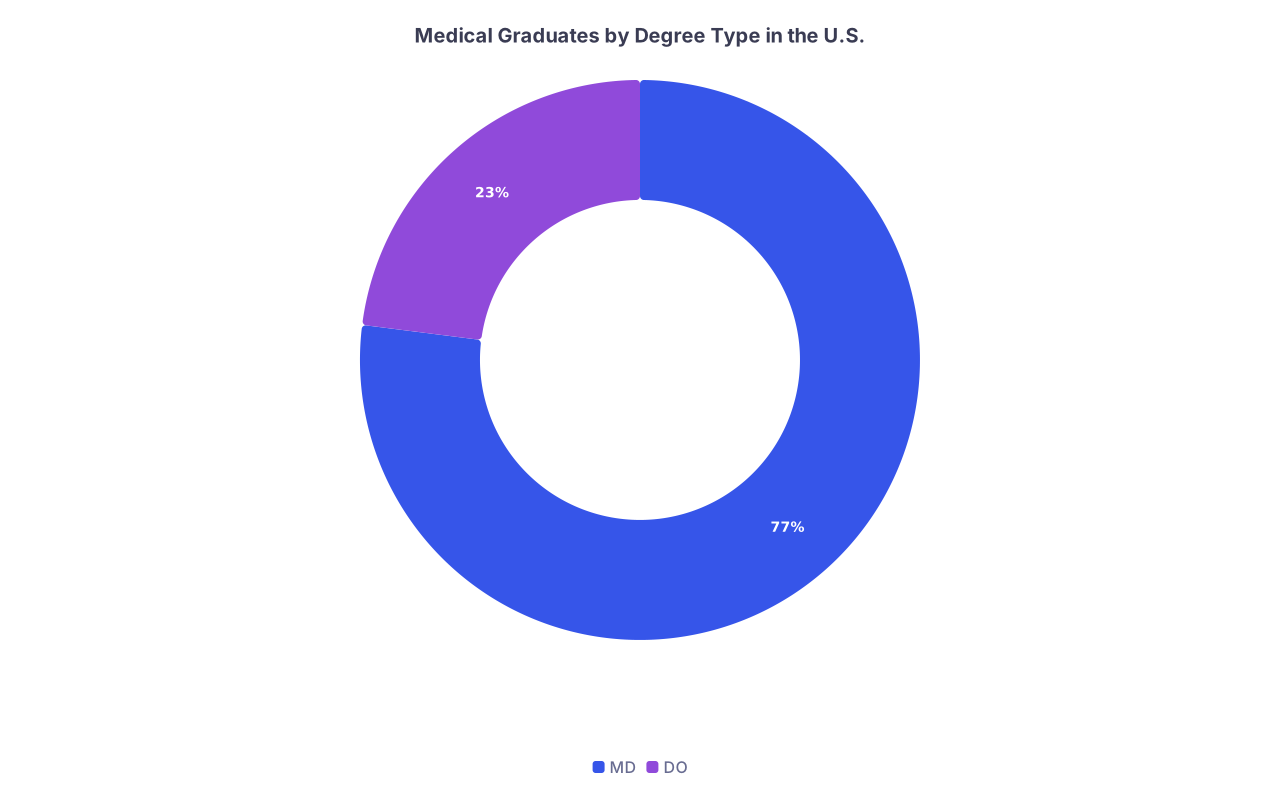
- Historically more MDs than DOs, and MDs have long dominated many subspecialty fields (e.g., dermatology, neurosurgery, interventional cardiology).
Defining the Degrees: What Is a DO?
A DO (Doctor of Osteopathic Medicine) is awarded by COCA-accredited (Commission on Osteopathic College Accreditation) osteopathic medical schools.
Key characteristics of DO programs and osteopathic medicine:
Philosophy:
- Emphasizes a holistic, whole-person approach to care.
- Focus on the body’s inherent ability to heal itself, preventive medicine, and the interconnectedness of body systems.
- Includes Osteopathic Manipulative Treatment (OMT), hands-on techniques used to diagnose, treat, and support function—especially of the musculoskeletal system.
Training Structure:
- Also 4 years, similar basic and clinical sciences as MD programs.
- Additional required hours in OMT and osteopathic principles.
- Historically, DOs take COMLEX-USA Level 1, Level 2 CE, and Level 3; many also choose to take the USMLE exams for residency competitiveness.
Recognition and Numbers:
- DOs are fully licensed physicians in all 50 states and can practice any specialty.
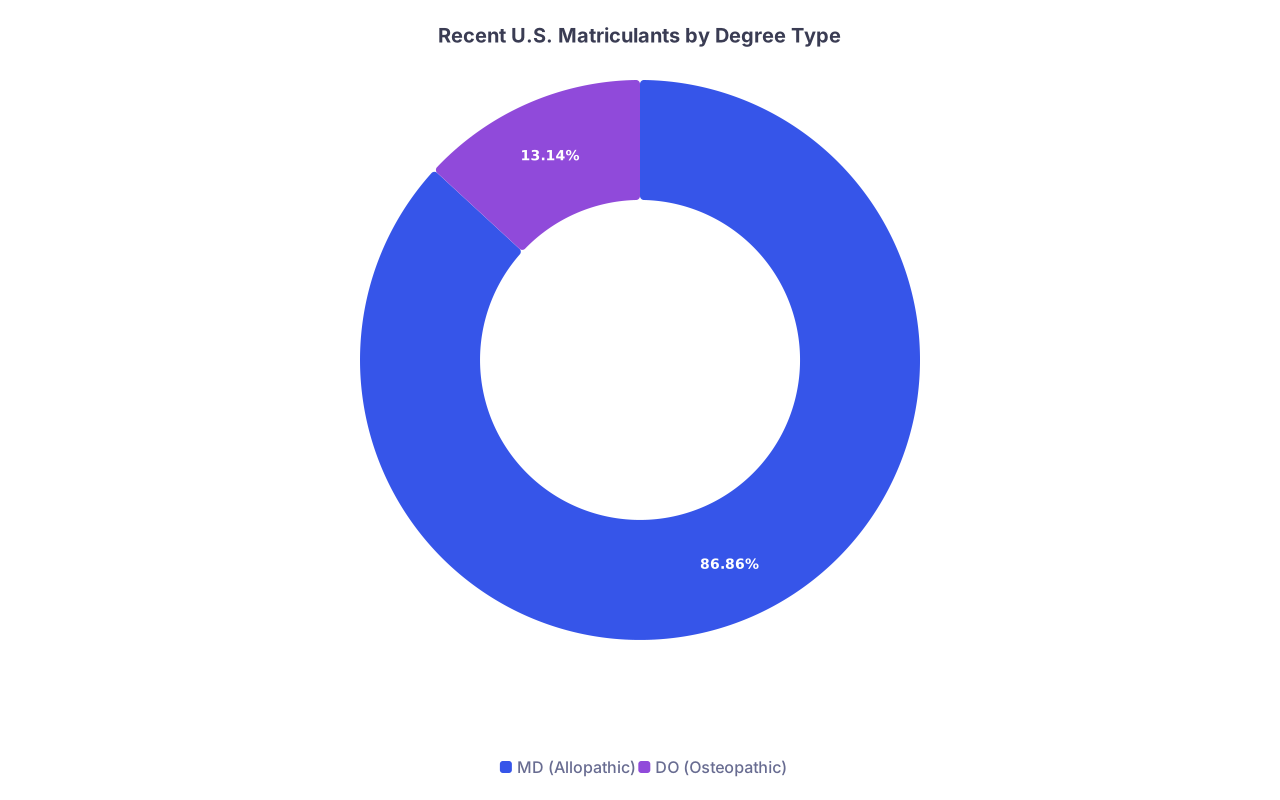
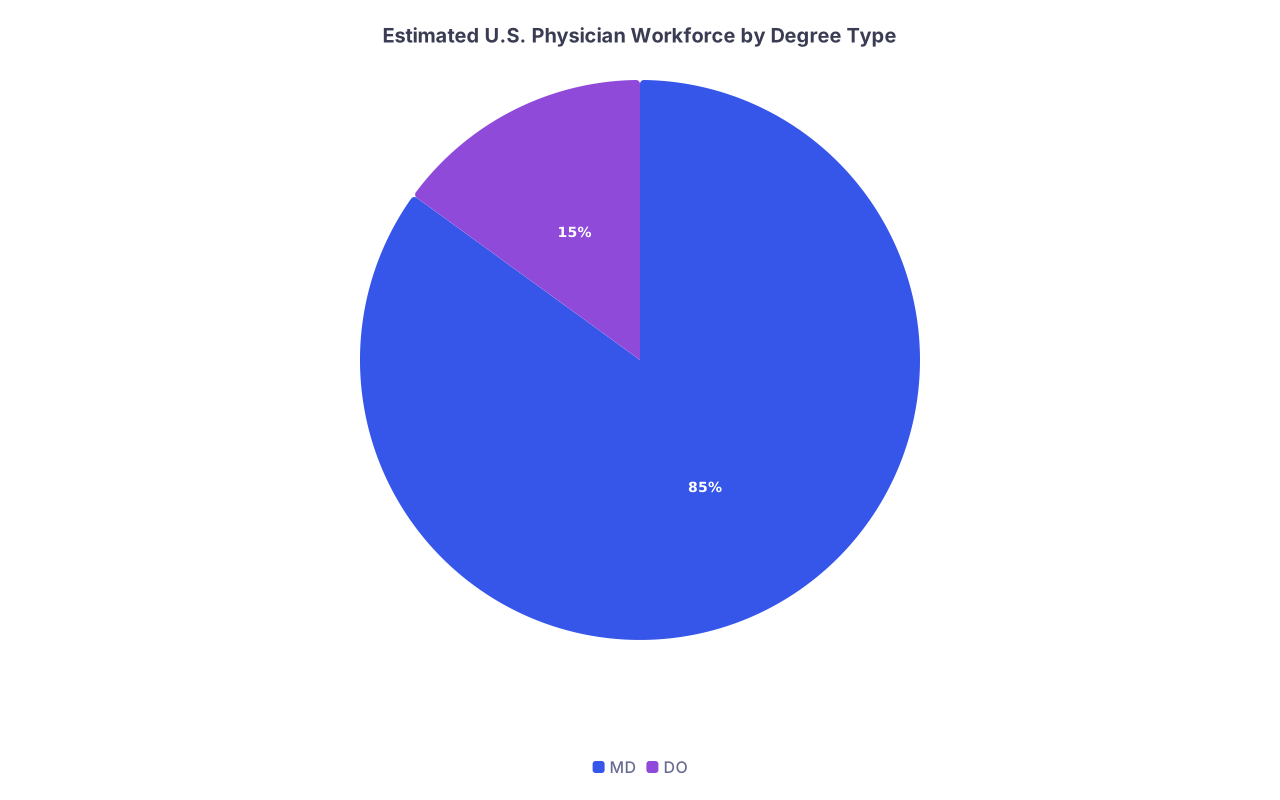
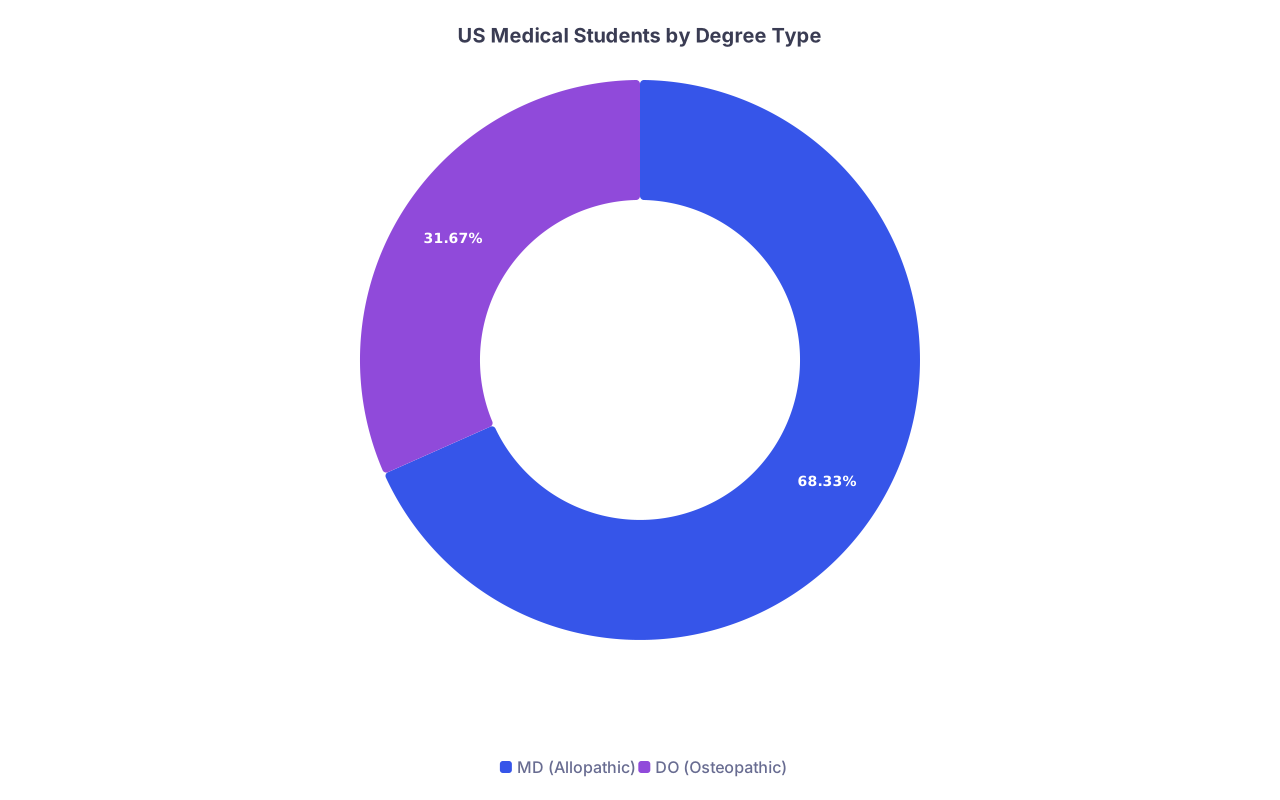
- Osteopathic schools have expanded rapidly, and DOs now represent a growing percentage of the physician workforce, particularly in primary care.
Comparing Physician Training: Curriculum, Exams, and Clinical Experience
Preclinical Curriculum: MD and DO Overlap and Differences
Common Ground (MD and DO):
- Core sciences: anatomy, physiology, biochemistry, microbiology, pharmacology, pathology.
- Systems-based instruction (e.g., cardiovascular block, respiratory block) integrating pathophysiology, pharmacology, and clinical reasoning.
- Small-group case discussions, simulation labs, and early standardized patient encounters.
- Increasing integration of clinical skills training, communication skills, and interprofessional education.
DO-Specific Enhancements:
- Osteopathic Principles & Practice (OPP):
- Courses on osteopathic philosophy and the relationship between structure and function.
- Training in palpatory skills—learning to detect subtle changes in tissue, alignment, and motion.
- Osteopathic Manipulative Treatment (OMT):
- Techniques such as muscle energy, counterstrain, HVLA (high-velocity, low-amplitude), myofascial release.
- Clinical use of OMT in conditions like low back pain, headache, musculoskeletal injuries, some respiratory conditions, and adjunctive care in chronic disease.
From a premed perspective, the day-to-day academic rigor is comparable. Both DO and MD programs demand strong study skills, time management, and resilience.
Clinical Rotations: Real-World Training in Both Pathways
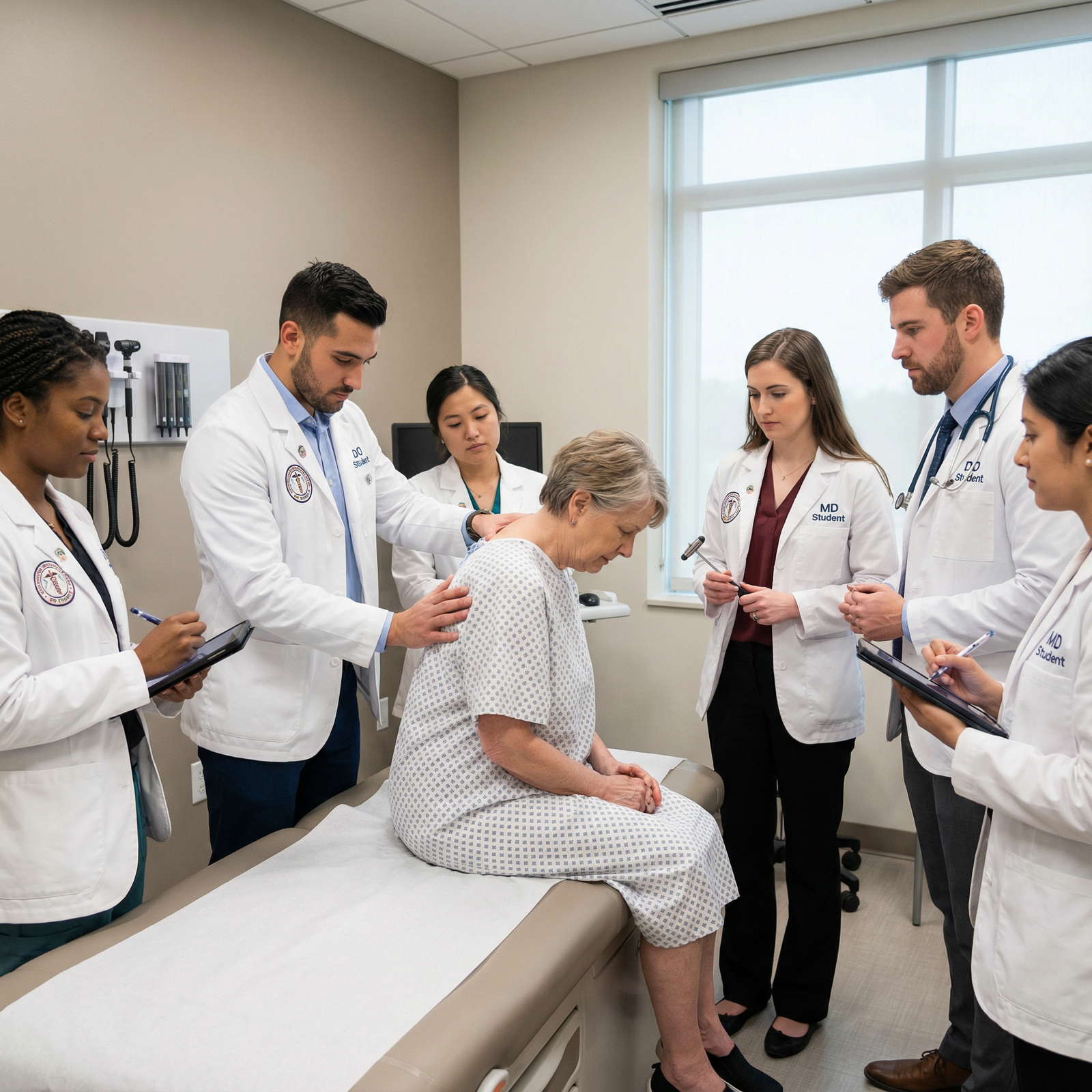
By years 3 and 4, MD and DO students look very similar on the wards.
Common core rotations:
- Internal Medicine
- General Surgery
- Pediatrics
- Obstetrics & Gynecology
- Psychiatry
- Family Medicine
- Emergency Medicine (often required or strongly recommended)
Differences you may notice:
- Some DO schools have more community-based and regional clinical sites, including rural or underserved areas, aligning with their mission to address primary care and access to care.
- MD schools may more often be attached to large academic medical centers, though many DO schools now have strong affiliations with major health systems and teaching hospitals.
- DO students may integrate OMT into clinical care when appropriate, especially in primary care, sports medicine, and pain management settings.
In practice, your clinical experience will be heavily shaped by your school’s hospital affiliations, not just your degree type. When comparing schools—MD or DO—ask specific questions about:
- Average patient volume and case complexity
- Access to tertiary and quaternary care centers
- Opportunities in your fields of interest (e.g., NICU, trauma surgery, advanced cardiac units)

Licensing Exams: USMLE vs COMLEX and Strategic Choices
MD Path:
- Must take USMLE Step 1 and Step 2 CK (and Step 3 during residency).
- These scores are critical metrics in residency applications, especially in competitive specialties.
DO Path:
- Must take COMLEX-USA Level 1 and Level 2 CE for graduation and licensure as a DO.
- Many DO students also choose to take USMLE Step exams to:
- Provide direct comparison with MD applicants.
- Satisfy residency programs that historically prefer or require USMLE scores.
- Some programs now accept COMLEX alone, but policies vary by specialty and institution.
Practical advice for DO students:
- If you’re aiming for highly competitive specialties (e.g., dermatology, orthopedic surgery, ENT), taking USMLE Step 1 and Step 2 CK in addition to COMLEX is often advantageous.
- Research target residency programs early (MS1–MS2) to understand their exam requirements and preferences.
Residency Training and Match Outcomes: DO vs MD in the NRMP Era
The Single Accreditation System and NRMP Match
Previously, MD and DO residencies had separate accreditation systems. Now, under a single ACGME accreditation system and unified NRMP Match:
- MD and DO grads compete for the same residency positions.
- Most programs now have experience training DO residents.
- Many program directors report being degree-agnostic and focusing more on:
- Exam scores (USMLE/COMLEX)
- Clinical evaluations and letters of recommendation
- Research productivity (for academic and competitive programs)
- Interview performance and perceived “fit”
Competitiveness by Specialty
Patterns are evolving, but some general trends:
- MDs remain overrepresented in historically competitive specialties:
- Dermatology
- Plastic Surgery
- Neurosurgery
- ENT (Otolaryngology)
- Orthopedic Surgery
- DOs are strongly represented in:
- Family Medicine
- Internal Medicine
- Pediatrics
- Emergency Medicine
- Physical Medicine & Rehabilitation
- Community-focused and rural programs
That said, many DOs successfully match into competitive specialties and academic centers every year—especially those who:
- Excel on board exams (USMLE and COMLEX).
- Build strong clinical reputations and obtain excellent letters.
- Seek research, leadership, and scholarly activity early.
Strategic Considerations for Premeds
If you are certain you want a very competitive, procedure-heavy subspecialty, an MD program might, on average, offer a somewhat smoother path. However:
- A strong DO applicant can still succeed in these fields.
- An MD from a less-established school without strong board scores or clinical performance may be less competitive than a high-achieving DO.
If you are open to or drawn toward primary care, holistic care, or community medicine, a DO pathway can align very well with your goals and potentially offer enhanced skills in patient-centered care and musculoskeletal medicine.
Philosophical Differences: Osteopathic vs Allopathic Medicine
While the practical day-to-day of MD and DO practice often overlaps significantly, the philosophies that anchor each pathway can influence how you think about patient care.
The Allopathic (MD) Lens
- Focus: Identifying disease processes and using evidence-based interventions to treat or manage them.
- Strengths:
- Deep integration with cutting-edge biomedical research.
- Strong focus on diagnostic precision, procedural excellence, and subspecialized expertise.
- Clinical style (stereotypically):
- Problem- and system-focused: “What disease is this and what is the best intervention?”
The Osteopathic (DO) Lens
- Focus: Treating the whole person—mind, body, and spirit—considering lifestyle, environment, and psychosocial factors.
- Strengths:
- Emphasis on preventive medicine, patient education, and long-term relationships.
- Unique skillset in OMT to complement pharmacologic and surgical treatment.
- Clinical style (stereotypically):
- Patient-centered and context-aware: “Who is this person, and how do all aspects of their life influence their health? How can I support their body’s self-healing capacity?”
In reality, many MDs practice with a holistic lens, and many DOs are deeply procedure-focused and research-driven. But if you resonate strongly with one philosophical framing, that may guide your choice.
Career Outcomes, Specialties, and Salary Considerations
Specialty Options: Where DOs and MDs Practice
Both MDs and DOs can enter any medical or surgical specialty:
Common MD-dominated specialties (historically):
- Dermatology
- Radiology (including interventional)
- Cardiology (especially interventional)
- Orthopedic Surgery
- Neurosurgery
- Academic subspecialties with heavy research emphasis
Common DO-dominated or strongly represented specialties:
- Family Medicine
- General Internal Medicine
- Pediatrics
- Emergency Medicine
- PM&R (Physical Medicine & Rehabilitation)
- Osteopathic Manipulative Medicine (OMM/OMT-focused roles)
However, these distinctions are becoming less rigid. Every year, more DOs match into highly competitive MD-predominant specialties, particularly when they have:
- Strong exam performance
- Robust clinical performance
- Mentorship and networking in their desired field
Salary Expectations: DO vs MD in Practice
Income depends far more on specialty, practice type, and location than on whether you have a DO or MD degree.
- A DO orthopedic surgeon and an MD orthopedic surgeon in the same group will typically earn comparable incomes.
- A primary care MD and a primary care DO in the same region and practice model will generally have similar earnings.
- Factors that heavily influence compensation:
- Specialty (e.g., orthopedic surgery vs family medicine)
- Practice setting (academic vs private practice vs employed)
- Geographic region (rural vs urban, high cost of living area vs low)
- Work hours, call schedule, and productivity bonuses
For planning your medical career, choosing a specialty that fits your interests, lifestyle, and strengths will have a much greater impact on your long-term satisfaction and income than whether you are DO vs MD.
Practical Guidance: How to Choose Between DO and MD Programs
Step 1: Clarify Your Priorities and Values
Reflect on:
- How strongly you value a holistic, hands-on approach (including interest in OMT).
- Whether you’re deeply committed to a hyper-competitive specialty vs still exploring options.
- Your interest in primary care, community medicine, or rural health.
- Your desire for international recognition (MD degrees may be more readily understood outside the U.S., though DO recognition is expanding).
Step 2: Evaluate Your Competitiveness and Application Strategy
- GPA and MCAT:
- Some DO programs may have slightly more flexible academic thresholds compared to many MD programs, though this gap is narrowing and top DO schools are very competitive.
- Timeline:
- Applying to both MD and DO programs can broaden your chances but requires careful planning for secondary essays and possible OMT/osteopathic philosophy questions.
- Fit with Mission:
- DO schools often emphasize primary care, underserved communities, and holistic care. Aligning your application with that mission is crucial.
Step 3: Shadow and Talk to Both DOs and MDs
- Spend time shadowing a DO in primary care or sports medicine and observe how OMT is integrated (or not) into daily practice.
- Shadow MDs in fields you’re curious about, including both primary care and specialties.
- Ask candid questions:
- How often do you use OMT (for DOs)?
- Do you feel patients care whether you are DO vs MD?
- Have you encountered any limitations or advantages due to your degree?
Step 4: Compare Specific Schools, Not Just Degrees
Not all DO programs are alike, and not all MD programs are equivalent. When comparing schools:
- Look at match lists: what specialties and locations graduates are entering.
- Examine board pass rates (USMLE/COMLEX).
- Ask about research opportunities, mentorship, and support for competitive specialties.
- Review clinical site quality and geographic distribution.
When you picture your future medical career, choose the program—DO or MD—that is most likely to support your goals and development, rather than simply the letters after your name.
Real-World Case Snapshots: DO and MD Career Paths
Case 1: A DO in Holistic Family Medicine
Peter, a DO, entered medical school with a strong interest in community health and preventive care. He was drawn to osteopathic medicine’s emphasis on treating the whole person and learning OMT.
- During residency in Family Medicine, he:
- Used OMT for patients with chronic low back pain, tension headaches, and certain respiratory conditions.
- Focused on lifestyle counseling, nutrition, and behavioral health.
- Now in practice, Peter:
- Runs a community-oriented family practice.
- Hosts group visits on chronic disease management.
- Markets his OMT skills as an added value, especially for patients who prefer to avoid or minimize medication when reasonable.
His DO background shapes his clinical style and has become an integral part of his identity as a physician.
Case 2: An MD in Subspecialty Cardiology
Sarah, an MD, knew early on she wanted to pursue a subspecialty in cardiology, influenced by her father’s coronary artery disease.
- She chose an MD program strongly affiliated with a high-volume tertiary care center.
- During internal medicine residency and cardiology fellowship, she:
- Engaged in research on interventional techniques and outcomes.
- Spent time in cath labs, electrophysiology (EP) labs, and advanced heart failure clinics.
- Now an interventional cardiologist, Sarah:
- Performs high-risk PCI procedures and structural heart interventions.
- Is actively involved in clinical trials and guideline development.
Her MD pathway was well-aligned with her subspecialty and research-intensive goals.
These examples underscore the central message: both DO and MD degrees can lead to impactful, fulfilling medical careers. The key is choosing the path and school that aligns best with your goals, philosophy, and strengths.

Frequently Asked Questions: DO vs MD and Your Medical Career
Q1: Are DOs and MDs equally licensed and recognized in the United States?
Yes. In the United States:
- DOs and MDs are both fully licensed physicians.
- Both can:
- Diagnose and treat illnesses
- Prescribe medications
- Perform surgery
- Enter any medical or surgical specialty (assuming appropriate training)
- All 50 states and all major insurers recognize DOs and MDs equivalently for licensure and reimbursement.
The difference lies in the training philosophy (osteopathic vs allopathic) and the additional OMT skills learned by DOs—not in legal scope of practice.
Q2: Do residency programs prefer MDs over DOs?
It depends on the program and specialty:
- Many programs are now degree-agnostic, focusing instead on:
- Board scores (USMLE/COMLEX)
- Clinical evaluations and letters
- Research and scholarly activity
- Interview performance and professionalism
- Some highly competitive specialties and academic programs still have a higher proportion of MDs and may historically favor applicants with USMLE scores.
- DO students who:
- Take USMLE exams,
- Score well,
- Seek research opportunities,
- And build strong mentorship networks
can and do match into top-tier and competitive programs.
When you reach medical school, you’ll want to research specific programs early to tailor your strategy.
Q3: Are patients aware of or concerned about the difference between DO and MD?
Awareness among patients varies:
- Many patients do not clearly distinguish DO from MD and mainly focus on:
- The quality of the relationship
- Communication and bedside manner
- Perceived competence and outcomes
- Some patients actively seek DOs for their holistic approach and interest in OMT.
- A minority may ask about the difference out of curiosity or misconceptions. This can be an opportunity for education.
Your clinical skills, empathy, and professionalism will matter far more to most patients than your degree title.
Q4: How does the DO vs MD choice affect international practice opportunities?
International recognition of MD degrees is more established and straightforward in many countries. For DOs:
- Some countries grant full recognition and licensing rights, while others:
- May recognize U.S.-trained DOs as physicians but with extra steps.
- May not yet fully recognize the DO degree or may confuse it with non-physician “osteopath” roles.
- If you anticipate a strong desire to practice overseas long-term, it’s wise to:
- Research licensing policies in specific countries.
- Consider whether the broader global familiarity of the MD degree offers advantages.
That said, many DOs successfully work internationally through global health organizations, short-term humanitarian work, or in countries with established recognition of the U.S. DO degree.
Q5: Should I apply to both DO and MD programs as a premed?
For many applicants, yes—if:
- You are genuinely open to both osteopathic and allopathic philosophies.
- You are comfortable with the possibility of learning and applying OMT.
- You want to maximize your chances of acceptance into medical school.
Applying to both MD and DO programs:
- Broadens your opportunity set.
- Allows you to compare acceptances and choose the specific school that best fits your goals.
- Requires you to tailor personal statements and secondary essays appropriately (e.g., clearly articulating why you are interested in osteopathic medicine for DO schools).
If you strongly resonate with the osteopathic philosophy or anticipate gravitating toward primary care, DO programs may be especially appealing. If you are committed to a research-heavy, highly subspecialized path, you may lean toward MD programs—but applying to both is still common and often strategic.
Deciding between a DO vs MD education is not about choosing a “better” or “worse” degree; it’s about aligning your training with your values, strengths, and vision for your medical career. By understanding the similarities and differences in philosophy, curriculum, residency opportunities, and long-term career trajectories, you can chart a path that supports the kind of physician you want to become.