You are here
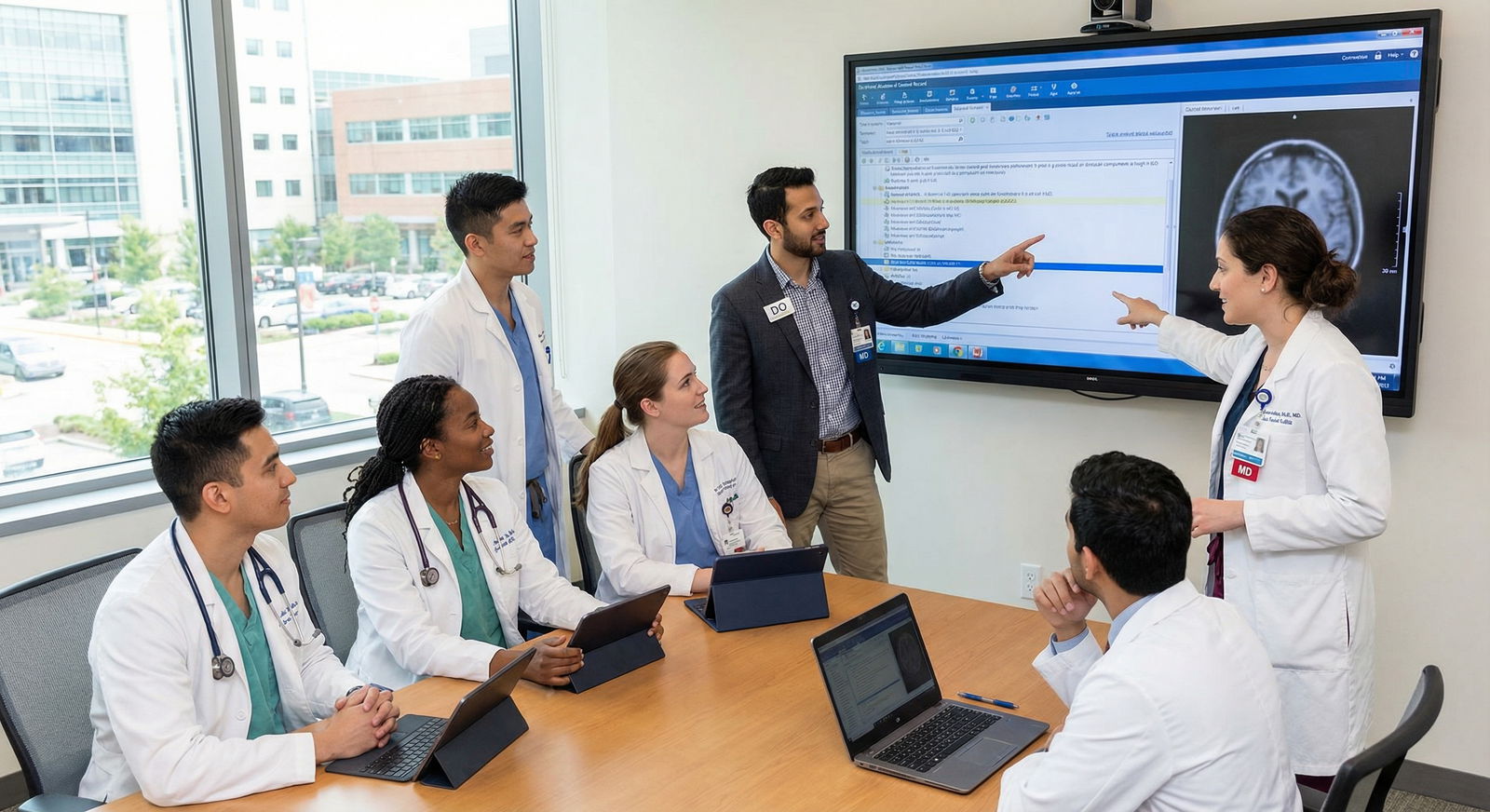
You are scrubbed in a cramped workroom on your IM rotation at a big-name academic hospital. Everyone is MD. The residents are firing off vent settings, diuretic dosing, and obscure trial names. You are the DO student who just finished a year of OMM labs.
You can:
- Diagnose a sacral torsion in 30 seconds
- Do a rib-raising sequence with your eyes closed
- Explain Chapman points better than most osteopathic faculty
But on rounds? None of that seems to matter.
You are starting to ask yourself:
“Is all this OMM just dead weight on my MD-dominated rotations? Or can I turn it into something that actually helps me stand out instead of making me feel like the odd one out?”
You can absolutely turn it into a strength. But it does not happen by accident. It requires strategy, timing, and knowing exactly what you should and should not do.
Let me walk you through a concrete plan.
Step 1: Reframe OMM in Your Own Head First
If you feel defensive or apologetic about OMM, everyone around you will pick up on that immediately.
You need a mental reset:
- OMM is not: “I do magic back cracks.”
- OMM is: “I have extra training in anatomy, palpation, and non-pharmacologic pain management.”
Here is the clean, rotation-safe way to think about it:
Palpation superpower
You have spent hundreds of hours with your hands on actual humans. That gives you:- Better sense of tissue texture, temperature, subtle swelling
- More confidence doing focused MSK exams
- More precise localization of tenderness
Functional anatomy in 3D
You were forced to connect:- Origins/insertions
- Joint biomechanics
- Nerve supply
- Lymphatic drainage
With how patients move and hurt. That makes your explanations of MSK problems sharper.
Non-opioid, low-risk tools for pain and function
This is gold in:- Post-op surgical patients
- OB patients who cannot take NSAIDs
- Geriatric patients already on 15 meds
- Patients with chronic pain and opioid tolerance
If you internalize that, you will stop “selling OMM” and start offering practical, targeted help. That is the shift.
Step 2: Build Your 15-Second OMM Identity Pitch
You need a stock answer ready for three questions you will be asked over and over:
- “So… you are a DO student. What is the difference again?”
- “Do you crack backs?”
- “Is that like chiropractic?”
Here is a script that works and does not make people roll their eyes.
For attendings/residents:
“I am in a DO program, so in addition to the standard medical curriculum, I have extra training in hands-on diagnosis and treatment of musculoskeletal and some functional issues. I usually frame it as better palpation skills plus some non-pharmacologic tools for pain and function when appropriate.”
For patients:
“I am in an osteopathic medical school, so I am learning everything your regular doctors do and also some hands-on methods that can help with pain, mobility, and recovery. I always combine it with your regular medical care and only if you are interested.”
For the inevitable chiropractor comparison:
“Chiropractors are trained as chiropractors from the start. I am training as a physician, with full medical training plus some additional hands-on techniques. The philosophy overlaps a bit on structure and function, but my scope is full medical care.”
Say it calmly. No defensiveness. No DO vs MD sermon. You are just stating what you bring.
Step 3: Decide When OMM Is Actually Appropriate
OMM is not a party trick. Use it like any other intervention: indication, risk, benefit, alternatives.
Here are places where OMM actually makes you useful on MD-heavy teams.
A. Inpatient “quick wins”
Look for:
- Post-op ileus → gentle abdominal / rib work, lymphatics
- Post-op or ICU neck/upper back pain from positioning
- COPD exacerbations with rib dysfunction and accessory muscle overuse
- Pregnant inpatients with low back or pelvic pain
- Elderly with acute-on-chronic low back pain where adding opioids is a bad idea
The key: you are not trying to fix their entire life. You are trying to:
- Reduce pain enough to move, cough, or deep breathe
- Help them sit up, turn, or wean off a little analgesia
- Improve comfort without adding meds
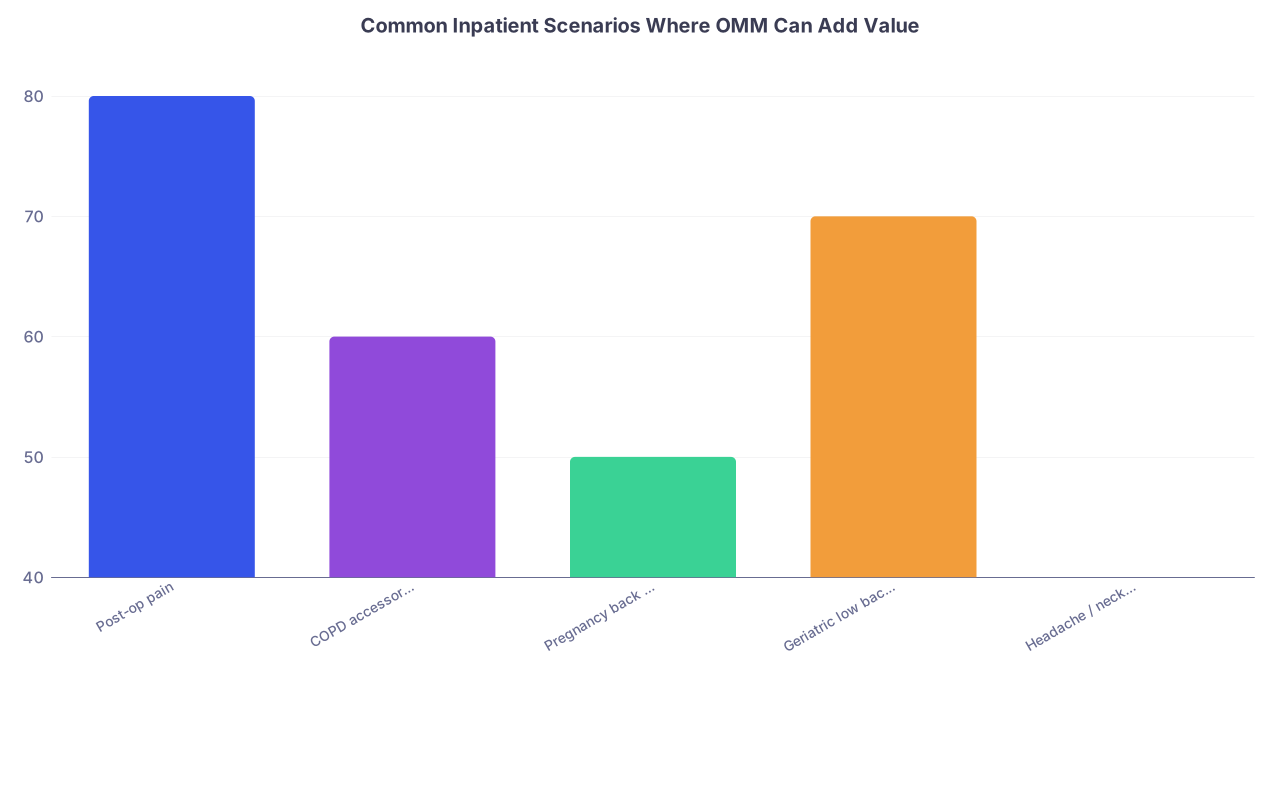
| Category | Value |
|---|---|
| Post-op pain | 80 |
| COPD accessory strain | 60 |
| Pregnancy back pain | 50 |
| Geriatric low back pain | 70 |
| Headache / neck strain | 40 |
(Percentages here are just approximate “this comes up a lot” priorities, not formal data. The point: post-op and geriatric pain are your bread and butter.)
B. Outpatient / clinic
You are on family med, sports, or IM clinic. The schedule is slammed. Every third patient has:
- Shoulder pain
- Non-radicular low back pain
- Tension headaches
- Thoracic outlet-ish symptoms
- Rib pain after cough / strain
Here OMM can:
- Provide immediate relief while waiting for PT
- Reduce reliance on refills of muscle relaxants and long-term NSAIDs
- Give you a concrete “value add” to the visit
You do short, targeted, 5–10 minute interventions that match the attending’s plan. Not 30-minute full-body rituals.
C. When not to even suggest it
Skip OMM when:
- The patient is unstable or acutely decompensating
- There is any red flag for fracture, infection, malignancy, cauda equina, etc.
- The team is rushing to OR, CT, or code status discussions
- Your attending clearly does not want ancillary stuff today
You want to be the student who reads the room, not the one asking to do rib raising during a rapid response.
Step 4: Script How You Offer OMM Without Sounding Like a Sales Rep
You should never say: “Can I do OMM?” full stop. That sounds like a club activity.
You anchor it to a clinical goal.
On rounds, keep it like this:
Patient: POD2 after colectomy, complaining of shoulder pain and chest wall soreness from laparoscopy and positioning.
You:
“He has a lot of upper back and rib discomfort that is limiting deep breaths. After we adjust his analgesia, I could also do a brief osteopathic treatment to help with rib motion and muscle tension. It does not interfere with his meds but may help him breathe and cough more comfortably. Would you be comfortable with that this afternoon?”
Notice the structure:
- Identify a specific problem (not “I want to do OMM”).
- Link it to a clinical goal (pain control, deep breathing, function).
- Emphasize it is brief and adjunctive.
- Ask permission clearly.
With clinic attendings:
Patient: Chronic non-radicular low back pain, already on NSAIDs, waiting for PT.
You:
“She has a lot of paraspinal tension and segmental restriction but no red flags. If you are okay with it, I can do a focused osteopathic treatment today to reduce some of the muscle tightness while we are setting up PT.”
Again:
- Not offering magical cures.
- Just targeted symptom relief.
Step 5: Tighten Your Technique Toolbox to 6–8 Workhorse Moves
You do not need every technique you ever learned. On rotations you need a small, sharp set that is:
- Safe
- Fast
- Evidence-supported enough for most attendings
- Non-dramatic (no big thrusts that scare everyone)
Here is a rotation-ready toolbox:
Soft tissue and myofascial release
- Cervical, thoracic, lumbar paraspinals
- Upper trapezius and levator scap
- Quadratus lumborum / lumbar fascia
Muscle energy (ME)
- Cervical (especially for tension headaches)
- Lumbar and SI for non-radicular LBP
- First rib ME for thoracic outlet-like symptoms or accessory muscle overuse
Rib raising / thoracic techniques
- Gentle rib raising for post-op pulmonary support and sympathetics modulation
- Seated or supine rib mobilization for chest wall discomfort from coughing
Suboccipital release
- Tension headaches, neck strain, post-ICU stiffness
Lymphatic techniques (selectively)
- Thoracic inlet release
- Effleurage and simple lymphatic support for edema
- Very gentle work post-op or with infection (only when stable)
Counterstrain (only 2–3 favorite points)
- Classic piriformis, psoas, or a key cervical point for headaches
- Use sparingly; it is time consuming
You should be able to:
- Do any of these in 5–10 minutes
- Explain each in 1–2 sentences, non-woo language
- Modify or abort if the patient is uncomfortable or positioning is limited
If you cannot do it fast and clean, do not do it on rotation. Practice on classmates or friends before you ever touch an inpatient.
Step 6: Document Like a Physician, Not a Technician
Your note needs to stand on its own in an MD chart. That means:
State the indication clearly.
- “Acute non-radicular low back pain limiting ambulation.”
- “Post-operative chest wall pain limiting deep breathing.”
Describe exam findings in standard medical language.
- “Increased paraspinal muscle tension L3–L5, decreased lumbar flexion and extension, no midline tenderness, negative straight leg raise bilaterally.”
- “Palpable tenderness over right upper trapezius and cervical paraspinals; full strength and intact sensation.”
List techniques simply.
- “OMT performed: soft tissue to lumbar paraspinals, muscle energy to L3–L5, suboccipital release.”
Document response.
- “Pain reported 7/10 before, 4/10 immediately after; improved ability to sit up in bed.”
- “Patient reports less neck stiffness and improved rotation to the right post-treatment.”
Address risks / consent briefly.
- “Discussed risks and benefits of osteopathic manipulative treatment, including soreness and temporary discomfort. Patient gave verbal consent.”
You want the attending reading it to think: “This is how I would document an intervention I believe in,” not “What is this alternate universe SOAP note?”
Step 7: Turn OMM into Talking Points for Evaluations and Letters
You are not doing OMM just for warm fuzzies. You want it to show up in your evals.
You can make that happen without bragging.
During mid-rotation feedback:
Ask directly:
“I am trying to use my osteopathic training to add value for patients, especially with non-pharmacologic pain management. Are there specific situations on this service where you think that would be appropriate, or skills I should sharpen to make it more clinically useful?”
This does three things:
- Puts OMM in the “value add” category
- Signals that you want feedback, not approval
- Plants the idea in their head that you do this well
In end-of-rotation conversations:
When they ask about your strengths, say:
“One area I have tried to use consistently is my osteopathic training, especially for musculoskeletal complaints and post-op discomfort, in a way that complements the medical plan. I am also very open to feedback about when it is or is not appropriate.”
You are not begging them to mention OMM in the letter. But you are giving them a clean, ready-made talking point that many will use.
Step 8: Handle Skepticism Like a Professional, Not a Missionary
You will meet attendings who roll their eyes at OMM. Some will say it out loud. “So that is the back-cracking stuff, right?”
Here is how you respond without tanking your eval.
Mild skepticism:
Attending: “Does that stuff actually work?”
You:
“It is most helpful for straightforward musculoskeletal pain and some post-op issues, as an adjunct to standard care. The data is mixed depending on the condition, but in practice I have seen good results for things like non-radicular low back pain and tension headaches, especially when patients want to avoid more meds.”
Short. Honest. No evangelism.
Open hostility:
Attending: “I do not want any of that done to my patients.”
You:
“Understood. I will not use it on this service. I will focus on sharpening my diagnostic and management skills within the standard framework.”
Then drop it. You lose nothing by shelving OMM for 4 weeks. You gain a good eval by not being a problem.
Curious and open:
Attending: “Show me what you are talking about sometime.”
You:
“Happy to. Next time we have a straightforward musculoskeletal or post-op pain case and some time after rounds, I can walk through a brief assessment and a couple of simple techniques.”
Then pick your highest-yield, least weird, best-understood intervention. Do not start with cranial. Start with soft tissue and muscle energy.
Step 9: Integrate OMM into Your Presentations Subtly
You can make OMM part of your “brand” on rotation without sounding like a broken record.
In your oral presentations, you can mention it like this:
- “MSK: Paraspinal muscle tension, no radicular signs. I think his pain is primarily mechanical and muscle-based. We have optimized NSAIDs and started PT. If you are okay with it, I can also provide brief osteopathic treatment today to help with muscle tension.”
Or:
- “Resp: Post-op day 2 with shallow breathing from incisional pain and some chest wall discomfort. Incentive spirometry and analgesia ordered. I can also provide gentle rib and thoracic work this afternoon to improve comfort with deep breaths if that aligns with your plan.”
You are presenting:
- Assessment consistent with standard medicine.
- A non-pharmatool as an extra, not a replacement.
That is how you normalize OMM in a room full of MDs.
Step 10: Build a Simple Pre-Rotation OMM Prep Protocol
If you know an MD-heavy rotation is coming up, do 1–2 weeks of targeted prep. Not for Step questions. For actual clinical use.
Here is a simple protocol:
1. Pick your 6–8 techniques
From the toolbox above. Write them down. For each:
- Indications
- Contraindications / red flags
- Steps
- How to explain it to a skeptical MD in one sentence
2. Practice on real people
- Grab 3–5 classmates or friends
- Simulate: post-op shoulder/neck pain, chronic low back pain, tension headaches
- Time yourself: nothing should take more than 10 minutes start to finish
3. Build 3–4 mini-case scripts
For each scenario, rehearse aloud:
- How you would present the patient
- How you would offer OMM to the attending
- How you would explain it to the patient
4. Prep your documentation phrases
Write template language for:
- Indications
- Techniques used
- Patient response
- Consent statement
Have it saved where you can quickly adapt it during the rotation.

| Step | Description |
|---|---|
| Step 1 | 2 weeks before rotation |
| Step 2 | Select 6-8 core techniques |
| Step 3 | Review indications & contraindications |
| Step 4 | Practice on classmates |
| Step 5 | Create 3-4 mini-case scripts |
| Step 6 | Draft documentation templates |
| Step 7 | Identify likely use-cases for that service |
You walk into the rotation not as “the DO student who sort of remembers OMM,” but as “the student who can deploy a sharp, clean OMM intervention when it matters.”
FAQs
1. What if my school’s OMM training was weak and I do not feel confident treating on rotations?
Then you do not treat until you fix that. Unsafe or clumsy OMM on a real patient is worse than no OMM at all.
Your action plan:
- Use an elective, selective, or free afternoons to work with a strong OMM faculty member or community DO who actually uses OMM clinically.
- Tell them directly: “I want a focused set of techniques I can safely use for inpatients and outpatients in 5–10 minutes.”
- Practice on them and on other learners until they say you are ready.
- Until then, use your osteopathic background as:
- Better palpation
- Better MSK assessment
- Better functional anatomy explanations
You can still stand out on rotations with those alone.
2. Does MD skepticism about OMM hurt my residency chances as a DO?
Not if you are smart about it. Programs care if:
- You are clinically competent
- You work well on teams
- You do not push an agenda
- You add value without drama
If you show:
- Excellent standard medical knowledge
- Solid work ethic
- OMM used thoughtfully, selectively, and safely
Then even skeptics will usually respect you. Some will even write in your letters that you used your osteopathic training to help with non-pharmacologic pain management or function. That is a strength, not a liability.
Key takeaways:
- Your OMM training is a real asset if you frame it as better palpation, anatomy, and non-pharmacologic tools for specific problems—not a belief system.
- Use a small, sharp toolbox of safe, fast techniques, offered only when clearly indicated and integrated into the medical plan, not in place of it.
- Handle skepticism professionally, document like a physician, and deliberately position OMM as one of your clinical strengths—not your whole identity.